Author: Madelaine Millar
Date: 08.31.21
Margarita Gubanova never planned to be a computer scientist. She was born in Russia to a family of lawyers. Fully intending to follow in their footsteps, she completed her undergrad at Northeastern in political science.
After taking two computer science classes as an undergrad — “Computer Science and Its Applications,” and “Fundamentals of Computer Science 1” — Gubanova realized her passions lay elsewhere.
“I really, really loved it. That’s when I saw the formulas and I was like, oh my god, this is amazing. Computers can do so many things for you,” Gubanova said.
Gubanova declared a minor in computer science, and she says she was interested in pursuing a graduate degree, but she didn’t think she could do so without a bachelor’s in a related field. That’s when Professor Olin Shivers mentioned Align to her, the innovative Khoury College of Computer Sciences program designed to provide a pathway to a master’s degree in computer science for people with an undergraduate degree in a non-technical field.
“Because I don’t have any technical background, I wasn’t sure that I could handle the pressure and the technical side of computer science,” said Gubanova. When she talked to Align advisors and other students, though, she could tell there would be support along the way. “Everything is just aligned and adjusted to people who don’t really have a background in technical specialties,” she explained.
Despite her trepidations, Gubanova found the program to be a perfect fit. Align offers bridge courses to help prepare students for graduate-level coursework, which helped Gubanova to deal with the learning curve of an entirely new field. “What I really like in computer science is the problem solving…(Align) gave us problems that you would face in the real world, but simpler.” explained Gubanova.
During her time in Align, Gubanova completed one co-op as a software development intern with the travel technology company Sabre. She worked on the back end developing microservices, a type of computer science architecture that allows large, complex applications to deliver products quickly, frequently, and reliably. This experience built on her work as a data quality specialist for the health insurance company Commonwealth Care Alliance, a position she had held during the time between her undergraduate graduation and her enrollment in Align. Gubanova had quickly noticed that manually reviewing hundreds of spreadsheet rows was taxing and inefficient, so she coded a set of macros to highlight mistakes in real-time.
“All of my experience contributed to me realizing how CS can automate what we do every day,” said Gubanova. “(For example,) I recently created an AWS Lambda function (an Amazon code running service which is triggered automatically by events like the addition of an apartment listing) that is triggered every five minutes to check a website for an available apartment that me and my boyfriend wanted to rent. We told management that we are interested in the apartment, but they said it’s first come first serve and we didn’t want to miss the chance to rent it, so that automated service would email me when that apartment becomes available.”
One of the most valuable elements of Gubanova’s Align experience was the collaboration with classmates, who ranged from chemists and physicists to digital marketers and recruiters. Gubanova found that each brought a unique perspective to the program.
“I feel like we’re approaching problems differently. When you collaborate with people like that, it definitely helps you grow even more,” said Gubanova. “The people that I’ve met in the Align program have definitely helped me grow professionally and personally.”
That same collaborative spirit is one of Gubanova’s favorite things about her current position as a front-end software developer at the online sports betting company DraftKings. Gubanova works on the common platform team, developing components like user authentication, and sign-up and login pages. Because she works on the front end, Gubanova usually gets to see the results of her work right away, which she finds hugely rewarding. “If you change from a full web screen to a cell phone, you will see a lot of buttons cutting off, the page will be going into the background, stuff like that. That’s something that I’m fixing in my day-to-day job, which is cool because the (user) experience is definitely better,” said Gubanova.
DraftKings uses a ticket system to address bugs and perform software upgrades. When tackling a new project—for instance, adding a new menu to the DraftKings website or resolving a bug—one person thinks up a solution, a second person implements it, and a third person reviews it; the fix also goes through functional testing before the ticket is closed. Gubanova enjoys a lot of freedom to pick her own tickets, and regularly ends up working on each step in that process.
“It’s a lot of steps, but it’s really organized,” she said. She was also excited to find the same collaborative spirit at DraftKings that she had found in the Align program. “It’s one of the things that I was originally attracted to; the environment is great, and everyone is friendly, smart, and collaborative.” DraftKings benefits such as an onsite barbershop and nail salon provided another perk.
Gubanova graduated from the Align program in December, and she looks back fondly on her experience. She hopes that other people considering making the switch to computer science know that they aren’t alone; people like her have successfully made the switch, and the support structures exist for them to do it too.
The Khoury Network: Be in the know
Subscribe now to our monthly newsletter for the latest stories and achievements of our students and faculty
Author: Kelly Chan
Date: 08.26.21
From the colorful, mural-lined streets of Chinatown in Oakland, California, to the bright luxury hotels of the Las Vegas strip, Michael de Vera has captured all of the beauty of his travels through a lens. Khoury News sat down with de Vera, the associate director of graduate advising and student services for the Khoury College of Computer Sciences’ San Francisco campus, to explore his passion for video content creation. In this interview, he walks through his journey of becoming a creator, the messages behind his work, and how his passion projects have impacted his role at Northeastern.
How did you first get into video creation?
Throughout my childhood, I made a lot of home videos with my brothers. We would make alien movies while we were out camping and film fake news broadcasts. And my childhood icon was definitely Steven Spielberg.
Then in high school, I took a digital media class, and I wanted to continue it. For two years at community college, I started taking film courses and was a film major. When I transferred to UCLA, I didn’t want to pursue film since it was competitive, so I switched to anthropology. My passion for video continued when I traveled since I always took videos while on vacation. But only lately, since 2018, have I been trying to start upskilling, especially with Adobe Premiere Pro. Then, last October, my partner and I started a travel YouTube channel, Sole WAP (Wandering Around Places).
Tell me about your YouTube channel Sole WAP (Wandering Around Places). Why did you start it?
There were two main interests that led to this channel. One is my love for traveling. When I think about life outside of work, my goals would be to live outside the country and continue traveling. But during the pandemic, everyone experienced a lull when it came to traveling and adventuring. I knew I wasn’t alone, and I knew there were people who faced even more challenges in leaving their apartment. So, every opportunity when I went out of town or into the city, I took my Osmo Pocket camera and recorded my “wandering” videos. I thought it fulfilled a very functional purpose during the day, especially for people who were indoors and couldn’t really go outside.
The second factor was that I wanted to build up my portfolio and use this as a skill-building opportunity to engage more video content. I am revisiting my passion for video-making after deciding to pursue anthropology and then higher education.
What message do you want to send to your audience through this channel?
Our slogan is: “Get your daily dose of wandering.” It is very pertinent to last year, especially with remote learning, but I still think there’s a need for people to remember to get their Vitamin D and go outside — or at least feel like it. I want to help transport them to a different place because in the monotony of working from home, it’s good to have a break.
How did your passion for video seep into your work at Northeastern?
It started with a conversation with my colleagues about our passion projects outside of work. Then we realized we could use more video projects for Khoury College, and so far, I’ve been able to personally edit about five videos and help produce another three or four for Northeastern, including session introductions for Khoury’s State of The Culture Conference in April. Currently, I’m working on a project for orientation.
Using video for different purposes has definitely been a highlight of my experience at Northeastern because there’s this acknowledgment that you can bring your holistic self to work. It even became one of my workplace goals with my supervisor to see how I can incorporate my passions outside of work into projects at work, and I am lucky to be able to do that.
What do you like most about video content creation?
I like listening to people’s stories and how far they’ve made it, which is also the reason why I’m in academic advising and higher ed. Going to college is a big deal, and everyone has a story from somewhere. A lot of people don’t realize how valuable their story is and how captivating it could be. I think about that a lot, and this hobby helps me put people’s stories into something digestible while also valuable and inspiring.
How does this creative side of you help you as an advisor?
As an advisor for the Align program, I’m helping people who are transitioning into computer science from a different field. I have people from all walks of life with different goals – whether that’s working for Amazon, the city, or nonprofits – and I really have to think outside the box about how people can truly succeed in this program. With all that in mind, I have to be creative as an advisor.
What are you looking forward to in your journey of video creation?
Some of the video content that I’m hoping to create now for Northeastern is to spotlight resources for students by telling the story behind it, for questions like “What is the goal of orientation?” and “What are Career Peer Advisors?” It makes a big difference when there’s a short video that showcases what students will experience and it adds a human touch. That’s the main question I ask myself: How can I humanize things to relate to students, especially in a virtual world?
Also, part of what I want to do is create a video editing business, that specifically supports Black, Indigenous, and People of Color and individuals of marginalized identities who are trying to start a business and use visual media as a way to enhance their story and outreach. Whether it’s about lifestyle or services, I want to help uplift other people’s work.
Watch more of de Vera’s videos on his YouTube channel or follow his travel Instagram account for more content.
The Khoury Network: Be in the know
Subscribe now to our monthly newsletter for the latest stories and achievements of our students and faculty
Author: Sarah Olender
Date: 08.25.21
Khoury College of Computer Sciences prepares diverse students for significant roles in a wide range of industries and sectors and has fostered a strong foundation for future leaders in tech, including innovators and entrepreneurs.
Two Khoury College entrepreneurs stood out at Northeastern University’s first Women Who Empower Innovator Awards. Two students in the Align MSCS program, Molly Beck and Shital Waters, were recognized for their unique business ideas—Beck in podcasting production and Waters in environmental AI—both ideas that they implemented as students.
Spotlight on Khoury’s two award winners
Entrepreneur Molly Beck won a first-place innovator award on the strength of her podcast production company, Messy.fm, which is a suite that helps businesses efficiently create podcasts to distribute internally. Her business had origins in her early experiences as a blogger, which led to a side career and a book. She explained, “I benefited from blogging because I was a content creator in the space, but when podcasting started happening, I wanted to own a bigger piece of the space, and that would be in the technology.”
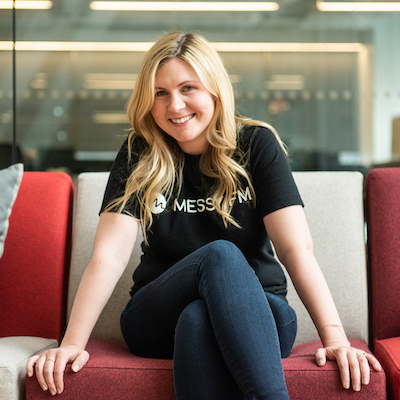
As Messy.fm grew, Beck realized that effective leadership would require computer science knowledge. She decided that she would go back to school and learn about the coding behind the software she was creating. In her free time, as Beck was mentoring people who were interested in podcasting, she found herself advising her mentees to study computer science–or at least take some courses. She kept giving this advice, which eventually inspired her to pursue a computer science education.
“One day I was like, why am I giving this advice to everyone and I’m not taking it myself?” Beck said.
Soon after she had that thought, she applied to the Align program.

Shital Waters, won the runner-up award, and she is working to develop and grow BluePlanetAI, an environmental artificial intelligence company.
Waters attributes the success of BluePlanetAI to her membership in a Northeastern AI club, where she was able to meet people with similar interests who collaborated to form the BluePlanetAI team.
“We came together, and we were thinking of starting a project, something that has to do with aquatic environments and trying to find a niche that has high impact,” Waters said.
But the team didn’t come up with one clear idea to start.
“It was a long process,” she said. “It was around ten months. As a startup, you change so many ideas as you go along with it. So eventually, with some guidance from different judges when we entered competitions, we found BluePlanetAI.”
The team took an interest in environmental AI technology, and after doing research, they learned that algae blooms were increasing and costing nations thousands of dollars. From there, the BluePlanetAI was established. The team now is in the process of building an “environmental system that allows us to stream data from a drone to our cloud software so we can provide preventative measures,” Waters said.
Waters hopes to use her business to help gather research for government and other organizations that will help protect, preserve, and learn from these environments.
“I always wanted to try to combine my undergrad degree in biology with computer science somehow, and I have a strong passion to help people or help the planet,” Waters said. “I wanted to make a difference in this world; to have some kind of legacy.”
It wasn’t always an easy path. During her presentation to the judges at the awards, Waters opened up about her difficult past and the obstacles she overcame, which is why winning this award meant more than just a cash prize.
“What means the most to me is that with that the award comes with support. Support from such powerful, inspiring women,” Waters said. “Growing up trying to get an education wasn’t easy. I came from a really difficult background. I went through a lot of struggles. I dealt with emotional and physical abuse for about 26 years of my life. And, you know, having that support from someone who really believes in you? I can’t even describe how it feels.”
While Waters is still in the beginning stages of her business, she now has the Khoury community backing her as she advances BluePlanetAI.
Recognition for female entrepreneurs at Northeastern
Behind the entrepreneurs and the awards, there is also a strong team with a passion to bring more recognition to female entrepreneurs.
Betsy Ludwig, the executive director of women’s entrepreneurship at Northeastern University, organized the event to help achieve one of her goals: help support female entrepreneurs. Aside from the awards, Ludwig also helps to promote other clubs that help women grow their businesses, skills, and ideas.
The Women’s Interdisciplinary Society of Entrepreneurship, or WISE, provides mentorship, workshops, and support for female entrepreneurs in the Northeastern community.
“It’s really supposed to be kind of a gateway into our entrepreneurship ecosystem for women with a very diverse perspective, with a very interdisciplinary perspective,” Ludwig said. With her program and in her position, she wants to see entrepreneurial pursuits not just from business school women, but also women from the health field, the arts, computer sciences, and more.
The Women Who Empower Innovator Awards, far from simply recognizing individuals for their achievements, implicitly acknowledges the importance of community support in advancing entrepreneurial endeavors–a key factor that awardees value.
Said Shital Waters: “No matter what you’re going through, there are always people around you that are willing to help. You don’t have to feel like you’re in this alone. We’re all in this together and it comes from just helping each other out.”
The Khoury Network: Be in the know
Subscribe now to our monthly newsletter for the latest stories and achievements of our students and faculty
Author: Aditi Peyush
Date: 08.19.21
Whether you play them on your mobile device or a console, digital games have come to play a big role in our lives. Their purposes range from serving as a respite from our professional roles, to playing out of sheer enjoyment. Even though games are so popular because of their details, we hardly think of the makers behind our favorite video games. Two Northeastern University professors are inspiring the next generation of game creators through an experiential learning project course.
The pathway to game design
Originally from the Netherlands, Casper Harteveld has always been passionate about games.
“I think I got my first game console when I was four years old,” he recalled. “I got really hooked, so much so that I read all kinds of game magazines in different languages, because the Dutch ones weren’t enough.”
His passion never subsided. Harteveld pursued a bachelor’s, master’s, and doctorate in a program titled Systems Engineering, Policy Analysis, and Management. The graphic simulations he witnessed in his degree programs reminded him of video games.
“It turned out that there was a group of people who created games within that sphere, who were using games for social good,” he said. “That was one of the things I was interested in; I also wanted to use my talent for social impact.”
Harteveld focused on serious games–games designed for a purpose other than pure entertainment– during his doctoral candidacy. He collaborated on a game that helped train people to observe levees and take action before a flood. After receiving his doctorate, Harteveld joined Northeastern as a professor of game design at the College of Arts, Media and Design (CAMD), with a courtesy appointment at the Khoury College of Computer Sciences.
Chris Barney, a visiting assistant professor at CAMD, took a different approach to becoming a games professor. As an undergraduate, he studied creative writing and world studies. After taking a computer science course, he realized that he could pursue games as a profession. Barney enjoyed the creative aspects of games, but felt that he needed a stronger computer science understanding. After receiving his bachelor’s in computer science and sociology, he pursued his master’s in computer science, focusing on conversational artificial intelligence in massively multiuser environments.
With that degree under his belt, he decided that he was ready to be a game designer. But he faced roadblocks, saying “It turns out it’s hard to get into the industry, especially when you have a couple of degrees in game design, and no one else in the industry does.” He continued, “They [industry professionals] were like, ‘you have a degree in this? Why haven’t you been making games? Why did you waste your time getting a degree?’”
After showing the industry professionals what he had to offer, Barney joined Poptropica, a popular online role-playing game targeted towards children. At Poptropica, Barney worked on the server-side infrastructure that allowed the game to run.
“We had 500 million users signed up for the game, and I built the social networking layer on it and the user-generated content where people can build their own worlds,” he said. After working in non-game fields as well as on independent games, Barney joined Northeastern’s teaching faculty as a visiting assistant professor.
Now Harteveld and Barney have teamed up to lead the course, “Projects for Professionals: Game Studio” (INAM 5964). This course is a strategic collaboration between the colleges and Northeastern’s Experiential Network to provide broader and more diverse pathways for interdisciplinary experiential opportunities. In this project course, students create deliverables that will result in a published game, including several functional prototypes, a final prototype for quality assurance testing, a final playable game, and marketing materials, like a trailer and flyers. Harteveld heads the faculty research-driven aspect, while Barney captains the student-driven part of the project course.
Extended reality for rehabilitation
On the faculty research-driven side, Harteveld collaborates on an extended reality project with the Massachusetts General Hospital and the Massachusetts Institute of Technology. Semaa Amin, an Align student in the Silicon Valley campus, works with the faculty-driven side of the course, and collaborated with seven other graduate students, Harteveld, MGH, and MIT to create the project, ‘Chrysalis: adaptive physical rehabilitation in extended reality.’ The Northeastern members of the team won a 2021 RISE award, which Amin said was “unexpected, because our intention was to come up with a prototype that would be helpful for the people undergoing surgery, so it was really nice to be able to be recognized.” Amin was the environment designer on the team, working on the landscapes that users of the VR headset virtually travel to.
“We thought about having the app named Chrysalis to symbolize the final stages of transformation from a Chrysalis or pupa into a butterfly,” Amin explained, “one of the ideas we had for this project was to choose a migrating butterfly species, such as the Monarch butterfly, so that we could make it travel to different places, for example having it start in Canada and then travel down the US West Coast.”
Designing the student-driven side
The course was designed to give students more opportunities to exercise the skills they learn from Northeastern programs. Barney mentioned that this program is the beginning of their process to challenge students while encouraging them to collaborate and showcasing their skills to the outside world.
Said Barney, “There is a lot of work to be done, and a fully student-driven game studio will be the result of years of iterative effort, but this is an exciting place to start.” Harteveld added, “It’s important that we teach the theories and have students critically think about what games mean, but at the end of the day, the best way to engage with games is to actually make them.”
Northeastern offers many combined major programs, and over 30 combined majors are housed in Khoury College, so Harteveld emphasized the importance of interdisciplinary skills in game design.
“Even though our own students are combined majors between Khoury and CAMD, they themselves still don’t have all of the skills needed to create a successful game, he noted. “Because games require marketing, they require graphic design skills, it’s impossible for a single student from any program to have all of those skills. Also, students in English or history can play an important role in creating game narratives or providing historical context.”
Barney noted an additional reason of the importance of the course.
“You know, an issue of scale is the biggest thing, both in terms of the team that [students] get a chance to work with and in terms of the length of the project they work on.”
Harteveld agreed, adding, “It’s harder for students to create a solid game within the context of the classroom; they basically just build and create prototypes. So, what we wanted to do with this was to give students the opportunity to work concretely on a long-term project.”
Keeping in mind what industry professionals told him when he first started, Barney wanted to provide students with opportunities beyond internships and co-ops. “Our goal is to let students participate with the studio and be part of a game published each year that they’re at Northeastern,” he explained. “Then they would be graduating with four published games.”
Danya Zheng, a graduate student in Northeastern’s Game Science and Design program, says the course has taught her “how to design a game in a more standard way, and how to make our game ideas come true” in a structured setting.
The student-driven side of the project course allows students with diverse skillsets to define what kind of games they want to produce and control the process from the ground up, features that Barney calls “a valuable experience.”
“Chris Barney has a certain style when it comes to designing games, and that is through a pattern language,” said third-year computer science and game design student Caleb Myers. “For example, if we want players to have more interactive gameplay, how would we go about solving that? Well, a potential answer is to add a jumping mechanic.” Myers continued, “There’s a lot of these design problems in answer responses collected all in one database, and that is the pattern language that we would use to help develop this game.”
Beyond the course, Harteveld and Barney remain committed to their pedagogy. Barney describes his long-term goal as “teaching students to think in that [design pattern] way and then watching the metrics of the projects that they produce, both in classes and through the studio.”
“We’re still struggling to understand how games are made, what the best way to do it is, and how we should teach it,” Barney continued. “So, my long-term goal is to help that understanding mature, both in academia and industry.”
Harteveld similarly delights in his students’ success and growth.
“MGH is really satisfied with some of our students,” he said. “One of my students got offered an internship and was made a research fellow, so now he directs the internships, I made a joke saying, ‘Well you got promoted pretty quickly,’ but the fact is, MGH trusts him to lead internships – I mean, that’s amazing to me.”
“They’re [students] capable of phenomenal things,” Barney concludes, “they’re really talented, they’re really wise, and they’re going to make games that will change the world.”
The Khoury Network: Be in the know
Subscribe now to our monthly newsletter for the latest stories and achievements of our students and faculty
Author: Madelaine Millar
Date: 08.17.21
Khoury College of Computer Sciences is full of motivated, talented, creative, and service-oriented students and alumni. Every year, though, a few go above and beyond to improve their community, their industry, and themselves. This year, nine such people received awards recognizing their accomplishments in the realms of research, teaching, co-op, and community service. Read on to meet these nine alumni, some of whom are recent graduates, who represent the best of Khoury College.
Kyle Sferrazza: Undergraduate Teaching Award
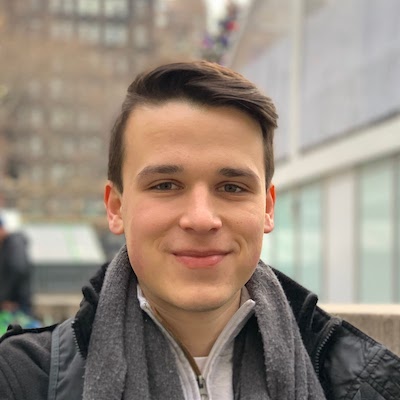
At Khoury College, “Fundamentals of Computer Science 1” (or “Fundies One”) has a bit of a reputation. For some people, teaching a class known for its brain-bending learning curve would be a nightmare; for Kyle Sferrazza, winner of the Undergraduate Teaching Award, it’s his favorite class to TA.
“Those times where it’s office hours right before a homework is due, or the day before an exam or something, and tens of students show up to office hours all asking questions—being able to get them to a place where they feel comfortable to submit that assignment or to take that exam the next day, from utter panic when they showed up, is a great feeling,” said Sferrazza. “I had some really great TAs my first semester, in fundies one, and I wanted to help people in the same way that they were helping me.”
In addition to working as a TA for fundies one and two, and as a grader and a tutor for other courses, Sferrazza has worked with Professor Ben Lerner since 2019 to build a web application to let students take their computer science exams online. As a cybersecurity major, Sferrazza was disturbed by the invasive nature of many of the test-taking platforms on the market, and excited to find a way to incorporate his passion for education into his research. As the platform begins its rollout this year, Sferrazza is beginning a master’s in cybersecurity at Northeastern as part of the PlusOne program.
Isabel Tripp: Undergraduate Community Service Award
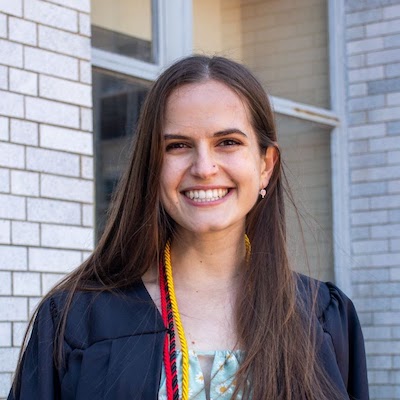
Isabel Tripp’s path through computer science has been anything but traditional; to her, that’s what’s made it meaningful. From a co-op at the Institute for Astronomy at the University of Hawaii identifying asteroids with the potential to hit the Earth, to a co-op at Square Roots, a Brooklyn-based start-up using tech to increase urban access to local food, it’s all about the impact for Tripp. That includes the impact she has on younger students, particularly students from nontraditional backgrounds or interested in pursuing nontraditional career paths.
In roles as diverse as the outreach chair for NU Women in Technology, a mentor for the computer science mentorship organization CoSMO, and a Husky Ambassador, Tripp has consistently been a friendly face for younger students on campus. She’s helped people catch up on foundational knowledge (like how to use GitHub) that wasn’t covered in their high school classes, and shared insight about how to pursue co-ops in academia or government, for which there isn’t as clear of a pipeline as there is to the tech industry. More than anything, though, she’s tried to make everyone feel welcome in computer science.
“All my friends within computer science have very different skill sets and backgrounds, because of what we learn on our co-ops and bring back to group projects that we’re doing in class,” Tripp explained. “Oftentimes, people have totally different areas of expertise, even when we’ve taken basically the same coursework. That’s really exciting, because I can learn from other students as well as learning from the class itself.”
Tripp graduated in May with a bachelor’s in computer science and a math minor, in addition to the Undergraduate Community Service Award. She’s currently working at Zenysis, a San Francisco-based start-up that’s working on a platform to enable global development goals.
Lucas Calero Forero: Undergraduate Co-op Award
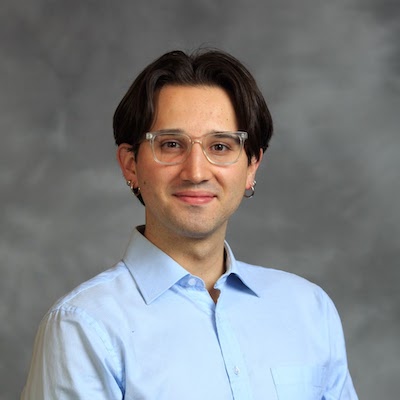
When Lucas Calero Forero started their computer science degree, they weren’t even sure it was what they wanted to study. How fitting, then, that their first co-op as a quality assurance (QA) mobile engineer at ASICS Digital was what convinced the Undergraduate Co-op Award winner that the tech space was exactly where they wanted to be.
“Everything’s a learning opportunity. I was initially disappointed that my first co-op was doing QA, but I don’t think I could have found anything better for me at that point,’ said Forero. “In doing QA, you get exposure to so many different teams, and you get exposure to so many different engineers; if I hadn’t asked all those questions to every single team member at Basics Digital, I don’t think I wouldn’t still be in CS. I was able to really see the diversity of thought and the diversity of people working in the tech industry.”
Calero went on co-op two more times; first, a self-developed co-op as a machine learning engineer at a start-up in Santiago, Chile, then as a data and back-end engineer at Spotify. During their co-ops, they found the real-world impact of their work helped them develop communication skills that they would have never developed as fully in the classroom. Calero is passionate about working in a mission-driven environment, and after their May ‘21 graduation with a bachelor’s in computer science, they accepted a position as a machine learning engineer at the startup Nomad Health. They’ll miss Khoury, though, particularly the co-op department.
“Everyone in that team just really wants to help you succeed,” said Calero. “I even talked to my co-op advisor after I graduated; she hopped on a call and helped me with my resume, and helped me land this job that I’m taking.”
Akriti Chadda: Graduate Community Service Award

If someone helps Graduate Community Service Award winner Akriti Chadda, she always tries to pay it forward. So when a master’s in computer science from the Align program helped her build on her background in biomedicine, neuroscience, and robotics—resulting in a full-time position as an applied scientist at Microsoft—she knew she had to mentor others through their Align transitions too.
“I am very passionate about people moving into tech, especially women moving into tech from non-traditional backgrounds,” said Chadda. “I think the first year is the hardest part of the Align program, and it just becomes easier from there. A lot of people that I’ve spoken to who decide not to join the program, or dropped out early in the first semester, do that because they’re not prepared to put in the hard work, or don’t understand how much effort goes into transitioning into a new field. But that being said, I think the fruits of the labor that you get just by putting in that effort for the first two semesters are much, much, much more rewarding than the effort that goes in. It’s not proportional at all.”
In addition to her more formal Align mentorship, Chadda volunteers a lot of her time doing interview prep, resume reviews, and chatting about her career. She finds it incredibly rewarding to see someone receive seven or eight interviews after making a few tweaks to their resume, and she even helped one woman negotiate her starting salary up by $40,000. She also runs a popular Instagram page to share her journey into tech, and to encourage others from underrepresented or nontraditional backgrounds to take the plunge.
Chintan Shah: Graduate Research Award
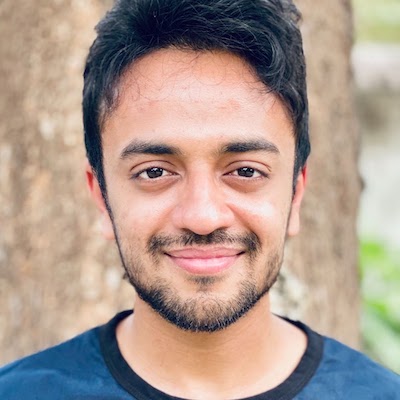
It’s not easy to simulate an epidemic forward to guess where it will spread, yet it is even more challenging to figure out the origins of the epidemic. It takes the better part of a day for a supercomputer to run it backwards, and figure out where the epidemic originated in order to triage resources and contain it. But what if a neural network could do it in a fraction of the time?
This is the problem that Graduate Research Award winner Chintan Shah has worked on for the past year. In addition to being one of his first introductions to research, the project (headed by Dr. Rose Yu) provided an early opportunity for Shah to dig his teeth into machine learning.
“In my second semester, I had the opportunity to take a machine learning course and I was totally blown away. I thought okay, this is it—this is what I want to do … I’m very grateful for the quality of education in the first place, because I think if not for some of these courses that I took it would have been very hard to actually go do any of these research projects,” said Shah. “When I started at Northeastern, I hadn’t done much research, so for those who are starting out I think it’s important to know that it’s okay if you’ve not experienced that in the past. Just go all in and you’ll be fine.”
Shah loves machine learning for its dynamism and creativity. After his December 2020 graduation with a master’s in computer science, he has worked as a machine learning engineer at the medical tech startup Path AI, where he is helping to build an AI to advance digital pathology and enable cancer research.
Ariel Hamlin: PhD Teaching Award
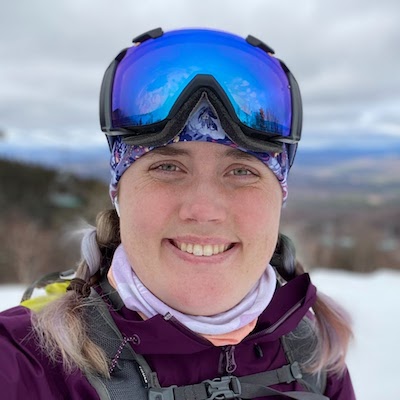
Going into the fall of 2019, Ariel Hamlin wasn’t planning to run a 600-student course, but being a great teacher means being flexible. Her favorite part of teaching is mentoring students individually, but when a “Discrete Structures” course coordinator left on short notice, the PhD Teaching Award winner stepped up to the plate. She found the semester to be an incredible learning experience, thanks in no small part to the work of her TAs, but she appreciated that she was only directly teaching 50 students so that she could spend more time with them one-on-one.
“Mentorship has been so important in my own career. I wouldn’t have gotten into computer science, I wouldn’t have ended up at the job I’m currently at without that mentorship; I wouldn’t have ended up in a PhD program, and successfully completed that PhD program, without having these mentors along the way,” she said. “As a woman in computer science, having those mentors and role models was very important to me, and so being able to do that for other students was very heartwarming.”
After graduating with a doctorate in computer science, Hamlin is returning to a job at MIT’s Lincoln Laboratory. For the time being, she’s hoping to get involved with lab programs like LL Cipher, which teaches cryptography to high school students, in order to scratch her teaching itch. “I love working with students,” she explained, “especially one on one, and getting to a place where you understand what they don’t understand.”
Sofia Eleni Spatharioti: PhD Community Service Award
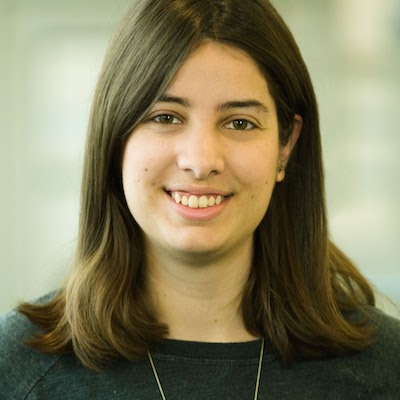
Whatever PhD Community Service Award winner Sofia Eleni Spatharioti is doing, she wants to bring the human element to the forefront. In her research, that means making human–computer interactions more engaging and rewarding; in her post-grad work as part of the computational social science group at Microsoft Research, that means making the mind-boggling numbers populating the news cycle comprehensible. In her time as a doctoral student, that meant finding every opportunity to go beyond the work and the research and start building a community.
“We’re spread out across different buildings as PhD students—you have people in West Village H, you have people in ISEC—and you suddenly realize that it’s very easy to spend five years, six years [here] and not meet everyone in your year,” she said. “I feel like the vast majority of students want to have this social experience. They want to get together, they want to meet people … Don’t fall into this loop of, I need to get this working, there’s deadlines! Yes, there are, but your mental health is also very important, and if you don’t take care of it you’ll see that.”
So, Spatharioti organized. She helped to run the PhD Social Hour, a regular, informal social space for doctoral students; she worked as an organizer for the Khoury PhD Women group; she served as a representative for the PhD open house. And she found that the more she focused her free time on things other than her research — for instance, tennis, her favorite sport — the more relaxed and productive she felt when she was working. After graduating in December of 2020 with a doctorate in computer science, she wants to encourage other students to seek out community and prioritize their work-life balance.
“Doing research as a PhD student has a lot of uncertainty, and you get to worry about this and stress about your research work throughout the week,” she said. “Let’s make sure that your mind is actually clear a few times a week, so that you don’t overwork yourself and stress yourself out.”
Albert Cheu: PhD Research Award
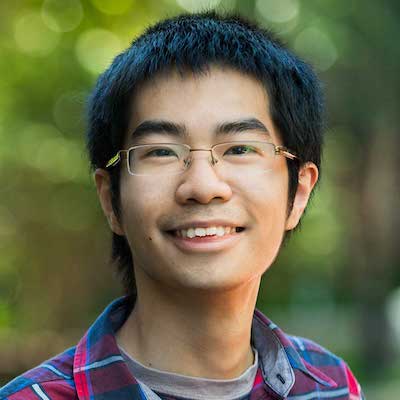
Local randomization is a well-established technique in the world of data privacy—noise is added to an individual’s data so an outside observer wouldn’t know whether the result is the original value or an alternative one. Unfortunately, this technique introduces a lot of error to the statistics that can be drawn from the data. But what if, on top of not being able to tell what’s true and what’s noise, a malicious agent also couldn’t tell who gave which answers? This is called anonymization, and it’s what Albert Cheu, winner of the PhD Research Award, is working to develop.
“What gets me excited [about privacy and security] is that it’s something that we really need to be concerned about. For me personally, it’s both [that] there’s interesting mathematical and theoretical questions, but also at the end of the day it’s defining what we mean by privacy,” he explained. “It’s really useful to have some kind of rigorous way of analyzing and asking if the people who are using our information or collecting our information are doing the right thing. That’s what we are basically trying to do; make sure the people who have that are using it correctly.”
Companies like Google have already begun to apply anonymization, but for the moment Cheu is more interested in staying in academia. After graduating in May with a doctorate in computer science, he’s off to work with Kobbi Nissim at Georgetown University, where he’s looking forward to learning more about the legal and policy side of computer security while keeping his day-to-day focus on the math. Although he’s looking forward to a new challenge, he’ll miss the Khoury College community.
“Khoury has selected a really good base of security and privacy professors that I’m just able to work with, ask questions to, and take classes with,” he said. “There’s a variety of things that people are working on, and I like being in that environment. Even if I’m not writing papers for them, just being there, being passively inspired … They’re good researchers, but also good people.”
Jillian Kando: Outstanding Alumna Award

When reflecting on her education and early career, Jillian Kando considers herself an example of how important it is to introduce people to STEM early and often. Her father was an electrical engineer and always pulling apart electronics like VCR players at the dining room table, so by the time Kando got to her first programming class in high school (a rarity in the late ‘90s and early ‘00s), she had a keen interest and a leg up.
Her three software engineering co-ops solidified her career trajectory and gave her the network and experience to build her start-up-focused career. Fourteen years later, Kando is happy and proud to be a director of engineering at the alcohol delivery service Drizly. She manages the teams building the Drizly website and mobile apps and guides her teams through the company’s high-level engineering direction — a long way to come from a disassembled VCR.
“The computer science program at Northeastern gave me a really good foundation to build off of, which has served me well in my career,” said Kando. “Not only did I learn all of the programming concepts I would need to be successful, I also learned how to learn new concepts and apply them. This is an invaluable skill, especially if you want to be a software engineer. The industry changes constantly, and as an engineer, you need to be able to learn a new set of technologies, troubleshoot difficult problems, and assess the right tool and solution for what you are working on.”
The 2021 Outstanding Alumna Award winner has also remained very involved with the Khoury community since graduating in 2007 with a dual degree in computer science and cognitive psychology. She speaks at campus panel events to help current students better understand their potential career trajectories and the wider software engineering industry. She has also been a strong advocate for the co-op program at several of the companies she’s worked at, and has facilitated the hiring of many students.
“So many of the opportunities you get after graduation come from networking, and the co-op program gave me a great head start,” said Kando. “Attending Northeastern University played a huge role in who I am today and the success that I have had in my career, so I am happy to give my time and expertise where I can.”
The Khoury Network: Be in the know
Subscribe now to our monthly newsletter for the latest stories and achievements of our students and faculty
Author: Jessica Brite
Date: 08.05.21
For first-year computer science major Rishan Annadurai, there is one moment that stands out from the last few months of classes.
“When you’re reading those [notes] and it’s starting to click in your mind,” he said, “you read it, then you start to code it and you’re like ‘Wow, I can actually do it.’”
That kind of moment is something students and professors continue to work towards to make the most of their summer learning experiences at the Khoury College of Computer Sciences. With course offerings available for the undergraduate and graduate programs, students can continue their academic journey over the summer.
“I really enjoy summer courses and I think they are very fun,” said Emily Minor, a fourth-year computer science and philosophy major. “I’ve done at least 24 credits over the summer as far as I’ve been here.”
Unlike full undergraduate semesters that average about 15 weeks, the summer is split into two seven-week-long semesters: Summer 1 and Summer 2. Students take classes more frequently during the week and learn the material at essentially double the pace of full semesters. While this may seem daunting, students adjust.
“Even if students don’t have the reference point to compare to the fall, we know the professor does,” said Annadurai. Going into Summer 1, he knew class would be taught at a faster cadence but was not too worried because professors were accustomed to teaching at this pace.
“I do have to try to make the course somehow, in the way I teach it, more approachable to students in these circumstances,” said Walter Schnyder, an associate teaching professor at Khoury College who is teaching “Theory of Computation” this summer. “[The way the course is taught] does demand more consideration compared to a regular time.”
The graduate program, however, offers classes that span the full summer, so the pace of learning is quite similar to that of the fall and spring semesters.
The summer courses offered at Khoury College range from introductory required courses to advanced required courses to select electives. While the summer offerings may not be as diverse as those in full semesters, there is enough variety so that no matter how far along a student is into their degree program, there is a course available for them.
“Discrete Structures” (CS 1800) is a recurring summer undergraduate introductory course which many students take between their first and second years.
“It really lays the foundation for what a computer can do and what kinds of problems we are able to solve as computer scientists,” said Dr. Laney Strange, an associate teaching professor at Khoury College who is teaching the course this summer.
Students also can use summer courses to figure out what other classes they want to take further on.
“As it gets closer to the end of the semester, we are seeing things like graphs and the run times of algorithms, so that can help students say ‘Hey, this kind of stuff is interesting, where can I get more of that?’” said Dr. Strange. “[The class] puts a lot of formality around programming, and they can take that with them to other programming classes.”
“Theory of Computation” (CS3800) is another undergraduate required course that is being offered in both Summer 1 and Summer 2.
“The class shows how one can mathematically prove [that] a problem is easy, hard, or impossible to compute. So, any person who tries to use computers to solve problems does need that background,” said Professor Schnyder, speaking on the importance of the course.
For the graduate program, classes like “Supervised Machine Learning and Learning Theory” (DS5220) and “Intro to Programming for Data Science” (DS5010) are being offered for the full summer.
“[The material] is important for their careers because most of the tools that they will use as data scientists rely on the algorithms that they use in class, so it’s very basic knowledge that they must have, even to pass an interview,” said Roi Yehoshua, an assistant teaching professor, who is teaching both DS5220 and DS5010 this summer.
In all of these classes, the course material is meant to teach students industry concepts that are important to their career pursuits. This is something that students consider when selecting their summer courses.
“The field that I am getting my masters in, it’s separated into two kinds of machine learning: supervised and unsupervised. So, because I will be going for co-op next January, it was important for me to take these classes before applying so that I have substantial learning of it,” said Parth Bhatt, a first-year data science graduate student. “Also, I can show in my resumé I have done some projects in this area.”
Even just having the option to take classes over the summer before co-op, can give students peace of mind that they are prepared to seek an internship.
The lower summer enrollment across the graduate and undergraduate programs also adds to the experience.
“It is a smaller class, so it has a different flavor than the larger class,” said Professor Schnyder. “I may know some students better than if there were 100 of them, and the same is also for the TAs. They get to know the different students better.”
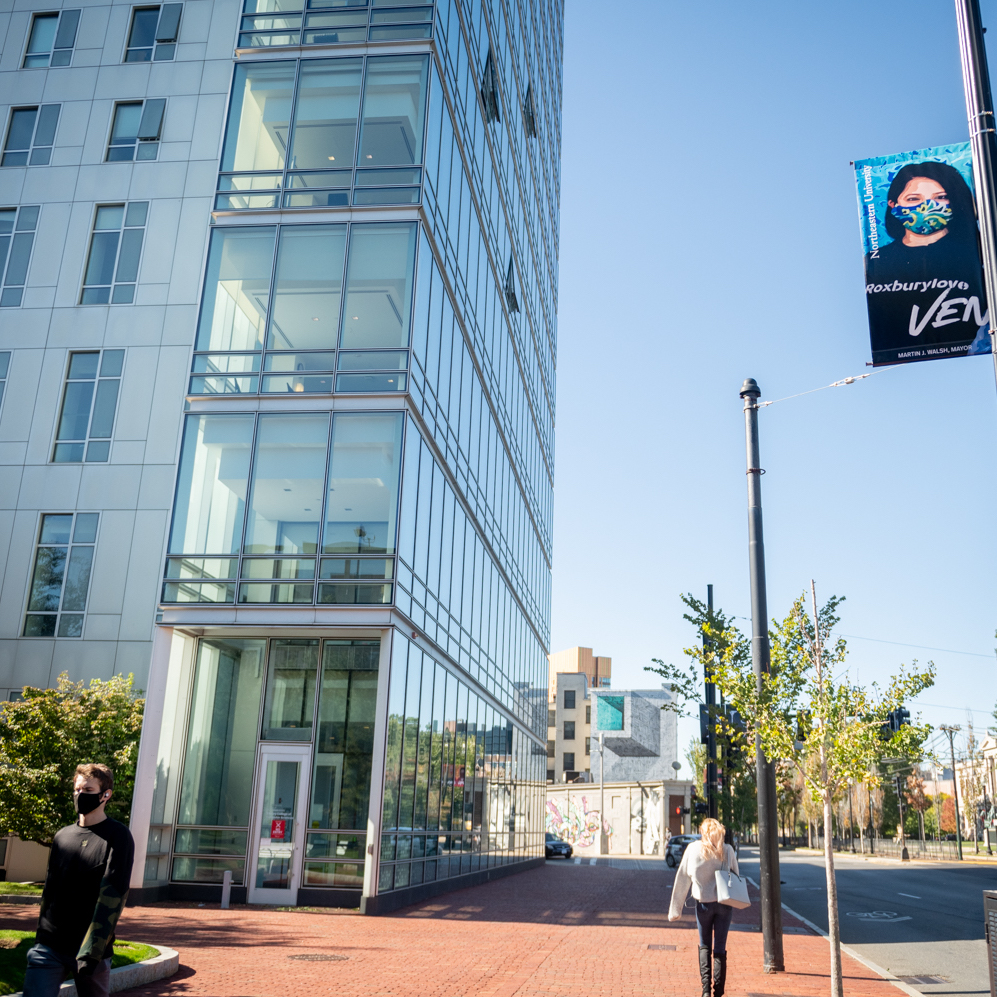
Aside from class, students and professors look forward to a livelier campus due to the sunny weather and more lax energy from students.
“What I really like is that it is warm outside, and I can consistently walk places,” said Minor. She also expressed how the weather helps her feel more relaxed and motivated to go places to study.
Overall, the summer learning experience at Khoury College is not only academically enriching, but also essential for every Northeastern student to experience.
“The events on campus this summer are engaging, so you can come forth and meet more people and have a social gathering,” said Bhatt. “If I didn’t take a summer course, I would have missed those experiences of connecting with peers of my own and making connections, and that’s the important part.”
The Khoury Network: Be in the know
Subscribe now to our monthly newsletter for the latest stories and achievements of our students and faculty
Author: Madelaine Millar
Date: 07.26.21
There are two things that Jennings Zhang, fourth-year computer science and biology combined major at the Khoury College of Computer Sciences, is deeply passionate about: creating software that improves people’s lives and making such software available to as many people as possible. When he’s able to do both – for instance, during his recently completed Honors in the Discipline project to improve fetal neuroimaging – then he’s right where he wants to be.
Zhang’s project was two-part. The first part focused on developing a computational pipeline for MRI image reconstruction. Basically, MRI scans of human fetuses in utero tend to have blurry sections called “motion artifacts,” created when tissue or fluids move during the scan. These are a problem because they limit the amount of information doctors can extract. Working with the Fetal-Neonatal Neuroimaging Developmental Science Center at Boston Children’s Hospital, where he had interned back in the spring of 2019, Zhang developed software to correct for those motions, creating clearer and more informative images. He was excited to apply both halves of his combined major in computer science and biology.
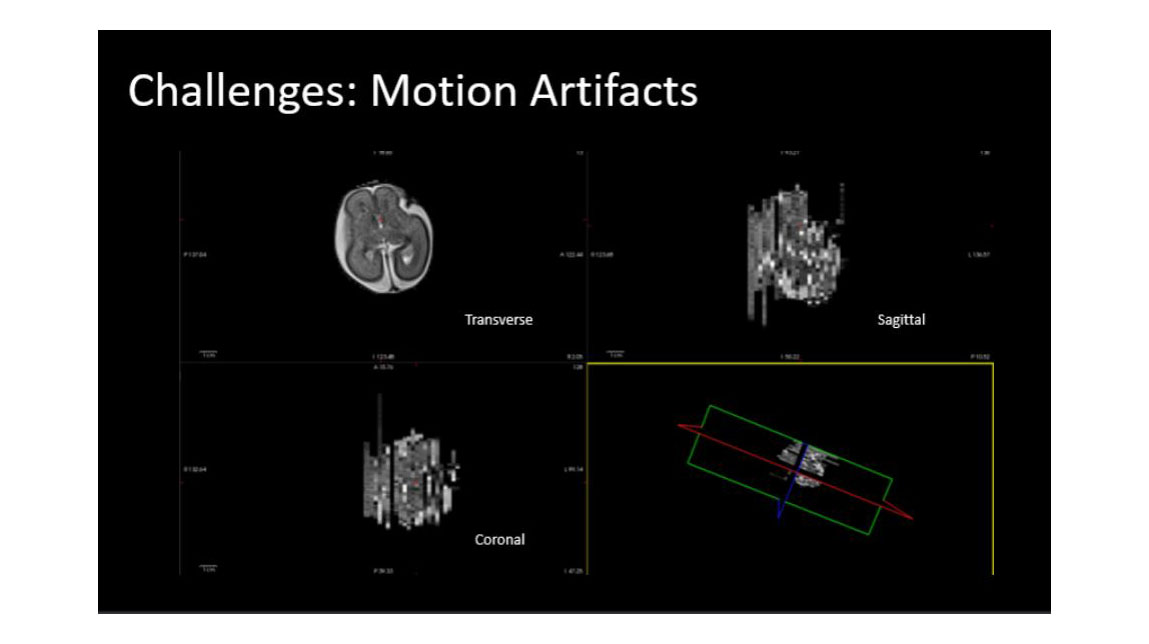
“Fetal neuroimaging is inherently interdisciplinary – it combines the most advanced topics in neurology with cutting-edge computer science, where engineers and scientists must work together to achieve their goals,” he said. He was also excited to work on a translational medicine project, where computation is done with real patient data and the impacts are more immediate (as opposed to non-translational science, where the products of research are put into journal publications without immediate impact on the population that was studied).
Though the technical challenges were considerable, they were the least of Zhang’s worries. The larger challenge – and the second half of his project – revolved around enabling non-technical users to interact with cutting-edge medical technologies in a practical, usable way.TThis half of Zhang’s work had to do with the open science initiative the ChRIS project. The project offers a free, accessible way for clinicians and researchers to run powerful medical software more easily, allowing them to make better use of existing research in actual medical practice.
“One of the problems in biomedicine right now is that there’s a wealth of research, but very little of it actually gets used or applied in the clinic, mostly because it’s inaccessible for one reason or another,” explained Zhang. He continued, “Within computational sciences, that accessibility [barrier] is usually the difficulties of how to install and run software.” And that’s where his work came in. Working with the ChRIS project, he developed a way for clinicians to run this software and take advantage of the associated research, without having to go through the learning curve of downloading, installing, and learning to use highly specialized computer programs.
“The platform we’ve developed connects high-performance computing and Linux technologies to the web browser,” he explained. During his Honors in the Discipline project, Zhang deployed ChRIS at the Boston Children’s Hospital and began user testing so that doctors could begin to apply the research that the software opens up.
The fetal MRI image reconstruction software he built is ChRIS-compliant, meaning that it will be seamless for clinicians who want to use it to improve their care. Zhang believes that the relatively new field of fetal neuroimaging represents an incredible opportunity to begin integrating open source and open science ideas into real-world clinical practice and translational medicine efforts. “Because [open source/open science] kind of takes a different approach to science, there’s a lot of new frontier to discover,” said Zhang.
The possibilities continue to stir his imagination. “Part of that is, how can we create these free and open source tools for integrating our novel research into clinical practice? That’s the missing piece—not only in fetal neuroimaging but in most of biomedicine in general,” Zhang explained.
Although his Honors in the Discipline project has ended, Zhang plans to continue to work with fetal neuroimaging and the open science movement. His short-term goal is to expand the deployment of ChRIS locally, so that the clinical staff at the Boston Children’s Hospital aren’t constrained by the learning curve of computational science. He wants them to be able to spend as much time as possible focusing on their research, and as little as possible having to learn how to use a Linux terminal.
In the long term, Zhang hopes that the open science movement will make the kind of computational science he works on more accurate, more reproducible, and more accessible.
“To me, software also is this chance to really rethink how many aspects of our society work,” said Zhang, who summed up his larger goal: “Software is unlike anything in our physical world, because it can be copied for free. And that freedom is precious. Maybe we shouldn’t be creating tools to patent and keep for ourselves, but instead we should be creating tools for the love of creating these tools, for the love of the science of how these tools work, and for the value that these tools bring to lives.”
The Khoury Network: Be in the know
Subscribe now to our monthly newsletter for the latest stories and achievements of our students and faculty