Author: Milton Posner
Date: 09.23.21
Spend a few minutes with Professor Amit Shesh and his love of computer science becomes obvious. He wants his students to feel that same lasting passion he discovered as an undergraduate in India two decades ago. And in a field that can intimidate outsiders and newcomers, the sixth-year Khoury College of Computer Sciences professor believes that computer science education must be made accessible for everyone.
What first drew you to computer science?
I had very little computer science exposure before college. But it was something that was sought after [in India] when I was a kid. The brightest students either became doctors or engineers, and within engineering, computer science was the top discipline. My first college semester, I took a programing course, and I knew almost immediately it was the right decision. I was a bit lucky, going into a major thinking I’d like it and then liking it exactly as much as I thought I would.
Within computer science, which topics are you most passionate about and why?
My dissertation was on computer graphics; that’s the area within computer science that interested me the most. Two things drew me to it. One, I discovered through taking computer graphics that I’m a very visual person. Two, we had to take a lot of college-level math. Computer graphics was the best application I had come across for all the math that I had learned before, specifically calculus.
I’ve been teaching for more than ten years, and my interests have broadened, but computer graphics remains one of the things that draws me the most.
What should a layperson understand about computer graphics and its relevance to computer science?
Computer graphics is actually one of the easiest sells to somebody who is not in computer science because it’s everywhere. Usually, when I teach a computer graphics course, most of the students don’t have experience doing computer graphics. So, I start with, “OK, let’s come up with applications.” Everybody says games, everybody says movies, because those are the two most accessible things.
Now, there’s a big difference between using computer graphics and learning how to do it, which is very technical and quite mathematical. One other motivating factor for people not in computer science is that they will actually use math that they did in high school. If you thought, ‘where am I going to use geometry?’ or whatever you did in high school, this is one of the places where it comes up.
Which classes are you teaching this semester? Are there other classes that you usually teach?
I’m teaching CS 3500, which is “Object-Oriented Design”. In the bachelor’s program in computer science, we have a required sequence of four programming/design courses. This is number three in that sequence.
Normally, the courses that I teach fall into the programming and design bucket. A lot of them are required for both undergraduate and graduate students. The students that I typically teach have had some coursework using programming, and then the courses that I teach take it to the next level, making it bigger, more complex, and therefore more interesting. The course leaves off at a stage where students are equipped to succeed in their co-ops.
Can you tell me more about the “Object-Oriented Design” course?
This four-course sequence emphasizes writing programs that not only solve the problem correctly but are also designed and documented well for the benefit of others who work on it. Often when students think about computer science and specifically programming, they think it is all about writing some source code that just works correctly, and that is all that matters.
But software development is much larger. The easiest analogy is if you’re good with words, that’s not enough to make you a successful novelist. You also have to know how to frame the thing that you’re trying to say. You have to be communicative enough that somebody can read it and feel the same emotions that you did when you wrote it.
All of this is in software development as well. It’s the difference between ‘good with words’ versus ‘successful novelist.’ Everything you need to bridge that gap? That’s software development. And that’s what the four courses try to teach you. Object-oriented design is a specific way of thinking about the design of computer programs. In the two courses prior to this, the programs they write and the designs they create are quite small. Students often report that this object-oriented course feels more real world because the scale and complexity of the problems and their solutions has gone up.
Besides teaching at Khoury, what do you do professionally?
I am teaching faculty, so my job is primarily teaching. It’s something I always wanted to do. I also partake in research occasionally. My research over the past few years has moved on from computer graphics to general computer science education.
I’m invested in making sure that computer science is made attractive and accessible to everybody. Students come into computer science from different backgrounds and with different perceptions and perspectives. All of that is an asset. That also means that we have to teach students in a way that makes sense to them, relating it to their background whenever we can. That challenge is what draws me to computer science education—it is a combination of research with my experience and love for teaching.
I am also the director of the Master of Science in computer science (MSCS) program at the Boston campus. I oversee the MSCS curriculum and work with faculty to keep our course work challenging, updated, and interesting. I also work with other Northeastern campuses to homogenize our program across locations. This role also allows direct communication with our students. I work with our academic coordinators to help students navigate our program.
What’s the most important quality a student needs to succeed in computer science and in your classes?
You need to have perseverance and agility, a willingness to learn new things. Learning to be a good computer scientist is like training yourself to run a marathon. Some of us are naturally physically inclined to run well, and then the rest of us look at those people and say, “Ah, running is so easy for them.” But then we try to make up for that innate talent through practice. Computer science will test you and your patience in unique ways. I believe computer science requires but also teaches us perseverance.
Then there’s how fast the industry moves. It surprises nobody, including me, that by the time students graduate from a computer science program, there’s a fair chance that something that they learned is already outdated. You have to be ready. That’s the difference between getting a bachelor’s or a master’s in computer science versus learning programming. The skills that you get in a good computer science degree are not just to hit the ground running when you graduate; it gives you a set of tools that will serve you for a lifetime so that you don’t have to return to college to reeducate yourself every few years.
You have to go with the times, and that is reflected in the industry. You have to embrace whatever is new and realize that you can be a computer scientist all your life and still not know many things that people half your age will know. It happens to me every day.
Is there a non-computer-science fun fact that your students might not know about you?
Boston is the warmest place I’ve lived in in the US. I graduated from the University of Minnesota, then worked for seven and a half years in central Illinois, so Boston really is warmer than both of those places. But in my lifetime, I have lived through a temperature range of –40 to 120.
The Khoury Network: Be in the know
Subscribe now to our monthly newsletter for the latest stories and achievements of our students and faculty
Author: Aditi Peyush
Date: 09.17.21
If you sit in on an “Object-Oriented Design” lecture from Lino Coria Mendoza, an associate teaching professor in Vancouver, you’ll notice that the environment differs greatly from that of a typical graduate lecture. Students interact and collaborate more with their peers than in traditional graduate classes, discussing and practicing design principles deeply and critically.
“I want my students to be doing something in the class. I don’t want to be talking for two hours,” says Coria Mendoza.
Bethany Edmunds, director of computer science at the Khoury College of Computer Sciences in Vancouver, calls this style the “student-centered learning model.” This model puts students at the heart of the learning process. Collaboration and small group discussions are encouraged, and the classroom is much more interactive. According to Sommer Harris, a graduate computer science student in Vancouver, the model “encourages students to take ownership of their own learning process.”
Harris explains, “We are asked to understand the material before we come to class and bring any questions we have. This requires us to be actively engaged and discerning about which parts of the material are most important to focus on. I have also learned to break down questions and terms, to decipher problems in new areas in computer science that I haven’t seen before.”
Coria Mendoza emphasized the importance of practice: “If I were teaching people how to ride a bike, they would see me riding a bike, but they wouldn’t be able to learn anything from seeing that. They need to get on that bike—we need to do that.”
“Mobile Application Development,” taught by Michal Aibin, visiting associate professor, requires as much engagement as all other courses on campus. “We try to put as much theoretical content [as possible] before the class in videos and some materials that we can practice in class, which is very important from a teaching perspective,” says Michal. “You need to be flexible; you need to listen to the environment.”
Through this model, Edmunds hopes that students are getting a deeper understanding of the computer science field.
“I think one of the things that hurts computer scientists and the tech industry is that, being a field-driven from mathematics, we are programmed to think there’s one right answer. And there is one right answer from a given perspective. But I think it’s really important to look at different perspectives and question your own decisions.”
Edmunds explained that when people don’t question their decisions, others get left out and the big picture isn’t complete. “We really tried to give students a broader picture of what they’re trying to do, and it allows them to go deeper.”
This model is key in allowing students to develop the critical soft skills needed to collaborate in teams and communicate effectively. This compelled Edmunds to incorporate this model into the Khoury College Master of Science in Computer Science (MSCS) program offered in Vancouver.
Since February 2020, she’s been investing her resources into building the program with the intention of exposing students to the industry so they’re able to integrate into the workforce with ease. The learning model enables students to continuously improve their interpersonal skills, which in turn, empowers them to adapt to the demands of the industry.
“It’s really exciting, to be able to build a program from the ground up with fantastic resources out of Boston, Seattle, and Silicon Valley,” said Edmunds. “To be able to see what’s worked well on other campuses and then say ‘okay, but what does that mean and what would it look like here, knowing that it’s a slightly different environment here?’”
Part of Edmunds’ efforts include building a diverse teaching team in Vancouver. As a campus that offers the Align program, Edmunds factored features of the program—like diversity of thought and background—into her planning.
“I love the Align program, many of our regional campuses have a large Align program. But when we sought to deliver it, one of the things I thought about was, not only are we giving people with various backgrounds an opportunity to learn computer science, but it’s an opportunity for all of the people in the classroom to interact with people with different perspectives,” explained Edmunds.

However, Edmunds wasn’t just focused on diversity in the student population. Driven to include interdisciplinary voices in the classroom, the Vancouver campus introduced five new faculty members in 2021.
Edmunds explained, “I’m not hiring individuals. I’m hiring teams. Just knowing that I can learn from this person, or I can learn from that person [means that] as a team, we’re going to be so much stronger.”
As a team, the faculty collaborate to offer students the best experience possible, while drawing from their diverse backgrounds.
“There is just value in having somebody in the front of the classroom who comes from a background similar to yours. It allows somebody that comes into a program who’s not sure if it’s right for them to go and then be in a class and know that somebody else has been through this struggle before.” Edmunds continued, “One of our professors is a graduate of the Align program, another one of our professors grew up with intermittent water and electricity. So they know what it’s like to face some of the challenges our students face.”
Edmunds’ faculty selection criteria explain why Khoury College’s Vancouver teaching team is so unique. “The number one thing I look for is the understanding that their job is to be a facilitator of learning,” she explained. “Their job is not to be a gatekeeper; their job is to really understand that the student comes first.”
But Edmunds isn’t done building the program; her goal is to make it more accessible. “I don’t think that everybody has access to the opportunities that computer science brings,” she said. She’s also dedicated to transforming the field, noting “I think what we should be saying is, ‘this person with this background is valuable, and they’re bringing something valuable.’”
“To get more voices into computer science will lead to tech where the goals are more in line with society’s goals,” Edmunds concluded.
The Khoury Network: Be in the know
Subscribe now to our monthly newsletter for the latest stories and achievements of our students and faculty
Author: Madelaine Millar
Date: 09.13.21
For many, summer is a time to pursue passion projects. Maybe you picked up a cool new hobby, or exhausted your personal reading list; maybe you developed and executed your first graduate-level research project. For 23 graduate students at Khoury College of Computer Sciences, a summer filled with project design, user testing, and data analysis culminated with a presentation of their work at the Summer Faculty Research Showcase, held on August 18th.
The showcase featured 13 different research projects that the students conducted under the direction of Khoury faculty members across the network. Projects were diverse, ranging from the verification of neural networks to cybersickness and virtual reality to the automation of airplane inspections. Each group had five minutes to present their work, then received feedback from Greg Waters, the founder of Matrixspace, former CEO Integrated Device Technology, and himself an alumnus of Khoury’s MSCS program.
“The students were articulate, had well-formed presentations, and presented their ideas clearly and with conviction,” said Waters. “I think having a forum like this where people can bounce off ideas is just fantastic!”
The two projects highlighted here display some of the diversity and scope of the faculty summer research program; to read more about the other projects, consider checking out the Khoury Summer Faculty Research Showcase Program.
The Microaggression Games Project
For a team of three student researchers, the summer research initiative presented an opportunity to address social issues, specifically microaggressions, which are one of the most insidious forms of bias. The repeated, subtle violences accumulate to make their targets feel unwelcome and unsafe; however, specific instances are usually just minor enough that the target feels tentative about calling them out, while the incident flies completely under the radar to uninformed bystanders.
As part of her doctoral thesis, Northeastern assistant professor Alexandra To developed a game that enabled players to learn about, experience, and discuss a racial microaggression without having to disclose personal experiences. The game was met with positive reception, and she decided to open the project up to graduate students interested in designing educational games to raise awareness about other types of microaggressions.
Professor To worked with three students this summer: Heng Su, a rising second-year pursuing an MSCS in Seattle; Doxa Asibey, a rising second-year pursuing an MSCS in Boston; and Xinyu Hou, a first-year pursuing an MSCS in Boston. Each developed their own game. Su, who was born and raised in mainland China, developed “Golden Age,” a role-playing game about Chinese’ and Chinese Americans’ experiences in the 1800s. The game was intended to address the anti-Asian sentiment that has come to a head during the pandemic by educating players about the integration and contributions of Chinese Americans. Asibey, who was born in Ghana and raised in Western Massachusetts, developed “They Didn’t Mean That,” a game that focuses on the role third-party observers can play when they witness micro-validations, a type of microaggression that she describes as a backhanded compliment with racial overtones. Hou’s game, “What’s on Your Mind,” is also focused on allyship, and aims to help bystanders identify microaggressions and implement a range of intervention strategies.
Part of what the students found impactful in their research was the way they were able to tie in their personal experiences and values.
“When I was in New York, the pandemic started off. At the same time, I know we’ve been seeing the rise of anti-Asian hatred. I’ve seen the events happening around me, and I experienced some incidents as well,” Su said. Though motivated to do something, he didn’t know what, he explained, “Until I saw Professor To’s proposal and thought wow, that’s exactly what I want to do.”
Recalling instances of micro-validation, Asibey explained, “It’s like if someone says, ‘oh you’re speaking, really good English for an Asian person or a Black person’…initially you’re like ‘oh thank you’ but [then] you’re just like wait, why was that made towards me when everyone else is speaking English?” She reported, “I’ve had that comment been made to me several times, I’ve been in rooms where it’s made to other people.” She drew on these experiences in her work on To’s game.
Although the initial scope of To’s project was limited to a conversation prompt for participatory design work, her student researchers have imagined a variety of potential applications. They hope educational institutions and workplaces might adopt games like this as a form of anti-bias training, or see their potential as a participatory exhibit at museums.
“I’m incredibly proud of the work that they did this summer,” said To of the three researchers. “Doing research for the first time, learning how to develop a game, and doing all that narrative design, along with all the research work to understand this topic is a big undertaking for summer, and I thought the work was really amazing.”
List Curation
Another student research group chose to focus their efforts in the rapidly expanding world of human-computer interaction, or HCI.
Imagine you decide to rent a new apartment: you could look up “apartment” on Zillow or Apartments.com, but the sites will show you only the options that are the most popular or the most promoted, not the ones that best fit your needs. You could add filters like “two-bedroom” and “pet-friendly”, but just because an apartment has the amenities you’re looking for doesn’t mean you’re going to like it. You could browse through Facebook Marketplace and let an algorithm present options in line with your preferences, but an algorithm can only guess at what you like. Wouldn’t a service that allowed you to browse a list of apartments to make notes and clarify your preferences, and then took both your browsing habits and your annotations into account to update be the ideal way to find your next home?
This is exactly the niche that assistant professor John Alexis Guerra Gómez and Jinqian Pan, a first-year computer science graduate student who has since transferred from Northeastern to another university, aimed to address with their summer research project on list curation, the technical concept illustrated above in the real estate example. Their tool has nine modules — Data Loader, Sorter, Filterer, Summarizer, Annotator, Seener, Lister, Detailer, and Recommender — to make browsing a list as user-friendly as possible. The tool can be used in any setting where a user has a daunting list of options from which to select, from Kelley Blue Book to YouTube videos to Amazon search results for socks.
“What we do in information visualization is that we allow the user to navigate through complex data by using intelligent visual interfaces, interactive visual interfaces—the whole aim of this is to improve the life of users at the end of the day,” explained Guerra Gómez. “The advantage of this [list curator] is that if we can have a system that actually lets you do those searches, without and with less intervention from the computer, and that produces results that are more interesting for you, then that would be a win-win situation.”
To Guerra Gómez, the graduate summer research program is an opportunity for faculty too, enabling them to step out from behind the lectern and get hands-on.
“This is my passion. I’m not a professor in Northeastern just to teach the classes, or write the papers, I’m actually very interested in mentoring people and trying to plant that seed of interest on research and creativity and all of those things,” said Guerra Gómez. “I’m very proud of everything that Jinqian and all the other students have achieved.”
The value of a research showcase
Student research is a pillar of experiential learning at Khoury College, and while the majority of student researchers are doctoral students, the summer program provides a great opportunity for master’s students to get their feet wet in the world of research. The Summer Faculty Research Showcase is a way to share and celebrate all their hard work, and an opportunity to practice explaining it clearly and effectively.
“Our role as computer scientists has to go beyond a computer,” said Guerra Gómez. “It has to also go to the part of communicating what we did, to pitch it to other people—people that don’t know anything about computers. If they cannot understand it, then they will not adopt it or use it.”
To Waters’ eye, the showcase achieved exactly that.
“There is a lot of value in presenting and defending research projects — why are they valuable, what problems are being solved, why should people care?” said Waters. “Most presentations explained what they were doing with little jargon, and presented at least some of their early findings — enough so that the projects felt real and not just an exercise in intellectual gymnastics. A productive mix of nervousness and enthusiasm!”
Contributing reporting by Aditi Peyush
The Khoury Network: Be in the know
Subscribe now to our monthly newsletter for the latest stories and achievements of our students and faculty
Author: Milton Posner
Date: 09.08.21
Want a diverse collection of interesting people? The recipe’s easy.
First, create a computer science master’s degree program, one that’ll attract educated people interested in equipping themselves for the future.
Then, tear out the computer science prerequisites. Welcome applicants from any academic background. Make your program a launching pad for everyone’s academic and professional redirect.
And prepare for the parents to show up.
At the Khoury College of Computer Sciences’ Align graduate program, there are some students balancing children and their master’s journey, with some working on top of that. Meet five Align parents with remarkably different journeys.
Bo Mendez
Everyone else in this piece found their way to computer science, roughly speaking, on their own. For Seattle-area high school math teacher Bo Mendez, who trained in math and music education as an undergrad, computer science came knocking when his school looked to add electives.
“I was approached to teach computer science and music,” he remembered. “I’m like, ‘Okay, I have a degree in music, no problem. Computer science—what is that?’”
After familiarizing himself at a series of summer teaching conferences, his eyes were opened to another means of expression.
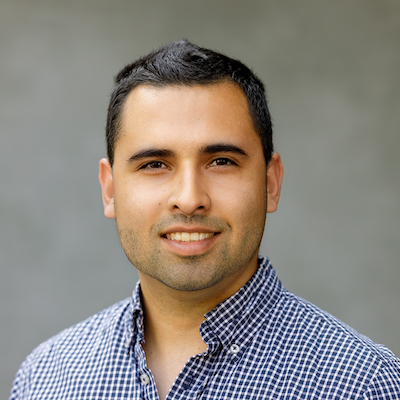
“I went into music and math because they express the human experience in a way that’s not just saying it out loud in English,” he explained. “Computer science is the same way.”
Soon Mendez realized he wanted a more substantial computer science career with a mix of software engineering and teaching. Recognizing his knowledge limits, he vowed to get his master’s degree.
“A lot of people were like, ‘You want to do the short route or the long route?’” says Mendez, who also considered local and online boot camps. “And I said, ‘I want to do the right route. I want it to be comprehensive, I want to ensure I’ll get a job, I want to learn about this field.’” Align’s no-prerequisite approach, combined with the staff and family fit of the Seattle campus, made it exactly what Mendez was seeking in 2020.
With a five-year-old in the house, there were hard decisions to make. Mendez and his wife landed on three criteria; he’d need to work full-time, she’d need to be okay with his time commitment, and there needed to be a clear return on investment.
“We weighed those three things and decided that this was the right move,” Mendez says. “There’s going to be a big shift in income and also extra time outside of work because I won’t be [a student] anymore.”
But for now, it’s a daily challenge. Mendez’s remote math tutoring and support job with Outlier.org, a for-credit online university, lets him log 40 hours per week at convenient times. His Align classes have been remote too, a necessity during an “extraordinarily challenging” summer that included the arrival of their second child.
Mendez expects to graduate with his master’s degree next summer, making his schedule more manageable. Apart from full-time work and family time, he’ll also have more flexibility for the church music directing he does on the side.
“A huge goal of mine,” he says, is “a healthy balance between work and everything else people want out of this life.”
Maria Piper
Even among Align students seeking a master’s degree, Maria Piper stands out. That’s because she’s already got one.
After parlaying a childhood love of Japanese language and history into an East Asian studies bachelor’s and a year teaching in Japan, Piper returned to school amid the post-2008 recession. A couple of years later, history master’s in hand, she followed her mother and grandfather into teaching.
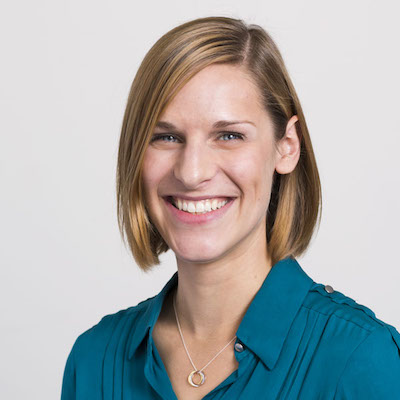
“I taught in a very different environment than they did,” Piper said, noting that many of her ninth graders entered reading well below grade level. She also was intrigued by the potential of technology to do even more to engage and teach students. In particular, she wanted to explore the educational potential of games. That’s when a friend, after hearing one of her game ideas, said something that changed her career path.
“He said, ‘No developer is ever going to work with somebody who says they have a great idea but doesn’t know how to code, because you have no idea what goes into it,’” Piper recalled. “That’s when I started transitioning; I went to a web development boot camp and moved to the Bay Area.”
Over the next seven years, two things changed. First, Piper had three children, with the youngest arriving in 2019. Second, she worked a smorgasbord of Bay Area tech jobs, from curriculum-based roles to business and human resource positions. She kept running into the same issue.
“There really aren’t that many jobs in this niche area of building programs,” she explained. “I applied for other jobs that had technical education components, but the lack of fundamentals was holding me back.”
After six years combined at Oberlin and NC State, Piper couldn’t imagine trudging through years of prerequisites just to draw even. Then she found information about Align, applying and enrolling in 2020.
While the program is designed so students can work during the day and take classes during the evening, Piper found that combining work, classes, and kids proved infeasible. Things have improved since she stopped working, and online classes have enabled a life balance that likely couldn’t exist if she had to commute into San Francisco. But even with that, and even with her mom around for help with child care, it’s been difficult.
“The Align program had four-night classes during the week. That’s four bedtimes I’m missing, and bedtimes are the worst times for a parent because they’re trying to get a lot of things done,” Piper says. “So my poor husband is sitting there doing it all himself. But at least I could get out and say goodnight and give them a hug during breaks.”
With an internship planned into her coursework, Piper expects to graduate sometime in the back half of 2022, finally armed with the foundation she has sought for years.
“Being a software engineer will be important,” she says, “but in five years or so I would want to start transitioning to the engineering manager side or the training of software engineers.”
Henry Kinard
The student-to-teacher transition happens all the time. Student to teacher to student—not as much.
After securing a bachelor’s and master’s degree in French, Henry Kinard landed a French (and sometimes journalism) teaching job at Noble and Greenough School, a private boarding school in Dedham, Massachusetts. While there, he led international, community-service-focused trips within the school’s extensive global education program.
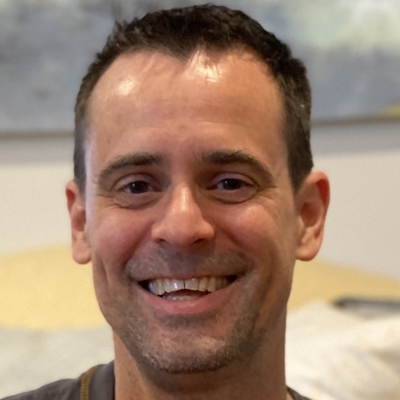
“It’s funny,” Kinard remembers. “As a teacher who preached for a decade and a half, ‘The only way you’ll learn is by getting out there and trying new things,’ it was natural that I myself one day said, ‘I had a wonderful career as a teacher; I’ve got to try something.’ It’s never too late.”
He transitioned into computer science in 2019 and relished its connections with his teaching, namely project-based work and real-world experience. He also saw tinkering- and language-based connections with his hobby of composing and producing music, which he calls his “proverbial happy place.” Enticed by the diversity of the Align community, he jumped eight miles northeast to Northeastern’s Boston campus.
“I’ve met so many people like myself who had no STEM coming into it, [plus] people at different stages of life,” he said. “When people are trying to balance different things, there’s a community that’s created, and an understanding that a lot of us are trying to juggle different things. Align is a great community in that way.”
His personal juggling act—a team project with a wife who works full-time—involves a five-year-old and a three-year-old whom Kinard jokingly calls “needy little people.”
“I will be a good father. I won’t compromise that at all,” he insisted. “But to make it through this program I have to be really tight with time management.”
To that end, Kinard triages his work based on the amount of focus required. Lower-tier work can be completed with noisy kids in the house; upper-tier work is best saved for hours covered by school or daycare. At least it was until COVID-19 shut down the schools and daycares.
“My teachers and Align advisors were so helpful,” Kinard said. “The hardest point of the bridge year is the exact time I had to take care of my kids. I finished one of the classes and then they let me delay the end of the other class I was in. I finished it in the summertime … I don’t think I would have made it through otherwise.”
Kinard believes that the time management lessons he has learned will serve him well in industry, and that the co-op he expects to begin in January will help him define what that role might be. He loves the more traditional learning, he said, “but nothing happens until you get out there, get dirty with it, and do the work yourself.”
With an expected graduation date of December 2022 and a plethora of interests that he’s explored within Align, Kinard’s career is wide open. He may even teach again at some point.
Ganga Hosmani
As if juggling kids and grad school wasn’t tricky enough on its own, let’s throw culture shock into the mix.
Before 2017, Ganga Hosmani lived in India. She grew up in a small town, and until she started university in 2001, she had barely used computers.
“We were just getting to know the internet,” she recalled. “We didn’t understand what operating system it was or what was actually happening. It was all new. That’s what drives you—the curiosity, what exactly happens behind that small screen.”

In her university studies, Hosmani dove deep into the hardware. After graduating with a bachelor’s in telecommunications, she spent the next dozen years working in chip verification for Texas Instruments and Microchip Technology. Toward the tail end of that time, she gave birth to her son.
By this point, Hosmani’s husband was in Boston working on his master’s in engineering and management. Numerous family members at home supported her, but after two years apart—and with her husband and son having barely spent time together—the pair moved to Seattle, where her husband had netted a job with Amazon.
“We were totally new here, new culture, everything was new,” she explained. “So I took a year off from career and everything, just spent some time with my kid. When he turned two, two and a half, that was when I decided to … get back to work.”
She hadn’t planned on doing a master’s, but her husband, enamored with the cultural understanding he’d gained from his fellow master’s students, encouraged it. Hosmani, realizing she might never have the opportunity again, resolved to append her hardware experience with software knowledge.
“Computer science made sense,” she said. “I already knew the hardware part, so let me explore the software.”
Because Northeastern’s Seattle campus sits across the street from Hosmani’s husband’s office, the university and its Align program were a natural choice, if not an easy path.
“It was hard, a lot of prioritizing and planning,” Hosmani admits. “We couldn’t change our schedule for any reason … Looking back now, I don’t know how we did it.”
That schedule typically involved Hosmani knocking out as much classwork as possible during the mornings while her son was at school, then attending classes in the evening while her husband looked after their son. When she had to, she’d cart him to class, study groups, or TA hours in a stroller. On weekends, her husband watched their son while she went to the university to study.
After withstanding the stresses of pandemic school closures, Hosmani graduated Align in May with an MSCS degree and landed a computer-aided engineering position at Intel, a “perfect role” chock full of verification, machine learning, and data science.
“Balancing the role of mom and student is quite a challenge,” she admitted. “You need a lot of support—husband, extended family, friends. But if you’re really interested, if you want to do it, you can do it.”
Rajen Aldis
Rajen Aldis’s last name carried some professional weight, if you knew where to look. His father, uncle, grandfather, and great-uncles had all practiced medicine, and by 2018, Rajen had a resumé overflowing with prestigious positions and institutions.
Doctor of medicine from Dartmouth Medical School. Clinical and research fellowships at Harvard Medical School. House officer at Cambridge Health Alliance. Associate psychiatrist at Brigham and Women’s Faulkner Hospital.
But Aldis had something up his sleeve—not a career redirect, but a merging of an old passion with his medical journey.
“My father got me a computer way back in the 80s when they were very new and it was rare for people to have them in their homes. And it was even more rare for kids to have one,” he recalled. “That sparked my interest.”
In his training and work, Aldis did projects that melded technology and computer science with medicine, and wanted to understand how technology—including AI—worked behind the scenes within medicine. So he opted for a computer science master’s.
“I enjoyed bringing my code skills up to speed, and then I enjoyed transitioning to the mainstream master’s part of the program and choosing the courses I wanted to take and specialize in,” Aldis says. “I did a data science concentration, so I did the AI course and data mining courses.”
By the time he started at Northeastern, Aldis and his wife had two young daughters in tow. While he had balanced kids and work for a few years, grad school was different.
“Parenting is a 24/7 from when you wake up to when you go to bed … and work hopefully has some boundaries,” he explained. “But school doesn’t have any boundaries because there’s always something that has to be done … Every moment I wasn’t parenting, I was studying.”
And it has paid off big time. In December 2020, about half a year before he graduated from the Align program with his MSCS, Aldis assumed a new role at the Cambridge Health Alliance. As associate director of informatics research—a relatively new role for a physician with tech experience—he assists researchers with the data science components of their work. Added bonus: his father, a longtime doctor himself, thinks it’s fantastic.
“The friends that I had and the other people in Align, they were doing a lot of cool stuff,” he said. “I found it admirable to see the resiliency of people. Folks had so much going on, but still found a way to devote themselves.”
The Khoury Network: Be in the know
Subscribe now to our monthly newsletter for the latest stories and achievements of our students and faculty
Author: Madelaine Millar
Date: 09.02.21
Machine learning works a little differently than human learning does. While a toddler only has to interact with a dog a few times to recognize the animal, an AI needs to crunch through thousands of samples to gain even a partial understanding of the same concept. But what if AI — artificial intelligence, either as an individual system or as a concept — could learn a little more like a child does?
Enter Khoury College of Computer Sciences doctoral student Dat Huynh. He is developing a method to train AI using a fraction of the training samples that conventional machine learning uses. Traditionally, a machine learns a separate model for each task: 10,000 images of dogs, labeled “dog,” to train it to recognize a dog, and an additional 10,000 of cats to train it to recognize a cat. Huynh’s method shares information between tasks, breaking complex concepts down into simpler components and using those to leverage the similarities between different subjects. Taking advantage of the similarities between a cat and a dog, for example, allows an AI to learn to recognize each one more quickly and efficiently, and with far fewer labeled training images than two fully separate, fully trained models would require.
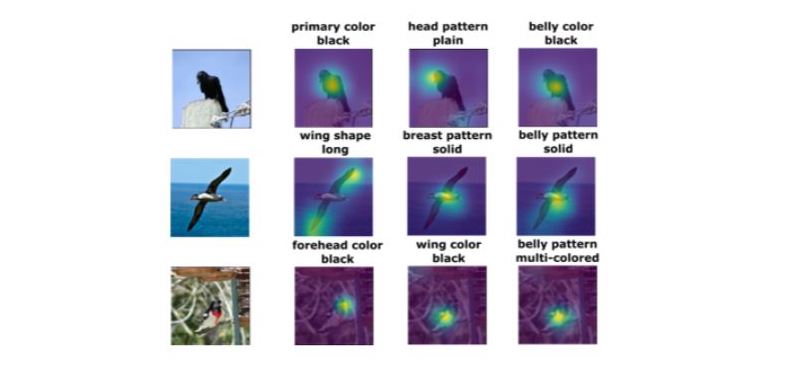
According to Huynh’s Ph.D. advisor Ehsan Elhamifar, Huynh’s research is a significant advance over traditional AI training methods, which are difficult and expensive to scale up.
“Data labeling [to create training samples] is a very costly and, in some cases, complex process — imagine labeling frames of videos that are several hours long. In some cases, such as classifying different clothing types or species of closely related families of animals or plants, labeling can be done only by experts and professionals, adding to the complexity and cost of the process,” explained Elhamifar. Furthermore, systems in the real world will encounter concepts they’ve never seen before, and for which they don’t have training data; traditional AI has difficulty adapting to these scenarios.
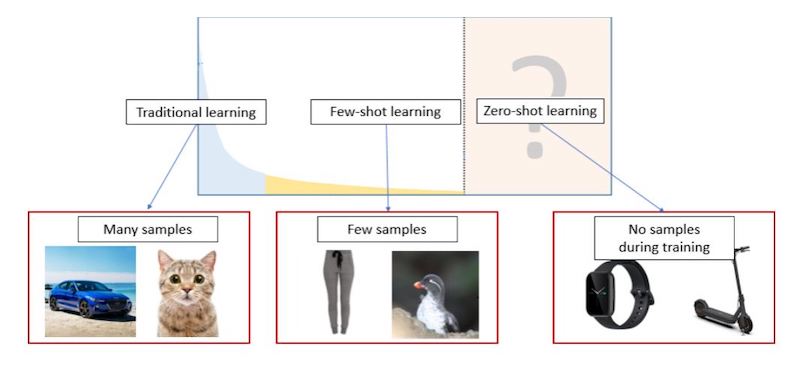
What’s the significance? “The outcome of [Huynh’s] research will have a big impact on real-world problems including robotics, autonomous driving, and health-care applications, in which labeling is costly and we keep encountering new classes and concepts as the systems work in real-time,” said Elhamifar.
From ‘outside the mainstream’ to fellowship winner
Potential applications for Huynh’s research go well beyond the dog-and-cat scenario. Huynh pointed out two additional benefits to being able to train AI with fewer training samples: making machine learning more accessible and reducing its biases. First, he said, “It’s going to democratize machine learning to developing countries, where you don’t have large facilities to collect 10,000 training samples.” Fewer training samples can be processed in smaller data facilities, he pointed out.
“The second [advantage],” continued Huynh, “is that you can control what it learns. So, these days, we have to learn with a large number of training samples, and there’s no way you can control the quality of them.” In other words, hand-selecting thousands of training images is prohibitively time-intensive, so a machine-learning system simply draws on the large pool of images – unedited, uncurated – that are available. “That’s why these [methods] often result in unwanted bias,” said Huynh, elaborating, “If you [train AI] with a lot of black cars, then what it learns is to recognize only black cars. It does not recognize yellow cars, green cars — it’s similar for human people. If you reduce the amount of training samples, you can inspect whether the training samples are unbiased and diverse enough.” And then, if needed, the training samples can be improved to better represent the concept of “car” — or “human.”
Initially, many of Huynh’s discoveries lay outside the mainstream of the machine-learning industry.
“I once went to a conference…and I talked to a researcher over there, and then when I introduced that I was working on reducing the number of training samples, the PI just immediately dismissed my research,” recalled Huynh. “He said ‘Look, these days big companies can collect thousands of training samples. The training sample will not be the bottleneck of their model, training samples will not be a problem worth working on.’”
While Huynh admitted, “It’s very hard to listen to that and continue working on research projects,” he believed in the value of this work and persisted.
Within the last few years, his research has started to gain traction. Huynh was recently a recipient of the JP Morgan Ph.D. fellowship, which is awarded to Ph.D. students whose research has financial applications that align with the JP Morgan business model. In Huynh’s case, being able to train AI with few or no training samples would allow companies to use AI to conduct market research on brand-new concepts or product ideas. If the thousands of sample images needed to train an AI to recognize a potential new product already existed, the market would be so saturated with that product that there would be no reason to develop it any further. AI-enabled market research on new ideas would need to work in an environment of scant sample images.
The prestigious fellowship — which will cover funding and a stipend for the coming year — offers Huynh a greater degree of research freedom than he’s had in the past. One of 15 fellowship recipients, he will also be connected with researchers from JP Morgan, having the opportunity to intern with them next summer.
Vision for his research and advice to other students
Huynh is planning to use his increased research freedom as a fellow to continue to refine and improve his methods, developing ways to quickly train AI to extract more and more useful information.
“I would like the algorithm to make more fine-grained predictions. What my algorithm is predicting so far is just what’s appearing in an image, whether it’s a dog or a cat or a car — it can’t segment the object out of the image,” he said. In other words, while the existing algorithm can tell you whether there is a dog in the picture, it can’t tell you where the dog is and where it isn’t, or what it’s doing. “I think that now, if I can make the algorithm a more detailed and vibrant application, it can have a larger impact, because people are not only interested in what appears on the scene, but where it is, how the object fits into the overall context.”
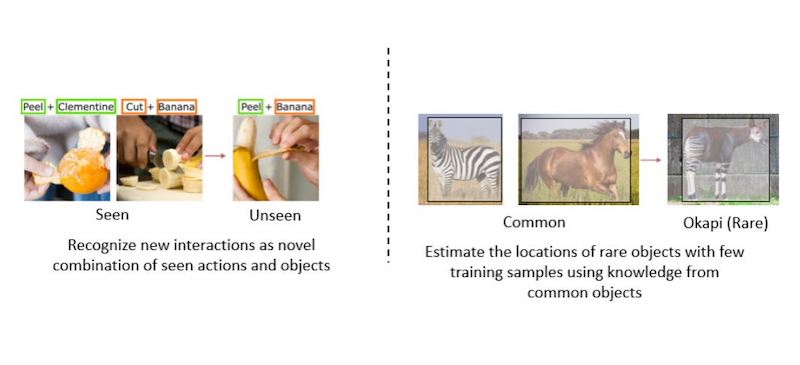
As Huynh’s hard work on a subject in a specialized niche of computer science has started to pay off, he has two pieces of advice to offer to other students: focus on your fundamentals, and then pursue your passion.
“Getting a good foundation is really important. The foundation here is that you not only learn the trendy techniques, but you should be empowered to learn more classic techniques [too]… Most of the current state-of-the-art techniques were actually techniques 20 years ago, but they put some twists in there to make them work with the latest hardware,” he said. He gave the example of neural networks, a type of “deep learning” machine learning that has been around in concept since the 1940s but wasn’t widely adopted until 2012, when graphics cards sped up computation enough to make the technique viable.
“More importantly,” he advised, “you have to find something [to research] that you really like. [When working on] the hottest topic, the competition is very fierce, so if you don’t have some breakthrough techniques it’s very hard to publish a paper. If you figure out something a bit specialized to you and you really like it, maybe other people won’t appreciate it at first, but once you make some progress?” Promising, original work attracts notice, he believes. Another benefit of pursuing your own research path? Huynh added, “Certainly, you will make your life easier, rather than competing with big companies on the hottest techniques.”
The Khoury Network: Be in the know
Subscribe now to our monthly newsletter for the latest stories and achievements of our students and faculty