Date: 01.27.22
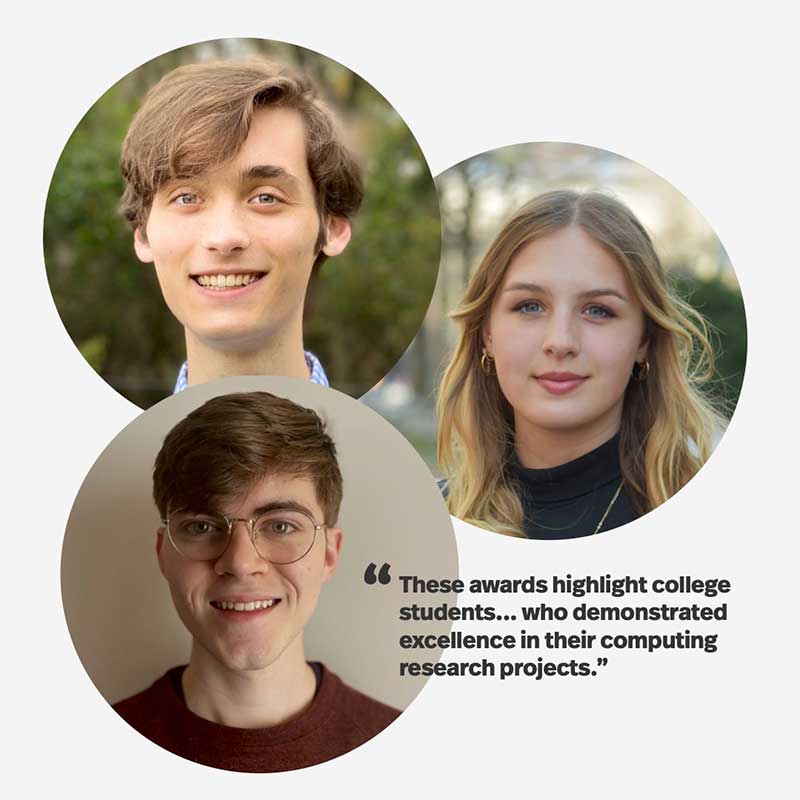
BOSTON—On Jan. 4, three students from Khoury College of Computer Sciences were recognized by the Computing Research Association, or CRA, in its 2022 Outstanding Undergraduate Researcher Awards. Sponsored by Mitsubishi Electric Research Labs this year, these awards highlight college students in North American schools who demonstrated excellence in their computing research projects.
Khoury College had one finalist and two honorable mentions for these awards:
- Finalist: Max Daniels, fourth-year computer science and math combined major with a physics minor
- Honorable Mention: Maggie Van Nortwick, fourth-year cybersecurity major with an interaction design minor
- Honorable Mention: Levi Kaplan, fourth-year computer science major
The award recipients, runners-up, finalists, and honorable mentions were selected by a committee of professors from universities across the U.S., including Northeastern, Pomona College, and Williams College. Khoury College professor Jonathan Bell was a member of the 10-person committee.
Daniels’ award application to the CRA described two research projects, both of which were in collaboration with assistant professor of mathematics and computer science Paul Hand of Khoury College. One project focused on signal recovery, where the goal is to recover an image from partial information, and the other was on optimal transport, which aims to create the most efficient system for resource distribution.
“It has definitely contributed a lot to my excitement in starting research as a career,” Daniels said, remarking on the CRA recognition. “It’s really amazing to work on projects that you have a personal stake in, especially when you have some independent role in creating it, putting it together, and writing a paper about it to share with people. So, the support from the award is mostly encouragement to keep doing that because I really enjoy it.”
Van Nortwick was recognized for her data privacy project that she worked on as a research co-op at Khoury College, which investigated whether websites are complying with the California Consumer Privacy Act. Kaplan, in his CRA application, also submitted work from his research co-op, where he analyzed data brokers, or companies that collect and license personal information, as well as the accuracy of their data and the role of demographics in data collection.
Written by Kelly Chan
The Khoury Network: Be in the know
Subscribe now to our monthly newsletter for the latest stories and achievements of our students and faculty
Author: Jane Kokernak and Sarah Olender
Date: 01.14.22
The world of grants is complex. Private foundations, industry, and government agencies in the U.S. fund institutional and faculty research that builds knowledge and drives innovation. Globally, the grants landscape varies dramatically. IREX, an international nonprofit, is working to address the disparities in global development and education.
Recently, four fellows from research universities in Africa visited Northeastern University for the first time for just this very reason – to understand grant funding in the U.S., make connections with research grants professionals, and build ties to faculty. They participated in the exchange through IREX and its University Administration Support Program (UASP).
Andrea Stith, the new director of research development at Khoury College of Computer Sciences, invited the four fellows to join her at Northeastern after their stint shadowing grants administrators and faculty at the University of California, Santa Barbara, where Stith previously worked. Stith herself had joined the Khoury College community just a few short weeks before the fellows from the IREX program arrived at Northeastern. As she was settling into her new role, Stith guided them through the process: “We talked about research development, pre-award support, what funding agencies are looking for, and opportunities in the U.S. and Europe.”
The UASP fellowship can be transformative. Stella Kakeeto, a grants manager from Makerere University in Uganda, described her experience as “intense, learning vertically and across institutions.” Patrick Okonji, a senior research fellow at the University of Lagos in Nigeria, commented on meaningful interactions with research faculty at Khoury College and the university. “We had very engaging and interesting conversations around what they do, their roles, and the challenges associated with working in such positions.”
Learning opportunity for the fellows and their home institutions
Stith’s support for the UASP fellowship program extended beyond her formal responsibilities. She said, “I personally wanted to engage with them because research should be a global enterprise,” adding, “I want to do my part to bridge the resource and training divide.”
During their time at both UC Santa Barbara and Khoury College, the fellows set out to learn about research management, grants administration, patents, and intellectual property, while also figuring out how to best implement these strategies at their home institutions.
Jean Uwamahoro has multiple roles at the University of Rwanda, the country’s public research university, as associate professor of physics, administrator, and deputy director of the center of teaching and learning in mathematics and science. “The university is taking the teaching of math and science really seriously to catch up with the developed world,” he explained, always seeking new tools for STEM education and communicating science. The UASP program, he said, enables “the ability to link up with international researchers and also international managers to learn about funding opportunities.” Uwamahoro has learned more, too, about creating effective grant applications.
The fellows learned that U.S. institutions have many more opportunities for government funding, through agencies such as the National Science Foundation, Department of Energy, and National Institutes of Health. The experience led Sintayehu Tiruneh, a UASP fellow from Addis Ababa Science and Technology University, to recognize the value in cultivating international research partnerships. For his university to grow in grants funding, he observed, “The answer is to make connections, make collaborations, because then you can apply with them [researchers at other institutions] and get funding.”
From meeting with faculty across Northeastern, especially the College of Engineering and College of Science, Tiruneh is solidifying potential collaborations; he has a doctorate in materials science and engineering and is an assistant professor at his university.
Reflecting on what she and the other UASP fellows have learned, Kakeeto remarked, “Now the onus is on us to decide what is applicable in our setting and how we apply it. Sometimes you do a trick here and there. Sometimes it’s not going to work. Now it’s up to us to filter what is going to make an impact in our context.”
Alignment with Khoury College’s mission
The IREX fellowship program helps train the next generation of university leaders, empowering them as catalysts for change at their home institutions. It also builds diversity in the global research grants community and fosters collaboration across borders.
Alan Mislove, who was Khoury College’s interim dean at the time, described the genesis of the college’s involvement. “This particular program, it came in from a new hire, Andrea Stith, but it was something that was so well aligned with our DEIAB activities that it absolutely made sense for us to support it.” He said, “We believe computing is for everyone. It underlies everything we do.”
As to what the fellows learned, Mislove said, “They got to see all sorts of how we structure research administration, both at the collegiate level, as well as at the university level.” He praised Stith for bringing the UASP fellows from UC Santa Barbara to Khoury College around the same time she was beginning her new role. He said, “It was really a testament to her, how well the program turned out, how much the fellows got out of it.”
From his interactions with the fellows, Mislove gained perspective on the differences and commonalities between research development in the U.S. and internationally. “What I learned in talking with them [was] the challenges that they face in their day-to-day jobs are sort of different, and the way that things are structured at their home institutions are different,” said Mislove. “[But] a lot of the basic challenges are very similar in terms of managing an organization, and dealing with how do you get people to agree on things.”
An enjoyable, rich experience with long-lasting effects
Aside from gaining valuable knowledge and initiating important connections, the fellows also got the opportunity to enjoy Boston and their trip here, too.
“I’ve met lots of wonderful people here in Northeastern, you have a very fantastic campus. It’s a beautiful campus. It’s so welcoming,” Okonji said.
Kakeeto commented on the benefits of shadowing researchers; the experience will have “long-lasting” effects, she said. “It demystifies some of the things you think about, to see others experiencing the same thing.” Her meetings with research grants managers at both Khoury College and Northeastern shed light on putting together grant applications, compliance, tools and systems, and “the whole cycle of funding.”
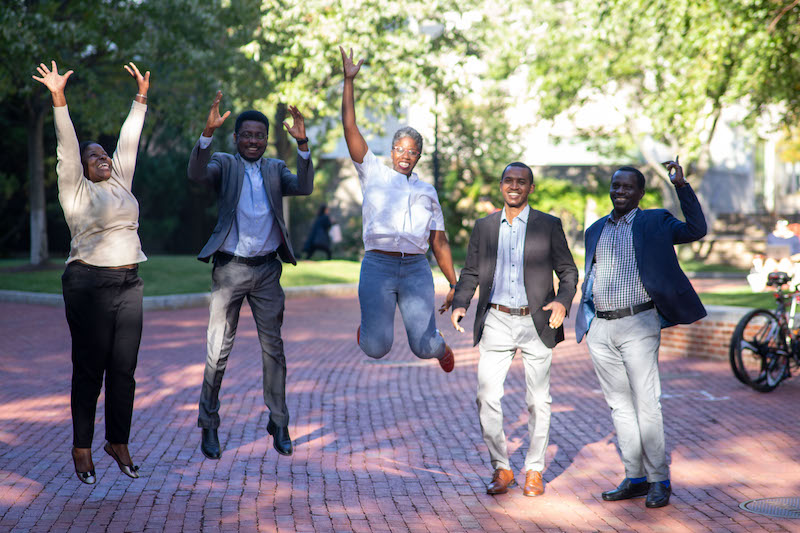
Stith, who coordinated the fellows’ engagement on campus, described her commitment to this kind of professional growth. “For me, I really want them to feel supported in their proposal development efforts. I’m passionate about their critical role in the development of effective and meaningful research,” she said.
New to the Khoury College and Northeastern community, Stith was heartened by the warm welcome that the UASP fellows received. “I’d like to thank all the research administrators and faculty at the college and the university who were welcoming, encouraging, and so willing to help.”
Her outlook is optimistic. “I hope to see new opportunities as a result of this visit.”
The Khoury Network: Be in the know
Subscribe now to our monthly newsletter for the latest stories and achievements of our students and faculty
Author: Tracy Geary
Date: 01.13.22
Imagine a world where you can rely on an adaptive and interactive virtual task assistant to help you do everything from trying a new recipe to fixing a broken water heater.
Thanks to Ehsan Elhamifar, assistant professor in the Khoury College of Computer Sciences, Northeastern University and director of the Mathematical Data Science (MCADS) Lab, that world is one step closer to becoming a reality.
Elhamifar and his collaborators have been awarded a $3M grant from the Defense Advanced Research Projects Agency (DARPA) to work on combining artificial intelligence (AI) and augmented reality (AR) to help people/users perform complex tasks. “The program is connected to research I have done in my lab,” Elhamifar said.
He explained the specific focus of his work in this area. “Some of the research in my lab addresses automatic understanding of such procedural videos and learning from them using structured visual summarization methods and techniques. Summarization specifically reduces each video to a small number of representative frames, and in our case, those representatives must be from task steps, which are common across videos,” Elhamifar said.
DARPA, an agency within the U.S. Department of Defense (DoD), is responsible for catalyzing the development of technologies that maintain and advance the capabilities of the U.S. military. The grant, a multi-million dollar and multi-university effort, is being led by Elhamifar at Northeastern’s Khoury College in collaboration with Misha Sra at UC Santa Barbara and Minh Nguyen at Stony Brook University.
Being awarded this grant was “a big moment for me and for the other schools,” Elhamifar said.
Developing the technology for AI task assistants in two domains
“Our project is part of the Perceptual Task Guidance (PTG) program recently announced by DARPA,” Elhamifar explains. The three universities “bring together different skills to the project, covering visual perception, visual reasoning, user modeling, and augmented reality. We will be pushing the boundaries of deep learning for perception and attention, automated reasoning, and augmented reality to achieve the goals of this project.”
“Each school will bring their expertise,” Elhamifar continued. “At the end of the day, there will be integration and collaboration.”
As Elhamifar explains, DARPA is interested in two domains: one of medical assistance and the other of pilots. “Military personnel need to perform an increasing number of more complex tasks. For example, medics must perform various procedures over extended periods of time, and mechanics need to repair increasingly sophisticated machines.”
The goal of the project is to develop methods and technology for AI assistants that provide timely visual and audio feedback to users to help in performing physical tasks.
Elhamifar described the intended user situation: “The user wears cameras and a microphone, which allow our system to see and hear what the user sees and hears, and an augmented reality headset through which our system provides timely and adaptive feedback, guiding users of all skill levels through familiar and unfamiliar tasks.” What makes the technology helpful? He continued, “The system will provide instructions. For example, the system can suggest remedial actions when the user has made a mistake or is about to do so. Or when the user is faced with a completely new task, the system provides step-by-step visual and audio instructions based on the user’s skills and cognitive style.”
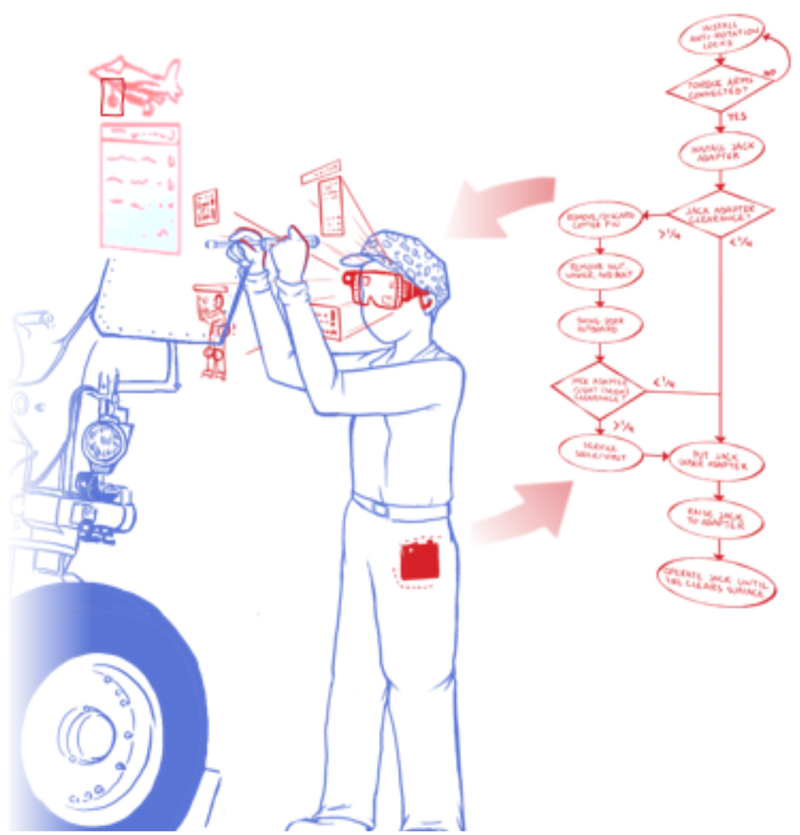
The research team calls their new technology AI2ART Assistant, which stands for adaptive and interactive AI-AR task assistant, as the system integrates AI with augmented reality and adapts to the user’s skill-level, attention, and cognitive style.
Several unique challenges are associated with the project. For example, being able to recognize learning models of tasks with high accuracy and in real-time from a tiny number of training videos and resources is a major undertaking. Another challenge is for the system to understand the user’s cognitive style and attention/emotion state during task execution and integrate them into their prediction models.
Elhamifar pointed out that since different types of learners will be using this product, “we must take into account the style of the user and the different skill levels.”
Assistive technologies potentially helpful to regular users, too
To address the many challenges they face while meeting the research goals, Elhamifar explained, “We will push the boundaries of science and engineering in this project to address these challenges to develop assistive technologies that in real-time understand and evaluate tasks and subtasks performed by the user and provide just-in-time feedback according to the user’s style and state.”
Elhamifar asserted that, while the system is being built for DARPA and will be extremely helpful to pilots and soldiers on missions, its ultimate use will not be just for the military, but for all people.
“We believe that our system would not only be useful to DARPA and the military, but also to regular users and people who want to perform new or complex tasks,” Elhamifar stated. “Imagine you want to cook a new recipe. Instead of searching on the internet, reading different instructions for the same recipe and watching YouTube videos, our system provides step-by-step audiovisual instructions and corrects and guides you as you work through making the recipe.”
Another example, said Elhamifar, is needing to repair a device at your home, or when your car part is malfunctioning. “You can wear our AI2ART assistant, which tells you what to do and how to do it.”
Third-year Khoury College doctoral students Zijia Lu and Yuhan Shen are part of the team on this DARPA project, working on new methods to address challenges related to understanding and analyzing egocentric videos of users in real-time. “They have developed efficient and high-performance methods for learning from procedural videos of complex activities and have tested our methods on real-world challenging datasets,” Elhamifar explained.
Elhamifar is no stranger to DARPA, having been awarded the prestigious DARPA Young Faculty Award (YFA) in 2018 for his research on structured summarization of very large and complex data. The award honors scholars who plan to focus a significant portion of their career on DoD and national security issues. Elhamifar pointed out that the line of research supported by the DARPA YFA program has resulted in “a solid foundation and a main building block for our AI2ART system.” The first-year goal of the planned four years of the project is to present to DARPA a demonstration model that will guide the user through a task. By the end of the fourth year, Elhamifar believes the system will be fully developed and able to guide users through multiple tasks that are time-and energy-efficient.
“DARPA is one of the leading agencies in developing and supporting cutting-edge technology and research,” Elhamifar noted. “We are excited to have this tremendous opportunity of working with them.”
The Khoury Network: Be in the know
Subscribe now to our monthly newsletter for the latest stories and achievements of our students and faculty
Author: Milton Posner
Date: 12.23.21
For students who find it nerve-wracking to raise their hands in class, leading a meeting of career investment professionals would be imposing. Doing it their second week on the job would be terrifying.
For Abby Cossette, it was exactly what the fourth-year Khoury College of Computer Sciences student had signed up for. Her co-op represents a unique success story—for a student with a combined major in computer science and business administration; for Par Equity, the Scotland-based, tech-oriented investment firm that employed her; and for the Northeastern parents whose financial support helps students have the same international experiences their family did.
“For Khoury people who have combined majors: don’t be afraid to venture out of a software dev position for co-op and do something in your other major,” Cossette said. “Especially at a small company, you can make the role your own.”
Enthusiasm for travel and the value of a Northeastern co-op
The path that Abby Cossette has walked these last few months began several years ago, when two families took inspiration from the adventures of their sons.
The first was the Thomas family. In 2018, as their younger son Joe was finishing his journalism degree at Northeastern, his parents, avid travelers Kelly and Matthew, established The Joe Thomas Explore the World Fund to help provide Northeastern journalism students with opportunities for international experiences.
“Travel enriches your life, spirit, and intellect,” Kelly Thomas noted. “Travel expands your expectations of what is possible and your understanding of other people and cultures. And it’s fun.”
Northeastern’s student journalists immediately took advantage. For work conducted in Cuba in 2019, three fund recipients—Jonathan Mejia, Seamus McAvoy, and Collyn Stephens—won local Emmys for reporting on Cuba’s novel 3G network, longtime reliance on traditional medicine, and hip hop, respectively.
The following year, enamored of the fund’s success, the Thomases expanded their support to Khoury College, where their older son Max had enrolled as a graduate student. The Max Thomas Explore the World Fund offers annual awards to Khoury College students for international experiences.
“We are aiming to change lives,” Kelly Thomas said. “The changes may be small or profound, but travel will change you.”
Several years prior, UK-born Rory Higginson made his own international learning journey.
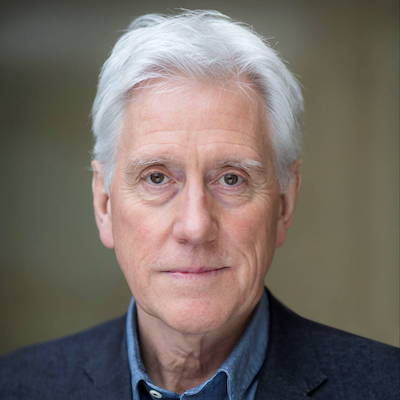
“I don’t think we understood the value of co-op when Rory applied,” Higginson said. “But after his first co-op, I could see why this could be incredibly helpful to him. And it was a program that Par Equity could benefit from.”
Par Equity is an Edinburgh-based, award-winning, early-stage venture capital firm that Higginson had co-founded seven years prior. It focuses on high-growth, Northern-UK tech startups and, unlike most of its peers, benefits from a large network of angel investors who help the company find, evaluate, and grow investment opportunities.
The company was unique, and its co-op opportunity would be too. Venture capital firms tend to run small, so they don’t hire many people, let alone students without professional qualifications and years of experience.
Such a position demanded a student confident enough to assume leadership duties overseas, one with financial savvy, tech awareness, and—in the case of the fall 2021 co-op—an informatics affinity. Back across the Atlantic, a Northeastern student matching that description was waiting.
Domain knowledge from combining computer science and business
Like innumerable students, Abby Cossette spent her first co-op at Wayfair, one of Northeastern’s co-op partners. As a pricing and profitability co-op, she was charged with SQL coding in the company’s pricing database and engineering a Google BigQuery dashboard to highlight database issues.
But before that co-op, Cossette had ditched her computer science–engineering major after discovering her preference for front-end software over hardware. The computer science and business administration combined major with a concentration in finance—offered between Khoury College and the D’Amore McKim School of Business—allowed her to explore “the quantitative side of business.”
“What I did at Wayfair wasn’t finance-related; it was strictly e-commerce plus database work,” Cossette noted. “I wanted to expose myself to the finance world because I hadn’t been around many finance classes. And I really wanted to go abroad in Europe. And then I saw this.”
For Cossette, the Par Equity co-op in Scotland was ideally timed. But even as Par’s early hiring, Cossette’s proactivity, and the easing of pandemic restrictions made travel logistics easier, she still faced substantial visa, travel, and housing costs. This is where the Explore the World scholarship—as well as the Presidential Global Scholarship—made a big difference.
When she arrived in Edinburgh, Cossette found herself thrown into the fire right away.
“Startup companies apply for funding on our client management system, and I do an initial screening of those applications and figure out if they’re a good fit for us,” Cossette explained. “We try not to invest in companies that lack defensible intellectual property. It ends up being a lot of deep tech, AI stuff, energy tech, clean tech … It’s helpful to have a STEM background because without it, it’s hard to pick up on what these companies are doing.”
Presenting promising firms to the investment committee each week was a crucial and regular activity at Par Equity, one Higginson said Cossette “had no problem whatsoever” with. But the co-op’s other main element was specific to Cossette.
“We wanted somebody with an informatics background who could help us with database design, new technologies, and building on the venture capital investment process to improve our in-house processes and systems,” Higginson said. “She can help us fine tune and build our systems, and work with third-party developers on our behalf to develop those improvements in productivity, customer relations, and our investment profile.”
Her Wayfair database work was good preparation.
“Right now we don’t store our data in one database and we’ve had many inefficiency issues because of that,” Cossette said of Par Equity. “We store data in various Excel trackers on our server, and then manually input that data into our client management system.”
Her role required she keep a close eye on the process. “There’s a lot of unnecessary data duplication and room for human error,” she said. “The advantage of a database is that it’s one central data source, and then you can launch an application programming interface and pull from it.”
As the firm’s sole co-op, Cossette has varied other responsibilities: marketing campaigns, portfolio company follow-on rounds, and aiding investment managers with deals they’re closing.
“Abby is fantastic … she is extremely confident, very well organized,” Higginson said. “She’s done her job extraordinarily well. She’s brought a lot of domain knowledge that we wouldn’t have in house.”
Cossette’s database work will require months to complete, so she wrote a schema that Par can hand to a third-party engineer after she leaves. She’ll continue part-time from the US until she lands another role, but, according to Higginson, she’s already fulfilled the expectations set by her predecessors, two of whom—Sydney Couval and Jennifer Chou—recently landed full-time finance industry positions.
As far as co-ops go, Par Equity is more than happy with their investment.
Global co-op an opportunity to “rethink my life”
For Cossette, there are many advantages of a global co-op in Edinburgh. For one, she said, “The size of the city is perfect. You can walk anywhere and that makes it feel like a small town; it’s not overcrowded. But it’s also a decent-sized city with a ton of things to do. The architecture is beautiful.”
Cossette, who shares the Thomases’ traveling inclination, also gushed about the city’s location, noting the cheap flights she took to Malta, Rome, and Iceland once COVID-19 safety restrictions eased. She also visited London for a business trip after Par closed an investment round in a startup, which proved especially fruitful.
“I was sitting with the [startup’s] CEO at a pub drinking some pints, and she was asking me about my interests,” Cossette recalled. “I said I was interested in quantitative and algorithmic trading because it’s a good bridge between programming and finance. And she had a university friend who’s the engineering COO of an algorithmic trading company in London. She got me an interview with them for my next co-op.”
That co-op will be Cossette’s last, as she is set to graduate in the spring of 2023. She may pursue a graduate degree in financial engineering, and would explore the University of Edinburgh if so.
“I feel at home here,” she said. “I fell in love with it. I feel like I lived here in another life. It’s made me rethink my life; I think I’ll try to come here full-time after graduation. Or somewhere in the UK.”

It’s the ideal reaction in the eyes of those helping to fund the opportunities.
“To the students considering a global experience: do it,” Kelly Thomas implored. “Please spend our money. Challenge yourself. Step outside your comfort zone. Do the thing you have been dreaming of doing.”
Put another way?
“Go global,” Cossette said. “It’s amazing.”
The Khoury Network: Be in the know
Subscribe now to our monthly newsletter for the latest stories and achievements of our students and faculty
Author: Sarah Olender
Date: 12.16.21
Teaching isn’t for everyone. Yet, in Fall 2021, 456 students stepped up to the plate to become teaching assistants (TAs) for the Khoury College of Computer Sciences. It requires patience, communication, and a strong mastery of the subject material. Behind every good student is a strong teacher, and often the best teachers are peers, or TAs, especially in Khoury College of Computer Sciences’ Align program, where everyone has a unique background.
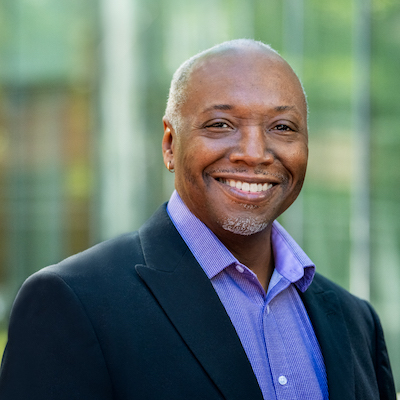 Keith Bagley
“I look for people who are self-motivated,” Bagley said. “You have to be right there next to them and walking with them to help them answer those questions without giving them the answers.”
Bagley added, “I also look for people who are people persons. You don’t have to be an extrovert, but you have to be able to at least gauge people, where they’re at, and have conversations that are coherent, and not be so introverted that you can’t communicate topics, because that’s really important when people are looking for you to help them think through problems. You can’t sit there and say nothing, you have to be able to facilitate dialogue, and help them to overcome whatever place that they’re stuck at.”
These qualities are exactly what made Align student Kristi Spicer so successful in the role.
Spicer helped Bagley by TAing for three semesters, which was every semester she was available to TA during her time in the Align program.“I just really enjoyed connecting with the students. As a TA, you end up working more with students that struggle, I would say, than the ones that feel very confident. I enjoyed being able to turn their experiences around in a way.” Spicer said.
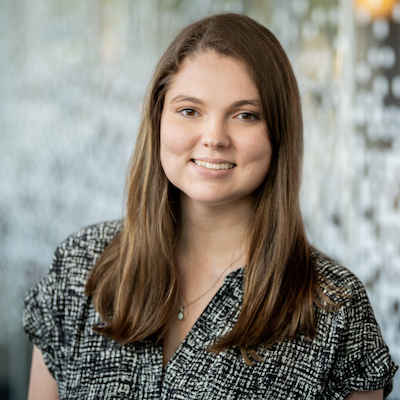 Kristi Spicer
TAing for CS 5001 means working with students who are just entering the program and navigating the difficulties around graduate school and learning a new discipline. This [remove realization] brings on a lot of feelings of imposter syndrome and doubt, which Spicer helped students overcome in her TA sessions.
“I like [that] when a lot of them come to you, they’re really stressed, and they don’t understand why their code isn’t working, and the program is harder than they anticipated,” Spicer said. “It’s a lot of risks they’re taking just by entering this program, especially if they’re already in the workforce, and I enjoy being able to relate to them and just help them through that process.”
Spicer credits her background in psychology as one of the reasons why she enjoys helping her peers succeed in their course. She and Professor Bagley both said that empathy helps when it comes to teaching.
Another one of Bagley’s TAs, Logan Mednick, also comes from an unconventional computer science background Before coming to Northeastern, Mednick studied sound recording technology at Ithaca College. While his undergraduate degree was focused on music, computer science was always in the back of his mind.“I couldn’t really explore [CS] until I started grad school,” Mednick said.
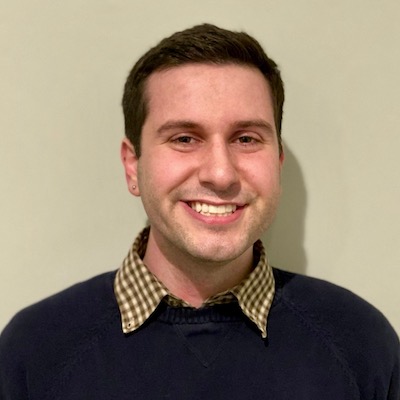 Logan Mednick
Align was the perfect way to explore his interest, and Mednick shined in his classes. One class Mednick particularly excelled in was Bagley’s, and so Bagley recognized Mednick’s name when he came across it while reviewing TA applications.
“Fortunately, I already taught [Logan and Kristi] in the program and so I knew their background, I knew how conscientious they were in terms of doing the work and their intelligence as well. I picked them out of that bunch because of my experience with them,” Bagley said. “I tend to try to have role models like them. So for the Align bridge, I often, if not always, pick from former Aligners because they have a unique perspective of having been through the program, they know the challenges of not having a CS background and kind of fighting through the imposter syndrome.”
Right now, Mednick is an intern at Bankers Healthcare Group, and while he loves working there, he also loves his work as a TA because of the connections he makes with his fellow students.
“I really want to have an impact on people not just in software, but in life in general,” Mednick said. “I want to be able to have some sort of positive impact in some way, and I feel as if being a TA is one way that I can do that. Even if it’s just helping a student understand what a “for loop” does, and helping them get one more question right on their final exam, I like to be able to have that small impact and to help students realize their potential as well.”
Spicer and Mednick became TAs by filling out an application on the student employment website, but it wasn’t just their stellar grades that landed them the position. It was their empathy, people skills, and articulate way of explaining complex CS terms that landed them the gig.
In September, Spicer was offered a full-time software engineering job at DraftKings that she has started while she finishes her last two classes, and Mednick’s internship has been extended too. As the two begin the next steps in their computer science careers, it’s time for the next generation of Khoury College TAs to rise up to the occasion.
“Think of [the TA job] as a learning opportunity for yourself. It’s something to put on your resume, yeah, but also have the heart of paying it forward or paying it backward, whichever way you’re looking,” Bagley said. “This is more of a calling than just a job.”
Subscribe to the Khoury College newsletter
The Khoury Network: Be in the know
Subscribe now to our monthly newsletter for the latest stories and achievements of our students and faculty