Author: Madelaine Millar
Date: 03.20.23
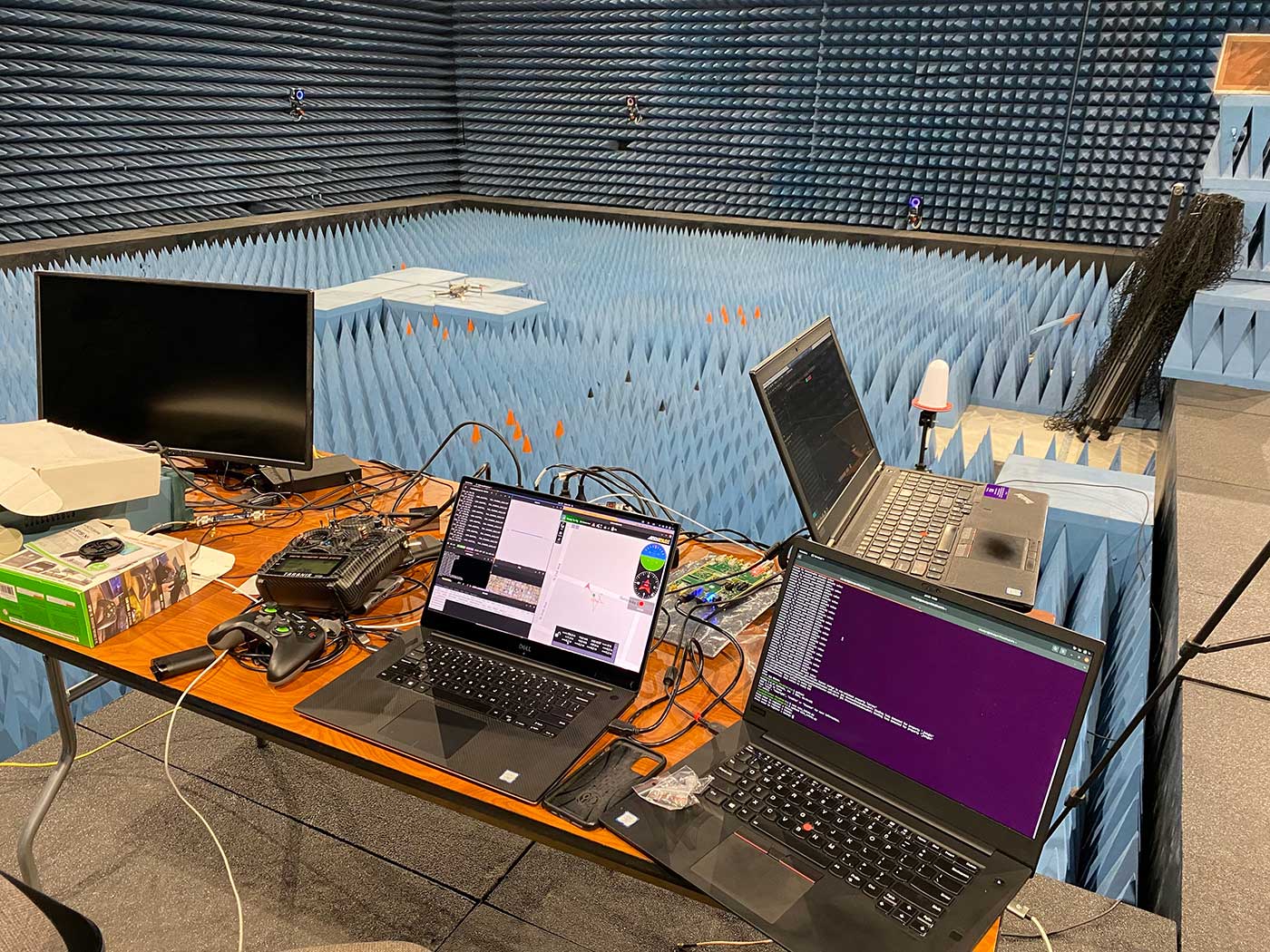
It didn’t look like much — just a small drone, drifting slowly to the left. To the drone’s controller, it didn’t look like anything at all, and that was the issue.
Like the navigation on your phone, drones rely on GPS data. They determine their location by calculating how far away they are from several constantly transmitting satellites simultaneously. GPS is affordable and easy to use because a device only needs to receive and interpret signals, not transmit, respond, or authenticate them.
But what makes GPS so valuable is also what makes it so vulnerable, says Aanjhan Ranganathan. The Khoury College professor recently received the National Science Foundation (NSF) Career Award to pursue his research on GPS. The half-million-dollar grant recognizes early-career faculty who have the potential to serve as role models in research and education and to lead advances in their fields; it aims to lay the groundwork for the rest of their careers.
“GPS is extremely vulnerable to attacks because you’re relying on unsecured signals that are transmitted from satellites 20,000 kilometers above,” Aanjhan said. “When they reach the ground, the signal is already quite weak; $20 worth of equipment can make GPS devices not receive any signal at all. Or, $100 of equipment can transmit signals such that they look like they’re actually coming from GPS satellites. We call it ‘spoofing’ — basically, you can fake where a signal is coming from.”
That’s what Aanjhan was doing to the little drone; by spoofing the signals it was receiving, he tricked it into thinking it was somewhere that it wasn’t. As Aanjhan manipulated the GPS inputs, the drone drifted sideways in an attempt to keep “standing still” — and because the drone thought it was maintaining its position, the controller didn’t show any movement. Aanjhan co-opted the drone without hacking it, effectively circumventing its security protocols.
The implications of spoofing are subtle and widespread. A malicious state could fiddle with airplanes attempting to land and delay entire airports’ worth of flights. A cyberterrorist could steal millions of dollars’ worth of military drones by causing them to land behind enemy lines. Because modern timekeeping relies on GPS, a determined hacker could cost a bank billions by falsifying the timing of stock trades, all without the target’s cybersecurity protocols even having a chance to take effect. A malicious agent’s control is strictly limited to uncorroborated location data, but there is a lot more of that floating around than you might think.
Aanjhan is grateful for the five-year NSF grant because addressing this vulnerability will be complicated in the extreme. His first goal is to understand the GPS ecosystem, its security problems, and what’s already being done to address them. Next, he will design components — from physical hardware to secure applications — that can improve GPS security without overhauling the system.
“You’re not going to replace GPS immediately, no way. It’s going to take more than a couple of years,” Aanjhan said. “During this time, what can we do to protect ourselves from GPS spoofing and jamming attacks? How can we strengthen the security guarantees of GPS position estimates without modifying the infrastructure?”
After that, he’ll turn his attention to longer-term questions. For instance, both the Department of Defense and the European Space Agency are working on adding cryptographic protections to their GPS system. But Aanjhan says these measures do not fully protect GPS, as an adversary can record and replay signals. Today’s secure designs require a number of back and forth communications, and Aanjhan’s work will begin to grapple with questions of scale and how to balance performance with security, privacy, and scalability.
“Wireless networks are ubiquitous already. With the advent of next-generation cellular and Wi-Fi networks such as 5G, every device is becoming very flexible and configurable, which means a new set of applications, a new set of requirements, new standards — but we already have a wealth of information from recent decades to help answer the question ‘How do we build security and privacy by design?’” Aanjhan said. “We are at the right place and the right time to actually influence security and privacy in system design itself.”
He’s also excited to bring more of his students in on the process. He teaches “Security of Wireless Networks” every spring, and enjoys creating hands-on exercises for his students, such as having them compete to locate a wireless-signal-emitting device. Aanjhan has found that computer science students are often intimidated by the complexity of wireless systems, and by showing them how engaging and fun the work can be, he hopes to alleviate this fear and bring more researchers into the space.
“I’m more than a decade into the research topic; one starts to build strong opinions on what is possible and what is not. Beginners are much more like, ‘I think this should be possible’ and they start trying different stuff — and maybe break the boundaries,” Aanjhan said. “Because they are coming from a whole bunch of diverse communities, they bring in different perspectives. If I convince five percent of them to work in the exciting area of wireless security — or just to get interested in cybersecurity and privacy research in general — that would mean so many new perspectives for the community.”
The Khoury Network: Be in the know
Subscribe now to our monthly newsletter for the latest stories and achievements of our students and faculty
Author: Sarah Olender
Date: 03.15.23
Just a year after completing his doctorate in computer science at Dartmouth College, Varun Mishra, now a professor jointly appointed between Khoury College and the Bouvé College of Health Sciences, won an Distinguished Paper Award at UbiComp, the Association for Computing Machinery’s (ACM) conference on pervasive and ubiquitous computing. The award is given to the top papers published during the previous year in Proceedings of the ACM on Interactive, Mobile, Wearable and Ubiquitous Technologies.
Mishra and his co-authors won for their paper “Detecting Receptivity for mHealth Interventions in the Natural Environment,” in which they built machine learning models to predict when users would be receptive to engaging with smartphone-based digital health interventions. The team integrated those models into a chatbot-based digital coach, Ally, that delivered interventions aimed at improving users’ physical activity. They found that participants were up to 40 percent more likely to engage with interventions delivered at times when the models predicted that users would be receptive, as compared to interventions delivered at random times. They also found that after 17 or 18 days of learning how participants interacted with the app, those machine learning models outperformed the generalized, static models.
“This research is a perfect example of how to improve mobile health interventions by exploring models that help to decide on the fly when the right moment for the intervention has arrived,” the ACM award committee noted. “It reports findings from an in-the-wild study with 83 participants over three weeks and thus constitutes a core Ubicomp research contribution.”
READ: Powered by digital devices, Herman Saksono promotes exercise in underserved communities
Mishra collaborated with colleagues from ETH Zurich to follow up on their initial Ally study conducted in Switzerland. His colleagues’ exploratory analysis had shown that various contextual factors — like location, activity, and phone usage — were associated with participants’ receptivity to interventions.
While Mishra is excited to have his work recognized, he remains humble and takes the award as inspiration.
“It feels great that this work is recognized by a community like UbiComp, that it was good enough to actually be awarded,” Mishra said. “It helps validate my research agenda because my future research goals build on prior works, and that gives me more motivation and confidence to keep going forward with them.”
“These were very preliminary works,” he added. “These papers were trying to show the feasibility of this working or not. And now that we’ve shown that it’s feasible, the next pieces are more tricky in trying to optimize it for different types of interventions.”
Mishra also directs the Ubiquitous Computing for Health and Well-being Lab, an interdisciplinary research group between the Khoury and Bouvé Colleges. There, he and his colleagues are working to enable the delivery of effective digital health interventions for behavioral and mental health.
The Khoury Network: Be in the know
Subscribe now to our monthly newsletter for the latest stories and achievements of our students and faculty
Author: Attrayee Chakraborty
Date: 03.10.23
The Khoury Research Apprenticeship is a premier opportunity for master’s students to conduct research over a semester under the guidance of a faculty advisor. It also strives to cultivate potential doctoral researchers. In December, the program held its second showcase, where more than a dozen students presented their results. Click one of the names below to read about their project, or check out the program info here.
Akash Shitole
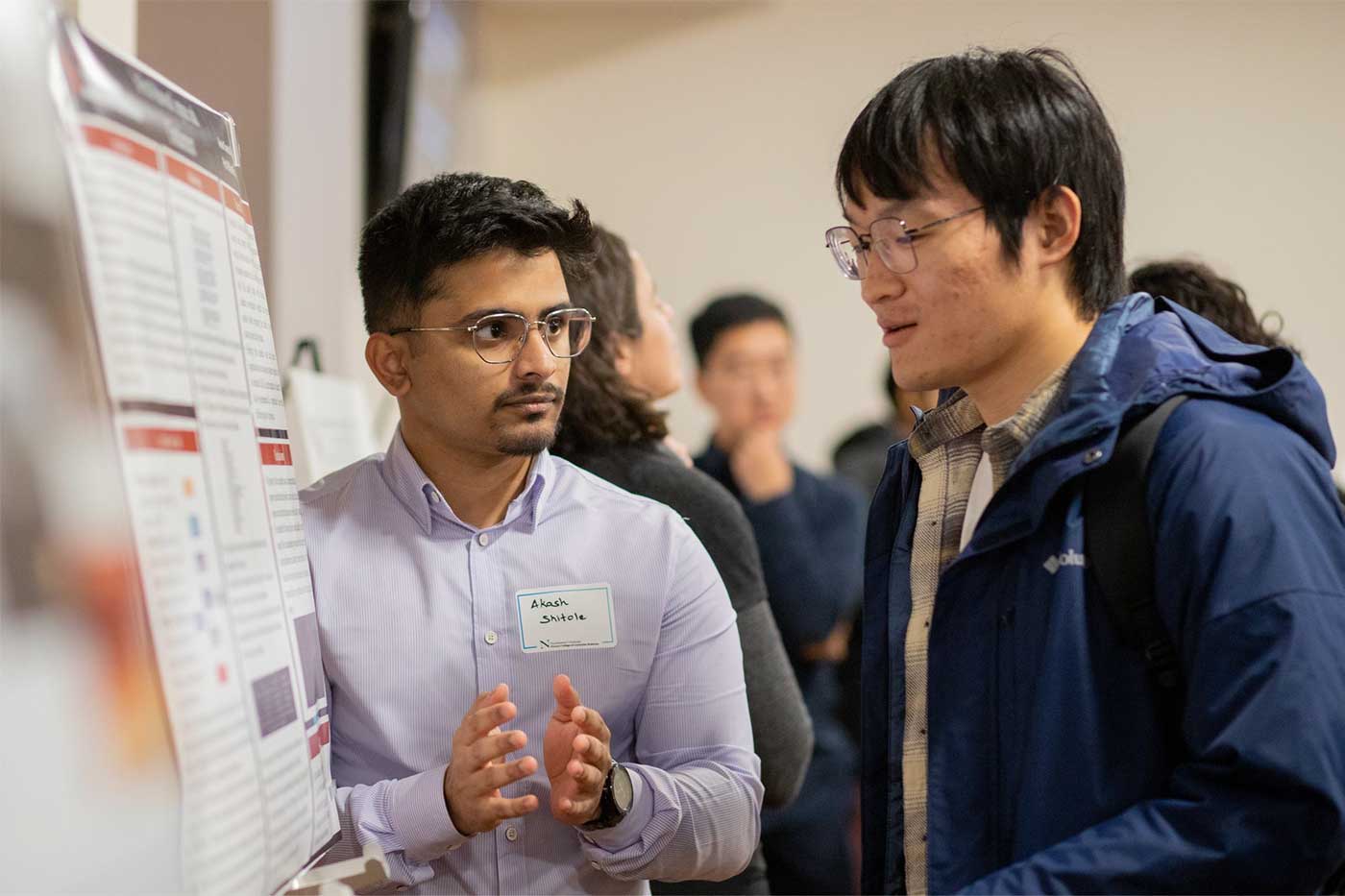
Akash Shitole’s cybersecurity passion stemmed from his undergraduate days, when he learned how data breaches paralyze institutions.
“Malware has creeped into our lives,” Shitole explains. “With so many data breaches and data theft going on around us, I believe that the future of computer science lies in malware capture and containment.”
Through his master’s program in cybersecurity and cloud computing, Shitole aims to use novel approaches to decimate command and control information stealers. While traditional procedures treat systems after they’re breached, Shitole’s unconventional approach searches for traceable malware fingerprints to detect malicious activity in real time. “This can fix the problem of current approaches where we stop using systems altogether once a breach occurs,” Shitole says.
However, creating a hack-proof end-user system was difficult. Shitole had to create an isolated testing environment to run his programs and resolve version incompatibility before he could implement his approach against different kinds of malware.
“With the help of Professor William Robertson and Khoury College’s supportive research culture, I surmounted most of my challenges,” Shitole says. “I feel more passionate about solving real-world problems than ever before.”
Caroline Craig
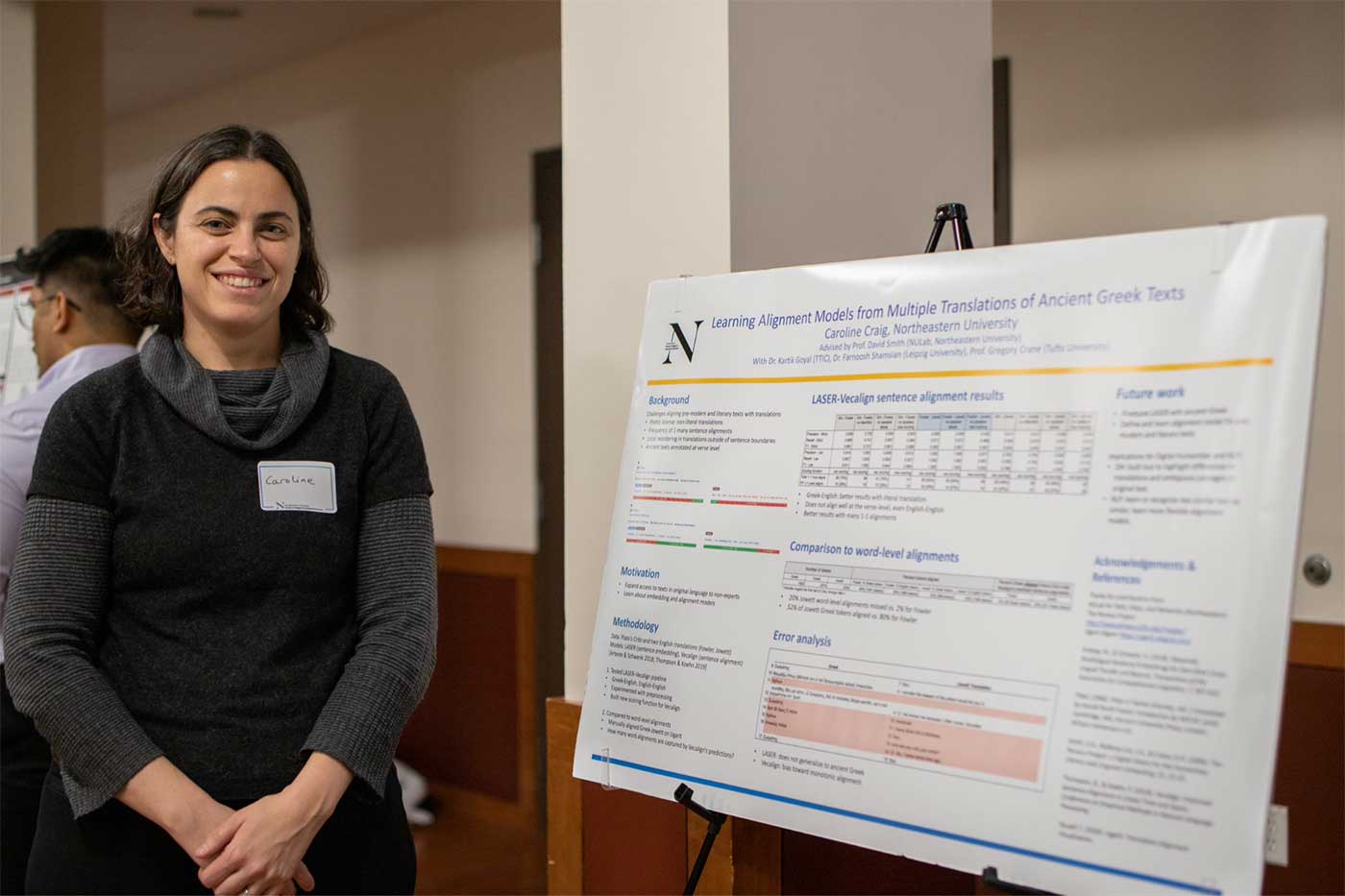
Caroline Craig brings a unique background to her data science master’s program.
“As an undergrad, I was passionate about classics, so I was excited to have an opportunity to study alignment models,” Craig says. “Ancient Greek text is an unusual data set to use, and using it would allow us to poke at natural language processing (NLP) models to see what works and what doesn’t.”
In her project, Craig tested two NLP models to see how they interpret this unconventional text. Her results are guiding her research questions this spring as she strives to build a better NLP model for documenting and preserving ancient languages, and see what other alignment models can be used to perform NLP.
“Learning new models, working on research code, running code on a cluster, and most importantly, taking ownership of a research agenda helped me grow into a better researcher,” Craig reflects. “I am thankful to Khoury College for giving me the chance to present research in an academic environment, a required skill in the PhD that I am considering.”
Sumukh Vasisht Shankar
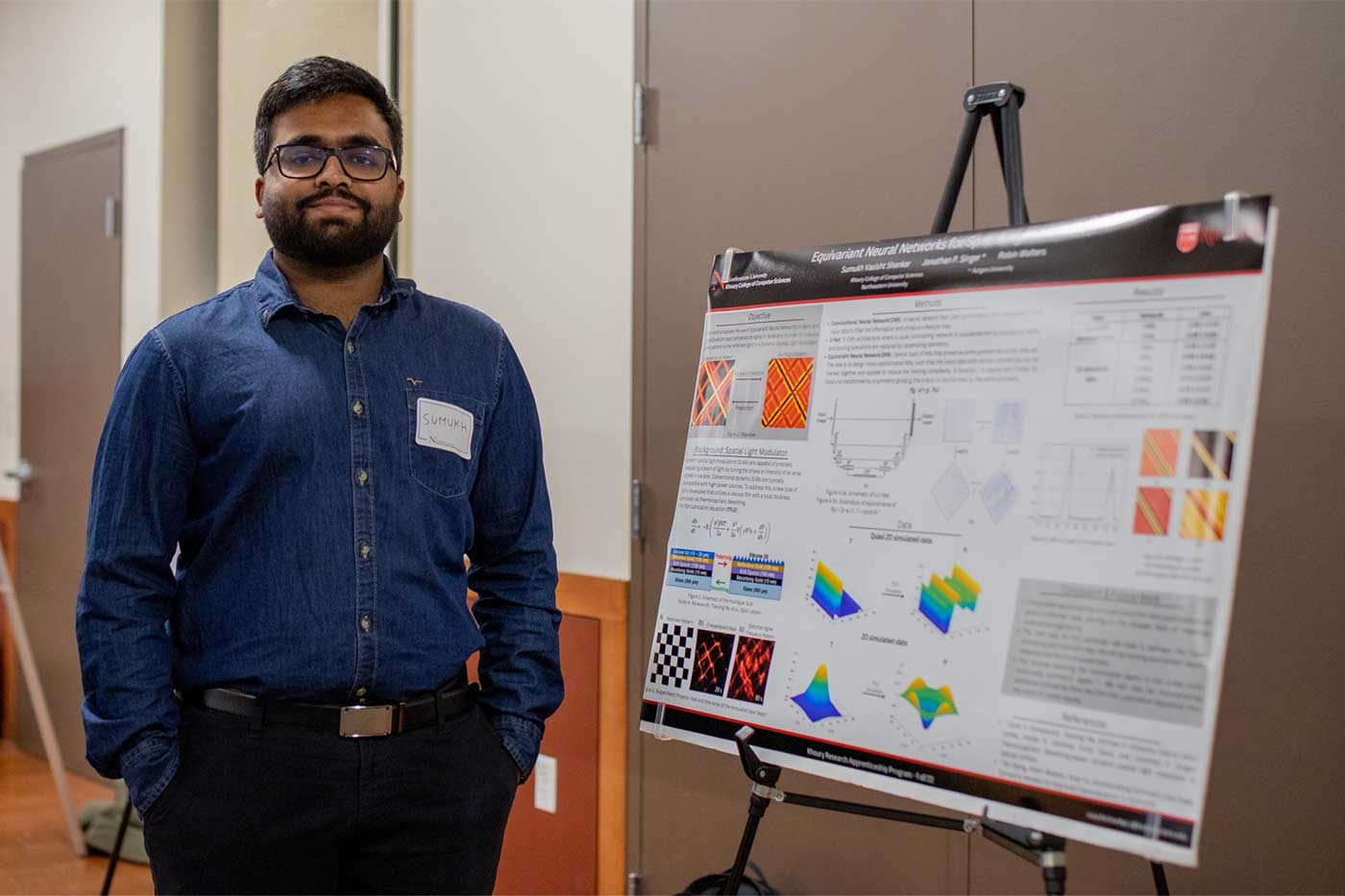
In pursuing his master’s in data science, Sumukh Vasisht Shankar has incorporated his lifelong interest in physics. He gravitated towards using deep learning to control light patterns in spatial light modulators (SLMs), and for his apprenticeship project, he trained models to generate temperature patterns required for producing a light pattern in an SLM.
“Heating an oil film changes the thickness of the oil film, resulting in a change in the phase and intensity of the beam of light which shines over it,” Vasisht Shankar elaborates. “But conventional SLMs working on this principle don’t work well with high-power sources like lasers. We want to work on forming physics-informed deep learning models that can learn what temperature is needed to induce a given pattern of light.”
Vasisht Shankar used a fourth-order differential equation to simulate data, which proved daunting.
“Carrying out real experiments is expensive,” Vasisht Shankar says. “Equations have boundary conditions and are computationally difficult, so we relied on deep learning to eliminate the need for these boundary cases.”
Vasisht Shankar’s future is bright, figuratively and literally; he plans to use data from his apprenticeship research to train neural networks in real-world settings to create desired light patterns. With his knowledge in data science from Khoury College, Vasisht Shankar is confident in pursuing a PhD in physics-informed deep learning.
Keith Rebello
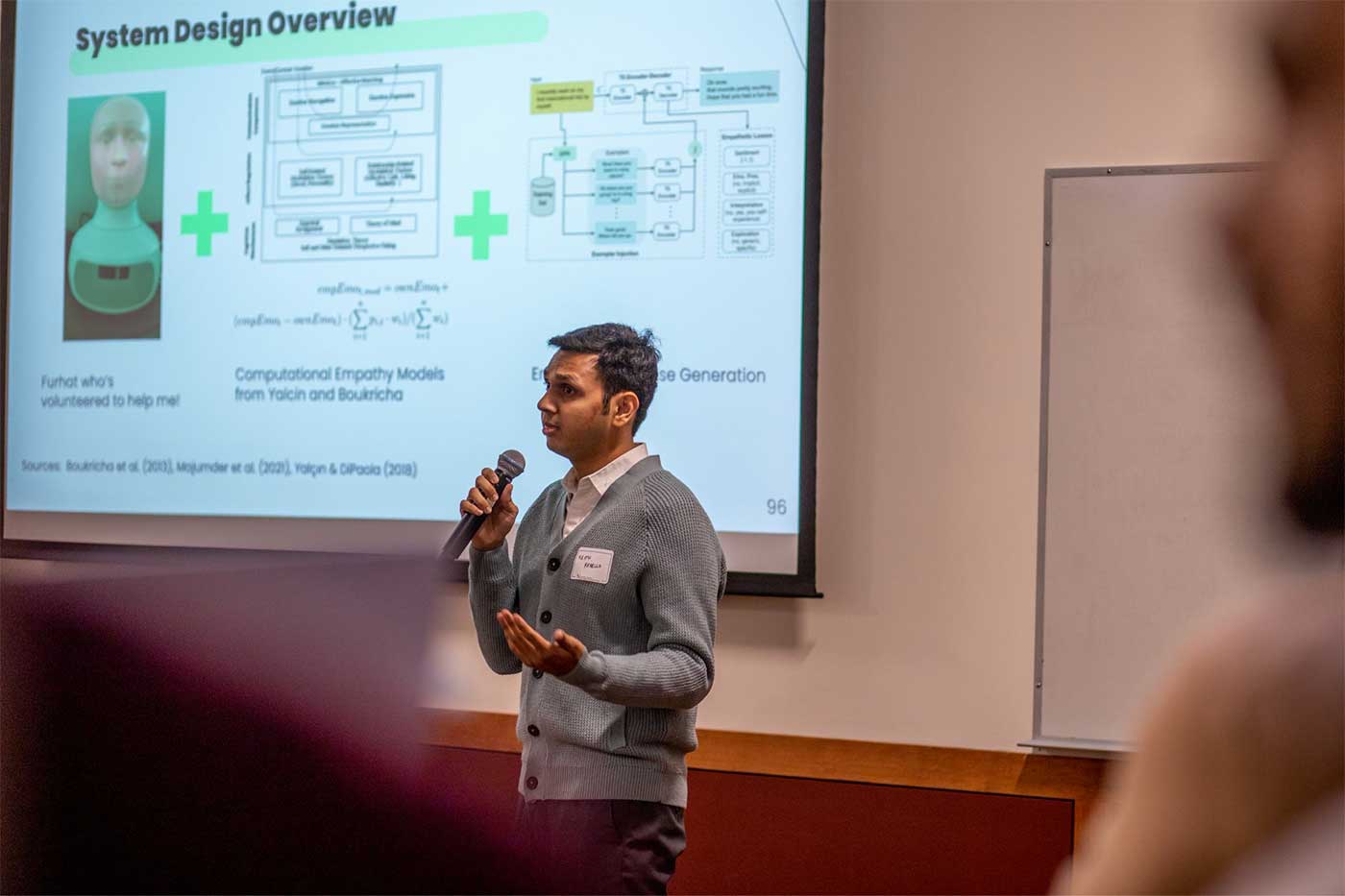
As part of his master’s in artificial intelligence, Keith Rebello is trying to solve one of the field’s most enduring problems: the need for empathy in robots.
“I studied mental health as a minor in my undergraduate degree, and I always had a passion for artificial intelligence,” Rebello says. “Coming to Khoury College to study artificial intelligence paved my way to working with the Relational Agents Group headed by Timothy Bickmore, where I have been teaching robots empathy so they can have a better conversation with you.”
Rebello’s project focuses on teaching robots to handle emotionally charged situations — such as dementia patients who require constant attention — while keeping the user’s feelings in mind.
“It was difficult to find a consensus definition of empathy and synthesize existing models of empathy into an empathetic response generator,” Rebello says. “But now that I am almost done building the system, I plan to test it with people to see whether it actually helps them.
“I plan to continue research in social robotics and empathetic conversation agents through a PhD,” Rebello adds. ”I am confident that I’ll enjoy working in research, given that I had such a positive experience testing my ideas through Khoury College’s courses, apprenticeship, and unique opportunities.”
Mingxi Jia
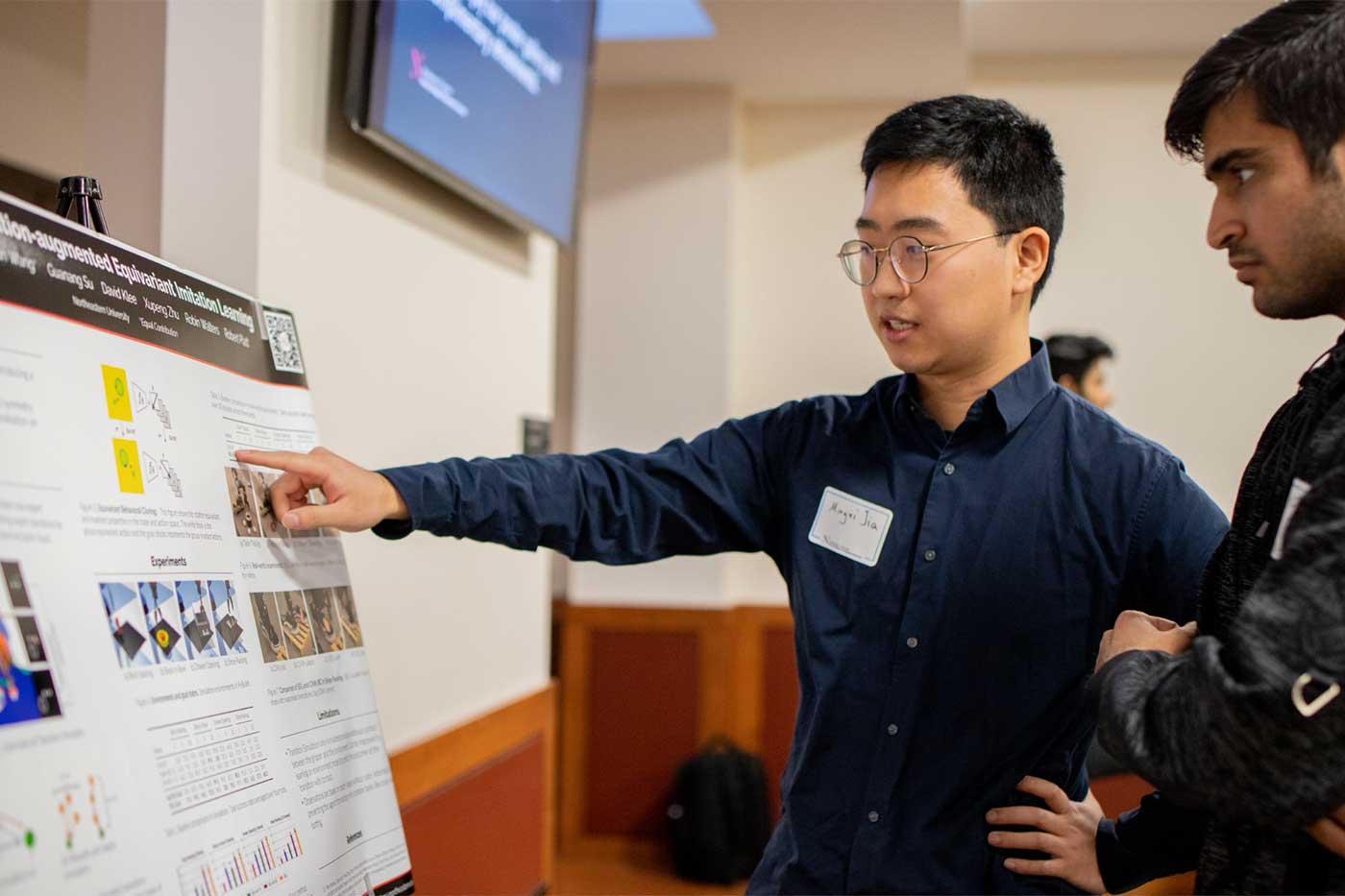
Mingxi Jia’s journey in combining machine learning and robotics started with a video that his grandmother sent him.
“The video predicted low-cost domestic robots in five years, but my inner robotic researcher knows that we have a long way to go in transforming such dreams to reality,” Jia explains. “That got me wondering: can we train robots to perform skills in an easier way using smaller data sets?”
During his master’s in robotics and computer science, Jia observed that industrial robots require careful calibrations and specially designed programs to work. He was also exposed to a low-cost technique called imitation learning — which aims to train a robot to mimic a set of demonstrations given to it — at the Helping Hands lab, so called for its mission to build robots for domestic tasks.
“We want to use the commonalities in routine tasks to train robots to make decisions and tackle objects,” Jia says.
Additionally, Jia studied ways of extracting more information from demos given to robots, namely by introducing a novel 3D data augmentation technique and taking advantage of symmetries in robotics. But the challenges were formidable, especially calibrating a real robot which had much more noise than a perfect simulation, and developing a new program to collect the data.
Jia’s paper has been accepted by the Conference on Robot Learning’s Workshop on Sim-to-Real Robot Learning: Locomotion and Beyond, and he’s looking forward to presenting his ideas at the 2023 IEEE International Conference on Robotics and Automation. He also hopes to continue learning how to improve robotic performance through a PhD.
SzeYi Chan
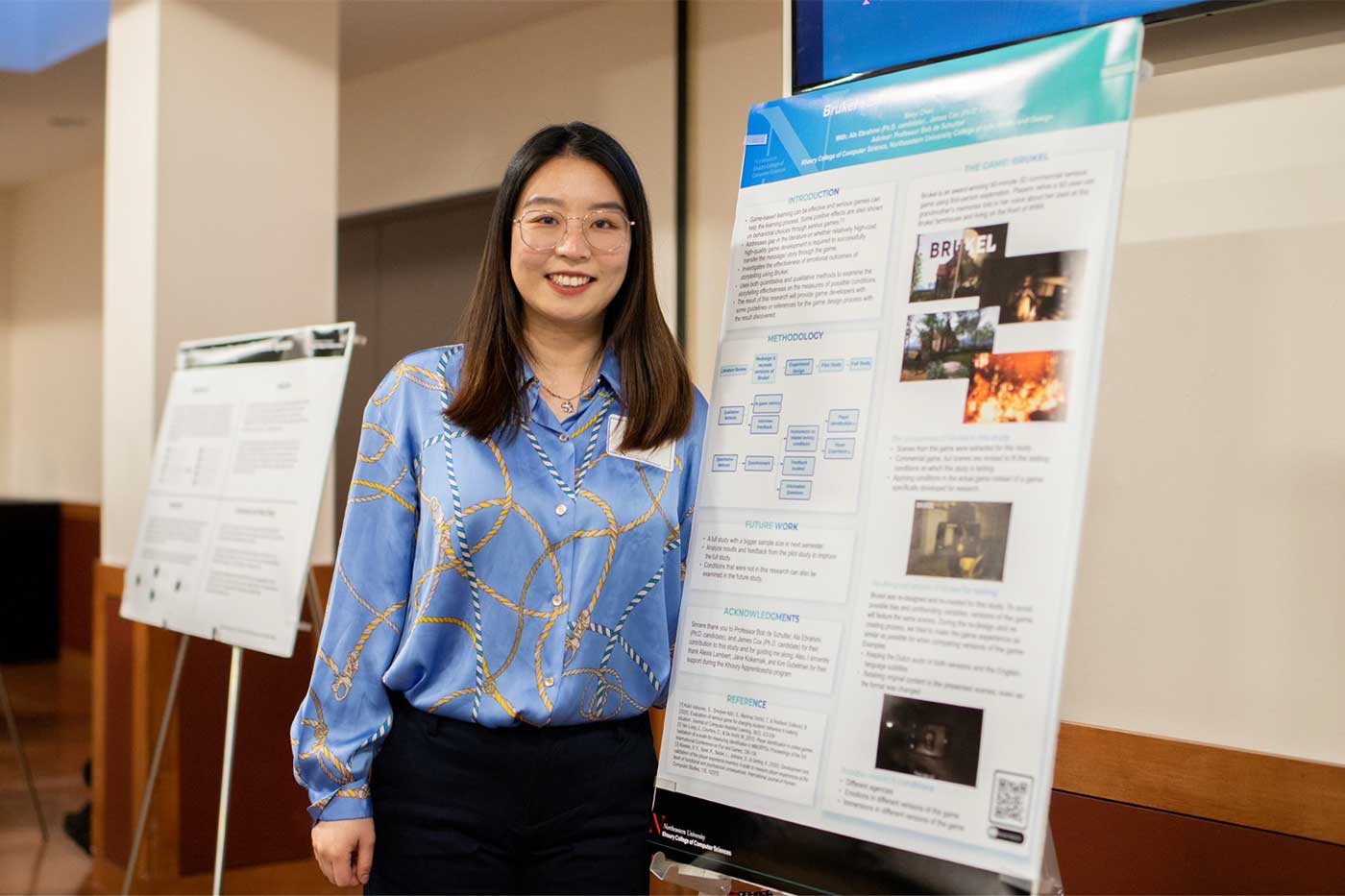
After earning an undergraduate degree in economics, SzeYi Chan ventured into data analysis — mostly using Microsoft Excel — in a sales and marketing company to understand consumer behavior. When she discovered that data analysis could be much easier if she knew coding, Chan enrolled in Align, Khoury College’s master’s program for students who studied non-CS subjects as undergrads. Within her computer science degree, she took an interest in human-computer interaction (HCI), a multidisciplinary field that focuses on the design of computer technology.
“I have always wanted to understand the factors behind people’s behavior, and HCI seemed like my calling, as it aims to study what can be done to improve it. Then while I was looking for HCI projects, I came across Bob De Schutter’s project,” Chan says, referring to Brukel, a first-person exploration game De Schutter developed based on his grandmother’s experience during World War II. “Once I found a research apprenticeship with a professor who had a commercial game on Steam, it felt like a dream come true!”
Chan began her apprenticeship by exploring HCI in gaming and game-based learning.
“However, we found limited literature on what makes these games so efficient in improving educational learning and cognitive skills,” Chan recalls. “We decided to explore the determining factors that made the storytelling so effective, specifically the high cost and quality of these games.”
READ: Armed with a video game, Khoury College researchers turn amateurs into scientists
“After finishing pilot studies during this apprenticeship, I plan to publish a paper before going on to a PhD,” she adds. “Games are a small part of HCI, and I want to explore more of what Khoury College has to offer!”
Charles Kirchner

“When I saw the apprenticeship program, I knew I had to apply,” computer science student Charles Kirchner says. “My experience with Chris Amato in reinforcement learning made me value and understand research, and how unconventional paths lead to success.”
In his apprenticeship, Kirchner combined two reinforcement learning strategies: macro action reinforcement and value decomposition. Conventionally, macro action reinforcement learning trains AI systems to decide between high-level pathways and reduce complexity, while value decomposition improves coordination between multiple learners.
“A joint evaluation of decisions could improve outcomes of decision-making in artificial intelligence,” Kirchner explains. “Preliminary outcomes show promising results of improvement in AI system coordination.”
Kirchner joined Flexcar as a back-end software engineer after graduation. But he says he’ll continue mixing and matching tools to help AI learn better, and hopes his team explores the intricacies of this novel approach.
Shriya Dhaundiyal
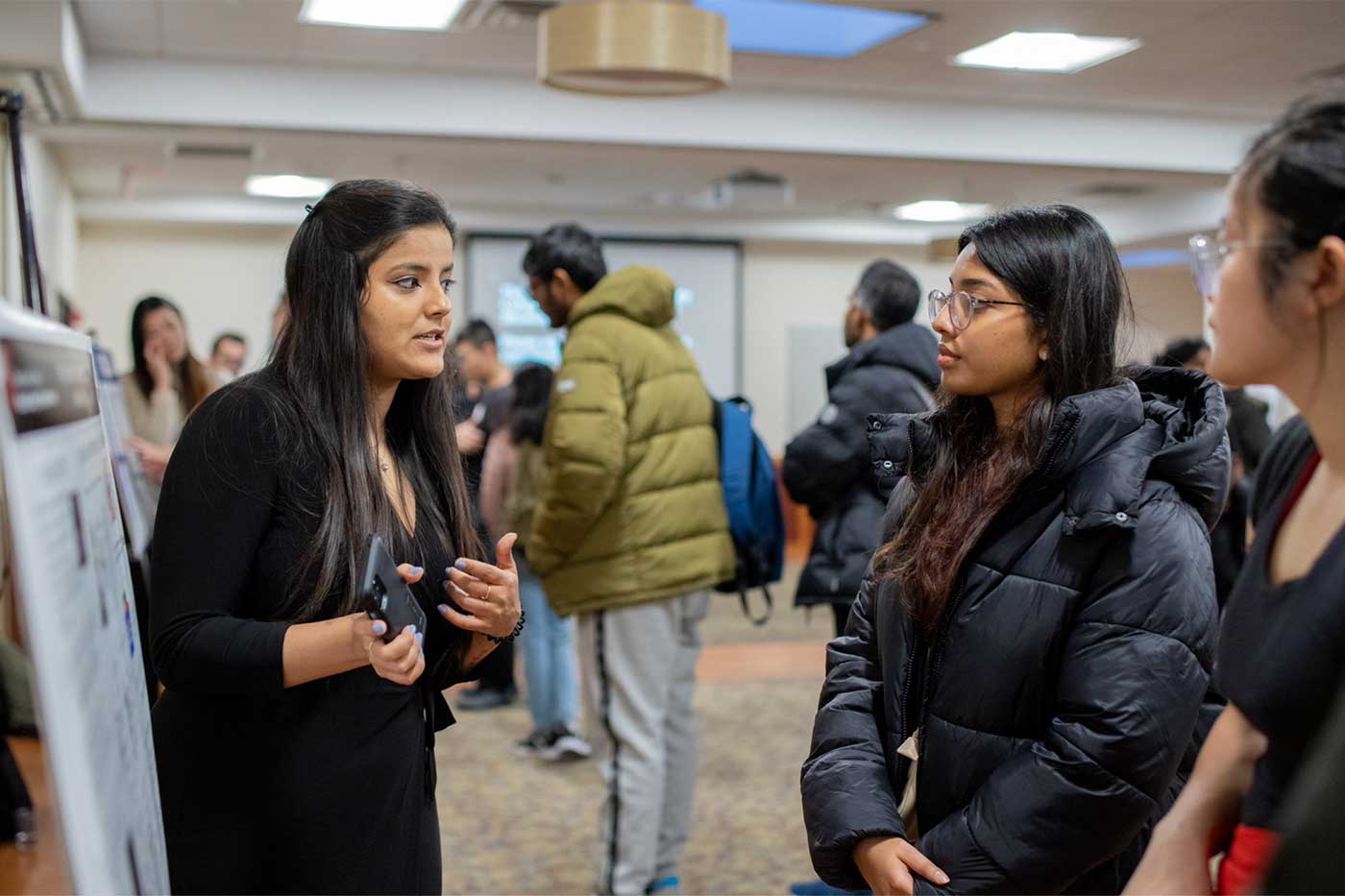
“After studying dental surgery during my undergrad, I decided that I wanted to get involved in med-tech research,” says Shriya Dhaundiyal, now a computer science student in the Align program. “With so many privacy breaches in the healthcare sector, it seemed natural to explore how our data is used by the tech we use on a daily basis.”
During her apprenticeship with David Choffnes, Dhaundiyal investigated voice-based AI systems such as Alexa, Siri, and Google Assistant to determine whether they profiled users based on their interactions. Dhaundiyal’s results supported her hypothesis, and she’s looking to confirm them by reproducing her experiments at scale.
Dhaundiyal’s project helped her identify a lot of red tape. Every big tech company has its own privacy policy, and looking at how those policies account for profiling activities demands an understanding of nuanced legal declarations.
As a personal challenge, Dhaundiyal found it adventurous to shift from hardcore healthcare to technology.
“I can’t wait to collaborate with people on tech privacy,” Dhaundiyal says. “I appreciate how Khoury College has introduced me to viewing things differently. The unique and inspiring ideas of professors spur me on to create an impact on the world.”
Jianhua Che
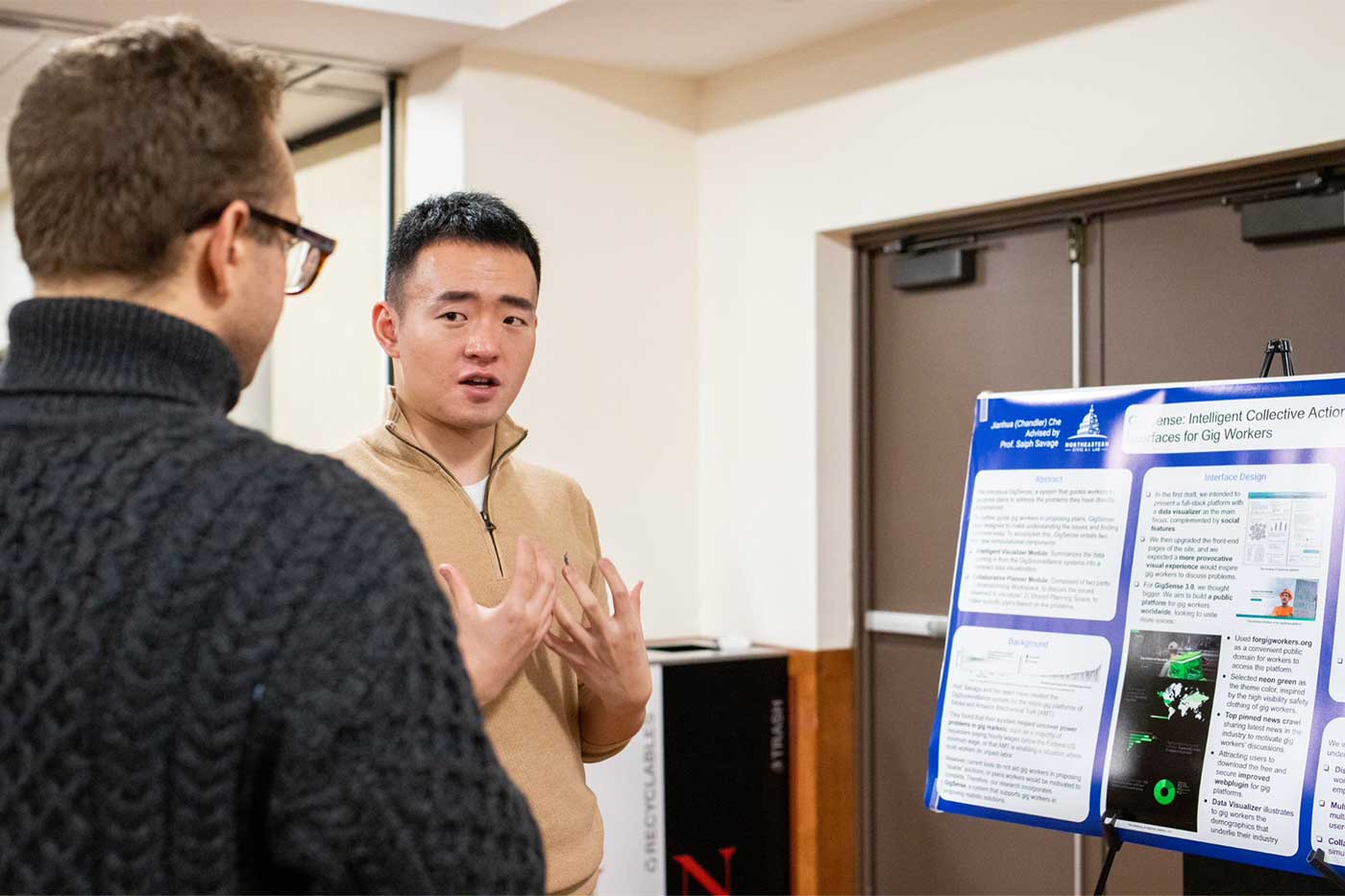
Jianhua Che can envision his revolutionary dream already: millions of gig workers of the world uniting and using data to claim what they deserve. An Align computer science student, Che leveraged a web plug-in built by his advisor, Saiph Savage, to collect data provided by gig workers, model their wages and hours worked, and determine whether those workers are fairly paid given current economic conditions. He aims to design social computing systems and intelligent collective action tools, which gig workers can use to demand better compensation and working conditions.
“A majority of gig workers are earning below the US federal minimum wage, and many big gig platforms like Toloka and Amazon Mechanical Turk are enabling a situation where most workers do unpaid labor,” Che says. “In response, I developed GigSense, a platform for gig workers to speak out about their work conditions.”
The main challenge was guiding gig workers in proposing plans with collective action tools. By achieving this, Che aims to bring human-centered AI tools to the gig market to help workers evaluate their benefits, voice their concerns to management, and achieve a better quality of life.
“I love designing social computing systems,” Che says. “It adds meaning to my life.”
Dmitrii Troitskii
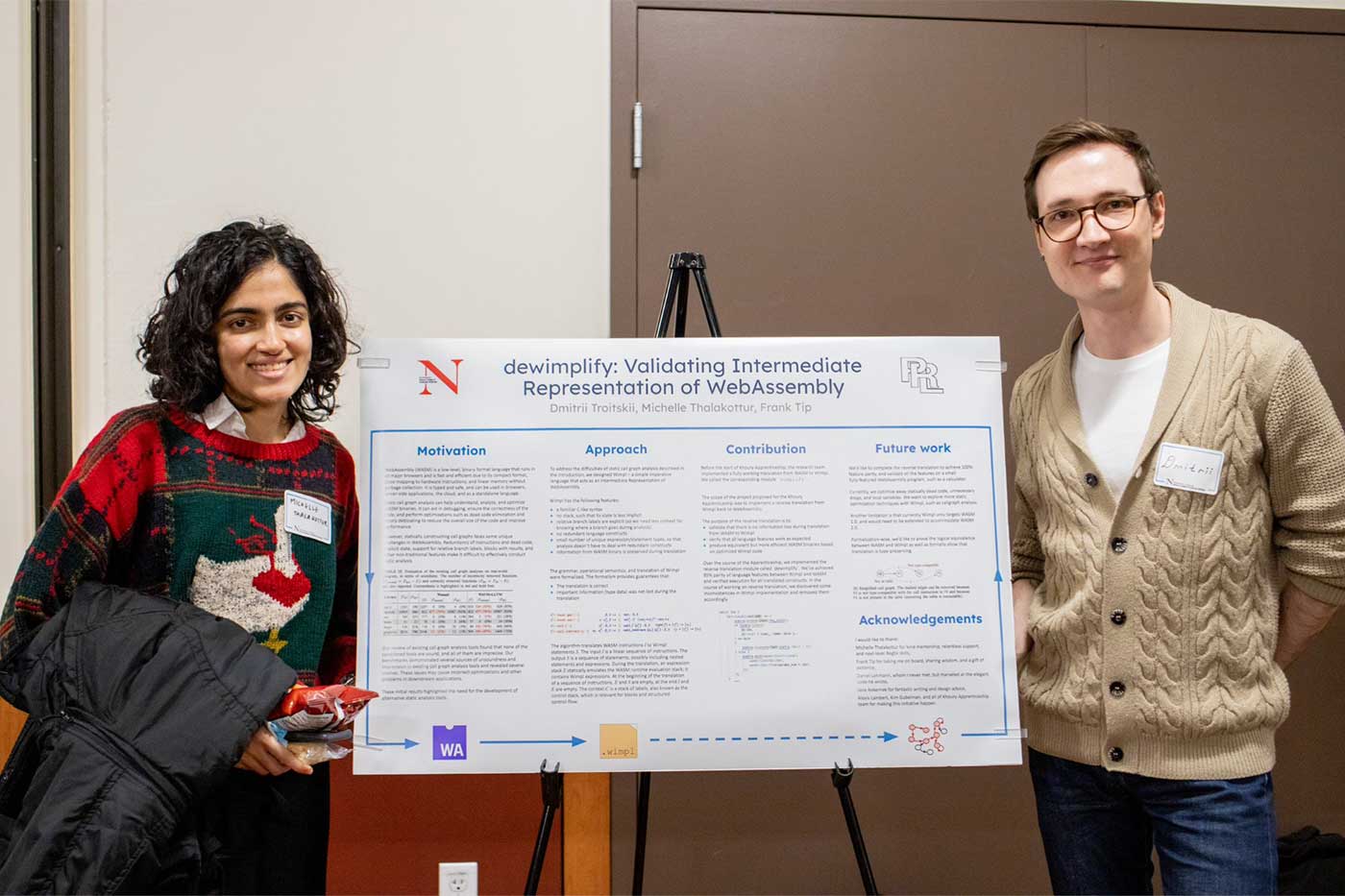
After participating in a coding bootcamp, Dmitrii Troitskii pivoted from technical project management to the Align computer science program.
“I realized my passion lay there,” Troitskii says. “I wanted to explore computer science both as a career opportunity and as something that would make me curious.”
When Troitskii found a project related to programming languages, he decided to join the apprenticeship, where he worked on static analysis of WebAssembly. The team, led by Michelle Thalakottur and Frank Tip, optimized WebAssembly by designing Wimpl, an intermediate language. Wimpl can help with finding errors in code, streamlining code by excluding unused features, checking code for security flaws, and optimizing programs.
“We named the project ‘Dewimplify,’” Troitskii says. “It’s like a circuit: we are ‘wimplifying’ from Web Assembly to Wimpl, and ‘dewimplifying’ as we go the reverse direction.”
The project aspires to translate WebAssembly code to Wimpl, conduct static analysis, and then translate the optimized code back to WebAssembly. WebAssembly presented an interesting challenge; for example, it stores all the values on a stack instead of the registers that most languages use. Troitskii hopes that this project will reduce the burden of running complicated programs.
“We have been testing with small programs, and would like to test medium-sized programs — a calculator, for example,” he says. “We want to take these programs, optimize them using Wimpl, and see how their performance improves.”
The Khoury Network: Be in the know
Subscribe now to our monthly newsletter for the latest stories and achievements of our students and faculty
Author: Milton Posner
Date: 03.06.23
For Predrag Radivojac, multiple multi-year efforts came to fruition in 2022 and solidified him as a leader in his field.
He published two major research projects — one on reducing the risk of gestational diabetes, another on incorporating algorithms into clinical practice. Participants at his genome interpretation conference diagnosed genetic diseases for patients left in limbo by conventional medical establishments. And after nearly a decade on the board of the International Society for Computational Biology, he was elected to captain the group into the field’s exciting future.
“Genomes are so big, and genomic variation is so extensive, that nobody can experimentally test all of it,” says Radivojac, associate dean of research at Khoury College. “It has to be driven by predictors. There are many machine learning challenges to solve these problems, and I would like to help solve those challenges.”
And with 2022 in the books, Radivojac is well on his way to doing so.
Frenetic genetics
An ultimate goal of any machine learning method is to translate it into practice to solve a societal problem. For Radivojac, this means leveraging AI to better understand how human genetic variants and mutations affect diseases and disorders. Understanding genetic variation helps physicians to diagnose patients early and correctly, customize treatments, and improve outcomes for conditions ranging from cancer to autism.
An example: Radivojac and his collaborators analyzed the genomes of over 3,500 women to measure their risk for gestational diabetes (GD). Their paper, published in August, found that about 30 minutes of moderate physical activity per day early in a pregnancy can curtail GD risk, including among women genetically predisposed to diabetes.
“It has an impact,” Radivojac says of the effort, which counted several of his students and postdocs among its lead authors. “That’s what we care about: that our research translates into clinical practice and advice to patients.”
The same ethos underpinned another of Radivojac’s former-student-studded collaborations, published in December. Previous academic and industry groups crafted guidelines for when an algorithmic output could help classify a genomic variant as “disease-causing,” and thus when clinicians could use the output as a basis for molecular diagnosis, treatment, and therapy.
READ: Millicent Li bridges the gap between theoretical AI and medical practice
Under previous guidelines, computers could provide only “supporting” evidence, the lowest tier of evidence used in establishing pathogenic status. Radivojac co-led the team that found computers can provide “strong” evidence, the second-highest tier. They successfully defended their findings to ClinGen, an NIH-funded consortium that aims to authoritatively define the clinical relevance of genes and variants.
“Often, algorithms were undervalued in clinical practice, so we’ve developed new guidelines,” Radivojac says. “I’m proud of this work because more people will be diagnosed. The evidence says that more variants can be called pathogenic, more diagnoses can be provided, and fewer of them will be false positives.
“To me, this paper is a game-changer.”
Conference and camp
In May, several hundred people participated in the sixth NIH-funded Critical Assessment of Genome Interpretation (CAGI), which was followed by a 100-person conference which Radivojac co-chaired. CAGI works to assess the quality of genome interpretation algorithms, use genomic sequences to predict a person’s risk for common diseases, and find genomic explanations for rare genetic disorders. To discover which variant is responsible for the characteristics they’re seeing, participants examine everything from standalone protein mutations to entire genomes.
The conference exists in part because genomics lacks an authoritative body to evaluate the accuracy of algorithmic diagnostic methods and disseminate the results. For instance, physicians may lack the time or mathematical foundation to understand how an algorithm works, but CAGI works to ensure they can still understand how accurate it is. Additionally, an increasing number of companies are selling computational diagnostic services to patients, and their performance needs independent evaluation.
“We assess the quality of these methods through a series of 14 challenges,” Radivojac says. “For clinicians, the conference provides information about the quality and applications of the methods. For us computational researchers, it shows what works, which ideas win, what the bottlenecks in the field are, and what is relevant to work on.”
May’s conference had plenty of significance for individuals with rare genetic diseases and disorders too. These patients often seek etiological diagnoses — explanations not of what they have, but of why they have it — and they may wait years for results. Radivojac believes computational tools can reduce this wait by telling us which genomic variants are causing their disorders.
Working with 30 genomic trios previously evaluated by the Broad Institute of MIT and Harvard, the CAGI challenge participants correctly identified disease-causing variants on most of the cases that Broad had solved, and solved two new ones by using different methods than Broad did. Because of that, two families received etiological diagnoses to help them to pursue the right therapies for their children and gauge the likelihood of the same condition happening in another child.
CAGI followed this up with its first-ever virtual summer bootcamp, attended by 17 high-school and undergraduate students from five continents. It blended lectures on genome interpretation and biology with hands-on training in Python programming and machine learning, and even sent two students — UTEP’s Luis Cedillo and Tuskegee University’s Kaiya Jones — to the Annual Biomedical Research Conference for Minoritized Scientists. Like the class’s geographic spread, this trip reflected the students’ push for greater diversity in — and deeper knowledge of — the field.
“They’re pushing us to teach them, and when you see how competitive those kids are, it’s unbelievable — it’s beautiful,” Radivojac says. “They just keep coming.”
Mighty society
This summer, Radivojac was elected president of the 3,000-member International Society for Computational Biology (ISCB), the preeminent body dedicated to understanding life at the molecular level through computation. He’ll begin his three-year term in January 2024, with plans to expand the society and bolster ties across borders.
Radivojac was instrumental in establishing Bioinformatics Advances, the ISCB’s open-access, peer-reviewed journal now in its second year. It’s important to showcase computational biology excellence, he says, because the field’s researchers sometimes find support lacking in their own departments. Computer science colleagues may write them off for not working with sufficiently “hardcore” CS systems and architectures, while biologists may view CS as “too technical.”
“I understand the challenges our researchers face, and how our students go to find careers,” Radivojac says. “The Society has a voice, and it’s important to keep that voice going to advocate for necessary changes.”
The ISCB lobbies for increased support for computational biology in research grants and promotes the role of computation in solving clinical problems. It also promotes standards for computational biology curricula and career credentials, and recognizes excellence in the field through its awards and fellow selection.
But for all the progress the field’s researchers have made, large hurdles remain. Some minority groups are reluctant to donate their genomes to research projects given historical injustices, and are underrepresented in research populations as a consequence. Some countries refuse to allow data sharing across borders, citing concerns over data protection or human rights records. And many physicians wary of false positives are reluctant to make AI a pillar of disease diagnosis, reasoning that they can’t just tell patients “the algorithm said so.”
But the field’s potential defies reckoning. Polygenic risk scores could gauge your risk for complex diseases like cancer and diabetes. Computationally enhanced newborn screening could identify autism early, increasing the effectiveness of targeted behavioral therapy. Genomic diagnoses could help patients preemptively adjust their lifestyle to earn their best chance at long-term health. Radivojac wants to be in the middle of it all, and to do it the right way.
“In the end, a computer scientist is a computer scientist, and I get satisfaction from important technical solutions,” Radivojac says. “But we need time to do them right. That’s where ethical challenges come in; you can do damage — impacting specific populations, diagnosing incorrectly, or missing diagnoses — if you rush things, aren’t careful, or don’t know the material.
“I’d like my research to continue contributing to interpretation of genomic variants. It’s an extremely powerful field that makes a difference in the clinic.”
The Khoury Network: Be in the know
Subscribe now to our monthly newsletter for the latest stories and achievements of our students and faculty
Author: Sarah Olender
Date: 02.28.23
Rewriting the Code, an organization that helps empower women in computer science, announced on February 16 that they selected Khoury College as their first official collegiate partner.
The announcement came during a fireside-style chat between Khoury College Dean Elizabeth Mynatt and Rewriting the Code founder Sue Harnett, an event attended by existing RTC members and Khoury community members. The pair discussed the future of the partnership and its goal of creating a better future for women in computer science.
RTC is an international nonprofit of about 17,000 undergraduates, graduates, and young professionals around the world striving to create a more inclusive community within tech and computer science. The organization helps women in computer science to network with each other and employers, and it also provides students and early-career tech professionals with mentorship and networking opportunities.
While spending her college career studying economics and healthcare administration and earning accolades as one of the top scorers in Duke women’s basketball history, Harnett also recognized a problem in the world of computer science — the large discrepancy in the number of men and women working in the field. Using her leadership and organizational skills, Harnett founded RTC seven years ago, hoping to encourage more women to enter the field.
“I was introduced to the fact that women were walking away from something that they loved for reasons that were addressable,” Harnett said. “I just couldn’t stand by and watch that happen, so I feel incredibly fortunate that we get to work with women from across the United States and the globe to try and have as big an impact as possible.”
Northeastern and RTC are striving to empower all women in tech by building trusted communities and networks designed for female CS students and those early in their careers. Mynatt recalled many times where she was the only woman in a computer science class, but over time, she said, things began to change. Early in her career at Georgia Tech, Mynatt helped to create a new PhD program in human-centered computing. After the program was up and running, she began to see a difference in both the people who were joining and their contributions; the program had enabled greater diversity in students and research topics.
“Not only did we have more women in the building, but they asked different questions, they had different research goals, they brought different agendas with them for what impact they wanted to make in the world,” Mynatt said. By having more women in the program, more perspectives entered the classrooms, and learning was enriched.
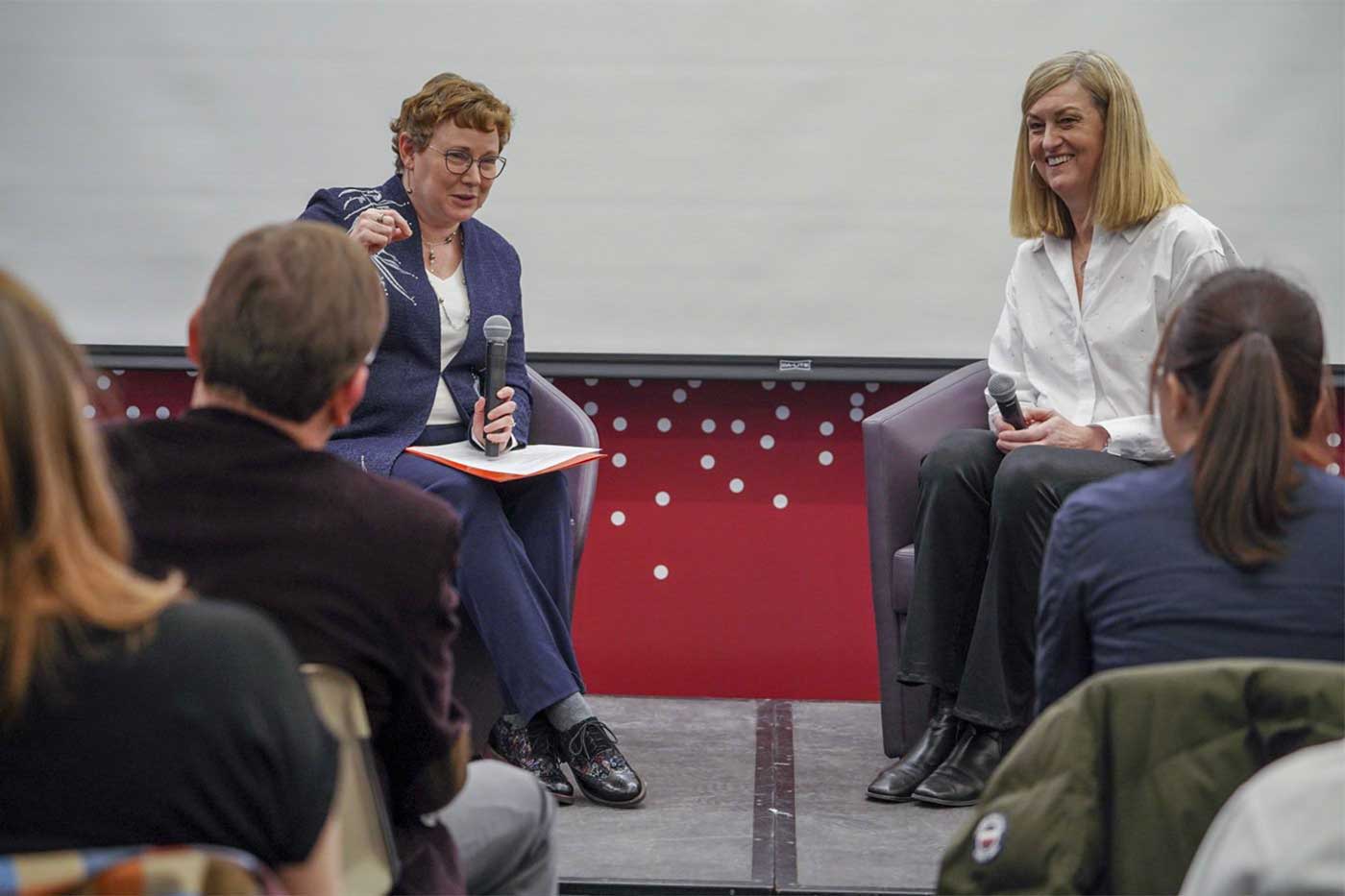
During her time at Khoury College, Mynatt has spotlighted and furthered the college’s gender diversity goals. At the RTC event, she noted that the college’s most recent fall undergraduate class is 47 percent female and that the Align master’s program is currently 54 percent women, both numbers well ahead of the field’s averages. The College strives to keep those numbers high to bring more equity to the profession, as well as more diverse perspectives into Khoury classrooms.
After Mynatt and Harnett introduced the partnership and discussed their experiences, career goals, and journeys, fifth-year computer science and economics major Amina Haida came forward to talk about how impactful Rewriting the Code was throughout her time at Khoury College. Haida joined RTC five years ago as a freshman in search of a community and a place to network with other women. RTC became a great place for her to do this, and she’s been a part of the organization for the last few years. When she was on co-op in New York City, she even got the chance to attend an RTC event and network with women and companies from another region.
Haida shared that she struggled with impostor syndrome while in her computer science classes. She credits her regained confidence to organizations like RTC, which helped her see that other people who looked like her also felt the same way.
“I got to see other women be vulnerable and say those same feelings that I was feeling,” she said. “There was that vulnerable side to RTC that was super helpful.”
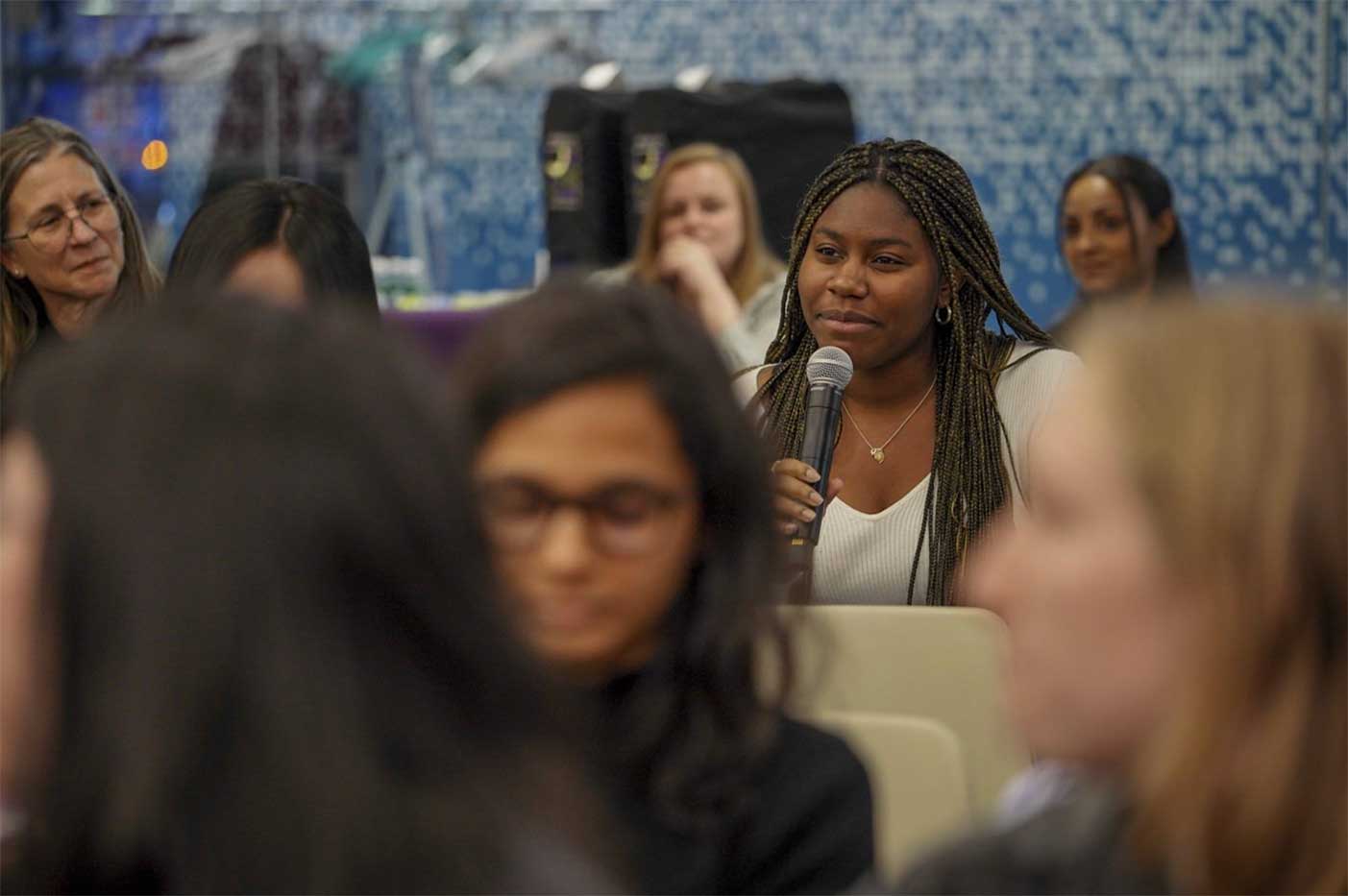
The event concluded with an opportunity for the community members in attendance to ask Mynatt and Harnett questions. With about 30 students of all ages and from both graduate and undergraduate programs in attendance, nearly every student participated. Their questions — largely about how to join RTC and network through the organization — showed the community’s excitement for the new partnership, and for the work to come.
The Khoury Network: Be in the know
Subscribe now to our monthly newsletter for the latest stories and achievements of our students and faculty
Author: Matty Wasserman
Date: 02.21.23
Branching into a brand-new area of study is perilous for young PhD students, but Megan Hofmann was confident she was on to something with huge potential impact, if only she could produce the research to prove it.
“There is a little bit of fear when you’re going in,” Hofmann said. “You know you are doing work that is important for you and that you believe in, but you don’t know if anyone else is going to follow in your footsteps.”
Hofmann, a senior research fellow at Khoury College who will begin as an assistant professor this fall, has seen that self-belief and dedication pay off. Her doctoral dissertation at Carnegie Mellon University’s School of Computer Science has earned recognition from peers within the fields of human–computer interaction (HCI) and digital fabrication, and on February 14, she was announced as a recipient of the SIGCHI Outstanding Dissertation Award. The award committee touted her research as “seminal” in the field of medical making because of its potential for widespread social impact and practical application.
Hofmann manages her own disability and chronic pain, and her research focuses on creating customized assistive devices. Such devices are invaluable for people with disabilities looking to perform everyday tasks, especially because each person has different needs that often aren’t properly addressed by one-size-fits-all solutions. But the devices are often inaccessible for people with disabilities and their clinicians, particularly for those without computing backgrounds.
Despite the need, little research has been conducted in the field due to the barriers of digital fabrication, which is the use of computing and digital modeling to build physical objects. Additionally, there’s a lack of representation for people with disabilities in computer science, which often leads to oversights and gaps in technologies that would serve them. But when she began her doctoral dissertation, Hofmann sought to change that. She began building technologies that would allow people to design and 3D print medical support devices tailored to their needs — even if they lacked programming experience or technical expertise.
“I really wanted to think about how people who came from my background as someone with a disability — or how people like my own clinicians — could access new technology instead of just supporting the engineers that I surrounded myself with during the research,” Hofmann said. “I saw that need in my own life. I saw that need in people around me, and it wasn’t being explored in the wider field. So I really wanted to build that new space.”
Hofmann’s research process and initial ideas were broadly motivated by programming language concepts, as she aimed to create modular, parameterizable components that others could reuse. She applied these concepts to 3D printing, and later introduced machine knitting to the medical making space, using the innovative printing technology to produce medical devices for the first time.
According to Hofmann, most HCI dissertations center on human behavior or complex systems. But what set her thesis apart was how she combined the two — conducting multiple six-month ethnography studies with clinicians, gaining insight into the medical making aspect of the research, then tying her findings back to the optimization and systems components of her work.
“What gave us the technology side of it is that I observed patterns in how people go about building optimizers, 3D models, knitting patterns that no one had seen before,” Hofmann said. “We didn’t invent new algorithms or methods, but we restructured them in a way that people who are not computer scientists, who are not engineers, could understand these systems and use them without the support of others.”
Though the technology is still in its infancy, it has already been applied successfully. Hofmann cites an occupational therapy patient in Pittsburgh who loved cooking, and who wanted to cut vegetables and prepare food independently. But he was paraplegic, with no motion in his lower body and limited mobility in his hand, which made it difficult for him to safely grip the knife.
“We designed a special case that covered his knife handles,” Hofmann said. “So he took a standard kitchen knife, and we stuck it into this case that had a handle for him to put his hand through. That way he could hold on to it, rock his hand back and forth, and cut independently.”
Though it may seem like a small achievement, the device had to be designed extremely specifically and carefully to fit the patient’s hand measurements and motion needs.
“We saw someone take this assistive technology that we helped them make and worked with them on, then bring it home and get a lot of joy out of it. That was some of the earlier work that I did on this thesis, and it propelled me forward for years,” Hofmann said.
Hofmann’s aspirations for the research and functionally of the software stretches much further than its present capabilities. In the knife example, the project still required a full team of engineers and medical makers to see the process through. With further advancements, Hofmann envisions a beginning-to-end process where people without computing skills could customize assistive devices for themselves, by themselves.
“In the current state of this research, it enables new people to collaborate with programmers,” Hofmann said. “But the long-term goal is to make it so that people don’t need to be programmers in the sense that we think of them now.”
Though it was self-belief that first got Hofmann’s research off the ground, seeing her work praised now by peers only further drives her.
“Having this acknowledged by the awards committee, having it seen as top-tier research not just in my little sub-area but across the entire field of HCI, was really supportive to the work,” Hofmann said. “It definitely motivates me that I’m going in the right direction here at Northeastern.”
The Khoury Network: Be in the know
Subscribe now to our monthly newsletter for the latest stories and achievements of our students and faculty