Author: Madelaine Millar
Date: 09.13.23
Keeping children safe online sounds like a political slam dunk, so it’s no real surprise that the Kids Online Safety Act (KOSA) has faced little resistance since it came out of committee at the beginning of August. The bill’s provisions, proponents claim, will keep children safe on social media by restricting access to minors’ personal data, providing parents with tools to supervise their children’s social media use, and creating liability for platforms that allow minors to encounter inappropriate content, among other measures.
But Michael Ann DeVito, assistant professor of computer science and communication studies, thinks the bill deserves more scrutiny. DeVito has spent the last decade researching how queer and trans people interact with computers, social media, and online communities — first as a doctoral student at Northwestern University, then as a postdoctoral research fellow at the University of Colorado Boulder, and now at Northeastern University as a newly arrived joint appointee between Khoury College and the College of Arts, Media and Design.
“KOSA is one of a family of bills that’s been proposed in the last couple of years that all center around the rhetorical premise that we have to protect children,” she said. “You can slip anything under that radar once you’ve got such an appealing premise; people will stop reading, and they will sign on to something that actually will harm their kids.”
Per DeVito, KOSA’s potential harm derives from three elements: how queer and trans online communities function, how social media platforms navigate questions of legal liability, and the techniques bad-faith actors use to silence queer and trans people online. So, with DeVito’s help, let’s break it down.
How do queer and trans online communities function?
When DeVito was growing up in the 1990s and 2000s, information about being queer was buried in what she called the “nasty corners of the internet,” mixed haphazardly with misinformation and bigotry. Over many years, queer and trans people built alternatives, determined to make sure the next generation of kids didn’t have to go through the same confusion and isolation. Today, the communities DeVito studies often materialize through influencers and educators on Instagram or TikTok who create videos about what to expect when talking to your doctor about hormones, experiences with different surgeries, and what went into figuring out their own identities, as well as influencer staples like makeup tutorials and vlogs.
“One characteristic of these spaces is the provision of high-quality information — information that has scientific backing, and that is also community-based and vetted,” said DeVito, who spent a year becoming a trans TikTok educator as part of her study of the phenomenon.
She also found that queer and trans influencers tend to be vigilant about self-policing, attaching warnings to adult content and moderating their own comments sections for bigotry.
“They will sacrifice all kinds of their own goals and their own time to stay on top of that comment section and make sure no kid who watches their videos sees nasty, hateful stuff,” DeVito added.
Finally, queer and trans online communities are characteristically labors of love.
“These are volunteers who are doing this,” DeVito explained. “They’re trying to create places where people can actually explore who they are, ask questions, and get a sense of what’s going on with their peers.”
And the research is decisive; the availability of supportive online communities directly correlates with a host of improved health metrics, including a notable drop in youth suicide rates.
“It’s not one or two studies; I’m talking about the last ten years of studies on all different kinds of queer youth populations, trans youth populations. It is so clear: when you have a supportive online space, you do way better,” DeVito said. “If you don’t make kids feel super isolated about who they are at their core, they are less likely to harm themselves.”
How does legal liability work with social media platforms?
Social media platforms are governed by a set of federal laws called Section 230, which generally absolve them of liability for what their users post. That means if someone posted a hateful screed about DeVito to TikTok, she could potentially sue the user for defamation, but not the platform for hosting hate speech. Platforms try to moderate harmful content out of an economic incentive to be a pleasant place for users, not out of liability concerns.
KOSA would change that, making platforms liable if children encounter content that could cause them harm. DeVito acknowledges that additional review of harmful content could be a good thing if undertaken by an impartial review board. But instead, KOSA allows individual state governments and attorneys general to determine what constitutes harm, and some have a very different idea of what constitutes “harming children” than others do.
“For example, Texas’s government has been very explicit that they plan to use this law, should it pass, to censor any queer and trans content coming into the state of Texas,” DeVito said.
Under the new law, if a child in Texas watched one of DeVito’s TikToks about her experiences as a trans woman, Texas could hold TikTok itself liable if the child “comes to harm” — however Texas chooses to define “harm.” Even if her videos are factual, well-vetted educational material presented in an age-appropriate way, the threat of a lawsuit incentivizes TikTok to take a “better safe than sorry” approach and remove DeVito’s content.
“(KOSA) gives additional control over what is inappropriate to political entities, and then takes that pressure and lets it sit on platforms that are already inclined to over-moderate,” DeVito said. “That’s how you wind up getting rid of all queer and trans content, not just the stuff directed at kids. It’s like book banning on steroids.”
What techniques do bad-faith actors use to silence queer and trans people online?
While researching queer and trans online communities, DeVito observed many creators undergoing a common, upsetting experience: mass reporting campaigns. If their work caught the attention of a bigot who wanted to silence them, they would suddenly find their posts reported to the platform hundreds of times for hate speech and sexually explicit material, regardless of the post’s content. The reports were either submitted by a group of politically aligned people coordinating through another platform like Discord or Reddit, or by hundreds of fake accounts directed by a single person in a phenomenon called a “bot swarm.”
DeVito found that platforms generally took down mass-reported posts, sometimes via automatic action rather than moderator review. Two hundred reports saying a post contains sexually explicit material sounds like a sure thing, and reviewing posts one by one requires financial, psychological, and temporal investments many platforms won’t — or can’t — make.
Creators can appeal these decisions, but DeVito found that some queer and trans creators who reported harassment saw their own content or accounts get pulled down instead of the hateful comments. Rather than going to the platform, many creators spent hours figuring out how to tag their content to conceal it from bad actors but not from other queer people in a process called folk theorization, all while transphobic and homophobic harassment continued to rain down.
“Part of what I’ve been studying recently is the moments when creators say ‘This isn’t worth it; I can’t do this anymore,’” DeVito said. “People drop out, and communities are harmed by not having that positive influence and that positively curated space.”
That’s the real goal of mass reporting campaigns — not to get individual videos taken down, but to overburden creators until they burn out and quit. Because KOSA would expand what content could be reported and decrease platforms’ incentive to stand with marginalized creators, it’s an ideal tool for bad-faith actors to harass queer creators into silence.
“This law will wind up harming the exact creator that you as a parent probably hope your kids find … the creator who was going to give your kid the piece of information that made them think ‘Oh, I might be okay actually; maybe I can have a good future,’” DeVito said. “I’m afraid that a lot of these spaces that we see queer teens really benefiting from are just going to go silent.”
What’s Next for KOSA?
DeVito encourages people who support queer and trans youth to contact their legislators to voice their feelings about the bill, which is currently awaiting the scheduling of a floor vote. Because it’s packaged so appealingly, ensuring that congresspeople understand the policy they’re voting on is a major hurdle; another is building empathy for the people who will be impacted. DeVito particularly encourages those who can to share stories about how online queer communities have bettered their lives.
“When I was acting as a trans influencer, I was blown away by the number of people who got deep in the comments … It’s touching to get the comments like ‘This made me feel seen, this made me feel safe, this made me feel like I’m not alone,’” DeVito said. “I wish there were people like this when I was young … It would have made it so much easier to get to the good place I’m in now. It was a struggle because I did it largely alone, and they don’t have to — at least, if we don’t pass this law.”
The Khoury Network: Be in the know
Subscribe now to our monthly newsletter for the latest stories and achievements of our students and faculty
Author: Sarah Olender
Date: 09.18.23
Most friendships don’t blossom into a powerful math-teaching tool. But Mihir Walvekar, Harish Sundar, and Sahil Shah’s friendship is unlike many others.
The three met last fall as first-year computer science students, when Shah and Sundar were roommates. They soon met Walvekar, who shared similar interests, and the three became fast friends. Before long, they decided to attend Harvard Dream Hack, an augmented reality and virtual reality hackathon. There, despite having little AR experience, the three knew they’d be challenged to come up with an innovative idea and build a prototype in a short time.
The idea the trio decided on was MathGPT, an AI-powered tutoring platform that educates users on math problems and provides feedback so they can identify and fix their mistakes. It was intended to be a teaching experience where students could put on their augmented reality or virtual reality goggles and feel like they were in a learning environment. The trio wanted the user to be able to look at a problem, ask for help, and have the AI explain the steps needed to solve the problem as the user works through it — just as a human tutor would.
We wanted to make something that students like ourselves would want to use,” Shah said. “Instead of just providing answers, our app guides students through the problem-solving process to promote better understanding … We thought that would be a better way for students to learn instead of just getting the answer.”
When building the tool, the team also emphasized that it should be accessible for people from all backgrounds.
“A lot of students can’t afford personal tutors, but this is a free personal tutor you could take anywhere,” Shah said.
When building the website, the three divided the work based on their backgrounds, leveraging their strengths to find success. Walvekar, a computer science major with a psychology background, was interested in coding the AI voice, so he used his psychology knowledge to research and predict how people would respond to certain questions, and how the AI voice should respond as well. Sundar, a computer science major with a math minor, worked with Walvekar to write the program’s Python code. Shah had a strong interest in application programming interfaces (APIs) — which were new to all three members of the MathGPT team — so he took on a strong research role at the beginning, and also helped to develop and design the program.
“The project was mainly research because we didn’t have much experience with API integration,” Sundar said. “We had to find a blueprint on the available technologies and make it work.”
While showcasing their project at Harvard Dream Hack in April was nerve-wracking for the team, they presented MathGPT confidently and impressed a panel of judges that included Northeastern College of Engineering doctoral student Steven Yoo. The team took home fourth place, three pairs of HoloKit AR goggles, and a drive to participate in future hackathons.
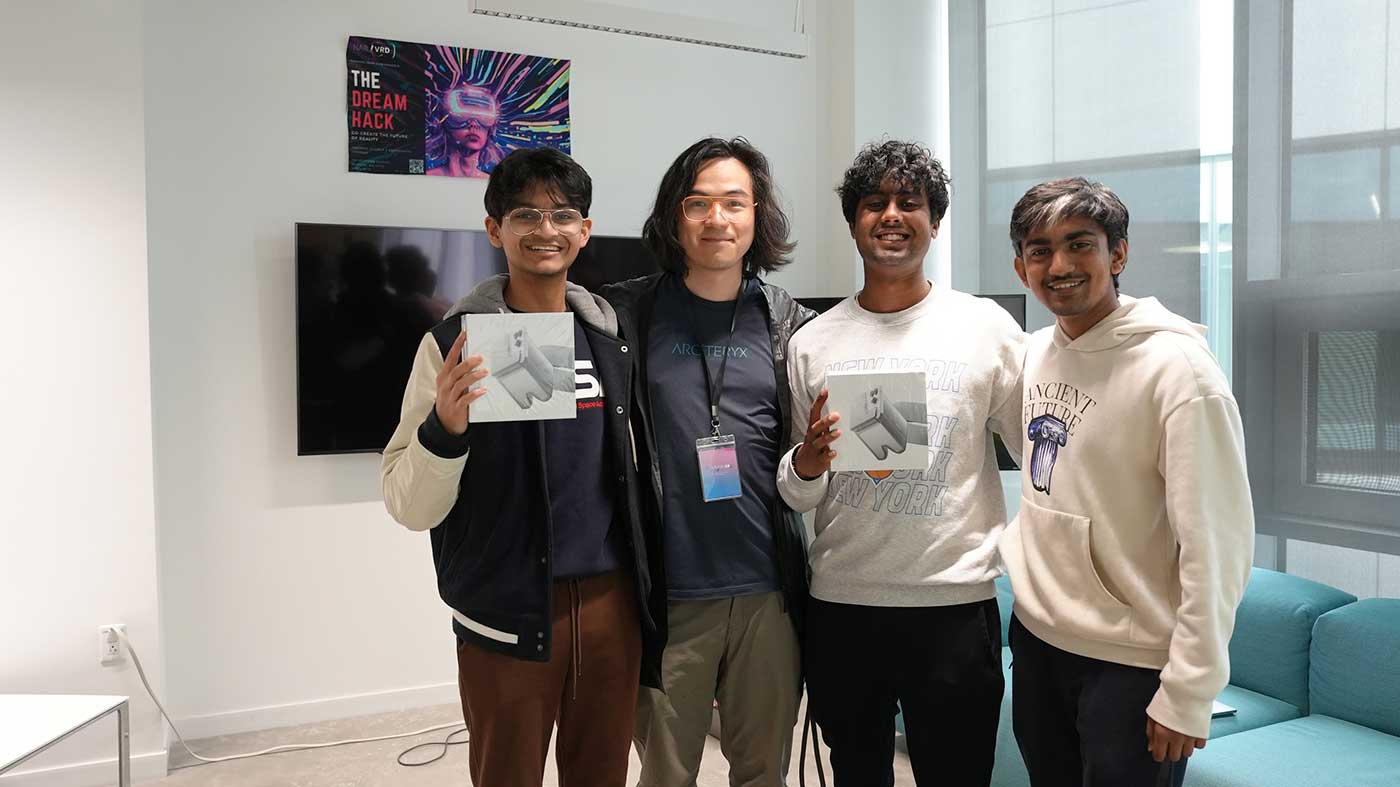
They also left with plans to continue developing MathGPT into an accessible learning tool for all. Currently, MathGPT is a website where the user enters a math problem and learns the steps to solving it, but ideally, it will fulfill the group’s initial vision.
“Since the hackathon is done and we have time to work on it, we want to get back into what we originally wanted to do: integrating this into a VR environment,” Walvekar said. “We want to get it to a place where you can use VR headsets while you’re doing your homework. It’s a pretty big vision for the future, but it’s definitely doable.”
The Khoury Network: Be in the know
Subscribe now to our monthly newsletter for the latest stories and achievements of our students and faculty
Author: Milton Posner
Date: 08.30.23
Khoury College welcomed a record number of faculty hires this year, from AI ethics stalwarts to data privacy specialists to instructional inclusivity advocates and everyone in between. As they begin their research and teaching across seven Northeastern campuses, let’s take a moment to meet them.
Click a faculty member’s name to jump to their section, or simply read on:
Click a faculty member’s name to jump to their section, or simply read on:
Ildar Akhmetov, associate teaching professor
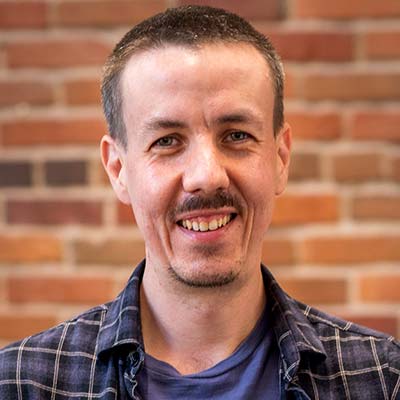
Starting fall 2023 in Vancouver
Throughout his career, Ildar Akhmetov has worn three hats. As a professor in Russia and Canada, he designed and taught courses that elevated hands-on, experiential projects. As an entrepreneur, he founded and managed several businesses, including those advancing innovative digital learning models. And as a software developer, he oversaw the development, integration, maintenance, and security of IT and computer systems. Now, as he shifts his focus to the Align program, Akhmetov wants to leverage his array of experiences to launch students of all backgrounds into industry.
Malihe Alikhani, assistant professor
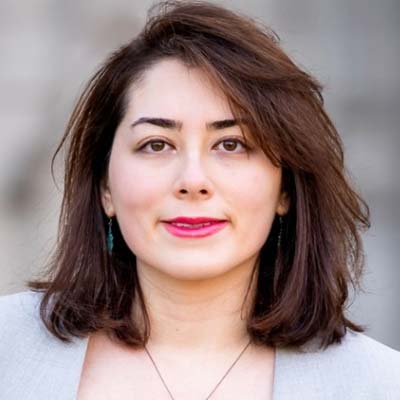
Starting fall 2023 in Boston
Malihe Alikhani believes in the ability of language technologies and AI learning models to bolster critical education, health, and social justice efforts, but she also studies the ways in which those models become biased. Her vision is to ground these systems in fairness, inclusivity, and collaboration, and to leverage them for the benefit of long-underserved communities. Alikhani joins Khoury College after three years teaching at the University of Pittsburgh, where she earned a handful of AI-based “best paper” honors from top natural language processing and machine learning conferences, as well as grants from DARPA, the NIH, Google, and Amazon. She is looking forward to teaching AI ethics courses and collaborating within Northeastern’s cross-college institutes.
Tehmina Amjad, associate teaching professor
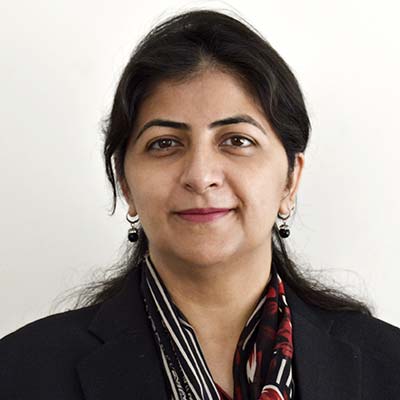
Starting fall 2023 in Silicon Valley
After 16 years teaching information retrieval, data mining, databases, machine learning, and more at one of Pakistan’s most prestigious universities, Tehmina Amjad joins Khoury College with a drive to advance the intellectual development of her students. In her courses on discrete structures and information retrieval, she aims to impart foundational concepts that will connect Align students to more advanced topics. In her own research, Amjad has delved into citation analysis, topic modeling, knowledge diffusion, health care analytics, and machine learning, and has published her work in a slew of high-impact-factor journals.
Akram Bayat, assistant teaching professor
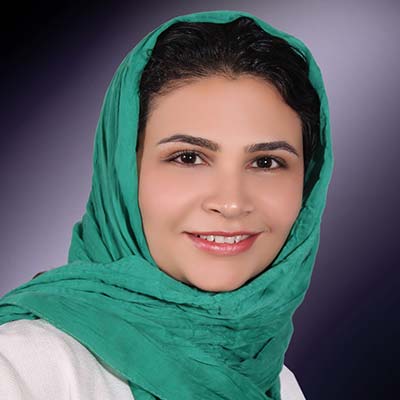
Starting fall 2023 in Oakland
Akram Bayat earned her Ph.D. at UMass Boston, where she conducted experimental studies to model human physical and behavioral characteristics. In the years since, she has held a smattering of data science positions, often at the intersection of AI and health care. As a postdoctoral associate at the MIT Media Lab, Bayat forged novel intersections between engineering, medical imaging, machine learning, and medicine to further patient-centered research. And as a data science fellow at a joint program between the University of California, San Francisco, UC Berkeley, and Johnson & Johnson, she designed an AI-based platform for primary care physicians to provide proactive care for patients.
Elettra Bietti, assistant professor
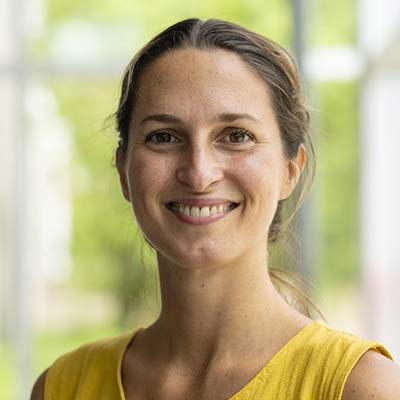
Started summer 2023 in Boston, jointly appointed (75% School of Law)
Elettra Bietti first delved into technology as an antitrust and intellectual property lawyer in Brussels and London. As she gravitated toward questions of data and political economy, she became fascinated by the interactions between technological innovators and public policymakers, and by the way large tech platforms shape users’ online privacy and consumption choices. Now, after a slew of published papers in computing journals and law reviews, plus a year researching and teaching at the NYU School of Law and Cornell Tech, Bietti joins Northeastern, where she’ll teach on the regulation of technology in the digital economy. Outside of Northeastern, she is affiliated with Harvard’s Berkman Klein Center for Internet & Society, as well as Yale’s Information Society Project.
Ryan Bockmon, assistant teaching professor
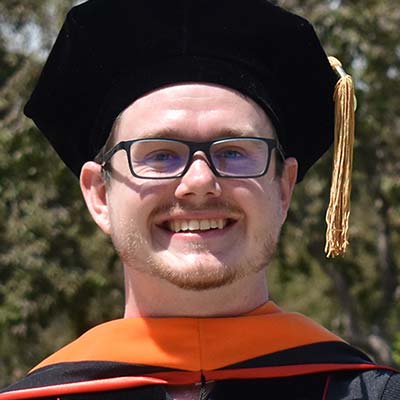
Starting fall 2023 at the Roux Institute in Portland, Maine
Ryan Bockmon’s teaching and research is fueled by a desire to improve the areas he found lacking in his own experience as a computer science student. After co-creating and piloting Montana’s first high school data science course as an undergrad at Montana State University, he earned his Ph.D. in computer science from the University of Nebraska–Lincoln in 2022. Now, Bockmon joins Khoury College intent on working with students from all walks of life to better their careers. When he’s not teaching, he researches computer science education best practices, spatial skills, and VR and AR learning experiences.
Juancho Buchanan, professor of the practice
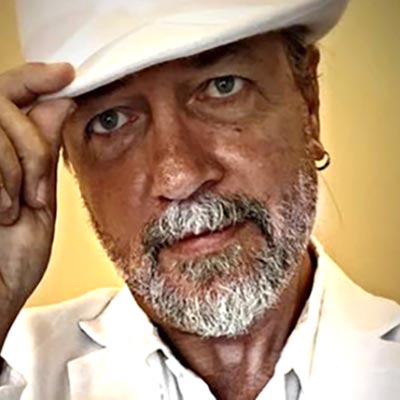
Started summer 2023 in Vancouver
Juancho Buchanan’s career contains a multitude of eventful stops. After researching non-photorealistic rendering at the University of Alberta in the 1990s, he joined Electronic Arts Canada, where he founded the internal education program known as Electronic Arts University. After an Australia-based research position at Carnegie Mellon University where he prototyped interactive worlds, he returned to Vancouver, where he worked a variety of software engineering roles, including at Amazon Web Services, Staffbase, and Hothead Games. Now at Northeastern, he’s excited to teach students to use intriguing new tools.
Richard Cobbe, assistant teaching professor
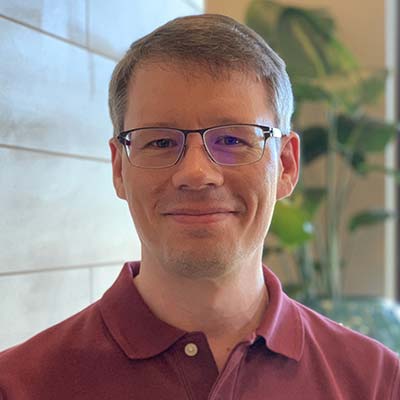
Starting fall 2023 in Seattle
Richard Cobbe earned both his master’s and doctoral degrees from Khoury College, where he worked with Matthias Felleisen on the design and implementation of object-oriented languages. Then, after 15 years in industrial software development, including five years working on internal projects for Microsoft, Cobbe rejoined the college as a part-time lecturer in Seattle. Now he’s making the jump to full-time professor, doing so with teaching experience in databases and introductory programming courses, plus research experience in programming language design and analysis.
Michael Correll, associate research professor
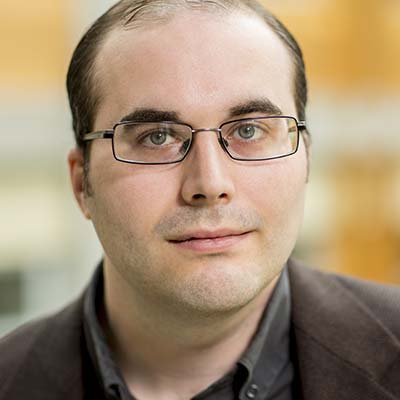
Starting fall 2023 at the Roux Institute in Portland, Maine
In his information visualization research, Michael Correll aims to understand how to ethically, accurately, and responsibly communicate data. After writing his Ph.D. dissertation on the use of visual perception to improve statistical graphics, then spending his postdoctoral days at the University of Washington’s Interactive Data Lab, he joined Tableau as a leading research scientist. There, he focused on the visual communication of statistical models, visualization and data ethics, epistemology in data science, and designs for auditing and verifying visual analytics. His recent work has zeroed in on deceptive and dangerous practices that can result in unethical or misleading uses of data.
Michael Ann DeVito, assistant professor
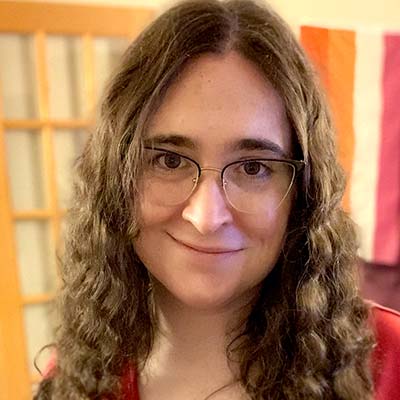
Starting fall 2023 in Boston, jointly appointed (25% College of Arts, Media and Design)
Michael Ann DeVito is a member-researcher who grounds her theory-based, qualitative research in her experience as part of the communities she studies. This approach to AI, machine learning, and human–computer interaction has encompassed a litany of sociotechnical topics, including adaptive self-defense for transfeminine content creators and educators, the impact of TikTok’s algorithmic content curation and moderation on mental health content and communities, and safe dating and connection apps for trans or neurodivergent sapphics. For DeVito, it’s all about bringing human and community elements front and center, and she’s earned a handful of “best paper” and diversity awards at CSCW and CHI as a result.
Brianna Dym, assistant teaching professor
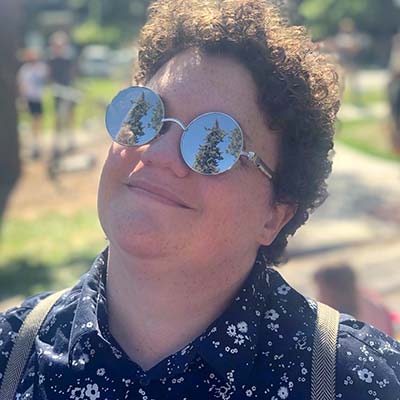
Starting fall 2023 at the Roux Institute in Portland, Maine
Fittingly enough for someone who came to computer science through nontraditional means — her bachelor’s and master’s studies were in English — and who used the internet to foster a sense of queer community she otherwise lacked, Brianna Dym focuses her teaching and research on the inclusion of groups underrepresented in computing. She did so while teaching introductory computing classes at the University of Maine, where she reimagined core curricula to appeal to a wider range of students. Now Dym sees a similar opportunity at the Roux Institute, where she hopes to empower Align students to leverage new and emerging technologies for their personal benefit and their communities’ gain.
Laura Edelson, assistant professor
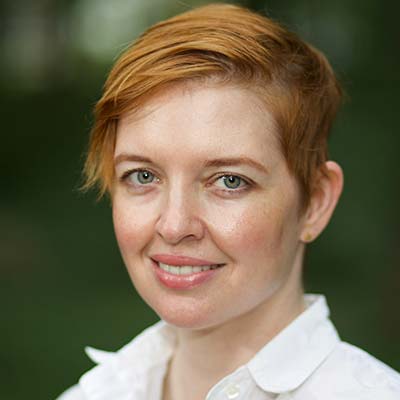
Starting fall 2023 in Boston
As the former chief technologist of the US Department of Justice Antitrust Division, Laura Edelson understands just how crucial cybersecurity is in today’s world. She feels that after climate change, the spread of misinformation and disinformation is the most pressing problem of our time, and that engineers and scientists must center ethics, impact, and public policy participation in their work. To that end, her research analyzes the spread of harmful content on social media platforms, the development of methods to detect such content, and the ways in which platforms can be made safer and more transparent for users. She is excited to contribute to Khoury College’s ongoing research efforts in social cybersecurity, and to collaborate with Northeastern’s law and social science scholars.
Mai ElSherief, assistant professor
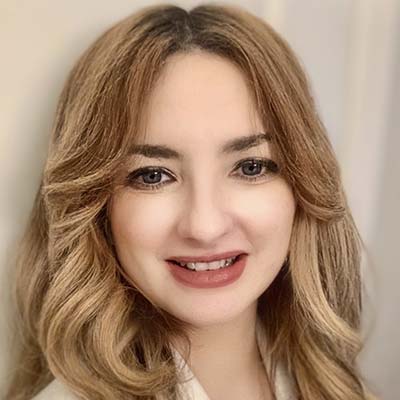
Starting fall 2023 in Boston
Mai ElSherief wields machine learning and natural language processing to examine human behavior, particularly online abuse, biases, public health intelligence, and community well-being. She is driven to minimize online harm and make online spaces safer for users, and she has worked on “computing for social good” projects dealing with hate speech, gun violence, and opioid use, among others. Before joining Khoury College, ElSherief was an assistant professor at the University of California San Diego, an EECS Rising Stars participant at UC Berkeley, and a CS Outstanding Graduate Student at UC Santa Barbara.
Miguel Fuentes-Cabrera, associate teaching professor
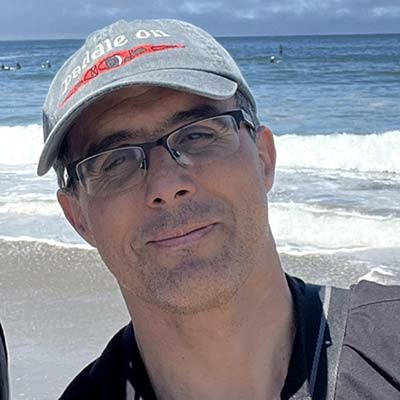
Starting fall 2023 in Oakland
Miguel Fuentes-Cabrera situates his research at the intersection between experiment and simulation, using deep learning to improve simulation models and pave the road toward autonomous experiments. In doing so, he strives to work in areas with clear societal impact, namely nanomaterials, microbial populations, proteinaceous structures, and mosquito-borne parasitic diseases. During his 21 years as a researcher at the Oak Ridge National Laboratory in Tennessee, Fuentes-Cabrera mentored more than 30 students in their research, and he hopes to continue both his mentorship and research at Northeastern’s Mills College.
Benjamin Gyori, associate professor
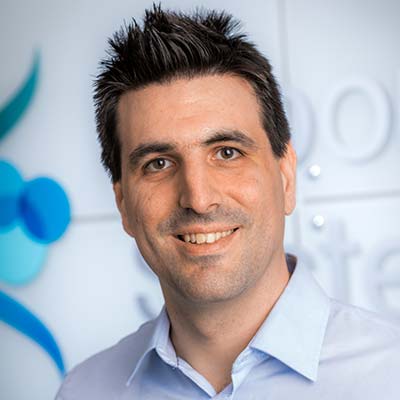
Started summer 2023 in Boston, jointly appointed (25% College of Engineering)
Benjamin Gyori wants to leverage computation to solve medicine’s fundamental problems. In particular, his research group uses machine learning, formal verification, text mining, knowledge assembly, and causal analysis to automate scientific modeling, understand human biology, and pave the way for advances in health care. With a skill straddling multiple fields, it’s no surprise that Gyori’s career has been thoroughly interdisciplinary; he led the Machine-Assisted Modeling and Analysis Group at Harvard Medical School, earned his doctorate under an interdisciplinary scholarship at the National University of Singapore, and has advocated for open-source software development in the computational biology community. In addition, he recently received two DARPA awards and has led a series of federally funded projects on machine-assisted complex systems modeling.
Ariel Hamlin, assistant teaching professor
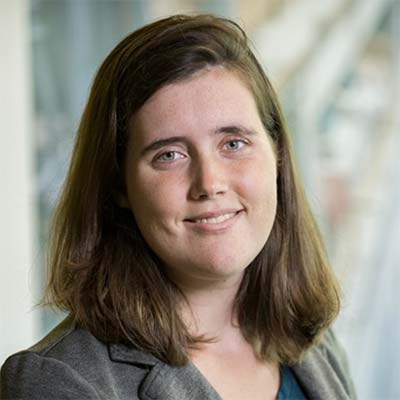
Starting fall 2023 in Boston
For Ariel Hamlin, a Khoury College professorship is a full circle of sorts, as she returns to teach at the college where she earned her Ph.D. in cryptography. Her research focuses on securing and using data in outsourced environments while preserving functionality — for instance, examining how a server can host a private database while supporting queries upon it. Apart from her doctoral studies at Khoury College, Hamlin worked at MIT Lincoln Laboratory, where she pursued advanced cryptography in a national security context. As she becomes a professor, she wants to pay forward the mentorship that was so valuable in her studies, and to help her students realize that computer scientists come in many forms.
Zhengzhong Jin, assistant professor
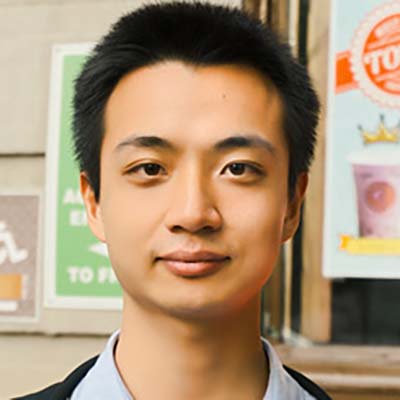
Starting fall 2024 in Boston
The more Zhengzhong Jin studied cryptography, and the more he saw blockchain and cryptocurrency technologies coming into prominence, the more enamored he became. Now, he’s leveraging cryptography to develop a proof system, one that would allow users to delegate heavy computation to an untrusted server while still ensuring that the computation is performed properly. By securing and speeding up this process, Jin believes he can better enable some of the technologies that first attracted him to the field. He is currently a postdoctoral associate at MIT and will join Khoury College in the fall of 2024.
Youna Jung, associate teaching professor
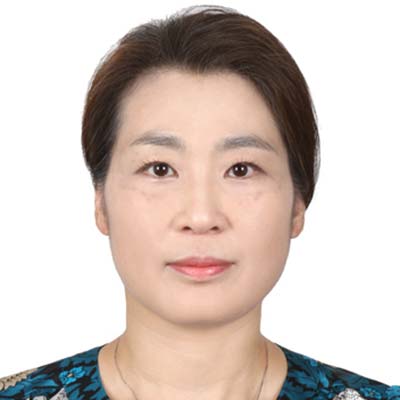
Started summer 2023 in Arlington
For nearly a decade, Youna Jung has made her home at the Virginia Military Institute as a professor, chair of the Women in STEM group, and most recently, as director of the school’s joint master’s in computing program with Virginia Tech. In that time, she has published more than 45 papers, mainly around artificial intelligence, the Internet of Things, collaborative computing, and cybersecurity. Now, as she prepares to teach courses on databases and security and privacy at Khoury College, Jung is excited to contribute to a new computer science master’s program at the Arlington campus.
Chris Le Dantec, professor of the practice and director of digital civics initiatives
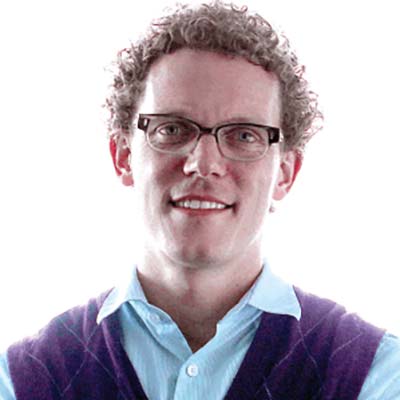
Starting fall 2023 in Boston, jointly appointed (50% College of Arts, Media and Design)
Chris Le Dantec researches digital civics, working with community partners to explore new forms of civic participation through computing and data interfaces. His work blends approaches from human-computer interaction, participatory design, digital democracy, and smart cities. He regularly publishes in the ACM conferences CHI, CSCW, and DIS and is the author of Designing Publics, in which he explores how alternative visions of design can unite communities and bolster action on social issues. Chris is excited to join Khoury College for this year to help build out research initiatives and partnerships across campus for work in digital civics.
Tianshi Li, assistant professor
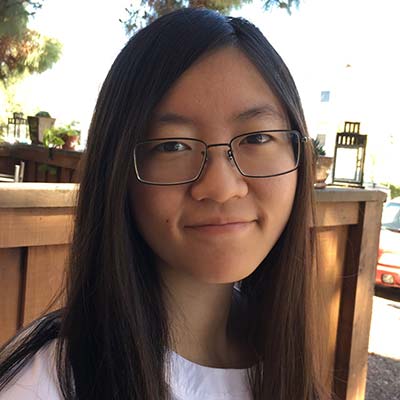
Starting fall 2024 in Boston
During her recently-concluded doctoral studies at Carnegie Mellon University, Tianshi Li focused on human–computer interaction, security and privacy, and software engineering. Specifically, she developed IDE plugins to aid app developers in adding privacy annotations to their source code, allowing them to incorporate native privacy support into the apps. In her current role at Google, Li is helping to support companies in their privacy compliance, and later this year, she’ll build on her thesis research and explore new topics as a postdoc at the University of California, Berkeley.
Joydeep Mitra, assistant teaching professor
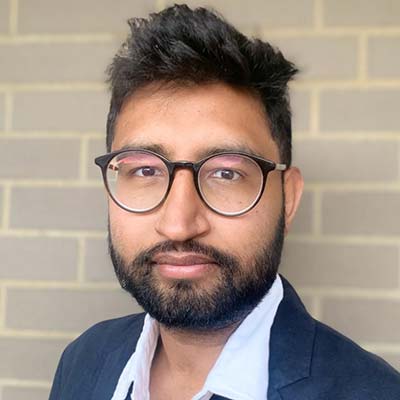
Starting fall 2023 in Boston
It’s not every day that you receive a reward from Google for pinpointing vulnerabilities in the Android platform, but Joydeep Mitra has received two. The credentials are well-earned for a researcher who saw mobile app technology flourish during his undergraduate years, and has felt driven to understand and secure those apps ever since. Mitra’s teaching in systems, security, and software engineering at Stony Brook University reflects those same convictions, and as he joins Khoury College, he’s excited to train the next generation of computer scientists, and to develop pedagogical methods that will improve diversity in the field.
Lace Padilla, assistant professor
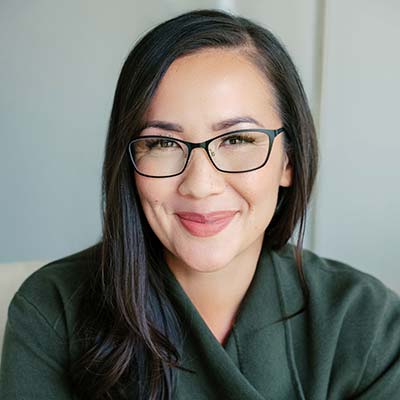
Started summer 2023 in Boston and Oakland, jointly appointed (25% College of Science)
Lace Padilla wants to design effective, helpful visualizations, especially for high-risk events like natural disasters. But she knows all too well that human brains don’t always process uncertainty well, so her research strives to bridge that gap without compromising digestibility. Those efforts have recently garnered her an NSF CAREER grant, and as she joins Khoury College, she is ecstatic to contribute to what she calls “the most vibrant hub for data visualization research in the world.” Apart from her research, Padilla advocates for minority groups in STEM, serves on the IEEE VIS Inclusivity Committee, and has received several grants and awards for her diversity work.
READ: Clarity or uncertainty? In her visualizations, NSF CAREER awardee Lace Padilla balances both
Nadim Saad, assistant teaching professor
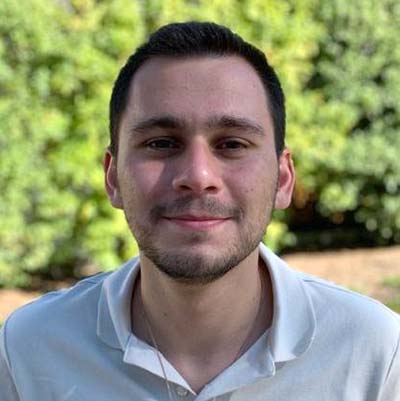
Starting fall 2023 in Silicon Valley
Nadim Saad recently completed his Ph.D. in computational mathematics at Stanford University, where he developed traffic flow models based on partial differential equations (PDEs). During that time, he also worked with Amazon Web Services, where he developed deep learning models to solve PDEs. Now, with a drive to teach foundational concepts that students can build their specializations on, Saad joins Khoury College, where he’ll teach a variety of core computer and data science topics.
Weiyan Shi, assistant professor
Starting fall 2024 in Boston, jointly appointed (75% College of Engineering)
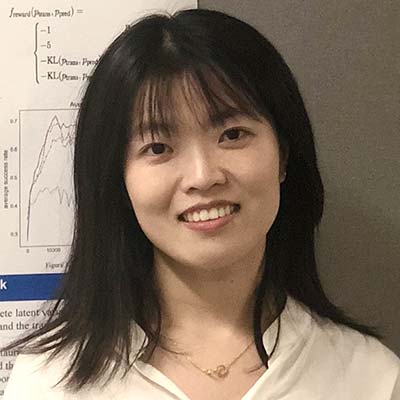
Weiyan Shi’s research focuses on natural language processing, namely social influence dialogue systems and privacy-preserving NLP applications. At Meta AI Research, she worked to develop the negotiation dialogue for Cicero, the AI that Meta taught to play the board game Diplomacy. She also spent two years as a data scientist in the Bay Area, where she developed customer service chatbots. And she has published at top-tier conferences and journals including Science, ACL, EMNLP, NAACL, and AAAI, and was recognized as a Rising Star in Machine Learning. Now, after spending the next year as a postdoc at Stanford, Shi will join Northeastern, where she hopes to further her AI, large language model, human–computer interaction, and security research.
Katherine Socha, associate teaching professor
Started summer 2023 in Arlington
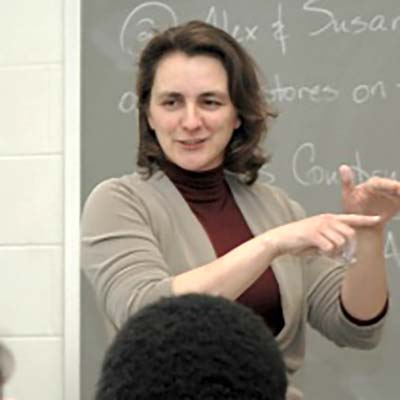
Katherine Socha’s teaching career has taken her from the Park School of Baltimore to a tenured mathematics professorship at St. Mary’s College of Maryland, and now to Khoury College in Arlington. Her interests include expository mathematics, mathematical modeling of surface water waves, graph theory, and discrete structures, with an eye turned toward modern category theory for the future. She has received the Lester R. Ford Award for an American Mathematical Monthly article of expository excellence, the Henry L. Alder Award for distinguished early-career university teaching, and an AAAS Science and Technology Policy Fellowship.
Shanu Sushmita, assistant teaching professor
Starting fall 2023 in Seattle
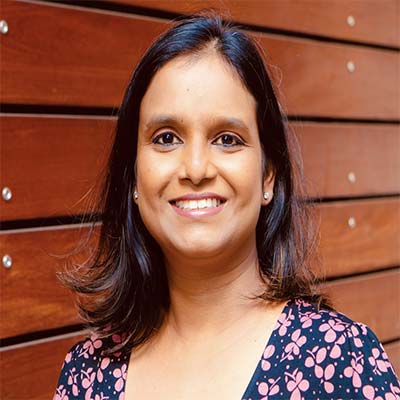
After two years with Northeastern’s College of Professional Studies, Shanu Sushmita is jumping to Khoury College, and doing so with more than 15 years of research and teaching experience in machine learning, information retrieval, and data science under her belt. She enjoys using data to tailor products and solutions to improve user experiences and has worked on search engines, digital libraries, and social media tools, among others. Outside of academia, Sushmita served as head of data science for Seattle-based KenSci, which aimed to provide machine-learning-based health care solutions.
Zhi Tan, assistant professor
Starting fall 2023 in Boston
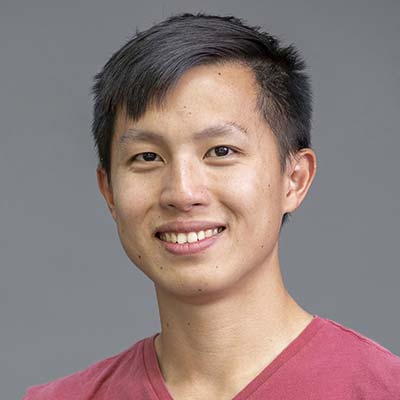
From his doctoral days at Carnegie Mellon University to his postdoctoral fellowship at Georgia Tech, Zhi Tan has immersed himself in human–robot interaction. He wants to design algorithms and systems that enable robots to work together in new environments, collaborate with the people around them, and leverage nearby Internet of Things and digital devices to operate more efficiently. Tan has published his work at numerous top-tier ACM and IEEE conferences, and enjoys the cycle of developing, evaluating, and improving new systems.
Iraklis Tsekourakis, associate teaching professor
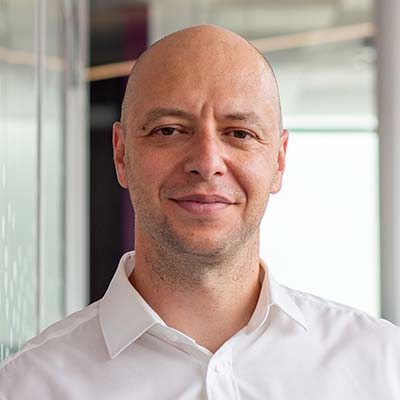
Starting fall 2023 in Boston
When Iraklis Tsekourakis began teaching at Stevens Institute of Technology, he did so with a drive to make the computing field more diverse and inclusive, and to improve learning outcomes at all levels. So he designed, proposed, and launched a new computer science master’s program for students without a computing background and contributed to the creation of a new master’s program in machine learning. When he joined Brandeis University as a professor and director of graduate studies, he continued to develop curricula with a focus on his mission. Outside the classroom, Tsekourakis researches ways to improve the accuracy of 3D reconstruction using multiple-view videos as inputs — enamored, he says, by its applications to mixed reality, medicine, and robotics.
Rajagopal Venkatesaramani, assistant teaching professor
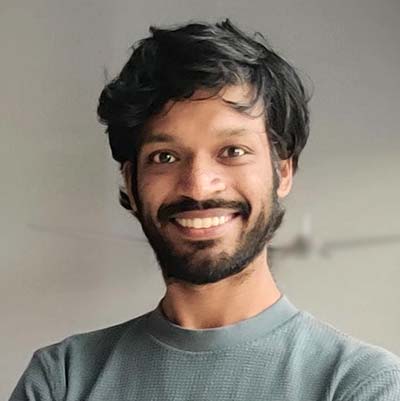
Starting fall 2023 in Boston
As genomic data sharing becomes more prevalent, Raj Venkatesaramani only becomes more convinced of the need for privacy safeguards in the field. That’s why he develops defenses against membership inference attacks on genomic datasets, with an emphasis on statistical inference attacks and the correlation between DNA and facial images. In the classroom, Venkatesaramani believes in a learner-centric environment, innovative course design, and coding instruction for every student regardless of their background or discipline.
Chieh Wu, assistant teaching professor
Starting fall 2023 in Boston
After earning his doctorate from Northeastern’s College of Engineering in 2020, then transitioning to a postdoctoral position there, Chieh Wu joins Khoury College, where he’ll teach machine learning and data science courses. He believes in building a solid foundation for students in these subjects, fanning their interests and propelling them toward graduate work. In his research, Wu models neural networks through kernels, with the goal of discovering a unifying mathematical theory for these networks. He also studies gerontology and machine learning, namely the biomarkers that help us understand human aging.
Xiao Yang, assistant professor
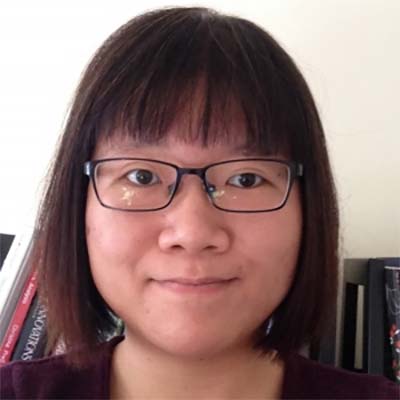
Starting fall 2023 in Boston, jointly appointed (75% Bouvé College of Health Sciences)
By combining her backgrounds in computer science, statistics, and quantitative psychology, Xiao Yang has worked to develop innovative, personalized mental health interventions for depression and anxiety. She comes to Northeastern after serving as research lead at Mindstrong Health, a telehealth company that leverages passive sensing data to provide mental health care and just-in-time intervention. She has published in psychology journals and human–computer interaction (HCI) venues, including Multivariate Behavioral Research, Developmental Psychology, Complexity, and ACM’s HCI publications.
Xiaoyi Yang, assistant teaching professor
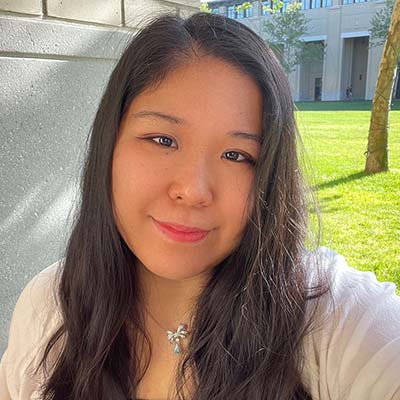
Started summer 2023 in Boston
After earning her Ph.D. in statistics from Carnegie Mellon University, Xiaoyi Yang jumped to Creighton University, where she taught undergraduate data science courses, developed student research projects, and handled other teaching and research duties. Now at Khoury College, Yang will teach machine learning courses that lie at the intersection between core CS and her statistics background. She is also interested in applying social science to statistics, sociology, finance, education, and sports.
The Khoury Network: Be in the know
Subscribe now to our monthly newsletter for the latest stories and achievements of our students and faculty
Author: Attrayee Chakraborty
Date: 08.28.23
Within the past year, two Khoury College research papers have been recognized with prestigious awards for their contributions to theory-based research.
Former postdoctoral research associate Wei-Kai Lin, PhD student Ethan Mook, and Professor (and NTT Research Senior Scientist) Daniel Wichs won the Best Paper Award at the ACM Symposium on Theory of Computing (STOC). The team’s research focused on maintaining user privacy in search engines through fully homomorphic encryption, and discussed how the theory could be applied in practice.
Meanwhile, Professor Soheil Behnezhad won Best Paper at the ACM-SIAM Symposium on Discrete Algorithms (SODA), one of three flagship conferences in algorithms and theory. His research revolved around dynamic graph algorithms, optimizing processes for changing conditions, and large datasets.
Efficient and encrypted
Lin, Mook, and Wichs aimed to tackle a highly nuanced topic: would it be possible to search Google — or any search engine — without the engine learning anything about the user?
Mook says that it has been theoretically possible to do so using fully homomorphic encryption (FHE), which allows computation to be performed on data without the data itself being revealed. Their paper, titled “Doubly Efficient Private Information Retrieval (DEPIR) and Fully Homomorphic RAM Computation from Ring LWE,” brings this concept into reality.
“Think of it like putting your data into a locked box and performing operations on that data while it remains locked inside,” Mook explains. “I would give Google whatever it needs to do the search, but I’d protect my data without Google or any other third-party eavesdropping on it.”
However, Mook believes that standard FHE is unsatisfactory for the large databases that search engines work on. Instead, he and his team proposed a unique way to maintain user privacy while still delivering search results in seconds.
“Instead of using the circuit model of computation — in which processing speed depends on the size of the database — we focused on the random-access machine (RAM) model,” Mook says. “This way, the search engine could just read a single bit from the database without having to scan through the entire database, drastically reducing the time needed to receive the answer to a query while still maintaining user privacy.”
The biggest advantage of the RAM FHE model is that the server itself could save time by transforming the data into a format that is more easily processed (called “preprocessing”) instead of relying on a third party to perform the entire task — all without compromising encryption. The team based their work on prior research into private information retrieval and preprocessing polynomial computation, essentially simplifying equations to enable this faster processing.
“The server could preprocess parts of the cryptographic input, thereby reducing the time that the server needed to crunch the input message,” Mook says. “That formed the basis of DEPIR; we want the server to be ‘doubly efficient’ to show the result without going through the whole database.”
But before RAM FHE can deliver these advantages, some aspects of implementation still need to be squared away.
“Along with the cost of implementing the model, Google may not be that open to implementing the idea due to the large amount of information that users disclose through search queries,” Mook mentions. “Additionally, our results are mostly theoretical, so practically implementing such ideas may involve a few hiccups, such as the actual time that it would take, and the need to explore different assumptions on which DEPIR can be based.”
But in the meantime, the team will enjoy the “Best Paper” honor, one of two that the STOC program committee awarded this year.
“The DEPIR problem has been unresolved for many years,” Mook says. “The fact that this technique solves the DEPIR problem and then actually extends much further to solve all of FHE is a great promise.”
Boosting the algorithms that power our favorite apps
Soheil Behnezhad has worked on dynamic graph algorithms for multiple years, and now he has some hardware for his efforts. His recent paper on the maximal matching problem in the dynamic setting, titled “Dynamic Algorithms for Maximum Matching Size,” won the Best Paper Award at SODA from a pool of nearly 600 submissions.
Dynamic graph algorithms are designed to handle changes to a graph without starting from scratch after each change. Behnezhad brings up the example of Google Maps, which uses dynamic graph algorithms to predict the best driving route. In this case, the graph is the road network; the algorithm calculates the fastest route based on traffic conditions and changes its output as new information becomes available.
Now consider an app like Uber, in which dynamic algorithms can quickly figure out which nearby driver would be the best match to pick you up. The algorithm considers where you are, how close the available drivers are, and even the type of car you’d like to ride in — and it keeps working while you wait. If traffic or ridership increases, the algorithm can adjust to find the driver who can take you to your destination the fastest.
Behnezhad had previously approached the maximum matching problem through sublinear time algorithms, which solves problems using less time than it would take to go through each item in the input data one by one. But he never imagined that he’d find an answer to the dynamic matching problem through the same concept.
“What’s special about the new dynamic matching algorithm is that it uses a sublinear time algorithm inside another algorithm, thereby finding a new connection between sublinear time algorithms and dynamic algorithms,” Behnezhad explains. “This kind of connection, at least for the matching problem, was never found before and paves the way for future research on this problem.”
For Behnezhad, this project was part of a broader practical problem: the need to account for massive amounts of data while designing algorithms. By using dynamic matching algorithms to better handle these huge datasets, Behnezhad’s approach could help companies spend time that’s proportional to the flux of new information, rather than solving problems from scratch.
“Traditional algorithms do not scale well with how much growth we’ve had with data. They assume that you have the whole input in one computer,” Behnezhad says. “However, in recent years, inputs have grown so large that we cannot even fit them into the input of the into memory of a single machine, and that has changed the paradigm of algorithm design.”
The Khoury Network: Be in the know
Subscribe now to our monthly newsletter for the latest stories and achievements of our students and faculty