Author: Sarah Olender
Date: 10.23.23
Khoury College students take wildly different routes to Northeastern and to computer science. Graduate students Amari Parris and Nikos Tziavelis are no exception, with passionate stories and varied backgrounds that have led them from sports to technology research and everywhere in between. But while their backgrounds differ, the pair share one thing in common: they have both won prestigious fellowships to help them further their education.
Amari Parris: From kinesiology to Khoury College
After studying kinesiology at Morehouse College in Georgia as an undergraduate, Amari Parris decided that he was no longer passionate about his original career plans. For a while, he planned to become a physical therapist, but after finding a similar lack of excitement in the material, Parris started exploring other ways he could use his kinesiology degree.
“I ended up getting into tech and data science as a result of a sports analytics course I took at Morehouse in my junior year,” Parris said. “I really got interested in data-driven decision-making in sports and I just parlayed that into things that are more sports- and human-performance-focused, like sensors and wearable devices.”
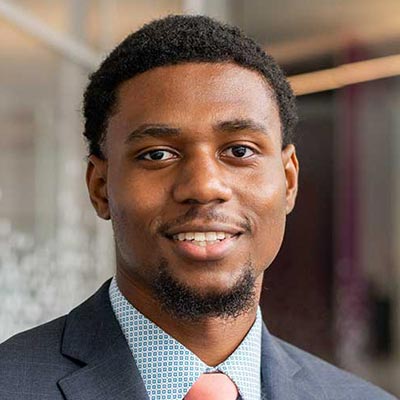
Now Parris is pursuing his master’s in data science through Khoury College’s Align program, which allows students like Parris who come from noncomputing backgrounds to earn their master’s degrees in computing fields.
Once Parris realized he wanted to go back to school, he started researching ways to fund his education. One of his peers from Morehouse recommended he apply for the GEM Fellowship, which provides partial or full funding to master’s or doctoral students in STEM. The prestigious program also provides exposure to a variety of internship and networking opportunities.
Through the GEM Fellowship, Parris was matched with Genentech, a biotech company in San Francisco regarded as the first of its kind in the world. Parris worked as an intern in their small molecule pharmaceuticals department, and while the work wasn’t directly adjacent to his sports science passion, it still gave him a new perspective on research and a better idea of how he could combine his passions for data and kinesiology into a career.
“I’m not much of a chemist, so it wasn’t for me, but I did enjoy the company, and I think there are other roles at the company that I’d be interested in,” Parris said. “It was a challenging experience, but I appreciated the opportunity because it really helped me see this is what I want to do, this is everything that I possibly can do from visualization to developing and maintaining models, and then presenting those to stakeholders.”
Parris still plans to go into the biotech space, but with a semester and change left in his master’s journey, he plans to take advantage of all the resources Khoury College has to offer.
“It’s really cool to have a ton of different things that you’re interested in right at your fingertips,” he said. “There are sports science labs, biomechanics labs, hackathons, and special interest groups that constantly bring in companies to talk about the things that you’re interested in … It’s a really cool opportunity to build the career that you want because you have access to so many different things and avenues.”
Nikos Tziavelis: creativity, databases, and a Google fellowship
During his last undergraduate year in electrical and computer engineering at the National Technical University in Athens, Greece, Nikos Tziavelis was exposed to the world of tech research.
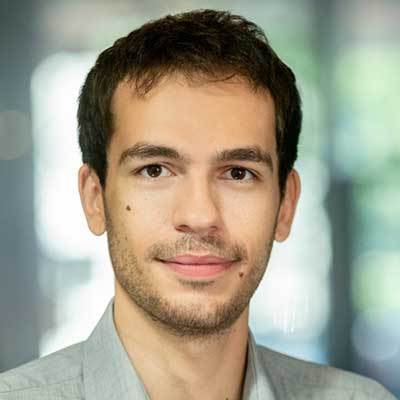
“I really loved research and I wanted to continue doing it,” he said of the decision to pursue his PhD in database management at Khoury College, over 4,000 miles from his home country.
Now in the fifth year of his transatlantic PhD journey, Tziavelis has enjoyed the creative endeavor, which requires him to think outside the box and come up with unique solutions.
“I think it really differs from other stuff that you can do in tech,” he said, citing the inherently entrepreneurial atmosphere of technology research. “You can really develop your own ideas. You can have leadership. I think it’s similar to doing a startup, just without the risks.”
Tziavelis recently won the prestigious Google PhD Fellowship, which supports PhD candidates in their research journeys. This support comes through different avenues, including a mentor to offer support and wisdom, as well as financial support to cover tuition and living expenses.
Tziavelis is grateful to his advisors, Professors Wolfgang Gatterbauer and Mirek Riedewald, for their assistance along the way.
“Not only did they provide scientific guidance and support, but they also encouraged me to take on more and more of a leadership role — both scientifically and in our Khoury College community,” he said.
Tziavelis put in a lot of work to earn the fellowship, and his resume shows it. He has published papers throughout his PhD candidacy, all of them emphasizing the creation of more efficient databases and solving problems that arise in the foundations of data systems. In one such paper on “any-k algorithms,” Tziavelis helped craft a database that manages information and delivers it to users promptly and efficiently, all without making the users sort through complex algorithms.
To create that database, Tziavelis didn’t just build a new system. He had to reconfigure the algorithms that any particular database uses, which created a database that orders faster than even some commercial database systems used today, according to Tziavelis.
In addition to this work, he also has given tutorials on these ideas — tutorials which are available online. He made one about his any-k algorithm paper, which also extends to his work with responsive DBMS.
“The fellowship is definitely a big recognition of the work that I’ve been doing together with my advisors and collaborators and I’m very honored to receive that,” Tziavelis said. And as he nears the end of his candidacy and prepares to defend his thesis, he’s reflecting not just on the fellowship’s importance, resources, and opportunity, but also on what it says about his future.
“It gives me confidence,” he said. “That’s the biggest thing. It gives me confidence to pursue my next moves.”
The Khoury Network: Be in the know
Subscribe now to our monthly newsletter for the latest stories and achievements of our students and faculty
Author: Attrayee Chakraborty
Date: 10.17.23
Northeastern University’s Women Who Empower initiative was founded on the belief that diverse and inclusive communities contribute to a more enriched world. The initiative serves as a platform for women to share their stories, foster connections, and engage with distinguished speakers and advocates representing a range of experiences and professional paths.
This year, the third annual Women Who Empower Innovator Awards celebrated the accomplishments of 28 outstanding women from a pool of 110 applicants, with a record total of $500,000 awarded. The recognition is bestowed upon Northeastern students and alumni who advance areas such as health, diversity and inclusion, global change, social impact, and sustainability. Among this year’s honorees were two members of the Khoury community: undergraduate Alexis Musaelyan-Blackmon and alumna Dania Alnahdi.
Alexis Musaelyan-Blackmon
Alexis Musaelyan-Blackmon, on track to earn a bachelor’s in data science and biology in 2025 and a master’s in data science in 2026, secured first place in the “Powering Diverse and Inclusive Communities of Belonging” category. With a passion for harnessing data, AI, and computational biology, Musaelyan-Blackmon came up with the idea of Dephend — a play on “phishing” and “defend” — to tackle ever-changing security threats.
Dephend is a cloud-based software-as-a-service security platform which, once deployed, will provide real-time insights into cyber threats. Using machine learning algorithms, the platform will continuously scan incoming URLs and content to detect phishing threats, then present its findings on an intuitive, user-friendly dashboard. Users can monitor system performance, view detailed reports, customize security settings, and set up easy-to-use response actions to ensure efficient threat mitigation.
“My driving force is to create social impact in my endeavors,” Musaelyan-Blackmon says. “With Dephend, I aim to bridge the gender gap in technology and cybersecurity.”
Musaelyan-Blackmon conceived of Dephend at a cybersecurity pitch competition while attending Khoury College’s Virtual Institutes for Cyber and Electromagnetic Spectrum Research and Employ (VICEROY) program, which aims to bolster the cybersecurity industry’s talent pipeline. Determined to bring awareness and recognitions to the project, she was inspired to apply for the Women Who Empower Innovator Award.
READ: From scholarships to cross-university classes, VICEROY preps Khoury students for cyber defense
Musaelyan-Blackmon hopes to grow Dephend through her unique perspective, which she forged in part through her national cybersecurity work at the Naval Research Lab, along with her fellowship at the Department of Homeland Security. So far, Musaelyan-Blackmon has secured Northeastern advisors for Dephend, including VICEROY lead Jose Sierra and the National Security Innovation Network’s John Griffin. And her work is just beginning.
“I plan to advance artificial intelligence technologies to see if I could leverage that for Dephend,” Musaelyan-Blackmon says. “I see Dephend building more strategic partnerships and collaborations with other government agencies as well.”
Musaelyan-Blackmon’s path hasn’t been without challenges, and in that vein, she envisions herself starting a cybersecurity mentorship program to cater to high-school and college-bound women.
“Seeing a group of women working in cybersecurity breaking the glass ceiling can serve as a role model to youngsters doubting their potential,” Musaelyan-Blackmon says. “That’s my ultimate goal with Dephend as well … Being a young woman with an idea, securing funding was tough. But I saw Dephend as an opportunity to grow and find people like me, and I learned the beauty of resilience.”
Dania Alnahdi
Dania Alnahdi, a 2022 Khoury College graduate, secured second place in the “Young Undergraduate Alumnae Award Winners” category. Despite initial doubts about launching her own business, Alnahdi took a bold step forward in January 2023, driven by her personal encounter with a sick pet.
“We suddenly found blood in our pet cat’s urine, so we took her to several vets,” Alnahdi recalls. “It was only after much time had passed and numerous misdiagnoses that she was finally diagnosed with kidney disease, leading to the loss of an entire kidney. That’s when I realized that there aren’t many ways to test pets at home and catch diseases early before late-stage symptoms appear.”
She wasn’t the only one thinking this way. While attending pet conferences and talking to pet owners, Alnahdi found pet diagnosis to be a recurring problem. Her solution, Cora Care Strips, offers pet owners assurance through immediate, cost-effective insights into their pet’s well-being.
To detect changes in a dog’s health, Cora Care uses Smart Strips — a patented technology which leverages monoclonal antibodies to detect specific biomarkers in saliva. Using a suite of biomarkers and data analytics tools, Cora Care’s technology can identify conditions like liver disease, kidney disease, parvovirus, diabetes, and inflammatory bowel disease in dogs. The team is also planning to expand the product to cats.
“My team is very motivated by this problem,” Alnahdi says. “We combined our diverse skillsets and entrepreneurial mindset to set up this company.”
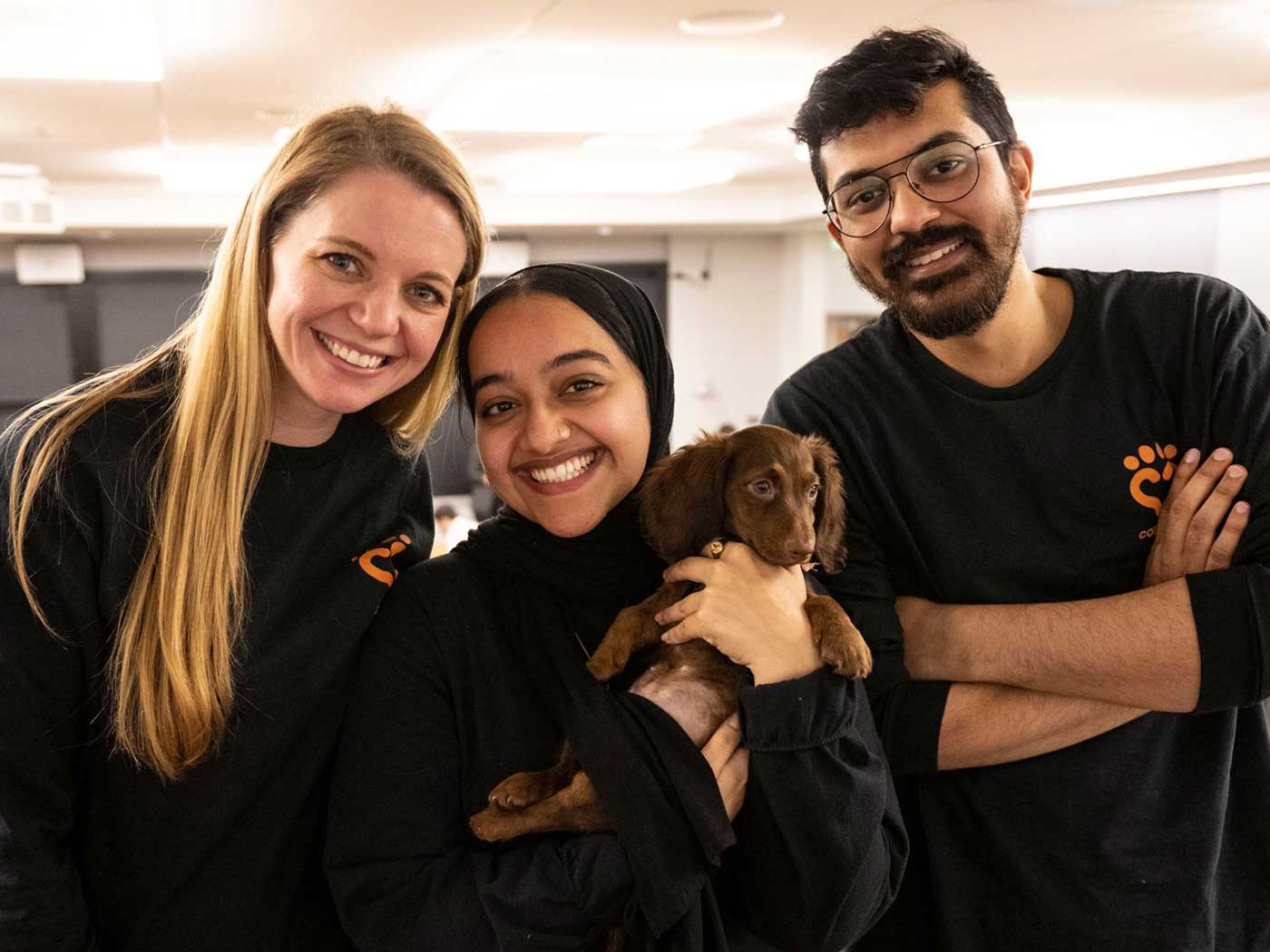
For Alnahdi, that skillset came in the form of computer science and design skills honed at Khoury College, along with experience from three co-ops. Meanwhile, her co-founders brought in sales, finance, and data analytics perspectives. Now master’s students in engineering management and innovation at nearby Tufts University, the team consulted Tufts’ veterinary school and researchers who were already using blood, saliva, and urine tests in their research.
After making it to the final round of three biotech accelerator programs and leveraging their collective experience to develop and prototype their own ideas, the team feels that they are on the path to gain funding.
“My biggest learning as an entrepreneur is becoming comfortable with not knowing what exactly needs to be done,” Alnahdi says. “And of course, never feeling dejected when I’m close — but not quite close enough — to win.”
As a Middle Eastern, Muslim, female entrepreneur venturing into a male-dominated sector, and as a longstanding advocate for diversity within the technology realm, Alnahdi aspires to inspire other women to follow their entrepreneurial aspirations and feel at ease within technology and engineering spheres. This has spilled into Cora Care’s values as well, as the company aims to make technology accessible to all.
“Pet care is expensive,” Alnahdi says, “And we understand the diversity in age, languages, and cost-privilege that comes with it.
“If you’d tell me a year back that I’d have my own venture, I wouldn’t have believed it,” Alnahdi adds. “But I realize that as someone coming out of tech, I can have a greater impact in society by creating solutions which can be used by everyone.”
The Khoury Network: Be in the know
Subscribe now to our monthly newsletter for the latest stories and achievements of our students and faculty
Author: Milton Posner
Date: 10.12.23
After years of involvement with the Critical Assessment of Genome Interpretation (CAGI), and after co-chairing the group’s most recent conference in 2022, Predrag Radivojac finally got his chance to welcome the group to Boston and to Northeastern.
Beginning on Friday, September 29 and continuing through the weekend, nearly 100 computational genomics and biomedical researchers flocked to the top floor of Northeastern’s East Village to catch up on the latest research and evaluate the challenges that remain.
“CAGI’s mission is to conduct community experiments and rigorously evaluate the state of the art in patient genome interpretation,” noted Radivojac, Khoury College’s associate dean of research. “That means evaluating the accuracy of computational predictors and providing valuable information to users, be they biomedical researchers, clinicians, or computer scientists. We also highlight methodological innovation and bottlenecks in the field, and contribute to the development of guidelines and regulation of computational methods.”
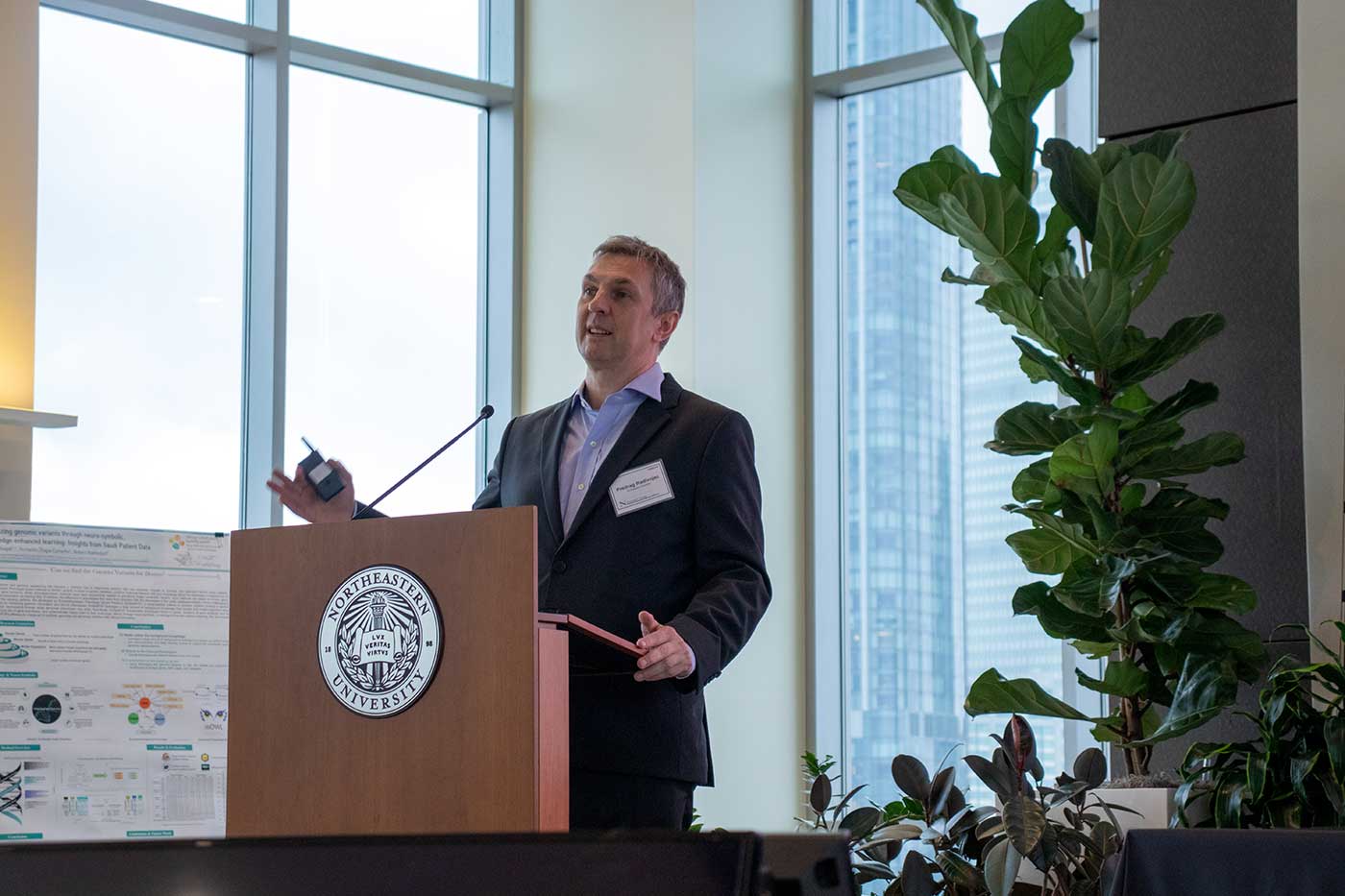
At CAGI conferences, these experiments take the form of “challenges” — group experiments where participants are presented with genetic variants, predict phenotypes based on the variants, then have their predictions independently assessed. It’s all part of an effort to understand how genetic variation impacts diseases and disorders, and to diagnose earlier and more accurately.
But this event, titled CAGI** (pronounced CAGEY-star-star), was a bit different. As the group’s second-ever workshop, the event aimed to highlight advances in the field and distill insights from CAGI’s first six conferences. It did this through themed sessions ranging from rare diseases to emerging methods to polygenic risk scores — genetic analyses that can help to predict whether a patient is likely to develop specific diseases later in life.
FOR MORE: In clinics, classrooms, and conferences, Predrag Radivojac elevates computational genomics
“Faced with hundreds of methods [of interpreting genetic variation] that all excelled, it had become a challenge to understand their distinctive characteristics and how they should be used,” noted Stephen Brenner, CAGI’s co-chair and a professor at UC Berkeley. “CAGI aims to understand that challenge and figure out which methods are best for each application.
“CAGI is an experiment, not a competition,” he added. “We aim to understand what is happening in each method and how it’s performing, not to crown winners or besmirch losers.”
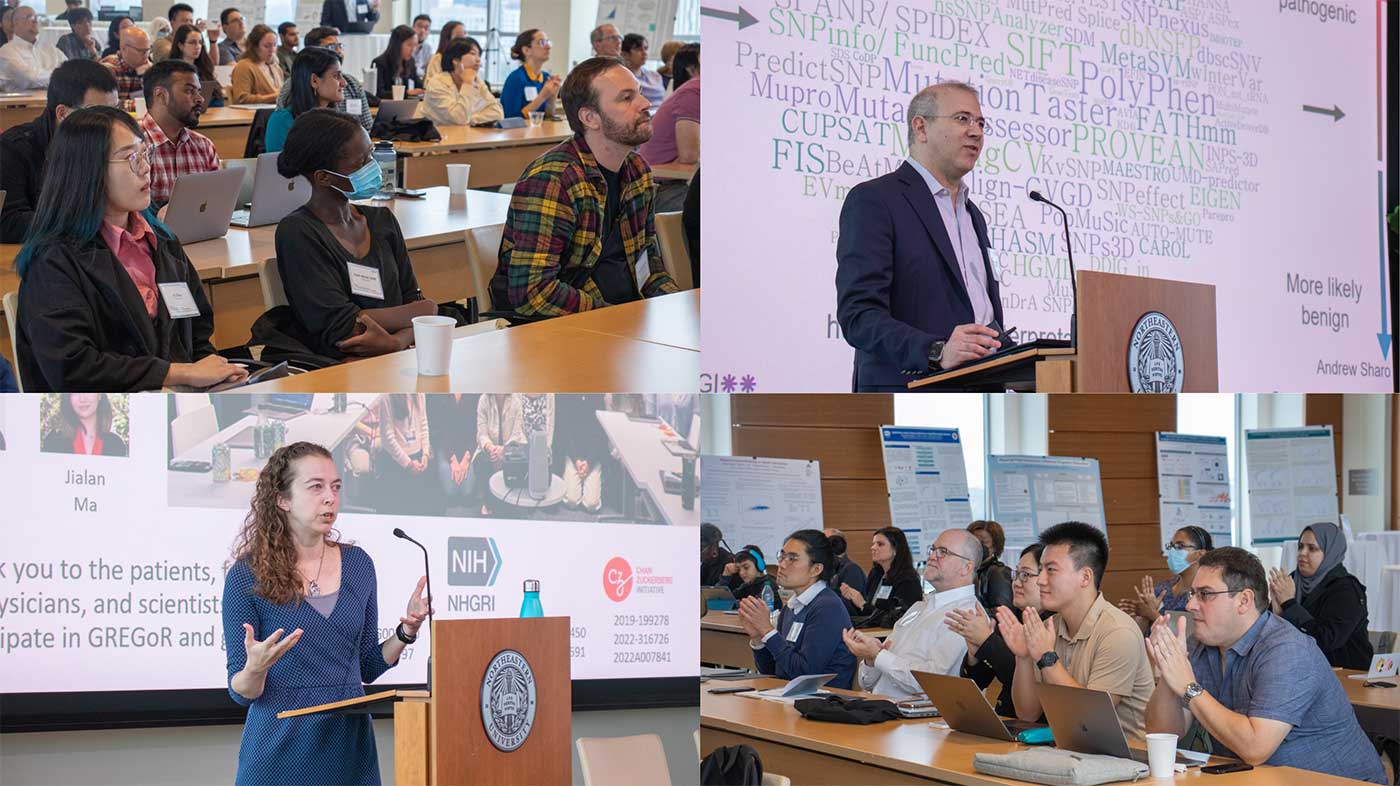
The workshop also contained a pair of keynotes. The first came from Anne O’Donnell-Luria of the Broad Institute of MIT and Harvard, who works to more effectively diagnose rare diseases by discovering novel disease genes and improving the interpretation of rare genetic variants. The second came from Wendy Chung of Boston Children’s Hospital, who researches the genetic basis for more than a dozen diseases, disorders, and conditions, including autism, diabetes, and cancer.
The audience that heard them hailed not just from academia, but from industry — with representatives from Pfizer and Google DeepMind, among others — and from institutions such as the Memorial Sloan Kettering Cancer Center, Mass General Brigham, and the NIH (CAGI’s main funder). And fittingly enough for an event that drew researchers from the US, UK, Japan, France, Italy, Saudi Arabia, Germany, Thailand, and Denmark, the event also touched on the value of data sharing and developing a diverse community of study participants, both tricky endeavors given some countries’ reluctance to allow across borders.
CAGI’s next full conference is penciled for the summer of 2024, not far off at all. But the nature of genomics, especially in the age of computing, means that even such a short window is still ripe for discovery.
The Khoury Network: Be in the know
Subscribe now to our monthly newsletter for the latest stories and achievements of our students and faculty
Author: Matty Wasserman
Date: 10.03.23
Until the day he was accepted to an internship program at NASA, Owen Seltzer never envisioned himself working in the space industry.
Seltzer, a fourth-year cybersecurity major at Khoury College, has long held a passion for technology and systems security. But his primary reason for applying to NASA was to fulfill requirements for the government-sponsored cybersecurity scholarship he earned last spring.
Now, after thriving during his 10-week summer cybersecurity internship at NASA’s Space Communications and Navigation (SCaN) department in Washington, D.C., Seltzer has extended his role into a co-op that will run through the end of the year. In this role, he works jointly between the cybersecurity office and national network operations as a fully integrated team member, traveling to NASA offices around the country to conduct security assessments and other projects.
“I never had any interest or thought of working at NASA or the space industry before. I mostly was just throwing some applications out to anything that had open roles,” Seltzer said. “But my experience over the summer was so great, and now in this bigger role, I get to see the impact and scope of the work we can do here. It’s a really unique opportunity.”
Seltzer is one of 13 Khoury students enrolled in the prestigious Cybercorps Scholarship for Service program (SFS), which is run nationwide through the U.S. Office of Personnel Management and is coordinated at Northeastern by Guevara Noubir, Khoury College’s executive director of cybersecurity programs. Through grants from the National Science Foundation, SFS fully funds cybersecurity students’ final two-to-three years of undergraduate or graduate studies. In exchange, recipients complete a summer internship for a U.S. government agency, and upon graduation, must work for the government for a period equal to the length of the scholarship.
RELATED: From scholarships to cross-university classes, VICEROY preps Khoury students for cyber defense
At SCaN, which is responsible for satellites, tracking, and communications between Earth and space, Seltzer works on a five-person network operations and integrity team. The unit manages cybersecurity compliance and risk for the computer systems that operate SCaN’s complex web of networks.
During the summer, Seltzer’s day-to-day role involved some typical intern programming — such as professional development training — along with some decidedly less typical items, including cybersecurity policy meetings and meet-and-greets with astronauts. But his primary work was a single summer-long project; he would inspect different networks and cyber programs, determine issues and areas for improvement, and then, using a holistic view of the department, suggest ways to problem-solve more efficiently.
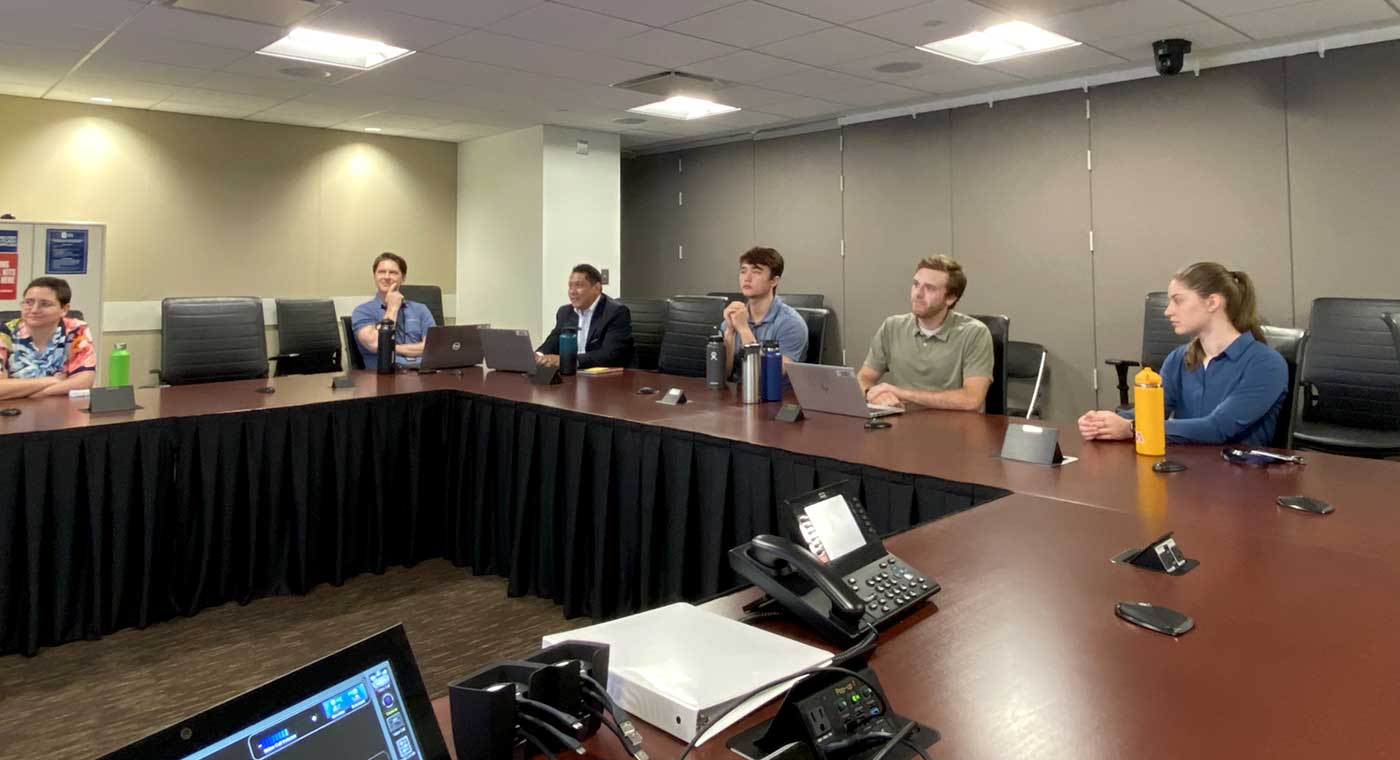
“I was essentially trying to find network commonalities and shared problems,” Seltzer said. “I would say, ‘I found this person is working on fixing a very similar problem to this other person, who is doing an entirely different project. We can get them to work together.’ Or maybe I’d suggest we appeal for more money to try and knock a problem out, because it was pervasive across multiple networks.”
At the end of his project, he presented his findings to his team and to the cybersecurity team for Artemis — a cutting-edge, NASA-led, multinational project which plans to send astronauts back to the moon.
“Getting to present to Artemis was really cool, because I’m sitting up there in front of a room of pretty powerful people and they’re listening to my ideas,” Seltzer said. “It really helped validate the work.”
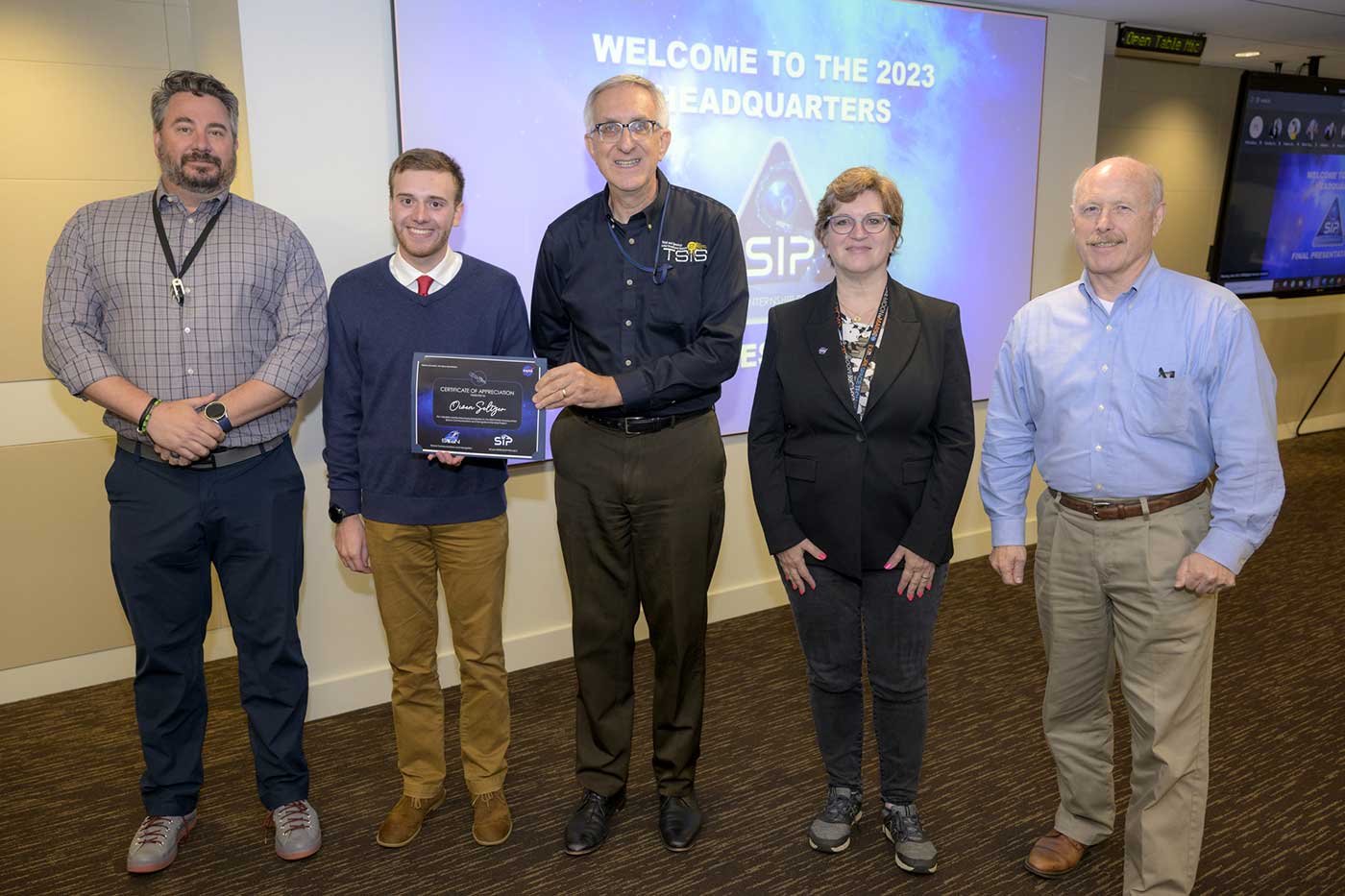
As he transitions from his summer internship to his fall co-op, Seltzer has also begun reviewing cybersecurity systems at other NASA branches across the country — a common procedure NASA uses to ensure checks and balances. In late August, he traveled to the Jet Propulsion Lab in Pasadena, California to help assess their internal programs, and he hopes to travel to NASA’s launch site in Cape Canaveral, Florida soon for a similar task.
“We’re looking at computer systems and asking, ‘Do they follow all these different regulations for cybersecurity?’ That’s everything from physical security, like ‘Are they behind a locked door,’ all the way to, ‘Are they using encryption and the disk properly for anti-virus protection,’” Seltzer said. “Seeing the operations at different sites is really interesting to learn from.
While Seltzer is not dead-set on a career in space cybersecurity, he’s now weighing whether to pursue a full-time role with NASA after his graduation. But even if he works at another government agency, the support of SFS and the diverse array of responsibilities and exposure he received during his internship will serve as a major boost.
The Khoury Network: Be in the know
Subscribe now to our monthly newsletter for the latest stories and achievements of our students and faculty