Author: Madelaine Millar
Date: 02.09.24
Numerous studies have found that Black Americans are more likely to experience severe depression than their white counterparts, and less likely to receive a diagnosis or treatment. In fact, the research concluded that Black people are less likely to receive adequate treatment for a wide variety of health issues — and Khoury College’s Teresa O’Leary believes tech can help to address that gap.
O’Leary was recently awarded her doctorate in personal health informatics after crafting an app-based mental health intervention for Black church community members who experienced depression, or who supported a loved one with depression. The intervention was part of a larger project called Smart and Connected Churches, in which multidisciplinary researchers from Khoury College, the Bouvé College of Health Sciences, Boston Medical Center, and Georgia Tech worked with members of Boston-area Black churches — the project’s intended user base — to design a health intervention app called ChurchConnect.
ChurchConnect features a digital counselor named Clara, who offers everything from guided meditations and health education to goal-setting help and counseling. The app also provides faith-specific support — such as a community prayer wall and a daily bible verse — and connects users with resources ranging from local health programs to other users of the app.
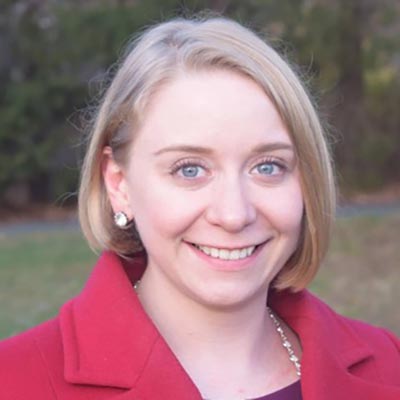
“Working with the community, I began to understand that people really want a whole-person, holistic approach to their health and wellness,” O’Leary said. “They want something that can address their concerns in multidimensional ways, with a focus not just on bodily health, but our mental health, as well as social and spiritual well-being.”
O’Leary first became interested in medical support technologies in her late teenage years when her father suffered a stroke that left him disabled, then developed renal cell carcinoma and passed away. Her mother was a nurse, but even with her skills and knowledge, transitioning her father’s care between the hospital and their home was difficult.
“If we don’t have the necessary support in our home environments, then we’ll go back to the hospital constantly,” O’Leary said. “That’s what I saw happen to my father.”
After completing her undergraduate degree in sociology at Smith College, O’Leary spent three years as a case manager for people experiencing mental illness. Next came seven years performing motivational interviews, an open-ended style of counseling that identifies and supports patients’ personal reasons for improving their health. As she worked with tobacco users to bridge the gap in care she experienced with her father, O’Leary began to understand that people’s motives for seeking care were often very personal, and that the support it was possible to offer on the spot was often very limited.
“I view technology as a way to supplement and personalize care, and as a way to connect people to other resources and services,” O’Leary said. “Technology has the potential to be more flexible and dynamic and responsive to individual needs and values in a way that physicians typically can’t be. That was the impetus that brought me to Northeastern.”
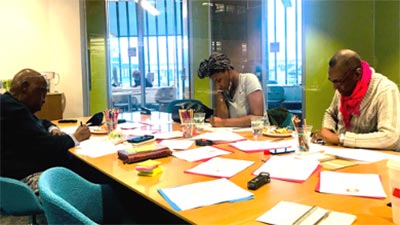
Upon arriving at Khoury College in 2017, O’Leary joined the Relational Agents Group under the mentorship of professor Tim Bickmore, who had recently received a National Science Foundation grant to pursue technological health interventions in Boston’s Black church communities — a project called Smart and Connected Churches.
O’Leary began by leading focus group discussions with local churchgoers to understand their needs and how they wanted them addressed. As O’Leary and her fellow researchers executed the technical components of the app, feedback from community members and church leaders drove design decisions, and after three years of collaboration, ChurchConnect launched.
During the focus groups, church members identified stigma and a lack of support for mental health challenges as the main obstacles to improving care in the community. So O’Leary took charge of that project component for her dissertation, and asked how an app could support people experiencing depression and their loved ones.
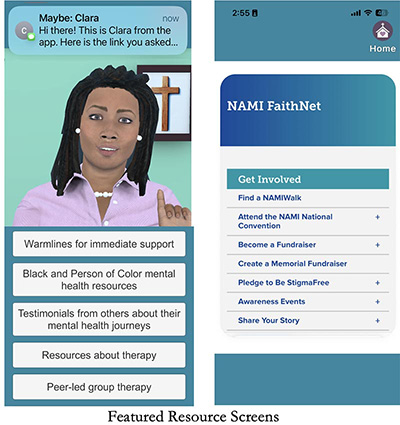
The resulting intervention begins with Clara, the ChurchConnect relational agent, screening users for depression. If the screening indicates a user is at risk, Clara provides resources like crisis intervention hotlines, discusses reservations the user may have about seeking therapy, and encourages users to seek support through traditional routes and through community members who have indicated they have the bandwidth to support others. If the screening doesn’t flag depression risk, Clara teaches the user how to support members of their community whom they suspect may be struggling with depression.
”What I want people to consider is that stigma, for somebody who’s depressed, can actually be worse than depression itself. If somebody feels stigmatized and they blame themselves for that … they start to diminish their own power and opportunities,” O’Leary said. “Stigma is something that happens to you and you’re marginalized by it. It makes your life more difficult, but in no way is it your fault.”
User response to the app has been incredibly positive. Multiple people who worked through the supporter interface self-identified as depressed or at risk of depression, which empowered them to seek support and treatment before their condition became debilitating. The Smart and Connected Churches project as a whole has been represented at the prestigious CHI conference for four years running, and the app is now in clinical trials.
READ: Awards, ethics, cross-college collaboration: Northeastern at CHI 2023
Now equipped with her doctorate, O’Leary has joined Terika McCall’s Consumer Health Informatics Lab at the Yale School of Public Health. There, supported by her two-year National Library of Medicine fellowship, she will use her expertise in qualitative research and user-centered design to support numerous digital health research projects,. She’s excited for her next endeavor, and expects her experiences building ChurchConnect to deeply inform her work.
“I never imagined I would do techno-spiritual work, but now that I’ve done it, I can’t imagine not incorporating it in my work from here on out,” O’Leary said. ”There’s always going to be something that people want or need within an intervention that I have no personal experience with. Understanding the ways in which I can learn about that, and to honor it in a way that feels genuine and relevant to them, is what’s most important to me, and I think for this piece I accomplished that.”
The Khoury Network: Be in the know
Subscribe now to our monthly newsletter for the latest stories and achievements of our students and faculty
Author: Attrayee Chakraborty
Date: 02.06.24
Last year, Rewriting the Code (RTC) selected Khoury College as its first official collegiate partner. And in just one year, the partnership is paying off.
The international nonprofit focuses on empowering and supporting undergraduate, graduate, and early-career women in tech through mentorship, education, and peer-to-peer networking, with the goal of promoting sustainable careers and equal opportunity. It also offers access to in-person and virtual events, job and internship opportunities, and a Women in Tech Fund for members who need financial assistance.
Ambassadors of RTC at Northeastern aim to further those missions by empowering female students to complete their degrees and build their careers, all while being supported by a global network of women. Khoury students Jamie Pan, Annie Pates, and Crystal Zhang share their stories as ambassadors and how they’re spreading the word about the RTC community at Northeastern.
Jamie Pan
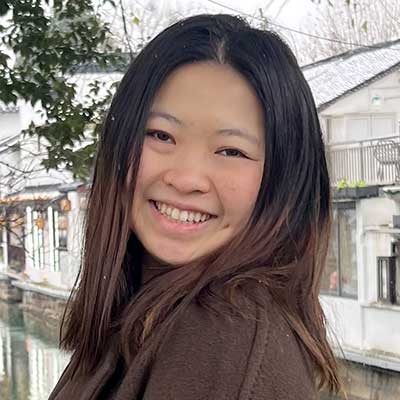
Jamie Pan, a third-year undergraduate in computer science and economics, joined RTC because of the community resources it provides.
“RTC hosts a number of social events for women to get together and build a strong community of people interested in pursuing a career in tech,” Pan says. “I would not be where I am without my mentors who inspired me to expand my community and support system.”
Pan decided to become an RTC ambassador because she wanted to help women like herself. Previously a member of the National Center for Women in Computing during high school, Pan believes that joining RTC has been a boon for connecting directly with recruiters in established tech companies, especially in figuring out what kind of roles exist in industry.
Pan also mentions several RTC initiatives that motivated her to spread the word, including technical workshops and funding to attend major tech conferences such as the Grace Hopper Celebration. Now she and her team are seeking collaborations with other clubs on campus.
“There are higher dropout rates for women who want to pursue computer science in comparison to men,” Pan says. “As ambassadors, we want to increase outreach and make women feel comfortable with the ever-changing nature of this field and overcome the impostor syndrome that they often feel.”
READ: Impostor to Aligner: How LeAnn Mendoza found her way to data science
For herself, Pan thinks that RTC has helped her to identify her passion for product management and stand out as a job candidate. During her search for a co-op, which she is excited to start this summer at Microsoft, Pan has found a supportive community of women at RTC to guide her through the process.
“RTC is a great way to be exposed to opportunities for career development,” Pan says. “We provide a safe space for women to ask honest questions and get real answers. Being an undergrad woman in tech, I understand what most women are going through, and I want to share this resource with others.”
Annie Pates
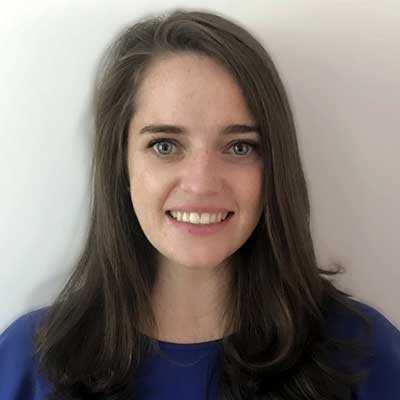
Annie Pates, a master’s student in Khoury College’s Align program, learned about RTC from a panel discussion involving Kristin Austin, RTC’s vice president, at the Harvard WEcode Conference.
“It was the first place I had ever been since I started in computer science where I felt like I could be wholly myself in the room,” Pates says. “And that’s what I want when I’m talking to people about RTC — for it to be a place where they can bring their whole selves.”
Apart from being a great resource for resume tailoring and other career management tools, Pates believes that RTC provides a space where women can create a world that is more empowering than many other experiences in tech. The group helped her adjust to a new program and figure out how and when to apply for internships — a process which led her to securing an internship at Mercedes-Benz, where she works on 3D object databases to improve driver experiences.
“I wanted to share this resource with students in my cohort,” Pates says. “So we organized a start-of-year pizza party to welcome students back to school. RTC’s senior VP, Jade Barricelli, flew in to introduce RTC to undergrad and grad students.”
Pates has big plans for expanding RTC on campus and bringing Northeastern’s women-in-tech organizations together to expand learning opportunities for students. The group is also hosting a fireside chat with Khoury Dean Beth Mynatt and RTC Founder and CEO Sue Harnett, the second of its kind, in mid-February. But their focus doesn’t stop at the edge of campus.
“With only 20 percent of CS majors being women on an average nationally, it can feel like you’re a small group. But in Boston, we have such incredible potential with the other schools around us,” Pates feels. “We are trying to get a breakfast meeting going for women and tech leaders from a lot of colleges around Boston to stay connected and share our collective experiences.”
With RTC’s Slack community numbering more than 20,000, Pates encourages people from all educational backgrounds to engage on RTC’s communication platforms, which she and the other ambassadors help to monitor.
“I have received immense support from the RTC community, with Kristin being a very responsive mentor,” Pates says. “And I would love to pass down that beacon of support to all our members as I progress through my journey in CS.”
Crystal Zhang
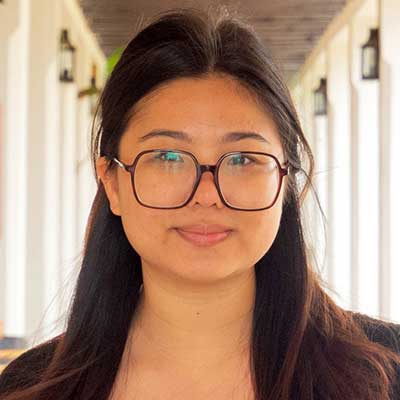
Crystal Zhang, a computer science and design student, embarked on her RTC journey during her second year while searching for internships.
“Navigating the internship search alone felt discouraging, but I found a super supportive group in RTC,” Zhang says. “I have found people at my dream companies who were open to communicating and sharing their experiences over Slack.”
Similar to Pan and Pates, Zhang also feels that supportive RTC mentors changed her career for the better. She found herself promoting RTC in her communities even before she became an ambassador.
“As a first-generation and low-income student, finding a mentor at Microsoft who has helped me in navigating networking, negotiating offers, and other life skills has been a blessing,” Zhang says. “Seeing how far I have come in the past year with guided mentorship has been an illuminating journey.”
Zhang feels that RTC is a great support system, especially for first- and second-year undergraduates.
“When I joined RTC, I was on the verge of failing a class and I was contemplating dropping out of computer science. I was feeling impostor syndrome to the max,” Zhang says. “What helped me keep pushing was the strong support system RTC offered and the connections I made with other Khoury women. I want to pay it forward to all our future members, especially those who feel they don’t belong somewhere or that they aren’t good enough.”
To that end, Zhang has been planning events for the coming semester to bring Khoury students together under RTC’s umbrella.
“I want to provide students with the sense of community and support that pushed me to continue and believe in myself,” Zhang says. “Today, I’m candidly sharing my experiences with failure and impostor syndrome in the hopes that it can make a difference to someone in the shoes I was in.”
Students interested in getting involved with Northeastern’s chapter of Rewriting the Code can join RTC and the Northeastern RTC Slack channel and register here to attend the group’s February 15 fireside chat.
The Khoury Network: Be in the know
Subscribe now to our monthly newsletter for the latest stories and achievements of our students and faculty
Author: Benjamin Hosking
Date: 01.29.24
Khoury College professor Malihe Alikhani and her doctoral student Anthony Sicilia led a team that recently finished third in the Alexa Prize TaskBot Challenge 2. The international Amazon-run competition aims to build AI assistants called “TaskBots” that help users through detailed tasks like cooking or do-it-yourself work, with winners determined by user ratings, research contributions, and a judged final event.
After nine months of building a TaskBot that interacted with real Alexa users, the team not only achieved the third-place prize, but did so by centering the Khoury ethos of “computer science for everyone.” Their proposal was for an inclusive and equitable Alexa system, which they called ISABEL (IncluSive And collaBorativE aLexa).
“We promised that we would make these devices accessible and usable by communities that historically haven’t been able to use them as well,” Alikhani says, “such as people with speech impediments, African American Vernacular English speakers, and the American Sign Language community.”
Alikhani’s lab, which migrated from the University of Pittsburgh to Khoury College last year, designs inclusive and equitable language technologies for health, education, and social justice uses, and seeks to understand and mitigate biases in language models. Sicilia is an integral part of that lab, which he joined after the first year of his doctoral program. He’d studied math as an undergraduate because of an early interest in chaos theory, but while building an app for a professor, he saw the wide benefits computer science can create — benefits he saw as vital for ISABEL.
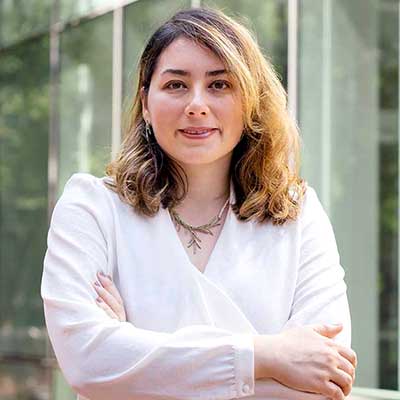
Malihe Alikhani
“Our goal set us apart,” he says. “We were trying to reach more Amazon customers who have different preferences or capabilities without excluding anyone in the way the bot was designed. All of our choices were built from that principle.”
ISABEL’s context-aware, multi-modal communication relies on state-of-the-art machine learning techniques to enable flexible, human-like collaboration. Users with different preferences and capabilities can tailor their experience, making the TaskBot more accessible for diverse groups. To achieve this, the team needed to rectify the sorts of biases that limited previous TaskBots; this, Sicilia notes, required a “mathematical explanation of why AI fails when working with underrepresented communities.” So Team ISABEL based their design on their recent mathematical analyses of bias prevention and collaboration in large AI language models.
As the team lead, there were many firsts for Sicilia. He’d captained lab projects before, but this was a larger effort, and one intended for consumer use.
“If your code breaks in a lab setting, you lose a few hours. It’s lower stakes,” he explains. “Moving to this setting, where if your bot does something it’s not supposed to, it would impact a real person … The threshold for quality is a lot higher.” He adds that it was his first time doing “multithreaded processing” across diverse projects, referencing a form of computer architecture that involves parallel computing on one central processing unit core.
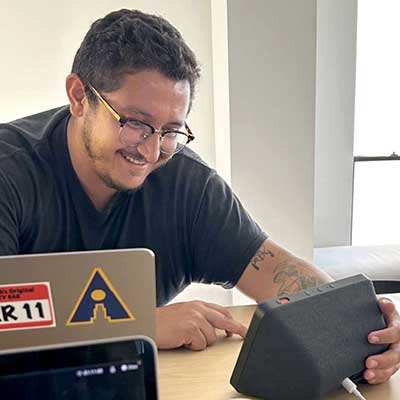
Anthony Sicilia
Alikhani expresses pride in Sicilia’s work over the last few years on difficult applied and theoretical problems, lauding him as a bright, driven, and high-potential researcher. But she’s also quick to mention the eight-student team Sicilia led, a team which also included Kate Atwell and Mert Inan. That group coordinated with Amazon scientists, the Alexa team, and community partners to bring their vision to fruition.
“The spirit was there, and they were always working hard,” Alikhani says. “We often design and evaluate systems but don’t see them deployed in the wild. It was rewarding for them to see a tangible result, and it changed their perspectives on the impact they can have.”
It’s that impact, Sicilia and Alikhani say, that fueled the effort they put into ISABEL.
“We have these technologies advancing extremely fast. I know friends who aren’t in CS who are using ChatGPT and improving their daily lives,” Sicilia says. “It’s one of those things where if we don’t pay attention to marginalized communities, we’re leaving them behind.”
“I care about how I take this technology and reach out to communities that may not have access to it,” Alikhani adds. “I want natural language processing technology to be for everyone, and I’m glad to be part of a college that can support this vision for my lab and my research. This is a very exciting time for conversational AI and natural language processing, and our lab will focus on the ethics, accessibility, and inclusivity of this technology as we move forward.”
The Khoury Network: Be in the know
Subscribe now to our monthly newsletter for the latest stories and achievements of our students and faculty