Author: Milton Posner
Date: 05.16.24
On April 18, Northeastern University held its 14th annual Academic Honors Convocation, in which students from across the university were honored for their determination and for making the most of the opportunities before them. To meet Khoury College’s undergraduate, graduate, and doctoral student winners, click any of the linked names below, or simply read on.
Huntington 100 (outstanding undergraduate students): James Chang-Davidson, William Cutler, Jona Fejzaj, Will Hanvey, Taeyoon (Kevin) Jin, Jocelyn Ju, Hunter Rudnet, Aarshiya Sachdeva, Erica Sammarco, Sara Takhim
Lux. Veritas. Virtus. (outstanding master’s students): Spencer Belsky, Vidya Ganesh, Tom Henehan, Annie Pates, Shagun Saboo, Manikhanta Praphul Samavedam, Daniel Bi, Niyati Khandelwal, Peiying Li, LeAnn Mendoza, Ziyun Chen
NSF Graduate Reseach Fellowships: Diego Rivera, Sabra Sisler, Neel Sortur, Stanley Wu
Fulbright Scholarship (for researching, studying, or teaching English abroad): Maxwell Pirtle
Sears B. Condit Award (outstanding academic achievement): Neeti Desai
Outstanding Graduate Student Award in Humanics: Ryan Muther
Outstanding Graduate Student Award in Teaching: Diptendu Kar
James Chang-Davidson, Huntington 100

One commencement-season honor isn’t enough for James Chang-Davidson. Even two is too few. He walked the stage with three honors in tow: the Huntington 100, plus Northeastern’s Compass Award and the Lasting Impact Award from the annual Student Life Awards.
It’s a haul that recognizes Chang Davidson’s immense and varied contributions to Northeastern student life. In his work with the Northeastern Electric Racing club — which designs, builds, and races formula-style electric racecars — Chang Davidson jumped from project manager to vice president to president, and established a software team that expanded to handle web development, data analysis and visualization, and vehicle interface and controls. In addition, he was the founder and president of Kaleidoscope, which serves as a council to unite and support Khoury student groups, with the goal of creating a lasting synergy among the college’s student groups.
Tack on his involvement with oSTEM, Out in Business, the College of Engineering’s Student Activities Council, and Northeastern’s Student Government Association, and you have a textbook advertisement for the benefits of student life, not just for Chang Davidson, but for the students around him as well.
William Cutler, Huntington 100

After arriving at Northeastern undeclared as part of the Explore program, it took William Cutler nearly two years to settle on his combined major of computer science and physics. In the three years since, be it co-ops or research, he has run with every opportunity.
Cutler’s first co-op role was a development position with the API team at CNC Software, where he helped debug code and maintain the software’s usability. His second was with Amazon Robotics’ resource management team, where he optimized warehouse robots and debugged their software.
Then, after receiving funding through Northeastern’s PEAK Trail-Blazer Award, Cutler worked in a trapped ion lab at Oxford University last summer, where he contributed to calibration experiments for trapped-ion quantum computers.
“Calibration is a big deal in experimental physics to make sure all your devices are working properly,” Cutler says. “That was an incredibly exciting project to be working on, both geographically and intellectually.”
Following his time abroad, Cutler completed his final co-op with NK Labs in Cambridge, Massachusetts, where he worked on a muon-catalyzed nuclear fusion experiment — a large-scale effort to create novel fusion conditions and measure the outcomes using precision detectors. The experiment required a specialized beam of muons, which Cutler and his team helped to create and deploy over two months at the Paul Scherrer Institute in Switzerland.
“It was really an incredible experience of getting the full picture of research, from reading papers and coming up with an idea to testing it, iterating, and prototyping,” Cutler says. “It really filled out for me what being an experimental physics researcher would be like.”
After graduation, Cutler will pursue a doctorate in atomic and laser physics at Oxford, where he will continue to research trapped-ion quantum computers.
Jona Fejzaj, Huntington 100

When Jona Fejzaj started her college journey, she wasn’t at Northeastern. She wasn’t a computer science major. She had never written a line of code.
But after transferring to Northeastern for her third year, Fejzaj reshaped her academic focus entirely, first selecting a combined computer science and math major, then stacking experiences at a striking rate. TA for “Object-Oriented Design.” Project manager with Enabling Engineering, where she oversaw development of a Roku device for a user with cerebral palsy. Participant in Moving the Cities, a weeklong international program where entrepreneurial students innovate to address global challenges. Web developer at Forge, where she helped develop a water bottle with tracking capabilities. Participant in Break Though Tech AI, where she worked on a model to classify plant specimens in the New York Botanical Garden. Quantitative research co-op in Chicago at UBS, where she works on workflow streamlining and portfolio optimization.
READ: Tech solutions for global crises: Jona Fejzaj’s take on Moving the Cities
After graduation, Fejzaj hopes to attend grad school and work as a machine learning engineer, with a focus on developing equitable machine learning models and reducing algorithmic bias.
Will Hanvey, Huntington 100
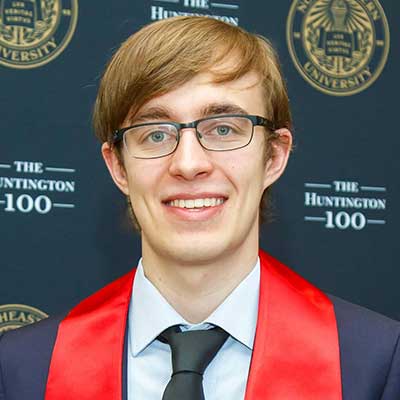
When your data science journey encompasses public transit, soccer, Asian politics, and whale sharks, you’ve charted a path unto yourself.
Such is the path of Will Hanvey, who helped create a combined data science and international affairs major at Northeastern, then tacked on minors in economics, Japanese language, and East Asian studies. He blended all five fields throughout his time as a Husky, but especially so in 2023, almost all of which he spent in Asia. What begin with a study abroad at the University of Tokyo and a visit to all 47 Japanese prefectures continued with a co-op at Taiwan’s first international think tank. On weekends and holidays, Hanvey voyaged around Southeast Asia, swimming with whale sharks in the Philippines and meeting elephants in Thailand.
Hanvey’s Boston-based days were eventful too. When he wasn’t doing predictive modeling for the T or the 2022 FIFA World Cup, he was co-oping at Lightcast, where he investigated gaps between the skills colleges teach and the skills the labor market seeks. Hanvey also helped lead the International Relations Council and collaborated with Northeastern’s World Languages Center to create a chapter of the Japanese National Honor Society.
With one semester remaining before he graduates, Hanvey plans to return to Japan as a data science co-op for the Hiroshima Toyo Carp in Nippon Professional Baseball — the final co-op in his nascent data science career.
Jocelyn Ju, Huntington 100
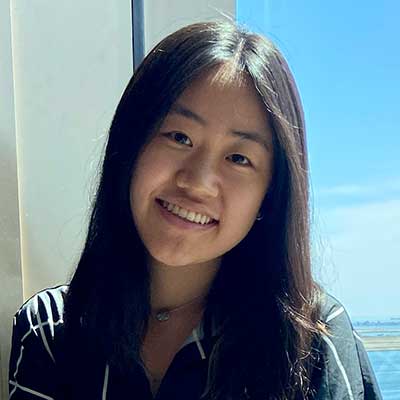
After joining Northeastern undeclared through the Explore program, Jocelyn Ju found her niche: using data science in service of sustainability and the environment. Along the way, she completed a handful of co-ops in AI, data science, and sustainable investing, served as a leader and ambassador in the Explore program, and competed for Northeastern’s club taekwondo and women’s hockey teams. She also earned several honors, including the Asian American Center’s Student Engagement Award, the Joseph E. and Zeina Aoun Global Experience Scholarship, and a Northeastern Honors Scholarship.
Ju is currently studying abroad at the University of Sydney in Australia, where she’s undertaking service learning in Indigenous communities and analyzing drone imagery to predict pasture biomass and quality. Unlike most Huntington 100 honorees, she has a year left before graduation, at which point she plans to pursue employment for a year or two, pinpoint her next area of study, and pursue a master’s degree.
Taeyoon (Kevin) Jin, Huntington 100
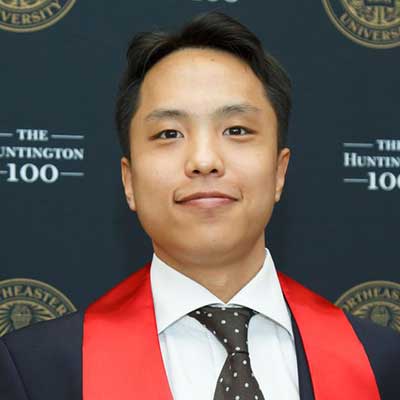
By the time he arrived at Northeastern, Kevin Jin had two programming and design ventures under his belt. The first was a company he founded at age 13, one that leveraged Jin’s virtualization solution to provide affordable servers to small businesses. The second came through a high-school internship at venture capital firm SOSV, where he parlayed lessons from other founders into Keo, a learning management software system for schools with limited resources. Jin raised more than $500,000 to further the venture, which now has more than three million student users.
Jin continued his entrepreneurial streak at Northeastern when, as a second-year student, he joined global software consulting firm Revox. Over the next few years, including through two unconventional own-venture co-ops funded by NU’s Center for Entrepreneurship, Jin quintupled the size of the Revox team, served as interim CEO, and helped revamp the company’s internal processes. When he wasn’t doing that, he was boosting other students’ ventures through the Husky Startup Challenge, for which he served as co-director and startup mentor. In the research realm, Jin has studied open-source technology as it relates to accessibility and human–computer interaction, and plans to continue this work in his graduate studies.
Hunter Rudnet, Huntington 100

For Rudnet, who buttressed his computer science major with a minor in business administration, a litany of different co-op roles was the perfect path to chart outside the classroom. Whether he was working for a household name like The Walt Disney Company, finance and consulting firms like Stripe or Boston Consulting Group, or a straight-ahead software company like Datadog, he tackled a wide variety of projects, from staff onboarding to security work to software engineering.
When he wasn’t propelling someone else’s business, Rudnet was founding his own in 2018. ShoeHunters LLC, an online community powered by Rudnet’s Python- and Go-based software, allowed sneaker and streetwear enthusiasts to monitor limited-edition goods. Within the business’ first few years, those enthusiasts had collectively made over $1 million.
Outside the business sphere, Rudnet served as a TA for “Fundamentals of Computer Science 1” and “Object-Oriented Design,” mentored Khoury students in their co-op searches, and fundraised through Northeastern Greek life. After graduation, he’ll work as a full-time software engineer for his former co-op employer Stripe in New York City.
Aarshiya Sachdeva, Huntington 100

Aarshiya Sachdeva’s Northeastern resume is a resounding reflection of her data science and business degree. She’s been involved in TAMID at Northeastern, DATA Initiative Lab, Husky Ambassadors, IDEA, and the Khoury Student Advisory Board, and has TA’d for “Discrete Structures,” “Innovation,” and Khoury College’s “Professional Development for Co-op.” Outside of the classroom, Sachdeva worked as a model development co-op for Credit Suisse HOLT and as a technical project management and analytics co-op at Wayfair.
After singing the national anthem at Northeastern’s undergraduate commencement ceremony, Sachdeva plans to travel throughout Europe and Southeast Asia.
Sara Takhim, Huntington 100

Sara Takhim’s passion for community service in tech began during high school, when she co-founded an extracurricular computer science learning program for children with disabilities. In college, she took that passion to Northeastern University Women in Technology (NUWIT), where, as president, she bridged the gap between the club and tech industry leaders.
“We created a packet we provided to any companies we worked with, where they could get a glimpse [of the club’s members] through a resume book,” she said. “And then in exchange, they’d sponsor the club, either monetarily or by providing us with tech talks and workshops throughout the school year.”
READ: From cybersecurity co-ops to women in tech, Sara Takhim makes her mark
This past year, Takhim served as the co-head of operations at Kaleidoscope, the council that coordinates with and advises Khoury College’s student clubs. There, she built on her work with NUWIT by helping other Khoury-based clubs establish connections with local companies and programming initiatives.
Upon graduating, Takhim will start as a full-time cybersecurity consultant on the same IBM team she worked for during her two co-ops. And as she establishes herself in the industry, she will look to continue her community service.
“I started out when I was pretty young, so I know how difficult it can be to navigate this space,” Takhim said. “I’d love to be like a mentor to younger children who are looking to get into tech or security.”
Spencer Belsky, Lux. Veritas. Virtus.

Spencer Belsky began his time at Northeastern rather unconventionally. While many of his peers took classes in person, Belsky was skiing professionally — representing the United States in competitions at home and abroad, rising to a peak national ranking of seventh, and taking classes remotely in the College of Professional Studies.
When injuries and the pandemic brought a close to his competitive skiing career, Belsky enrolled in in-person classes, completed his bachelor’s in information technology, and jumped to Khoury College’s Align program to begin his studies in computer sciences. Along the way, he assumed leadership positions within AEPi and TAMID at Northeastern, worked as a software engineering intern in Israel, and served as a product management co-op at Bevi.
After graduation, Belsky will move to New York City, where he’ll work for Meta as a rotational product manager.
Tom Henehan, Lux. Veritas. Virtus.

Throughout his time as a data science master’s student, Tom Henehan made it his mission to assist others, whether as a research assistant with local labs or a teaching assistant on campus. He also volunteered as a math tutor for multiple organizations and founded a nonprofit that specialized in delivering dental supplies to unhoused people.
In addition, he took part in Khoury College’s apprenticeship program under Ravi Sundaram. There, Henehan explored the ties between mergers and acquisitions, patents, globalization, and green energy, and developed a model for companies to determine whether an acquisition makes strategic sense.
After commencement, Henehan plans to research AI and machine learning for the Air Force Research Laboratory.
Annie Pates, Lux. Veritas. Virtus.

Among a handful of experiences during her time as a computer science student in the Align program, including a software engineering internship with Mercedes-Benz, Annie Pates made her mark as an ambassador for Rewriting the Code. The organization, which strives to empower and support women in tech, made Khoury College its first collegiate partner last year, and relies on ambassadors to recruit, welcome, and support its members.
“It was the first place I had ever been since I started in computer science where I felt like I could be wholly myself in the room,” Pates says. “And that’s what I want when I’m talking to people about RTC — for it to be a place where they can bring their whole selves.”
READ: Northeastern’s Rewriting the Code ambassadors share their stories
Shagun Saboo, Lux. Veritas. Virtus.
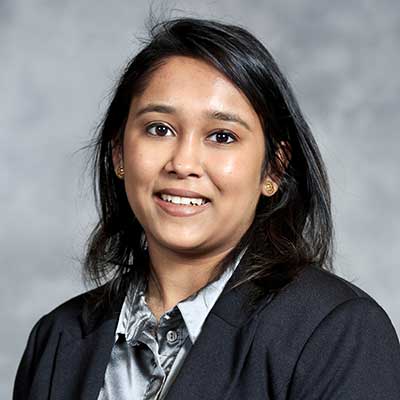
Shagun Saboo spent her master’s studies at Khoury College fusing data science with health care and business, primarily through a series of partnerships with faculty.
First came a research assistantship under Khoury–Bouvé professor Stephen Intille in his mHealth Research Group, where Saboo helped develop a pioneering sensor to monitor abiotic room parameters, analyze the sleep patterns of children, and provide insights into pediatric health. Then there was her apprenticeship with Divya Chaudhary, in which she worked on an AI-based form verification system. Finally, there was her work with D’Amore McKim’s Paula Caligiuri on advances in international business and marketing.
Outside of these roles, Saboo served as a TA for data science and machine learning courses under Ehsan Elhamifar, as a co-op for Fidelity Investments and Amazon, and as president of the Khoury Master’s Student Council, where she honed her leadership skills and earned a Student Life Award.
Going forward, Saboo will continue her research with Chaudhary on leveraging AI to treat autoimmune disorders; she’ll also seek full-time opportunities in the finance and health sectors.
Manikhanta Praphul Samavedam, Lux. Veritas. Virtus.
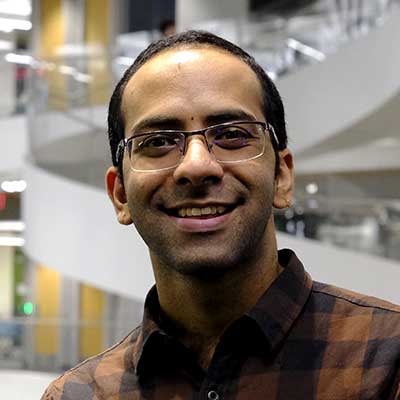
For Manikhanta Praphul Samavedam, the name of the game has been, and will continue to be, leveraging AI in practical ways. It explains not only his choice of a master’s degree in AI, but also his co-op at the data science startup Sway AI and his forthcoming AI research within the Khoury College’s apprenticeship program. He wants his post-commencement job to explore similar ground, and to allow him to push the field’s boundaries with innovative solutions.
Outside of the classroom, Samavedam involved himself with numerous student groups, including the Khoury Master’s Student Council, Graduate Student Governance, NU Sanskriti, and the Google Developer Student Club.
Daniel Bi, Lux. Veritas. Virtus.
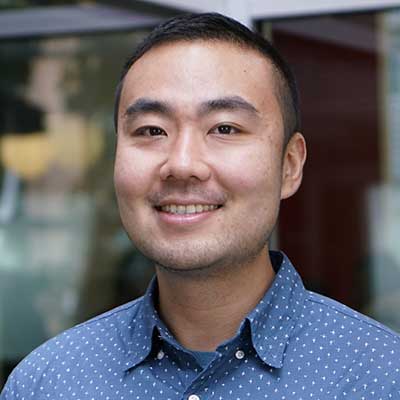
During his time at Khoury College, Daniel Bi worked as an admin and event assistant, which allowed him to participate in numerous events and meet many students on the Seattle campus. Outside of work, he is an avid traveler, chef, gamer, and fitness enthusiast.
After graduation, Bi will join Amazon as a software engineer. He previously interned for the company in 2023.
Niyati Khandelwal, Lux. Veritas. Virtus.

Niyati Khandelwal began her master’s studies in Seattle with full stack software engineering experience, and with the goal of absorbing AI and machine learning concepts to expand her professional options. She leaves after navigating not only challenging courses, but also formative internships at Lumen Technology and Tesla, glimpsing the end-to-end car manufacturing process in the latter.
On campus, Khandelwal participated in a product development hackathon as part of a Khoury-sponsored team. She also became a Seattle campus ambassador for Rewriting the Code, an organization which helps women in computer science to network with each other and employers, and which provides students and early-career tech professionals with mentorship and networking opportunities. She was grateful to see people like her climbing the tech ladder and hopes to continue giving back.
After graduation, Khandelwal will be a full-time software engineer for Tesla’s internal applications team in California.
Peiying Li, Lux. Veritas. Virtus.

Peiying Li is a Khoury College Double Husky, having jumped from her bachelor’s in data science to a master’s in computer science at the Seattle campus. After serving on the executive board of Northeastern’s Healthcare Innovation Core for two years as an undergraduate, she spent her graduate years involved with the Seattle campus’s Women in Tech group, eventually becoming the group’s president. She also completed a co-op as a data engineer at sleep fitness company Eight Sleep, where she continued to combine her health care and tech passions.
After graduation, Li plans to pursue software engineering and hone her developer skills, with an eye toward entrepreneurship and innovative health care software.
LeAnn Mendoza, Lux. Veritas. Virtus.

As a member of Khoury College’s inaugural Align data science master’s cohort in Silicon Valley, LeAnn Mendoza spent the last few years building and deepening the community around her.
When she wasn’t serving as a student ambassador, career peer advisor, or teaching assistant, she was founding and chairing the campus’ chapter of the ACM-W, in which students support, celebrate, and advocate for women in computing. Mendoza also helped found the Multimedia Information AI Research Group Lab in Silicon Valley, and researched ways to democratize access to AI technology in K–12 education and entrepreneurship.
And she wrapped it all up with a message for her fellow graduates at Khoury College’s commencement celebration:
Diego Rivera, NSF Graduate Research Fellowship
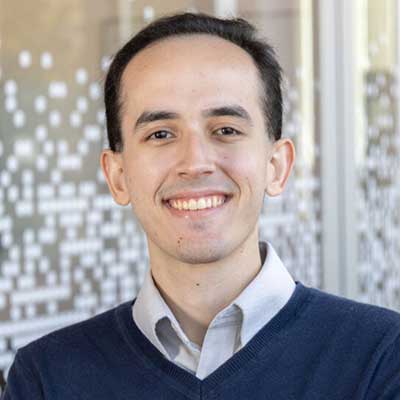
Diego Rivera has always been fascinated with rearranging the flow and combination of things, which spurred him to leverage scalable algorithms and graph analysis to boost network resilience, particularly as applied to supply chain disruptions. After growing up in Puerto Rico, where hurricanes often cause this sort of disruption, he feels he can bring a unique perspective to the field.
Apart from his new NSF fellowship, Rivera is also a Khoury Distinguished Research Fellow. He previously worked in transportation, insurance, finance, and healthcare analytics.
Sabra Sisler, NSF Graduate Research Fellowship
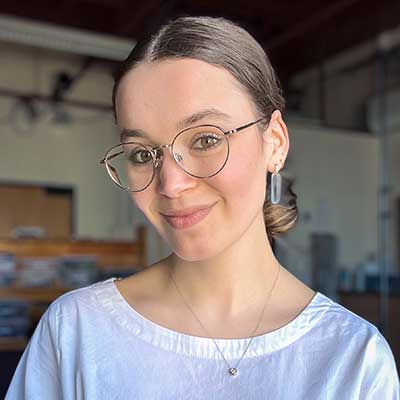
Unlike most of her fellow honorees, Sabra Sisler graduated from Northeastern last year, doing so with a bachelor’s in computer science and behavioral neuroscience. Along the way, she explored the intersection of those two fields, namely through her co-ops at Merck Research Laboratories, Globus Medical, and Neuraville, a neurorobotic startup. She was also a LSSURP Fellow at the University of Minnesota’s neuroscience department in the summer of 2019.
In the past year, Sisler has delved into post-baccalaureate work on human motor learning under the mentorship of Dagmar Sternad, laying the groundwork for her future research. Alongside Deniz Erdogmus, she also developed EEG-based decoders to control computer interfaces, highlighting the noninvasive potential of brain–computer interfaces (BCIs) in aiding communication for patients with locked-in syndrome.
Sisler will begin her bioengineering doctorate at Stanford University in the fall, with the goal of developing BCIs that decode the neural bases of motor learning and restore motor function in people with neurological impairments.
Neel Sortur, NSF Graduate Research Fellowship
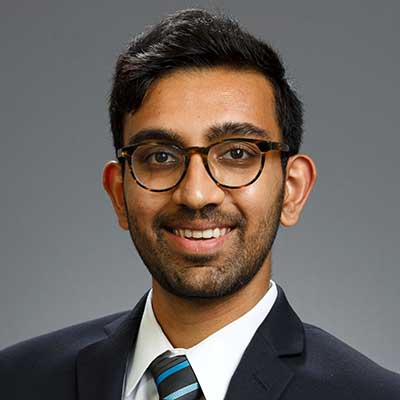
Neel Sortur got plenty of research experience during his undergraduate years at Northeastern, beginning with a research assistantship in Northeastern’s Helping Hands Lab, where he worked on machine learning and robotic automation projects. He then led a project of his own at the Geometric Learning Lab, in which he improved machine-learning-based drag modeling to help satellites avoid colliding with one another. Now he’s algorithmically generating shapes from radar observations at MIT’s Lincoln Laboratory. Along the way, Sortur has also served as a technical consultant with TAMID at Northeastern and as the propulsion software lead for AerospaceNU.
READ: Neel Sortur presents satellite research at NeurIPS Conference
With his NSF fellowship in hand, Sortur will pursue a research-based master’s degree at Northeastern, and will continue his work on physics-informed, robust machine learning.
Maxwell Pirtle, Fulbright Scholarship

Maxwell Pirtle’s Husky years, particularly the last two, were marked by a healthy helping of globetrotting.
He began in 2022 with an iOS development co-op for Ginger Labs in San Francisco, where he integrated features for the company’s flagship note-taking app Notability. While there, he also researched formal verification and model checking with Gene Cooperman.
In 2023, Pirtle self-developed a co-op at the IRISA Lab in Rennes, France, where he worked on the SimGrid model check, attended public talks and cultural festivals, and indulged his love of the outdoors by traveling extensively around France. From there, he jumped to a similarly self-developed study abroad at the University of Oslo’s International Summer School, where he spent six weeks learning Norwegian with other international students. And during his final semester at Northeastern, Pirtle traveled to Bangkok on a spring break trip for a business course — where he learned through cultural events and interactions with Thai businesses — before flying to Sweden to present his programming research.
After graduation, and backed by his Fulbright Scholarship, Pirtle will return to France to pursue his computer science master’s degree at the École Normale Supérieure de Rennes.
Neeti Desai, Sears B. Condit Award
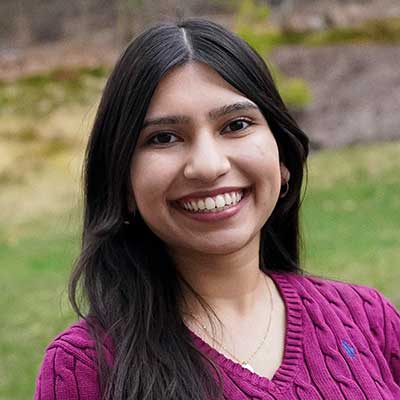
Computer science and behavioral neuroscience major Neeti Desai has built her Northeastern journey around two pillars: the intersection of tech and neuroscience, plus the use of tech for social good.
For the former, she works as a research assistant in the Movement Neuroscience Laboratory, where she helps with data processing and visualization. Her co-ops have seen her build electronic ink panels at E Ink Corporation and test AI models and datasets at MORSE Corp.
She has also worked as a Husky Ambassador and the editorial director of Spoon Magazine.
For the latter, Desai is a software developer at Code4Community, a student group that develops software solutions for local nonprofits. There, she has worked to build an HR management system for a nonprofit that helps unhoused young adults find employment.
After graduation, she plans to work in machine learning.
Diptendu Kar, Outstanding Graduate Student Award in Teaching

Diptendu Kar’s journey to cybersecurity was kickstarted after he found his hard drive unexpectedly wiped. After some research into how to retrieve his data, he was on his way.
The teaching award recognizes not just Kar’s TA work, but also CasualCTF, the capture the flag competition he organized for them. Kar had participated in more than 70 CTFs, in which teams engage in challenges, such as finding hidden text strings in intentionally vulnerable systems, breaking into websites, or identifying software vulnerabilities. These competitions have long been a popular method for testing technical knowledge and building problem-solving skills, and Kar says he’d like to see future students continue what he started.
READ: Cybersecurity games: Diptendu Kar’s capture the flag journey
The Khoury Network: Be in the know
Subscribe now to our monthly newsletter for the latest stories and achievements of our students and faculty
Author: Matty Wasserman
Date: 05.13.24
At Khoury College’s commencement celebration, four undergraduate and three graduate students were honored for going above and beyond in research, co-ops, teaching, and community service throughout their time as students.
Following a nomination process, recipients were selected by a committee of administrative staff and advisors from the college. Below, meet the seven outstanding students who were honored for their accomplishments in 2024, or click a name to jump to that point on the page.
- Garrett Michiels
- Nadine AlMuasher
- William Cutler
- Sara Takhim
- Cecilia Lopez
- Zhiyuan (David) Yang
- Chaitanya Gokhale
Garrett Michiels, Undergraduate Co-op Award

Neither of Garrett Michiels’ two co-op experiences went at all according to plan.
For his first co-op in the spring of 2022, Michiels was hired as a DevOps engineer at Wellframe, only for his initial company to be acquired by HealthEdge, a digital healthcare company, one month before he started. The acquisition resulted in a series of layoffs and reorgs, meaning his initial team of six was cut to just three by the end of the co-op, and was assigned a brand-new set of responsibilities.
This past fall, Michiels was hired for his second co-op as a software engineer at Blackberry, a cybersecurity company. Soon after joining, half of his initial team was laid off, and he was reallocated to an interdisciplinary, high-priority team of ten people, where he worked on API and back-end engineering for two yet-to-be-released cybersecurity products.
“I went through the ringer in both experiences, and I feel I came out as a much better employee,” Michiels said. “Seeing people laid off and getting new responsibilities is a challenging experience, but it prepared me for anything that I might see in the future.”
In both instances, the abrupt shifting of his team expanded Michiels’ responsibility — opportunities he ran with. For example, his role at Wellframe revolved around building infrastructure for engineers, and he took initiative to rework the entire onboarding process by restructuring how pipelines loaded data into the new hire database, and how personal environments were reset and rebuilt for new hires and existing engineers.
“My dream is to eventually be a CTO, and you really have to be ready to adjust on the fly and handle anything,” Michiels said. “Maybe it was unconventional, but I was fortunate to get such an exposed version of co-op experiences and see the realities of the working world while still being a student.”
Nadine AlMuasher, Undergraduate Teaching Award

Dating back to the fall of her sophomore year, Nadine AlMuasher has served as a TA every semester, minus those when she was on co-op. And as she became increasingly experienced in teaching Object-Oriented Design (OOD) — a course she ultimately TA’d five times — she took on increased responsibility and influence in shaping the course.
In the summer of 2023, AlMuasher was selected as a head TA for OOD, and helped to redesign homework assignments, labs, and course material in conjunction with Professor Mark Fontenot, all while also helping to oversee other TAs.
“It was a lot of taking initiative, and just being very hands-on with the students,” AlMuasher said. “I had my usual TA responsibilities, like grading and office hours, but then also on the other side, meeting with the professor every week, drafting the material for classes, and keeping in touch with students on a deeper level.”
Throughout her time as a TA, and especially as a lead TA, AlMuasher emphasized the importance of preparation — something she took from her own positive and negative experiences as an OOD student, where TAs could help make or break her succeed.
“That drew me into wanting to be the best TA I could be,” she said. “If there is someone asking for help, I need to be as prepared as possible and put my best effort forward.”
William Cutler, Outstanding Research Award

After arriving at Northeastern as part of the Explore program, a program for undeclared students, it took William Cutler nearly two years to settle on his combined major of computer science and physics. In the three years since, be it co-ops or research, he has run with every opportunity.
Cutler’s first co-op role was a development position with the API team at CNC Software, where he helped debug code and maintain the software’s usability. His second co-op in January 2022 was with Amazon Robotics’ resource management team, where he designed and deployed solutions to optimize robots on the Amazon warehouse floors, in addition to debugging the robots’ software systems.
Then, after receiving funding through Northeastern’s PEAK Trail-Blazer Award, Cutler worked in a trapped ion lab at Oxford University last summer, where he contributed to calibration experiments for trapped-ion quantum computers. Trapped ions are used as fundamental units of information in quantum computing and are studied to build large-scale quantum systems.
“Calibration is a big deal in experimental physics to make sure all your devices are working properly, because if they’re not, then you can’t get an accurate measurement. And that’s what you’re there for,” Cutler says. “That was an incredibly exciting project to be working on, both geographically and intellectually.”
Following his time abroad, Cutler completed his final co-op this fall with NK Labs in Cambridge, Massachusetts, where he worked on a muon-catalyzed nuclear fusion experiment — a large-scale effort to create novel fusion conditions and measure the outcomes using a suite of precision detectors. The experiment required a specialized beam of muons, which Cutler and his team helped to create and deploy over two months at the Paul Scherrer Institute in Switzerland.
“It was really an incredible experience of getting the full picture of research, from reading papers and coming up with an idea to testing it, iterating, and prototyping,” Cutler says. “It really filled out for me what being an experimental physics researcher would be like.”
This fall, Cutler will continue his research at Oxford as he pursues his doctorate there.
Sara Takhim, Undergraduate Community Service Award
Sara Takhim’s passion for community service in tech began during high school, when she co-founded an extracurricular computer science learning program for children with disabilities.
In college, she took her passion for community service to Northeastern University Women in Technology (NUWIT), serving as the club’s outreach chair in 2021–22 before taking over as president the following year. While president, she developed the sponsorship prospectus program, in which NUWIT partnered with tech industry leaders to extend opportunities and resources to the club’s 200 members.
READ: From cybersecurity co-ops to women in tech, Sara Takhim makes her mark
“We worked to create a packet we provided to any companies we worked with, where they could get a glimpse [of the club’s members] through a resume book. And then in exchange, they’d sponsor the club, either monetarily or by providing us with tech talks and workshops throughout the school year,” Takhim said. “That really helped us bridge the gap between the club and the leaders in the technology industry.”
This past year, Takhim served as the co-head of operations at Kaleidoscope, the council that coordinates with and advises Khoury College’s student clubs. There, she built on her work with NUWIT by helping other Khoury-based clubs establish connections with local companies and programming initiatives.
Upon graduating, Takhim will start as a full-time cybersecurity consultant on the same IBM team she worked for during her two co-ops. And as she establishes herself in the industry, she will look to continue her community service efforts.
“Even after college, I just want to continue making a broader impact in terms of helping young people however I can,” Takhim said. “I started out when I was pretty young, so I know how difficult it can be to navigate this space. I’d love to be like a mentor to young younger children who are looking to get into tech or security.”
Cecilia Lopez, Graduate Community Service Award

Throughout her time in Khoury College’s rigorous Align program, Cecilia Lopez had even more on her plate than many of her peers: She also worked a full-time job. While studying for her master’s degree on the Silicon Valley campus, Lopez worked as a content marketing manager for Meta, then transitioned to an AI content writer role for the past year.
Lopez was already feeling the challenge of balancing both sets of demands, which proved overwhelming and isolating at times. But then, after taking on an additional role as a student mentor, she was also tasked with supporting other students facing a similar predicament — and suddenly realized she was far from alone in balancing full-time school and full-time work.
That’s why, in the fall of 2022, she created the Never Enough Timers club, a community group of Align students who work full-time. Students shared their experiences and time management tips with each other while offering support and encouragement.
“I would have loved to be able to only focus on school, but I didn’t have that option because I needed to pay rent and make a living,” Lopez said. “So for us, everything needs to be devoted to avoiding burnout, because the bridge program is really intense to begin with. We are working from 8:30 a.m. to 9:30 p.m. four days per week at least, and we just try to survive and keep going. It helps to have a community of people with those same challenges.”
Lopez ultimately found great success in Align. In addition to serving as a student ambassador and mentor, she has shared her Align student experience on numerous panels, roundtable discussions, and info sessions, while also sharing her CS journey with student organizations that serve underrepresented populations in CS.
“I was the crazy person who was like, ‘I have a full-time job and full-time school, and I’m going to take on this other part-time job [as an ambassador].’ But I did it, and still do it, because I just believe in the Align program so much. And I love being involved in the local San Jose community — and also the Northeastern community — by attending events, talking to prospective students, and telling them about my experience.”
Zhiyuan (David) Yang, Outstanding Research Award

Zhiyuan (David) Yang’s undergraduate background is in landscape architecture — a field that shares few similarities with CS at first glance, but one that paved the way for his vast research efforts as a master’s student.
Throughout his two years in the Align program, Yang threw himself into research, leading him to work with three different faculty to co-author and publish multiple papers in addition to his capstone study.
“In my journey through landscape architecture, I conducted numerous experiments in VR and AR, and I realized that the field of computer science holds tremendous potential to solve spatial and environmental problems. That realization sparked my interest in conducting research in computer science,” Yang said. “The professors were incredibly supportive, enabling me to explore various avenues during the research process and guiding me towards multiple accomplishments.”
One research piece Yang co-authored explored his interest in global sustainability. In particular, the study addressed the challenge of monitoring global solar energy by proposing a new vision transformer model, which improves the accuracy of solar farm mapping. Additionally, Yang contributed to the creation of the first global dataset of multispectral satellite imagery specifically for solar farms, opening exciting possibilities for renewable energy applications.
For his capstone course, Yang led a team to develop an innovative zero-shot emotion evaluation system for videos using multi-modal methods and large language models, in which the computer model can estimate emotional intensity of video subjects.
“We developed a system where we extract all the features from the video — the sound characteristics, the subtitles, the description of each frame, and the color of each frame,” Yang explained. “And we convert all these features into textual data, feeding them into a large language model. We then allow that model to estimate the emotional intensity of each second of the video. To our knowledge, no one else is researching with a similar approach.”
In addition, Yang helped develop computer vision techniques for remote airport management in Northern Canada, and helped build a computer vision system using drone technology to evaluate forest fire risks.
Chaitanya Gokhale, Graduate Teaching Award

After receiving his undergraduate engineering degree back home in India, Chaitanya Gokhale came to Northeastern in 2022 to earn his master’s degree in hopes of pursuing a career in cybersecurity. But in his time at Northeastern, he’s also discovered another life passion he hopes to incorporate into his future: teaching.
Gokhale took a cybersecurity course in 2022, then TA’d for the class in the spring and fall of 2023. While a student in the course, he felt the impact that dedicated TAs and professors had on his learning experience, and wanted to replicate and expand on that for others.
“During that first semester, I had some really amazing TAs, as well as the professor, who helped me through a lot of my struggles. It immensely inspired me to go on that path and help others,” Gokhale said. “And having taken the class, I truly knew what gaps needed to be filled by a TA and which questions students usually face.”
Gokhale emphasizes the importance of meeting students where they are and making himself accessible in practical, helpful ways. That’s why he made himself available to students on WhatsApp, Microsoft Teams, or via email — whichever they were most comfortable with. On the day before the final paper was due, he was on call nearly around-the-clock to help students as they crammed ahead of the deadline.
“The program has students from so many different technical backgrounds as well as different cultural backgrounds. So, I loved seeing different opinions and ways of thinking on various assignments, and I had to make sure to tailor my help accordingly,” Gokhale said. “It was so gratifying to feel like I was a part of a student’s journey beyond the classroom, and to see them succeed.”
While Gokhale is still lining up a post-graduation job, he said he plans to continue expanding his cybersecurity skills for the next few years before migrating back to a teaching role.
“It isn’t something I always saw myself doing,” Gokhale said. “But after my experience at Northeastern, having a part-time teaching job and eventually coming back to supporting others in some way is something I definitely hope to do.”
The Khoury Network: Be in the know
Subscribe now to our monthly newsletter for the latest stories and achievements of our students and faculty
Author: Madelaine Millar
Date: 05.09.24
The most prestigious human–computer interaction conference in the world is taking place in Hawaii this month, and Khoury College’s researchers — along with their collaborators in the College of Engineering (CoE), the College of Science (CoS), the College of Arts, Media and Design (CAMD), and the Bouvé College of Health Sciences — are ready. To discover their work, which touches on everything from parrot socialization to 3D-printed braille to historical anatomical drawings, click on one of the linked summaries below, or simply read on.
For a schedule of Khoury researchers’ presentations and other activities, visit our CHI 2024 page.
Khoury researchers are bolded.
1) Sensible and Sensitive AI for Worker Wellbeing: Factors that Inform Adoption and Resistance for Information Workers
Vedant Das Swain, Lan Gao, Abhirup Mondal, Gregory D. Abowd (CoE), Munmun De Choudhury
Best Paper winner
Ever since the pandemic disrupted the ways employees work and employers monitor them, passive-sensing AI (PSAI) tools have gained attention for collecting and inferring information about workers’ productivity and well-being. While these insights can help workers and their employers to make healthier, more effective choices, conventional design approaches have also led to workers feeling watched or exploited and resisting the tools. Given that these tools are mandatory for many jobs, is it possible for workers to benefit from PSAI tools without giving up more privacy than they’d like?
The researchers asked 101 information workers to evaluate the benefits and harms of hypothetical PSAI tools, which were differentiated by the type of sensing taking place, whether they measured work alone or included broader activity, whether the tool looked for insight into their work performance or into their personal well-being, and who the tool shared its insights with.
“In our previous study, workers revealed tensions where they worried … these applications might become surveillance tools rather than personal aids,” Khoury distinguished postdoctoral fellow Vedant Das Swain said. “That made us wonder, how do we design these sensing AI to maximize value for workers while minimizing the harms?”
The team found that workers were more open to tools that tracked time or physical activity and reacted very poorly to tools that used cameras. Online language trackers were only viewed positively so long as they only sensed material related to work. Furthermore, the participants preferred tools generating insights into their well-being over insights on their performance, and they didn’t like those results to be shared with others. On average, participants were only willing to adopt 20 percent of the tools in the study, which indicates a need to design PSAI with more care toward workers.
2) Barriers to Photosensitive Accessibility in Virtual Reality
Laura South, Caglar Yildirim, Amy Pavel, Michelle A. Borkin
Honorable Mention winner
Virtual reality is an increasingly popular way to do everything from playing games to socializing with remote coworkers. Many people with photosensitive epilepsy have expressed interest in the technology, but because of the risks involved, there is little concrete information available about VR’s safety for epileptic people.
In interviewing five people with epilepsy or seizures triggered by photosensitivity, the researchers found a wide range of potential barriers to VR accessibility, although what posed a barrier depended on the specifics of the interviewee’s condition. There were physical concerns over VR headsets putting visual stimuli closer to the eyes while making it harder to get away quickly, or over a heavy headset injuring the wearer if they have a seizure and fall over. There were content barriers, such as the fact that VR stimulus is more unpredictable than many types of on-screen content, and that users without technical know-how might struggle to shut it down quickly in case of a triggering stimulus. There were also application-related barriers; for example, stress and exhaustion make people more sensitive to triggers, so a VR workplace might be riskier than a relaxing VR game.
“The consequences of encountering inaccessible content can be extremely severe for people with photosensitive epilepsy, and often it is possible to vastly improve the safety of digital platforms through relatively low-cost interventions,” Khoury doctoral student Laura South said. “People with photosensitive epilepsy have not historically been represented in computer science and human–computer interaction research, so it is important to me to center their voices in my research by conducting interviews and building systems based on their feedback.”
One central fix, the researchers wrote, would be to automatically test a program for flashing lights and prominently display warnings as needed. Ideally, the program would be customizable so that photosensitive participants could turn off display elements that triggered their condition. The team also recommended creating a lighter headset that was easier to remove, or including a means of notifying a friend that the user might need medical care.
3) Odds and Insights: Decision Quality in Exploratory Data Analysis Under Uncertainty
Abhraneel Sarma, Xiaoying Pu, Yuan Cui, Eli T. Brown, Michael Correll, Matthew Kay
Honorable Mention winner
The proliferation of useful, user-friendly data tools means two things: More people than ever are using data visualizations to make business decisions, and more people than ever are making beginner-level statistical errors and discovering “insights” that aren’t true. One common mistake is the multiple comparison problem, when multiple hypotheses are tested simultaneously, leading to confusion between signal and noise. But what if the data tools could visualize uncertainty?
To start out, the researchers gave 180 participants a set of 12–20 graphs that showed the profitability of 20 stores in a region, then asked them to predict whether the entire region of 200 stores was profitable. One third of the participants were provided only a scatterplot of data points, another third was given marks at the mean and at 50% confidence intervals, and the final third was given a probability density function, a bell curve showing how densely grouped data points were across the entire set. The team then compared the participants’ results against two statistical golems (data analyzers) — one controlling for the rate at which the wrong insight was drawn from multiple comparisons, and one not.
While the participants given only a scatterplot consistently came up with more untrue insights than the golem that did not control for the multiple comparison problem, both groups given uncertainty visualizations performed better, particularly those given probability density functions. This suggests that while participants are aware of the risk of drawing the wrong conclusions, they need uncertainty visualizations to avoid doing so.
“We are giving people the wrong tools for the job,” Khoury professor Michael Correll said. “If I’m asking you questions about uncertain information, it’s at least a little bit rude that I’m not giving you visualizations that communicate uncertainty in any direct way. Kind of like giving people peanut butter, jelly, bread, and a knife, and then acting surprised that they made a PB&J sandwich and not a filet mignon.”
4) A Design Framework for Reflective Play
Josh Aaron Miller, Kutub Gandhi, Matthew Alexander Whitby, Mehmet Kosa (CAMD), Seth Cooper, Elisa D. Mekler, Ioanna Iacovides
The emotional challenges offered by games make them ideal for transformative reflection — a cognitive or behavioral reappraisal that helps participants develop new insights, values, and behaviors. Research on the reflective potential of games exists already, but how do insights translate across disciplines, and how can that insight be transformed into guidelines that game designers can use?
To answer these questions, the researchers synthesized academic papers, blog posts, videos, individual games, and more, then devised a five-step player journey for reflective experiences in games. First, disruptions and discomfort in the game lead to slowdowns. These moments of stillness create space for the game to promote either a question that demands self-explanation (“why do you think that happened?”) or one where the player can develop and test hypotheses (“can you figure out why that happened?”). Then, when players revisit the experience, the game can prompt reflection, break the fourth wall, or encourage discourse with other players.
“Games are a wonderfully powerful medium for reflection, for getting their players to reflect on themselves and the world around them,” Khoury doctoral student Kutub Gandhi said. “To bolster the accessibility of the framework for game designers, we simplified it into a deck of cards. Each card is a pattern in the framework, and designers can pull on these cards for inspiration as they build their games.”
While mainstream games and serious games (those designed for purposes other than entertainment) usually aren’t well suited to transformational reflection, experimental games — where gameplay conventions are looser — often are. To be a good fit, a game should value questions over answers, clarity over stealth, disruption over comfort, and reflection over immersion.
5) An Exploration of Learned Values Through Lived Experiences to Design for BIPOC Students’ Flourishing
Laveda Chan (CoS), Dilruba Showkat, Alexandra To (+CAMD)
Much has been written about the negative, frustrating, and dehumanizing experiences that Black and Indigenous people of color (BIPOC) often face at predominantly white institutions (PWIs), and how that harm can be addressed. However, far less study has been devoted to the positive and fulfilling experiences of BIPOC students, and how to best cultivate and support those experiences.
To answer those questions, the researchers interviewed 17 BIPOC students who attended or had recently graduated from PWIs. They identified four values that the students considered essential to their success: resistance to adversity, aspiration for their futures, gratitude for support, and pride in their accomplishments and growth. They also identified specific ways those values manifested. Their findings showed that when BIPOC students seized opportunities and engaged in activities for connection and personal growth, they could counteract racial barriers at their PWIs — highlighting the importance of centering students’ experiences of joy, love, community building, and racial identity development.
“These positive aspects have been linked to persistence and satisfaction throughout students’ enrollment in college,” Khoury doctoral student Dilruba Showkat said. “Our aim is to empower BIPOC students by making space for the full spectrum of their experiences in human-centered design efforts.”
The researchers identified three critical elements to consider when designing systems to support BIPOC students’ emotional well-being at PWIs: pleasure, personal significance, and virtue. In practical terms, that means that system designers should try to create experiences that uplift those learned values and activities and are potentially either enjoyable and relaxing, meaningful and fulfilling, or that promote behavior like open-mindedness.
6) Bitacora: A Toolkit for Supporting NonProfits to Critically Reflect on Social Media Data Use
Adriana Alvarado Garcia, Marisol Wong-Villacres, Benjamín Hernández, Christopher A. Le Dantec (+CAMD)
When Adriana Alvarado Garcia and Accelerator Lab Mexico developed the Bitacora toolkit, they did so to help nonprofits who were interested in using Twitter (now called X) data to explore and refine their ideas for social media. Guided exploration and reflection, they hoped, would help users discover that Twitter is often a costly or infeasible tool for coordinating on-the-ground crisis response. For example, during the early part of the COVID pandemic, could listening to conversations on Twitter have helped NGOs to figure out what specific communities needed the most, and better targeted the delivery of things like healthcare, childcare, and food?
“Social media data can provide a rich, real-time view into how communities are identifying and responding to a crisis. This kind of insight can be incredibly valuable for nonprofit organizations who want to support grassroots emergency response,” said Christopher Le Dantec, professor of the practice and the director of digital civics at Khoury College and CAMD. “However, understanding how to effectively select, clean, and make sense of social media can be a challenge.”
Le Dantec, along with Garcia and other colleagues, researched how ten practitioners at three nonprofits interacted with the Bitacora toolkit in the real world. The toolkit takes users through three iterative steps: The first is defining their topic within a limited set of keywords and date ranges and gathering data on the existing Twitter discussion on the topic. The second is defining and documenting the basic information that is known to be true, and the formats in which that information is conveyed. The third is qualitatively analyzing examples to determine how the Twitter community conceptualizes the problem, and map out how different ideas are seen as relating to one another.
While the toolkit did slow practitioners down and examine the problems they would encounter, it did so in unexpected ways. For example, when users discovered how difficult it was to find keywords that would return usable results, many adjusted by altering elements of the topic to fit Twitter’s capabilities, rather than reflecting on how changing the topic would impact their organization’s goals. Practitioners also found completing the entire toolkit to be too time-consuming for emergency response situations; instead, it could be used as a guided learning tool to teach practitioners about the limits of Twitter’s capabilities, in advance of the crisis situations where its use might be suggested.
7) Building LLM-based AI Agents in Social Virtual Reality
Hongyu Wan, Jinda Zhang, Abdulaziz Arif Suria, Bingsheng Yao, Dakuo Wang (+CAMD), Yvonne Coady, Mirjana Prpa
Non-player characters (NPCs) are a staple of most video games, and though their dialogue ranges from heartfelt to quippy to famously stilted, they have always been limited to a small range of set phrases. In social gaming platforms (such as VR Chat), NPCs’ ability to remember players’ data over time and provide responses contextualized by previous interactions is crucial. So, the researchers wondered, could text-generating large language models (LLMs) remember and generate dialogue for video game NPCs, and if so, what info would the AI models need?
Using an NPC delivering dialogue generated by GPT-4, the researchers tried inputting different volumes and amounts of information about the NPC characters and their environments. They applied three metrics to test the quality of the generated NPC replies:
- Did the dialogue-generating system function correctly?
- Did another LLM think the response was generated correctly?
- Does a human observer think the LLM’s response could be human?
The researchers found that the ideal amount of prompt information was three base observations (things like their name, character details, and future plans) and five context observations (things going on around the NPC). With these inputs, their system returned plausible responses and observations 95 percent of the time.
“Social VR platforms … are focal points where complex social interactions occur between players,” Khoury professor Mirjana Prpa said. “It became a timely topic to … understand the role of LLM agents in social VR worlds and how they should be utilized and even regulated so that the values of human interaction in VR are preserved and enriched.”
8) Call of the Wild Web: Comparing Parrot Engagement in Live vs. Pre-Recorded Video Calls
Ilyena Hirskyj-Douglas, Jennifer Cunha (NU affiliated researcher), Rebecca Kleinberger (+ CAMD)
Khoury–CAMD assistant professor Rébecca Kleinberger and her colleagues, the University of Glasgow’s Ilyena Hirskyj-Douglas and Northeastern’s Jennifer Cunha, caused a media flurry last year with their research into the positive social impacts of video calls for lonely parrots. But given the difficulty of coordinating the birds’ calendars, the researchers wondered if recorded footage would provide the same enrichment using fewer resources.
To answer this question, the researchers tested nine parrots’ engagement with prerecorded versus live video calls. After being trained to use the systems, the birds were given opportunities to call each other in three-hour windows, three times a week, for eight weeks. Then the experiment was repeated, but the birds’ calls were directed to pre-recorded footage of other parrots instead of live footage of one another. After both phases of the experiment, the birds’ caregivers were asked for their opinions and observations.
On average, the birds spent four times as long on live video calls than on prerecorded ones. They also initiated more live calls, and the calls lasted for longer. Caregiver feedback suggested that this discrepancy was because they could tell when the calls weren’t live; the prerecorded birds didn’t respond to their stimuli, and so many of the parrots found it unfulfilling.
9) Counting Carrds: Investigating Personal Disclosure and Boundary Management in Transformative Fandom
Kelly Wang, Dan Bially Levy, Kien T. Nguyen, Ada Lerner, Abigail Marsh
Transformative online fandoms are online spaces where primarily queer and female users creatively iterate on a piece of media and share their creations with a community of other fans. In these communities, it is common to proactively and publicly disclose vulnerable personal information, a practice that existing models of privacy, which hinge on withholding such information from strangers and developing intimacy only with close friends, can’t explain this behavior. So what’s going on?
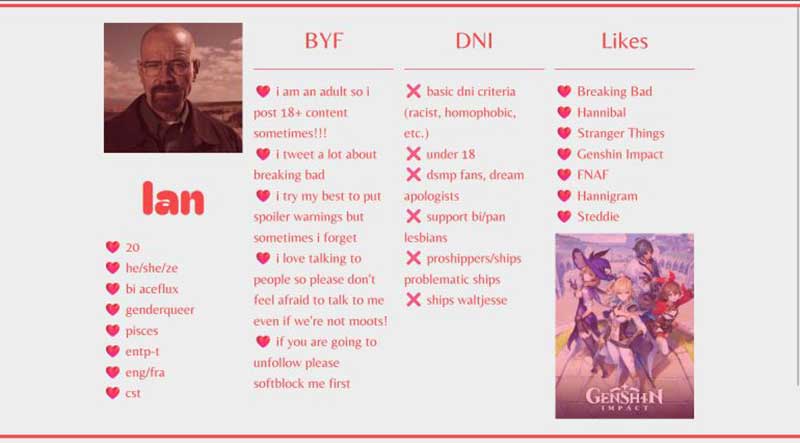
To find out, the researchers studied 5252 fan Carrds — personal websites that provide information about their owners and are usually linked in the bios of social media pages. They found that Carrds tended to cover three categories: identity elements like age, gender, orientation, and disability status; Do Not Interact (DNI) criteria that listed who the user did not want following them on social media; and Before You Follow (BYF) disclosures that explained the user’s etiquette around things like content warnings and blocking. To users outside the community, these Carrds may appear nonsensical or even unsafe. Common DNI criteria like “no homophobes” are functionally unenforceable, and sharing vulnerable personal characteristics like mental health diagnoses or transgender identity with strangers can carry real risk.
But just because existing models don’t explain this behavior doesn’t mean that the behavior doesn’t serve a function, which is why the researchers propose developing a new model of collective privacy based on developing trust cyclically at the community level. As users share personal information and boundaries, the community develops inclusive values and norms, resulting in a safe, trusting environment where users can explore and affirm identities they may not be able to safely disclose offline.
“It brings a lot of new ideas into the discussion of what we mean by privacy, which we can take for granted sometimes when we focus on a particular type of privacy problem like keeping sensitive data a secret,” Khoury doctoral student Kelly Wang said. “I think this conception of privacy especially reflects the lived experiences of users on the margins … who need to self-censor with certain people but find that that’s also counterproductive to their goals, like participating in community.”
10) Country as a Proxy for Culture? An Exploratory Study of Players in an Online Multiplayer Game
Alessandro Canossa, Ahmad Azadvar, Jichen Zhu, Casper Harteveld (+CAMD), Johanna Pirker
Playing video games is a pastime that crosses the borders of country and culture to unite players who would never otherwise encounter each other. But do those borders impact how players play, communicate, and collaborate? And is grouping players by country a legitimate approach when attempting to research cultural differences?
The researchers examined these questions in the first large-scale exploratory study of its kind. They surveyed players of Rainbow Six Siege, an economically accessible, online, multiplayer, first-person shooter game with a dedicated global fanbase and a range of viable play styles. The survey covered demographics, habits like how much time or money someone spent on the game, technical skill and player ratings, and psychographic questions on players’ impulses and subconscious attitudes. In total, 14,361 players from 107 countries completed the survey.
The team then scored how much two players from the same country would differ on average in their answers and attitudes (within-country variance) and how much two players from different countries would differ (between-country variance). They found that between-country variance was greater than within-country variance by a small but statistically significant amount. This indicates that future studies could group video game players into study groups based on their country of origin.
11) Ellie Talks About the Weather: Toward Evaluating the Expressive and Enrichment Potential of a Tablet-Based Speech Board in a single Goffin’s Cockatoo
Jennifer Cunha (affiliated NU researcher), Corinne C. Renguette, Nikhil Singh, Lily Stella, Megan McMahon (CoS), Hao Jin, Rebecca Kleinberger (+CAMD)
It’s natural for humans to wonder what our pets might say if they could talk. In hopes of making that dream a reality, some animal owners have turned to human-focused augmentative and alternative communication devices (AACs), such as tablets with buttons for different words. But because we don’t know what the birds are trying to say, it’s difficult to determine if the tablets allow them to communicate effectively.
To gain insight into parrot self-expression using AACs, this research team spent seven months gathering data on how a Goffin’s cockatoo named Ellie used an AAC tablet. The tablet had 148 words that the bird could access by navigating several branching sub-menus, which were organized based on topics like eating, drinking, and playing. The team recorded nearly 4,700 button presses, with the goal of determining whether they were random or indicative of complex choices. Additionally, the researchers built a schema to look at possible corroboration of button presses.
The team was able to corroborate the bird’s selections about 92 percent of the time, an impressive rate. Furthermore, they could not match the experimental results with data generated by a mathematical model, further implying that Ellie’s choices of words were not purely random or based on things unrelated to communication, like button location or brightness.
12) Engaging and Entertaining Adolescents in Health Education Using LLM-Generated Fantasy Narrative Games and Virtual Agents
Ian Steenstra, Prasanth Murali, Rebecca B. Perkins, Natalie Joseph, Michael K. Paasche-Orlow, Timothy Bickmore
Educating adolescents about their health in an engaging way is critical to ensure they develop lifelong healthy habits. Video games are famous for holding tweens’ attention; could they be an effective, responsive, and affordable way to provide health education?
Using a large language model (LLM) and virtual agents, the researchers produced two short, interactive health interventions to teach 9-to-12-year-old about the HPV vaccine. The first was a more traditional pedagogical agent, which simulated a counseling session in a doctor’s office and asked quiz questions about HPV vaccination without any kind of storyline, points, or progression.
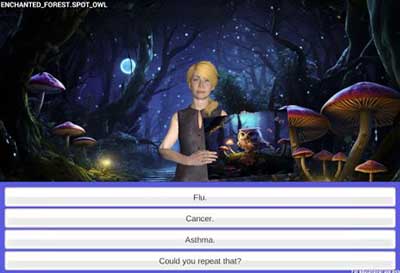
The second intervention was called “The Quest for the HPV Vaccine.” Players helped Evelyn the Adventurer to find Doctor Clara and the HPV vaccine to protect a village from HPV-related diseases. The game took players through stages like a glowing mushroom forest, the mountains, a cave, and the village itself, and had them answer questions posed by various fantasy creatures. Correct answers gained points that helped the player move to the next level and progress the story.
Thirteen adolescents completed the interventions under parent supervision, then the players and their parents provided feedback. As the team hypothesized, both interventions upped participants’ knowledge and acceptance of both HPV vaccine and vaccination in general, and the narrative game was more engaging than the pedagogical agent. However, the narrative game did not outperform the pedagogical agent in improving players’ intent to seek vaccination. The team also discovered that LLMs were an effective way to quickly formulate games like this, but it was important to keep a human involved to catch the falsehoods that the AI generated.
“Since the COVID-19 pandemic, there has been a rise in vaccine denial or skepticism for other vaccines than just COVID-19; this includes the HPV vaccine as well,” Khoury doctoral student Ian Steenstra said. “By intervening on the child or adolescent, by providing them with knowledge about HPV and HPV vaccination, we hope to spark vaccination conversations in their families.”
13) From Provenance to Aberrations: Image Creator and Screen Reader User Perspectives on Alt Text for AI-Generated Images
Maitraye Das, Alexander J. Fiannaca, Meredith Ringel Morris, Shaun K. Kane, Cynthia L. Bennett
AI image-generating technology has grown exponentially in capability and popularity since the release of DALL-E in 2021. For visually impaired and blind people who use screen readers to interpret the internet, though, the fact that image generators don’t produce alt text — a short description of the image that can be read aloud — means the new technology is frustratingly inaccessible.
The researchers gathered 16 screen reader users, then asked 16 AI image creators to generate five images apiece and write alt text for each one. Then, both groups evaluated four examples of alt text for the same image: the original prompt, the creator’s alt text, alt text written by the researchers, and alt text generated automatically by a vision-to-language (V2L) model.
Unsurprisingly, the four alt texts had different characteristics. The creators’ and researchers’ texts tended to be longer and more detailed, while the V2L text was short and terse. The original prompts provided passable descriptions of some images but were often too abstract or generic to give clues about the image’s content or composition, and frequently contained unwieldy jargon. They were also sometimes inaccurate if the creator included elements in the prompt that the AI didn’t fully render, indicating that prompt text was not a good substitute for alt text.
“We want to call for provenance, explainability, and accessibility researchers to work together to address this critical issue as text-to-image models continue to evolve,” Khoury and CAMD professor Maitraye Das said.
Das and her team also recommend that in contrast to other forms of alt text, alt text for AI images should clearly indicate that the image was AI-generated, whether it contains any of the aberrant features and bizarre renderings that AI images have become known for, detail what the creator intended the misgenerated element to be, and describe the style and ambiance of the image using objective descriptions.
14) GigSousveillance: Designing Gig Worker Centric Sousveillance Tools
Maya De Los Santos (CoE), Kimberly Do, Michael Muller, Saiph Savage
From rideshares and food delivery apps to online platforms like Mechanical Turk and Upwork, gig work has become incredibly common. Unfortunately, gig workers’ status as independent contractors, plus the physical isolation they often face, means that they are disproportionately vulnerable to being tracked and exploited using everything from webcams to mouse trackers. Drawing on a concept from 20th century French philosophy called sousveillance, the researchers, led by College of Engineering undergraduate Maya De Los Santos, investigated whether gig workers could ensure accountability, empowerment, and care for themselves by watching their employers back.
“Gig workers are often denied access to their own data regarding their work, which leaves them vulnerable to platform manipulation like data theft and labor coercion. To combat this, our stance promotes the empowerment of workers through access to their own data, enabling them to resist the unfair practices of their bosses,” said Saiph Savage, Khoury professor and director of Northeastern’s Civic A.I. Lab. “This paper delves into workers’ imaginations and the potential impact of such technologies on their professional lives.”
The researchers sought gig workers’ insights into their use of — and attitudes toward — sousveillance, as well as the needs that future sousveillance tools might address. They found that workers tended to watch the organizations requesting their labor in three ways: by researching their reputations online, noting other workers’ experiences through avenues like independent review boards, and citing a lack of available information on an organization as a red flag. While workers appreciated that sousveillance helped them seek better-fitting gigs, communicate with their employers, and avoid scams, they had reservations about collecting data on their employers, breaking laws or damaging relationships, and putting themselves in emotionally challenging situations by learning more than they wanted to know.
Based on worker feedback to three potential tool designs — a well-being tracker, a requester review board, and an invisible labor tracker — the team developed several design recommendations to make sure future tools are empathetic and responsive to workers’ needs. For example, they found that a tool aggregating and filtering information about potential employers would likely be welcome; meanwhile, a tool tracking invisible labor and notifying workers when they were making less than the minimum wage would be demoralizing and unhelpful because there was little the workers could do about it. Workers also wanted their sousveillance tools to be user-friendly, and to carry a reputation as professional, transparent, and mutually beneficial for employees and employers.
15) How Beginning Programmers and Code LLMs (Mis)read Each Other
Sydney Nguyen, Hannah McLean Babe, Yangtian Zi, Arjun Guha, Carolyn Jane Anderson, Molly Q. Feldman
Many a hand has been wrung in recent years about generative AI replacing students learning how to code. But most of the research into coding large language models (LLMs) has looked at users who are already experts. How — and how effectively — do beginning coders work with generative AI?
The researchers had 120 students who had completed introductory computing courses use the Codex text-to-code LLM to solve a series of tasks and mediated the students’ interaction with the LLM through a character called Charlie the Coding Cow. Based on examples of correct inputs and outputs, students wrote natural language descriptions of what they wanted their code to do, then gave it to Charlie, who returned Codex’s automatically generated code. While participants could edit their prompts, they could not edit the code itself; when they were satisfied with the return, participants told Charlie whether his answer was correct and whether they would have written the code themselves.
The researchers found that the students ran into issues getting Charlie to understand what they wanted. Additionally, errors in the generated code and limits in their own knowledge prevented them from completing the tasks. Just over half managed to generate correct code, and only a quarter could do it on the first attempt. The students also misunderstood what Charlie was, generally thinking of him like a dictionary that would add the right code if the right keyword was used, so they tended to edit their prompts by adding more details. Students who correctly identified Charlie as a model that generates the most statistically probable next output tended to use him more successfully, as did students who had more experience with computer science.
“My research group has been developing large language models trained on code, and it is quite remarkable what they can do. But, since they are trained using code that is almost entirely written by professional programmers, we started to wonder if beginners would be able to use code LLMs as effectively as professionals can,” Khoury professor Arjun Guha said. “We concluded that beginners and code LLMs frequently miscommunicate with each other. Students tend to write prompts that LLMs do not understand, and LLMs respond with code that students don’t understand.”
Based on the team’s findings, generative AI’s goal of making coding accessible to everyone, regardless of technical experience, is still a ways off. For now, a strong foundation in CS fundamentals remains critical for student success.
16) It’s a Fair Game, or Is It? Examining How Users Navigate Disclosure Risks and Benefits When Using LLM-Based Conversational Agents
Zhiping Zhang, Michelle Jia, Hao-Ping (Hank) Lee, Bingsheng Yao, Sauvik Das, Ada Lerner, Dakuo Wang (+CAMD), Tianshi Li
Large language models (LLMs) like ChatGPT can be a great way to research topics in a simple, conversational way. But as the models grow more common in sensitive areas like healthcare, financial planning, and counseling, they raise unique privacy concerns that users may not fully grasp.
The researchers analyzed 200 chat logs from ChatGPT and interviewed 19 users to better understand their behavior and mental models of the tool. They found that many users disclosed sensitive personal information like their name, email address, phone number, and passport number, and sometimes disclosed other people’s personal information as well. While many users concerned with data misuse chose not to reveal certain details, they also believed that privacy risks were a necessary trade-off to get the model to work effectively, and that most of that personal data was likely already compromised anyway.
Many participants didn’t quite understand how the models functioned, which obscured the real privacy risks. Chatbots come with two main privacy concerns: traditional data breaches and memorization risks, which is when a model returns private information that was used as training data. Unless a user understood that the LLM used statistics to spit out the most probable next word in a sequence — and used their inputs as training data to learn what the most likely next word would be — they weren’t likely to understand memorization risks.
Furthermore, even users who understood the memorization risks were unlikely to understand how to protect their privacy. On ChatGPT, for a user to opt out of having their inputs used as training data while still retaining their own personal chat history, they had to submit a form through an FAQ article that none of the participants could find without help.
“Policymakers interested in regulating generative AI technologies may find our findings useful for rulemaking, particularly for health care and education,” Khoury professor Tianshi Li said. “Companies that build LLM-powered services can refer to our design recommendations to improve their privacy designs. In fact, we noticed ChatGPT recently implemented a new privacy feature called ‘Temporary Chat,’ which is just one of the features requested by our participants and reported in this paper.”
17) Malicious Selling Strategies in Livestream E-commerce: A Case Study of Alibaba’s Taobao and ByteDance’s TikTok
Qunfang Wu, Yisi Sang, Dakuo Wang (+CAMD), Zhicong Lu
Although livestream shopping — the modern hybridization of TV shopping channels like QVC and social media influencing on platforms such as TikTok and YouTube — is still in its nascent form in the United States, the format has exploded in China, especially since the pandemic. While livestream shopping offers novel advantages like a social shopping experience and a wider audience for small businesses, it also creates novel challenges. Streamers may manipulate, coerce, or trick their viewers into buying products, a phenomenon known as malicious selling.
READ: Inside the deceptive techniques of TikTok’s livestream sellers
To investigate, the researchers analyzed 40 livestreams across the shopping platforms Taobao and TikTok, then interviewed 13 shopping livestream viewers. They found that malicious selling strategies fall into four categories:
- Restrictive strategies, which told viewers to purchase or subscribe to get a discount or reward
- Deceptive strategies, in which streamers falsified information like how scarce or popular a product was
- Covert strategies, in which streamers made products more appealing using subtle strategies like special lights
- Asymmetric strategies, tactics that created subtle emotional pressures (e.g. baiting customers with a cheaper product and then pressuring them to buy a pricier one)
Furthermore, the researchers found that certain features of platform design enabled or encouraged restrictive and deceptive strategies, covert and asymmetric strategies relied more on the salesperson’s ability, and asymmetric strategies could be hard for viewers to spot. The study’s livestream viewers expressed several frustrations, such as how difficult it was to see exactly what they were buying, research products, and gauge their popularity.
18) No More Angry Birds: Investigating Touchscreen Ergonomics to Improve Tablet-Based Enrichment for Parrots
Rebecca Kleinberger (+CAMD), Jennifer Cunha (NU affiliated researcher), Megan McMahon (CoS), Ilyena Hirskyj-Douglas
As she’s studied the social behavior and tech interactions of various animals, including pandas, orcas, and lonely parrots, Khoury–CAMD assistant professor Rébecca Kleinberger has become acutely familiar with just how unsuited tablet touchscreens are designed for beaks, paws, tongues, and talons, and how app interfaces aren’t designed for users whose face needs to touch the screen with every tap. So, how do animals — and parrots in particular — interact with touchscreen technology?
Kleinberger and her team at the INTERACT Animal Lab, in collaboration with Glasgow University, trained 20 pet birds to tap a relocating red circle on a custom designed Fitt’s touch app, in a study that was covered by the New York Times. They analyzed the parrots’ results, videos of their interactions with the app, and their caregivers’ feedback. The parrots ranged in size and species, but all had previous experience interacting with tablets.
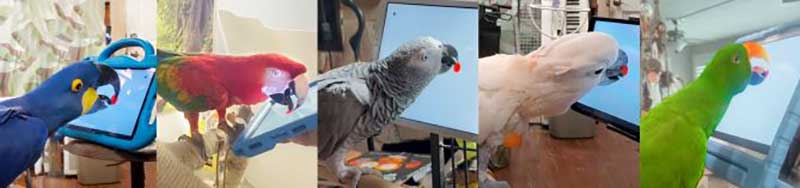
Aside from the obvious physical differences between parrots and humans — like the parrots being prone to “multi-taps” or dragging their taps across the screen — there were also more subtle differences. For instance, Fitt’s Law, which shows a linear relationship between the distance a digit moves and the time that movement takes, did not apply to parrots. Instead, the birds retreated from the screen after each touch, meaning both small movements and large ones took longer.
In addition to designing systems that respond correctly to several long, soft taps instead of one firm one, the researchers recommended allowing elements like button size to be customized based on the size and personality of the bird. They also encouraged designers to keep human interaction involved; several caregivers reported that the most rewarding part of taking part in the study was the opportunity to bond with their birds.
19) Patient Perspectives on AI-Driven Predictions of Schizophrenia Relapses: Understanding Concerns and Opportunities for Self-Care and Treatment
Dong Whi Yoo, Hayoung Woo, Viet Cuong Nguyen, Michael L. Birnbaum, Kaylee Payne Kruzan, Jennifer G. Kim, Gregory D. Abowd (CoE), Munmun De Choudhury
For people with schizophrenia, serious relapses can entail self-harm and suicide. Catching and treating relapses early can prevent this sort of serious harm, but it’s hard for clinicians to constantly monitor patients for aberrant behavior. But could AI help, and how would schizophrenic people feel about that?
To answer this question, the researchers interviewed 28 people with schizophrenia about the possibility of an AI using their social media behaviors to alert them to potential relapses. Because one symptom of a relapse is faltering self-perception, many respondents liked the idea of an external reference point against which to check their behavior; they also liked that the data could help spark important conversations with the people in their support networks.
They also had concerns, though, ranging from security and privacy qualms to worries that the feeling of being monitored could exacerbate paranoid delusions. The researchers also discovered that the algorithm and patients sometimes disagreed on what they considered a relapse, highlighting the importance of using the data to help inform schizophrenic people’s health decisions, rather than assuming the algorithm knows best.
Based on those perspectives, the researchers developed a generally well-received prototype AI called Sompai, which used Facebook posts to flag abnormal user behavior in line with a schizophrenic relapse. When Sompai spotted something concerning, it sent the user a gently worded message and reminded them to sleep, take their medications, and practice good hygiene. The messages could also share Sompai’s accuracy rate and the specific posts that had triggered the message and offered to share that information with the user’s chosen support system with a single click.
20) Profiling the Dynamics of Trust & Distrust in Social Media: A Survey Study
Yixuan Zhang, Yimeng Wang, Nutchanon Yongsatianchot, Joseph D. Gaggiano, Nurul M. Suhaimi, Anne Okrah (CoE), Jacqueline Griffin (CoE), Miso Kim (CAMD), Andrea G. Parker
Digital communication presents amazing possibilities, but also serious new harms. In particular, misinformation on social media undermines trust and is difficult to counteract; doing so requires a nuanced understanding of the multifaceted dynamics of trust and mistrust online.
To develop that understanding, these researchers surveyed almost 1,800 Americans about their trust in social media and their experiences with anti-disinformation features. They determined that trust and distrust are not polarized opposites, but often exist simultaneously. They also discovered that trust and distrust behaviors vary significantly based on demographic characteristics, and on the platform on which the behaviors occur. The researchers conclude that the misinformation interventions which have gained popularity in recent years do heighten awareness of misinformation on social media and bolster trust in the platforms, but were not enough to alleviate users’ underlying distrust.
21) ReactGenie: A Development Framework for Complex Multimodal Interactions Using Large Language Models
Jackie (Junrui) Yang, Karina Li, Daniel Wan Rosli, Shuning Zhang, Yuhan Zhang, Yingtian Shi, Anisha Jain, Tianshi Li, Monica Lam, James A. Landay
Imagine you’re feeling hungry, so you open up UberEats. Tacos sound good — “reorder my last meal from this restaurant” you say, tapping on the Taco Bell logo. UberEats, predictably, does nothing, because it isn’t coded to support complex, multimodal commands that combine spoken words with touchscreen inputs. Coding these interactions has always been tricky and labor-intensive.
The researchers developed ReactGenie, a programming framework that uses object-oriented state abstraction to allow developers to quickly and cheaply encode multimodal commands. If developers’ state code is clearly defined, they can add annotations with examples of the desired inputs and outputs for specific objects. ReactGenie then uses those examples to train a large language model which turns the user’s natural language into a domain-specific language called ReactGenieDSL, which the program interprets as commands.
The framework is extremely developer friendly. When the team gave ReactGenie to 12 developers with experience in React, all 12 built applications within two and a half hours. ReactGenie is also highly accurate; when 50 users tested apps using multimodal commands developed using ReactGenie, the system correctly parsed 90% of commands within its scope.
“Imagine converting all current websites and mobile apps into a smart assistant, allowing you to control them through natural language as if you were talking to a person. ReactGenie brings us very close to achieving this in reality … this work has the potential to bring multimodal interactions into mainstream app development,” Li said. “ReactGenie is a revolutionary idea, and I’m excited to be part of the team.”
22) Rethinking Human-AI Collaboration in Complex Medical Decision Making: A Case Study in Sepsis Diagnosis
Shao Zhang, Jianing Yu, Xuhai “Orson” Xu, Changchang Yin, Yuxuan Lu, Bingsheng Yao, Melanie Tory, Lace M. Padilla (+CoS), Jeffrey Caterino, Ping Zhang, Dakuo Wang (+CAMD)
While several AI tools for medical diagnostics have performed well in research settings, they often fail to live up to their promise in practice because of their inability to collaborate well with human users — sometimes even creating a “human–AI competition.” This phenomenon was reaffirmed by the six clinicians interviewed in this study, who insisted that the AI sepsis diagnosis tool implemented in their hospitals was incompetent, unhelpful, or an outright annoyance that added to their workload.
To determine what a helpful AI–physician collaboration might look like, the researchers heard the clinicians’ concerns — including slow and vague predictions, a fatiguing number of false positives, and nonactionable alerts — and designed SepsisLab. The new tool displayed a patient list, patients’ personal info, recommended tests, sepsis risk scores (complete with historical data and uncertainty visualizations), and counterfactual explanations that explain why other potential diagnoses wouldn’t fit. SepsisLab predictions were designed to reach the same diagnostic conclusions as existing tools, but involved themselves in developing and refining physicians’ hypotheses and helping them gather data, rather than trying to hand them results. All six clinicians had significantly more positive feedback about the new tool.
“Most of today’s AI systems center around what AI can and cannot do, and design human experts like doctors to be the guardrail for AI in case its prediction is wrong. This is what we call human-in-the-loop AI architecture, and it often fails in real-world deployment because human users quickly abandon such an AI system,” Khoury and CAMD professor Dakuo Wang said. “We propose an AI-in-the-loop architecture that can center the AI system around the human’s workflow.”
23) Social Justice in HCI: A Systematic Literature Review
Ishita Chordia, Leya Breanna Baltaxe-Admony, Ashley Boone, Alyssa Sheehan, Lynn Dombrowski, Christopher A. Le Dantec (+CAMD), Kathryn E. Ringland, Angela D. R. Smith
Over the past decade and a half, and especially after 2020, human–computer interaction (HCI) studies have increasingly focused on interactions between computers and marginalized or disenfranchised communities. However, what social justice means, and how it’s framed and measured, varies significantly between research teams. That’s why Christopher Le Dantec, professor of the practice and the director of digital civics at Khoury College and CAMD, got together with some colleagues and reviewed 124 HCI papers published between 2009 and 2022 that related to social justice.
The team found that while researchers carefully considered how justice could be applied, they rarely defined the concept of justice itself. Instead, most authors defined the harms that required social change to receive justice. The most attention was paid to recognition harms — which impact one’s ability to engage in society — and autonomy harms, which inhibit self-actualization. Little attention was paid to cultural or environmental harms, the studied technologies’ benefits, or who those benefits were conferred on.
“As the field of HCI continues to consider the role of computing systems in either perpetuating or confronting systems of inequality and oppression, we need to have a better understanding of what we as an intellectual community mean with the term ‘social justice,’” Le Dantec said.
In addition to the definitional shortcomings, the last decade-plus of HCI social justice research paints a picture of a field with good intentions, but which continues to limit itself by approaching social justice with a deficit model that centers repairing damage, rather than focusing on promoting joy, wholeness, and care. To bridge this gap, future research should consider what the harms and benefits of the topic are, who is harmed and who benefits, the sources of those harms and benefits, possible sites of intervention, and possible tools for intervention.
24) ‘Something I Can Lean On’: A Qualitative Evaluation of a Virtual Palliative Care Counselor for Patients with Life-Limiting Illnesses
Teresa K. O’Leary, Michael K. Paasche-Orlow, Timothy Bickmore
For terminally ill patients, palliative care can make the end of their lives as easy and comfortable as possible. But because physicians are often reluctant to refer patients to palliative care, and because providers are in short supply, many patients don’t receive its benefits until late in the trajectory of their disease. Could digital tools like an embodied conversational palliative care counselor help to bridge the gap?
The researchers attempted to answer this question by building a prototype for a tablet-based palliative care counselor, which was tested by 20 patients for six months. The patients expressed that the system had helped to bring their health to the forefront of their minds and keep them accountable about healthy behaviors like exercise and meditation, while also providing relief from the stress of caring for their health. Socially isolated patients said they appreciated the care and connection the system offered them, while socially connected patients appreciated that they didn’t feel like they had to give a positive spin to their experiences like they often did with their human support systems.
The patients also provided critical feedback that the researchers incorporated into design recommendations; in particular, patients wanted future versions to facilitate communication with their medical providers and be better personalized to their unique diagnoses, life situations, and personal preferences.
25) Stairway to Heaven: A Gamified VR Journey for Breath Awareness
Nathan Miner (CAMD), Amir Abdollahi (CoE), Caleb P. Myers, Mehmet Kosa (CAMD), Hamid Ghaednia, Joseph Schwab, Casper Harteveld (+ CAMD), Giovanni M. Troiano (CAMD)
Studies have shown that mindful breathing techniques help people manage stress, anxiety, and depression while promoting feelings of peacefulness and calm. For beginners especially, though, it can be tricky using the abdomen to breathe deeply and to sustain attention for long enough to reap the benefits. Could an interactive VR experience help?
To find out, these researchers developed Stairway to Heaven, a virtual reality experience to support mindful breathing. While being measured by a respiratory sensor, participants progressed through a series of calming VR forest locations to the top of a hill. Along the way, a meditative audio guide instructed participants about their breathing, and a green bar in the display gave users feedback about whether they were breathing deeply enough to progress.
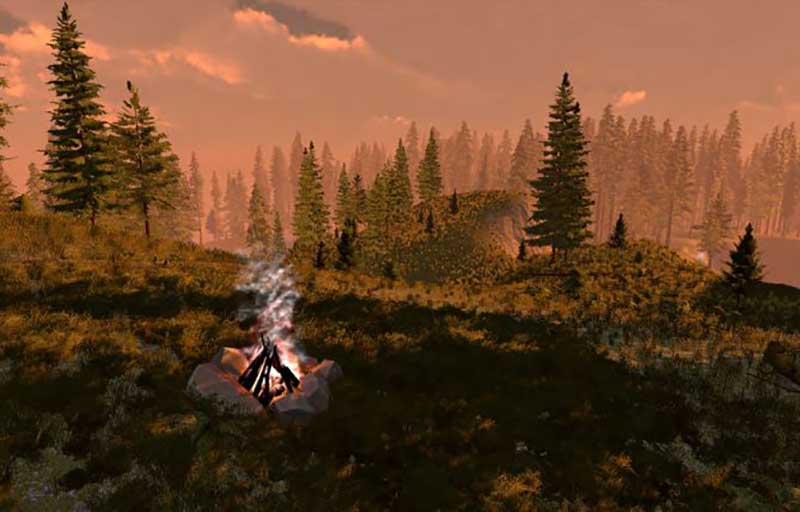
Participants generally found the experience usable, relaxing, and engaging, and their breathing rates slowed by an average of 57% over the course of about 15 minutes. Participants’ differences impacted how they felt the training went; for instance, people with previous meditation experience sometimes struggled to split their attention between the environment and their breath, while people experienced with VR games sometimes took time to slow down and relax.
That some users wanted Stairway to Heaven to be more relaxing, while others wanted more engagement, highlights the difficulty of designing a system that promotes mindfulness for everyone. However, the fact that most participants enjoyed themselves and reached the target therapeutic breathing rate for at least some of the training reflects positively on the VR technology’s potential.
“Mindful attention to breathing, specifically deliberately engaging in slow breathing using the diaphragm … is a simple yet powerful way to reduce stress and improve feelings of well-being,” CAMD researcher Nathan Miner said. “Our research stands out for its unique approach of using virtual reality to support and engage users in self-regulating their breathing.”
26) The Effect of Orientation on the Readability and Comfort of 3D-Printed Braille
Eduardo Puerta, Tarik Crnovrsanin, Laura South, Cody Dunne
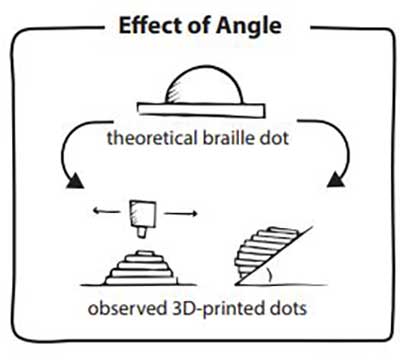
3D printing offers an affordable way to produce braille for people who are blind or have low vision. One of the most common types of 3D printing, called FDM, works by stacking layers of molten plastic to build up each braille dot. The layers are always stacked horizontally, but the designers can adjust the angle by printing the model on a slant, ranging from 0 to 90 degrees.
To determine which angles provide the quickest, most comfortable, and easiest reading experience, the researchers printed sample phrases at seven different angles and had twelve Braille users evaluate them against a control that used traditional embossing. The team measured users’ reading speed and solicited feedback about the ease of discerning letters and words.
All three metrics improved as the print plate angle increased, with a noticeable difference at 60 degrees and above. The comfort and discernment available at 75-degree and 90-degree print angles matched that of the embossed control, and the average reading speed was better than for other angles.
Printing at high angles, like 90 degrees, provides the best braille. However, printing at this angle is technically tricky because printing any model vertically can leave “overhangs,” or layers with nothing supporting them underneath. Therefore, the authors propose a 75-to-90-degree range that produces the ideal braille for the FDM technique and gives designers flexibility to avoid overhangs. If a higher angle can’t be used, the researchers also found that sanding down braille printed at lower angles could minimize discomfort and discernment issues.
27) Thinking Outside the Box: Non-Designer Perspectives and Recommendations for Template-Based Graphic Design Tools
Farnaz Nouraei, Alexa Siu, Ryan Rossi, Nedim Lipka
Design templates in tools like Canva and Adobe Express can be a great way for nondesigners to quickly create beautiful posters, fliers, and cards. But working from a template can also limit a person’s creativity and frustrate them when their media assets don’t fit into the template well.
That’s why the researchers had ten students design posters advertising a clothing sale, first by using anything they liked from a selection of nine templates, then based off a template assigned by the team. Participants tended to fall into two camps: those who preferred to pick and customize a template they liked, and those who preferred to mix and match elements from several templates into an original design. Today’s template interaction designs tend to support the pick-and-customize method, which can hinder and frustrate mix-and-match users. Furthermore, some users were frustrated when they found their designs subpar compared to the professional-looking template they had started with, though they appreciated that the templates helped them avoid decision paralysis. Users tended to accept the creativity limits of the templates as a trade-off for improved productivity.
To maximize benefits and minimize frustrations, the team recommended that future tools provide more visual decision-making support (including how to select the best template), add features like a mood board that encourage exploration and iteration, and identify and automate rote tasks using intelligent algorithms so that users can focus on more creative edits.
“Interactions with templates matter, such that if these interactions are not supportive of a user’s natural workflow, they can hinder creativity and satisfaction with the creative process,” Khoury doctoral student Farnaz Nouraei said. “I believe that a user-centered approach to building creativity support tools … can help us identify the various types of users in terms of their approach to the creative process and develop inclusive interaction schemes that help everyone feel creative while still enjoying the productivity gains from using these tools.”
28) When the Body Became Data: Historical Data Cultures and Anatomical Illustration
Michael Correll, Laura Garrison
Our species has tried to picture what’s going on in our bodies for thousands of years. The millions of visualizations we’ve created in that time have happened within a wide range of data cultures — ways that data, knowledge, and information are conceptualized, collected, structured and shared. As a result, the historical record is filled with an array of different pictures of human bodies that reflect the time and culture in which they were created, just like our modern, “objective” visualizations do.
To explore and reflect on those visualizations, the researchers compiled historical vignettes about how anatomical illustrations have varied throughout history. For example, medical diagrams of all kinds leave out the specifics of irrelevant systems to avoid visual clutter and highlight the diagram’s rhetorical aims. Taoist concepts of the body focus on the flow of various energies like yin, yang, and qi, so muscular or skeletal systems were often left out of 15th century Chinese diagrams. Early Greek culture valued physical vitality as a sign of divinity, so anatomical diagrams offered detailed depictions of the muscular and skeletal systems but had little specificity regarding things like circulatory rhythms.
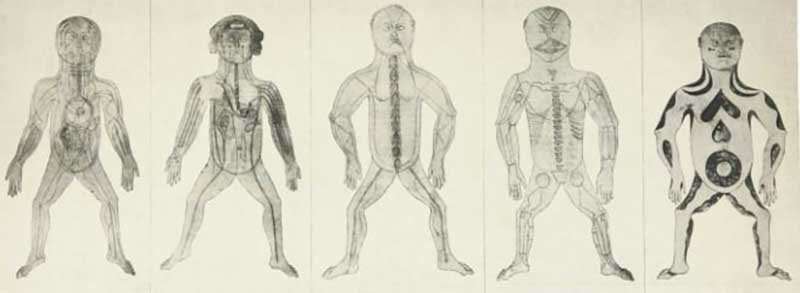
“Somebody drawing the results of a candlelit autopsy on a possibly illegally acquired cadaver for a vellum manuscript is performing a fundamentally different design activity than somebody making an interactive visualization of volumetric imaging data for a virtual reality headset. The fact that both designers might be talking about the same anatomical structures is almost beside the point,” Correll said. “The resulting visualizations are just going to look different, be used differently, and be connected to a host of different world views.”
This paper reminds us that these anatomical visualizations reflect our historical and cultural positioning, and the history from which that position developed. The paper is also intended to encourage medical visualization creators to consider the rhetorical implications of their choices and what argument their drawing makes about human bodies, as well as the ethical context in which those choices take place.
The Khoury Network: Be in the know
Subscribe now to our monthly newsletter for the latest stories and achievements of our students and faculty