Author: Dakota Castro-Jarrett
Date: 10.02.24
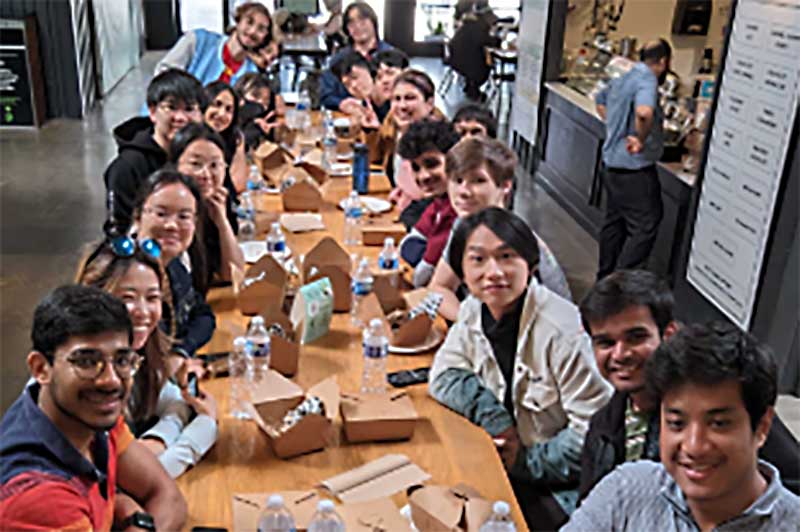
At Northeastern’s Oakland campus, which has only existed in its current form since 2022, most things are new, including the campus’s nascent student life.
Danny Sklyarevskiy, a first-year computer science student, knew before he even got to Oakland that he wanted to help the campus’s community in some way. So when he realized that the campus didn’t have a computer science club, he hopped on to one of the new-student group chats and proposed the idea. Shortly after, Dharana Alilaikannan, a first-year combined computer science and business major, reached out to Sklyarevskiy and the two started organizing the CS Coalition.
“The first couple of months, Dharana and I worked a lot on making sure that the club had a solid base and knew how to organize any events we wanted to,” Sklyarevskiy said.
Building that solid base required a lot of work from the club’s e-board, which began by organizing weekly tutoring sessions.
“A lot of people here are very new to computer science; other people have a lot of experience. So, we got the people with a lot of experience to help mentor the newer students on homework,” he said.
Initially, getting people to attend these sessions was difficult — not because people didn’t need the help, but because it was hard to advertise the events. Newly minted club leaders across campus were figuring out the best ways to get the word out.
Eventually, the CS Coalition asked teachers to mention the club during their classes — and students started showing up.
As the club grew, it faced another challenge. Computer science students couldn’t share their homework assignments, meaning the study sessions were largely overviews of general questions rather than more individualized help. The coalition wanted to provide more specific support, so Sklyarevskiy reached out to faculty to change these rules.

“I started talking to the teachers and I was like, ‘It’s very hard to tutor when we can’t look at students’ code. Looking at the code is like a huge part of helping,’” Sklyarevskiy said.
Eventually, this led to the development of Peer Programming, a program unique to the Northeastern network, and one that Sklyarevskiy considers to be the CS Coalition’s greatest accomplishment. Beyond that, the club has hosted game jams — where groups and individuals compete to program games within a brief time — and helped organize PawHacks, a hackathon on the Oakland campus.
During this same time, another CS club emerged on the Oakland campus. It isn’t breaking news that there are serious gender disparity issues within STEM fields, and computer science, where just 20% of professionals are women, is no exception. For students like Jasmine Yuen, a first-year computer science major in Oakland, these disparities are a major concern. So to address them, Yuen wanted to start a campus chapter of Girls Who Code, an international nonprofit working to close the gender gap in tech sector.
“The gender disparity in a lot of different fields that are dominating the market right now is a really important issue,” Yuen said. “I believe that all individuals should have equitable access to education.”
After floating the idea, Yuen and her friends formed the club and quickly filled its e-board positions, with Yuen becoming president.
“The biggest challenge was that none of us had leadership positions before,” Yuen said. “We were very unsure if we were fit for this big role … I think the way we overcame that was that we fully supported each other … with all the responsibilities.”

The majority of Girls Who Code’s work is done through weekly study sessions, which the club usually schedules the day before major CS assignments are due. In these sessions, students work together to figure out these assignments, as well as general concepts they’re struggling with. These meetings also allow women within the computer science program to come together and develop deeper bonds.
“A lot of the girls started talking to each other, and they socialized a lot during the meetings,” Yuen said, noting the importance of friendship building in making women feel more welcome in predominantly male fields. “I think the most important thing for girls entering computer science is finding people who you can rely on and will always support you.”
Though the e-board members of both the CS Coalition and Girls Who Code departed Oakland after the spring semester, they are determined to keep the clubs running in Oakland. Sklyarevskiy, now studying in Boston, will help develop computer science clubs at the Oakland campus as the global campus ambassador for Kaleidoscope, a computer science club consortium at Northeastern. Yuen, now a student at Georgia Tech, is working with her former e-board colleagues to convince incoming Oakland students to join Girls Who Code and make it permanent.
READ: Inside Kaleidoscope, the student-led council supporting and uniting Khoury College clubs
“We want to continue to serve the Oakland campus for years to come,” Yuen said.
The Khoury Network: Be in the know
Subscribe now to our monthly newsletter for the latest stories and achievements of our students and faculty
Author: Emily Spatz
Date: 09.26.24

On average, only 18% of the hundreds of papers submitted annually to the Association for Computing Machinery’s Conference on Computer and Communications Security (ACM CCS) are accepted. One acceptance at the prestigious conference is rare enough, let alone multiple.
But Ben Weintraub, a doctoral student in the Networks and Distributed Systems Security group at Khoury College, didn’t just have one or two papers accepted — he had three. His research, while spanning a wide range of topics, centers on exposing previously unknown security risks in a variety of technologies and protecting honest users from harm.
“[ACM CCS] is very competitive” said Weintraub’s advisor, Cristina Nita-Rotaru. “Having one paper accepted is excellent; having three is extraordinary.”
“I’m really thankful for my co-authors; I certainly would not have been able to complete these projects without them,” Weintraub said.
ACM CCS is the flagship conference of the ACM’s Special Interest Group on Security, Audit and Control. The annual event brings together international technology researchers, practitioners, developers, and users to exchange ideas and experiences about a range of computer security topics.
Vulnerabilities in Bitcoin payment system
Weintraub’s first paper, Payout Races and Congested Channels: A Formal Analysis of Security in the Lightning Network, focuses on two security vulnerabilities his team found in a system that aims to speed up the processing of Bitcoin payments. The project was mainly driven by Weintraub and stemmed from a previous, more abstract project that he wanted to make more concrete.
Weintraub and his team decided to study Lightning Network, a popular Bitcoin processing technology. An estimated 6.6 million transactions were routed using the network in August 2023, according to a report by River, a Bitcoin technology and financial services company.
“We were wondering in what kinds of useful ways we could evaluate this protocol that might yield some interesting findings,” Weintraub said. “We settled on doing something called model checking, which is a mathematical technique to explore the ways that a program can execute and find if there are issues.”
From there, Weintraub’s team spent the next year building their own model of the Lightning Network, then explored that model for possible security vulnerabilities. They ended up finding two pitfalls that could result in users having their money stolen, results that were confirmed when the team then tested their findings on the real program.
Weintraub and his co-authors contacted the Lightning Network security team to alert them about the vulnerabilities. Though the network can’t fix the issues due to the technology’s protocol, the Lightning Network can make the security risks clearer in their documentation, Weintraub said.
Timing attacks in intent-based networks
Weintraub’s second research topic, Exploiting Temporal Vulnerabilities for Unauthorized Access in Intent-Based Networking, was inspired by his 2023 internship at MIT’s Lincoln Laboratory, which researches and develops technology to meet national security needs.
“When I started there, they had a [research] area in mind, which I hadn’t looked at before,” Weintraub explained. “Then, we found this interesting research problem that we were able to look into.”
The work focused on “intent-based networks” — networks that use clever heuristics to configure network devices to best serve an operator’s intent. Weintraub and his team hypothesized that such networks could have security vulnerabilities during the configuration update phase.
“One, we wanted to prove this vulnerability could happen, and two, we wanted to show that we could detect situations where it might happen so that you could increase your security in those particular moments when you might be most vulnerable,” Weintraub said.
With the help of other experts in intent-based networks, Weintraub and his team found that if “flow rules” — forwarding instructions installed on network devices — are delayed at just the right time, it can result in unauthorized connections between network nodes. The connections can then be exploited by attackers, leading to network instability and breaches of sensitive data.
Weintraub continued to collaborate with the Lincoln Lab after his internship ended. Eventually, he and his team developed a free and publicly accessible “defensive system” that would allow network administrators to detect timing issues before they become a problem.
Predatory trading of Ethereum cryptocurrency rollups
For Weintraub’s third paper, Rolling in the Shadows: Analyzing the Extraction of MEV Across Layer-2 Rollups, he and his co-authors focused on predatory trading practices within Ethereum trading networks. Ethereum is a decentralized global software platform that uses blockchain technology, and its native cryptocurrency, Ether, trails only Bitcoin in global popularity.
Certain trading networks called “rollups” are offshoots of Ethereum that aim to improve Ethereum’s speed and reduce the processing costs of transactions. Weintraub and his team found evidence that certain actors can perform malicious trades on rollups, which was previously thought to be impossible. These malicious trades can take the form of several harmful or exploitative trading practices, allowing attackers to manipulate the market for their gain.
Ultimately, Weintraub and his co-authors found three new attack vectors within rollups. Weintraub collected and analyzed data for the project and helped write the paper, which focuses on where risk mitigations are and aren’t possible.
In October, Weintraub will travel to Salt Lake City for ACM CCS, where he will present and discuss his Lightning Network and intent-based networks papers. Although it won’t be his first time presenting his work at a conference, getting his papers accepted at ACM CCS is a new achievement.
“[This conference] is a great opportunity to not only share this work that we’re proud of, but also give ideas to other people about what they can do in their research,” Weintraub said. “Likewise, I also want to know what [other professionals] are doing and see how I can integrate those lessons as well.”
The Khoury Network: Be in the know
Subscribe now to our monthly newsletter for the latest stories and achievements of our students and faculty
Author: Juliana George
Date: 09.23.24
Parul Singh always wanted to create things. What started as a childhood passion for makeshift art projects transformed into a love for coding and distributed computing, interests that she nurtured in her master’s studies in computer science at Khoury College.
Now Singh is a principal software engineer at Red Hat, the largest open-source software company in the world. Red Hat’s products range from Red Hat Enterprise Linux, the widely used operating system that made the company’s name, to cloud-native application development and IT automation tools. All of the company’s products are open source, meaning that the code underwriting the software is available for subscribers to view and modify to encourage democratic innovation.
Red Hat’s open-source approach is part of what drew Singh to the company to begin with.
“I strongly believe that the best innovation happens when there is more diversity and more brains involved than just 10 people in a company working behind closed doors,” she said. “History provides all the evidence that problems get solved more efficiently and for a larger community when people of many, many backgrounds come together.”
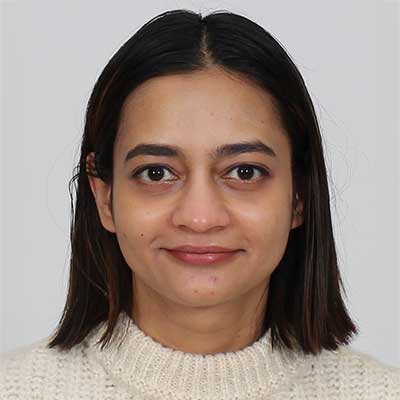
For Singh, that coming together began while she was taking “Fundamentals of Cloud Computing” at Khoury College, through which she obtained a research position at Mass Open Cloud. MOC is an educational cloud that partners with Northeastern University, Boston University, Harvard University, the Massachusetts Institute of Technology, and other Massachusetts-based institutions and companies (including Red Hat) to support open-source cloud development.
Singh credits the opportunity to work for MOC as the reason she later decided to complete a four-month software development internship at Red Hat. During that stint, Singh worked on the ChRIS project (ChRIS Research Integration System), a collaboration between Red Hat, MOC, and Boston Children’s Hospital that seeks to streamline medical imaging and rare disease identification through AI.
“These medical imaging analysis results would come in weeks or months, which could be a really long time for a critical patient,” she explained. “We were trying to reduce the analysis time to days or even minutes. I could tell that it was impactful, and that’s what you want your work to be.”
That experience working on such an important project ultimately drove her to pursue a full-time opportunity there, even as she received job offers from other companies. Now coming up on six years at Red Hat, Singh spends most of her time working on the Kepler project (Kubernetes-based Efficient Power Level Exporter), a tool designed to improve sustainability in the information and communications technology sector by monitoring energy consumption within the cloud. Kepler estimates the processes and units of computing that consume the most energy, allowing organizations and users to optimize their energy consumption.
“Sustainability doesn’t just extend to using your own grocery bag or recycling,” Singh said. “It’s having this awareness that everything that you do in your day has some kind of emission … So, solving this problem with the skill set that I have feels very nice.”
Open source, open management
Singh isn’t the only Khoury alum who was attracted to Red Hat for its open-source values. Gagan Kumar, a senior product manager at Red Hat who earned his master’s in computer science in 2018, applied to a three-month product management internship at Red Hat after an employee spoke to his “Fundamentals of Cloud Computing” class.
The company culture proved to be a perfect match for Kumar; not only did Red Hat prioritize open-source software, but it also practiced open management, promoting team collaboration and receptivity to new ideas. While working as an intern, Kumar pitched a product that would notify system administrators of potential product health risks and recommend preventive actions. This proactive solution differed from the primarily reactive approaches to failure offered by other cloud computing companies at the time, such as Amazon Web Services.
“I actually carried forward a lot of the things I learned from the Khoury program,” Kumar said. “We used to have a course called ‘Software Development Life Cycle,’ where I got to learn how software is built and who the users are. We call this ‘user story,’ and I was able to implement that in my internship.”
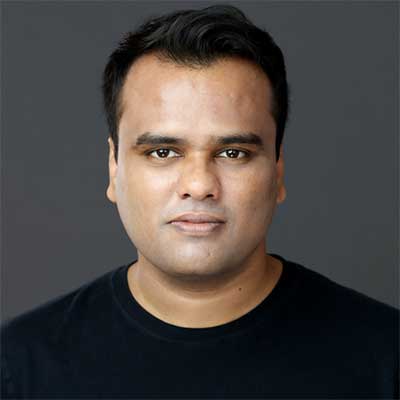
Kumar’s product pitch was accepted, and the tool is now integrated into Red Hat’s OpenShift, a Kubernetes distribution, to prevent cluster failures and ensure that the infrastructure is almost always available. Kumar’s ingenuity as an intern translated into a full-time role, and like Singh, he has now been at Red Hat for almost six years. As a senior product manager, he transitions Red Hat’s projects into marketable products that can be sold to customers. The project that’s closest to his heart is MOC, which he sees as a more democratic alternative to big-name cloud providers like AWS and Microsoft Azure.
“It’s like a David versus Goliath battle,” he said. “AWS and Azure are well-established cloud providers. But with MOC, we can prove users, especially researchers and academics, have an alternative open-source infrastructure to public cloud providers.”
“Anyone can build on it”
Rohan Devasthale, a recently hired software engineer at Red Hat and a 2023 graduate of Khoury College’s computer science master’s program, shares Singh’s and Kumar’s enthusiasm for open-source software.
“Red Hat’s products and code are all open source, so anyone can take it, work on it, build on it,” he said. “This open-source culture at Red Hat promotes collaboration. You’re not alone working on a product.”
Devasthale completed an eight-month co-op at Red Hat in 2022, where he worked on an MOC project called Elastic Secure Infrastructure, a platform enabling vendors to lease out unused bare metal machines (physical computer servers) to customers for maximum efficiency in computing workflow. He cites his Khoury College curriculum and TA work for Alden Jackson’s “Networks and Distributed Systems” course as key.
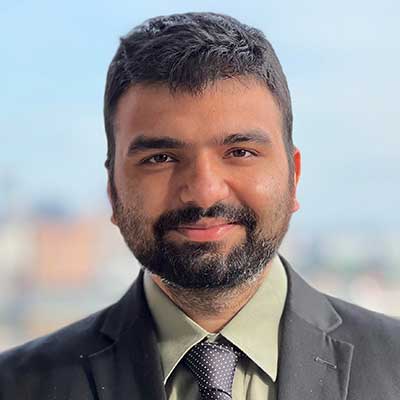
“Khoury has amazing coursework,” Devasthale said. “I remember taking algorithms, computer networks, and operating systems courses. All these courses are related to the work I do right now, and they involve really good hands-on projects.”
Devasthale has only been a full-time software engineer at Red Hat for a few months, but so far, he’s been involved with RHEL AI (Red Hat Enterprise Linux AI), an in-development generative AI platform that Red Hat is hoping will serve as an open-source alternative to large language models like ChatGPT.
Devasthale asserts that open-source software doesn’t just represent a way to make code more accessible — it also empowers students and amateur coders to cultivate their coding skills, even outside of a job or internship.
“Contribute to open-source projects,” he advises. “There are many open-source projects available on the Internet, like Linux, Kubernetes, Git, etc. If you feel like adding a feature or contributing something, that will help you understand how software works and how to write code in the way it’s written in industry. Contribute to open-source projects and keep learning.”
The Khoury Network: Be in the know
Subscribe now to our monthly newsletter for the latest stories and achievements of our students and faculty
Author: Emily Spatz
Date: 09.18.24
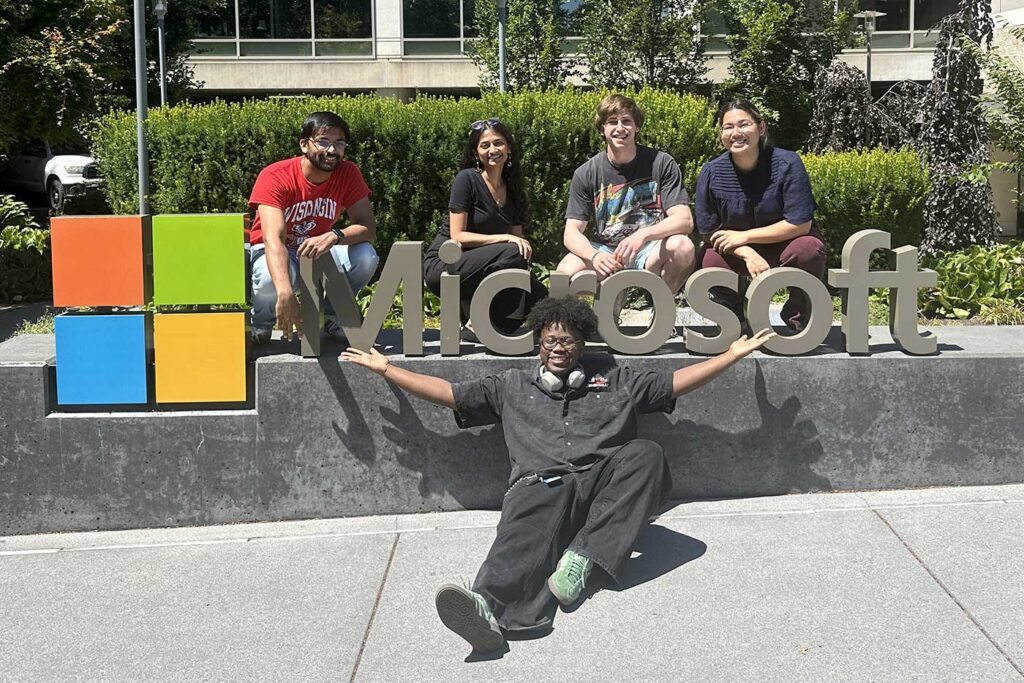
This summer, 11 Khoury College students traveled to the West Coast to intern with Microsoft, assuming roles ranging from software engineering to consulting.
The students spent 12 weeks living in Redmond, Washington, a suburb of Seattle and the home of Microsoft’s headquarters. Along with hundreds of other interns across the country, they worked on a variety of projects for numerous Microsoft services — drawn, they said, by the abundant opportunities offered by one of the world’s largest tech companies.
“Microsoft is in a really unique position; because it’s so big, it’s almost like several different companies within one company,” said Isabelle Papa, a fourth-year computer science and music technology major and a software engineering intern. “I was excited about the prospect of not just working in one particular area, but making connections and exploring other areas as well.”
Microsoft doesn’t offer co-ops, so students interested in working there must intern for the company.
“It was a way to explore something in a much shorter time span than a co-op,” said David Oduneye, a fourth-year computer science major and software engineering intern. “Co-ops are really cool, but I think sometimes you want to try out a shorter experience or go a little farther away.”
Students also said that Microsoft’s culture, which emphasizes personal growth, was a crucial factor when they considered the professional and self-development opportunities the internship offered.
“Microsoft is a big tech company with a big impact,” said Mike Mundia, a fourth-year computer science and theatre major and a software engineering intern. “That’s something I look for when I’m looking for my next internship or co-op opportunity. I read up on their culture, and one of their culture pillars is that growth mindset. My biggest goals when I’m doing these co-ops is to grow myself as a person, as an engineer.”
Software engineering interns improve Microsoft services
Throughout the internship, students worked on individual projects with support from their assigned team, which included a supervisor and mentor.

Papa worked on Microsoft’s Entra Verified ID service under the Identity and Network Access Organization. The product allows organizations to issue and manage decentralized identities for employees and customers, ensuring greater control over personal data and privacy.
Papa’s project laid the groundwork for a selective disclosure feature, which allows users to share only select information when verifying their personal details. For example, a person asked to verify their age for a job could share their date of birth from their ID without disclosing other information.
“It was super interesting because it’s emerging technology that is just starting to take off and get more customers, so it was pretty cool to be a part of,” Papa said.

Oduneye’s project also focused on security; his team was created after external hackers breached Microsoft data in November 2023. That meant his team, which was a bit busier than normal teams, worked on technology that would help Microsoft more proactively secure its information and protect customers from future hacks.
“Specifically, I was working on a tool for performance testing,” Oduneye explained. “Especially in the early months of my internship, there was a lot of learning. My mentor would guide me to resources or people who could help me understand the work I was doing.”
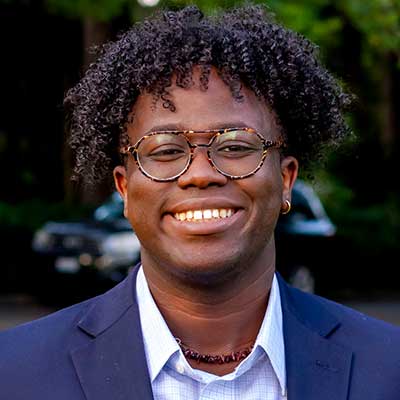
Mundia worked on the engineering systems behind Microsoft Windows and Azure, managing builds for operating systems and migrating their back ends to simpler systems.
“I’d never even coded on a Windows machine,” Mundia said. “All of that was new, but I learned how to actively ask questions and ramp up quickly so I can tackle anything going forward.”
Software engineering intern Adithi Ponakampalli, a third-year computer science and economics major, worked under Microsoft’s Fast Healthcare Interoperability Resources (FHIR) service. Her project involved building a FHIR subscription feature that would allow clients — such as health care providers, patients, and insurance companies — to keep track of and receive notifications when there are changes to specified health care data, such as lab results.
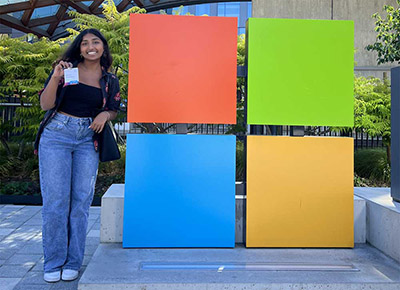
“This really automates the process of asking for updates and receiving all those notifications,” Ponakampalli said. “FHIR subscriptions is a feature that users are waiting for right now, which is also really cool, because working on this project has really made me feel like I have an impact at Microsoft.”
Designing applications through the New Technologists Program
Third-year computer science major Emma Vonbuelow, a software engineering and product development intern, was part of the New Technologists Program, which allows college students interested in tech careers to learn programming languages and develop products. This summer, the program’s 70 interns were split into groups of five, with each group developing a product for an assigned theme.
Vonbuelow’s team was tasked with developing a travel-themed technology, and after brainstorming problem statements, they developed a system that allows travelers to be more aware of local and Indigenous cultures.
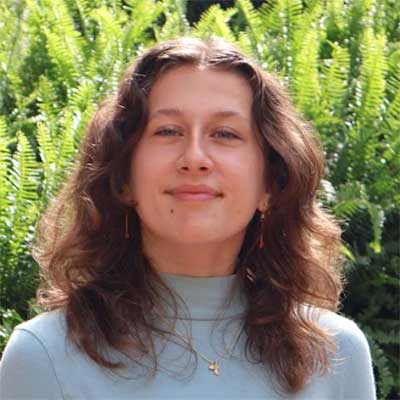
“We did a lot of research about how people are interested in local cultures when traveling, but recommendations can be more polarized because a lot of people indicate they get their recommendations via social media or online platforms,” Vonbuelow explained. “But when going to new places, they don’t consider culture so much when it comes to the activities they do.”
Vonbuelow’s team coded an app — currently proprietary to Microsoft and not publicly available — that invites each user to complete a questionnaire. Based on their answers, the app generates customized tags that relate to events happening in the user’s travel destination.
“Users were able to see local events from all over the world and have them relate to those personal tags,” Vonbuelow said.
Consulting and program manager interns improve customer experience
Cecilia Chepkoech, a fourth-year finance and data science combined major, took on a more customer-facing role during her consulting internship at Microsoft. She worked in the company’s solutions sector, which focuses on finding software solutions for companies using Microsoft products.

Chepkoech worked with a consumer goods company that wanted to have all their systems managed by Microsoft. The company also wanted their system to predict when a system break or failure was occurring, add efficiency to their sales process, and bring in more customers. Chepkoech’s job involved listening and fully understanding the customer’s needs and wants, then applying her technical skills from classes and previous co-ops to gain a deeper understanding.
“I know how to talk, I know how to listen, I know how to get into the consumer mindset. I also know how to code, so I can understand a bit of every single facet,” she said. “I’m able to communicate effectively to understand the customer.”
As she took more initiative and gained trust from her team, Chepkoech got to travel to the client’s location and take a more forward-facing role in consulting meetings.
“This internship really taught me to present myself, be myself in every single situation, and take initiative,” she said.
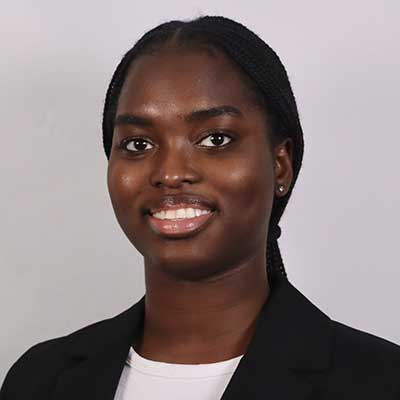
Yadah Ampofo, a graduate student in computer science, worked as a technical program manager for the Azure Core customer common platform and technology team. Azure is a cloud computing platform that offers cloud services like computing, analytics, and storage to organizations. Ampofo’s internship focused on improving customers’ zone-redundant resource deployment experience, which ensures that cloud services on Azure are reliable and resilient to disruptions.
Ampofo’s job included analyzing customer experience and encouraging customers to opt in to Azure’s resilience and zone redundant options.
“Even though Microsoft has a responsibility of making sure [Azure] is resilient, [system security] is a shared responsibility between the customer and Microsoft,” Ampofo explained. “There was an issue of low adoption of [zone-redundant] features for certain customers. I came up with UI/UX design recommendations on how we can make this deployment for customers easier, simpler, and in general increase adoption.”
Interns explore outdoor activities, network opportunities in Seattle
Microsoft allowed interns to choose between taking a stipend to find their own housing and living in corporate housing with other interns. Both options allowed students to connect with others working at Microsoft and other companies in the area.
“Making that group of friends and having that shared experience with them is not only a networking opportunity, but you get so close to people so fast,” said Ponakampalli, who opted for corporate housing.
Ampofo took the housing stipend and lived in Seattle’s University District with students who attended nearby schools. Through exploring the city, she met other Microsoft interns and people who worked at other technology companies like Amazon.
“Some of them lived in apartments down the street in the district, so we’d always have an opportunity to meet each other and network,” Ampofo said.
To get to work every day, some students used Microsoft’s bus system, which picks up employees around the city and takes them to Microsoft’s headquarters. While on the 502-acre campus, employees have access to a “personal Uber system” that takes them between Microsoft’s 125 buildings.
Outside of working hours, interns spent time exploring outdoor activities in Washington, found their favorite food spots, and attended events like comedy shows.

“I loved [Seattle] so much, I think it’s the most beautiful city in America. The whole city in the summer is very green; there are trees everywhere,” Mundia said, adding that teams within Microsoft often did activities together such as hiking or kayaking.
“I got to do a hot-air balloon in Seattle and visit the beach at Golden Gardens Park with some of my friends,” Ampofo said. “And I definitely ate a lot.”
Microsoft also organized company-wide events for interns, allowing them to connect and network.
“I always felt like I was taken care of. There’s a really big emphasis on the benefits and the enjoyment of your time while you’re working at Microsoft,” Oduneye said.
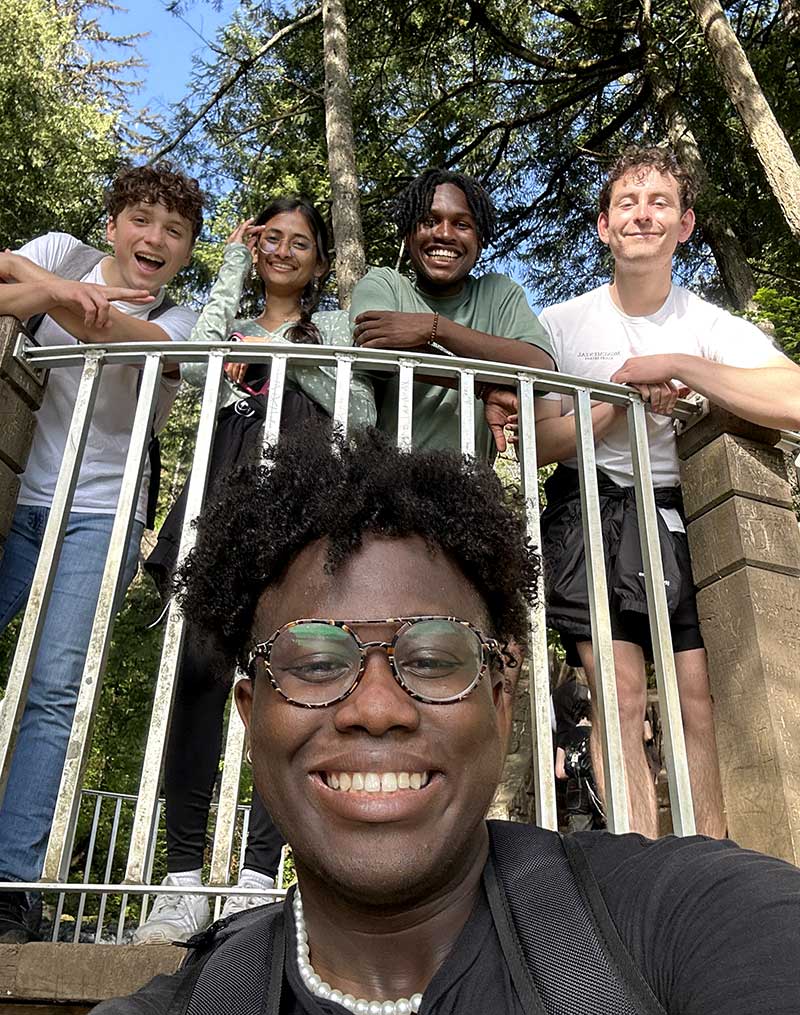
In all, students said the internship helped them grow both personally and professionally. Several interns, including Mundia, Papa, and Oduneye, got full-time return offers from Microsoft.
“This internship and my other internships have definitely solidified that software engineering or tech in general is a career path I want to go down,” Papa said. “Technology, especially in today’s world, is progressing super rapidly, and there’s a big opportunity to make a very positive impact but also a negative impact. You have to keep both of those things in mind, and I’ve always found that really interesting.”
Interns also said the experience showed them how to navigate workplace ambiguity and be comfortable asking questions.
“I gained a lot because I asked good questions. I was able to understand how to communicate, what I need to do, what I need to accomplish, and how I need to succeed in this role because of my previous experiences,” Oduneye said.
“You learn how to belong in tech spaces a lot more,” Vonbuelow added. “That’s such a big takeaway, that you belong in the space that you are in.”
The Khoury Network: Be in the know
Subscribe now to our monthly newsletter for the latest stories and achievements of our students and faculty