Author: Dakota Castro-Jarrett
Date: 11.12.24
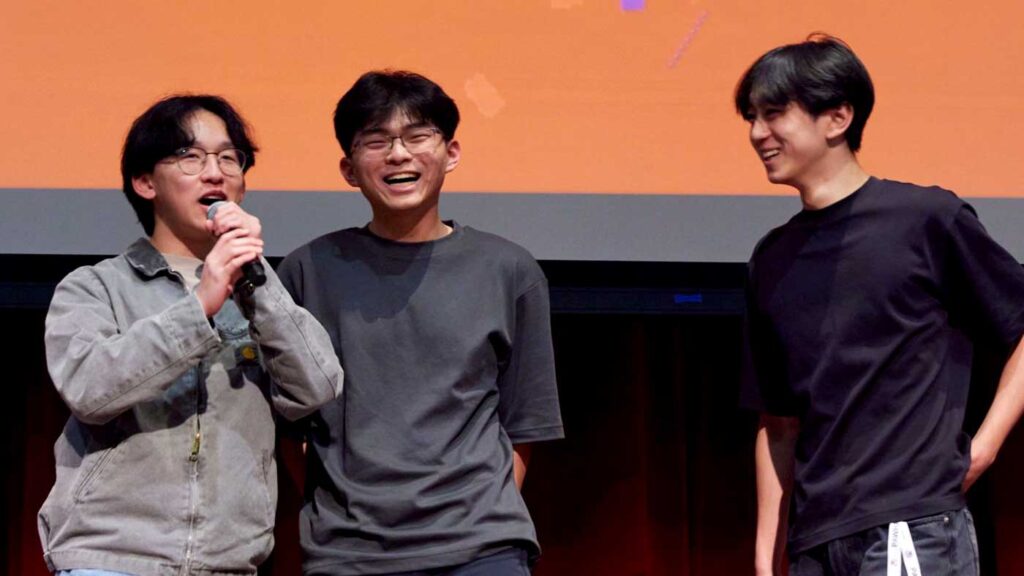
When Arav Kumar, a first-year computer science major, heard about the hackathon being hosted on Northeastern’s Oakland campus, he didn’t have much interest in joining. Eventually, his friends, some of whom were organizing the event, encouraged him to sign up, and his roommates, who were struggling to find a good idea for the event’s education theme, asked him for help.
It wasn’t too much of a shock to Kumar; thanks to his interests in philosophy, art, and music, he’s always pursued his creative side. Together, the group began to brainstorm possible project themes.
That brainstorming session resulted in a project that landed the team first place.
The hackathon, called PawHacks, took place this past spring and was one of the first major student-run events on the Oakland campus since the Northeastern–Mills College merger in 2022. It was a novel exercise for the undergraduates who organized it, and one that made the campus feel more alive for many of the student participants.
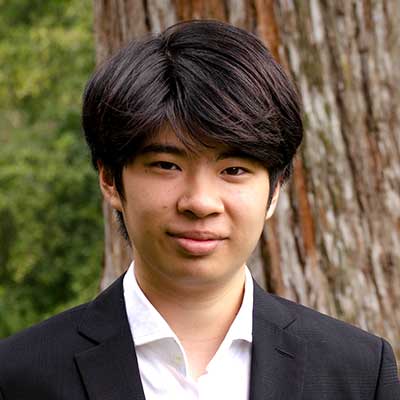
Rich Zou, a first-year computer science and business administration major and president of the Oakland branch of Northeastern’s Entrepreneurs Club, came up with the idea for PawHacks after some of his friends attended CalHacks — the world’s largest collegiate hackathon — at nearby UC Berkeley.
“My friends were participating in it, and I was visiting them that weekend … and I just saw how big it was,” Zou said. “I wanted to host a hackathon of my own.”
To organize such an event, Zou knew he’d need support from others who had more experience with coding. This led him to reach out to Girls Who Code and the CS Coalition, two student-led computing clubs that have played a significant role on the new campus.
READ: In Oakland, Khoury students build computing clubs to connect, compete, and collaborate
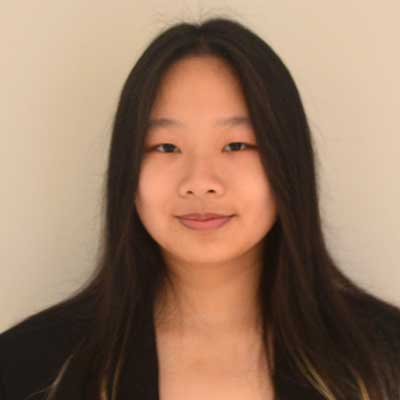
“It was a little idea at first,” said Jasmine Yuen, a first-year computer science major and president of Girls Who Code. “We were sitting in the library, and we were talking about doing this big event … We were pretty excited for it, but honestly, it was hard to [see it coming] to reality.”
Together, these clubs chose an education theme and created the agenda for the event, which included an opening ceremony and programming workshops. They also sought the funding they needed to make PawHacks a reality. With the help of James Chang-Davidson, a recent Khoury graduate and founder of Kaleidoscope, Zou reached out to Khoury College as well as the entrepreneurial organization Mosaic.
READ: Inside Kaleidoscope, the student-led council supporting and uniting Khoury College clubs
The organizers also received key fundraising guidance from Major League Hacking (MLH), a student hackathon league that hosts more than 300 hackathons every year. Using MLH’s advice, the group raised more money from groups outside of Northeastern.
MLH also collects logistical data from past events, information that helped the group of student organizers know what they needed to have ready for the event to run.
Meet the winners
Kumar’s inspiration for his group’s first-place project came from seeing his best friend, who has dyslexia, struggle with an education system that wasn’t made for him.
“He’s the smartest guy. He does differential equations while at the gym,” Kumar said. “I wanted to help him, so we came up with the idea of [helping anyone] learn about anything they want using AI.”
This project, which became known as CurveAI, aimed to develop an app that used AI to customize learning programs based on each student’s learning style. The creation process wasn’t easy; while Kumar had a lot of AI experience, neither he nor his group mates knew much about creating an app.
“A lot of the first day was spent just trying very hard to figure everything out,” Kumar said.
Despite the team’s limited knowledge of the subject, their passion for the mission of the app helped keep them on track for the win, as did an admittedly “dangerous amount of caffeine.” Another factor, Kumar said, was the strength of their three-minute pitch to the judges’ panel. This part of PawHacks gave students a chance to flex their entrepreneurial muscles, a critical skill in a tech industry that constantly seeks new ideas from fiercely competitive start-ups. The CurveAI team recognized how important this pitch was, especially given that some of the judges were venture capitalists. So early on, they decided to focus on an emotionally gripping story and centered Kumar’s friend with dyslexia to show the importance of their project.
LinguaLink, the second-place winner, is a language learning website that employs a mix of text and video chats with native speakers — as well as text chats with AI chatbots — to help users learn their target language. According to their description on the PawHacks website, the LinguaLink group struggled to ensure that every element of the website worked together seamlessly. Still, they ultimately achieved their vision with their own AI and support for 50 languages.
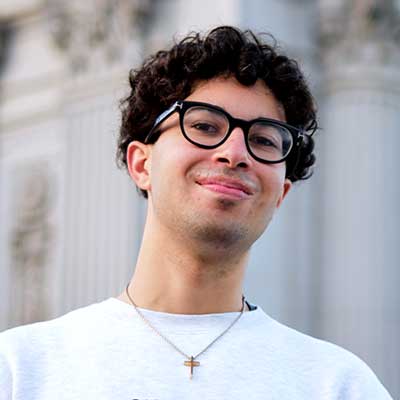
Like the CurveAI team, the third-place Lectura team was created in reaction to personal experience. Ryan Amiri, a first-year computer science major, had noticed that some computing instructors were battling to keep their students engaged. Even when instructors used interactive tools that allowed students to ask and answer questions, they wouldn’t always get enough class participation. Some students would allow their classmates to answer the professor’s questions and wouldn’t ask or answer anything themselves.
“We were in our Fundies (Fundamentals of Computer Science courses) class, which used a website that gives interactive questions to make sure students are paying attention,” Amiri said. In addition, another website called Slideshow allows students to ask questions.
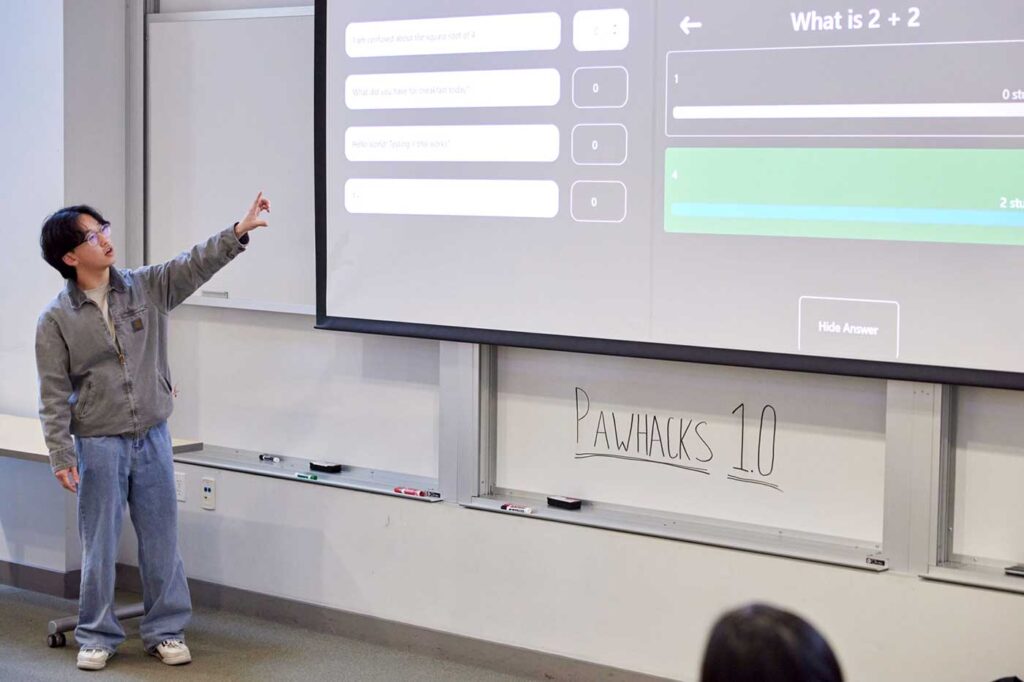
But still, the group thought, the class participation could be better, so they set out to create a website to incentivize it. They began by combining the engagement tools that instructors were using into one streamlined platform.
“Then we added a point system. So, for example, for every question students answer correctly, they get points,” Amiri said. “And if students ask questions, and an instructor thinks it is a good question, an instructor can reward them with however many points they choose.”
Lectura would track these points on a leaderboard, allowing the instructor to award or reward high-scoring students. While the group didn’t earn the top prize at PawHacks, they received interest from the instructors who inspired the project in the first place, and who believed that the project could help.
“I think what made us really successful was that our problem was very widespread across many colleges in the United States … [and in] high school classrooms,” Amiri said.
Local impact
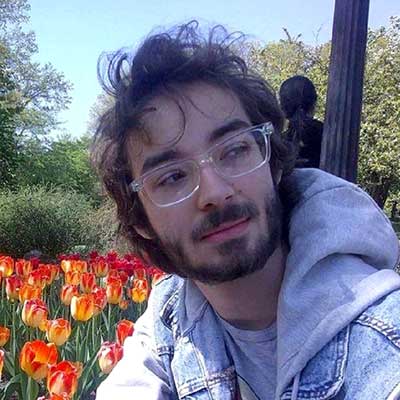
For those who participated in PawHacks, one of the highlights was the energy the event brought to one of Northeastern’s newest campuses. The campus culture and community needed to be built after the merger in 2022, and for students like Danny Sklyarevskiy — a first-year computer science student, president of the CS Coalition, and a co-organizer of PawHacks — the campus’s smaller size presented unique opportunities to do so. Events like PawHacks, he said, “showed that this campus can give a lot of opportunities to incoming freshmen that are much harder to get on bigger campuses.”
Sklyarevskiy also believes that the newness of the Oakland campus created an environment that encouraged students to take up the task of creating their own campus culture. Freshmen founded clubs and took up leadership positions, taking up roles that in Boston are often already filled by upperclassmen.
“Here a lot of people come in with zero leadership experience and end up hosting an entire hackathon by themselves,” said Sklyarevskiy. “I think it drives a lot of people … become more interested in leadership.”
The Khoury Network: Be in the know
Subscribe now to our monthly newsletter for the latest stories and achievements of our students and faculty
Author: Emily Spatz
Date: 11.06.24
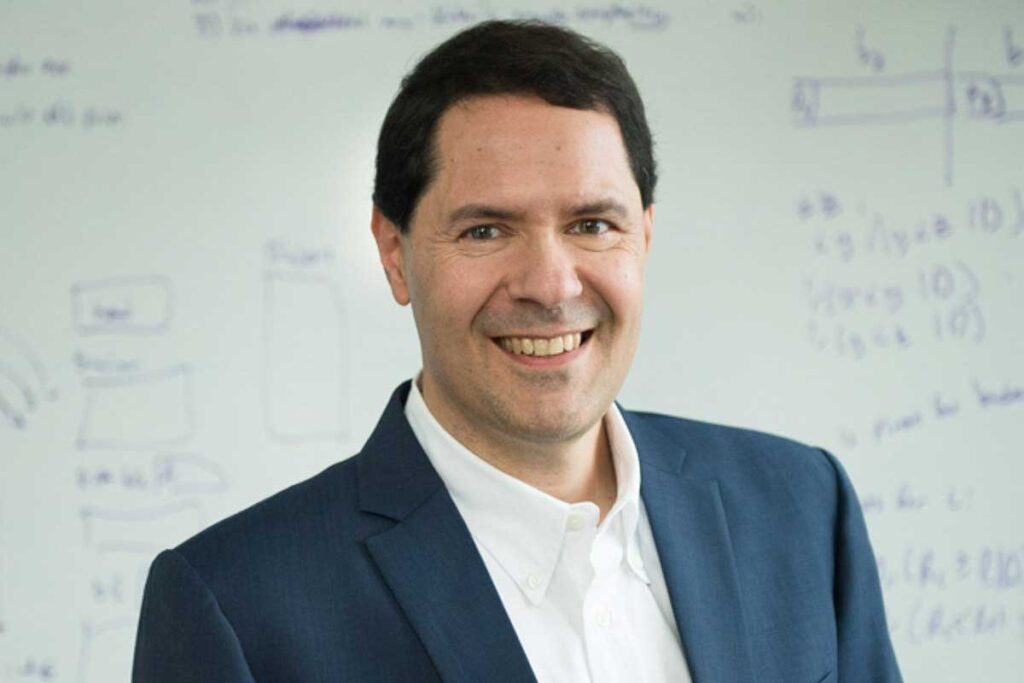
Northeastern University has announced that Khoury professor Javed Aslam will serve as the university’s inaugural chief of artificial intelligence, working to promote AI innovation, literacy, and adoption in all sectors of the university.
“With extensive AI experience in both academia and industry, Jay is well-positioned to excel in this new role,” wrote David Madigan, Northeastern’s provost and senior vice president for academic affairs, in the announcement. “As a professor in the Khoury College of Computer Sciences, his research has focused on AI and its implications, including machine learning, informational retrieval, natural language processing, and health care.”
Aslam, who assumed the role on October 1, said he has plans to expand AI learning offerings for students, increase both the research of AI and its application in interdisciplinary research, and streamline the use of AI in university operations.
“AI can be used in most any place,” Aslam said. “The question, then, is what is the best way to leverage AI? How do we manage disparate efforts that are already happening across the university and determine which efforts to start up?”
Aslam’s expertise in the field stretches back decades and extends beyond academia, putting him in an ideal position to lead the university in the rapidly evolving AI field. He describes himself as an “AI researcher from the very beginning of my career,” having received a doctoral degree in machine learning from the Massachusetts Institute of Technology in 1995.
Outside of his academic work, Aslam has dedicated most of the last five years to launching his AI-powered health care company, CodaMetrix. The company provides autonomous medical coding for premier health organizations including Mayo Clinic, Mass General Brigham, and Mount Sinai.
“Starting the company has been an eye-opening experience — seeing how AI can be applied in the real world, on real-world data, which is oftentimes messy and noisy,” Aslam said. “A lot of what we do at the university is interdisciplinary use-inspired research and having both the academic experience in AI and the applied experience at a company is incredibly useful.”
Aslam’s goals for the position are focused in three areas: research, literacy, and university operations.
AI and research
In the research field, Aslam sees potential for Northeastern to increase AI innovation and use AI to bolster disciplinary research.
“We have incredibly strong research faculty and research groups in core methodologies as well as AI policy, responsible AI, among other areas,” he said. “One of the things we want to do is build on those initiatives to really lead as a university in those areas through targeted hiring and providing the resources these researchers need to thrive.”
Specifically, Aslam plans to formulate a university-level strategy to obtain the compute infrastructure — the computational resources needed for AI to perform tasks — for cutting-edge research in areas such as large language models. Computes in areas like these are in high demand and are difficult to come by, Aslam said.
Outside of studying AI itself, Aslam also plans to promote collaboration between core AI researchers and disciplinary researchers in fields such as humanities, business, and health care. Another initiative involves building targeted AI models that disciplinary researchers can use to “supercharge” their endeavors.
“We want to leverage our strengths in interdisciplinary and use-inspired research, and we want to enable AI-powered research across the university,” Aslam said.
AI in the classroom
For students, the creation of Aslam’s role means a planned increase in AI-specific program offerings, including minors and certificates.
“We want to build core AI courses for all students so that everybody will come out being literate in AI — both in what AI is capable of and what it’s not capable of — and how to use AI appropriately,” Aslam said, adding that such skills will be necessary for students on co-op and post-graduation.
Another major goal for Aslam is the creation of a personal AI assistant for students. The assistant wouldn’t replace traditional advisors, but would offer customized, tailored information for students’ co-op and educational goals using data about university offerings and students’ individual interests and strengths.
“I very much believe in having a human in the loop, but AI is an assistant,” Aslam said. “It allows you, in real time, to get some intriguing thoughts and advice and then you can say, ‘Aha, this might be interesting for me. I should go talk to somebody about that.’”
AI and university operations
The third prong of Aslam’s plan involves expanding and streamlining the use of AI in university operations. That includes leveraging available data to optimize university functions like hiring and admissions.
“I’m in the provost’s office because this is a university-wide initiative, so I’ll be working with people across the university,” he said, adding that Northeastern has created an AI council, composed of leaders throughout the university, that he meets with weekly to discuss objectives.
Aslam emphasized that the university’s goal is not to replace people with AI, but to allow students to become literate in the emerging technology and optimize university functions with AI as a tool.
“There’s AI, and then you want to tie it to people,” Aslam said. “This is one aspect of human-in-the loop AI; it’s not necessarily that AI is going to replace people, but AI can be an incredible tool that people can use.”
The Khoury Network: Be in the know
Subscribe now to our monthly newsletter for the latest stories and achievements of our students and faculty
Author: Emily Spatz
Date: 10.28.24
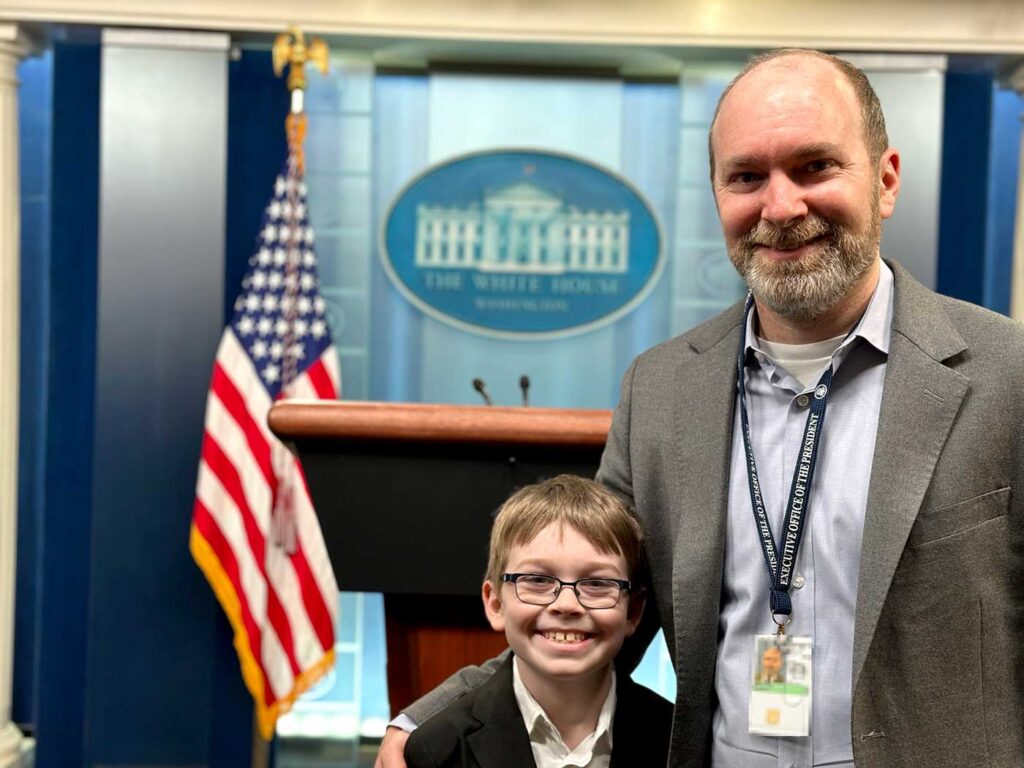
For the past 18 months, Alan Mislove, professor and senior associate dean for academic affairs at Khoury College, served in the White House Office of Science and Technology Policy (OSTP). During his time as deputy US chief technology officer for privacy, Mislove worked with other parts of the White House and agencies across the federal government on the Biden administration’s policies and priorities on artificial intelligence (AI) and privacy. In particular, he strove to reduce the risks of discrimination, bias, and disinformation in automated systems, as was highlighted in OSTP’s 2022 Blueprint for an AI Bill of Rights.
Khoury News caught up with Mislove to discuss his White House work. The interview has been edited for length and clarity.
How did you get the position and what was the process like?
I knew some folks from my research community who were serving at OSTP before I was there. I didn’t apply directly for the position, but I ended up talking to someone who said this might be a possibility. One thing became another, and I ended up there.
What work did the White House appoint you to do?
In October 2022 — before AI took over the public consciousness with ChatGPT, Claude, and others — the Biden Administration released its Blueprint for an AI Bill of Rights. The Blueprint lays out five key properties that, as citizens, we should expect from automated systems: things like respect for privacy, the ability for people to know what systems are being used, and the ability to opt out. What motivated that document is that, as time goes forward, we are seeing automated systems mediating more and more of our daily lives. There are ways in which that’s obvious, like ChatGPT. But there are also less obvious ways, like AI systems that rank applicants for jobs, or that affect interactions with the criminal justice system.
This trend brings up serious challenges, such as how should we be thinking about the ways these AI systems impact us? How can we put in protections to make sure AI is used in ways that live up to our nation’s laws and our highest values? Those are very hard, broad challenges.
The Blueprint essentially says that to address these challenges and mitigate the risks of these systems, we first need to be clear about our values. So, the idea behind the Blueprint was to lay out the core expectations of automated systems and then describe how to operationalize those expectations. It’s about applying those principles to real systems; for example, what each principle means in the context of law enforcement or hiring or adjudication of government benefits.
The reason I went to the White House was that much of my academic research focuses on algorithmic auditing. I look at real systems that we all interact with every day — such as Facebook or Uber or Google — measure them, and try to determine whether they’re making decisions that may disproportionately impact certain populations, or that just may not live up to our values. I was brought in to OSTP to help translate the ideas in the Blueprint into policy.
I showed up there in January 2023, just after ChatGPT became a thing. It was a fascinating time to be working in technology policy, as it was just when AI became one of the key things that everybody in the building — from the National Security Council to the Domestic Policy Council to the National Economic Council — was talking about. It took over the national conversation and was a significant focus for the administration.
What kind of policies were you working on and influencing?
The Biden administration has priorities, such as ensuring good-paying jobs, protecting the environment, and gaining the benefits of AI while also mitigating the risks. We work with federal agencies to help translate what those priorities mean for different agencies.
Our work varied a lot by the day. Some days we would work directly with agencies to help them protect Americans — for example, to protect them from housing discrimination. Other days we would work to host events, to highlight key administration actions that help move these priorities forward.
We also worked on executive orders, which are binding instructions that the president gives to the federal government. Last year, President Biden issued an executive order on AI, so we worked, along with other policy councils, to determine what the federal government could do to make sure AI is used in a safe, secure, and trustworthy manner. We also reviewed agency reports that were called for in this executive order to make sure they reflected the administration’s thinking and priorities.
We dealt with international issues, like helping to shape the US government’s positions on AI in international forums. For example, members of my team worked closely with our European counterparts to understand what they were doing, and to understand how their activities would impact what we were doing.

Were you in DC for your 18-month appointment or did you have to commute?
I have a family and young kids in school, so moving to DC wasn’t in the cards. Most weeks, I would take the early flight down to DC on Tuesday morning and fly back Thursday afternoon. I worked remotely the other days.
What was your day to day like? What were some of the biggest projects you worked on?
One of the most important things was Office of Management and Budget (OMB) Memoranda M-24-10. OMB is part of the Executive Office of the President, so they’re the White House’s budgetary arm and they work with federal agencies on budgets, but they also set federal-government-wide policy.
The AI executive order directed OMB to develop federal policy on the use of AI. In other words, when a federal agency wants to use AI in ways that could impact people’s rights or safety, there are things that the agency has to do to both before deploying the AI and on an ongoing basis ensure that the use of AI is safe. That includes things like engaging with the community, running tests for discrimination, providing notice to people, and enabling human review. We worked with our colleagues in OMB on this policy, which came out in March of this year.
What’s particularly important about this policy is that the federal government is one of the largest developers and procurers of AI systems. So when the federal government wants to procure a system, the system has to meet these rules, which helps to shape the market for both federal procurements and the private sector.
Another recent project we worked on dealt with the impact of image-based sexual abuse, which has existed for a long time but has been exacerbated by AI. People have probably heard of deepfakes like the Taylor Swift incident; these deepfakes are some of the most direct and acute AI harms we’ve seen. So we worked with our colleagues at the Gender Policy Council to issue a call to action to industry to address these harms while Congress considers legislation. After I left, the White House announced a number of voluntary commitments from industry to reduce the harms of image-based sexual abuse.
Who else did you work with?
A lot of different folks, both across the White House and federal agencies. One was the National Institute of Standards and Technology. Under the AI executive order, they were tasked with several things, including reporting on the potential harms of AI-generated misinformation, creating standards for synthetic content, and understanding the technical methods to counteract those harms.
We worked with the Department of Housing and Urban Development around AI’s impacts on housing. We worked with the Consumer Financial Protection Bureau to document ways in which consumer financial services are impacted by AI. We worked with the Equal Employment Opportunity Commission on what AI means for hiring and people’s civil rights in employment.
One mechanism by which we worked with so many agencies is through Interagency Policy Committees (IPCs). If the federal government is thinking about a particular topic, they might put together an IPC and lots of agencies will send representatives. I led a few of these while at OSTP; you really get a sense of everything the federal government does and how your efforts impact those operations.
How does the work that you did fit into your research interests and teaching career?
Much of my work tries to understand the potential harms of the systems we interact with every day, whether those harms be privacy leaks, security vulnerabilities, impacts on marginalized populations, that sort of thing. My research is naturally interdisciplinary. It sits at the intersection between computer science and policy, or computer science and law, and the ways systems and technologies impact people.
This was my first time serving in government, and I found it really fascinating because you get to see what it’s like inside. I learned to engage effectively with policymaking, talk to policymakers, and frame my research for them.
The Khoury Network: Be in the know
Subscribe now to our monthly newsletter for the latest stories and achievements of our students and faculty
Author: Meghan Hirsch
Date: 10.24.24
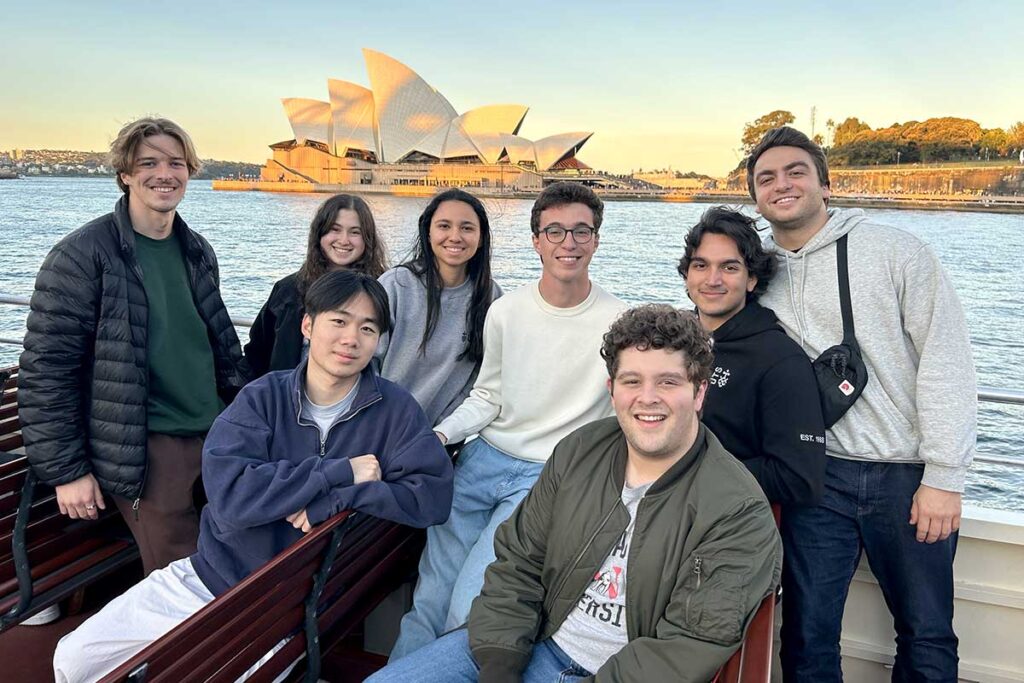
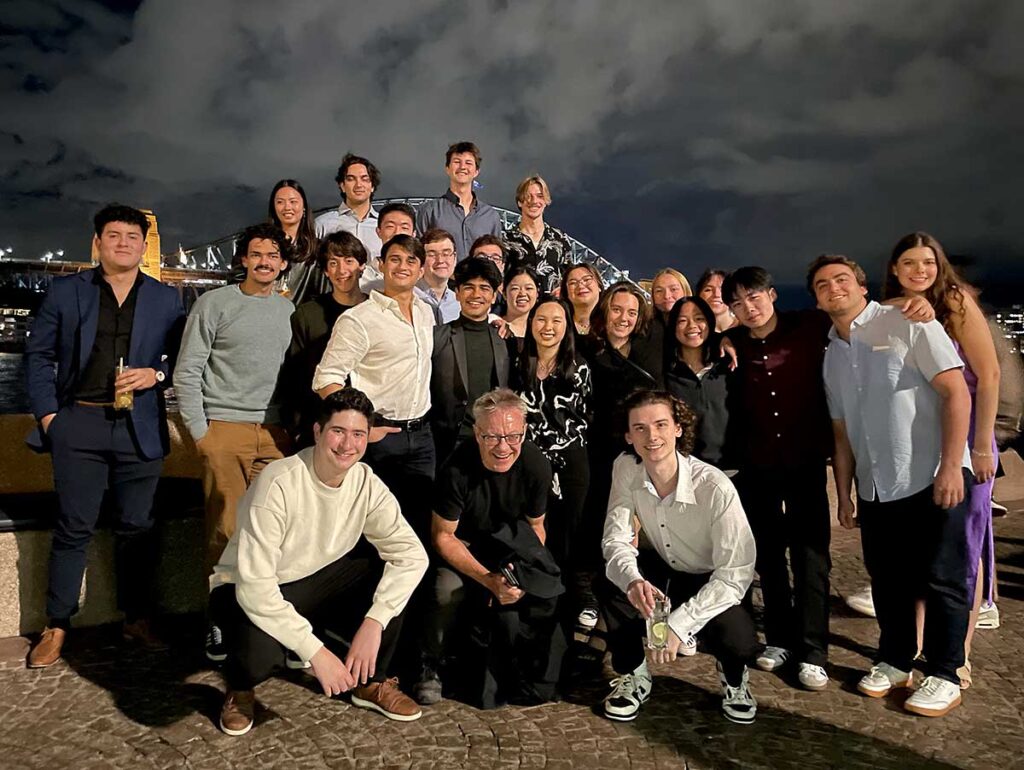
This summer, 30 Khoury College undergraduate students and two graduate student teaching assistants journeyed to Sydney, Australia, immersing themselves in software engineering projects and culture while exploring magnificent sites and scenery.
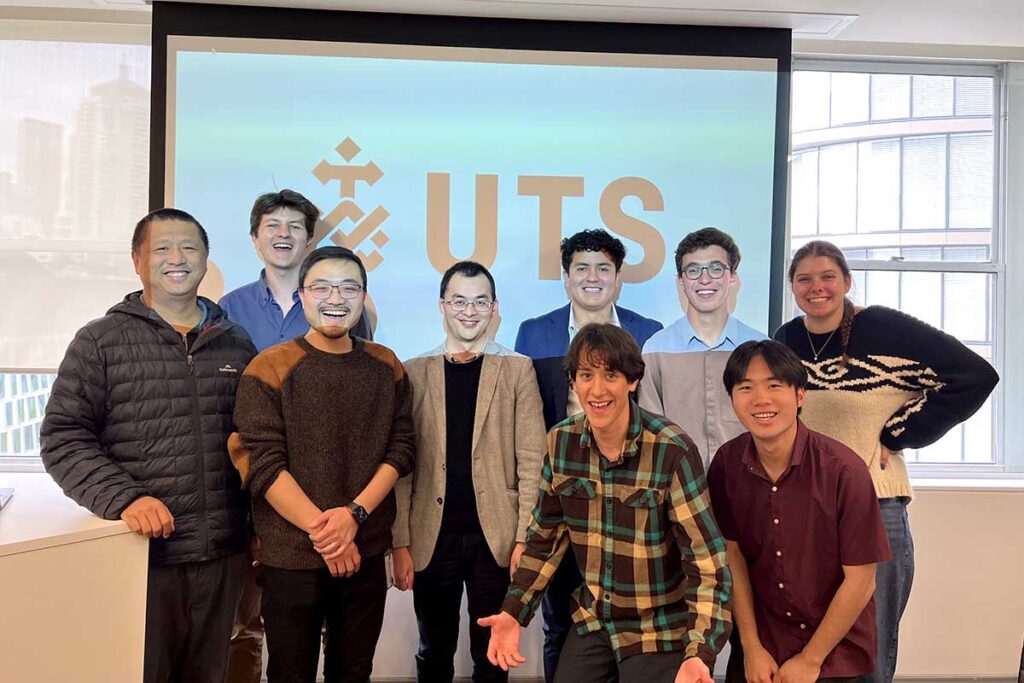
Professor Ian Gorton, director of mobility programs and a professor of the practice, led the program, called “Software Development and Innovation in Sydney.” The dialogue featured two computer science courses: Fundamentals of Software Engineering and a special topics project course, in which Khoury students collaborated with graduate students at the University of Technology Sydney (UTS).
For Audrey Romanik, a fourth-year computer science and business administration major, the location and courses drew her in and helped her overcome the anxiety of her first trip abroad.
“It had software engineering as an option, and it was a course I needed, so I thought, why not take it abroad? And who doesn’t want to visit Australia once in their life?” Romanik said. “I had a lot of fears going in. I didn’t know anybody, but then everyone was just so great, and we learned so much working on our projects and were able to produce something great.”
Throughout the project-based courses, students worked in groups on prompts and challenges, then presented them to each other.
“Our professor didn’t really lecture us. It was more so we learned parts of the material and then taught it to the other students in the class, which I felt was a good twist to learning,” said Richard Zhao, a third-year computer science and economics major. “The course was designed so we learned the material, then learned from each other, and then applied those concepts to real-world applications.”
The students spent two weeks on each course, first working among themselves on various software engineering projects, then collaborating with professors from UTS.
Adityaa Chandna, a third-year computer engineering major, described his experience during the first few weeks of software engineering.
“It was more about how to get requirements from a client on what they want to build,” Chandna said. “How do you nail it down to figure out what you want to create? And then how would you go about creating that with off-the-shelf stuff?”
Groups executed these goals by designing websites and then presenting them to their classmates.
Rachel Kahn, a fourth-year computer science and political science major, worked on “developing the business model and software architecture behind a company that helps international students apply to Australian universities.” The collaborative, nontraditional environment, coupled with guest speakers presenting to the group, provided context for the coursework, Kahn said.
Following the software development part of the Dialogue, students collaborated with professors at UTS on other projects. Romanik explained that groups joined teams with graduate students and professors at UTS on some of their pre-existing projects, where many of them applied skills learned in their first two weeks.
“My project was about using different tools to capture the tree canopy coverage in different areas of Australia,” Romanik said. “We used a lot of things we learned, like different project management forms and how to work as a team to create tickets, which we covered in software engineering.”
Though the group learned a lot and worked on fascinating projects, the trip covered much more than just academics. This was fostered by Gorton, who, Chandna said, struck a “balance of work hard, play hard.”
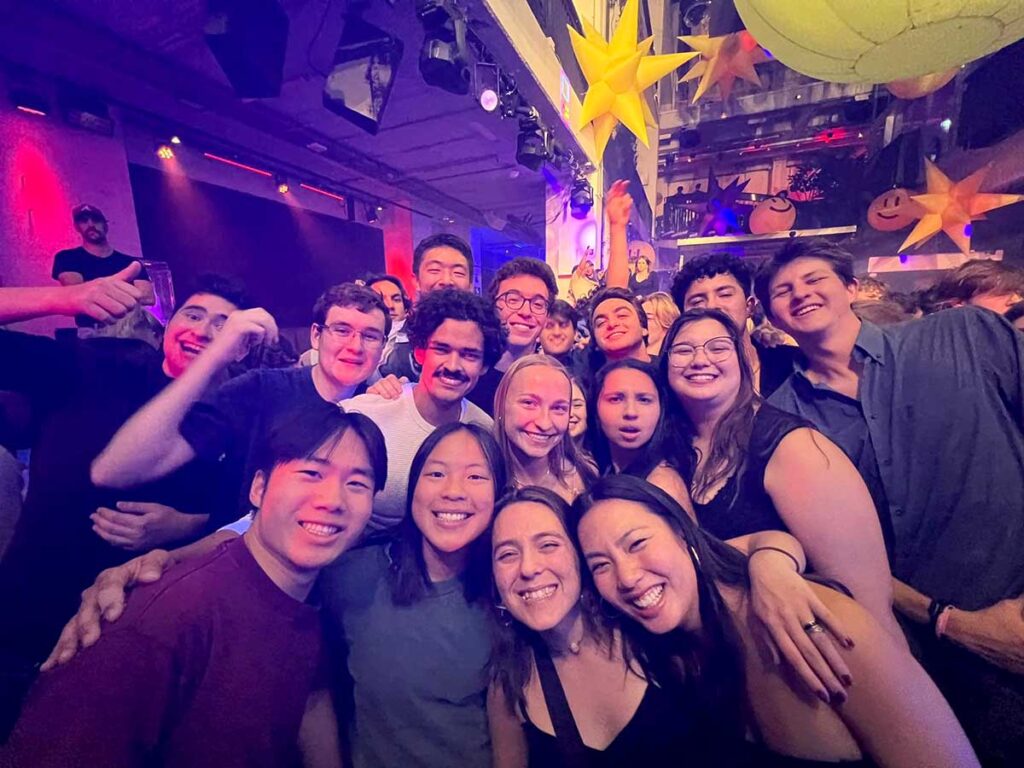
Part of that “play hard” mentality meant that days and nights without classes were filled with cultural experiences and expeditions, including a tour of Sydney led by an Aboriginal Australian, an Aboriginal dance performance, Australian barefoot bowling (like bocce ball with bare feet), and visiting the iconic Sydney Opera House.
The group also took a two-hour train ride from the city to spend some time in Australia’s Blue Mountains.
“It was all about nature and hiking, kind of a city getaway, which I appreciated,” Zhao said. “I’m from New York City and I don’t really get the opportunity to go on hikes, so that was a pleasant surprise for me.”
Beyond enjoying nature, Romanik the Blue Mountain trip and all the group’s excursions allowed them to bond on a deeper level.
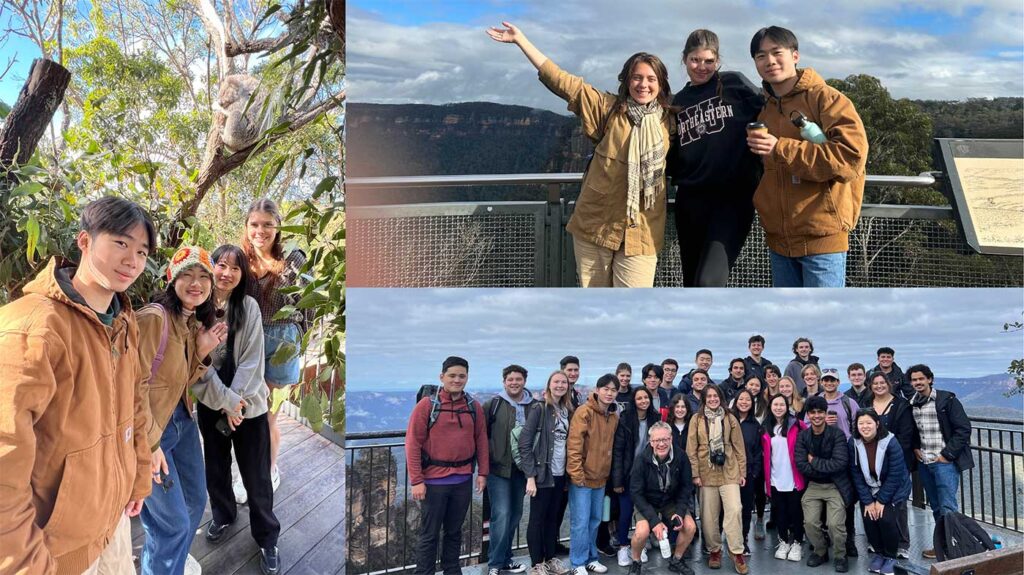
“That whole weekend was just us in this common area, playing pool, watching movies, and because you’re on the other side of the world, I think it brings people together,” Kahn said.
“The group dynamic was great. Everyone got along well, and interacting with each other was easy,” Chandna added.
The group brought back not only lasting friendships and new knowledge, but also insights into their personal lives and careers. Zhao explained that hearing from his classmates and guest speakers during the Dialogue helped clarify his goals for his next co-op search, where he’ll seek “something more computer science and economics related.” Others, like Chandna, are potentially looking to co-op in Sydney next semester
The bonding didn’t end when the Dialogue did, either. Back in Boston this fall, the group has kept in touch and even held a reunion recently, a reminder of the connections and memories they built together.
“If I told people about my time in Sydney, they’d be like, when did you have time to do all these other things?” Romanik reflected. “It was an amazing experience that honestly is at the top of everything I’ve done in my life.”
The Khoury Network: Be in the know
Subscribe now to our monthly newsletter for the latest stories and achievements of our students and faculty