Author: Matty Wasserman
Date: 12.13.24
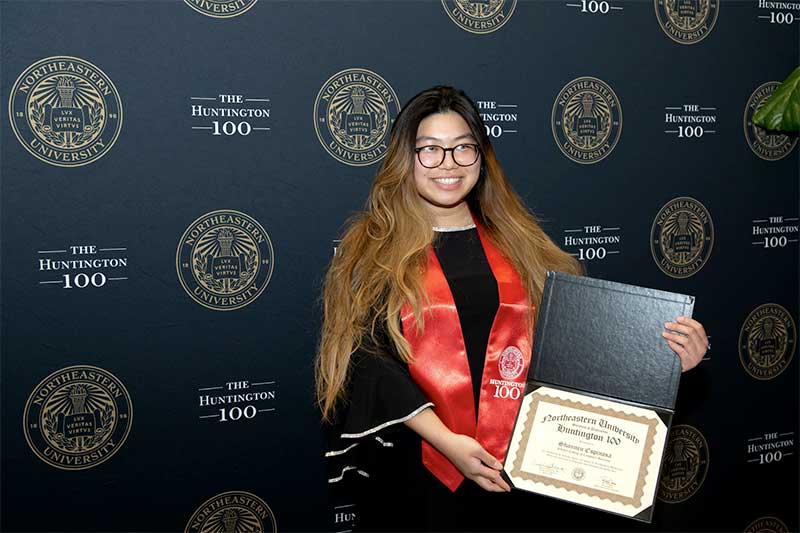
To get a glimpse behind the curtain of Shannen Espinosa’s varied success in 2024, look no further than a particular week this past March.
On Thursday and Friday, she studied through most of the night for a biochemistry exam. On Saturday, she pulled an all-nighter while competing in MIT’s quantum computing hackathon, for which her team won first place and qualified to represent the United States at an international hackathon. On Sunday, she pulled a second consecutive all-nighter to study.
And after all that, she resumed her research assistant role at Harvard University, where she developed universal nanoparticle coronavirus vaccines under Kizzmekia Corbett-Helaire, the researcher who helped create Moderna’s COVID-19 vaccine.
Impressed yet?
For Espinosa, a fourth-year data science and biology student, passions in public policy, medicine, and computing, along with a fanatical work ethic, have fueled her remarkable — and growing — list of roles and accolades. This past summer, she interned at Oxford University, where she trained machine learning models to identify Alzheimer’s pathology for drug development, while also developing algorithms to further United Nations digital diplomacy efforts. Her resume also includes three government internships and four lab research roles, and most recently, she was selected to the Huntington 100, Northeastern’s honor for outstanding undergraduate students.
“All of the work comes from my goal to help others and make an impact in my community,” Espinosa said. “I have gotten lots of experiences and have been really fortunate to learn from so many different places and great people over the past few years.”
Espinosa was born and raised in the Philippines, then immigrated to the Boston area at age 14. She was always intrigued by the medical field, namely by the study of infectious diseases given the impact of malaria and dengue on her community in the Philippines.
Espinosa’s early introduction into the intersection of healthcare and government policy came as a high school senior, when she volunteered in a COVID-19 vaccination clinic at the Reggie Lewis Center in Boston. Her work greeting, processing, and observing vaccine patients — particularly those from underrepresented backgrounds — further opened her eyes to the impact she could make in medicine.
“I would receive many concerns from people who didn’t have identification, especially undocumented immigrants. They were generally scared about the misinformation spreading about the vaccine,” Espinosa said. “Especially as an immigrant, it brought me a lot of fulfillment to explain the science and the policy behind the vaccine, and how it was there to help them. It made me want to look into it as a career.”
Espinosa soon turned her attention to receiving more research experience, working month-long stints first as an assistant at an MIT biomedical lab, then in copper neurodegeneration at Boston Children’s Hospital.
Around the same time, in the summer of 2020, Espinosa got her start in public policy as a judicial intern under Massachusetts State Representative Adrian Madaro. There, she worked on air quality regulations to protect residents near Logan Airport and organized events for Boston’s predominantly Hispanic and immigrant neighborhoods.
Two years later, following her first year of college, Espinosa landed an internship with the Massachusetts Department of Public Health, where she helped build a five-year plan to address the racial health equity gap in Massachusetts. That led to a legislative internship the following summer, this time on Capitol Hill handling health, innovation, data, and commerce for US Representative Lori Trahan.
“Every time I’ve applied to do anything in policy, it has always come back to me wanting to make healthcare access more widespread and applying the things that I’m learning and researching back to the community,” Espinosa said. “There’s so much opportunity to use policy for more education and healthcare equity.”
As she gained invaluable experience in government offices and labs, Espinosa was also busy building up her technical skill set through coursework and research projects in Khoury College and the College of Science. Some of her early work in 2022 included using local population metrics to build a model which predicted the number of pandemic-related deaths per country.
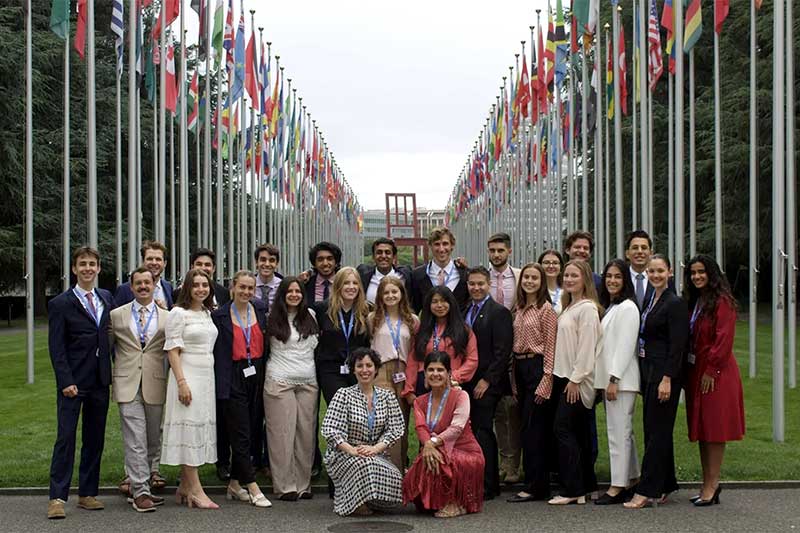
Next, in August 2023, Espinosa headed to the UN office in Geneva, Switzerland as part of Northeastern’s Dialogue of Civilizations program. There, she met with World Health Organization leaders in charge of international infectious disease policy and spoke with numerous diplomats and private representatives working on global health care equity. She also wrote one thesis on the global governance of neglected tropical diseases and a second on quantum computing in international humanitarian law.
“The experience at the UN and discussions with all of those leaders was unbelievable,” Espinosa said. “Not only did it open a lot of doors and give me more legitimacy in the field, but it gave me a whole new perspective on the line of work and the impact we can have on real people.”
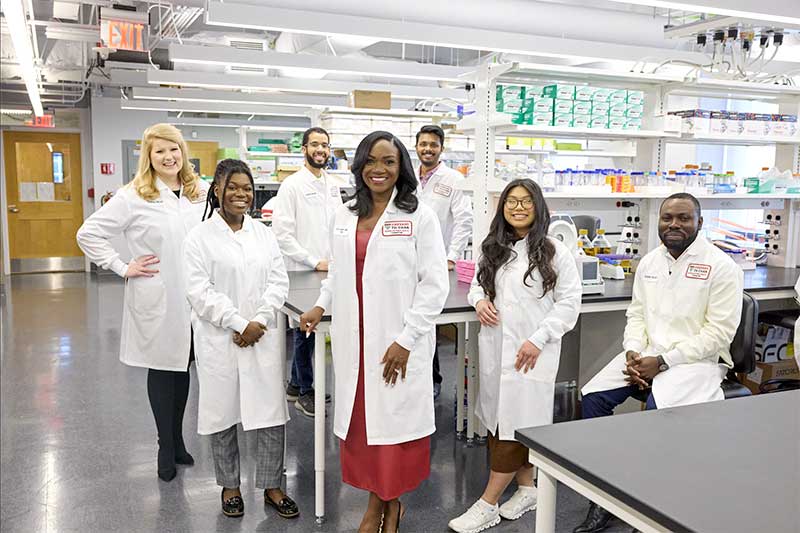
Just one month after returning from Geneva, Espinosa landed her next major gig: a research assistantship at Corbett-Helaire’s esteemed Harvard biomedical lab, where she studied the development of universal coronavirus vaccines through engineered nanoparticles and spike protein-based vaccine antigens. Working 20 to 40 hours per week, she designed and prepared plasmid constructs, optimized protein expression systems in bacterial and mammalian cells, maintained cell cultures, and purified proteins using advanced chromatography techniques such as affinity- and size-exclusion chromatography.
Then, this past spring, while still balancing classwork and the research job, Espinosa decided to start entering quantum computing hackathons, hoping to explore the technological side of medical research. These QC hackathons are weekend-long competitions in which engineers build competing projects under the same prompt and guidelines, then are judged at the end.
“While I had learned about artificial intelligence in courses, I was really intrigued that our current technologies don’t have the bandwidth to analyze drug discovery to the extent that maybe we could one day,” she explained. “And then I started going to hackathons for it, because I wanted to see if quantum computing was fun and worthwhile.”
The first was the IBM Challenge at the MIT Quantum Computing Hackathon (iQuHACK), which tasked participants with developing an application to solve real-world problems using IBM’s quantum computing back end. Espinosa’s group created an app to facilitate organ donation and won first place in a competition of more than 250 participants.
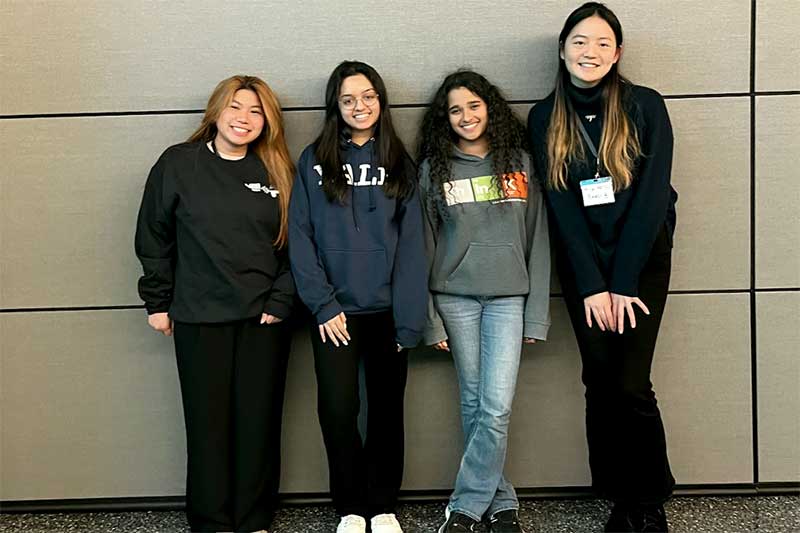
Based on that work, Espinosa was selected to represent the United States in late April at the annual International Hackathon for Social Good in Abu Dhabi. The event, which focused on tackling challenges and identifying solutions in line with the UN Sustainable Development Goals, furthered Espinosa’s ambitions in the quantum computing field.
“The hackathons were not something I was confident in at first,” Espinosa said. “But I think my success in quantum computing has made me switch more towards the computing side of the equation. Now if I were to define myself as a computational biologist, there’s definitely a greater emphasis on the computing part rather than the biology part.”
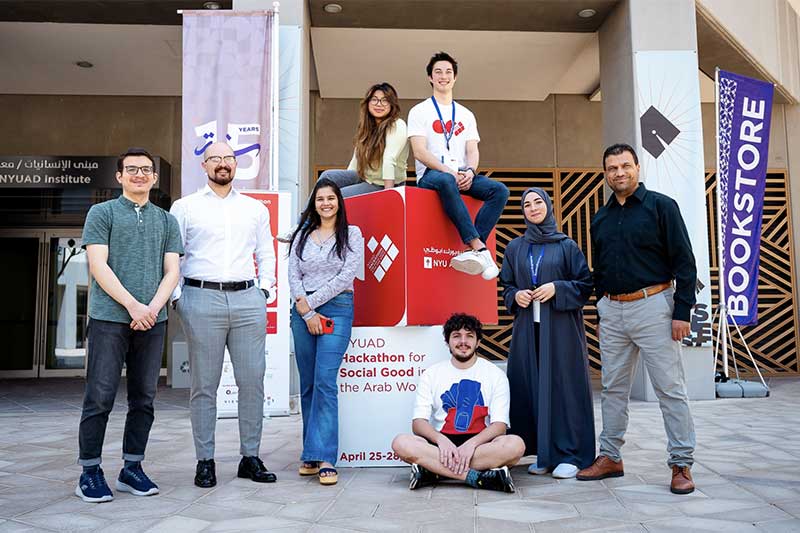
And she’s only ramping up her hackathon involvement. This fall, Espinosa entered into XPRIZE Quantum Applications, a three-year-long international competition with a $5 million dollar prize pool that is “designed to generate quantum computing algorithms that can be put into practice to help solve real-world challenges.” She will work on biomedical applications for novel algorithms alongside PhD students from a variety of companies and universities. Additionally, she is on the organizing board of the Quantum Coalition, a national group of undergraduates that is organizing a hackathon in 2025 — to mark the UN’s International Year of Quantum Science and Technology — in correspondence with two UN agencies.
But lest anyone think her biology bona fides have taken a backseat, Espinosa researched within the University of Oxford’s Department of Physiology, Anatomy, and Genetics this past summer, all while continuing to progress initiatives with the UN through her contacts from the previous summer. It was in that role where she fully merged biomedical research with computational biology, which is now where she hopes to wind up professionally. And while she isn’t yet sure exactly what the path there will look like, she hopes to bring her experiences and areas of expertise under one umbrella to make a difference however she can.
“Whether it’s in quantum computing or artificial intelligence, I want it to be in the healthcare field,” Espinosa said. “The goal is to use it for faster and more efficient drug discovery across infectious diseases.”
The Khoury Network: Be in the know
Subscribe now to our monthly newsletter for the latest stories and achievements of our students and faculty
Author: Olivia Mintz
Date: 12.09.24
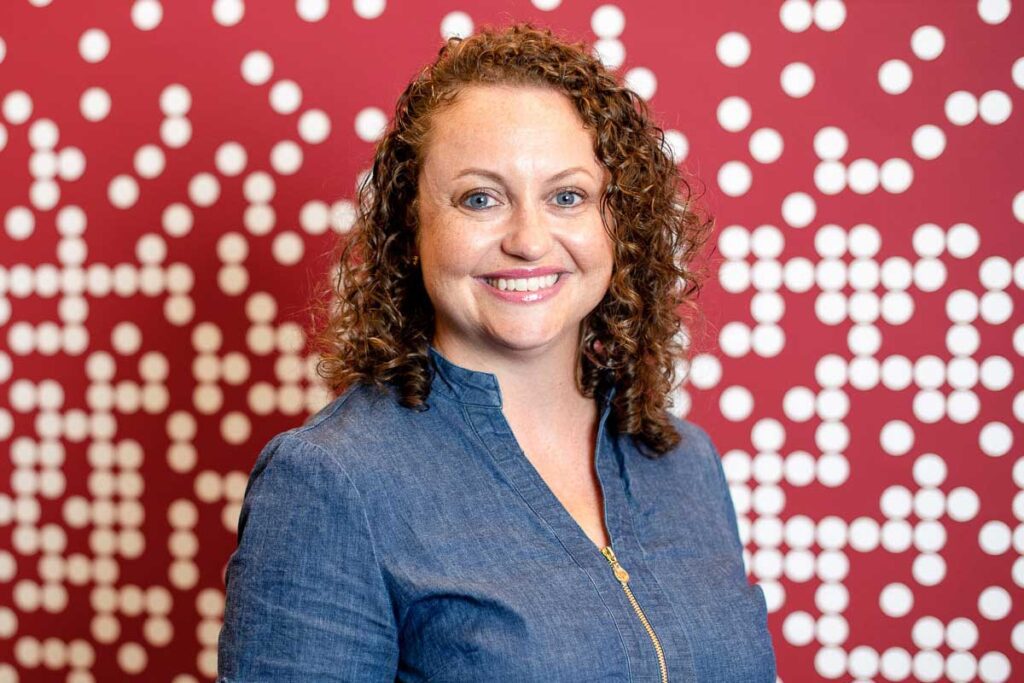
Sixteen years ago, Melissa Peikin began working at Northeastern as an academic and co-op advisor. Now she oversees Khoury College’s co-op and strategic partnership teams, and as someone who looks out for the well-being of students in their academic and career endeavors, she is also passionate about the well-being of her coworkers. Enter NUParents, an affinity group she co-chairs with the College of Engineering’s Alison Nogueria which supports Northeastern faculty and staff who are also parents.
Khoury News sat down with Peikin to hear about the group’s mission and her role within it. The interview has been edited for length and clarity.
Khoury News: How did NUParents come to be?
Peikin: I had my first child 13 years ago, and when I came back from my parental leave, it was a bit of a jolt to work with a three-month-old baby at home. I was looking for community with other people who were coming back and working full time when we’re exhausted, our baby’s been up all night, and our body doesn’t feel the same.
I started to meet with other women I knew who had kids, women who had already come back to work and adjusted. So, it was more of a “Hey, let’s meet for lunch. Let’s talk about these things.” And word started to spread. Over the years, we called ourselves “NU Moms,” and once we became an affinity group, we named ourselves “NUParents” to be more inclusive.
What type of impact has NUParents made for Northeastern employees?
Our group started to look at Northeastern’s parental leave and created a petition to try and get a stronger parental leave. The petition really caught on, and a lot of people signed it.
When we met with human resources, we shared some of the group’s concerns and the benefits comparison to other universities and what they were offering their employees. HR eventually changed parental leave at Northeastern for the better, and I think our group lit the match to get those needs met.
Do you see any overlap between being a Khoury leader and co-chair of NUParents?
I think being a parent naturally brings out leadership qualities. Work–life balance is really important to me, and I try to make sure everyone on the co-op team understands and shares that philosophy. I am very empathetic in general to people and what their needs are outside of work. We work really hard, and it’s important to remember that people have other things going on in life.
What are some of the most important values for NUParents?
Community and empathy for each other.
During COVID, there were many new additions to NUParents. Being a parent during COVID, working full time, and having your kids home on Zoom school was not easy. It was great to help each other, acknowledge that this was really hard, and find advice and solutions, especially when returning to work after lockdown. Although we had Microsoft Teams before COVID, it really took off after that because we all weren’t working in the same physical space, and that became our means to communicate where we’re the most active.
We’ve had different speakers come in to talk to the group — some in person, some virtual — and it’s been great to bring people together. We try to survey our membership and bring things that are topical and that people care about.
What do you hope to see in the future of NUParents?
I would love to see its membership grow and to get people interested in taking on roles within it. We’ve recently added a bunch of subgroup leaders to create community around the different facets of parenting: by age group, special needs, etc.
The parental leave situation and COVID were two major milestones that really connected the parent community. It’s hard to anticipate where there might be a need to advocate in that same way again.
It’s just nice to know that you’ve got a group of people who have a shared experience, and that you can reach out to them with questions and resources. I hope to continue this work and make sure we’re still finding community and support. Because we all work at Northeastern, there’s that common base, so it’s a nice way to connect with university colleagues who you might not otherwise interact with during the course of your work.
What is your favorite part about your role at Khoury College?
I get to see my worlds combined. I’ve had this happen before where I’ve worked with a student as an undergrad, they graduate, and then they work for a company and end up wanting to hire students for co-op.
So, it’s this full-circle moment where I send my current students to an alumnus who is also an employer and these worlds merge together. Alums who hire co-ops are our best hiring managers because they understand exactly what students want. It’s just really great to see a person’s journey, to remember them when they were in their first or second year as an undergraduate and know that you played a part in where they are now.
To learn more about NUParents, check out Melissa and Alison’s appearance on the Moms with Benefits podcast on Spotify or Apple Podcasts.
The Khoury Network: Be in the know
Subscribe now to our monthly newsletter for the latest stories and achievements of our students and faculty