Author: Madelaine Millar
Date: 04.22.25
The ACM Conference on Human Factors in Computing Systems (CHI), the world’s most prestigious human–computer interaction conference, is taking place in Yokohama, Japan this month (April 26–May 1), and a record number of Khoury College researchers — along with their collaborators in the College of Arts, Media and Design; the Bouvé College of Health Sciences; the College of Science; and the College of Professional Studies — are ready to go.
Three Khoury-affiliated works were recognized with honorable mentions, placing their work in the top five percent of accepted research. One explores how respecting marginalized peoples’ autonomy makes for better computing and design research. Another investigates the unique challenges Black femmes face as online content creators. And the third charts the history and conspiratorial implications of the octopus map.
To discover Khoury researchers’ work, which touches on everything from realistic LLM personas to GenAI accessibility to advancements in machine knitting technology, select one of the linked summaries below, or simply read on. For a schedule of their researchers’ presentations and other activities, visit our CHI 2025 page. (Khoury researchers are bolded below.)
- Aging into the future
- What’s going on in that AI?
- This chatbot’s sorry to hear about that
- Animals in a mechanical world
- Visualizing models and modeling bread part 1
- Visualizing models and modeling bread part 2
- AI choices from the heart
- Mother Goose and the LLM
- Playtime for everyone
- Did ChatGPT earn that A?
- AI has a quick question
- Putting trust in medical chatbots
- From escape rooms to XR
- Enchanting interactions
- Tantrums and time-outs in cyberspace
- Tricked into clicks
- Picture playtime for everyone
- Disability-centered garment design
- Your other teacher is on the screen
- But what does this graph say in Arabic?
- Let us study ourselves
- Advocacy, empathy, and an LLM
- Can AI dream of electric sheep?
- For the love of robots
- A quick little kindness
- Preventing oversharing with ChatGPT
- Counselor in e-training
- Getting healthier, together
- AI coding for developers who are visually impaired
- Cephalopods on the map
- AI-powered surrogates for real users
- Black femme creators’ invisible internet
Workshop: Technology Mediated Caregiving for Older Adults Aging in Place
Aging into the future
Elizabeth D. Mynatt, Masatomo Kobayashi, Alisha Pradhan, Niharika Mathur, John Vines, Katie Seaborn, Erin Buehler, Jenny Waycott, John Rudnik, Tamara Zubatiy, Agata Rozga
A growing number of technologies are available to help older people age comfortably, but older adults’ expectations and concerns about technology can differ from the concerns of their younger peers. How can technology support people as they age in a way that works for them and their caregivers?
This workshop will bring together researchers, students, and practitioners working at the intersection of technology and aging to discuss technological interventions for older adults. What challenges do aging individuals and their caregivers face? What cultural norms do older people have about technology? How can systems like AI — in concert with internet of things technologies, robotics, and collaboration tools — support, empower, and scaffold caregiving in old age?
“This workshop is a valuable discussion to assess progress in the field, and to especially understand how the role of technology supports for aging in place varies culturally across the world,” said Khoury Dean Elizabeth Mynatt, the workshop’s organizer.
Workshop: New Frontiers of Human-Centered Explainable AI (HCXAI)
What’s going on in that AI?
Upol Ehsan, Elizabeth A. Watkins, Philipp Wintersberger, Carina Manger, Nina Hubig, Saiph Savage, Justin B. Weisz, Andreas Riener
AI can do some amazing things, but far too often, we have no idea why the AI did what it did. Without the “why,” we can’t hold the AI accountable when things go wrong. Enter human-centered explainable AI (HCXAI), a field where the goal is to make AI understandable to everyone, not just the software engineers.
Now in its fifth year, the HCXAI workshop has become both the field’s flagship forum and one of CHI’s longest-running workshop series. This year, the focus is on participatory civic AI, LLM hallucinations, responsible AI, and Global South challenges in AI explainability. Since 2021, more than 400 experts across 19 countries and nine sectors have joined the workshop to push the state of the art around AI explicability. This year’s cohort will build on that foundation.
Upol Ehsan, a Khoury assistant professor and the workshop’s lead organizer, said this year’s goal is “to strengthen this global XAI community trying to build a future where everyone can experience AI with dignity.” Co-organizer and Khoury Assistant Professor Saiph Savage added that “Civic AI is a timely focus area because it’s about ensuring AI serves humanity, not the other way around.”
AI on My Shoulder: Supporting Emotional Labor in Front-Office Roles with an LLM-based Empathetic Coworker
This chatbot’s sorry to hear about that
Vedant Das Swain, Qiuyue “Joy” Zhong, Jash Rajesh Parekh, Yechan Jeon, Roy Zimmerman, Mary P Czerwinski, Jina Suh, Varun Mishra (+Bouvé), Koustuv Saha, Javier Hernandez
Client-service representatives (CSRs) like helpline workers, health care workers, and hotel front desk staff help us all, but when we’re confused, frustrated, or stressed, not all of us are very nice to help. Resolving hundreds of client complaints can be draining, and even traumatic when those clients are aggressive. Some have suggested AI replace CSRs, but could AI help them instead?
These researchers designed and tested an LLM-powered assistant called Care-Pilot, which generates supportive, actionable messages to help CSRs reframe and regulate their emotions while working with a difficult client. Some CSRs even found Care-Pilot more sincerely empathetic and action-oriented than venting with a human coworker.
“We need to expand our view of the role these AI agents can play to ensure human performance is healthy and sustainable,” said Khoury Distinguished Research Fellow Vedant Das Swain.
Animals’ Entanglement with Technology: A Scoping Review
Animals in a mechanical world
Rébecca Kleinberger (+CAMD), Lena Ashooh, Keavan Farsad, Ilyena Hirskyj-Douglas
The world is becoming ever more technical, and not just for human beings. From parrots making video calls to wildlife encountering farming systems, animals are also navigating a world increasingly filled with technology. How are animals using technology and how can we design better systems for these creatures?
Researchers with the INTERACT Animal Lab reviewed nearly 800 works, seeking to track the trends, gaps, and ethical considerations involved in animals’ use of tech. After discovering that most systems treat animals as subjects, rather than users, they suggested using feedback, empirical testing, and projected animal benefits to improve animal–technology interactions.
“Studying how different species engage with technology challenges our assumptions about interaction design and can lead to more inclusive technologies for all users — human and nonhuman alike,” said Khoury and CAMD Assistant Professor Rébecca Kleinberger.
Bridging Modeling and Domain Expertise Through Visualization: A Case Study on Bread-Making with Bayesian Networks
Visualizing models and modeling bread part 1
Omi Johnson, Melanie Munch, Kamal Kansou, Cedric Baudrit, Anastasia Bezerianos, Nadia Boukhelifa
How does machine learning work? Most people don’t know. But scientists within the EVAGRAIN project — which uses Bayesian network models of the bread-making process to examine climate resilience in the French wheat industry — need the help of bread data experts to check their work. So, how do you teach an old domain expert new computer science?
This research team developed a visualization platform to help domain experts explore and critically analyze Bayesian networks, which describe how different elements in a system relate to or cause one another. Using an interactive chart of edges, ring-shaped nodes, and dynamic propagation animations, their platform showed potential for helping non-computer scientists understand Bayesian models. It also taught the researchers valuable lessons in how to use visualization to make complex models accessible to experts across industries, improving the models and fostering trust and use in scientific tools.
“In an era where more and more of our decisions are guided by machine learning and AI, we should be trying our utmost to keep people informed on how these models work,” said fifth-year computer science and environmental and sustainability sciences major Omi Johnson.
Explaining Complex ML Models to Domain Experts Using LLM & Visualization: An Exploration in the French Breadmaking Industry
Visualizing models and modeling bread part 2
Briggs Twitchell, George Katsirelos, Anastasia Bezerianos, Nadia Boukhelifa
Remember how most expert bakers don’t understand Bayesian networks? In their case study, these researchers tried a different tactic to bring them up to speed.
Using an LLM-powered chatbot, this research team attempted to explain Bayesian networks — which describe how different elements in a system relate to or cause one another — to an expert baker already familiar with how things in the breadmaking industry are interrelated. Domain experts (like bakers) are crucial for checking whether models are correct, but they can only do that when they understand how the models work in the first place. The researchers found their approach worked well for some aspects, but there were still a lot of problems with using current LLMs to explain complex computer science models.
“Our goal is to make machine learning insights accessible to everyone, not just statisticians. Clear explanations empower users to confidently make decisions informed by ML,” said Briggs Twitchell, who earned his master’s in computer science from Khoury College in 2024.
CardioAI: A Multimodal AI-based System to Support Symptom Monitoring and Risk Prediction of Cancer Treatment-Induced Cardiotoxicity
AI choices from the heart
Siyi Wu, Weidan Cao, Shihan Fu, Bingsheng Yao, Ziqi Yang, Changchang Yin, Varun Mishra (+Bouvé), Daniel Addison, Ping Zhang, Dakuo Wang (+CAMD)
When you’re already sick from cancer and chemotherapy, it’s tough to tell life-threatening heart damage from any other weird new pain. Add in the fact that symptoms often occur when already overworked clinicians aren’t around, and it becomes extremely difficult to decide when to evaluate for treatment-induced cardiotoxicity.
This research team proposed CardioAI, a tool that uses the cancer patient’s wearable device data and the clinician’s own words to help evaluate the patient’s risk of cardiotoxicity. This study brought 11 clinicians into the design process for CardioAI to discuss how they evaluate cardiotoxicity risk without AI and how to design a tool that would supplement their decisions, rather than decide for them.
Characterizing LLM-Empowered Personalized Story Reading and Interaction for Children: Insights From Multi-Stakeholders’ Perspective
Mother Goose and the LLM
Jiaju Chen, Minglong Tang, Yuxuan Lu, Bingsheng Yao, Elissa Fan, Xiaojuan Ma, Ying Xu, Dakuo Wang (+CAMD), Yuling Sun, Liang He
Anyone who’s ever tried reading to a child knows that the actual reading is only part of what’s going on. Kids want to talk about the stories, guide them forward and backwards, slow them down, speed them up, imagine new endings, and interact with them in every other way they can imagine. Can a large language model (LLM) read a child a story in the personal, interactive way they love so much?
These researchers designed and developed StoryMate, which aims to do just that. Then, they gathered a group of children, parents, and education experts to see how it worked. While the participants enjoyed how personalized StoryMate was, they also suggested valuable design tweaks like guiding mechanisms and interactive interfaces to improve similar tools in the future. Readers can also try out StoryMate for themselves.
“Given the increasing role of AI in education and family interactions, understanding how LLM-driven tools can support parent–child reading is crucial for designing effective and ethical digital learning experiences,” said Khoury-affiliated research assistant Jiaju Chen.
Cultivating Computational Thinking and Social Play among Neurodiverse Preschoolers in Inclusive Classrooms
Playtime for everyone
Maitraye Das (+CAMD), Megan Tran, Amanda Chi-han Ong, Julie A. Kientz, Heather Feldner
Children in the 21st century need to grow up prepared to think about computers. How do you make sure that happens when not all children think in the same way?
Based on interviews with teachers about how to support neurodiverse preschoolers, this research team designed an age-appropriate, programmable robot called KIBO, deployed it in preschool classrooms with neurotypical and neurodivergent children, and analyzed their interactions. The team found neurodivergent preschoolers (such as those with autism or ADHD) enjoyed learning computational thinking using KIBO and played with it alongside neurotypical peers and adults.
“This research provides evidence-based strategies for inclusive computational learning that can shape classroom practices and technology design, and ultimately improve educational outcomes and social development for all children,” said Khoury Assistant Professor Maitraye Das.
Examining Student and Teacher Perspectives on Undisclosed Use of Generative AI in Academic Work
Did ChatGPT earn that A?
Rudaiba Adnin, Atharva Pandkar, Bingsheng Yao, Dakuo Wang (+CAMD), Maitraye Das (+CAMD)
If ChatGPT wrote an essay with your name on it, did you cheat? College students and teachers often disagree, and academic policies are struggling to keep up.
This research team surveyed and interviewed more than 100 students and teachers who had experienced generative AI use in the classroom to find out when and why they use the tools, and how they choose whether to be upfront about it. They found that students using generative AI often don’t disclose their use, even when they believe it should be disclosed. They also looked at ways teachers can start more open conversations and encourage transparency around the use of AI.
“The use and misuse of generative AI isn’t just a technological issue; it’s a cultural and ethical one,” said Khoury Distinguished Fellow Rudaiba Adnin. “If institutions fail to understand how and why students use generative AI, they risk falling behind in creating fair, transparent, and effective educational environments.”
Feasibility and Utility of Multimodal Micro Ecological Momentary Assessment on a Smartwatch
AI has a quick question
Ha Le, Veronika Potter, Rithika Lakshminarayanan, Varun Mishra (+Bouvé), Stephen Intille (+Bouvé)
AI models need accurate, relevant, and labeled training data. But is there a way to ensure that the model asks for data in a way that doesn’t irritate its human users?
This research team studied whether participants would answer a single question — whether they were sitting, standing, or moving around — with a verbal answer or a tap on a smartwatch screen, if the AI asked it every five minutes for a week. They found that providing different ways to answer the question encouraged participants to respond to almost three-quarters of the prompts.
“To build computers that can respond naturally to our everyday experiences, we need new ways to gather labeled training data about those experiences as people go about their lives,” said Khoury PhD student Ha Le. “If successful, we think the methods will be useful as we try to design computers that can naturally react to the activities we do every day.”
Framing Health Information: The Impact of Search Methods and Source Types on User Trust and Satisfaction in the Age of LLMs
Putting trust in medical chatbots
Hye Sun Yun, Timothy Bickmore
When we’re injured or sick, our first stop often isn’t the doctor’s office; it’s the internet. But not all online health information is true, and we aren’t always discerning, especially when the information is delivered in a way we trust.
These researchers compared how trusting and satisfied users were when the same health information was delivered by a search engine, a normal chatbot, or a Chatbot+ that could retrieve information from outside sources. A majority of users were most trusting and satisfied with either the normal chatbot or Chatbot+, although a few preferred search engines for their broader range of information. People also tended to be satisfied with information from social media posts and trust it as much as information from reputable health websites, until they were put side by side.
“While much of the existing research has focused on the accuracy and content of chatbot responses, we wanted to explore a different angle — how does the design of search interactions themselves shape users’ perceptions of information quality?” said Khoury PhD student Hye Sun Yun.
From Locked Rooms to Open Minds: Escape Room Best Practices to Enhance Reflection in Extended Reality Learning Environments
From escape rooms to XR
Erica Kleinman, Rana Jahani, Eileen McGivney, Seth Cooper, Casper Harteveld (+CAMD)
People learn best when they’re prompted to reflect on what they’re learning. But popping up a prompt in the middle of an educational extended reality (XR) session makes it feel a lot less real. Luckily, there’s already an industry that’s mastered the art of giving clues and feedback without breaking immersion: escape rooms.
This research team interviewed 13 escape room game masters on how they infuse reflective hints and prompts into complex, immersive problem-solving environments. They identified best practices — like the importance of adaptable interventions that can change based on what learners need — and used iterative open coding to practice giving subtle nudges.
“The results of this work can provide valuable insights to designers and developers of XR learning to create more effective and enjoyable learning experiences,” said CAMD postdoctoral researcher Erica Kleinman. “And as escape room enthusiasts ourselves, the research team also really enjoyed learning about how game masters do their jobs.”
GenieWizard: Multimodal App Feature Discovery with Large Language Models
Enchanting interactions
Jackie (Junrui) Yang, Yingtian Shi, Chris Gu, Zhang Zheng, Anisha Jain, Tianshi Li, Monica Lam, James A. Landay
Multimodal systems — systems that you can interact with using methods like voice, gestures, and typing — are more flexible, efficient, and adaptable than systems that can only be used in a single way. Unfortunately, that flexibility also makes them harder to develop and design. If only some kind of wizard or genie could predict all the different ways that people will try to interact with a new tool …
This research team developed GenieWizard, an LLM-powered tool to imagine potential user interactions and suggest the features to support those interactions. The team let 12 developers test GenieWizard and found that those who used the tool could identify and implement about four times as many of the missing interaction features as those who didn’t use it.
In Suspense About Suspensions? The Relative Effectiveness of Suspension Durations on a Popular Social Platform
Tantrums and time-outs in cyberspace
Jeffrey Gleason, Alex Leavitt, Bridget Daly
When users break online platforms’ community standards, they often get temporarily suspended, like a toddler in time-out. But after receiving a suspension, do those users change their behavior?
This research team analyzed two groups of several thousand people who had earned suspensions of varying lengths on Roblox, and asked whether their behavior changed after being penalized. They found that longer suspensions were more effective than shorter ones, particularly for first-time offenders. However, they also found that the effect wanes over time.
“Behavioral consequences are a critical tool that digital platforms use to respond to community standard violations and moderate their online spaces. However, there is limited causal evidence about the effectiveness of digital consequences,” said Khoury PhD student Jeffrey Gleason. “We use large, field experiments on Roblox to shed light on these questions.”
Inaccessible and Deceptive: Examining Experiences of Deceptive Design with People Who Use Visual Accessibility Technology
Tricked into clicks
Aaleyah Lewis, Jesse J Martinez, Maitraye Das, James Fogarty
Navigating certain websites without accidentally buying something you don’t want, signing up for something you don’t need, or clicking on a suspicious link can feel like picking your way through a minefield, all thanks to a practice called “deceptive design.” For visually impaired people who rely on technologies like screen readers, avoiding deceptive design is even tougher.
This research team followed 16 people who use visual accessibility technology as they interacted with deceptive design. They found that websites designed without accessibility in mind could present a second set of inadvertent deceptions on top of those designs intended to deceive. They also proposed tools and feedback that could help well-intentioned designers address deceptive patterns in their work.
“Our study exposes how deceptive patterns disproportionately affect millions of people who rely on visual accessibility technology, and create additional costs that can exclude them from fully participating in digital spaces,” said Khoury Assistant Professor Maitraye Das.
Incloodle-Classroom: Technology for Inclusive Joint Media Engagement in a Neurodiverse Kindergarten Classroom
Picture playtime for everyone
Kiley Sobel, Maitraye Das, Sara M Behbakht, Julie A. Kientz
It’s important for disabled and nondisabled children to play and learn together so both groups can grow up into compassionate and understanding adults. What kinds of technology can help them do that?
These researchers developed the tablet app Incloodle, which prompts children to share stories and take pictures together. Tested in a kindergarten classroom of neurodivergent and neurotypical children, Incloodle facilitated play between the two groups and gathered valuable information on how children with different neurotypes interact. This helped the researchers better understand how accessible technology can make engaging with media together inclusive, positive, and fair.
“Our research demonstrates how thoughtfully designed technology can transform classroom dynamics to promote genuine inclusion and equitable participation, and provide valuable social–emotional learning opportunities that benefit both neurodiverse and neurotypical children,” said Khoury Assistant Professor Maitraye Das.
KnitA11y: Fabricating Accessible Designs with Machine Knitting
Disability-centered garment design
Tongyan Wang, Hanwen Zhao, Yusuf Shahpurwala, Megan Hofmann, Jennifer Mankoff
Pretty much everyone knows the frustration of one-size-fits-all fashion, and for people with disabilities, this can make finding garments that fit their unique needs extremely challenging. Mass-manufactured clothing doesn’t support the fitting of garments around assistive devices, nor does it accommodate sensory needs.
This research team introduced KnitA11y, a digital machine knitting pipeline where users can add accessibility features to knit garments and automatically knit them on industrial knitting machines. The interactive design interface lets knitters visualize their patterns to better customize their changes, and supports modifications such as holes, pockets, straps, and handles. The team has successfully used KnitA11y to make a sensory-friendly scarf with a pocket, a hat with a hole for assistive devices, a sock with a pull handle, and a mitten with a pocket for heating pads to alleviate Raynaud’s symptoms.
Live-Streaming-Based Dual-Teacher Classes for Equitable Education: Insights and Challenges From Local Teachers’ Perspective in Disadvantaged Areas
Your other teacher is on the screen
Yuling Sun, Jiaju Chen, Xiaomu Zhou, Xiaojuan Ma, Bingsheng Yao, Kai Zhang, Liang He, Dakuo Wang
For a long time, where you live determined what kind of an education you could get. In recent years, though, some schools have experimented with class structures where a remote subject matter expert teacher and a local teacher in the classroom work together to deliver lessons. So does it work?
This research team examined live-streaming-based dual-teacher (LSDC) classes in disadvantaged regions of China and found that implementing the high-quality resources they offered came with practical challenges. When the teacher in the room put the remote teacher’s lectures into a local context, the students tended to understand the lessons best. The researchers encouraged schools considering LSDC classes to recognize and support the crucial contributions of their local teachers, ensuring that the classes are equitable, sustainable, and effective.
Lost in Translation: How Does Bilingualism Shape Reader Preferences for Annotated Charts?
But what does this graph say in Arabic?
Anjana Arunkumar, Lace M. Padilla, Chris Bryan
A good graphic can fly around the world in the blink of an eye, but the assumptions baked into its design don’t move so easily. Do people fluent in multiple languages interpret and trust the same charts in the same way?
These researchers had more than 1,000 bilingual people review charts with different levels of annotation, both in English and in either Arabic or Tamil. They found more annotations created better understanding but that participants reading in Arabic or Tamil tended to prefer minimal or more narrative annotations, even if they preferred more thorough annotations when reading in English.
“We often think of translation as a checkbox for accessibility, but language shapes how we process, trust, and even emotionally respond to information. As someone who grew up bilingual, I’ve felt this firsthand,” said Khoury postdoctoral research associate Anjana Arunkumar. “This work is about making sure data visualizations meet people where they are, not just where they’re expected to be.”
Moving Towards Epistemic Autonomy: A Paradigm Shift for Centering Participant Knowledge
Let us study ourselves
Leah Ajmani, Talia Bhatt, Michael Ann DeVito
The idea is simple: living through something makes you an authority on it, and the computer science and design fields will benefit from respecting that.
These researchers describe the importance and benefits of epistemic autonomy, the surprisingly novel principle that researchers should respect the rights of people who’ve experienced marginalization to govern knowledge about themselves. They demonstrate the principle firsthand with two of the authors, both trans women, sharing nuanced insights based in their own epistemic autonomy. They also discuss the harms that occur when researchers try to solve complex problems without listening to the people those problems affect.
“You shouldn’t need a PhD and a tenure-track job to be able to push back on people willfully misunderstanding or ignoring your on-the-ground community knowledge,” said Khoury and CAMD Assistant Professor Michael Ann DeVito. “If we really want to make ‘computing for all’ happen, it’s not just about who gets to have a degree in CS. It’s about how all of us respect the input of the folks our systems actually impact.”
Persona-L has Entered the Chat: Leveraging LLMs and Ability-based Framework for Personas of People with Complex Needs
Advocacy, empathy, and an LLM
Lipeipei Sun, Tianzi Qin, Anran Hu, Jiale Zhang, Shuojia Lin, Jianyan Chen, Mona Ali, Mirjana Prpa
If you ask an LLM to create a persona of someone with complex needs like Down Syndrome, the result is often a cringe-inducing mishmash of stereotypes and oversimplifications. Along with being insulting, this shortcoming can cause cascading problems as LLMs take on a larger role in fields like education and training.
These researchers present Persona-L, a novel approach to creating a wider range of LLM personas focusing on abilities rather than disabilities, through an ability-based framework. Persona-L lets users create and chat with characters with a variety of accurately represented complex needs. Evaluations with UX designers found Persona-L could help them better understand and empathize with those users.
“While access to people and their insights is preferred when gathering requirements for building new technologies, sometimes that type of contact may not be feasible, or even ethical,” said Khoury Assistant Teaching Professor Mirjana Prpa. “We aim to build an open-source platform for creating interactive, synthetic personas that can be available at any time, and that can provide wider context to the questions that arise in the design process, in UX practice and HCI classrooms.”
Proactive Conversational Agents with Inner Thoughts
Can AI dream of electric sheep?
Xingyu Bruce Liu, Shitao Fang, Weiyan Shi, Chien-Sheng Wu, Takeo Igarashi, Xiang ‘Anthony’ Chen
If a computer could think, what would it think about? In the library’s worth of science fiction books that explore the question, the computers are often smooth and lifelike conversationalists. These researchers believe having thoughts to talk about might be the key to that lifelike conversation.
This research team presents the Inner Thoughts framework, a continuous, covert train of thoughts that an AI runs in parallel to its overt communication processes. When the test models had something they were motivated to express, rather than being limited to reacting to their human conversational partners, the models talked more proactively, coherently, and intelligently, in a more appropriate and lifelike way.
“Existing chatbots are more passive, always waiting for the user to give instructions, which can be a bit frustrating during the conversation. With Inner Thoughts, they can follow the lead in the conversation, pick up topics mentioned a while back, and chime in at the right moment,” said Khoury Assistant Professor Weiyan Shi. “This research paves the way for AI systems that can anticipate user needs and participate meaningfully in conversations.”
Promises, Promises: Understanding Claims Made in Social Robot Consumer Experiences
For the love of robots
Johanna Gunawan, Sarah Elizabeth Gillespie, David Choffnes, Woodrow Hartzog, Christo Wilson
Human beings are social creatures who will bond with everything from pets to houseplants — even to Siri. As smart devices get better and better, what responsibilities do manufacturers have to help buyers manage the pains and promises of emotional attachment to their products?
These researchers examined the manufacturer claims, on-device experiences, and consumer reviews for four commercially available social robots to find out whether they deliver on their promises. They found that makers’ promises, consumers’ experiences, and actual robot capabilities all varied widely. They also identified characteristics that can make a social robot or its marketing riskier for its users, which the industry could avoid as the tech develops further.
“It’s all about reducing the risk of consumer harm,” said Johanna Gunawan, who earned her PhD from Khoury College in 2024, and current Khoury PhD student Sarah Gillespie. “Studying an emerging market can help mitigate future problems or inform safer design as these technologies gain popularity.”
Promoting Prosociality via Micro-acts of Joy: A Large-Scale Well-Being Intervention Study
A quick little kindness
Hitesh Goel, Yoobin Park, Jin Liou, Darwin A. Guevarra, Peggy Callahan, Jolene Smith, Bingsheng Yao, Dakuo Wang, Xin Liu, Daniel McDuff, Noemie Elhadad, Emiliana Simon-Thomas, Elissa Epel, Xuhai “Orson” Xu
Acting kind and helpful — or in other words, prosocial — makes you happier and healthier. The science is well established, but the question that remains is how to get people to actually do it.
These researchers deployed BIGJOY, a global study with more than 18,000 participants who each spent a week doing seven daily “micro-acts” — easy and brief actions psychologically designed to promote prosociality and joy. The resulting data provides insight into how the impacts of micro-acts of joy vary across wildly diverse populations, and the potential of small acts of prosociality to improve human well-being at scale. The research team hopes their work can provide a stepping stone to more large-scale interventions promoting a more unified and compassionate world.
Rescriber: Smaller-LLM-Powered User-Led Data Minimization for LLM-Based Chatbots
Preventing oversharing with ChatGPT
Jijie Zhou, Eryue Xu, Yaoyao Wu, Tianshi Li
We frequently tell chat-based LLMs more about our health, finances, and personal struggles than we mean to, risking our privacy in ways we may not fully grasp. But what can we do to keep our personal data safe from our own instinct to share?
These researchers developed Rescriber, a browser extension to help users identify and remove personal data from their chatbot prompts. A group of 12 test users found Rescriber helped them reduce unnecessary disclosure, protect their privacy, and feel more secure.
“Even though current large language models have layers of protection to avoid leaking data or getting attacked, and some even say they don’t use your data for training — let’s be honest, you never really know,” said Khoury visiting researcher Jijie Zhou. “That’s why preventing oversharing at the source is the smartest move.”
Scaffolding Empathy: Training Counselors with Simulated Patients and Utterance-level Performance Visualizations
Counselor in e-training
Ian Steenstra, Farnaz Nouraei, Timothy Bickmore
It takes practice and feedback to learn to be a good counselor, and the cost and availability of people to play mock patients is a big barrier for trainees. Could LLMs help fill the gap?
These researchers developed an LLM-powered training system that simulates the cognitive model of a person dealing with alcohol use disorder, with whom trainees could practice skills like motivational interviewing and empathy in a safe, repeatable environment. The application can also provide detailed visual feedback, even on specific words the counselor uses.
“Our work demonstrates that LLMs can effectively simulate alcohol misuse patients and serve as a tool to evaluate counselor performance within a training system,” said Khoury PhD student Ian Steenstra. “It suggests a viable approach for social skills training and opens up avenues for future HCI research into automated, data-driven training systems.”
Socio-Cognitive Framework for Personal Informatics: A Preliminary Framework for Socially-Enabled Health Technologies
Getting healthier, together
Herman Saksono, Andrea G. Parker
If you and the people around you think you can do something you want to do, you’re more likely to do it. So, if you want people to exercise, making sure they’re in a community that can help visualize and support their success is a great way to make that happen.
Building on seven years of research, these researchers developed the Socio-Cognitive Framework for Personal Health Informatics Systems, a theoretical foundation for developing effective health devices that can work for people on limited incomes. Their framework identifies five socio-cognitive concepts — aspirations, data exposure, stories, belongingness, and impediments — that systems should consider when reimagining health as a social project instead of an individual effort.
“Preventive health behavior is often very hard, and personal informatics tools that rely on individual efforts put a lot of burden on individuals,” said Khoury and Bouvé Assistant Professor Herman Saksono. “Many social barriers such as low wages, housing instability, job instability, and workplace demands can truly limit people in living a healthy life. When we develop health technologies, we should think about how these technologies can counter such social barriers.”
The Impact of Generative AI Coding Assistants on Developers Who Are Visually Impaired
AI coding for developers who are visually impaired
Claudia Flores-Saviaga, Benjamin V. Hanrahan, Kashif Imteyaz, Steven Clarke, Saiph Savage
AI coding tools don’t work quite right if you can’t see what you’re doing. But what particular problems do coders with visual impairments experience, and how could they be fixed?
This research team asked visually impaired developers to complete programming tasks using an AI coding assistant. While the participants reported many advantages, they also highlighted accessibility challenges, such as the way AI suggestions became excessive and overwhelming when they all had to be read aloud by a screen reader. The researchers suggest “AI timeouts,” a novel concept to help visually impaired coders avoid fatigue when using AI assistants.
“Our research findings not only inform design recommendations for building coding assistants for developers who are visually impaired, but also provide valuable insights for designing agentic AI systems that preserve user autonomy and can be effectively designed for diverse user groups,” said Khoury PhD student Kashif Imteyaz.
The Many Tendrils of the Octopus Map
Cephalopods on the map
Eduardo Puerta, Shani Claire Spivak, Michael Correll
Which came first, the octopus map or the conspiracy theory? Their histories have been twisted together for well over a hundred years; cartographers have wrapped tentacles around everything from the Ottoman Empire to the boroughs of New York City to evoke a sinister, grasping central force threatening the existing way of life.
In a paper that grew out of a pandemic hobby, the research team explored the history of the octopus map and the ways that the visual metaphor of an octopus can encourage conspiratorial interpretation. They also found that certain features in data or visual rhetoric can encourage “octopus-like” thinking. The team encouraged designers to carefully analyze how their cephalopod visualizations could contribute to conspiratorial thinking.
“Octopus maps are conspiracy catnip: they let the designer portray a bunch of seemingly unconnected stuff as, in their mind, the sinister machinations of a single overarching threat,” said Khoury Associate Research Professor Michael Correll. “Our results show that there’s a lot of potential power (and so, danger and responsibility) that comes with designing any sort of map or chart. It’s not just a problem for propagandists and political cartoonists.”
UXAgent: An LLM Agent-Based Usability Testing Framework for Web Design
AI-powered surrogates for real users
Yuxuan Lu, Bingsheng Yao, Hansu Gu, Jing Huang, Zheshen Jessie Wang, Yang Li, Jiri Gesi, Qi He, Toby Jia-Jun Li, Dakuo Wang
Before launching a new feature or web design, companies need to test how real users will react. But finding people, running the tests, and analyzing results takes time and effort. Worse, if the study itself is poorly designed, it might not give useful answers.
The researchers behind UXAgent created a new way to solve this problem. Instead of relying on real people from the start, their system uses LLM agent-powered “simulated users” to test websites first to gather early feedback. These LLM agents behave like real people and can provide both quantitative (e.g. what they clicked) and qualitative (e.g. why they made certain choices). Readers can try the tool here.
“As a researcher, the worst nightmare is realizing your study is flawed a week before the deadline. But there’s no good way to test a usability study before running it — so I’m exploring how LLM agents can help us simulate and refine study designs early on,” said Khoury PhD student Yuxuan Lu.
Why Can’t Black Women Just Be?: Black Femme Content Creators Navigating Algorithmic Monoliths
Black femme creators’ invisible internet
Gianna Williams, Natalie Chen, Michael Ann DeVito, Alexandra To
Many people earn a living on social media, but Black femme content creators know that the extra scrutiny and suppression their content receives makes that harder for them than most. Little research has explored their experiences — until now.
This research team interviewed 11 Black femme content creators to find out how they experience social media content moderation, what they do to resist it, and what folk theories they have about TikTok’s algorithm. They found that social media algorithms tend to present a monolithic view by only amplifying images of Black suffering, and that future HCI researchers should center Black joy to more fully understand the experiences of Black online communities.
“We hope this research can name the steadily growing trends Black content creators have been arguing against and resisting on their feeds, and lead to more solutions to aiding Black online communities,” said Khoury PhD student Gianna Williams.
Author: Benjamin Hosking
Date: 04.16.25

While in high school, Crystal Zhang did not plan on a computer science and design degree; in fact, she nearly failed her AP computer science course. However, thanks to an internship that introduced her to software development and user experience design, she felt inspired to give computer science another shot.
“I got really good financial aid and started researching opportunities at Northeastern … that showed me what a perfect fit it was,” says Zhang, who plans to graduate in May. “I’ve forged my own path and found opportunities to add creativity to my degree.”
Zhang hit the ground running, with two Dialogue of Civilizations programs in her first two years made possible by grants from Khoury College and Northeastern’s Global Experience Office.
“As a low-income student, travel, especially internationally, was not something my family could afford growing up,” she recalls, “but I always had this curiosity and dream to see the world.”

In Basel, Switzerland, Zhang studied graphic design and typography, her first time abroad other than a childhood trip to China. Learning graphic design under Mark Laughlin, she felt she walked away with a better understanding of design fundamentals.
“The pieces started falling together into place for me,” she recalls. “I felt that I had the tools to elevate my designs and confidently lean into that side of my degree.”
In the summer after her second year, Zhang traveled abroad again, this time to Cape Town, South Africa, after adding a minor in social innovation and entrepreneurship. The program involved Northeastern and TSIBA Business School students collaborating to help address the needs of a local social enterprise.
“I made lifelong friends through this experience, and I’m excited to go back and visit them,” Zhang says.
After working with the social enterprise, Zhang spent time researching solutions to social issues in Cape Town, such as youth unemployment. She and her team proposed a high school internships initiative to the deputy mayor, one that drew on her experience in New York City’s summer youth employment programs.
Zhang’s desire to give back was not limited to her time abroad. She became a participant and leader in Code4Community (C4C), a student group that Zhang says “defined my college experience.” C4C designs and develops software solutions for nonprofits in Boston.
After shadowing a product manager in her first semester, Zhang went on to lead a team as a product manager for a year before becoming director of design. Noticing a need for more design investment and development in the group, she recruited new designers, ran workshops, offered constructive critiques, and mentored budding designers. She also collaborated with another Northeastern club, Scout, to run a student design workshop on Figma, a popular interface design tool.
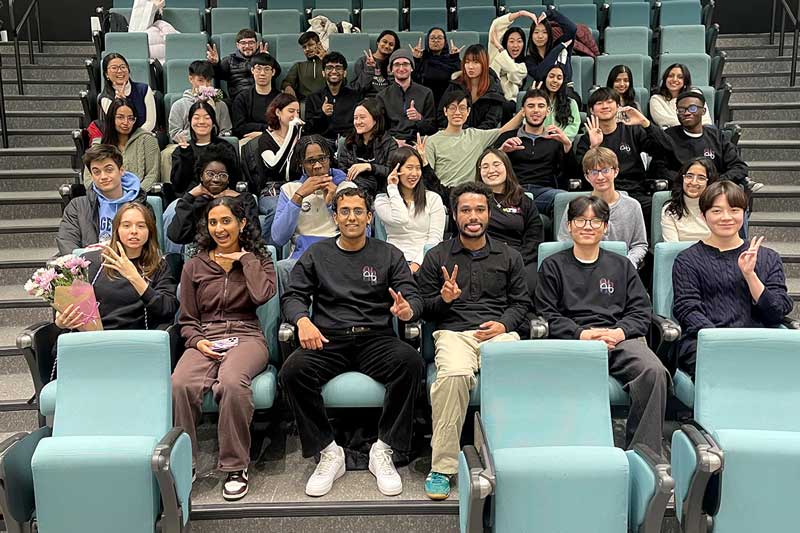
She also mentored and developed a close relationship with designer and Northeastern student Angeli Lu, who has since succeeded her as director of design and now carries forward the vision for better design practices within C4C.
“When we first met, she wasn’t a design major, but she had this unwavering and inspiring passion for design,” Zhang adds. “I think this speaks to something unique about C4C, where you can truly learn or do anything you want regardless of your background or previous experience.”
Zhang transitioned into the role of operations director, where she does everything big and small to keep C4C running. Recently, her focus has been on nurturing the club’s community and culture, empowering students to bring their ideas to life, and fostering an environment where they feel supported, included, and encouraged to explore their interests and curiosities.
“While I keep tabs on everyone and everything to make sure that we are delivering our projects to our partner organizations, the most meaningful part of the experience is seeing how my development over four years has allowed me to now step into a mentorship role,” she says. “The most fulfilling moments have come from staying hours after all-hands meetings to chat with folks and help them grasp technical concepts I once struggled with.”
The drive to mentor others is critical for Zhang, especially because at one point in her second year, she was failing a CS class and her self-doubt from high school returned.
“I was questioning my abilities and where I belonged in CS,” she remembers. “It was a hard time for me, seeing everyone else appear to succeed. I felt alone in my struggles with the course.”
But while searching for community, she got involved with Rewriting the Code, an international nonprofit that empowers young women in tech through mentorship, education, and peer-to-peer networking, with the goal of promoting sustainable careers and equal opportunity. Through RTC, Zhang met Melinda Rubenstein, a member of the customer success team at Microsoft. Rubenstein connected Zhang with other women in computer science and provided the advice and perspective that she needed to succeed in her courses.
“I felt like I could be really honest about how I felt,” Zhang says.
After learning that Northeastern was partnering with RTC, Zhang quickly applied to be an ambassador. Working with three other women to organize events, they promote Rewriting the Code to first- and second-year female students.
READ: “I could be wholly myself”: Northeastern’s Rewriting the Code ambassadors share their stories
“All of us have been there and felt like we didn’t belong,” Zhang says. “I love the raw and unfiltered advice we’re able to give to those who are navigating the same struggles we once did.”
In addition to her work with C4C and Rewriting the Code, Zhang had co-ops on Fidelity Investments’ digital consulting solutions team, which provides clients with custom microsites — small and light websites that integrate with existing Fidelity products. She started with consulting, pivoted to software engineering after expressing an interest, and is now hoping to stay on at Fidelity as a full-time software engineer.
“The team at Fidelity is supportive and cares about my development. I am grateful that I am able to explore what interests me with the support of my managers,” she says.
The Khoury Network: Be in the know
Subscribe now to our monthly newsletter for the latest stories and achievements of our students and faculty
Author: Meghan Hirsch
Date: 04.16.25

McKenna Quam, a fourth-year data science major, did not come to Northeastern thinking of herself as a researcher. However, after publishing several papers and receiving an honorable mention from the Computing Research Association (CRA) to recognize her “outstanding research potential,” Quam has started to see herself in a different light.
“Now I’m like, ‘Oh, yeah, two published papers, you have to call yourself a researcher, McKenna,’” she said.
Quam’s journey with research began in her first-year “Foundations of Data Science” course.
“Dr. Albert Lionelle asked if anyone was interested in research, and to be honest, I wasn’t sure if I would be the right fit for helping out, but I liked Dr. Lionelle, and the research project was about women’s participation in computer science,” Quam said. “That’s a subject I hold very dear to my heart.”
Quam’s first project focused on curricular complexity, which required mapping degree requirements and structures onto a graph. This allowed researchers to analyze which courses acted as blockers for other classes and determine the overall complexity of a degree.
To compile the data, Quam explained, “You have to go in and find the degree website and then find every single course, put that into the machine, and the machine will give you back a number. Then you have to map the whole thing.”
This process was extremely time intensive. While working on this paper at Northeastern’s Center for Inclusive Computing (CIC), Quam began to wonder if she could extend her research into a co-op position.
“I was doing the work on a volunteer basis for a very long time, and eventually, I asked, is the CIC hiring?” Quam recalled. “I finished the first paper while doing a co-op there.”
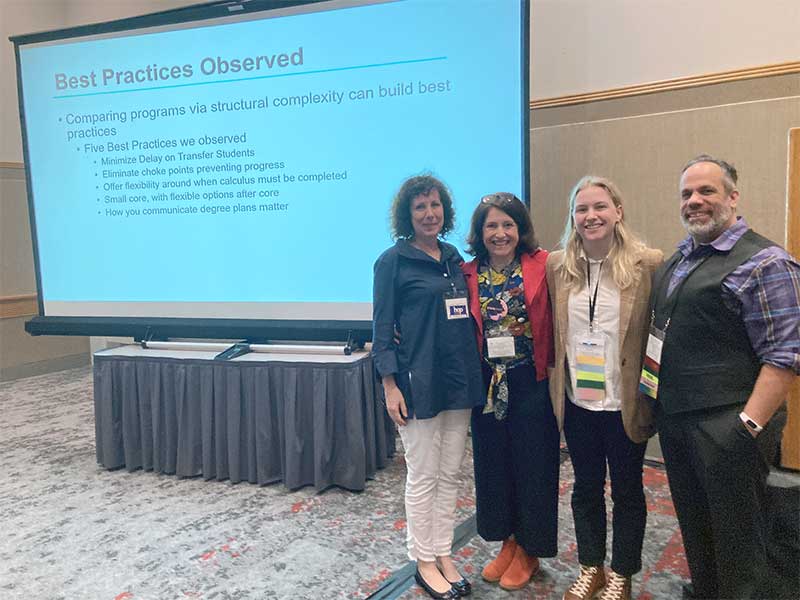
Albert Lionelle
The paper revealed that higher-complexity degrees had lower levels of female participation, while simpler degree structures saw greater female enrollment. These findings led Quam to explore the reasons behind these disparities.
“If you’re not encouraged to pursue something in high school, you have to find it in college,” she explained. “The longer you make your degree take, the longer those paths are, or the more involved the prerequisites are, the less likely you are to try it.”
For Quam, the study highlighted how differences in early encouragement could impact participation in computer science. The CIC, she explained, is working to identify and address these disparities.
“The CIC has 10 interventions to get more women and more marginalized identities to participate in computer science,” she said. “When I talk about this work, a lot of people are like, ‘Well, wouldn’t a lower-complexity degree benefit everyone?’ And yes, it would. Removing barriers to CS helps everyone, it just so happens that there are more barriers for women in CS education.”
Quam’s first paper was published at SIGCSE TS, the flagship conference of the Special Interest Group on Computer Science Education, where she presented her findings in March 2024. This conference, she said, felt especially impactful because “people in this room are computer science administrators. They are computer science teachers. They’re the ones creating these undergraduate curriculums. If they can listen to me, if anything sticks from my presentation, that might mean that somebody, somewhere, gets involved in computer science who wouldn’t have previously.”
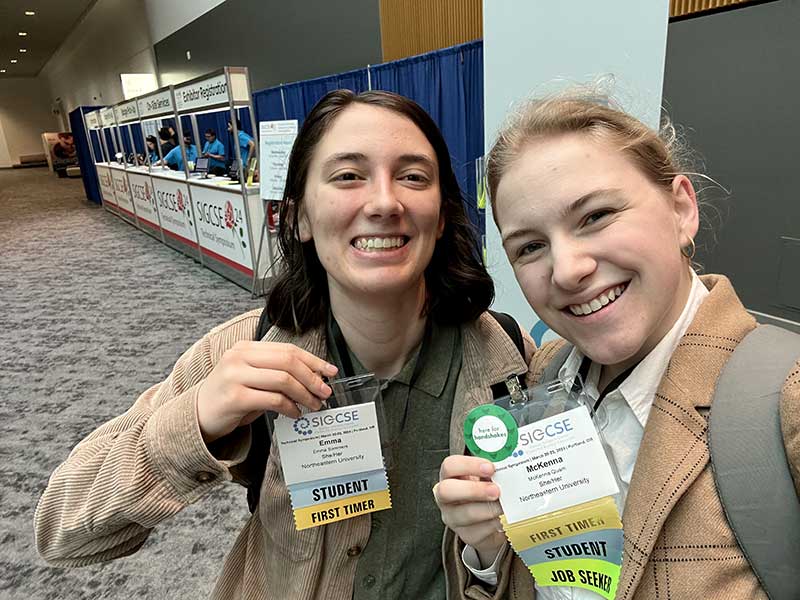
While working on that paper, Quam noticed that different degrees had different math requirements. For example, one degree at one school might require calculus before fundamentals of computer science, and another school may not require calculus. This led to Quam’s second research paper, in which she and her coauthors “surveyed 199 undergraduate CS degrees, which covered around 60% of all undergraduates in the United States who earned a CS degree in 2021.”
Through this research, they uncovered significant inconsistencies.
“There are some degrees where Calculus 1 blocks zero classes, and there are some degrees where Calculus 1 blocks 30. It is an absolute disparity,” Quam explained.
These findings indicated that differing math prerequisites could present barriers for students.
“When calculus blocks 30 classes, it’s because you have to take calculus before you take your first CS class, and calculus is a concept that is important to understand,” Quam noted. “Consider a student who didn’t take high-level math. If you’re just discovering computer science in college or high-level math in college, it’s another barrier to participation.”
Throughout both projects, Quam also wrote an academic op-ed, known as a white paper, outlining 10 ways universities can make degree requirements more transparent.
“I have looked at so, so many of these sites, and so I thought I should use this knowledge to tell other people about what I figured works well for communicating requirements and what doesn’t,” she said.
The white paper included recommendations such as “Hyperlink Everything – Avoid Dead Ends” and “Words Please – Course Codes Mean Nothing to Me.”
Although each of her research projects tackled different aspects of degree accessibility, Quam sees them as deeply connected.
“All of these things, when you end up making a body of work like I did, flow into one another,” she said. “You start with a question that you want to research, and then that question makes you think about other questions.”
The accessibility theme of Quam’s research stems from her own experiences.
“I’m so lucky to have people in my life who inspired me to see myself as a mathematician and as a computer scientist, but so many other people don’t have that,” Quam said. “For people who design these curriculums, they need to think of the student who comes to your university and hasn’t taken pre-calc. Does your university allow them the space to become a computer scientist?”
As for her next steps, Quam has accepted an offer from EPFR, where she completed her second co-op, to serve as a quantitative analyst full-time after graduating. In this new role, and in general, Quam said she “will continue to advocate for women, both intentionally, but also just by being a woman in male-dominated spaces.”
The Khoury Network: Be in the know
Subscribe now to our monthly newsletter for the latest stories and achievements of our students and faculty
Author: Benjamin Hosking
Date: 04.10.25

Disleve Kanku, a recent graduate of Khoury College’s master’s in data science program, put his skills to immediate use by creating a large language model called AI Career Coach Pro. The program scans a user’s resume and provides tools for career-building, such as career and salary insights, interview question practice with feedback, and a portfolio builder, which helps users structure and showcase their projects to attract recruiters.
Having grown up in the Democratic Republic of the Congo, Kanku understands the importance of education to help improve people’s lives.
“I’m passionate about education,” he says. “I’m from a place where not everyone has access to these opportunities.”
While attending Kansas State University for his bachelor’s in mechanical engineering, Kanku involved himself in the bioinformatics lab, where he learned to code in Python.
“Once I gained that interest, I saw so much potential,” he recalls. “Coding can be involved in any field.”
And when Kanku decided to apply for graduate school, Northeastern was high on his list.
“I’ve always wanted to go to Boston to study, and when I was accepted, I didn’t think twice,” he says.
But as he approached graduation, Kanku was having a hard time finding the right full-time job in a tight job market. Wanting a way to test his own resume, and needing a project idea for a class on large language models, Kanku began developing AI Career Coach Pro. He describes it as a virtual career coach that helps students plan their careers, prepare for interviews, and “put them on the right path for their future based on what they want to do and achieve, and in a better place for the job market.”
It worked well enough for Kanku, who landed a data engineer role at the Dana-Farber Cancer Institute in February 2024. Since then, he has won multiple awards for making the institute’s data more transparent, usable, and integrated.
“I focus on building ETL pipelines to streamline data integration across systems,” Kanku says. “My work primarily involves Snowflake and Informatica Intelligent Cloud Services to enhance data accessibility and usability. I’ve also worked on optimizing workflows for real-time data processing and improving how the institute manages and analyzes critical health care data.”
In addition to his work on AI Career Coach Pro and at Dana-Farber, Kanku is the co-founder of Vibie.AI, an AI-powered music curation platform.
“Vibie.AI dynamically adapts to the atmosphere of any venue by analyzing crowd behavior, mood, and preferences in real time,” he says. “Whether it’s a lively bar, a chill cafe, or a high-energy gym, the platform crafts the perfect playlist to enhance the experience.”
Kanku hopes that AI Career Coach Pro can help other students refine their skills before interviews. He describes a feature that allows a user to find resources to study and prepare for specific roles, such as data science engineer.
“You can tap a skill like Python or SQL and it will provide a list of online resources,” he explains.
Another feature generates 15 interview questions based on the job role and provides real-time feedback on the user’s answers.
Next steps include scaling and optimizing the tool. Kanku is in discussion with Northeastern University to see if it can help prepare students for co-op and give them an advantage.

“I plan on deploying the beta version at Northeastern,” he says. “I want to refine the tool and make it work here first.”
In the long term, Kanku wants to grow the platform, as well as his involvement with AI. As an advocate of ethical AI, he believes everyone should have access to these tools.
“There’s a disparity, and I want to bridge the gap and keep growing as an AI engineer,” he says.
The Khoury Network: Be in the know
Subscribe now to our monthly newsletter for the latest stories and achievements of our students and faculty