Author: Juliana George
Date: 05.06.25

Like a lot of his students, Logan Schmidt had no programming experience when he entered Khoury College’s Align master’s program for computer science.
Now an assistant teaching professor and assistant director of computing programs at Northeastern’s Vancouver campus, Schmidt started his higher education journey by earning bachelor’s degrees in English literature and classics, as well as a master’s degree and PhD in rhetoric.
Now, as an Align alumnus and instructor, Schmidt was both a coauthor and a data point in “An MS in CS for non-CS Majors: A Ten Year Retrospective,” which recently earned a Best Paper Award at SIGCSE, a prominent conference on computing education. The paper, which was authored by Khoury faculty and staff members, broke down the history and results of the Align program, which offers master’s degrees in computer science, data science, and cybersecurity for students from any undergraduate background.
Despite his humanities background, Schmidt found that computer science was a good match for his research interests, communication and pedagogy methods. As a PhD student in rhetoric at Carnegie Mellon, he wrote his dissertation on how laypeople approach highly technical information and develop or rely on expertise.
“It was a very short step from helping people understand and process technical information to learning how they join the community of computer science in different ways,” he said. “It may seem like a long way away from English, but it’s not that far.”
According to Caitlin Kidder, a coauthor of the paper and the director of graduate programs at Northeastern’s Center for Inclusive Computing, the Align program was conceived to broaden the reach of computer science to new demographics and knowledge spheres.
“Typically, to get admitted to a direct-entry master’s program, you need to have a bachelor’s degree in computer science,” she explained. “When you can pull only from that pool of students, you inherit the demographics of undergraduate CS programs, which for many decades have been very lopsided … meaning not very many women and people of color.”
There are countless barriers to entry in the computer science world, as both Kidder and Schmidt attest to. Due to the volume of applicants, many undergraduate computing departments have raised GPA requirements or implemented “weed out” courses. This often means that only students who have had the chance to learn computer science in middle and high school or practice programming on the side will make it past the first semester. A lot of students, Schmidt included, did not have this opportunity.
“I don’t even want to call Align a second chance, because that makes it sound like some people had a first chance, and not everyone did,” Schmidt said. “But it’s an open door that I think has allowed people to come into computer science who might not normally feel encouraged to.”
In numerous cases, coming from outside fields has benefited Align students in the job market.
“When you bring in students from extremely diverse backgrounds in terms of individual identity, but also academic experience, work experience, and life experience, you get people who look at problems in different ways and come up with different solutions,” Kidder said.
Kidder said the program could, for example, help a former biology student move from a biomedical research role to a computational role at their company, or enable a K-12 teacher with a liberal arts background to break into K-12 computer science education and educational technology. Schmidt added that there’s a significant market for programmers with business backgrounds in roles that require both technical skills and business logic.
Many students still find it tough to move between disciplines. Schmidt said his students frequently confront a frustrating mental block when they don’t grasp a concept immediately, which he remembers facing himself. That’s why an essential tenet of the Align program is confidence-building, aided by a preprogram supplementary math prep course and continual collaborative learning.
Both Schmidt and Kidder shared that although they believed their work coauthoring the paper was important, the success of the Align program and its alumni are victories even more worthy of celebration.
“Part of what impressed people at the conference were the results of the Align program, which are the work of hundreds of people,” Schmidt said. “I am just as proud of being a member of the data set as I am of being an author on the paper.”
Apart from Schmidt and Kidder, the paper’s authors include Ildar Akhmetov, Megan Bebis, Alan Jamieson, Albert Lionelle, Sarah Maravetz, Sami Rollins, and Ethan Selinger.
The Khoury Network: Be in the know
Subscribe now to our monthly newsletter for the latest stories and achievements of our students and faculty
Author: Juliana George
Date: 05.05.25
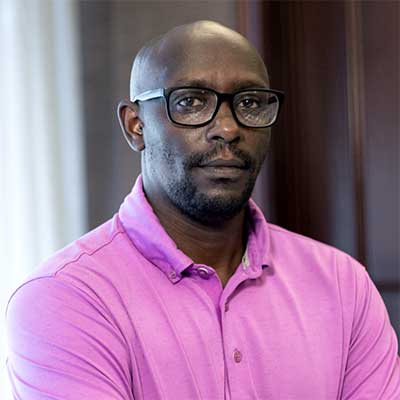
Jonathan Mwaura is very conscious of the disparities in computing education, both within the United States and between the US and the Global South. He earned his undergraduate degree in computer science in Kenya, and ever since he joined Northeastern’s faculty in 2021, he has worked to expand education for computer science students from marginalized backgrounds.
As an associate professor of computer science at the Roux Institute in Portland, Maine, Mwaura has spearheaded an exchange program with Université Gaston Berger (UGB) in Saint-Louis, Senegal; partnered with Black-owned organization The Third Place to provide STEM networking opportunities for Black Portlanders; and established partnerships with multiple universities in Kenya. Recently, all this outreach culminated in his receiving the 2025 SIGCSE Award for Broadening Participation in Computing Education.
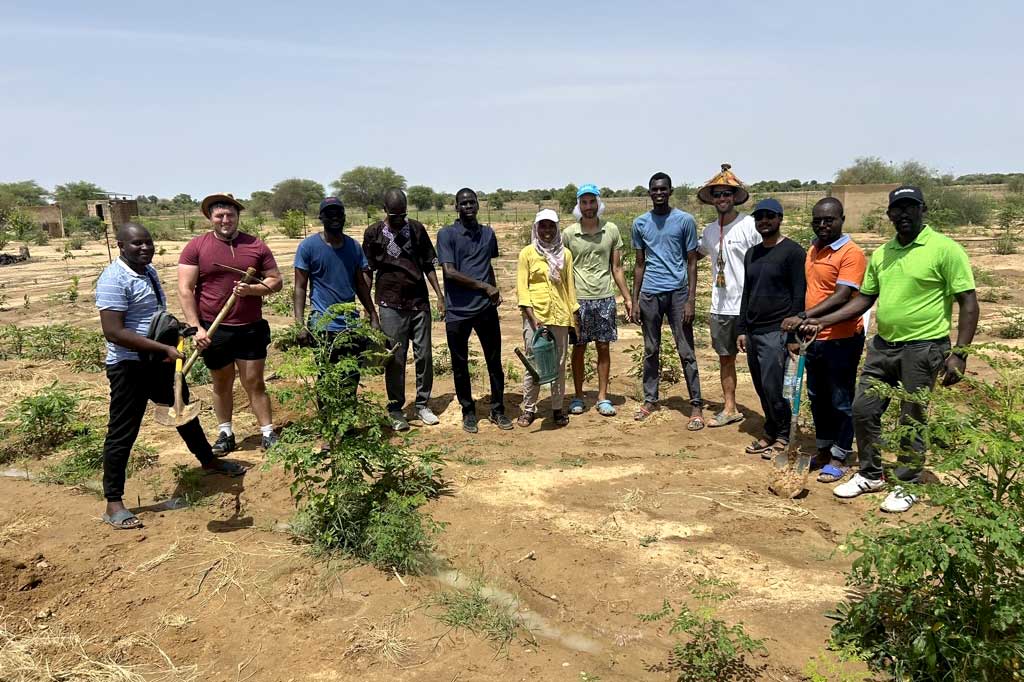
Although much of Mwaura’s work fits the bill for this honor, the UGB exchange is particularly noteworthy. Using grant money from the US State Department and their embassy in Dakar, Senegal, he developed a unique course, “Artificial Intelligence for Agriculture,” which allowed Khoury and UGB students alike to develop projects related to Senegal’s farming system.
“Here in the United States, we have a lot of resources in our universities,” Mwaura explained. “A lot of the universities I have been working with in Africa don’t have the same resources. Bringing those students into the United States, having their voices heard, and showcasing their work is an important step towards broadening and extending their reach.”
Mwaura came up with the idea for an AI agriculture course when he visited Senegal for the first time last year. He marveled at the idea that anything at all could grow in the country’s hot, dry, unforgiving climate, and when he learned that UGB had a demonstration farm for gathering data on crop growth, he saw a chance to integrate computing education with experiential learning.
“I thought, ‘Why don’t we do a course in machine learning for smart agriculture?’” he recalled. “Students would be encouraged to work with data from UGB to understand how new techniques, for example machine learning and artificial intelligence, could be applied to economically advance the work of the farmers.”
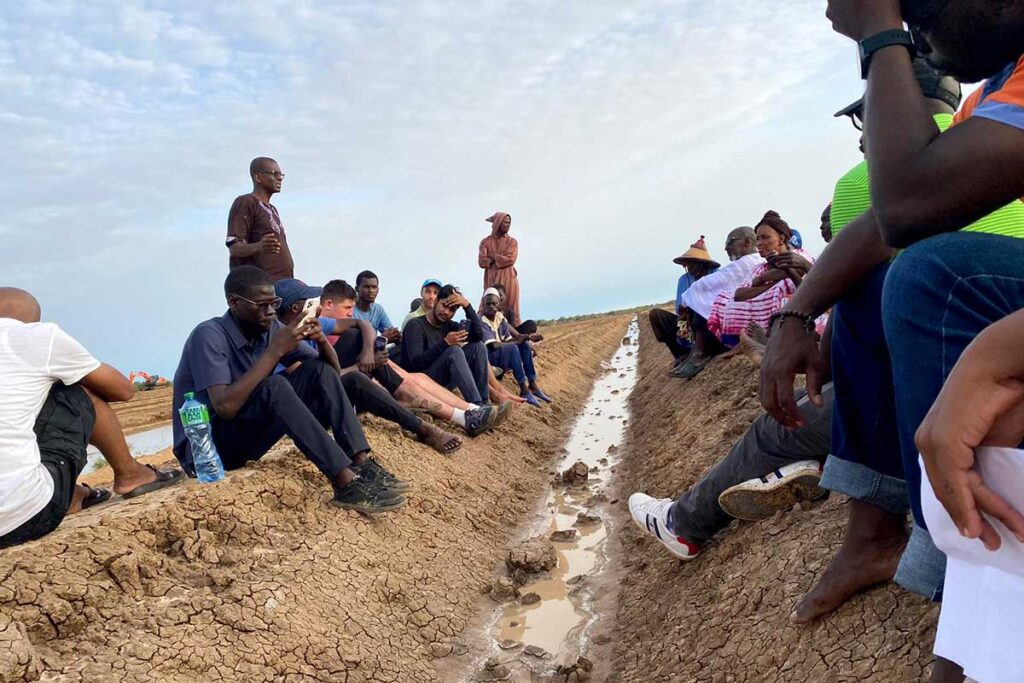
The program only had enough money to fly five students from UGB to Portland, but Mwaura wanted a larger reach. He asked UGB to choose 10 students for the course, five of whom would learn remotely from Saint-Louis. For the second half of the course, the in-person students traveled to Senegal to conduct research for their final projects, meeting with farmers and tailoring their work to local circumstances.
After the course, Mwaura was invited to submit an article to the 2024 Pan-African Artificial Intelligence and Smart Systems Conference. Realizing that some of his students had never had the opportunity to publish an academic article, he asked them if they would be interested in extending the projects they began during his course. In December, Mwaura and the five students who had been unable to visit the US traveled to the conference, which was held at the University of KwaZulu-Natal in Durban, South Africa.
Mwaura’s students published and presented four papers at the conference, all of which used AI to tackle Senegal’s agricultural problems. One group took data from the US Department of Agriculture on predicted agricultural yields for Senegal, combined it with national environmental and climate data, and created a predictive model for agricultural yield that outperformed the USDA model. If implemented into national farming and decision-making processes, this model could become a powerful tool for combating food insecurity and improving agricultural policy.
Other groups created machine learning models for classifying soil drainage capacity, which would help farmers with crop selection and soil conservation; for assessing crop damage using photos taken by farmers, which would speed up the crop insurance claims process; and for identifying sub-Saharan maize leaf diseases, which would enhance the accuracy of agricultural disease control.
Mwaura was extremely proud of the work he helped his students produce, and he’s currently trying to establish an African center for computing excellence at Northeastern.
“This center would help me to continue creating these partnerships,” he said. “And it would help me to invite these folks from Africa to come here during a summer course to enable them to excel in computer science.”
Mwaura stressed that the value of international collaborations with African universities goes far beyond providing learning opportunities for students in an underserved region. Exchange programs like his “AI for Agriculture” course also bring diverse perspectives to the table, allowing for unique and creative projects like the ones his students worked on.
“This work has tried to bring voices from Africa that people will not otherwise hear from and create partnerships with them,” he said. “By broadening participation and inclusion in the computer science ecosystem, we can tackle global challenges and expand the university’s research impact.”
The Khoury Network: Be in the know
Subscribe now to our monthly newsletter for the latest stories and achievements of our students and faculty