Author: Benjamin Hosking
Date: 06.05.25
In March, Northeastern University’s Seattle and Vancouver campuses hosted three industry-sponsored hackathons. Each one was sponsored by an industry partner: Qualcomm Technologies at both campuses with additional support from Microsoft, and Deloitte for Vancouver.
Ildar Akhmetov, an associate teaching professor at Khoury College and the director of computing programs for Vancouver, notes that coursework and the classroom are just one slice of students’ education, and that “they need to stand out to be needed by the industry.” Hackathons serve as a way for students to access external opportunities and build projects for their portfolio. However, Akhmetov notes that it’s not always easy for students to join their first hackathon without any on-ramps or initial introductions — experiences the sponsored hackathons provided.
“It’s important to bring some of the hackathons to campus, in the building students know, with the support of faculty, while giving students opportunities to get to know staff from big industry names,” he says.
Each hackathon provided unique challenges and constraints, with partners providing their own spin based on their needs. Qualcomm required students to implement edge AI applications on a Snapdragon X Elite Copilot+ PC laptop (provided by Qualcomm and Microsoft) locally and offline, with no access to online models like ChatGPT. The hackathon spanned 24 hours on a Saturday and Sunday, with teams submitting proposals a week beforehand and Qualcomm selecting the top 35 to participate.
In contrast, Deloitte’s constraint was thematic, with a focus on higher education solutions in British Columbia. This hackathon took place over a week. Teams prepared for an initial presentation to judges on Wednesday and the top six advanced to a final pitch on Friday.
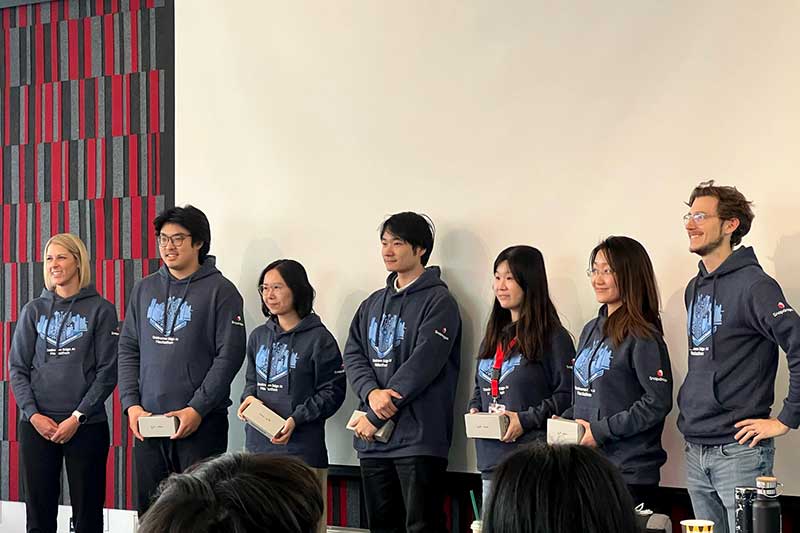
“Students could tell how much Qualcomm and Microsoft cared,” says Dominik Beckers, director of strategic partnerships at the Vancouver campus. “Food for the weekend was provided, as well as a two-hour restaurant social at the end. Winning teams received smart glasses, and the top teams will continue to work with Qualcomm on their applications. Students felt really taken care of.”
With Deloitte’s weeklong hackathon, Beckers says, “It was a different feel. Students loved presenting and pitching in front of Deloitte partners and faculty combined, and it was important to see how they improved from Wednesday’s pitch to the Friday finals.”
For computer science master’s student Kalhar Pandya, that improvement boosted his team to first place in the Deloitte-sponsored hackathon in Vancouver. His team created a comprehensive AI-powered vision board creator to help users turn their visions into reality with strategic insights, integrating with existing tools like Gmail and Google Drive. Using more than 50 AI agents simultaneously, they differentiated themselves from existing platforms.
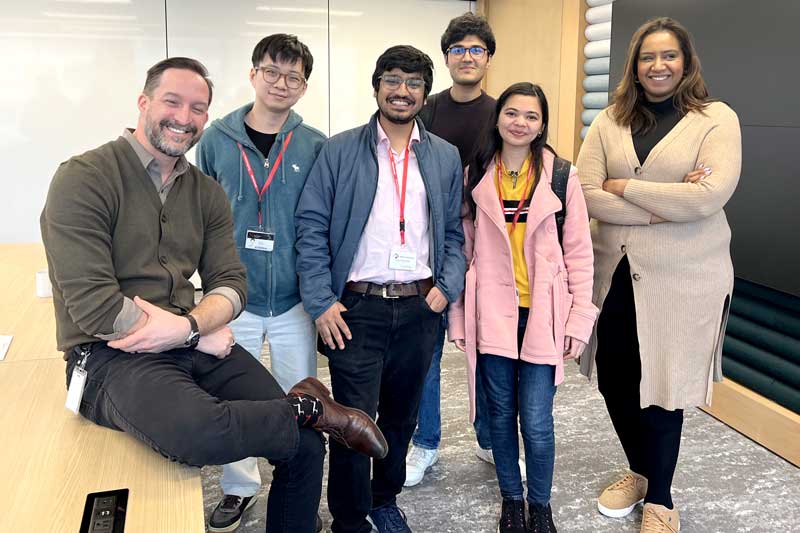
“We knew we didn’t want to replicate ChatGPT,” Pandya says. “We needed to find something ahead of that, something that’s not out there already.”
Pandya’s team included students from computing and noncomputing backgrounds, providing different perspectives and concepts.
“We had coaches that guided us in the right direction and helped us communicate what we were trying to do,” he says.
Both Northeastern faculty and Deloitte staff were eager to help students prepare, and provided crucial feedback as the jury for the competition.
“They are very supportive of ideas and they encouraged everyone,” Pandya adds.
The team that won the Qualcomm hackathon in Vancouver reported a similarly positive experience. Dingyang Jin, an Align master’s student in computer science and a member of the winning team, has participated in many hackathons, and this was his third with Northeastern. His team built an AI model to help wheelchair-bound, visually impaired users navigate through space using computer vision technology. The software ran on the Qualcomm laptop without access to the internet, which created challenges for the team.
“It took a whole day to configure it,” Jin says. “Our proposal is complicated and we needed to combine different AI tools to make it work: AI for vision detection and a text-to-speech model which would speak out the object detection system’s result.”

When the object detection system, commonly known as YOLO for “you only look once,” sees a person in front of the wheelchair, it will say aloud that there is a person in front and will describe how many meters away that person is. Another version that the team developed connects to a large language model that provides more specific scene description.
Jin, who earned his master’s degree in business analytics from Northeastern before pursuing a master’s in computer science, is proud of how his team drew on each member’s strengths and background.
“I love challenging myself and working with these teammates in a competition. I enjoy the process,” he says. “I had worked with two of them before in other hackathons. I’m lucky to have talented teammates.”
Jin also enjoyed the presentation experience, in which his team used a laptop-mounted camera to scan for people in the audience as they showcased their large language model.
“My biggest takeaway was learning how to integrate advanced computer vision and speech recognition technologies into a real-time device solution with zero reliance on cloud solutions,” Jin explains. “This is critical to hardware and algorithms that solve real-world problems.”
The team plans on making a better version with a front end and improved voice activation for vision-impaired people, and will continue working with Qualcomm toward that.
At the Seattle Qualcomm hackathon, the winning project was “Fitmirror,” an on-device fitness coach that helps people analyze their exercise movements and make improvements.
“Participating in the hackathon taught me and my teammates how to build and deliver a working AI-powered solution under intense time constraints,” says Yiyi Wang, a master’s student in computer science and a member of the winning team. “We constantly had to think about usability, not just functionality. We gained confidence in turning ideas into action and clearly presenting them to judges.”
Beckers notes the importance of hackathons goes beyond student experiential learning, pitching practice, and portfolios.
“For the industry partner, we want to make sure they have a proof of concept at the end that they can develop or deploy,” he says. “For Qualcomm, this is the basis of a larger partnership. We started with Vancouver and Seattle, but we’ll expand to other campuses to make it a global network hackathon.”
When Beckers joined Northeastern several years ago, industry people he spoke with were unfamiliar with Northeastern. That’s different now.
“People know who we are and what we stand for — experiential learning, building community around technology, and becoming a tech hub in downtown Vancouver,” he says. “Hackathons are a great way to [start a partnership]. It happens with companies who might have worked with co-ops or alumni, wanting to deepen their relationship and partnership with Northeastern. It’s a lot of word of mouth. We’ve become known for experiential learning and for high-caliber students working on projects.”
Khoury College’s capstone projects are vital in this effort, since they showcase students’ technical skills and diversity of backgrounds, especially in the Align program.
“Companies like Deloitte love that, when they find people who were accountants or consultants who can now approach things from a technical level,” Beckers says.
“It creates some very powerful synergies,” Akhmetov adds. “We really want to have students who can do things that aren’t just coding. We opened the hackathons up to all colleges at Northeastern Seattle and Vancouver, not just Khoury College. This is where diversity of knowledge, experiences, and skills really shines.”
The Khoury Network: Be in the know
Subscribe now to our monthly newsletter for the latest stories and achievements of our students and faculty
Author: Meghan Hirsch
Date: 06.03.25
With another commencement season upon us, Khoury News met with students across Northeastern’s network of campuses to learn more about their unique experiences and future endeavors. To hear their stories, click on one of the linked names below, or simply read on.
- Akash Sancheti, Arlington
- Crystal Zhang, Boston
- Rohan Hughes, Oakland
- Benji Northrop, online
- Rahil Jhaveri, Portland
- David Treadwell, Seattle
- Lana Do, Silicon Valley
- Tsz Wai (David) Tam, Vancouver
Akash Sancheti, Arlington
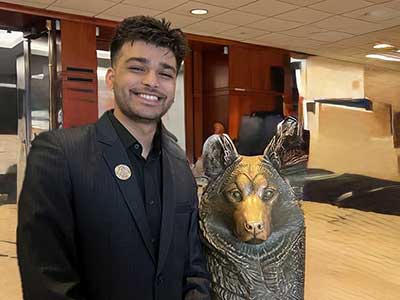
After working as a software engineer for a few years following his undergraduate studies in computer science, Akash Sancheti wanted to return to the classroom. And as a graduate student studying CS at Northeastern’s Arlington campus, his contributions have extended far beyond the classroom setting; he’s been instrumental in building a sense of community there.
Sancheti founded the Arlington Explorers Society, a club that organizes group outings to areas in and around Washington, DC.
“Nobody knew the area, and people weren’t connecting with each other,” Sancheti said of the new campus.
The club has helped Arlington’s campus feel more like a home and enabled students to meet each other through hikes and cultural activities.
Sancheti is also a global recreation ambassador on the Arlington campus, planning events and collaborating with other Northeastern campuses to brainstorm and foster community. In this role, Sancheti said he has developed numerous skills that will help him professionally, namely collaboration.
When he wasn’t working as an ambassador, Sancheti served as a teaching assistant for “Fundamentals of Cloud Computing,” won Northeastern’s Network Student Award for Arlington’s campus, and has been nominated for Northeastern’s Outstanding Master’s Student Award in Community Impact.
After graduation, Sancheti plans to work as a teaching assistant at the Institute for Computational and Experimental Research in Mathematics at Brown University.
“My experience here at Khoury College has set me up for this role,” he said. “I’ve been a TA and I’ve built up communities. This summer, I’ll be doing both.”
Crystal Zhang, Boston
FULL STORY: Courses, clubs, co-ops, and travel: how Crystal Zhang made the most of her Northeastern journey
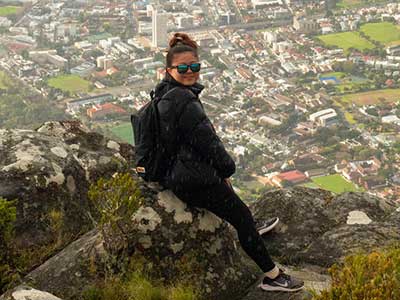
Although she didn’t see herself as a computer scientist in high school, after a software development internship, Crystal Zhang was inspired to give computer science a try at Northeastern. As a computer science and design major, she made the most of every resource she found.
She went on two Dialogue of Civilizations programs because she said she “always had this curiosity and dream to see the world.” On her first dialogue, Chang studied graphic design and typography in Switzerland, where she “leaned into that side of my degree.” Zhang’s second dialogue was in South Africa, where she worked with a local social enterprise, noting that she “made lifelong friends through this experience, and I’m excited to go back and visit them.”
On campus, Zhang became involved with Code4Community (C4C), a student group that develops software for nonprofits around Boston. While working with C4C, Zhang recruited designers, offered critiques, ran workshops, and mentored peers — even inspiring some, like Angeli Lu, to become designers.
Although Zhang remembers questioning her abilities and belonging in CS at the beginning of her Khoury journey, clubs and organizations like C4C and Rewriting the Code, an international nonprofit that empowers young women in tech through mentorship, helped her find her place and purpose. In the latter group, she went from mentor to mentee, relishing the opportunity to advise students navigating the same challenges she did.
READ: “I could be wholly myself”: Northeastern’s Rewriting the Code ambassadors share their stories
After graduation, Zhang hopes to work full time for Fidelity, where she completed two co-ops.
Rohan Hughes, Oakland
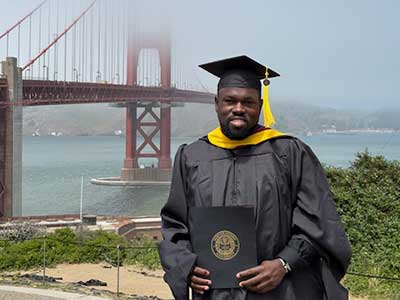
The English-major-to-CS-master’s pipeline is rare, but Rohan Hughes makes it seem natural. After Hughes used his undergraduate degree to teach in the US and abroad, one of his friends suggested he take a computer science class — just to try it.
“Oh, I’m not a tech person,” Hughes recalled thinking. “That’s for the tech geeks; that’s not my thing.”
Slowly but surely, though, Hughes became interested in computer science and decided to apply to a full-time graduate program. He knew he wanted to go to California, and when he learned about Khoury College’s Align program, it seemed “perfect for someone like me who didn’t have a tech background.”
Hughes said that Rasika Bhalerao has served as a great mentor to him. Bhalerao encouraged Hughes to take an AI foundations course and a research course, where he has studied topics he, as a Maryland native, cares about, like the impact of climate change on Chesapeake Bay. Hughes and his group also presented their research at a showcase, which Hughes found fulfilling.
“She’s exactly the kind of professor that you hope for when you take a program like this,” he said.
After forging connections with other students — including a friend from the same province in China where Hughes taught — and taking advantage of research opportunities, Hughes said that keeping an open mind was essential.
“My advice to other students is get involved, get engaged, make connections, meet people that way, whether it’s just friends or networking. Just go to stuff!” he said.
Following graduation, Hughes hopes to stay in the Bay area and find a data-centric role.
Benji Northrop, online
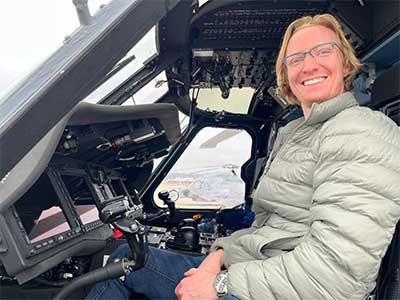
As a Navy helicopter pilot, Benji Northrop already had an extensive technical background. But he wanted a change of pace. He and his wife had always considered moving to Japan; however, as a pilot, “Flying internationally isn’t very easy to do in the sense of job security and quality of life. Being home-based at an airline in the US is pretty good, but once you go overseas, it’s a lot more difficult,” he said. Northrop thought a different technical path might open more doors and give him and his family a bit more freedom.
A friend noticed Northrop was good at coding on Excel and suggested he try coding or software engineering. Northrop did try, and eventually applied to the Align program, where he could be a computer science master’s student while continuing to work full time.
Northrop explained that since he worked with lots of technical equipment like radars and sonars in the Navy, he was known as “the nerdy type of helicopter pilot.” This helped his transition to computer science, where he took classes with professors who included Albert Lionelle and Bruce Maxwell. In Maxwell’s class, Northrop built a computer graphics system that takes photos of a 3D world by simulating a radar-based camera.
Northrop said this research “is what got me this [systems modeling and analysis] job. Having a working relationship with a professor for longer than just a semester was really beneficial. That mentorship and having a project that was in line with systems modeling really helped.”
Northrop, who defines his quality of life by the frequency of dinners had at home, is looking forward to graduation so he can spend more time with his family — as that is part of why he decided to pursue a career in tech to begin with.
Rahil Jhaveri, Portland
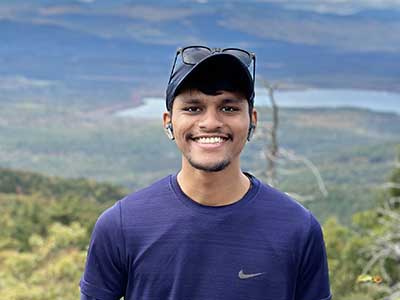
After completing his bachelor’s degree in computer engineering and working in finance and security for a few years, Rahil Jignesh Jhaveri wanted to return to school. He’s stayed busy ever since — pursuing a master’s in data science, mentoring his peers, working as a TA, and even starting a cricket club at Portland’s campus.
He said working as a career peer advisor, which allows him to speak with nontechnical students hoping to transition to technical careers, has been a great experience.
“Our job is to help them navigate the process, and to share our experiences,” Jhaveri explained. “This has given me a sense of responsibility and shows that I have something else that I can do apart from my technical work.”
In addition to researching natural language processing systems and mentoring, Jhaveri has also enjoyed classic Northeastern events, such as attending the women’s Beanpot in Boston, to round out his experience.
“I’ve never experienced an ice hockey game before, and that was a really cool game,” he said.
Jhaveri’s coursework will be over in June and after that, he is planning to take some much-needed time for relaxation and possibly continue in a full-time position at WEX, where he is currently an intern.
David Treadwell, Seattle
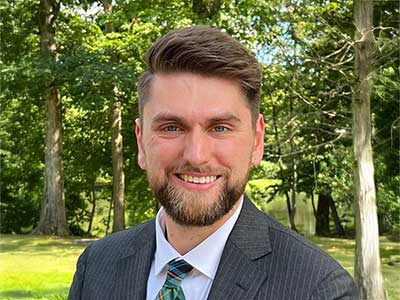
While working full time as a financial data analyst, David Treadwell realized that he liked working with Excel, specifically on the parts of Excel that required coding. After taking a few computer science classes on the side, he decided to pursue the field in a more concrete way by getting his master’s degree.
Treadwell said he picked Khoury College because “they seemed really focused on getting more than just theoretical knowledge, but [also] hands-on experience, and getting to work on a variety of projects.”
As a Khoury student, Treadwell did just that, participating in a hackathon where he focused on coding to improve forest fire preparedness for indigenous communities in British Columbia. After that, he worked for a nonprofit called Earth and Space Research “doing more work at the intersection of machine learning and environmental science,” such as analyzing changes in Arctic Sea ice.
Following his graduation, Treadwell plans to complete a research internship at the Pacific Northwest National Laboratory, then continue working for Earth and Space Research.
Before coming to Khoury College, he said he hadn’t realized “there’s space in the environmental field for someone with a computer science background. My work at Khoury College inspired that.”
Lana Do, Silicon Valley
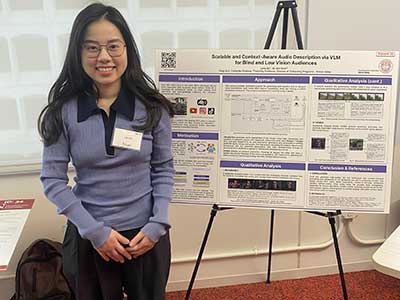
After getting a degree in industrial engineering at the University of Illinois Urbana-Champaign, computer science master’s student Lana Do was ready for a change of climate. She moved to San Jose to work in manufacturing, but after being surrounded by tech in the Bay Area, she thought she might give computer science a try.
“I really liked the idea of being in the Align program and having people with different backgrounds bring different perspectives,” Do said.
After taking a few machine learning classes and serving as a research assistant for John Alexis Guerra Gómez on his responsible AI project, Do became interested in research. Gomez’s research looked at cases where AI could be harmful for humans, including discrimination.
“[We] published a paper and presented it at a small conference,” Do said. “It was the first time that I had written a paper and then presented it at a conference, so I thought that process was really interesting.”
Now, Do is working on another research project with Ilmi Yoon that aims to improve accessibility for blind and low-vision users by using AI to create audio descriptions for social media content. Do plans to continue working on this research over the summer and then to apply to PhD programs in the fall to pursue more research — not only for the academic aspect, but also to connect with other scholars.
“When I started doing research, I had more opportunities to talk to people about things that they were doing and ask for feedback,” she said, “and I found that experience very fun and rewarding. It has really opened me up.”
Tsz Wai (David) Tam, Vancouver
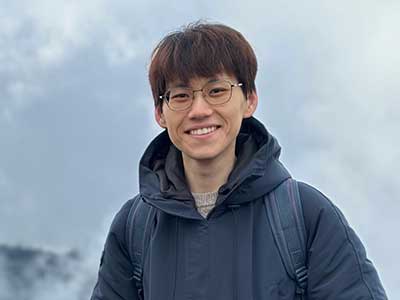
After studying language and literature at University in Hong Kong then teaching Chinese for years there, Tsz Wai Tam, who goes by David, wanted a change.
“There is a natural progression from teaching to software development,” Tam said. “I think they are both fundamentally about empowering people.”
Tam explained that as a software developer, he could create different tools to enlighten and empower people in a more scalable way than he could achieve as a teacher. He never completely gave up teaching, though; before long, he was working as a TA for both Lino Coria Mendoza’s “Object-Oriented Design” course, and Neda Changizi’s “Mobile Application Development” course, where he created assignments and hosted weekly office hours.
“Because I was a teacher, I know that it’s hard to explain the concepts to the students, especially since we don’t have computer science backgrounds,” Tam said. This is why he really admires the professors in Khoury’s Align program, he says – their ability to take complicated computer science concepts and break them down for those who have different educational backgrounds.
Tam was also part of the club, Husky Bytes, where he and a few team members worked to create software that helps airports detect movement and turn off lights when there’s no activity. The group also helped students create websites and prepare for graduation with networking tips.
Following his graduation, Tam will continue as a software developer at his current employer in Vancouver.
The Khoury Network: Be in the know
Subscribe now to our monthly newsletter for the latest stories and achievements of our students and faculty
Author: Juliana George
Date: 05.27.25
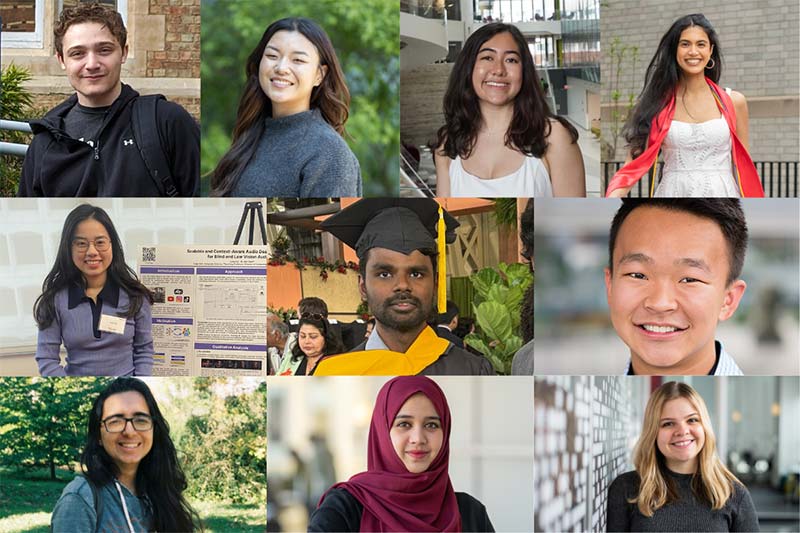
Each year, Khoury College honors exceptional students for achievement in research, teaching, community service, and co-ops. To learn more about this year’s winners, click any of the links below, or simply read on.
- Jake Ginesin, Undergraduate Research
- Katelin Tharp, Undergraduate Teaching
- Heidi Eren, Undergraduate Community Service
- Shreya Thalvayapati, Undergraduate Co-op
- Lana Do, Graduate Research
- Kishore Sampath, Graduate Teaching
- Yi Zu, Graduate Community Service
- Neha Makhija, PhD Research
- Uzma Haque Syeda, PhD Teaching
- Lisa Oakley, PhD Community Service
Jake Ginesin, Undergraduate Research Award
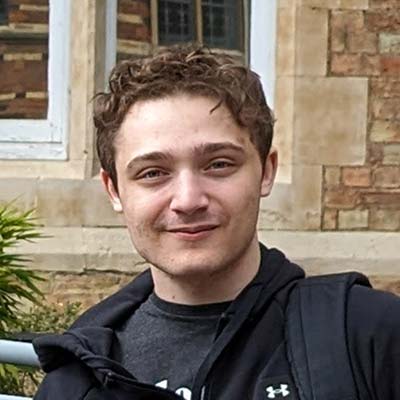
Before he entered Northeastern University, Jake Ginesin had little experience with programming and mathematics. Four years later, he’s graduating with a double major in computer science and mathematics and preparing to begin his PhD in computer science at Carnegie Mellon University.
Ginesin started as an engineering major, spending his first semester at University College Dublin as part of the NUin program. While in Ireland, he began poring over computer science research during his free time. By the time he made it to Boston, his mind was set. He switched his major to computer science and reached out to Khoury professor Cristina Nita-Rotaru to start researching.
Under Nita-Rotaru, Ginesin’s initial research focused on automated reasoning for simple mathematical statements and graphing problems. After he returned from a summer NSF research experience at the University of Southern California studying and measuring critical internet infrastructure, he officially joined Nita-Rotaru as a research assistant to study cybersecurity and distributed protocols.
From there, research opportunities began streaming in. Over the next three years, Ginesin continued his research as a co-op at the University of Oxford, as an intern learning automated bug finding techniques at Harvard University, and as a research assistant studying computer architecture at Northeastern’s College of Engineering, all while maintaining his position with Nita-Rotaru. He’s contributed to four published papers and won the 2025 Internet Research Task Force Applied Networking Research Prize for his paper analyzing the security of the Stream Control Transmission Protocol, a standard communication protocol in telecommunications and internet infrastructure.
“We used automated tools to discover problems in the original protocol specification and proposed solutions to the standardization of this protocol,” he explained. “We did a bunch of impactful work there.”
Starting this fall, Ginesin will put his extensive research chops to use as he pursues a security-focused computer science doctorate.
“Modern society has all this computing infrastructure and computer systems that we rely on for pretty much everything,” he said. “The least we can do is ensure that it’s reliable and secure.”
Katelin Tharp, Undergraduate Teaching Award
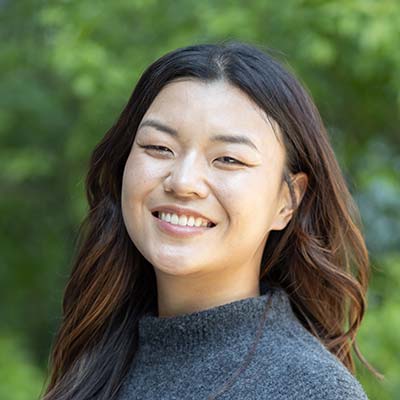
Katelin Tharp didn’t always want to become a teacher, but she always loved teaching. As far back as eighth grade, she volunteered to teach basic Mandarin classes after school, and in high school she became a peer tutor.
Computer science, on the other hand, wasn’t Tharp’s childhood passion. Her favorite subject in high school was English, and she declared a computer science and cognitive psychology combined major as a practical career choice. But as she adjusted to the demands of a new discipline, she realized that her relative inexperience uniquely prepared her to lend a hand to students in the same boat.
Tharp worked as a Khoury College TA for three years and completed a co-op at Northeastern’s London campus as a lead TA — teaching computer science labs, creating assignments, holding office hours, and leading a team of remote Boston TAs.
“I thought if I could succeed in computer science without any previous experience, I could help other people understand it,” she said. “I found a way to reconcile this thing that I was doing pragmatically with something that I’m super passionate about, which is teaching. Teaching helped me love computer science, and vice versa.”
Since graduating in December, Tharp has returned to one of her co-ops as a full-time software engineer. This summer, she plans to move back to her home state of California to pursue a master’s in education at UC Berkeley. She will be earning her teaching credential in English, but she’d also be happy to apply her computer science and psychology skills by teaching electives.
“If it wasn’t for all the teaching opportunities I got in my undergrad, all that experience engaging with content and teaching students and being on the ground full-time as a teacher, I probably wouldn’t have gotten this opportunity or learned that I love teaching so much,” she said.
Heidi Eren, Undergraduate Community Service Award
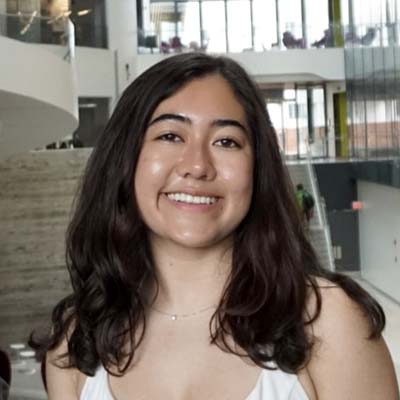
Growing up, Heidi Eren had no exposure to coding or computer science. She took a data science class her freshman year at Khoury College to challenge herself and tried out a few different majors until she finally landed on biochemistry and data science.
Eren found that studying data science was a steep learning curve. She became a regular at office hours, asked for help from professors and TAs, and dealt with her fair share of impostor syndrome. When she took a class taught by Laney Strange, a teaching professor and director of broadening participation at Khoury College, she realized her hard work gave her an avenue to connect with the greater Boston community.
Strange leads Women’s Community of Code (WCoC), a program that hosts beginner-friendly coding workshops for women and girls on Northeastern’s campus. Eren learned about the group from Strange’s class and started volunteering in the fall of 2022. Ever since, she’s spent her Saturdays teaching everyone from second graders to 50-year-olds to code simple websites and games with HTML, JavaScript, and Python.
“It’s definitely easier to teach once you know what it was like on the other end,” she said. “I never had this kind of exposure when I was younger, so it is important to me to help young girls feel more confident in a field that’s often dominated by men.”
After graduation, Eren will relocate to New York City to pursue a master’s degree in biomedical engineering at Columbia University. Although she’s planning to pivot from data science to systems engineering for medical devices, she’s also excited to maintain her commitment to inclusive computer science education. Her favorite part of volunteering with WCoC was getting to know the children personally, and she’s already found a New York-based organization that offers tutoring and workshops in elementary and middle schools.
“Whenever someone ran a code successfully, it felt as if there was a lightbulb that lit up in their eyes. It was great to be able to see that kind of impact,” Eren said. “I want to bring that impact to New York City.”
Shreya Thalvayapati, Undergraduate Co-op Award
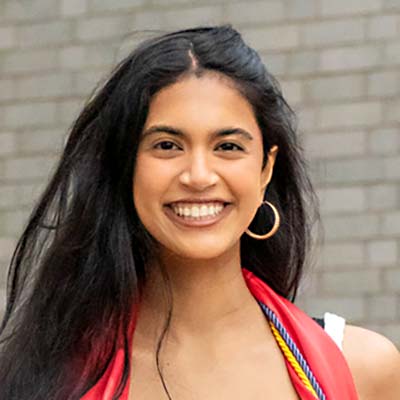
As she enters the job market, Shreya Thalvayapati has made herself a promise: if she goes a year in corporate life without seeing the human impact of her work, she’ll pivot.
Luckily, Thalvayapati, a data science and economics combined major, has plenty of experience throwing her data science skills behind social causes she believes in. At her first co-op, which she self-designed after cold emailing several organizations and startups that aligned with her principles, she wore multiple hats as a data science intern at a renewable energy company called muGrid Analytics. In addition to building predictive models that calculated the most active energy usage periods during the day, she also represented the company at industry networking events and conducted strategy-informing competitor analysis.
For her second role, Thalvayapati secured a position at Northeastern’s Burnes Center for Social Change as an AI4Impact co-op, where she aided in the research and development of an AI tool for reducing inequities in Massachusetts’ federal grant application system. She explained that some towns have more resources to hire professional grant writers than others, which can widen funding gaps between Massachusetts’ richest and poorest communities. To address this, Thalvayapati and fellow co-ops worked on Grantwell, a computing tool that streamlines the grant application process by simplifying funding language and drafting required documents.
“If and when the product gets fully deployed, I think it will make a big impact on these communities,” she said. “These federal grants can be up to $10 million, and that money can go towards things like education and public health.”
In both roles, Thalvayapati felt grateful for the chance to work “at the intersection of technology and social change,” a value she aims to keep pursuing after graduation.
“My time at Burnes was definitely where my passion for tech and social science cemented,” she reflected. “Every day was different, and I felt like I was actually making a difference. That was such a big draw for me, because I want to see the direct human impact of my work.”
Lana Do, Graduate Research Award
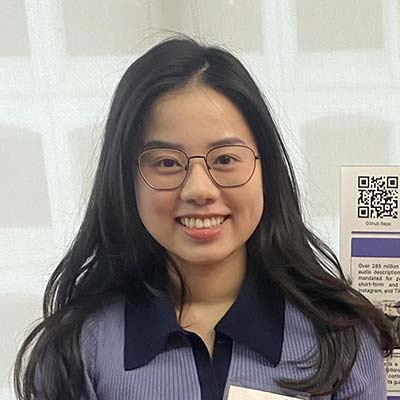
After getting a degree in industrial engineering at the University of Illinois Urbana-Champaign, computer science master’s student Lana Do was ready for a change of climate. She moved to San Jose to work in manufacturing, and after being in the Bay Area surrounded by tech, thought she might give computer science a try.
“I really liked the idea of being in the Align program and having people with different backgrounds bring different perspectives,” Do said.
After taking a few machine learning classes and serving as a research assistant for John Alexis Guerra Gómez on his responsible AI project, Do became interested in research. Gomez’s research looked at cases where AI could be harmful for humans, including discrimination.
“[We] published a paper and presented it at a small conference,” Do said. “It was the first time that I had written a paper and then presented it at a conference, so I thought that process was really interesting.”
Now, Do is working on another research project with Ilmi Yoon, one that caters to blind and low-vision users by using AI to create audio descriptions for social media content. Do plans to continue working on this research over the summer and then apply to PhD programs in the fall to pursue more research — not only for the academic aspect, but also to connect with other scholars.
“When I started doing research, I had more opportunities to talk to people about things that they were doing and ask for feedback,” she said, “and I found that experience very fun and rewarding. It has really opened me up.”
Kishore Sampath, Graduate Teaching Award
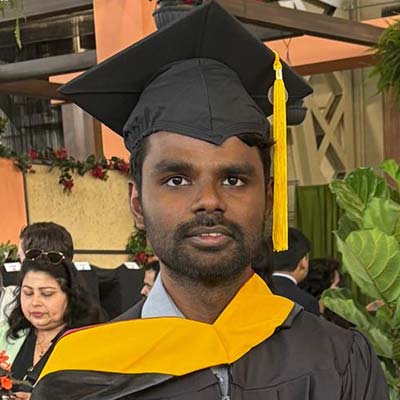
Not every educator enjoys holding office hours, but for Kishore Sampath, a master’s student in artificial intelligence, it was a favorite part of graduate school.
Sampath has worked as a TA for “Foundations of AI” since his second semester at Khoury College, and he attests that the job has enriched his abilities both as a teacher and student. Having earned a bachelor’s degree mechanical engineering in India, going back to basics with students in office hours gave him fresh eyes to think through the fundamentals of a new discipline.
“Students would come up with questions that dove deep into the foundational concepts of AI,” he said. “Answering questions like those has also helped me get a good understanding of the basics of machine learning and AI.”
Sampath also created materials for the course. Last semester, for the ethics module, he designed an assignment that asked students to analyze a decision-making model for bias towards certain demographics and taught them how to mitigate this bias. For another assignment, Sampath created a basic model trained on a popular large language model to teach students the concept of knowledge distillation, or the process of consolidating information from a complex model into a simpler one.
When he wasn’t busy being a TA, Sampath worked as a research assistant on various domains of machine learning, ranging from testing the privacy and security of machine learning models trained on bioinformatics data sets to developing bias mitigation algorithms for multimodal models. He intends to carry on his research on AI and machine learning after graduation, but he won’t leave his fondness for office hours behind.
“Even if I work in the industry or somewhere else, I’m planning to give occasional talks to Northeastern graduate students about AI,” he said. “Helping students build those foundational concepts is something I’ll always like.”
Yi Zu, Graduate Community Service Award
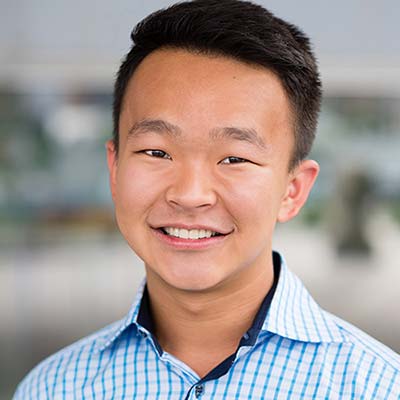
During his undergraduate days studying economics and business administration at Boston University, Yi Zu remembers feeling like his peers in computer science were learning how to do magic.
After working as a data researcher to analyze cryptocurrency trends, Zu’s distant curiosity morphed into a more practical understanding of computer science. He enrolled in an eight-week web development bootcamp to further his programming skills before eventually entering Khoury College’s Align program, a master’s pathway designed for students without undergraduate computing degrees.
As his coursework demystified the “magic” of coding, Zu found ways to leverage his business acumen and emerging technical skills as a Khoury College Graduate Recruitment Ambassador. He presented advice for networking and career advancement strategies at a Khoury graduate student lunch and learn, moderated an academic panel on different computing industry fields, and even helped organize a graduate Halloween party to promote social engagement. In addition to his official responsibilities, Zu made himself available to fellow master’s students by offering advice and mentorship.
“This fall, I stressed the benefits of going to hackathons because of the opportunities to meet people and the projects you can build in 24 or 36 hours,” he said. “I saw a lot of students at Boston University CivicHacks and they recognized me. It was really rewarding to see them follow my advice.”
Being a computer science newcomer also enables Zu to bring a valuable outside perspective to the table, both as an ambassador and a professional. He’s currently seeking software engineering and web development roles and is also interested in founding a tech startup that bridges business and technology. And of course, he’ll be around to advise younger colleagues.
“I push people to network more, because a lot of what I see is students focused on technical skills,” he said. “Nowadays, it’s not enough to be a programmer; you need other communication skills. That’s how my business background comes in handy.”
Neha Makhija, PhD Research Award
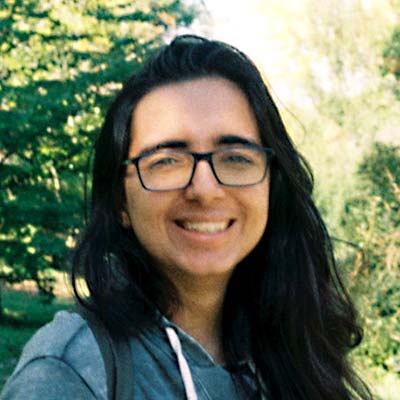
At 15, Neha Makhija learned computer programming to design video games. As an undergraduate, she started a competitive programming club at her school in India. But when it came time to pursue an advanced degree, she decided her long-term interest in computer science was a little less flashy — she wanted to work on problems that lack a clear solution.
Makhija’s PhD research has focused on reverse database management, which involves querying large databases to recognize patterns and identifying which kinds of queries are even possible to answer. With this research, she hopes to expand on the capabilities of traditional structured query language to ask more advanced data questions, using proof-backed algorithms to extrapolate predictive answers.
“You don’t just want to answer queries like ‘What is my current inventory?’ You want to ask questions like ‘Why?’ and ‘How?’ and so on,” she explained. “And you don’t want black box answers, you want actual data that supports your view, and you can prove that it does.”
Although this research is still in its experimental phase, Makhija believes it can be broadly applicable to practically any industry that deals with data, from finding causal patterns in the backgrounds of Grammy-winning artists to examining the resilience of the coffee supply chain. For her, database theory is a way to make sense of both existing and undiscovered human knowledge.
In the fall, Makhija will continue her research as she joins the University of Massachusetts Amherst as an assistant professor.
“I’m really excited to be on the other side of mentoring students and getting them involved in this kind of research,” she said. “I think there are a lot of cool ideas to be discovered and a lot of impact to be made on how we as humans understand our data and get the most information and knowledge out of it.”
Uzma Haque Syeda, PhD Teaching Award
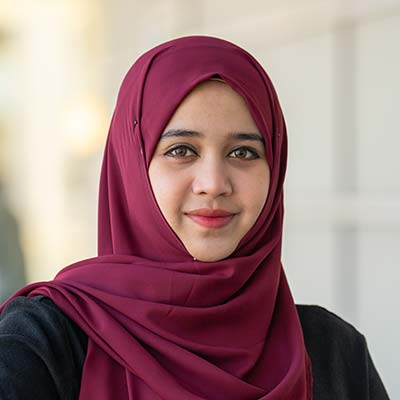
For Uzma Haque Syeda, TAing wasn’t just a side gig she picked up while completing her computer science PhD — it was also an essential aspect of her research.
Since Syeda joined the Khoury Vis Lab in 2018, her research has focused on data visualization and human–computer interaction. In 2020, she published a paper proposing a novel framework for visualization design studies that won “Best Paper” at CHI. She’s also collaborated with several local nonprofits to design data visualization solutions. Much of her work has centered on investigating the ways people conceptualize and interact with visualizations, which meant teaching was a no-brainer.
“I was teaching students how to design effective visualizations for real clients,” Syeda explained. “My research is based on visualization pedagogy, so TAing helped me hone my teaching skills and understand how students approach this type of work.”
It was one of Syeda’s own first-year service-learning projects, in which she created visualizations for a local neighborhood association, that inspired the design framework paper. Since then, she and her advisor, Associate Professor Michelle Borkin, have worked to incorporate more hands-on education into their data visualization class.
Over the course of her PhD journey, during which she gave birth to her first child, Syeda has had to overcome many obstacles. She came in as an outsider to the discipline, having studied electrical engineering as an undergraduate, and she said that the process of writing her dissertation with a demanding five-month-old was the most difficult thing she’d ever done. But she could always measure some of her success by the effusive feedback she’s received from students.
“I was really happy when I saw that students had positive things to say, and a lot of them reached out to me later to say that they were interested in data visualization research,” she said. “It’s really gratifying to know that I’m shaping how people choose to move forward in their careers, and I think that’s my biggest achievement from teaching.”
Lisa Oakley, PhD Community Service Award
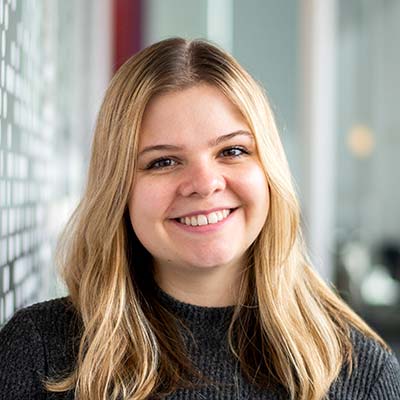
In September of 2020, Lisa Oakley started her PhD in computer science. Although the beginning of a new chapter should’ve been exciting, instead it was lonely and uncertain.
It was difficult to work from home during the pandemic without university equipment and resources. Without an in-person community of colleagues, Oakley felt isolated and unsure if other graduate students and workers were going through the same experience. But realizing that her problems weren’t going to solve themselves, she joined the graduate student worker union, GENU-UAW, and the Khoury College PhD Women’s Group as an organizer.
“I realized I had to connect with student-run organizations and work with other PhD students to create these spaces for ourselves,” she said.
When Oakley joined, the union was struggling with outreach and engagement. But thanks to the efforts of Oakley and her peers in boosting communication and building community power, GENU-UAW was certified in a formal election, and most graduate students have joined, with 1,300 grad student workers signing onto a petition in January calling for a fair contract. Likewise, membership in the PhD Women’s Group faltered in 2020, but the organization now hosts regular lunches consistently attended by 20 to 30 students.
When she graduates this year, Oakley will conclude a 10-year Northeastern journey that included stints as an undergraduate transfer student and a research assistant. During that time, she’s helped shape the growth of two caring communities that supply students with social connection, improved working conditions, support for underrepresented groups in computer science, and better communication with the university.
“This entire experience has propelled me to work really hard to help everyone find their power, find a way to come together and protect each other, and use this contract to set up systems to protect people going forward,” Oakley said. “In any space that I’m in going forward, I think the first thing to me is finding community and making sure that everybody feels safe and protected.”
Meghan Hirsch contributed reporting to this story.
The Khoury Network: Be in the know
Subscribe now to our monthly newsletter for the latest stories and achievements of our students and faculty