Author: Milton Posner
Date: 07.02.25
Anyone who’s ever contested an exam grade knows how frustrating it can be when a teacher won’t admit a mistake. But when the grader is an algorithm that can’t speak at all, it’s another matter entirely.
Such was the case in 2020 when the globally administered General Certificate of Education A-level exam, an entry qualification at many universities, was graded by an algorithm. As the algorithm’s deeply flawed scoring and the subsequent regrading drew criticism and protests from students in the UK, Upol Ehsan, an assistant professor at Khoury College and the faculty lead for the college’s initiative on responsible AI governance and policy, was talking to his former tutoring students about their experiences.
He had taken the GCE exams himself. He understood their inner workings. And two questions kept looming in his mind.
Why were students in the UK receiving nearly all of the media attention, even though the exams were administered all over the world, especially in the Global South? More importantly, why were students still furious after their scores had been revised (supposedly) without the algorithmic effect?
These questions prompted Dr. Ehsan to embark on a one-and-a-half-year journey of investigative journalism and rigorous research. After hundreds of informal conversations and interviews with students, teachers, and caregivers in Bangladesh, he announced the discovery of the “algorithmic imprint” at ACM FAccT in 2022.
Now Ehsan is taking that work to the next phase as part of a highly selective fellowship at Harvard University’s Berkman-Klein Center for Internet & Society (BKC), which strives to understand and tackle challenges at the nexus of computing and the social sciences.
Simply put, algorithmic imprint is the hangover that ensues when an algorithm is discontinued, but its harms remain unaddressed. Ehsan likens the algorithm to a cookie dough recipe; if the oven fails and you can’t bake the dough, you don’t get your flour and sugar back. The recipe has transformed the ingredients just as an algorithm reshapes its inputs.
“We often think that software being editable and reversible means that its impact doesn’t last beyond its lifetime, that if you use the kill switch, all harms are done and sins are forgiven. The imprint challenges how we assess algorithmic impacts by showing an entire afterlife that we weren’t seeing,” Ehsan explains. “Harms are hard to identify and measure during an algorithm’s lifetime, and after the algorithm is gone, it’s even harder. The imprint helps us to find those harms.”
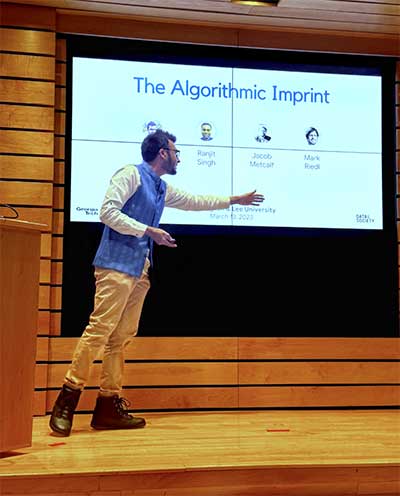
It also invites researchers to examine algorithmic harms beyond the usual monetary and property consequences.
“When you have an undignified, unjust experience with an algorithm, your lived experience matters when assessing AI harms, and that’s what we use to understand and evaluate harms,” Ehsan says.
And that means understanding harms to everyone, not just, for instance, harms to UK students whose admissions chances at elite universities were compromised by the GCE algorithm. It means understanding the impact of algorithms on countries outside of Europe, including Ehsan’s native Bangladesh.
“I was upset at the one-sided narrative and intent on making sure the Bangladeshi narrative wasn’t erased,” Ehsan recalls. “When these algorithms are made in the Global North without any input from the Global South where they’re deployed, we want to understand how they affect the people they’re deployed on.”
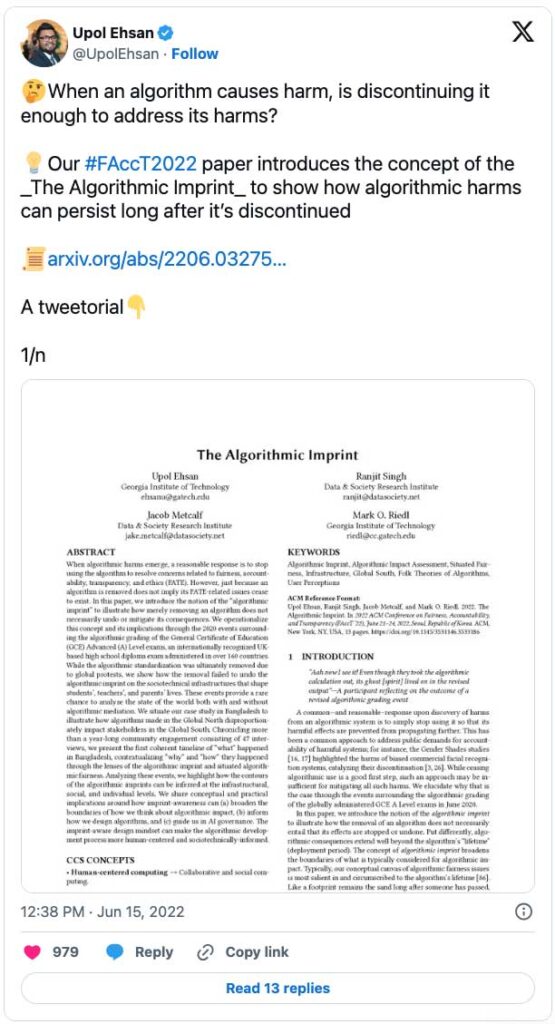
Everyday examples abound too. Ehsan notes the case of Stable Diffusion, a text-to-image AI model with millions of users.
“It was trained on the LAION dataset, and recently we found that the LAION dataset had instances of child pornography in it,” Ehsan says, noting that while the typical response would be to remove the data set, “Its data still lives in Stable Diffusion, which is still running. And there’s no way to surgically remove those bad data samples.”
Ehsan has centered his BKC fellowship work on a handful of key questions: How can we view algorithmic afterlife cycles — and develop a taxonomy of their harms — like we do for up-and-running algorithms? How can we extend algorithmic impact assessments to account for these afterlives? Can we design imprint-aware, degradable algorithms instead of building them to live forever?
“The work is very conceptual and there’s not a lot of prior work to build on, so you’re building the plane as you fly it,” Ehsan says, noting the BKC’s unusual and ideal funding of open-ended, self-guided research. “These questions can’t be answered only by computer scientists; we need lawyers, policymakers, and civil society to help address these problems. BKC’s ‘cohesive diversity’ is a perfect ecosystem for this kind of work.”
And the work won’t end there. Ehsan is bringing it to Northeastern as well, hoping to leverage connections between Khoury College, the Institute for Experiential AI, and the College of Social Sciences and Humanities to address interdisciplinary challenges.
Ehsan’s work on the algorithmic imprint has already been impactful nationally and internationally. It has created a new category of post-decommissioning, amended the National Institute of Standards and Technology’s globally adopted responsible AI framework, and informed AI policymaking — including algorithmic reparations — at international governing bodies like the United Nations.
“The imprint, fundamentally, is an accountability tracker; it doesn’t let AI deployers off the hook just because they decommissioned the AI system,” he says. “An imprint-aware approach will create AI systems to be more sociotechnically degradable, like biodegradable items.”
This story is the first of a three-part feature on Upol Ehsan and his research. The others detail his work on human-centered explainable AI and his efforts to facilitate the development of a national AI strategy in Bangladesh.
The Khoury Network: Be in the know
Subscribe now to our monthly newsletter for the latest stories and achievements of our students and faculty
Author: Milton Posner
Date: 07.02.25
The potential applications of AI in health care are numerous and undeniable. But what happens when, say, an AI assistant relays a cancer diagnosis, but its reasoning lies buried in numbers the doctor can’t untangle?
Upol Ehsan, who’s worked closely with oncologists, has seen AI’s power outpace its clarity. Understanding is power in an AI-driven world, and when the AI’s explanations are incomprehensible to lay users, the human–AI divide deepens.
Ehsan’s solution, which he has pioneered since 2020, is human-centered explainable AI (HCXAI), which strives to make AI decisions clear and accessible to expert and nonexpert users alike. Now an assistant professor and faculty lead for responsible AI governance and policy at Khoury College, Ehsan is on a mission to make AI systems explainable and responsible so that people who aren’t at the table don’t end up on the menu.
“HCXAI is a sociotechnical way of looking at the field that puts the human at the center,” Ehsan explains. “It’s a radical departure from the AI-first approach in that it aligns with what the human factor of explainability actually is. It democratizes explainable AI beyond experts and extends it to users.”
This explainability hinges on accountability — having the information to hold an AI system accountable — and contestability, the ability to ask the system “why” and challenge its outputs.
“You cannot have responsible AI without accountability, and you cannot have accountability without explainability,” Ehsan says. “If it’s a deep, feature-level, back-end explanation, for most lay users, that’s not actionable or contestable.”
Ehsan’s work in this area began when explainable AI (XAI) as a field was reborn around 2017. He kicked off with a landmark paper that was the first to make an AI agent think aloud in plain English. The paper also introduced rationale generation, a foundational concept that allows large language models like ChatGPT to reason aloud and explain themselves.
But whether humans would find the AI’s explanations plausible was still an open question. At the time, XAI was primarily algorithm-centered, and there were no methods to evaluate these systems from a human-centered perspective.
This blind spot became a turning point for Ehsan’s work, and it shaped his award-winning 2020 work “Towards Human-centered Explainable AI: A Reflective Sociotechnical Approach,” which coined “human-centered XAI” and helped define the field. The paper bridged AI, human–computer interaction, and critical computing, shifting the conversation from “how to open the black box” to “who opens it.”
“It was time we treated explainability for what it really is — a human factor, not just an algorithmic property,” Ehsan explains. “Who the human is matters. Riders of self-driving cars need different explanations than the engineers who built them.”
Ehsan’s HCXAI research has generated more than 25 peer-reviewed publications. Among them, his award-winning, oft-cited CHI paper “Expanding Explainability” introduced the idea of “social transparency,” which challenged conventional wisdom by showing that AI systems can be made more understandable without changing the underlying model’s transparency. Another pioneering paper, “The Who in XAI,” was the first to examine how users with and without AI backgrounds interpret explanations, revealing that both groups overtrusted them, but for different reasons. Later studies discovered “explainability pitfalls” — AI explanations from well-intentioned designers that still produce negative effects — and offered an actionable framework for designers and policymakers to close the gap between AI’s technical design and real-world use.
While most of the field chases seamless AI, Ehsan is leaning into its imperfections by introducing “seamful explainable AI.” Instead of making AI flawless and explaining why it does what it does, seamful XAI acknowledges that mistakes are inevitable, asks why the AI failed, and seeks to make its flaws useful. Ehsan likens it to Wi-Fi.
“Think about where the dead zones are in your home,” he says. “Knowing where the signal drops helps you avoid those spots and make better decisions. AI is no different. It performs unevenly, and recognizing those weak spots can empower users.”
Ehsan and his collaborators developed a three-step decision framework that guides users through identifying breakdowns, diagnosing their causes, and transforming those limitations into strengths. Their approach is already gaining traction; several Fortune 500 companies use it to stress-test their generative AI tools, and the National Institute of Standards and Technology has incorporated it into its globally adopted responsible AI framework. Ehsan’s research as a whole has informed the work of numerous health care, finance, and cybersecurity companies, and has shaped AI policies from leading global institutions including the United Nations.
But creating knowledge is only half the battle; sustaining a new field requires building and nurturing a community. In 2021, Ehsan spearheaded the creation of the flagship HCXAI workshop at ACM CHI. Since its inception, he has served as lead organizer, helping to grow the workshop into one of the longest-running in the conference’s history. It has welcomed more than 400 researchers, practitioners, and policymakers from almost two dozen countries.
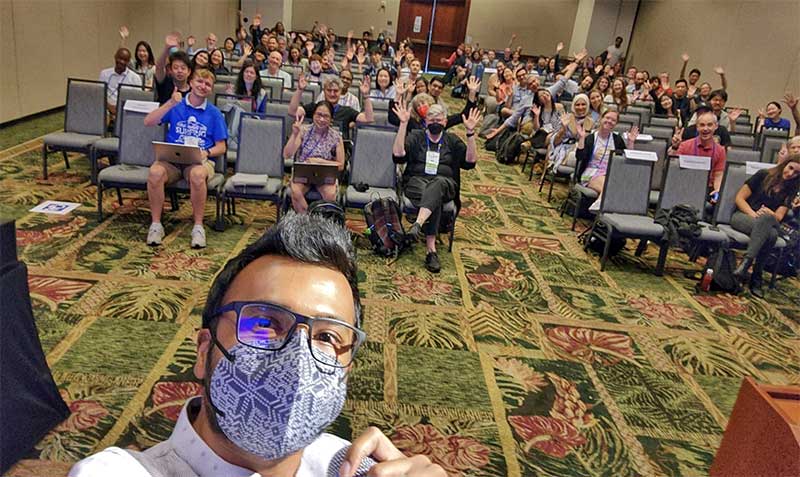
“My scholarship is important to me, but my pride and joy is the vibrant HCXAI community,” Ehsan reflects. “I’m constantly inspired by researchers who have taken the mission further than I could have imagined. Just recently, I saw that a new PhD position in HCXAI had launched at KU Leuven in Belgium. It is deeply rewarding to see the field come into its own.”
The CHI workshop’s fifth edition was held this year in Japan, with Khoury College Assistant Professor Saiph Savage joining Ehsan on the organizing team — cementing Northeastern’s role in shaping the future of human-centered AI.
“I’m thrilled to bring HCXAI to its new home,” Ehsan says. “Northeastern has some of the world’s best minds in human-centered computing. I cannot wait to collaborate and keep pushing to make AI serve humanity, not the opposite.”
This story is the second of a three-part feature on Upol Ehsan and his research. The others detail his work on algorithmic imprints and his efforts to facilitate the development of a national AI strategy in Bangladesh.
The Khoury Network: Be in the know
Subscribe now to our monthly newsletter for the latest stories and achievements of our students and faculty
Author: Milton Posner
Date: 07.02.25
When Khoury College Assistant Professor Upol Ehsan sat for an AI-focused interview with Channel24, one of the largest TV channels in his native Bangladesh, he did not anticipate what would follow.
A 15-minute segment became an engaging, hour-long chat. When it aired, millions tuned in to hear about the importance of AI for Bangladesh, Ehsan’s pioneering work on explainable and responsible AI, his decision to join Northeastern and lead the Human-centered Initiative on Responsible AI Governance and Policy, and why Khoury College and Dean Beth Mynatt are uniquely positioned to lead the future of AI.
The interview catalyzed national interest in Ehsan’s AI vision for Bangladesh. Before long, he was meeting with the Hon. Sharmeen Murshid, the adviser (leader) of Bangladesh’s Ministry of Social Welfare, to discuss the need for AI policy for the ministries under her leadership — and the potential for a national AI task force — in the world’s eighth-most populous country. What was supposed to be a brief 30-minute meeting evolved into a dynamic two-and-a-half-hour discussion.
“Moments like this are rare. Countries only get one true blank slate in their AI journey, and Bangladesh is at that inflection point. It can build an AI ecosystem from the ground up, learning from the mistakes of others,” Ehsan says. “But blank slates are double-edged, and without a national AI policy, the risks are real: deepfake pornography, harassment, fake news. Without care, AI could entrench injustice instead of alleviating it. Doing the right thing from the start is easier than fixing a mistake.”
During the conversation, Ehsan, Murshid, and Bangladeshi business leaders explored how AI could prioritize real-world impact and serve the public good. They discussed the contours of a potential national AI policy and task force, including who might participate. They emphasized the importance of Bangladesh’s hybrid talent — Bangladeshi experts who excel on the global stage yet remain deeply attuned to local needs. Ehsan later shared his vision document (“A Resilient Future: Human-centered National AI Vision for Bangladesh”), which Murshid forwarded to Dr. Muhammad Yunus, Nobel Peace Prize winner and the chief adviser (leader) of Bangladesh’s interim government.
There are many hurdles to clear before that vision can be realized. For one, Bangladesh is undergoing political and institutional reforms following a pro-democracy revolution in 2024.
“This type of revolution would have dismantled many countries, but this is where Bangladesh stands out; the people are remarkably resilient,” Ehsan notes.
Technical and institutional gaps remain as well. Ehsan points out that Bangladesh’s AI ecosystem must mature, and its national vision must move beyond generative AI hype to embrace more accountable, purpose-driven technologies.
“Over 65% of Bangladeshis are under 35, and the country has a large freelancing population,” Ehsan observes. “Building AI literacy within this young, trainable workforce will not only help mitigate job displacement, but it will lay the foundation for Bangladesh’s AI future.”
Ehsan also highlights the importance of engaging with the Ministry of Social Welfare.
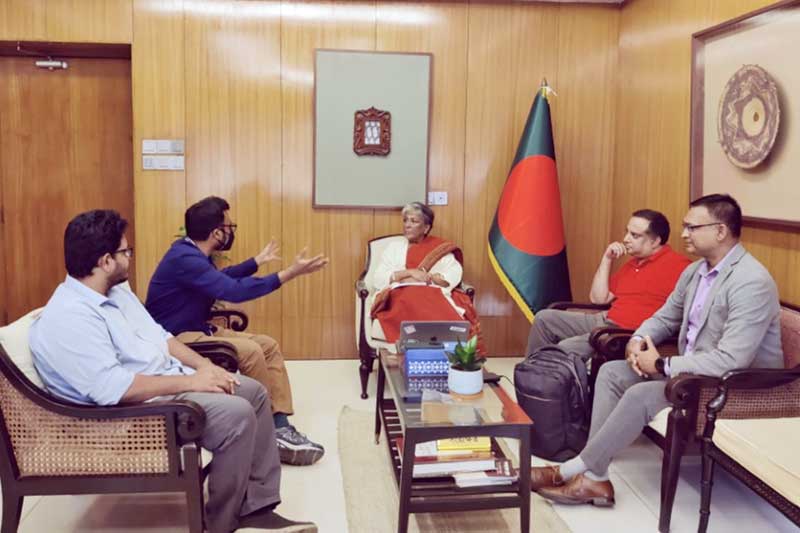
“As a human-centered AI researcher, I wanted to begin with the ministry that serves the most vulnerable populations,” he explains. “The Hon. Adviser, Ms. Murshid, is a sociologist by training and brings a sociotechnical lens to policymaking. She is also a deep thinker, which made the engagement intellectually stimulating.”
Their shared commitment to equity became the foundation for a conversation that bridged policy, ethics, and long-term national strategy.
“I knew I was at the beginning of something meaningful,” Ehsan says. “It’s great to have that kind of high-level buy-in. The Hon. Adviser and her team really felt the urgency to make AI safe. This was a conversation many had attempted, but this time, it landed.”
Although Bangladesh’s government is only an interim one, with elections projected to take place in 2026, Ehsan remains optimistic that the work will outlast the moment and spark lasting change. The discussions since that meeting have already proven fruitful; Bangladesh is planning its first National AI Summit, with Ehsan playing a key advisory role in strategizing and shaping the summit’s vision.
“Bangladesh’s AI story must be made in Bangladesh, not imported from elsewhere. I want the foundation to be there so the next government can build on it,” he says. “Bangladesh’s AI story is being written, and I’m honored to have the opportunity to shape its opening chapters.”
This story is the third of a three-part feature on Upol Ehsan and his research. The others detail his work on algorithmic imprints and his work on human-centered explainable AI.
The Khoury Network: Be in the know
Subscribe now to our monthly newsletter for the latest stories and achievements of our students and faculty
Author: Elizabeth S. Leaver
Date: 06.26.25
By any measure, Jeffrey Pan’s accomplishments as a data science undergraduate would be impressive. Two co-ops doing work he found meaningful and impactful. Concurrent research projects across multiple prestigious institutions. Mentoring peers as a teaching assistant. Being named a Huntington 100 scholar.
And it’s all even more impressive given that he was a full-time data science student for only two of his undergraduate years.
Pan, who graduated in May, started his Northeastern journey as an environmental and sustainability sciences major in the College of Science. While focusing on environmental science, he says he began to feel “like I was just missing a piece of my education.”
Pan comes from a family of coders who instilled in him a passion for sustainability. That, along with his growing awareness that he would need deep data knowledge to combat climate change, compelled him to add data science to his degree as a junior. It was the missing piece —and the one that would define the rest of his academic journey.
“I found out that there are so many different complex data sets … to measure how the environment and climate are changing. It’s a whole different scope that I never really discovered up until my junior year,” he says. “I’m very grateful there’s a combined major at Northeastern that allows me to use complex theories and code to solve one of the world’s biggest problems.”
During his first co-op as an energy data analyst at Veolia North America in Boston, Pan was part of a large-scale consulting project on carbon emissions that made him “fall in love with using coding languages and database tools” to tackle global climate change.
He and his team analyzed clients’ carbon and energy output metrics — comprising “billions of watts of energy,” he says — then built dashboards and visualizations that enabled clients to understand and reduce their emissions and usage. Pan found the experience so rewarding that after his co-op, he stayed on for a series of full- and part-time stints.
“I felt like it was contributing to a pretty awesome mission,” he says. “They gave me the opportunity to use all the tools that I’d been learning in school and apply them to the real world.”
Pan’s second co-op at Woburn-based Boston Metal, in which he scaled up the process of creating carbon-free (or “green”) steels, enabled him to “learn a lot more about the intricacies of databases and how we store and warehouse all the data in the real world.”
“[If] we scale up the process of creating completely carbon-neutral steels for industry … it’s going to reduce so much carbon emissions, so much energy usage, and we’ll make the world a better place,” he says.
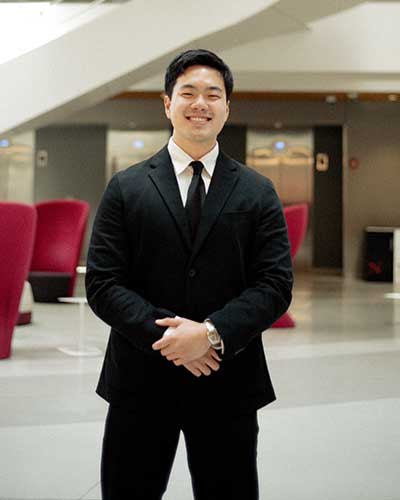
Concurrent with his classes and co-ops, Pan tackled research projects with multiple international institutions. The first, which he began in high school and continues to work on, is called “Beetlehangers.” In collaboration with Dr. Danny Haelewaters, Pan processed and cleaned data related to a newly discovered fungi called Hesperomyces harmoniae and its interactions with beetles. At the project’s outset, Pan recognized it as a “very cool interdisciplinary opportunity” that played to his own interdisciplinary bent.
“This really focuses on the ecology side of things, which I was very much exposed to in ecology science … and also database and Python and data structures and cleaning all the data, which I learned at Khoury College,” he explains.
When Haelewaters transitioned from Ghent University to the Czech Republic’s Academy of Sciences for a related project on parasitic interactions between bats, bat flies, and Laboulbeniales fungi, Pan followed, basing his senior research project (overseen by John Rachlin) on the work.
“The idea is to create a robust, structured database model to store these new records, these new interactions between a bat, its parasite — the bat fly — and then the bat fly’s parasite, the fungi,” Pan says of the project, on which he also remains a researcher post-graduation.
Human connection in a digital world
In reflecting on the breadth of his undergraduate experiences, Pan doesn’t hesitate when declaring which he considers the most rewarding: his two semesters as a teaching assistant in “Programming with Data.”
Pan’s desire to mentor younger students was informed by his own sometimes frustrating experiences in coding and advanced data sciences, times when “having a really good community — like all the TAs — really did help a lot,” he says.
Beyond handling thousands of questions from students, he says, he relished the opportunity to connect with others on a deeper level.
“Over four months you get close to [other students], you get to know how they learn, their learning patterns, what they’re struggling with,” he says. “You are that person to help them with everything that you can. And you learn a lot, too.”
And as the new graduate considers his past and future, he feels most grateful for that camaraderie.
“The human connection in a world that’s so digital and computer-focused is definitely the most important thing to me,” he says. “It’s not always just about using the hard skills that you’ve learned at school … it’s also the interdisciplinary and interpersonal skills.”
Even as he wades into a computing field in flux from AI advances, he leaves Khoury College grateful for all he has learned and experienced.
“I just know that I’ve gotten as much as I possibly can from this school,” he says.
The Khoury Network: Be in the know
Subscribe now to our monthly newsletter for the latest stories and achievements of our students and faculty
Author: Benjamin Hosking
Date: 06.24.25
Last year, 29 Khoury students took home honors at Northeastern annual Academic Honors Convocation. This year, it was 40 students earning a haul of Northeastern and external honors.
To meet some of the winners, click any of the linked names below, or simply read on.
Laurel and Scroll 100 (graduate students): Lahari Boni, Xiaolai Chen, Anikesh Ganesh Kamath, Seunghan Lee, Jordan Lewis, Aakash Mahalingam, Laasya Anantha Prasad, Harshika Santoshi, Diya Deepak Wadhwani
Huntington 100 (undergraduate students): Joshua Barde, Calli Colvin, Kerissa Duliga, Kathy Furman, Manvi Kottakota, Matthew Li, Annie Meaney, Gabriella Mitchell, Armina Parvaresh Rizi, Easha Patel, Nina Patel, Grace Preston, Brianna Rott, Alexzander Sansiveri, Reilly Teeter, Jasmine Wong
Outstanding Global Network Student Awards: Akash Sancheti (Arlington), Erdun E (Miami), Diya Wadhwani (Oakland), Yiwen Wang (Seattle), Richard Yue (Silicon Valley), Panxin Liu (Vancouver)
Sears B. Condit Award: Alexzander Sansiveri
Barry Goldwater Scholarship: Rohan Chopra
NSF Research Fellowship: Jake Ginesin, Elisabeth Leung, Conrad Zimmerman
Critical Language Scholarship: Matthew Chen
Fulbright Scholarship semifinalist: Shannen Espinosa, Jocelyn Ju
Outstanding PhD Student Award for Research: Dian Wang
Outstanding Master’s Student Award in Teaching: Jonathan Tarun Rajasekaran
Lahari Boni, Laurel and Scroll 100
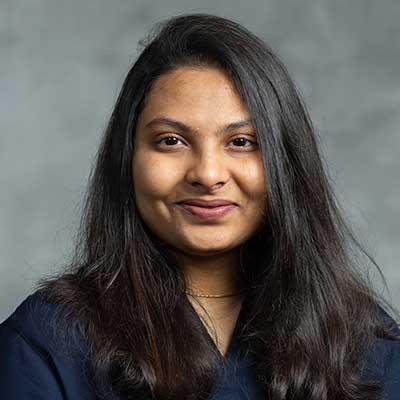
Lahari Boni is proud of her time as a master’s student in data science. She served on the Khoury Master’s Student Council as events coordinator and later as president, where she worked to build a stronger and more engaged student community.
Participating in research was another highlight. While on a research assistantship under Miguel Fuentes-Cabrera in collaboration with Foresight Health Solutions, Boni contributed to research on practical health care data applications to improve patient outcomes. On a research apprenticeship with Maitraye Das, she helped create an AI toolkit to help low-vision students improve their AI literacy. She also worked as a teaching assistant for Fuentes-Cabrera and for the College of Engineering’s Ramin Mohammadi in data science and generative AI courses.
After graduation, Boni is excited to explore professional opportunities in generative AI and data science.
Anikesh Ganesh Kamath, Laurel and Scroll 100
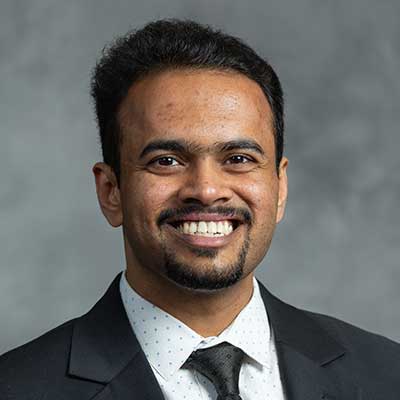
Anikesh Ganesh Kamath started his Northeastern experience well before arriving in Boston. He began by building a WhatsApp community of more than 300 incoming students and organizing three meetups for them in the summer before classes began, then continued by serving as a student representative for Northeastern events in India.
Kamath involved himself on campus as well. A Peer Pathways mentor for two semesters, he helped new students transition into graduate life at Northeastern. He participated in the Graduate Leadership Institute and was honored with the Emerging Graduate Leader Award. As a teaching assistant, he supported courses including “Foundations of Software Engineering” and “Human–Computer Interaction,” mentoring dozens of undergraduates in the process.
Laasya Anantha Prasad, Laurel and Scroll 100
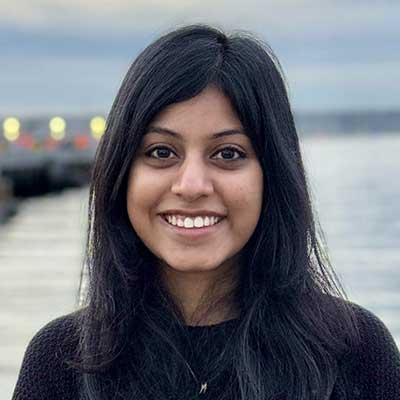
For data science master’s student Laasya Anantha Prasad, Northeastern has been an opportunity to learn, lead, and make a difference. As a teaching assistant for three courses, she helped students navigate complex topics and broaden their understanding. She also started Tutor Tuesdays (a peer learning and support group) and served as a member of the Data Science Hub and the Khoury Master’s Student Council. As a research assistant in the LearnBot Lab within the D’Amore-McKim School of Business, she contributed to human–AI interaction research.
While on co-op at Georgia-based fintech startup ValidFi, Prasad worked on predictive banking and business intelligence tools. She also won a Harvard-run datathon focused on agriculture, in which she and two other Khoury master’s students examined the relationship between agricultural production and farmer age.
READ: Khoury master’s students place first in Harvard agriculture datathon
Prasad plans to continue working at the intersection of data science and business, with a focus on explainable AI and technology accessibility.
Kerissa Duliga, Huntington 100
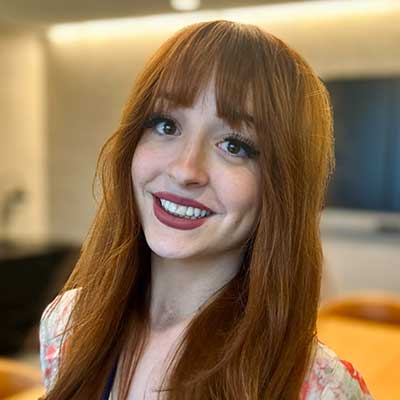
Kerissa Duliga has always believed in the power of Northeastern’s community, and she sought to strengthen that community across the university’s global network of campuses. She founded a branch of the Women’s Interdisciplinary Society of Entrepreneurship at the London campus, served as associate director of technology for the Northeastern Entrepreneurs Club, and was the outreach director for the Northeastern AI Club.
In her first internship at Sherwin-Williams, Duliga worked in intelligent forecasting, where she developed multivariate deep learning, machine learning, and time-series models to forecast multi-level company financials. In her second internship, she conducted machine learning research at the MIT Lincoln Laboratory in the Humanitarian Assistance and Disaster Relief Systems Group. In that role, she contributed to the National Disaster Medical System and to space medicine, even meeting with an astronaut and other NASA staff. Her work won first place in the laboratory’s summer research competition — plus an award for “most altruistic” — and her project will become an officially funded lab directive.
Duliga is currently working on scalable generative AI pipelines at her co-op with Priceline in New York City.
Kathryn Furman, Huntington 100
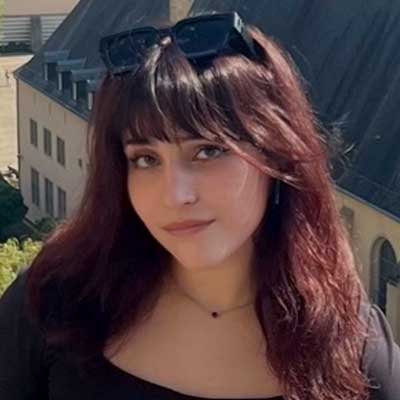
Kathryn Furman began at Northeastern as a chemistry major, but soon found herself immersed in computer science and math through the university’s Explore Program. Her interests also include cryptography, cybersecurity, and blockchain architecture.
Furman has taken part in a wide variety of experiences. On an actuarial co-op at John Hancock, she worked on life and annuity products system conversion. She spent a year in Amsterdam, where she continued her studies and worked on projects related to AI, concurrency, and multithreading. And through clubs, she pursued numerous interests beyond her major, including design as part of NU Sci Magazine and drone-building and racing through the Northeastern Aerospace Club.
Manvi Kottakota, Huntington 100
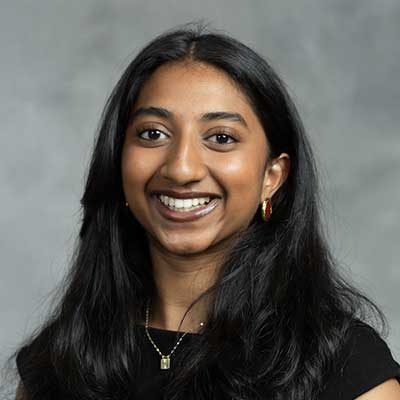
While at Northeastern, Manvi Kottakota has explored her technical and entrepreneurial sides. In addition to completing co-ops and internships in data science and machine learning at companies such as Johnson & Johnson, she served as co-president of the Northeastern Entrepreneurs Club, where she led programming for more than 1,500 students and launched the first-ever Husky Startup Hackathon. While studying abroad, she co-founded Northeastern’s Young Entrepreneurs in London.
Khoury College’s community has defined Kottakota’s experience at Northeastern, from her work as a data science TA to her interdisciplinary collaboration through organizations and clubs like Mosaic and Rev. This summer, she is interning in product management at IBM, and she hopes to continue working at the intersection of data, design, and impact-driven innovation.
Matthew Li, Huntington 100
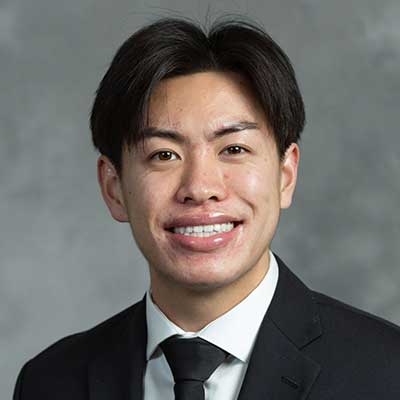
Matthew Li kept a busy life at Northeastern. A president of the Pi Delta Psi fraternity, he played a leadership role on campus and in the community. He explored Northeastern’s Seattle campus during a summer program. As part of the Generate club’s product development team, he worked on an internal chatbot to support their work. He also contributed to the Student Government Association as a software engineer.
While on co-op at Boston Partners, Li worked as a quantitative research systems analyst. He is working his second co-op at Wellington Management this summer as part of the Investment Strategy Platform Technology team and, after finishing his last year, he plans to travel before entering industry or a master’s program.
Gabriella Mitchell, Huntington 100
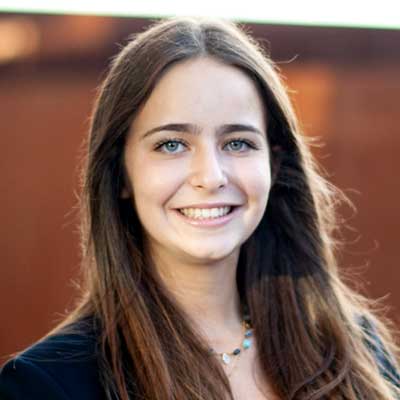
Gabriella Mitchell’s passion for software engineering and startups has fueled her academic journey. She joined TAMID at Northeastern, where she served as director of tech consulting foundations and taught new members the fundamentals of success in tech consulting. Committed to bridging the gender gap in computer science, she volunteers with Northeastern’s Women’s Community of Code.
Mitchell completed her first co-op as a full-stack software engineer at financial technology company Numerated, where she developed a novel financial statement filtering feature using Python and TypeScript, enhancing efficiency for live users of the loan origination platform. She won first place in the 2024 InnovAIte Hackathon held at Northeastern, where her team developed EduFlex, a personalized learning platform that links a user’s project idea to resources like YouTube tutorials, breaks it down into concrete steps, and highlights video segments relevant to the project.
During her recent study abroad in Madrid, Mitchell took her learning beyond the classroom while immersing herself in a new culture and practicing her Spanish. She is currently working as a software engineer intern at ServiceNow, which she will follow up with a fall co-op at Purple Carrot, a Massachusetts plant-based meal kit company.
Armina Parvaresh Rizi, Huntington 100
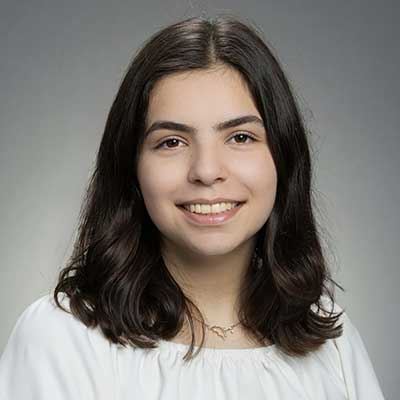
Armina Parvaresh Rizi has combined service opportunities with hard work within co-ops and student clubs. While in her first year, she volunteered with Little Brothers – Friends of the Elderly to build friendships with — and support for — the elderly in Boston. She served as a teaching assistant for two semesters of “Introduction to Artificial Intelligence” and “Discrete Structures” and as an NU presidential ambassador, allowing her to participate in university events and learn more about Northeastern’s successful alumni.
Rizi joined the newly formed Khoury Undergraduate Student Advisory Board and the technical co-ed fraternity Kappa Theta Pi, where she serves as VP of technical development. While on co-op at SpaceX, she worked on the Starlink team.
Rizi looks forward to graduating in the fall and starting full-time work as a software or machine learning engineer.
Grace Preston, Huntington 100
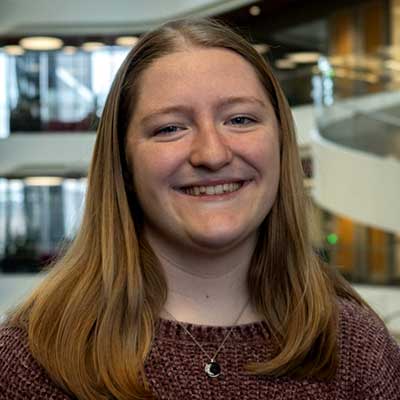
Grace Preston, a first-generation college student, participated in the Summer Bridge Scholars Program in 2022 before her first semester. She says it helped welcome her to a community that pushed her to the Dean’s List semester after semester.
But Preston’s success extends far beyond the classroom. She has been part of Northeastern’s club women’s rugby team since 2022 and now serves as president. She works as a referee for a variety of intramural sports. She’s set to follow up a Dialogue of Civilizations in Spain studying photography and architecture with another in Australia for software engineering, followed by a co-op on MORSE Corp’s security compliance team solving interdisciplinary national security problems. She has also worked for the United States Attorney’s Office’s Systems/IT unit.
Brianna Rott, Huntington 100
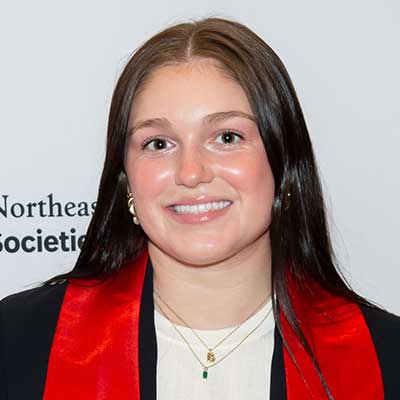
Brianna Rott is going into her fourth year as a cybersecurity and criminal justice major, and with her impressive array of co-op and internship experiences, she’s well prepared for her planned federal career in cyber crime and counterterrorism. Her adventures have included a co-op in the Medicaid Fraud Division of the US Attorney’s Office for the District of Massachusetts and the CyberCorps Scholarship for Service, and she’s interning this summer with the cyber crime and child exploitation group within the Department of Homeland Security.
Rott serves on two committees of her sorority, Alpha Chi Omega, including as the technology and website chair. She spent two years as the marketing director for Northeastern Club Gymnastics and now serves as the secretary. And after being inducted into the criminal justice honor society, Alpha Phi Sigma, she will join their executive board in the fall as the social media manager.
Alexzander Sansiveri, Huntington 100 and Sears B. Condit Award

Alexzander Sansiveri’s Northeastern tenure was marked by leadership and research. By founding the AI Perception Lab, he removed barriers for students researching AI, allowing them to pursue their work in a structured, personalized framework with mentorship from PhD students. As president of the AI Club, he championed accessibility through hackathons, a Women in AI Series, lab tours, and technical bootcamps. He established the Quantum Community to demystify quantum science and make its concepts and applications accessible to students across disciplines.
Sansiveri’s professional experiences include two co-ops: AI human–computer interaction research at LISN in Paris and computational neuroscience work at the Meditation Research Program of Harvard Medical School. For two years as a lab manager and programmer at Northeastern’s Language and Mind Lab, he explored cognitive concepts including implicit biases, theory of mind, and psychological dualism, and contributed to research examining subconscious processes through the lens of AI and psychology.
Akash Sancheti, Outstanding Global Network Student Award (Arlington)
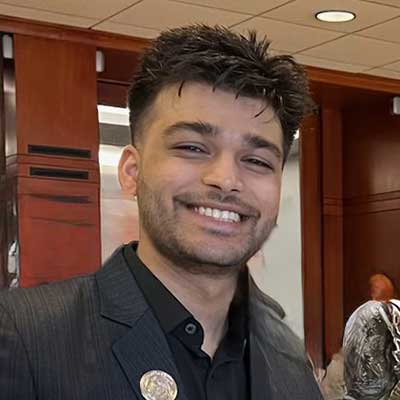
Akash Sancheti arrived on Northeastern’s Arlington campus as the campus itself was arriving on the scene.
“Nobody knew the area and people weren’t connecting with each other,” Sancheti says of the new campus.
Sancheti quickly began building a community. He founded the Arlington Explorers Society, which organizes group outings to areas in and around Washington, DC. The group has enabled students to meet through hikes and cultural activities, making the campus feel more like home.
Sancheti also served as a global recreation ambassador, planning events and collaborating with other Northeastern campuses to brainstorm and foster community. He was a TA for “Fundamentals of Cloud Computing” and was nominated for Northeastern’s Outstanding Master’s Student Award in Community Impact.
After graduation, Sancheti plans to work as a teaching assistant at the Institute for Computational and Experimental Research in Mathematics at Brown University.
“My experience here at Khoury College has set me up for this role,” he says. “I’ve been a TA and I’ve built up communities. This summer, I’ll be doing both.”
Yiwen Wang, Outstanding Global Network Student Award (Seattle)
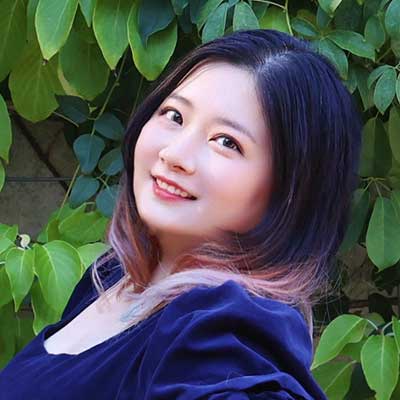
After earning her PhD in law, Yiwen Wang transitioned to Khoury College’s master’s in computer science program. As a founder of Tech@Crossroads, she grew the interdisciplinary student group to more than 350 members in one year by offering career guidance, technical workshops, and project-based learning opportunities. As president of Girls Who Code College Loop Seattle, she advocates for women in tech and facilitates professional discussions at events like the Grace Hopper Celebration. At Uplift NW, she developed software solutions to help disadvantaged people find employment.
This summer, Wang is interning in software development at Amazon, focusing on personalization technologies. After graduation, she plans to work as a backend engineer, building systems that connect interdisciplinary fields and drive societal impact.
Rohan Chopra, Barry Goldwater Scholarship
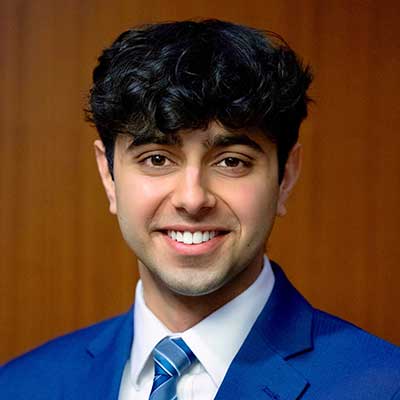
Rohan Chopra is a third-year data science and biochemistry major whose passion for improving health care accessibility and patient outcomes has led him to research at the intersection of public health and AI. He aims to leverage machine learning to address critical issues in health care, particularly in trauma-related outcomes, imaging-based risk prediction, and patient-centered clinical decision-making.
In addition to his work at Northeastern, Chopra has researched at the National Institutes of Health, Mass General Brigham, the Broad Institute, and the MIT Sloan School of Management. His interdisciplinary approach led to multiple peer-reviewed publications and significant grant funding, including the Northeastern PEAK Ascent, Summit, and Shout-it-Out awards. He aspires to become a physician–scientist specializing in computational health.
Jake Ginesin, NSF Research Fellowship
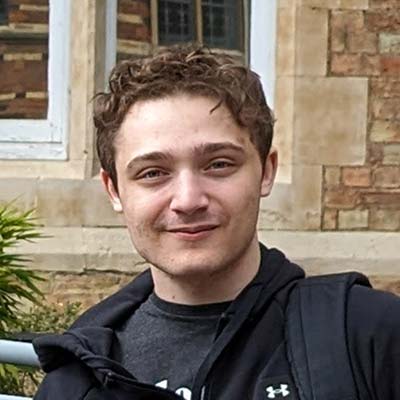
Before college, Jake Ginesin had little experience with programming and mathematics. Four years later, CS and math double major in hand, he has a truckload of research experience under his belt.
Under Cristina Nita-Rotaru, Ginesin researched automated reasoning for simple mathematical statements and graphing problems, then officially joined Nita-Rotaru as a research assistant to study cybersecurity and distributed protocols. He researched at the University of Southern California, the University of Oxford, Harvard University, and Northeastern’s College of Engineering, bouncing between automated bug-finding techniques, computer architecture, and telecommunications protocols. Along the way, he’s contributed to four published papers and won both the 2025 Internet Research Task Force Applied Networking Research Prize and Khoury College’s Undergraduate Research Award.
Starting this fall, Ginesin will put his research chops to further use as he pursues a security-focused computer science doctorate at Carnegie Mellon University.
“Modern society has all this computing infrastructure and computer systems that we rely on for pretty much everything,” he says. “The least we can do is ensure that it’s reliable and secure.”
Shannen Espinosa, Fulbright Scholarship semifinalist
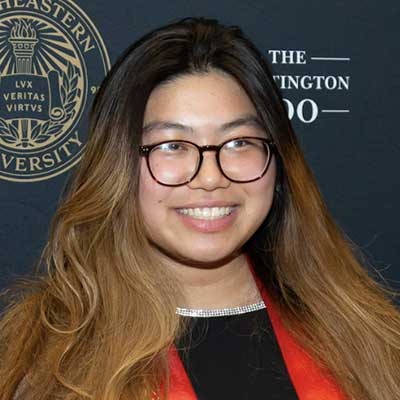
FULL STORY: Renaissance woman: Shannen Espinosa blends quantum computing, vaccine research, and digital diplomacy
Passions in public policy, medicine, and computing, along with a fanatical work ethic, have fueled Shannen Espinosa’s remarkable — and growing — list of roles and accolades.
Developing universal nanoparticle coronavirus vaccines at Harvard University. Winning an MIT quantum computing hackathon and representing the US at an international hackathon. Training machine learning models to identify Alzheimer’s pathology for drug development at the University of Oxford. Developing algorithms to further UN diplomacy efforts. Addressing racial health equity gaps as part of the Massachusetts Department of Public Health. Interning with US Representative Lori Trahan.
“All of the work comes from my goal to help others and make an impact in my community,” Espinosa says, noting that after seeing the impact of malaria and dengue in her native Philippines, she wants to use computing and AI for “faster and more efficient drug discovery across infectious diseases.”
Dian Wang, Outstanding PhD Student Award for Research
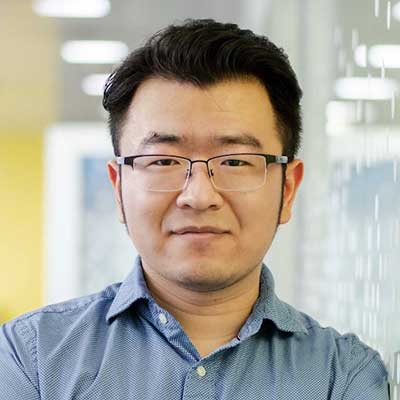
Inspired by the success of the AI program AlphaGo, and advised by Robert Platt and Robin Walters, Dian Wang researches machine learning and robotics, aiming to use symmetry to improve the learning efficiency of robots. His paper “Equivariant Diffusion Policy” was awarded Outstanding Paper Award Finalist at the 2024 Conference on Robot Learning.
WATCH: Khoury Story: Dian on Researching Machine Learning and Robotics
Wang also received the JP Morgan Chase PhD Fellowship in 2023. He completed two internships at RAI Institute, where he worked on machine learning and robotics. After graduation, he plans a career in academia, one in which he hopes to be as good a professor and advisor as the ones he’s had at Northeastern.
The Khoury Network: Be in the know
Subscribe now to our monthly newsletter for the latest stories and achievements of our students and faculty