Author: Caroline Baker Dimock
Date: 09.02.25
When Wensheng Mao arrived at Northeastern in 2009 as a computer science and psychology major, he expected to leave with a degree, some work experience, a better grasp of English, and knowledge of Java and AI.
What he did not expect was to meet his future wife. But in the summer of 2010, during his first co-op, chance and his Boston commute changed that.
Wensheng had just landed a software engineering co-op at Isobar, an e-commerce and digital marketing company whose clients included Adidas, Coach, HBO, Coca-Cola, JBL, and other high-profile brands. The only issue? The commute.
“About one hour by bus, with a transfer,” Wensheng recalled. “Driving along the Charles River would take only about 15 minutes.”
With that in mind, Wensheng bought a car. It was while discussing this in the West Village H lab, Wensheng’s favorite spot on campus, that his future wife introduced herself.
“Someone tapped my shoulder, and they said, ‘Hey, are you also going to Isobar for co-op?’” Wensheng said. “That was the first time I met her, in the lab because we were both doing homework.”
That student was Zhe, a first-year graduate student in computer science. She had started her co-op a month earlier, facing the same long commute from Fenway.
“For her, taking the bus every day was a challenge. She sometimes fell asleep and missed the stop. So, she suggested we carpool,” Wensheng said. “I didn’t know her at all, but it made sense — we were going to the same place every day and we both lived near campus in Fenway.”
From then on, Wensheng picked up Zhe each morning. They drove to the office together, worked together, and took lunch breaks together.
“We got to know each other very quickly,” Wensheng said. “We talked about work, computer science, and being international students from China.”
Both were navigating a new country, a new language, and a demanding field of study.
“We were learning English and Java at the same time,” Wensheng said. “It was challenging; my first semester I understood maybe half of what the professor said. But sharing those struggles made our connection stronger.”
Wensheng and Zhe began spending time together outside of work as well, meeting at birthday parties for mutual friends or catching up on campus. Within two months, they were officially a couple. And although their co-op ended six months later, their relationship did not. Within three months, they moved in together.
“It may not be the advice I’d give everyone,” Wensheng said. “But for us, it felt natural.”
Periods of long distance would follow. Wensheng’s second co-op took him to Intuit in San Diego while Zhe stayed in Boston for the final year of her master’s degree. Upon graduating, Zhe moved to California while Wensheng stayed in Boston to complete his undergraduate degree.
“We were apart for about a year and a half. Sometimes I flew back to Boston, sometimes she visited me, or we’d meet in places like Las Vegas,” Wensheng said.
Once they reunited in California following Wensheng’s graduation, they never had to do long distance again. The couple married at San Francisco City Hall in 2017, had their first son the following year, and welcome their second two years after that. Today, they live in the Bay Area, where Wensheng works as engineering manager at Airbnb and Zhe continues her tech career at Meta. Wensheng still credits Northeastern’s co-op program — and Khoury College — for bringing them together.
“Without co-op, we might never have met,” Wensheng said. “We’d have been at different companies with no reason to cross paths.”
Still, he’s careful to add a disclaimer.
“I don’t want to promote office romances,” Wensheng said with a laugh, noting that their story is more about the human connections that can form over shared challenges, cultures, and experiences. “We were both far from home, trying to learn and adapt. That bond is powerful.”
For current Northeastern students, Wensheng’s advice is straightforward — be open to small opportunities.
“I was just talking about my co-op in the lab. If she hadn’t overheard me, maybe nothing would have happened. Sometimes it’s those small moments that change your life,” he said. “I met my lifelong partner and best friend. The relationship has been steady, supportive, and full of understanding. And it all started with a simple question: ‘Are you also going to Isobar for co-op?’”
The Khoury Network: Be in the know
Subscribe now to our monthly newsletter for the latest stories and achievements of our students and faculty
Author: Madelaine Millar
Date: 08.26.25
As Khoury College’s newest faculty begin their research and teaching, let’s take a moment to meet them. For faculty who are beginning their appointment this year but who were announced last year, see our previous announcement.
Click a faculty member’s name to jump to their section, or simply read on:
Terra Blevins
Assistant professor, starting fall 2025 in Boston
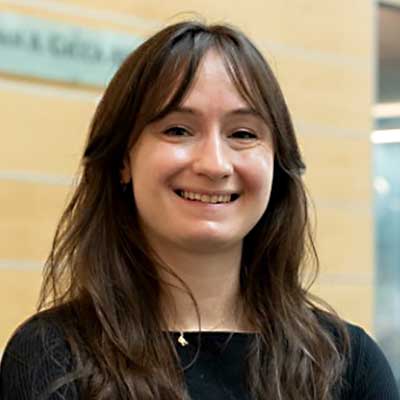
Blevins is interested in linguistic analysis of natural language processing (NLP) models and multilingual NLP. While completing her PhD at the University of Washington, she focused on how multilingual models acquire new language unsupervised, and on designing multilingual modeling approaches to better represent low-resource languages. She also spent time as a visiting researcher at Facebook AI Research and as a postdoctoral researcher in the Vienna NLP group at the University of Vienna.
Upol Ehsan
Assistant professor, starting fall 2025 in Boston (Khoury research fellow in 2024–25)
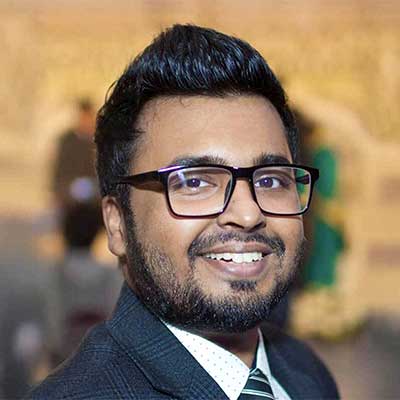
Ehsan’s mission is to make AI systems explainable and responsible so that people who are not at the table do not end up on the menu. He coined the term “human-centered explainable AI” and his work has informed responsible AI policies at policies at the United Nations, Mozilla Foundation, and the National Institute of Standards and Technology. In addition to his role as an assistant professor at Khoury College, Ehsan is also a fellow at Harvard University’s Berkman Klein Center for Internet & Society; an affiliate at the independent nonprofit research organization Data & Society; and an advisor for Aalor Asha, an educational institute he started for children subjected to child labor.
READ: Khoury News’ three-part series covering Ehsan’s work on the harms of dead AI systems, human-centered explainable AI, and AI in his native Bangladesh
Gabriela Gongora-Svartzman
Associate teaching professor and director of computing programs in Miami, started spring 2025
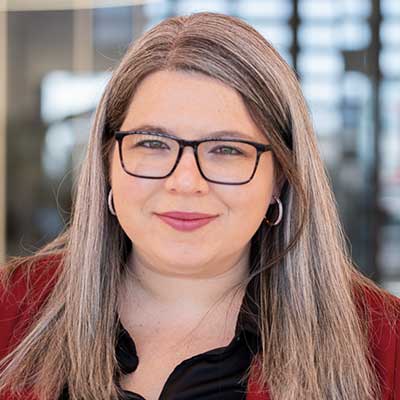
Gongora-Svartzman is deeply committed to inclusive and innovative computing. That value shapes everything she does — her leadership as Khoury College’s first director of computing programs in Miami, her research into ethical machine learning frameworks for decarbonization strategies, and her pedagogical approach as a longtime professor of data analysis and machine learning. Svartzman also chairs the Committee on Teaching and Learning at the Institute for Operations Research and the Management Sciences (INFORMS), and she enjoys mentoring students in data-focused competitions.
Lunjia Hu
Assistant professor, starting fall 2025 in Boston
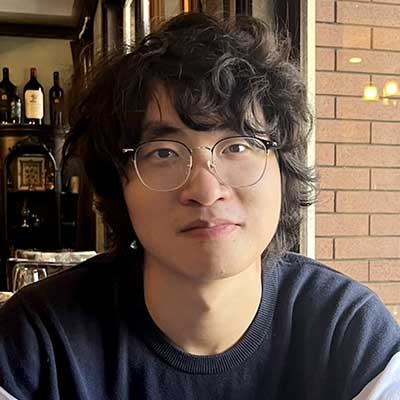
Hu’s theoretical computer science research explores the foundations of trustworthy machine learning. A member of the Northeastern Theory Group, he researches topics from uncertainty quantification to algorithmic decision making to learning theory. Before joining Khoury College, Hu was a postdoctoral fellow at Harvard University’s Center for Research on Computation and Society. He is looking for new PhD students and encourages interested candidates to reach out.
Xiang (Jenny) Ren
Assistant professor, starting fall 2025 in Boston
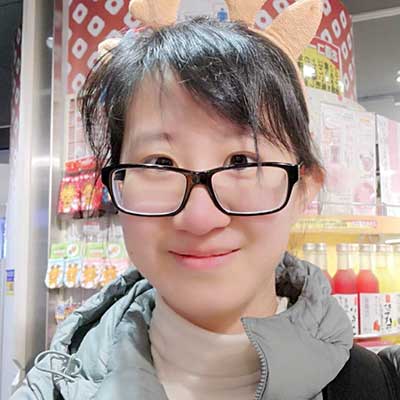
Ren’s work focuses on how to build better performance and reliability into system software, and on the tools that could help developers achieve those goals. Her work has appeared in such conferences as OSDI, SOSP, FAST, and FSE. Ren is a member of the Systems Research Group, and she looks forward to carrying out innovative research with motivated students.
Jayshree Sarathy
Assistant professor, starting fall 2025 in Boston
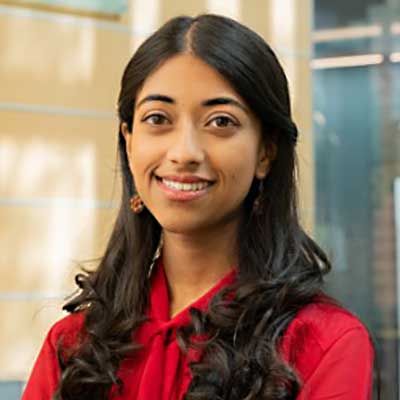
Sarathy blends technical computer science expertise and social science theory to explore responsible data science, with a focus on privacy and data access. Her work analyzing public-interest data infrastructures — e.g. the Wikimedia Foundation — has been published in numerous conferences and journals, including ACM CHI, CSCW, the Journal of Survey Statistics and Methodology, and the Harvard Data Science Review. As an assistant professor and member of the Cybersecurity and Privacy Institute, Sarathy looks forward to encouraging the next generation of technologists to center sociotechnical perspectives and political advocacy in their work.
Lorenzo Torresani
Professor and President Joseph E. Aoun Chair, starting fall 2025 in Boston
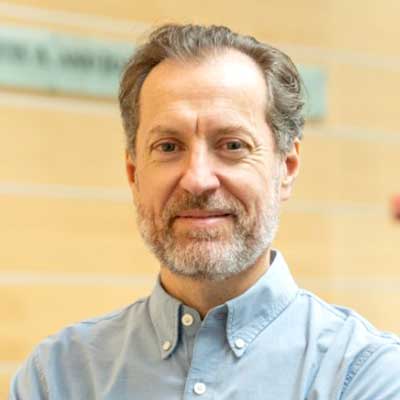
Torresani intends to build a research lab focusing on the creation of “perceptual AI assistants” — AI agents that use wearable cameras to observe, understand, and assist humans in daily tasks. He is fascinated by the way that vision is effortless for humans yet challenging for machines, and he wants to create multimodal video understanding systems that go beyond recognizing user actions to discern how an activity is being performed. His multimodal video recognition research has been recognized with a National Science Foundation CAREER Award, a Google Faculty Research Award, three Facebook Faculty Awards, and a Fulbright US Scholar Award.
Rebekah Tromble
Professor, starting fall 2025 in Boston, jointly appointed with the College of Social Sciences and Humanities
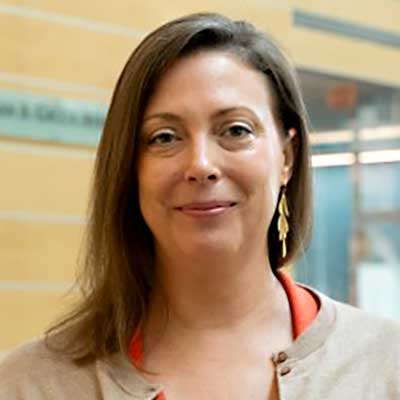
Tromble, who was an affiliate fellow of Northeastern’s Internet Democracy Initiative even before joining the university as a professor, studies political communication, digital research methodology, and research ethics. She is a leading expert on digital platform data access for research and a co-founder of the Coalition for Independent Technology Research and is particularly interested in the impacts of toxic and abusive content on social media.
Jia Zhu
Assistant teaching professor, starting fall 2025 in Miami
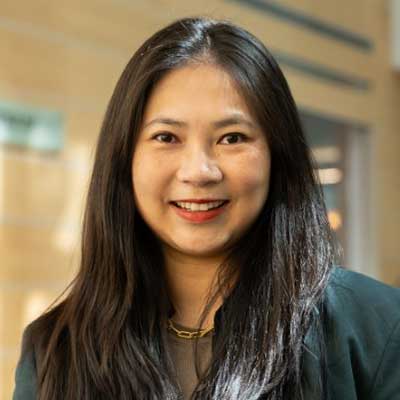
Zhu strives to use inclusive, hands-on, research-grounded teaching approaches to empower computing students from all backgrounds with the knowledge, mindset, and adaptability to thrive. She completed her PhD with a focus in computing education in 2024, then spent a year as a postdoctoral scholar at Ohio State University, where she researched ways to enhance learning experiences, expand supports, broaden participation, and improve retention in computing education. Zhu was drawn by Khoury College’s culture of inclusive, interdisciplinary learning, and will teach foundational courses in computer science and AI.
The Khoury Network: Be in the know
Subscribe now to our monthly newsletter for the latest stories and achievements of our students and faculty
Author: Emily Spatz
Date: 08.21.2025
Humans can be easily influenced by language that is one-sided, especially in complex fields like medicine. But a new Khoury-led study shows that large language models, too, can be tricked by bias.
The team, led by PhD student Hye Sun Yun, researched whether LLMs — or AI models trained on text data to generate human-like responses — are susceptible to “spin,” or the tendency of researchers to present their findings in a positive light. By asking various types of LLMs to answer questions about treatment efficacy based off existing study abstracts, Yun and her team found that though AI models can identify spin, they are still easily influenced by it — even more so than clinicians and medical researchers.
“Experts are more likely to say more positive things about an abstract with spin compared to those without,” Yun said. “We wanted to see whether this was true for LLMs and explore the dangers around that, especially when you use them to interpret results.”
With publishing pressures to answer to, researchers sometimes spin their findings in an effort to show an effective treatment or mitigation strategy. This can lead them to exaggerate results or pass over aspects like treatment side effects in their abstracts, Yun said. As more medical professionals use AI to summarize studies and research treatments, AI’s susceptibility to medical spin could mislead them into believing a treatment is more effective than it actually is.
“You are incentivized to make it sound better,” Yun added. “The medical field is a high-stakes setting where a lot of clinicians’ decisions and even public health policies are determined by these randomized control trials.”
As LLMs are increasingly used to summarize and analyze medical data, researchers hope the study, published in May, will make AI developers and users — including doctors — more aware of their shortfalls.
In the four-month research project, a six-person research team that included Khoury undergraduate (now recent alumna) Karen Zhang and Sy and Laurie Sternberg Interdisciplinary Associate Professor Byron Wallace used 30 existing abstracts. Each abstract had two versions — one exaggerated to make a treatment sound more effective, the other containing no embellishment. Researchers then fed the abstracts to the LLMs, asking the AI models to detect spin and measure the effectiveness of each treatment. The results showed that models can usually detect bias but are still influenced by it.
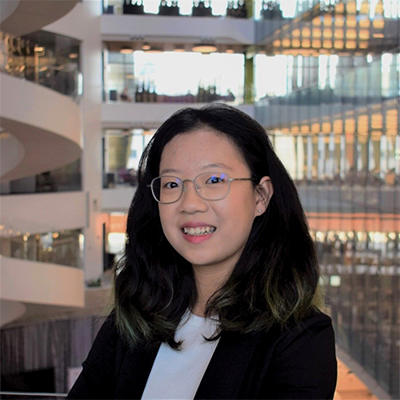
The researchers also tested whether bias could be reduced by telling models that an abstract had spin, or asking them to identify it. While this did reduce the likelihood of models exaggerating the benefits of certain treatments, it did not completely fix the problem, said Zhang.
“It provides the model with a bit more context and changes the outputs — even with a very simple prompting approach,” Yun added.
The study also determined that LLMs would continue to spin findings when generating simple, easy-to-read summaries of abstracts, possibly leading people to misinterpret jargon-heavy medical research.
“This is a phenomenon that can happen across all different types of models, regardless of what data it has been trained on,” Yun said, adding that the team worked with 22 different models — including some models specifically trained on medical data — and had to devise unique prompts for each to compensate for differences in the models’ training.
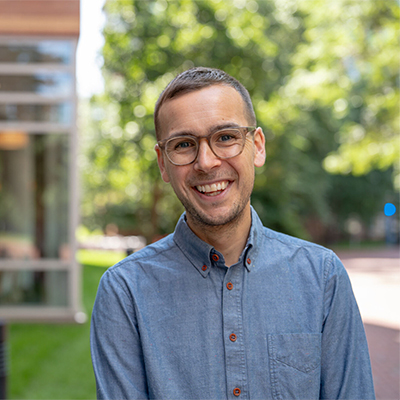
While it’s not clear why LLMs are particularly susceptible to spin when compared to humans’ susceptibility, Yun said it could be because of LLMs’ tendency to please the user. Some of the questions the researchers asked could be interpreted as a user trying to find evidence of a treatment’s benefits.
“When you think about it, the model is actually doing a great job in its task. The issue is the data that we’re providing is already biased, and we’re just asking the model to read the text and interpret it,” she said. “LLMs are sensitive to the style and tone of writing rather than focusing on the objective aspect, which is the numerical results. They are much like humans in this way.”
To prove the study’s conclusions further, Zhang is working to add an additional 150 abstracts to the dataset. In the first trial, only oncological studies were used, but the team is hoping to show that the phenomenon extends across medical specialties.
“Hopefully the additional data will give some new insights,” Zhang said.
Meanwhile, Yun is moving on to a related study about how asking LLMs leading questions can influence responses, even when the data remains the same.
“A lot of this ties back into my dissertation of looking at how we can build safer and more trustworthy LLM technologies for health information access,” she said.
The Khoury Network: Be in the know
Subscribe now to our monthly newsletter for the latest stories and achievements of our students and faculty