Author: Benjamin Hosking
Date: 05.28.26
Companion read: Khoury team helps Oakland government employees navigate AI productivity and safety
Even in the early stages of their undergraduate careers, Khoury students can deliver real value to local businesses and nonprofits. Thanks to a $1 million grant from the Kapor Foundation and an earlier sponsorship grant from financial technology company Block, students at Northeastern’s Oakland campus are doing just that.
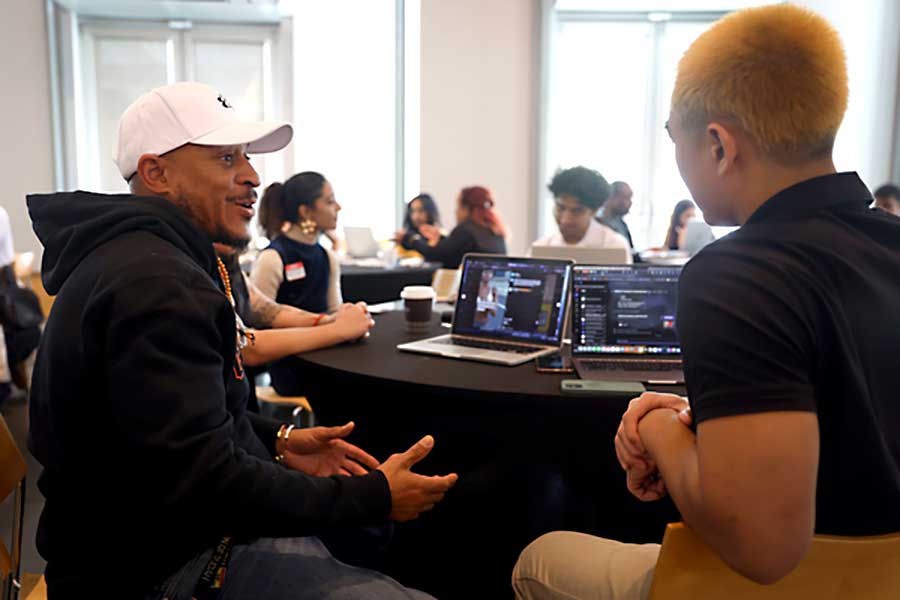
In a series of recent AI clinics, Khoury students led dozens of Oakland businesses and nonprofits in a collaborative series of workshops, with Khoury faculty and Oakland campus staff facilitating. Students were paired as consultants for local small businesses and provided technical advice on how to leverage AI to improve business outcomes.
“Everyone is trying to figure out a place in an ever-evolving AI economy,” said Nikki Lowy, director of city and community outreach and programming at Northeastern Oakland. “The program is great for businesses and for students, who learn what it takes to run a small business.”
Several Northeastern students helped co-found the AI clinics program, including rising-third-year computer science students Rohan Kathuria and Esha Kanakapura.
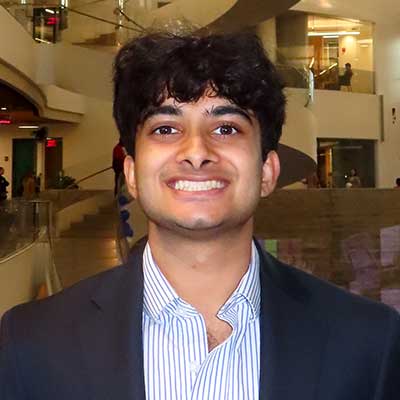
Kathuria highlights his experience working with Rize Up Bakery in Oakland, which has more than 20 employees and multiple delivery routes. He helped the owner use AI to automate emails, appointments, deliveries, and delivery confirmations.
“These things would require phone calls and can be automated with AI,” Kathuria said. “He gets to focus on the baking. I was going into this thinking it was just about teaching AI, but I learned a lot about the business side of working with clients.”
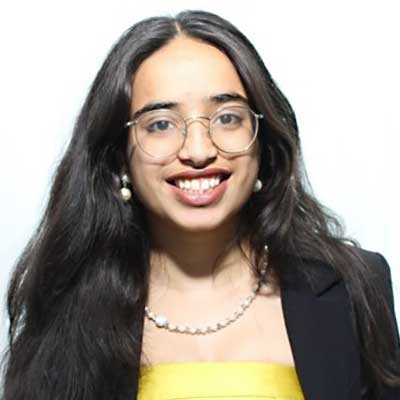
Kanakapura, who worked with elder care company Phlex65, emphasized the importance of detailed and iterative prompting when using Claude.
“My client needed help with social media posts, and she inputted ‘generate social media post ideas for my business,’” Kanakapura said. “We taught her to be more descriptive by telling Claude what the intended audience was. It was an opportunity to show clients what the AI could do. Clients were also impressed by the AI agent that uses LinkedIn to find users who might be interested in their product.”
Such opportunities for real-world experiences excite Lowy and Carrie Maultsby-Lute, head of partnerships at Northeastern Oakland. They cite the examples of students working on city projects to prevent illegal dumping and connect residents to services before eviction.
“These projects can connect our students with our city and community,” Lowy said. “That’s the kind of university–community relationship we hope to have.”
Maultsby-Lute hopes to see the clinics become an every-weekend event, such that local organizations can drop in at any time for student-led technical and consulting assistance.
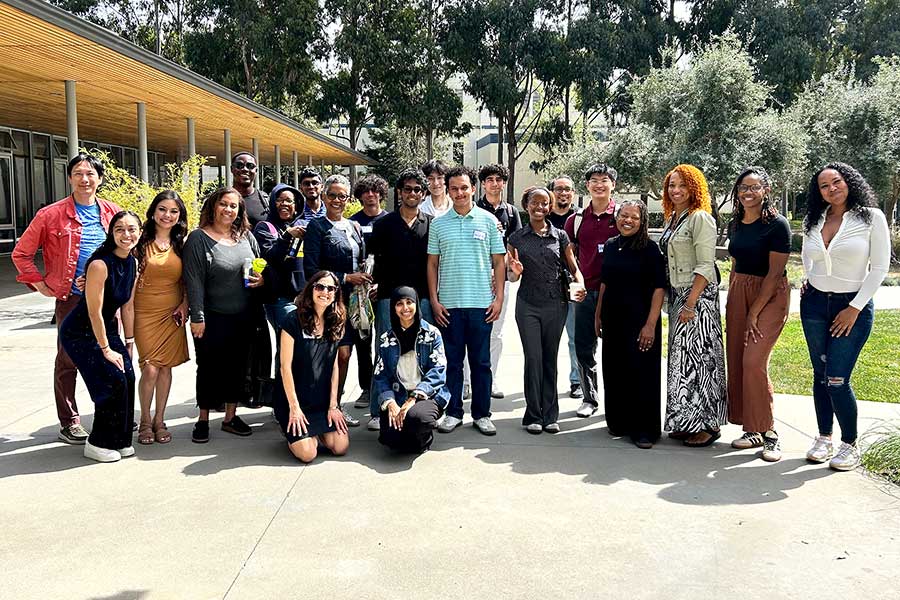
“Students learn about entrepreneurship and the challenges of being a founder,” she said. “The clinics give them opportunities in an AI world to learn human-oriented skills like critical thinking, communication, and collaboration.”
Broader university–community partnerships in Oakland
The Kapor Foundation’s broader mission is to create a more inclusive technology ecosystem with a focus on Oakland communities. Their social impact partnerships with Northeastern go beyond the AI clinics to include additional programs in educational pathways and social-venture creation.
First piloted in 2024, Bridge to AI brings 60 local high school students to campus for a five-week program to gain career-focused AI literacy and fluency. Future iterations may employ Khoury undergraduates as the trainers for these high school students.
With the support of the Kapor Foundation grant, five co-op students worked with nonprofit Lead by Learning and Oakland Unified School District educators to understand their AI needs and incorporate AI safety in the classroom. Lead by Learning has operated on the Oakland campus for several decades and has a longstanding relationship with local schools to credential and certify teachers.
Northeastern and Kapor also partnered on social-venture creation through a 10-week accelerator program, Social Innovation Launchpad, for Oakland resident-founders taught by Northeastern faculty and guest entrepreneurs. A final pitch session featured venture capital investors and a keynote by Oakland Mayor Barbara Lee.
“As much as these initiatives have an Oakland social impact focus, they only exist because of our desire to connect our Northeastern students with real projects that matter,” Maultsby-Lute said. “Experiential learning is the foundation and baked into everything. We describe our work as building ‘resume-able’ experience that is valuable throughout all stages of the academic journey.”
Experiential learning driving resumes and focus
Inspired by his work at the AI clinics, Kathuria is researching mechanistic interpretability by reverse-engineering the neural networks behind large language models (LLMs), part of the broader AI safety field. He recently accepted a research fellowship at the Cambridge Boston Alignment Initiative working on AI safety.
“Presenting AI technology to people who are new to it — and the power you wield when you correctly prompt a LLM to do something — made me realize what I was getting into with AI safety,” he said.
Kanakapura’s resume stood out thanks to her experiential learning in Oakland, with the AI clinic leadership helping her to secure her current co-op at IBM.
“I had the exact mindset the company was looking for,” she said. “Every experience taught me something new about communication and tech. There were so many opportunities like this at the Oakland campus.”
The Khoury Network: Be in the know
Subscribe now to our monthly newsletter for the latest stories and achievements of our students and faculty
Author: Benjamin Hosking
Date: 05.28.26
Companion read: Khoury students put on AI workshops for Oakland businesses and nonprofits
When it comes to using artificial intelligence models like ChatGPT, Claude, or Copilot, users bring a wide range of experience with prompt engineering. While the tools offer myriad ways to enhance workflows and deliver better results, many resource-constrained organizations lack the in-house expertise to train their staff.
In 2025, Khoury students and faculty at Northeastern’s Oakland campus held a series of workshops with local organizations, including City of Oakland government departments, that were designed to do just that: improve employees’ AI literacy and help develop AI policies.
Assistant Teaching Professor Rasika Bhalerao led a workshop for Oakland’s AI working group, where they learned that the group’s members would receive a free deployment of Microsoft Copilot. Oakland’s chief information officer asked Bhalerao and fellow faculty member Jessica Staddon if Northeastern could follow along to see how AI is being used and whether to expand the deployment citywide.
The project is supported by a Google Research Award, which focuses on resource-constrained organizations using artificial intelligence. The City of Oakland is a prime example.
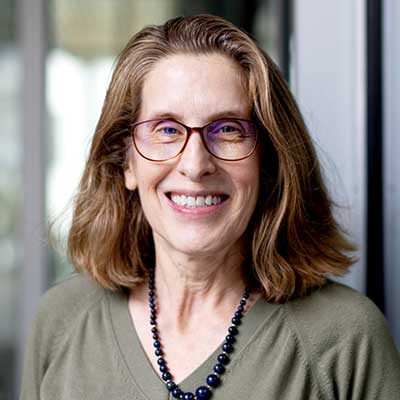
“They’re not staffed to develop their own models or maintain them,” Staddon said. “The question is how organizations like that can safely use AI. The Copilot deployment crosses many departments, with staff from the fire department, animal services, childcare, schools, and more.”
Data collected from Oakland participants — including surveys, interviews, and eventually data logs — informs Staddon and Bhalerao’s research into how local government staff are using AI and what stumbling blocks they’re encountering. They led a team of graduate research assistants in this work, including computer science master’s students and first-time researchers Vinal Dsouza and Rebecca Earle.
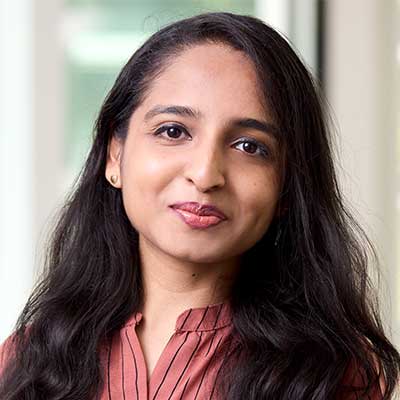
“Before this experience, research was a very new area for me,” Dsouza said. “Once I started it was easy, we could talk freely to the professors, conversations about how we build this, what is the research question we are catering to. I’m getting better at finding a needle in a haystack.”
“I started interviewing several participants this semester, talking with people across different departments,” Earle added. “Afterwards, we discuss as a group, and I’ve found those conversations enriching and thought-provoking.”
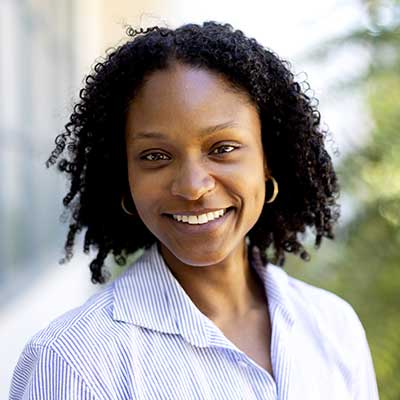
The group recently presented their findings to City of Oakland officials. Recommendations included specialized training programs tailored to department-specific use cases and data sensitivity levels, clearer personally identifiable information guidelines co-developed with city employees, and a longitudinal follow-up survey to track how AI perceptions and usage are evolving.
The group noticed participants’ prompt engineering skills evolving the more they were exposed to AI tools. Even in cases where a participant did not fully understand the concept of prompt engineering, they quickly grasped certain integral elements, such as “don’t ask the AI everything at once” or “break the prompt down into a couple of tasks.” The range of skills surveyed was wide, but most participants showed improvement with usage.
One recurring challenge was data privacy and safety in a government context.
“A public institution is subject to public records requests,” Staddon explained. “There were a lot of concerns about putting anything into an AI, as it could be requested. A lot of folks are concerned about transcribing meetings, which is super useful, but they are reticent to do so or are wary of areas like brainstorming and strategy development with AI.”
Dsouza points out that many people are uncertain what is right and what is wrong when it comes to government policy on AI and records, and this lack of clarity prevents them from taking advantage of AI.
“If people don’t know what to do, they won’t use AI,” Dsouza said. “They worry about having access to things they’re not supposed to, like if AI reads an email chain that becomes accessible to other people in the organization.”
Although AI poses privacy and policy concerns, it can also help protect the public from scams and fraud. Computer science master’s student Lucia Sun works with Staddon on a project about scam and fraud detection for resource-constrained organizations. The duo developed a prompting framework that incorporates Federal Trade Commission and Consumer Financial Protection Bureau definitions of fraud to improve classification accuracy. They analyzed how personal information included in narrative prompts can influence model predictions and classification outcomes.
“Scams influence a lot of people’s lives,” Sun said. “I think it’s very important to have a way for these organizations to distinguish scams and protect themselves.”
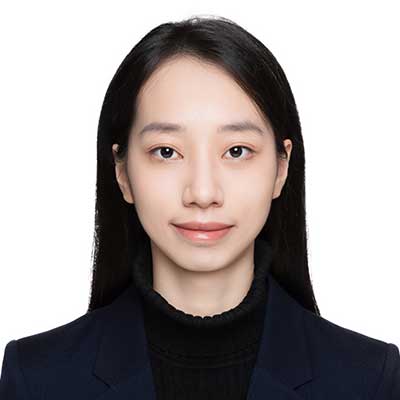
Currently, local governments like Oakland’s use semi-automated ways to distinguish and categorize scams, with trained officers supported by computer programs. Sun is working on a way to use large language models to help categorize and distinguish which scams need a deeper look and which will not, reducing the human personnel needed.
“I’m very interested in how AI spreads rumors and misinformation, and how AI-generated content influences the news and internet,” Sun added. “I’m working with [Staddon] on a new project about how to protect against an LLM disclosing redacted information like address and age.”
Through a separate practicum course led by Bhalerao, Oakland undergraduates also work directly with local partners, including teams from Oakland’s government, to implement AI.
“The most prominent one that comes to mind is the illegal dumping project,” Bhalerao said. “A group of undergraduates will create a computer vision neural network to detect illegal dumping that can be run on cameras already around the city.”
Although the challenges posed by AI to city governments like Oakland’s are numerous — from automated scams to unauthorized data disclosure — the potential for AI to help improve outcomes is palpable, provided there are clear usage and privacy policies in place.
“It’s a tough situation for strapped organizations like many cities,” Staddon said. “AI could really help in some ways.”
“There have to be clear ways they can be using it in their specific job,” Earle added. “Clarity and consistent guidelines are needed for everybody to be more confident in using it.”
The Khoury Network: Be in the know
Subscribe now to our monthly newsletter for the latest stories and achievements of our students and faculty
Author: Yashavi Upasani
Date: 05.26.26
Boston is known for many things: sports championships, Dunkin’, and a distinctive accent. But the city is also notorious for its complex real estate market. With more than 160,000 students attending dozens of colleges in the city, real estate agents and companies are constantly bombarded with messages and questions from interested tenants on finding a new apartment.
Recent Khoury graduates Noah Weinstein (class of 2026) and Isaac Levine (2025) created Frontstep.ai with the aim of solving this problem. When Levine’s brother, who works in real estate, explained the difficulty of tracking interested renters and sorting serious from casual offers, Levine reached out to his friend Weinstein to get to work.
The duo, who met at their fraternity Pi Kappa Alpha, had always wanted to start a business together and worked on multiple projects before concentrating solely on Frontstep in January 2025.
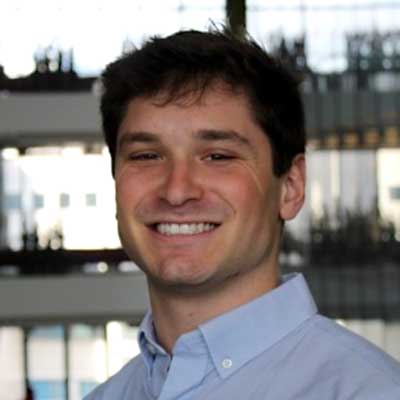
“Knowing Isaac’s skill set, I knew we were going to build something good and move quickly, so it was just exciting,” Weinstein said. “It’s fun to throw yourself into a problem. We called any brokers and property managers that would give us time, learned a lot quickly, and began to map out a viable solution to the problems we were hearing.”
Their solution was an AI-powered assistant that connects to a real estate agent’s email and responds to prospective tenants who email the realtor through Zillow, Realtor.com, or any other housing website. The AI assistant will begin a conversation within 30 seconds of the tenant’s initial email, starting a natural conversation that verifies the quality of the offer by asking questions like whether the prospective renter is a student, move-in dates, and number of roommates. The agent can jump in at any time, pausing the assistant to answer themselves. From there, the agent is sent a list of quality offers from truly interested parties, cutting down the time spent going through emails and giving agents their best chance at getting apartments off the market quickly.
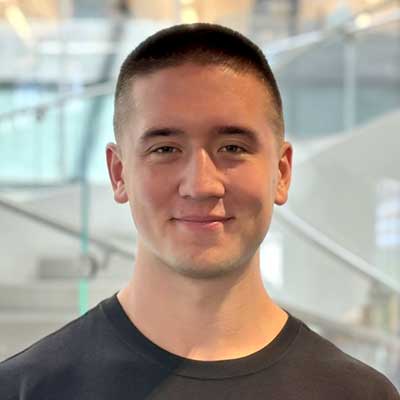
“A lot of these brokers will sign in to Zillow at the end of the day and maybe there’s 50 messages. Most days, they’re not looking at all 50 messages,” Levine said. “So student renters can get kind of unlucky just because Boston, especially near the schools, is so supply-constrained and there’s so much demand every single year. It was pretty motivating to solve a problem that we had experienced firsthand, even though we’re attacking it from the business-to-business angle and our value proposition is geared towards the broker.”
Weinstein and Levine spent the first few months of 2025 reaching out to brokers and real estate agents, learning their biggest issues with the housing market process, and zeroing in on this specific need. From there, they began coding and creating their business, all while taking classes, going on co-ops, and starting internships. Despite their busy schedules, they found time to work on their passion, whether through early morning and late-night calls or one of them picking up the brunt of the work when the other had too much on their plate.
But to them, it was all worth it, and they see their recent acquisition by R&M Capital Property Management as a testament to their effort.
The duo had reached out to Tyler Roberge, founder and CEO of R&M, as a possible client in November 2025. After learning about Frontstep, Roberge knew the service filled a hole in his industry. R&M introduced the idea of buying the platform, but it wasn’t until April 2026 that Weinstein and Levine circled back with the company and explored their acquisition offer.

“When you have trillions of listings, especially in the busy season, you try to secure qualified tenants without wasting your time so you can focus on things that matter in the day-to-day operations of managing properties for clients,” Roberge said. “I just thought Frontstep was a really good, value-add service on our end to save us time, and also to help real estate agents, leasing agents, and property managing companies do the same. It lets everyone focus on things that really matter: dealing with apartments quicker and helping residents find housing a lot quicker.”
Weinstein and Levine are already building their next venture, Dealwire, which turns a real estate investment firm’s full history — every deal execution and broker relationship — into what they call a “private brain.” The idea is for this system to store the information and help firms act on their pipelines through AI agents that can draft broker replies or set follow-up alerts.
“It’s taking something from an idea we had in the kitchen to interfacing with thousands of people in their journey to finding an apartment,” Weinstein said. “And we’re thrilled to continue working in this industry, helping firms turn their own knowledge into something they can actually use.”
The Khoury Network: Be in the know
Subscribe now to our monthly newsletter for the latest stories and achievements of our students and faculty
Author: Benjamin Hosking and Milton Posner
Date: 05.21.26
Last April, Khoury students earned a college-record 40 honors at Northeastern’s annual Academic Honors Convocation. This April, not content with that tally, they surpassed themselves, with 50 students earning distinction at the April 16 event.
To meet some of the winners, click any of the linked names below, or simply read on.
Fulbright semifinalist
Hodgkinson Award
Condit Award
Critical Language Scholarship
Schwarzman Scholarship
Benjamin A. Gilman Scholarship
- Colombe Akpaca
- London Jones
- Kayleen Kang
Outstanding PhD Student Award in Humanics
Outstanding PhD Student Award in Research
Outstanding PhD Student Award in Teaching
Outstanding Global Network Student Award
- Diya Wadhwani (Oakland)
- Anusha Devanga (Portland)
- Aisha Abdur Rahim (Silicon Valley)
- Kalhar Pandya (Vancouver)
Huntington 100
- Mehr Anand
- Sydney Bao
- Evan Crow
- Jasmin Duong
- Juliana Guarrera
- Aryan Jain
- Alice Lee
- Brady Li
- Ashley Lopez
- Benjamin Marler
- Nicole Ni
- Rachel Pao
- Khushi Shah
- Adya Verma
- Benedikt Winkler
- Rae (Rachel) Yan
- Spring Yan
- Olivia Yeung
Laurel and Scroll 100
Anika Jaswal, Fulbright Semifinalist
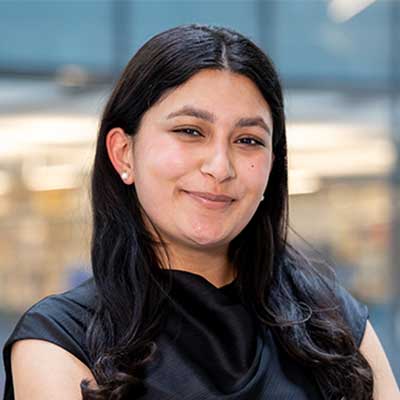
For Anika Jaswal, a passion for data science and immunology led to a deeper focus on understanding T-cell biology, immune regulation, and tumor microenvironments. As a CaNCURE trainee at a Harvard Medical School laboratory, an oncology summer intern at Johnson & Johnson Innovative Medicine, and a co-op at Regeneron Pharmaceuticals, Jaswal leveraged computational tools to advance immunology research.
Alexis Musaelyan, Fulbright Semifinalist
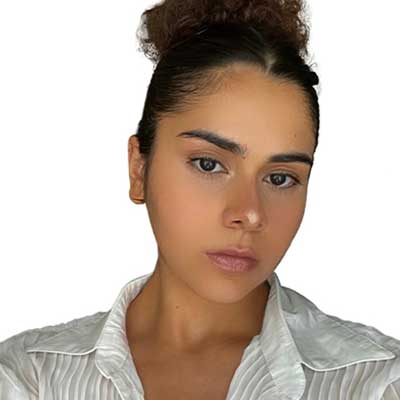
Driven by the challenge of building AI systems that are technically rigorous, equitable, and safe, Alexis Musaelyan applied her data science skills to domains like health care and national security through research in machine learning, AI-driven threat detection, and bioinformatics for Harvard Medical School, Microsoft, the Department of Homeland Security, and the Naval Research Laboratory. She also founded Threshold — a neurotechnology venture developing adaptive AI for nervous system regulation, — and earned both a Women Who Empower Innovator Award and Huntington 100 distinction.
READ: Khoury “Women Who Empower” winners advance cybersecurity, pet care tools
Zack Eisbach, Hodgkinson Award
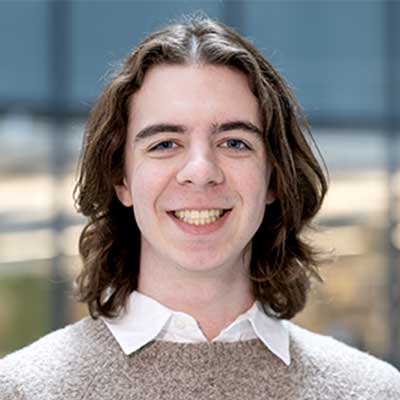
Zachary Eisbach specializes in programming languages and formal verification, conducting research that ensures programs written in different languages can safely interact without compromising the security guarantees each language offers. While on co-op at Northeastern’s Programming Research Lab, Eisbach laid the groundwork for his time with Apple’s Swift language team, becoming the Swift team’s first-ever research intern. Outside of his research, he served as president of the Northeastern Math Club.
Now graduated, Eisbach is a software engineer at Jane Street Capital, where he works on the company’s OxCaml compiler.
Hannah Wimpy, Condit Award
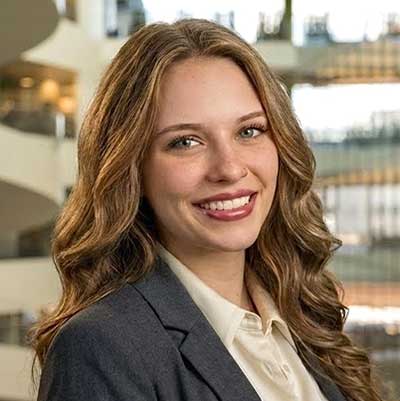
Stamps Scholar Hannah Wimpy leveraged her interdisciplinary interests in robotics and biochemistry to build autonomous systems in everything from life science to manufacturing. Through a grant-backed fellowship at Northeastern’s Center for Drug Discovery, co-ops at Lila Sciences and Harvard Medical School, and two ventures of her own design, Wimpy learned to make systems work reliably in complex real-world environments. She also served as executive director for Northeastern’s builder community, rev.
READ: Khoury “Women Who Empower” winner designs her own major and drug discovery software
Anastasia Lindquist, Critical Language Scholarship
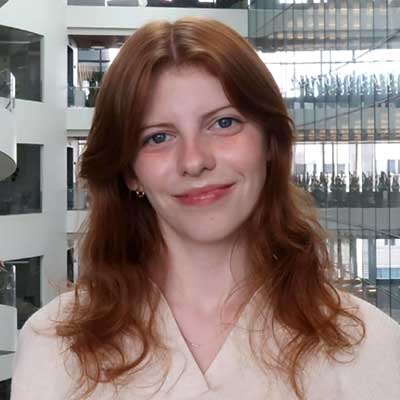
Anastasia Lindquist’s studies in computer engineering and computer science were enhanced by her minor in Chinese, leading her to a co-op in the semiconductor industry and a visit to TSMC in Taiwan. She completed Chinese-language Dialogues of Civilizations in Taiwan and China, where she spent her second co-op in the robotics industry. She also participated in Northeastern’s Underwater Robotics Club. This summer, Lindquist is returning to China as part of the Critical Language Scholarship program.
Su Cizem, Schwarzman Scholarship

After studying philosophy at UCLA, Su Cizem moved to London to study AI and ethics at Northeastern. As a Schwarzman Scholar, she will study global affairs at Tsinghua University in China next year.
Cizem has focused on AI governance and the international challenges of managing high-risk technologies while working at The Future Society and the French Center for AI Safety. She co-founded Northeastern University London’s AI and Ethics Society and worked as a research assistant on an international relations and policy project.
Colombe Akpaca, Benjamin A. Gilman Scholarship
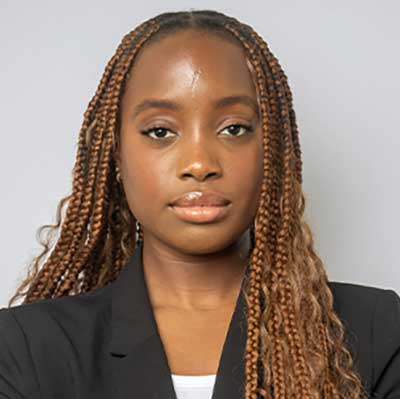
Aspiring to leverage data-driven solutions to address health disparities in sickle cell disease, Colombe Akpaca built her academic foundation in discrete structures, algorithms, data structures, and database systems. She contributed to the ITS team while on co-op at Northeastern’s Office of Information Security and is a member of the National Society of Black Engineers, the Legacy Mentoring Program, and Northeastern’s chapter of ColorStack, where she works to empower Black and Latino computing students.
Kayleen Kang, Benjamin A. Gilman Scholarship
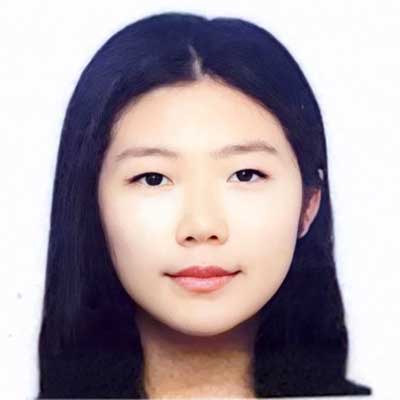
Kayleen Kang’s passion for building AI systems that are both technically strong and helpful to diverse users led her to pursue a combined BS/MS degree in computer science. Her interest in AI began during an internship at Giant Step, a global creative tech studio, where she trained Stable Diffusion models aimed at helping WEBTOON digital comic artists.
While exploring distributed systems through a collaborative project in Sydney, Australia, Kang extended database benchmarking tools across MongoDB and Cassandra on AWS. Other projects include building Q-learning agents and constraint solving algorithms, deepening her understanding of search, optimization, and decision making under uncertainty.
Ha Le, Outstanding PhD Student Award in Humanics
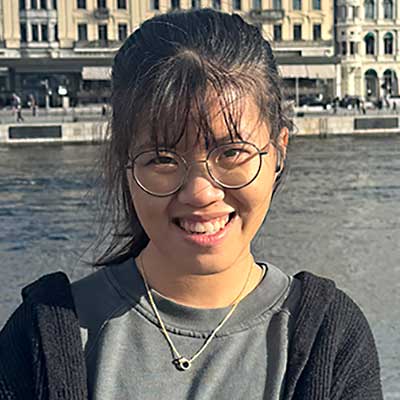
Advised by Stephen Intille and Varun Mishra, Ha Le develops human-in-the-loop systems for tracking and measuring physical activity and everyday behaviors using wearable devices. She recently earned Apple’s AI/ML PhD Fellowship and is part of both the mHealth Research Group and the UbiWell Lab.
Chantal Shaib, Outstanding PhD Student Award in Research
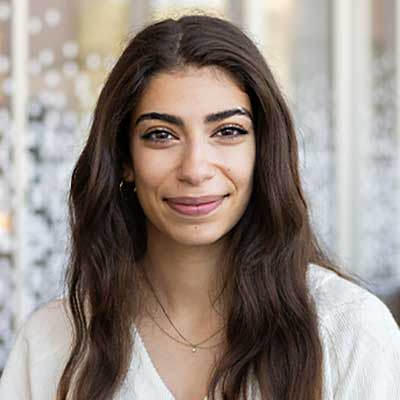
Advised by Byron Wallace, Chantal Shaib is a PhD candidate in computer science with a focus on the evaluation of generative large language models. Her research characterizes and measures linguistic diversity in these models and studies the ensuing implications for robustness, accuracy, safety, and societal impact.
READ: AI slop is a common online nuisance. But what makes a piece of text “slop”?
Guangyuan Weng, Outstanding PhD Student Award in Teaching
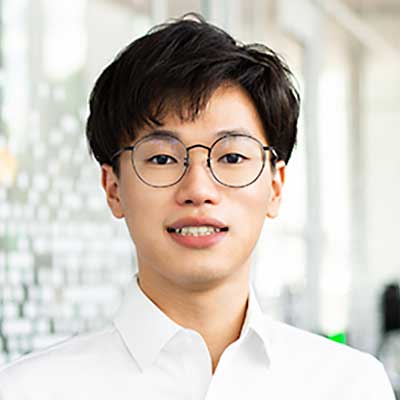
Guangyuan Weng is a PhD candidate in computer science whose research focuses on machine learning, human–AI interaction, and responsible AI, with an emphasis on building systems that better understand human behavior and support fairer, more reliable decision-making. He is interested in compositional visual reasoning and hopes to draw inspiration from human cognitive abilities to develop more generalizable machine learning models.
Weng’s interests were shaped by research in vision-language models, retrieval-augmented generation, human mobility modeling, and agent-based simulation while working in university labs and industry. He served as a teaching assistant for several computer science courses, deepening his passion for teaching and mentorship.
Anusha Devanga, Outstanding Global Network Student Award (Portland)
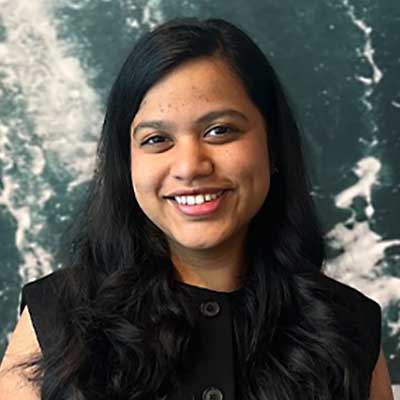
Anusha Devanga specializes in immersive technologies for educational impact. Her work includes developing a mixed reality sandbox and collaborating with Northeastern’s outreach program to bring immersive STEM experiences to K–12 classrooms across Maine. She expanded her expertise during a co‑op with the Blue Latitudes Foundation, building virtual reality tools to visualize ocean life around oil rigs.
READ: How the Roux Institute plays matchmaker for its master’s students and incubator startups
Aisha Abdur Rahim, Outstanding Global Network Student Award (Silicon Valley)
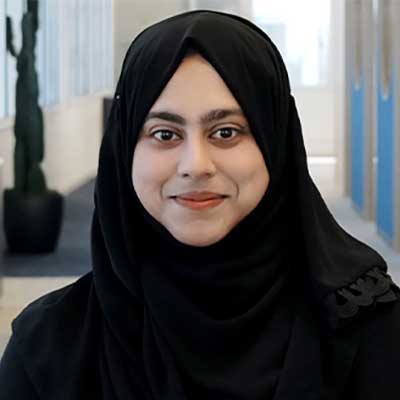
Aisha Abdur Rahim’s research interests span full-stack development, AI, and human–computer interaction, with a focus on creating technology that understands human needs and impacts learning, health, and psychological well-being. She works as a research assistant for Khoury Assistant Teaching Professor Akram Bayat and as a teaching assistant for algorithms — experiences which inspired her research interests.
Rahim serves as a Student Services Ambassador and in leadership roles for Huskies Beyond Borders, NU Algorithmic Interactive Gaming, and Innovation Consulting Group.
Kalhar Pandya, Outstanding Global Network Student Award (Vancouver)
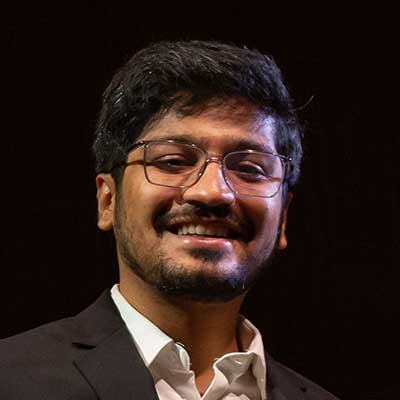
Building on a strong foundation in full-stack engineering, Kalhar Pandya designs agentic workflows and hierarchical multi-agent systems to advance AI toward greater autonomy, reliability, and real-world impact. He collaborated with Northeastern faculty on LLM-based root cause analysis for distributed systems, tackling one of modern infrastructure’s most pressing challenges.
As a facilitator for the Vancouver AI Meetup and a TA, Pandya helped build a stronger research and academic community. His team took first place in the campus’s Deloitte AI Hackathon in 2025, and while on co-op at Oracle, he helped design secure authentication systems for enterprise clients.
READ: “Northeastern became our second family”: Kalhar Pandya and Mansi Modi’s journey in Vancouver
Evan Crow, Huntington 100

As a Global Scholar, Evan Crow spent his first year at Northeastern’s Oakland and London campuses. He worked as a software engineer at cloud-based data platform Snowflake and at web search engine startup Exa.ai, where he built a retrieval augmented answer generation system. For the past three years, he has worked at Apple as a software engineer on co-op.
As president of Kaleidoscope, Khoury College’s club council, Crow led a team to create an environment where clubs can succeed. He launched a program to bridge clubs with co-op faculty and industry, supported global campus development, and hosted direct feedback sessions with club leaders.
Jasmin Duong, Huntington 100
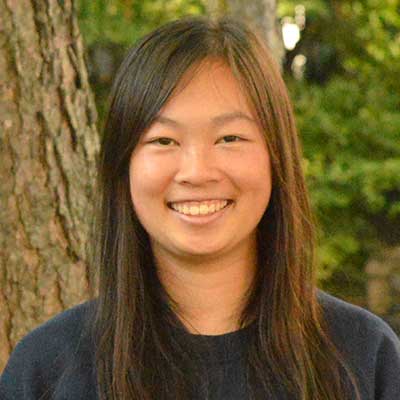
Jasmin Duong’s passion for meaningful impact and community-building led her to mentor her peers as a teaching assistant, volunteer to maintain trails in Arizona’s national parks, and serve unhoused people in Miami. She also pitched and built her own startup through the NU Entrepreneurs Club and helped build and launch two software products as a UX designer and developer for Sandbox, a student-led software consultancy.
Duong worked a UI/UX co-op at smart water cooler company Bevi and will join Bain & Company as a product design co-op later this year.
Juliana Guarrera, Huntington 100
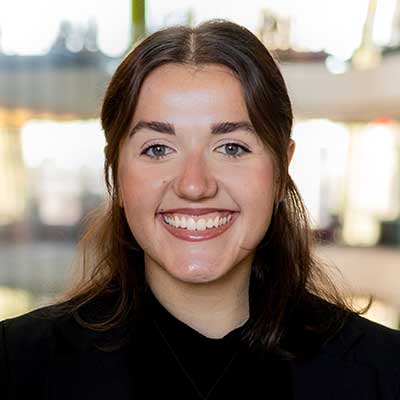
Juliana Guarrera has embraced Northeastern’s global programs, participating in the Summer in Seattle Cloud Computing program, a software engineering Dialogue of Civilizations in Sydney, and an upcoming Dialogue in Kyoto and Osaka. She served as vice president for engagement for Kappa Theta Pi, Northeastern’s professional technical fraternity, and as a teaching assistant. She has also taught technology and coding classes in Boston schools through CodeAdvantage.
Guarrera spent her first co-op in employee experience IT operations at Bain & Company, working between the product management and IT teams. Her upcoming product co-op will be with automated portfolio rebalancing platform Smartleaf.
Aryan Jain, Huntington 100
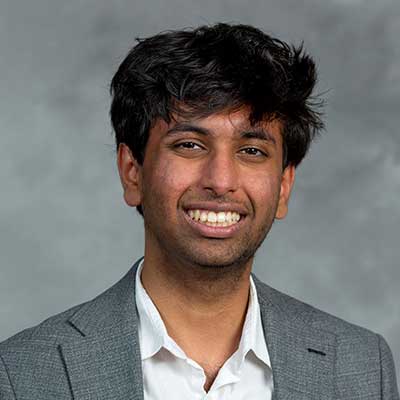
Aryan Jain’s interest in using data science and business skills for supply chain management has informed his co-ops and extracurriculars. While on a procurement co-op with Insulet Corporation, Jain leveraged his data analytics expertise to manage key performance indicators for suppliers. His upcoming co-op will focus on data science at Johnson & Johnson.
Jain has served as a tech lead for student design studio Scout, director of technology for the Supply Chain Management Club, and associate consultant for health-startup-focused and student-led Vital Ventures. As a research assistant for the SimBioSys Lab, Jain contributed to physics-driven biomolecular modeling tools, working on computational modeling for molecular data files.
Alice Lee, Huntington 100
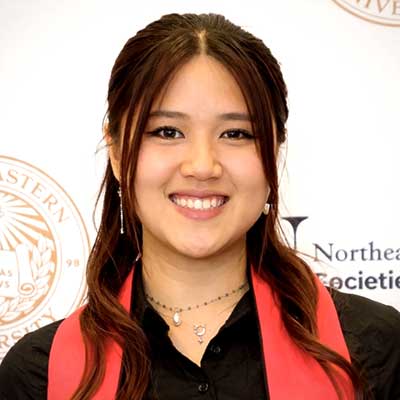
Alice Lee’s love for entrepreneurship led her to mentor student startups, lead product development for student club Generate, and serve as president of the NU Entrepreneurs Club. She was a student speaker at Northeastern’s Fall 2025 Student Convocation, representing entrepreneurship at Northeastern.
Lee founded a volunteering platform, Karp, that encourages local community service through a gamified app experience. On co-op, she worked at an early-stage financial wellness startup and will start a product management co-op at IBM this fall supporting their data platforms.
Brady Li, Huntington 100
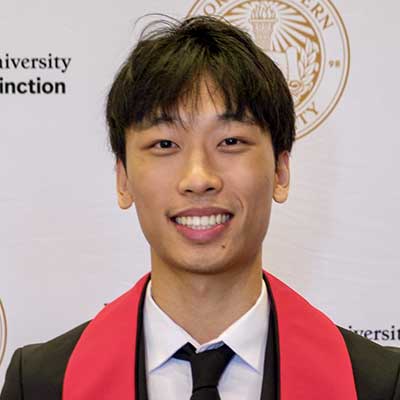
As a first-generation computer science student, Brady Li centered his path on exploring the intersection of human–computer interaction and software engineering. In his first year, he began his extended reality research, which he has since showcased in IEEE publications; one such effort was fully funded and presented in Korea. He later studied quantum computing and philosophy while abroad at Oxford University.
After entering college unsure of his place in technical spaces, Li grew to become president of Northeastern Virtual Reality and mentor students as a teaching assistant. He worked in software engineering while on co-op at Babel Street and has upcoming internships at Meta and Google.
Ashley Lopez, Huntington 100
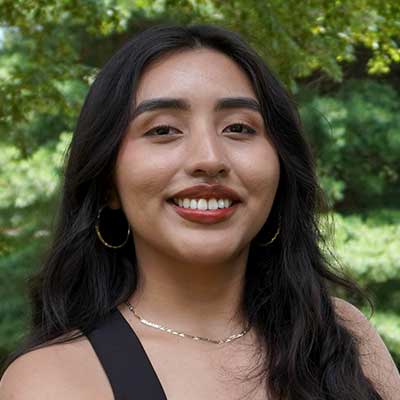
As a data scientist in manufacturing science and technology at Vertex Pharmaceuticals, Ashley Lopez contributes to data analysis initiatives that support manufacturing efficiency and quality for commercial distribution. Previously, she worked as an IT analyst in criminal justice training, where she analyzed facial recognition data to improve system accuracy and developed reporting processes that enhanced operational workflows.
Lopez applied her machine learning skills to predict movie revenue using real-world datasets and will serve as a volunteer for the FIFA World Cup 2026, leveraging data science to support the media operations team. A first-generation college student, she mentors the next generation as a math and science tutor, using performance data to support her students’ growth.
Rachel Pao, Huntington 100
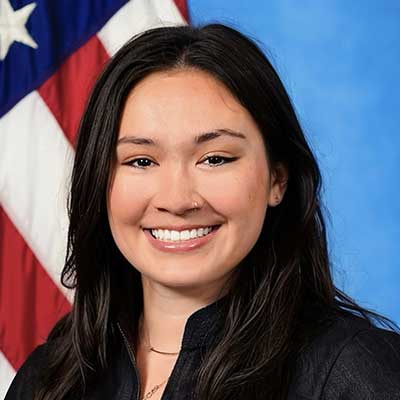
Rachel Pao’s longstanding interest in cybersecurity has led her to focus on supply chain management. Since she was 17 years old, she has worked at the Department of Defense through the Stokes Educational Scholarship Program on missions spanning operational technology, cryptologic intelligence, and digital network exploitation.
Pao serves as co-executive director of HackBeanpot, a nonprofit hackathon built for first-time hackers, and as head teaching assistant for “Foundations of Cybersecurity.” After graduation, she will begin a four-year service commitment at the Department of Defense.
Benedikt Winkler, Huntington 100
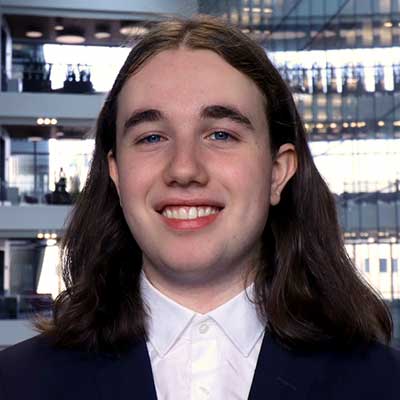
Through myriad roles in Northeastern’s Student Government Association — director of information management, director of student organization governance, vice president of operational affairs, and now executive vice president — Benedikt Winkler has updated recycling signage, launched a residential building composting pilot, and overseen the campus’s more than 500 SGA-recognized clubs.
Winkler served as a software consultant co-op for Verizon through Khoury College’s co-op consulting program and recently accepted a fall co-op at Wayfair as a software engineer. He is also engaged with Northeastern’s theater department, working on lighting design and operations for several productions.
READ: Second wave of Khoury co-op consultants design customer retention software for Verizon
Rae (Rachel) Yan, Huntington 100
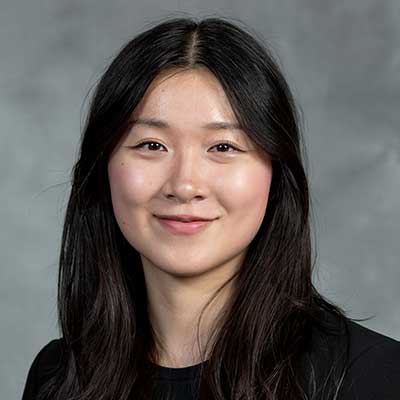
Rae Yan has combined her interests in software engineering, videogames, and music throughout her time at Northeastern, from a global co-op in software engineering and marketing at German videogame company Black Soup to creating a brand identity for band goodkarma as part of student-led design studio Scout.
As a production studios assistant for Northeastern Media Studios, Yan operates broadcast and recording equipment across a full-scale production facility that includes a television studio, three recording labs, and a podcast room. She is currently on a co-op as an interactive game developer and designer for entertainment and marketing company Universal Phoenix Group.
Srinivasa Sameer Addepalli, Laurel and Scroll 100
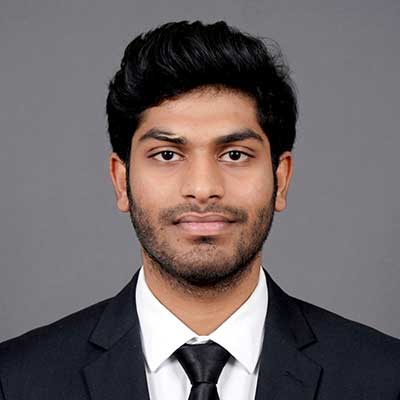
Srinivasa Sameer Addepalli’s software engineering co-op at Fidelity Investments led to his current role as a senior software engineer, in which he builds full stack applications and leads AI initiatives. As a student, he was active in the Aspiring Product Managers Club, including serving as president and leading multiple initiatives to build technical solutions for problems faced by Northeastern students, then strategizing to convert these solutions into wider-reaching startups. He also worked as a graduate teaching assistant for “Web Development” across four semesters.
Nandini Bommireddy, Laurel and Scroll 100
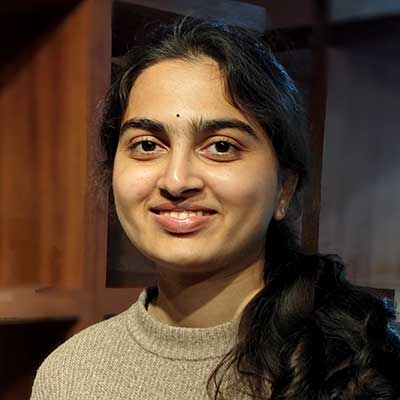
During a software development engineering co-op with Amazon Robotics, Nandini Bommireddy worked on large-scale engineering systems, and will return to work there as a full-time software development engineer after graduation. She has mentored fellow students as a teaching assistant and career peer advisor, served on the Khoury College Master’s Student Advisory Board, helped to organize the Emerald Forge Hackathon in Seattle campus, and contributed to the health care software tool MedQGraph as part of the InsightX Lab.
Ritik Bompilwar, Laurel and Scroll 100
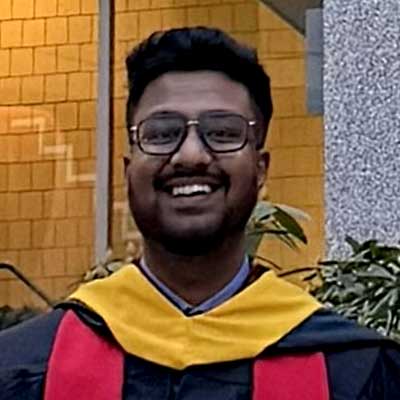
As a generative AI product developer co-op at Northeastern’s Burnes Center for Social Change, Ritik Bompilwar collaborated with Massachusetts’s Operational Services Division to build AI solutions to enhance state procurement. He was part of the team that won the 2025 NASPO Academic Collaboration Award and His thesis, “CrickFACT: Temporal Action Segmentation Guided Framework for Cricket Shot Recognition,” focused on faithful shot recognition in cricket videos using AI.
Himalaya Dua, Laurel and Scroll 100
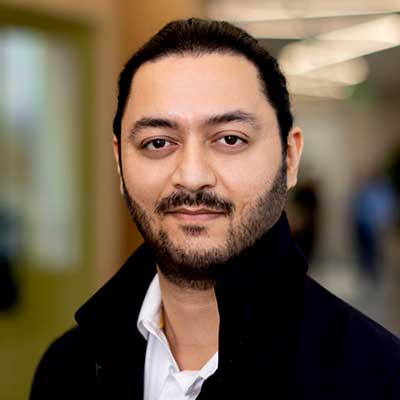
Himalaya Dua’s pursuit of research, teaching, leadership, hackathons, and industry shaped his Northeastern experience. His research areas include AI, cybersecurity, and multimodal, self-supervised learning for emotion recognition. He built 97 AI projects and participated in 50 hackathons, winning eight — including Nvidia’s AI ML ODSC 2024 hackathon on RAPIDS-accelerated ML workflows.
Dua completed an internship in generative AI at Amazon Web Services and will join AWS full-time as a software development engineer after he graduates. He served as a teaching assistant and a leader for the NU Readers Book Club and received the Northeastern Silicon Valley Leadership Legacy Award.
READ: Himalaya Dua’s 2nd place NVIDIA hackathon win with a last-minute team
Erdun E, Laurel and Scroll 100
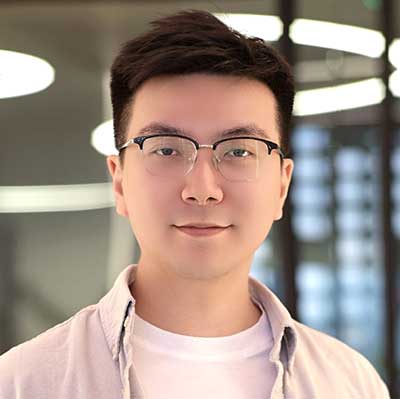
Erdun E combined software engineering with student leadership and community building at Northeastern’s Miami campus, earning an Outstanding Global Network Student Award for Miami in 2025.
As founder and president of Miami Tech Club, he strove to bring students together, organize activities and resources for them, and enable them to grow their skills and prepare for their careers. The club even organized its own coding challenge, in which students problem-solved and wrote pseudocode without phones or laptops; E later helped expand the event to other Northeastern campuses.
As a Khoury ambassador and advisory member, E worked to strengthen communication between students, faculty, and staff as one of Northeastern’s newer campuses built out its resources and infrastructure. He also served as a TA for core master’s courses “Program Design Paradigms” and “Algorithms” — grading, holding office hours, and explaining concepts to help fellow students understand core concepts.
Outside of the classroom, E worked as a software engineer for AWS and Superstars, participated in a climate justice hackathon, and joined an entrepreneurship trek with students from other Northeastern campuses.
Kaustubha Eluri, Laurel and Scroll 100
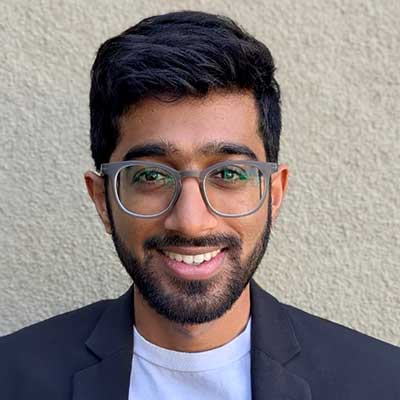
After two years in architecture, Kaustubha Eluri joined Northeastern to pursue computer science with an interest in combining AI, systems, and product thinking to create meaningful user impact. As a teaching assistant for “Mobile Application Development,” he mentored more than 30 students and helped improve evaluation workflows. As a research assistant and software engineer, he built AI-powered accessibility systems to support blind and low-vision users.
Jenish Kothari, Laurel and Scroll 100
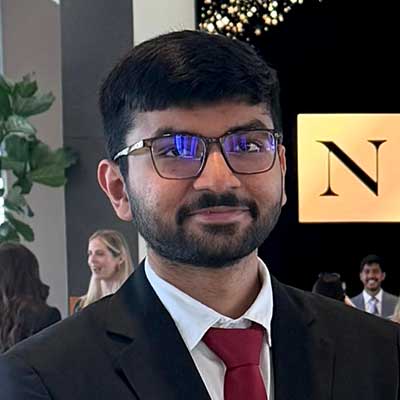
Jenish Kothari’s Northeastern experience has been fueled by leadership, technical growth, and the building of impactful systems. As president of the AWS Cloud Club, Kothari grew the group from 10 members to more than 400 within a single semester through technical workshops, speaker events, and collaborative sessions. He focused on building an inclusive and highly engaged community for students interested in cloud and emerging technologies. He also served as a TA for “Database Management Systems” and completed internships at Adobe and Dell, working on real-world, large-scale, data-driven systems.
Dipti Kulkarni, Laurel and Scroll 100
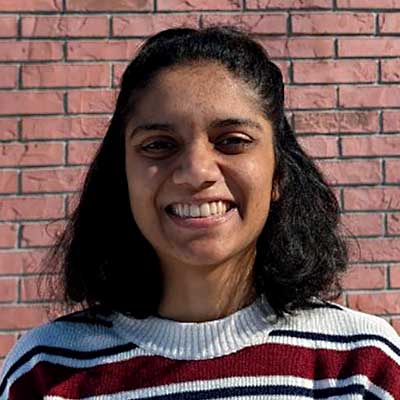
Dipti Kulkarni found her courage to design a career path through the community at Northeastern’s Roux Institute in Portland, Maine. An initial interest in applying technology to animal and environmental welfare led her to Data for Social Good, where she worked on a forecasting model for Shelter Animals Count and contributed to both the National Zoning Atlas and the Knox Clinic van initiative.
As a sustainability ambassador and student leader for Roux Interest in Sustainability and Environment, Kulkarni worked closely with groups like Maine Audubon, GPMetro, and Portland’s park rangers. She helped launch a bus pass program for faculty and staff and built a computer vision-based trash classification app to reduce contamination in campus waste management pipelines.
Nihar Sanda, Laurel and Scroll 100
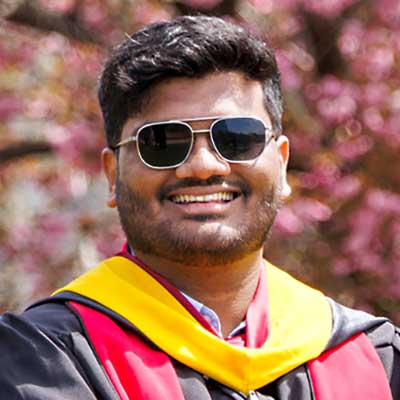
Throughout his time at Khoury College, Nihar Sanda involved himself in a multitude of research projects, publishing six papers in leading venues. Among other efforts, he collaborated with a NASA team on AI safety in geospatial science and worked with advisors Ayan Paul, Benjamin Gyori, and Auroop Ganguly to build a cross-domain knowledge aggregation system to understand the effects of climate on health. He served as a graduate research assistant, won an award at Khoury Poster Day in 2025, and became a member of Assistant Professor Maitraye Das’ Technology, Equity, and Accessibility Lab.
Outside of the research realm, Sanda completed a co-op at Vanderbilt University and won the Papers2Products hackathon at Northeastern.
Nayonika Sen, Laurel and Scroll 100
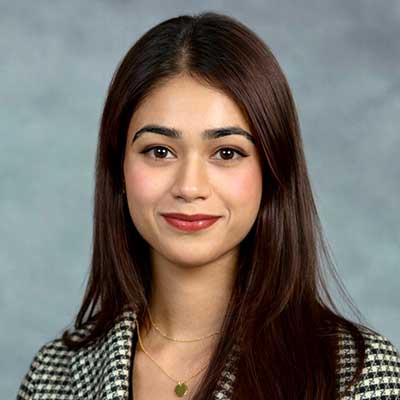
Through the Khoury Research Apprenticeship, Nayonika Sen worked under Professor David Bau on National Deep Inference Fabric, an initiative aimed at making powerful AI systems more accessible to the broader research community. In this role, she built tools to track and display how these AI systems were being used.
Sen served as a graduate teaching assistant and research peer advisor, supporting her fellow students. During her internship at Siemens, she developed software tools to streamline engineering workflows and was honored as a finalist at the company’s Intern Impact Awards. A subsequent internship at NVIDIA turned into a full-time, post-graduation position as a software development engineer.
Hunjun Shin, Laurel and Scroll 100
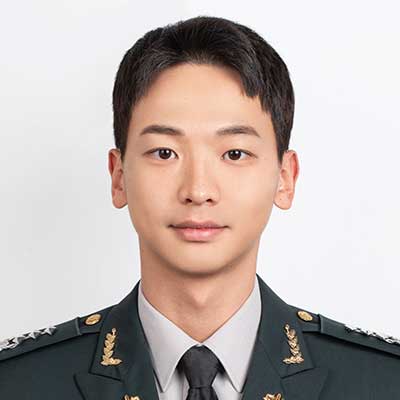
As an active-duty South Korean army captain, Hunjun Shin was awarded a full national defense scholarship by the Republic of Korea’s Ministry of National Defense to pursue a master’s in data science at Northeastern and bring AI capabilities back to the Korean military.
Shin channeled that mission into research under Mohit Singhal at the NULab for Digital Humanities and Computational Social Science, where he studied how the 2018–19 US–North Korea diplomatic summits shaped online discourse on Reddit. He is now investigating social media narratives surrounding the India–Pakistan conflict.
Outside of his research efforts, Shin took first place at the Brain Storm BCI Hackathon 2026 by building a real-time brain signal visualization tool.
Alyssa Smith, Laurel and Scroll 100
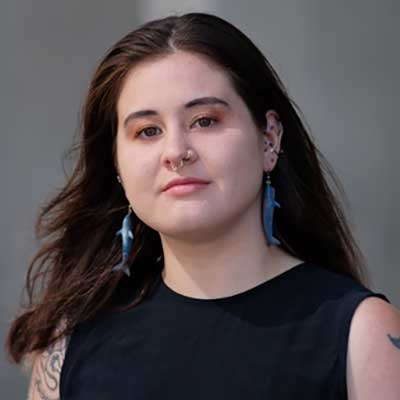
As part of the Network Science Institute, Alyssa Smith researches the ways that humans can impact attention structures and information flows on social media platforms and online news ecosystems. Using both qualitative and quantitative methods, she infuses her work with a sense of empathy and care, particularly for marginalized or vulnerable users of social media platforms.
Smith’s PhD is supported by an NSF GRFP award in social sciences. After graduation, she will join the College of the Holy Cross as an assistant professor in statistics and data science.
Shashwath Udaya Kumar, Laurel and Scroll 100
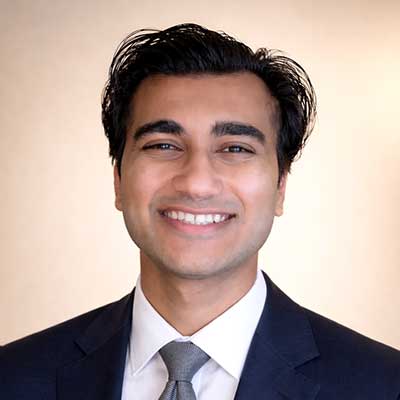
Alfond Scholar Shashwath Udaya Kumar has spent much of his time at the Roux Institute building software for Maine-based organizations that tackle public health problems. Among these are Mother of Fact, a digital health startup focused on maternal and infant nutrition, and Apriqot, a data analytics startup at the intersection of demography, geospatial modeling, and public health surveillance.
With a core team of friends, he participated in student competitions, taking first place at the Spring 2025 Pine Tree Challenge for TransitCare, a caregiver-first non-emergency medical transportation platform designed to help seniors in rural Maine reach medical appointments.
Princewill Chukwuka Umeh, Laurel and Scroll 100
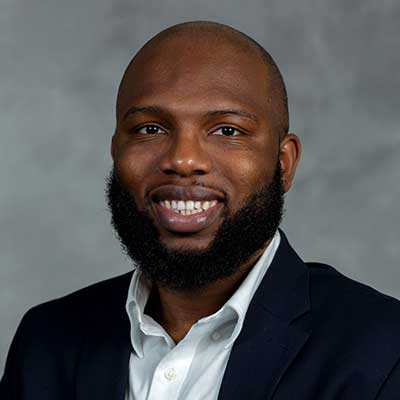
Princewill Chukwuka Umeh joined Northeastern’s Arlington campus as a Gates Millennium Scholar with a simple goal: to be a technologist whose work makes people’s lives easier. He began quickly, participating in the Graduate Leadership Institute’s LEAD360 program before becoming a Khoury graduate admissions ambassador — building relationships with DC-area universities, talking up the Align program, and even reviewing some applicants’ personal statements.
At nonprofit CodePath, Umeh reviewed resumes and ran coaching sessions for students seeking jobs. In addition, he worked with local charter school students who were performing below grade level. Through the African Graduate Student Association, he helped organize the Africa Awards Night and a Black History Month panel designed to help African students find their professional footing.
Umeh competed in hackathons at MIT and Harvard, both of which focused on economic challenges in Africa. During his time at CVS Health, he built an AI chat interface for data scientists working with drug pricing data and helped his team win the CVS Health Corporate Innovation Challenge. He is now in Northeastern’s IDEA accelerator, working to push a startup concept toward product-market fit.
“My time at Northeastern has been full of learning, community, rising above challenges, and believing in my capabilities,” Umeh says.
Songting Yang, Laurel and Scroll 100

Transitioning from a background in finance and business analytics into software engineering through the Align program, Songting Yang developed a strong interest in applying technology to real-world problems. During internships at Google and Oracle, she gained experience in applied AI and distributed systems.
As an IT support assistant at the Silicon Valley campus, Yang supports technical operations, and as a global student mentor, she helped international students transition into graduate life. She served as president of ACM-W at the Silicon Valley campus. After graduation, she will work on large-scale systems and AI-driven technologies as a full-time software engineer.
The Khoury Network: Be in the know
Subscribe now to our monthly newsletter for the latest stories and achievements of our students and faculty