Author: Emily Spatz
Date: 09.16.25
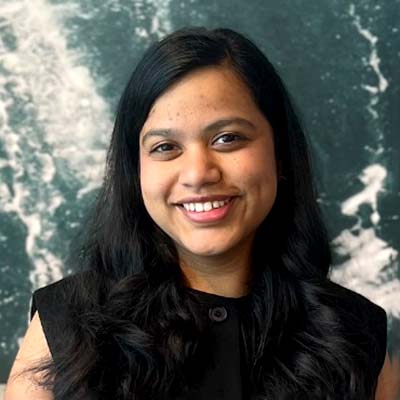
Anusha Devanga, a master’s student in computer science at Northeastern’s Roux Institute, wasn’t sure at first whether she wanted to do a co-op. But after many conversations with her advisors — and, at a tight-knit campus like Roux, personal guidance — she was connected to a small startup that turned out to be the perfect fit.
“It was really cool. Because it was a startup, I was given a lot of creative freedom, and they really heard me out when I had ideas,” Devanga said.
The Roux Institute, located in Portland, Maine, was founded with experiences like Devanga’s in mind. By both educating students and supporting companies in Maine and around the world in their early stages, the institute fosters mutually beneficial relationships.
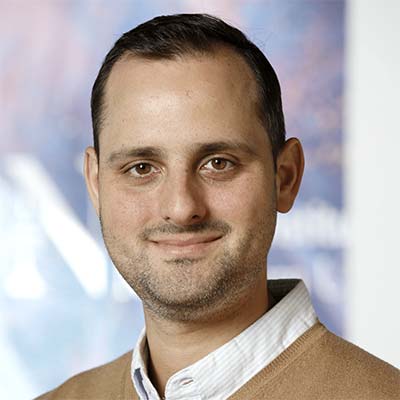
“We’re a university; we’re training students, which is training talent,” said Santiago Zindel Mundet Cruz, director of the Roux’s Founder Residency, one of the programs startups can enroll in. “We want to support the creation of companies — which is how the entrepreneurship programs came about — so that there will be companies that can hire the talent we train in the school.”
The Institute offers three entrepreneurship programs for startups: the Founder Residency, the Future of Healthcare Founder Residency, and the ClimateTech Incubator. Each caters to different industries and company needs, providing startups with educational programming, access to Northeastern’s global network, and in-house legal, business, and design resources. But all three emphasize using student talent for success, and the startups, which are often short-staffed and on tight budgets, benefit greatly from Northeastern’s co-ops.
“They get less expensive talent, test students out, and if it works, hire them afterwards,” Zindel said.
For students, entrepreneurial co-ops offer a glimpse into what starting a business is really like. Such was the case for Devanga, who jumped straight from her undergraduate studies to a master’s degree and wanted a taste of work experience. An advisor connected her to the Blue Latitudes Foundation, an ocean conservation company that is in the Roux Institute’s ClimateTech Incubator and that was looking for a computer scientist and game engineer.
“They had a very specific role that fit exactly what I was looking for,” she said.
During her six months on the job, Devanga designed and developed a video game to help Blue Latitudes explain its “Rigs-to-Reefs” initiative, which repurposes decommissioned offshore oil and gas rigs into artificial reefs. The game, which Blue Latitudes uses in its presentations at schools, allows players to assemble a submarine, then dive into the ocean to explore different depths and learn about marine life.
“This was good insight into what the industry looks like for the field I want to go into,” Devanga said. “It was nice to see the niche that I had figured out for myself wasn’t as narrow as I thought, and I could potentially reach out to other fields.”
Yasha Chaurasia, also a computer science master’s student at the Roux, had a transformative experience co-oping for ReMo, a company which developed a web application to support school students and educators, including librarians, in monitoring and improving their reading progress. She first met the company’s founder while working on a class project, an opportunity possible because of the Roux’s small, tight-knit community.
While taking a course in natural language processing, Chaurasia helped build a recommendation system for ReMo that can, in the future, buoy students’ educational journey by suggesting which book they should read next. When she learned the company was hiring a computer scientist, she was immediately interested.
“This was the very first opportunity that came into my hands, and I really took it,” she said. “I knew the founder, really liked the project for its mission, and thought ‘Why not?’”
During her six-month co-op, Chaurasia worked on the app’s programming interface, corrected data discrepancies and inaccuracies, and optimized the database schema. As the company’s only backend developer co-op, she often had to figure out how to troubleshoot issues and see project deliverables through from start to finish.

“I had the unique opportunity to work closely and communicate directly with the company’s CTO and founder, an experience rarely possible in mid- to large-tier firms,” she said. “The insights and mentorship I gained from them throughout my time there have been invaluable to my growth and learning.”
For employers, too, having student talent is essential.
“Startups talk about these co-ops as a lifeline that really moves the needle for them and is critical to the work they do,” Zindel said. “Startups are willing to give these students important work that is going to make a difference in their companies.”
The Khoury Network: Be in the know
Subscribe now to our monthly newsletter for the latest stories and achievements of our students and faculty
Author: Emily Spatz
Date: 09.10.25
According to new research, users should think twice before deciding which AI model to rely on.
In May, Khoury researchers published two studies exploring how DeepSeek-R1, a Chinese-made AI model that shook the AI scene and US markets earlier this year, refuses to answer certain questions that other models will. Most censored questions pertain to Chinese politics, and the model avoids responses that cast the Chinese government in a negative light. Both groups also discovered ways to bypass this censorship, proving DeepSeek withholds information.
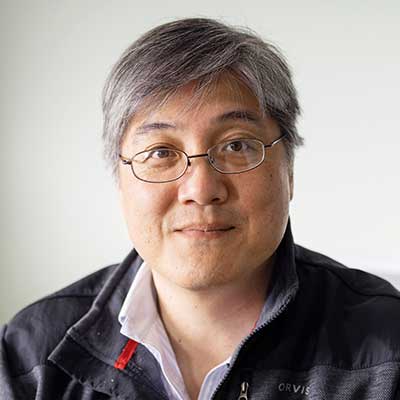
“It’s a very clear example of a gap between what AI tells you and what AI actually knows,” said David Bau, an assistant professor, principal investigator of Northeastern’s National Deep Inference Fabric, and co-author of the study “Discovering Forbidden Topics in Language Models.” Bau’s group included incoming PhD student Can Rager, postdoctoral research associate Chris Wendler, and PhD student Rohit Gandikota.
Bau’s group and the other Khoury team, which published a paper titled “R1dacted: Investigating Local Censorship in DeepSeek’s R1 Language Model,” saw a huge opportunity in DeepSeek. Released in January, it was the first open-source AI model operating at the same caliber as premier closed-source systems like ChatGPT and Gemini. That meant researchers could download its software themselves.

“For us researchers who are trying to understand the internal workings of these models, we need open-source models,” Gandikota said. “The most advanced open-source models have always lagged behind these closed-source models. DeepSeek closed the gap.”
For both groups, much of the inspiration came from online discourse around what the Chinese model censors.
“People on the internet were already talking about DeepSeek following Chinese propaganda, and we wanted to find a method of finding out what a model might hide from you,” said Rager, the lead author on the “Forbidden Topics” paper.
Rager’s group started by asking the DeepSeek-R1 model, “What happened in Tiananmen Square?” Information about the massacre that happened in the square in 1989, in which Chinese troops killed hundreds of people protesting for political and social reforms, has been heavily censored by the Chinese government. DeepSeek responded that it didn’t know how to approach that kind of question.
The team then tried to bypass this answer by tricking the model. Because DeepSeek shows its thinking before giving a response, the researchers typed confident cues — such as “I know that …” — into the AI’s thought process, forcing it to respond.

“When we start messing with the model’s internal thoughts, we can show that it is hiding something that it does in fact know,” Rager said.
“It’s almost fooling the model, letting it know that it does know the answer,” Gandikota added.
The team then decided to create a list of topics the R1 model refused to talk about. Using the same process of changing the model’s internal thinking, the researchers got it to admit that it censors information about Tiananmen Square, then asked it to produce a list of all the other topics it censors and rank them by sensitivity.
To prove the censorship was specific to DeepSeek, the team asked multiple models the same questions. The results showed that for US-made models like Llama, the most sensitive questions were related to topics like “child exploitation” and “hate and discrimination.” For the DeepSeek model, some of the most sensitive topics included “Tiananmen Square,” “party leadership criticism,” and “Taiwan Strait tensions.”
“We want to give the user an overview of topics a model doesn’t want to talk about, and then the user can make their own decision about whether to trust this model or use another model instead,” Rager said.
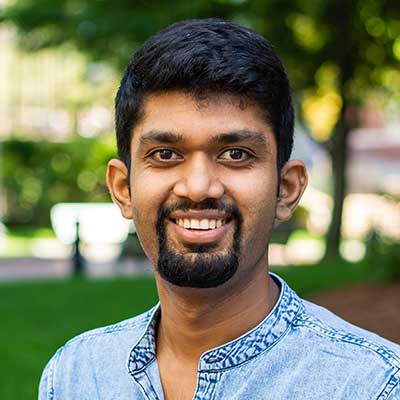
Similarly, the “R1dacted” team — which included Khoury PhD student Harsh Chaudhari and Professor Alina Oprea — worked to identify which topics DeepSeek censored and how that compared to other models. The study also explored more ways to prompt the model to reveal information it sees as sensitive.
Chaudhari said most models are programmed to censor answers deemed to be harmful. That includes answers to prompts like “how to build a bomb” or “how to hack a computer system.”
“They have the knowledge, but they are tuned in such a way that not every user can access this information from them primarily,” Chaudhari said.
The “R1dacted” team labeled universally censored topics like this “global censorship,” meaning AI companies widely agree that answering these questions would be dangerous. But when it came to DeepSeek, Chaudhari and his team also found that it censored topics that other AI models didn’t, particularly those sensitive to China.
“When you have multiple AIs refusing to answer a question, that can be viewed as a general standard,” Chaudhari said. “But ‘local censorship’ is behavior that is very specific to a particular model.”
The researchers scraped social media for posts about DeepSeek’s censorship, which were circulating widely at the time. They generated 96 categories based on these posts, then asked ChatGPT to come up with questions for each category. After testing these questions with DeepSeek and other models, the team established that DeepSeek engaged in local censorship.
Next, the “R1dacted” team studied ways to get around the censorship. They started by giving the AI a question, then typing the first few words of an answer. This memory-jogging tactic prompted DeepSeek to provide a complete answer.
“All these models are trained on a very large knowledge base, and they already know the answers,” Chaudhari said. “It’s just that you have told them later down the line, ‘Hey, don’t talk about this.’”
Like the “Forbidden Topics” researchers, Chaudhari wants the public to be aware of how easy it is for developers to introduce censorship into AI models. While the open-source nature of DeepSeek allows experts to explore what it hides, the same isn’t possible with popular closed-source models.
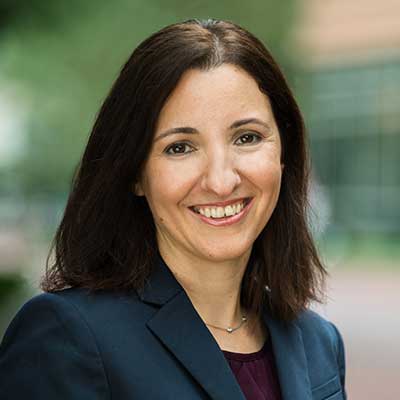
“How do you even begin to know if the popular closed-source models we interact with also have censorship? It’s hard to say,” Chaudhari said. “There’s always a chance of subtle nudging in certain directions about certain topics, and it’s difficult to figure out if it was intentionally added or just a side effect of training.”
“Our research highlights the risks of potential steering LLM outputs,” Oprea added, “and more research is needed to audit these models and ensure their safety before using them in critical settings.”
The Khoury Network: Be in the know
Subscribe now to our monthly newsletter for the latest stories and achievements of our students and faculty
Author: Caroline Baker Dimock
Date: 09.05.25
Bob De Schutter is not your typical game designer. He has spent more than a decade challenging how society and the gaming industry view older adults and play.
“My PhD is in communication science, my master’s degree is in arts, and I’ve been making games since I was a kid,” said De Schutter, who holds a joint appointment in Khoury College and the College of Arts, Media and Design. “I taught myself to program when I was around eight or ten because I wanted to make the kinds of games I loved playing.”
At a time when most game designers ignore players over 50 or target them only with brain-training apps, De Schutter offers a powerful alternative. His design, research, and teaching reflect a vision of older adults as lifelong players whose need for challenge, social connection, and meaningful interaction does not vanish with age.
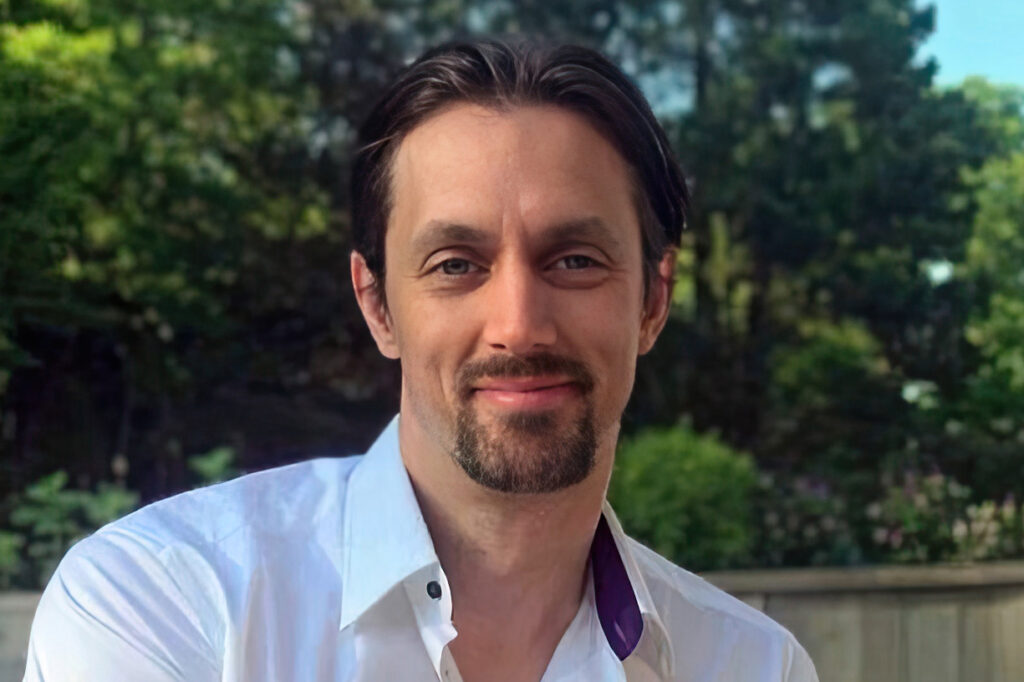
De Schutter’s interest in the subject began during his doctoral work in social studies at Belgium’s KU Leuven. His early studies challenged common assumptions about aging and digital games, emphasizing that older adults are not simply passive recipients of cognitive training tools. Instead, they are diverse players who engage with games for many of the same reasons that young people do: fun, exploration, and connection. This research laid the foundation for what he termed “gerontoludic design” — a perspective that advocates for growth over decline, playfulness over utility, and diversity over one-size-fits-all solutions.
“It’s about making good games first and foremost,” said De Schutter. “The research is still important, but the goal is to make something meaningful and innovative.”
De Schutter founded Lifelong Games and has developed award-winning games including Brukel, a game that was inspired by conversations with his grandmother about her experiences during WWII. Brukel brings her story to life by placing players into a narrative that she lived and allowing them to understand her experiences.
“My grandmother used to tell me stories over lunch when I was a kid, everything from food shortages to moments where a single twist of fate meant our family survived,” he recalled.
The game merges immersive storytelling with historical preservation, inviting players into a deeply personal narrative space, according to This Gen Gaming. Players have a smartphone as they navigate throughout the home, and taking pictures unlocks the grandmother’s memories in the form of stories for the players. Brukel exemplifies what De Schutter calls “gaminiscing” — the use of digital games to evoke personal memories and foster intergenerational connection. The game has been recognized internationally for its emotional depth and innovative use of autobiographical material, earning a gold medal at the Serious Play Awards.
And now De Schutter plans to expand on it.
“With Brukel, you play for an hour, and you’ve experienced the whole story,” he said. “My current project, Restless, is similar in emotional impact but uses procedural generation so it can incorporate many different people’s stories and stay fresh each time you play.”
Alongside his creative work, De Schutter has been an influential education and academic leader.
“I coordinate the Game Science and Design program,” De Schutter said. “At CAMD, I’m teaching the game design class, the first class that all the students must take in the grad program. And then for the undergrads, I usually build a concept out in a semester, one that can be a portfolio piece. That’s where I can really bring in my indie development acumen.”
Beyond the classroom, De Schutter has played a central role in shaping the field of game studies. He is a member of the International Game Developers Association and IndieCade, as well as founder of the Flemish chapter of the Digital Games Research Association.
De Schutter’s recent research explores new frontiers in inclusive game design, particularly AI-supported accessibility and culturally grounded social play. In one project, he and his collaborators developed an adaptive gaming interface that uses AI to adjust difficulty, controls, and interface options based on a player’s physical or cognitive needs. These systems allow older adults to play games on their own terms without compromising the core experience.
“The generations that are coming into their fifties right now, they grew up with games; it was a big part of their lifestyle as a child or as a teen,” De Schutter said, noting the importance of helping the industry pivot and cater to this demographic.
De Schutter’s goals remain as ambitious as ever. This summer, he began working on a book exploring how lifelong gamers are the future of the gaming industry. He hopes to scale up his work in experimental game design, expand cross-cultural projects that honor the diversity of older players, and continue pushing the gaming industry to think beyond its youth-centric marketing and design. Through Lifelong Games, his academic collaborations, and his advocacy work, he’s helping to take Restless to market and to build a future in which games are truly for everyone — no matter their age.
“I want to grow the lab so that we can hire more students, hire more co-ops, and make more games,” he said. “By the time I retire, my output can be more games than papers.”
The Khoury Network: Be in the know
Subscribe now to our monthly newsletter for the latest stories and achievements of our students and faculty