Meet Mathena Chan
Growing up, Mathena Chan was creative and also curious about technology, such as websites and apps. At Khoury College, where she is studying user experience, she is able to combine both her interests.
The Khoury curriculum especially does a really good job at kind of evening out the playing field, so it doesn’t really matter as much how much experience you have going in. And it’s easy to catch up and really know, kind of, what you want to be learning
Mathena Chan, BS in Computer Science and Design ‘25
Meet Ilmi Yoon
As an undergraduate student in Korea, computer science did not come easy to Ilmi Yoon. But she hit her stride in her third year and went on to earn a PhD. Now at Khoury College, she uses her experience to help students build confidence in their studies.
Computing can be, you know, challenging, and it looks very foreign, but it takes some time. Once you figure it out, it becomes so exciting, and you can do some amazing things with computing
Ilmi Yoon, Teaching Professor, Director of Computing Programs – Silicon Valley
Meet Gigi Gillen
When Gigi Gillen arrived at Khoury College, she kept her major undecided, not yet ready to limit her options. When she discovered the possibilities of combined majors, however, she realized she didn’t have to choose between her passions. With a combined computer science and design degree, Gigi found the perfect balance between technical expertise and creative expression — unlocking a world of limitless opportunities for her future.
I wouldn’t be in computer science and design anywhere else. … I’ve had a very well-rounded education that I’ve really enjoyed
Gigi Gillen, BSCS + Design ’25

Brian Wenzinger
When Brian Wenzinger’s high school guidance counselor suggested he check out the computer science program at Northeastern University, Wenzinger wasn’t sure he would be going to college. It wasn’t a matter of academic ability or interest, but an issue of financial need. “I wasn’t going to college if I wasn’t getting money to attend,” Wenzinger explained. “Fortunately, Northeastern provided me with a scholarship, and that sealed the deal.” Receiving that scholarship not only set Wenzinger on a path to a college education plus a successful career, it also inspired him to eventually extend that opportunity to students who came after him.
Wenzinger (BSCS ‘89) has fond memories of his five years at Northeastern’s College of Computer Science (now Khoury College). One of his favorite and most valuable experiences was the co-op work. “The combination of academics and co-op was perfect for me,” he said. “I’m one of many people who will say, be smart about your co-ops. Learn what you like to do. Learn what you don’t like to do.” Wenzinger had the opportunity to take on three different co-op jobs during his time at Khoury. They all ended up being good experiences, but his first co-op in the summer after his freshman year, which involved otherwise unexciting data entry and minor programming work, is one that he still considers “the best job I’ll ever have.” Not only did the work expose him to statistical analysis and data analysis, which steered him toward his eventual career, but he was able to live for three months in Hawaii.
After college, Wenzinger’s focus on data led him to several job opportunities, such as developing software to analyze data for quality control at DuPont. Then, after years of traveling for work and looking to settle in one place, Wenzinger took a position at DuPont’s Wilmington, Delaware, office in their pension group. Having already pursued business as a minor while at Northeastern, Wenzinger took the opportunity to get his MBA at night through the University of Delaware. Upon graduation, Wenzinger fully shifted his career to finance, where he combined his new focus on money management with his background in software development to create software that helped evaluate stocks and portfolio risks.
Today, as he enjoys early retirement from a successful career, Wenzinger welcomes the opportunity to support the school that first got him started. “I wouldn’t be here without Northeastern, so it’s important to me to give back.” He has contributed to the Carl S. Ell Scholarship, which was the fund that he benefited from as a student. Additionally, in 2003, he set up the Jane K. Wenzinger Scholarship Fund, in honor of his mother, to support students in need who wish to study computer science, with preference given to those from single-parent households, as was his situation.
Then, in 2014, Brian Wenzinger pledged $1 million over several years to fund the Larry Finkelstein Innovative Computing Education Endowment (ICEE) at Khoury. The fund, named for Wenzinger’s former professor and, at the time, dean of CCS, came out of conversations that Wenzinger and Finkelstein were having about ways to improve education at Khoury. Something that Wenzinger thought was important, but he hadn’t experienced while at Northeastern himself, was research- and academic-focused professor-student interactions. When he was pursuing his undergraduate degree, the focus had been on preparing for work and not as much on the less-tangible benefits of academia. So, Wenzinger and Finkelstein worked with the development office to create an endowment that would allow the Khoury dean to provide funds for academic experiences that fell outside of the standard classroom program. Wenzinger described it as, “If there are opportunities for growth and diversity in the educational experience, that’s what that fund is for.”
The combination of academics and co-op was perfect for me,” he said. “I’m one of many people who will say, be smart about your co-ops. Learn what you like to do. Learn what you don’t like to do
One such funded program was introduced by Dean Carla Brodley, whose focus on increasing opportunities for women in computer science inspired her to send students to the Grace Hopper conference. As someone who was moved when he had the opportunity to hear Hopper speak in person himself, Wenzinger was thrilled that this opportunity could be shared with others. He proudly displays a signed, framed photo of a group of Khoury students who attended the conference thanks to the endowment. Additional funded activities have been both professor- and student-generated, all sharing a focus on creating innovative academic opportunities for students and their professors.
Wenzinger’s latest funding effort is in support of Northeastern’s library. Having experienced first-hand the critical importance of libraries during one of his co-ops and in his graduate program, he wanted to help Northeastern’s library better meet the needs of future students.
Wenzinger still feels lucky that his guidance counselor suggested Northeastern and put him on the path to the scholarship that made his college education and career possible. Having been on the other side of the hiring desk where he has interviewed recent computer science graduates, he recognizes the value of the education he received at Northeastern. He has since returned to the campus several times, including to tour it with his own daughters as they were looking at schools. He enjoys seeing the improvements to the campus and the updates to the CS program, including the dynamic academic opportunities he is grateful to be able to fund. “The whole environment has changed. It is never static in technology, and that’s a good thing.”
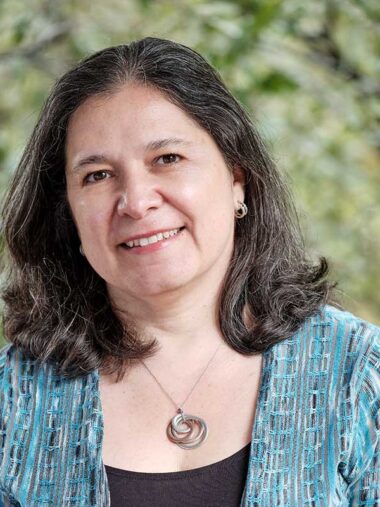
Natasha Noy
Research has been a driving force of Natasha Noy’s career. After completing her bachelor’s degree at Moscow State University, Noy began applying for United States-based PhD programs in computer science while still living in Moscow in the 1990s. Boston was one of the cities she had heard of, and she says, “It was mostly Boston where I wanted to go, and to the program that gave me full assistance — which was Northeastern.”
Noy first experienced “how to do real research” at Northeastern. Her research assistance came out of a grant with several professors collaborating on it. “I was immediately exposed to multiple points of view. There were a lot of firsts for me as part of that research. It grew into my dissertation.” The grant was focused on using knowledge representation methods to find information in medical and biology text. Noy’s dissertation was ultimately titled “Knowledge representation for intelligent information retrieval in experimental sciences.”
After completing the program, Noy taught for a year at Northeastern. She fondly recalls teaching an introductory computer science class where students wrote game programs. “The last day of the semester, they spent the whole night in the lab playing each other’s games.”
Her research led to a move to Stanford for a post-doctoral position working on knowledge representation and systems, “AI as it was perceived back then.” She worked as part of a group of computer scientists in the medical school. Their work became the Protégé ontology editor, which helped scientists build ontologies describing their domains.
Northeastern set me on the path of being a researcher, asking interesting questions, finding something new. In some sense, my research at Google goes back to what I was doing when I was at NU: helping users find information
After fifteen years as a research scientist at Stanford, she was looking for a change. She was enjoying the applied research, so she joined a research team at Google, one of the “bigger and more exciting labs for me.” Having joined a company built around searching the web, she eventually started Dataset Search – a search engine for datasets, akin to what Google Scholar is for papers.
Noy says, “Northeastern set me on the path of being a researcher, asking interesting questions, finding something new. In some sense, my research at Google goes back to what I was doing when I was at NU: helping users find information.” Noy was elected as an AAAI Fellow in 2020.
Assessing Northeastern today, Noy is impressed by its growth in stature. “I’ve moved across the country, and seeing NU from afar with its new professors, programs, and alumni, I’ve seen the PhD become even more valuable over time. Being selected as part of 40 for 40 is really special. It’s humbling to receive this award.”
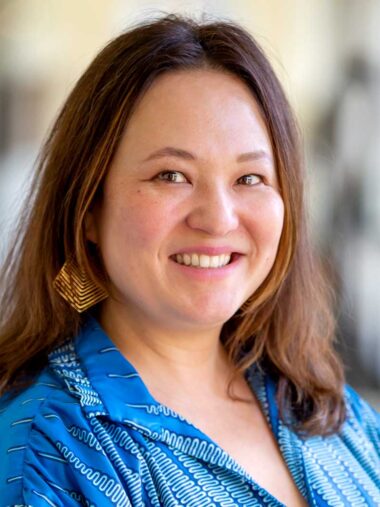
Laurel Yamaguchi
Pivotal Ventures was founded by Melinda French Gates to bring more equality and opportunity to people in the United States. Laurel Yamaguchi, Pivotal’s lead for women and tech innovation, focuses on efforts to increase women’s pathways into the U.S. tech sector.
When Laurel and the Pivotal team learned about the encouraging results of an NSF-funded pilot of the Align MS in Computer Science at the Khoury College of Computer Sciences — a program that provides a bridge for students who didn’t study computing as undergraduates to move into graduate-level computer science majors — they saw an opportunity to make an impact.
“What was interesting to us is how they were using best-known practices to recruit, retain, and graduate women and underrepresented groups in computing,” Yamaguchi said. “It was really encouraging.”
Pivotal launched their support in 2017 with a three-year investment to fund Align scholarships, build out the program’s staff, and develop the MS Pathways to Computing Consortium, a networked learning community of colleges and universities across North America that are investing in “Align-like” bridge programs. After working closely with Northeastern on these projects, Yamaguchi was impressed by the university’s interest in advancing equity.
“They had a willingness to share with others what had worked for them with a commitment to the greater good,” Yamaguchi said. On the strength of the university’s work on Align and the Consortium, Pivotal supported the launch of the Center for Inclusive Computing (CIC) at Northeastern. The CIC’s aim would be to provide financial and technical support to the largest computing departments in the country in order to increase the representation of women graduating with computing degrees. This gets to the heart of Yamaguchi’s goal at Pivotal.
“One of the things that I think is such a big deal about Align and the CIC is that they’re working out the systemic issues that are holding us back,” Yamaguchi said. “It’s not easy work, but they really are getting at the root of some of these issues.”
Throughout her work with Northeastern, Yamaguchi has been a deeply engaged partner, participating in strategy sessions, hosting events, and making connections. Catherine Gill, the CIC’s executive director, emphasizes how much she values Yamaguchi’s approach: “She’s an active advocate, spokesperson, and connector for us. She understands how hard it is to move the needle and she is with us every step of the way.”
I love working with the Center for Inclusive Computing. I learn so much from them constantly because of their deep expertise in higher education. They’re bold and they deliver. It’s really a pleasure to watch them do their thing
As for Yamaguchi, collaborating with Northeastern has been a joyful experience.
“I love working with the Center for Inclusive Computing,” she said. “I learn so much from them constantly because of their deep expertise in higher education. They’re bold and they deliver. It’s really a pleasure to watch them do their thing.”
In looking toward the future, Yamaguchi sees continued growth in the Northeastern approach to engaging any students interested in pursuing computer science degrees.
“They’re always changing, always evolving, doing more,” she notes. “They’re figuring out how to make this systemic and sustainable for the long haul.”

Padmaja Vrudhula
Padmaja Vrudhula considers herself a reluctant technologist. In fact, she originally planned on being a neurosurgeon, but her early experience with an internship at a Seattle software company led her in a different direction.
“I loved the new technology that I was working with, and it was super exciting to develop products that people used,” she explained with a smile. “I did the one thing that Indian parents fear, which was to say, ‘I’m going take a year off to work to save money for med school.’ Fast forward 20-some-odd years, and I’m still working in tech, with med school in the rearview mirror.”
What resonates for Padmaja Vrudhula regarding Khoury and the Align program — and how she got involved — is “trying to bring in students with non-traditional backgrounds.” As an aspiring neurosurgeon turned tech executive, it’s a journey Vrudhula knows well., a global cloud-based data platform. Prior to working at Snowflake, she held a number of industry-facing tech roles at VMware.
While pursuing a career in tech, she has also been active in several nonprofits, primarily geared toward creating opportunities for the economically disadvantaged. Over the last 10 years, this work has evolved into a focus on education and inclusion in technology.
“As a child of Indian immigrant professionals, it never occurred to me that women were supposed to be bad at math and science,” Vrudhula said. “Also, joining tech at a time when credentials weren’t as important as skills and talent, I had a much more diverse experience than those entering the workforce today. This is why I am so focused on ensuring that students have a variety of opportunities to participate in technology.”
To that end, Vrudhula has always enjoyed teaching and mentoring others, whether as an adjunct instructor at the University of Washington or a mentor at the Foster School. She has also helped students in the Align program in Seattle to discover the same spark that led her to pursue a career in technology.
“If there’s one thing I wish I could hear people, particularly women, stop saying is ‘I am not good at math’ or ‘I am not technical,’” said Vrudhula. “The popular notion of math and programming savants needs to be replaced with the idea that it is a learned skill, just like anything else. We are all technical, it is just a matter of degree.”
What resonates for me regarding Khoury and the Align program, and how I got involved, was trying to bring in students with non-traditional backgrounds. These are students who may have had a change in what they wanted to be when they were in their 20s compared to what they want to be in their 30s
“Padmaja has been supporting Aligners since her role at VMWare and now as a VP at Snowflake,” said Mary Trimarco, Khoury College’s business and outreach director. “Her insights are so valuable, and she is a strong advocate for our students.”
Recently at Snowflake, Vrudhula brought in two Align students (both women of color) as interns. They proved their value immediately and will join her team as full-time employees after graduation. For both women, the internship was a way to discover the thrill of problem solving while applying the knowledge they gained during their studies.
Over the past few years, Vrudhula has worked with the Align team to provide math tutorial sessions for students requesting additional support. In addition, she has spoken on panels with Aligners and mentored several students.
“What resonates for me regarding Khoury and the Align program, and how I got involved, was trying to bring in students with non-traditional backgrounds. These are students who may have had a change in what they wanted to be when they were in their 20s compared to what they want to be in their 30s,” Vrudhula said. “As somebody who continuously questions ‘Is this really what I want to do when I grow up?’ that’s something that really resonates with me. This program is also one of the best ways to take action in terms of building diversity in technology, not just from a demographic point of view, but in terms of experience and capabilities.”
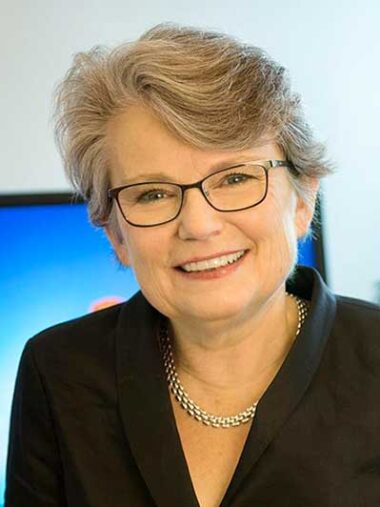
Doreen Hodgkin
During her 35 years at Northeastern, Doreen Hodgkin developed a reputation as a can-do manager, rising quickly through three different departments, finally reaching one of the top positions at Khoury College as associate dean.
One of her proudest achievements was helping Carla Brodley, a former dean of Khoury, increase the percentage of female students in the college from 19 percent when Brodley arrived in 2014 to 26 percent when Hodgkin retired in 2018.
Hodgkin took great pride in calling the family of every female student accepted into the computer science program, a personal touch that colleagues say was one of the reasons that college attracted top female students, a trend that continues today. Hodgkin was always completely honest with admitted students; she wanted to make sure that the College was the right fit for them and would meet their long-term goals.
“Her warmth, coupled with the confidence she inspires in prospective students and their families, was crucial,” said Brodley. “People automatically trust her.”
Whether their issue is academic or personal, her door was always open to students—as long as they arrived with a Dunkin’ Donuts dark roast with two creams and one Splenda.
Her warmth, coupled with the confidence she inspires in prospective students and their families, was crucial. People automatically trust her. — Carla Brodley
In recognition for all Hodgkin did for Khoury students, parents of a recent graduate established a fund in her honor, the Doreen Hodgkin Student Emergency Fund. The recognition was something that took Hodgkin by surprise. “I couldn’t believe it. I was so humbled,” she said. She added that throughout her time at Khoury, she always worked across the University to help students who were struggling financially.
In addition to her can-do attitude, Hodgkin said that she “always embraced change, whether for myself or for the organization.” This quality served her well at Northeastern, a university that prides itself on constant growth and improvement.
Since retiring, Hodgkin’s drive to help others has continued. Along with other North Shore volunteers, she set up a local non-profit aimed at helping seniors stay in their homes for as long as possible. And she also pursued another lifelong dream … learning to play the banjo.
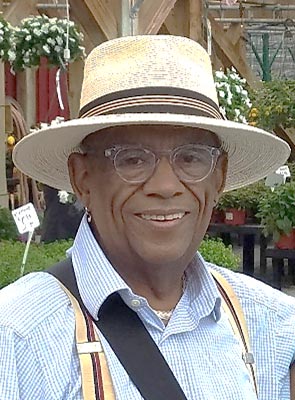
Melvin Simms
Melvin Simms launched Khoury College’s successful co-op program right from the beginning of the College in 1982. Little did he know at the time, he would shepherd the program for the next 30 years. Simms retired from Khoury nine years ago, but so much of what Simms achieved during his three decades of service to Northeastern is still felt today. Members of the Khoury community were deeply saddened to hear of his passing in late December.
As Director of Co-op, Simms established and grew the co-op program for undergraduate and graduate students. He created the backbone of co-op practices used today including the professional development class, the co-op clearance process, and the “First Formal Interview.”
According to Melissa Peikin and Aileen Kent Yates, current members of the co-op team, Simms was a valuable member of the University’s co-op division at large, serving on committees, undertaking new initiatives, and presenting at conferences both domestically and globally. He was a leader in introducing the need to look at data to measure the effectiveness and success of co-op from both the student and employer perspective.
In a tribute to Simms, Peikin and Simms shared: “The students respected Mel and to this day, alums always ask about him. When they think about the College of Computer Sciences, Northeastern University, and co-op, it is Mel who comes to mind. He was an integral part of their experience.”
“When the College moved into a new building in 1984, he insisted that the co-op faculty be co-located with the academic faculty of the College,” added Viera Proulx, a colleague of Simms during the late 1990s through 2012. “This was then a revolutionary idea that has proven to be a great success and has been since adopted by nearly all other university units.”
Proulx continued that Simms designed a co-op program that led students through the preparation for a job search in a systematic way—learning how to write a resume, how to apply for a job, go through a mock job interview, and write a follow-up letter. “He wanted to make sure that every co-op assignment was a valuable educational experience,” she said.
When I was a co-op coordinator for CCIS and Mel was director of the program, he kept students and the quality of their learning at the forefront of every decision
Another colleague, John Spadaccini, shared that under Simms’s leadership, CCIS, now known as Khoury College, was the first college at Northeastern to integrate academic and co-op advising and to take a holistic approach in advising. Spadaccini also appreciated Simms’s personal mentorship over the years as his own career unfolded.
“When I was a co-op coordinator for CCIS and Mel was director of the program, he kept students and the quality of their learning at the forefront of every decision,” said colleague Nora Jemison. “I was a young professional at the time, and he pushed me to become a better scholar and a better advocate for the students. I learned to go toe to toe with CEOs, when necessary, to ensure a quality learning experience.”
Concluded Jemison: “Melvin was funny, kind, a good communicator… best boss I ever had, really.”