
Brian Wenzinger
When Brian Wenzinger’s high school guidance counselor suggested he check out the computer science program at Northeastern University, Wenzinger wasn’t sure he would be going to college. It wasn’t a matter of academic ability or interest, but an issue of financial need. “I wasn’t going to college if I wasn’t getting money to attend,” Wenzinger explained. “Fortunately, Northeastern provided me with a scholarship, and that sealed the deal.” Receiving that scholarship not only set Wenzinger on a path to a college education plus a successful career, it also inspired him to eventually extend that opportunity to students who came after him.
Wenzinger (BSCS ‘89) has fond memories of his five years at Northeastern’s College of Computer Science (now Khoury College). One of his favorite and most valuable experiences was the co-op work. “The combination of academics and co-op was perfect for me,” he said. “I’m one of many people who will say, be smart about your co-ops. Learn what you like to do. Learn what you don’t like to do.” Wenzinger had the opportunity to take on three different co-op jobs during his time at Khoury. They all ended up being good experiences, but his first co-op in the summer after his freshman year, which involved otherwise unexciting data entry and minor programming work, is one that he still considers “the best job I’ll ever have.” Not only did the work expose him to statistical analysis and data analysis, which steered him toward his eventual career, but he was able to live for three months in Hawaii.
After college, Wenzinger’s focus on data led him to several job opportunities, such as developing software to analyze data for quality control at DuPont. Then, after years of traveling for work and looking to settle in one place, Wenzinger took a position at DuPont’s Wilmington, Delaware, office in their pension group. Having already pursued business as a minor while at Northeastern, Wenzinger took the opportunity to get his MBA at night through the University of Delaware. Upon graduation, Wenzinger fully shifted his career to finance, where he combined his new focus on money management with his background in software development to create software that helped evaluate stocks and portfolio risks.
Today, as he enjoys early retirement from a successful career, Wenzinger welcomes the opportunity to support the school that first got him started. “I wouldn’t be here without Northeastern, so it’s important to me to give back.” He has contributed to the Carl S. Ell Scholarship, which was the fund that he benefited from as a student. Additionally, in 2003, he set up the Jane K. Wenzinger Scholarship Fund, in honor of his mother, to support students in need who wish to study computer science, with preference given to those from single-parent households, as was his situation.
Then, in 2014, Brian Wenzinger pledged $1 million over several years to fund the Larry Finkelstein Innovative Computing Education Endowment (ICEE) at Khoury. The fund, named for Wenzinger’s former professor and, at the time, dean of CCS, came out of conversations that Wenzinger and Finkelstein were having about ways to improve education at Khoury. Something that Wenzinger thought was important, but he hadn’t experienced while at Northeastern himself, was research- and academic-focused professor-student interactions. When he was pursuing his undergraduate degree, the focus had been on preparing for work and not as much on the less-tangible benefits of academia. So, Wenzinger and Finkelstein worked with the development office to create an endowment that would allow the Khoury dean to provide funds for academic experiences that fell outside of the standard classroom program. Wenzinger described it as, “If there are opportunities for growth and diversity in the educational experience, that’s what that fund is for.”
The combination of academics and co-op was perfect for me,” he said. “I’m one of many people who will say, be smart about your co-ops. Learn what you like to do. Learn what you don’t like to do
One such funded program was introduced by Dean Carla Brodley, whose focus on increasing opportunities for women in computer science inspired her to send students to the Grace Hopper conference. As someone who was moved when he had the opportunity to hear Hopper speak in person himself, Wenzinger was thrilled that this opportunity could be shared with others. He proudly displays a signed, framed photo of a group of Khoury students who attended the conference thanks to the endowment. Additional funded activities have been both professor- and student-generated, all sharing a focus on creating innovative academic opportunities for students and their professors.
Wenzinger’s latest funding effort is in support of Northeastern’s library. Having experienced first-hand the critical importance of libraries during one of his co-ops and in his graduate program, he wanted to help Northeastern’s library better meet the needs of future students.
Wenzinger still feels lucky that his guidance counselor suggested Northeastern and put him on the path to the scholarship that made his college education and career possible. Having been on the other side of the hiring desk where he has interviewed recent computer science graduates, he recognizes the value of the education he received at Northeastern. He has since returned to the campus several times, including to tour it with his own daughters as they were looking at schools. He enjoys seeing the improvements to the campus and the updates to the CS program, including the dynamic academic opportunities he is grateful to be able to fund. “The whole environment has changed. It is never static in technology, and that’s a good thing.”
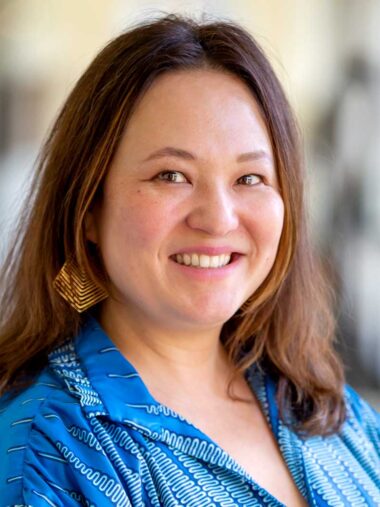
Laurel Yamaguchi
Pivotal Ventures was founded by Melinda French Gates to bring more equality and opportunity to people in the United States. Laurel Yamaguchi, Pivotal’s lead for women and tech innovation, focuses on efforts to increase women’s pathways into the U.S. tech sector.
When Laurel and the Pivotal team learned about the encouraging results of an NSF-funded pilot of the Align MS in Computer Science at the Khoury College of Computer Sciences — a program that provides a bridge for students who didn’t study computing as undergraduates to move into graduate-level computer science majors — they saw an opportunity to make an impact.
“What was interesting to us is how they were using best-known practices to recruit, retain, and graduate women and underrepresented groups in computing,” Yamaguchi said. “It was really encouraging.”
Pivotal launched their support in 2017 with a three-year investment to fund Align scholarships, build out the program’s staff, and develop the MS Pathways to Computing Consortium, a networked learning community of colleges and universities across North America that are investing in “Align-like” bridge programs. After working closely with Northeastern on these projects, Yamaguchi was impressed by the university’s interest in advancing equity.
“They had a willingness to share with others what had worked for them with a commitment to the greater good,” Yamaguchi said. On the strength of the university’s work on Align and the Consortium, Pivotal supported the launch of the Center for Inclusive Computing (CIC) at Northeastern. The CIC’s aim would be to provide financial and technical support to the largest computing departments in the country in order to increase the representation of women graduating with computing degrees. This gets to the heart of Yamaguchi’s goal at Pivotal.
“One of the things that I think is such a big deal about Align and the CIC is that they’re working out the systemic issues that are holding us back,” Yamaguchi said. “It’s not easy work, but they really are getting at the root of some of these issues.”
Throughout her work with Northeastern, Yamaguchi has been a deeply engaged partner, participating in strategy sessions, hosting events, and making connections. Catherine Gill, the CIC’s executive director, emphasizes how much she values Yamaguchi’s approach: “She’s an active advocate, spokesperson, and connector for us. She understands how hard it is to move the needle and she is with us every step of the way.”
I love working with the Center for Inclusive Computing. I learn so much from them constantly because of their deep expertise in higher education. They’re bold and they deliver. It’s really a pleasure to watch them do their thing
As for Yamaguchi, collaborating with Northeastern has been a joyful experience.
“I love working with the Center for Inclusive Computing,” she said. “I learn so much from them constantly because of their deep expertise in higher education. They’re bold and they deliver. It’s really a pleasure to watch them do their thing.”
In looking toward the future, Yamaguchi sees continued growth in the Northeastern approach to engaging any students interested in pursuing computer science degrees.
“They’re always changing, always evolving, doing more,” she notes. “They’re figuring out how to make this systemic and sustainable for the long haul.”
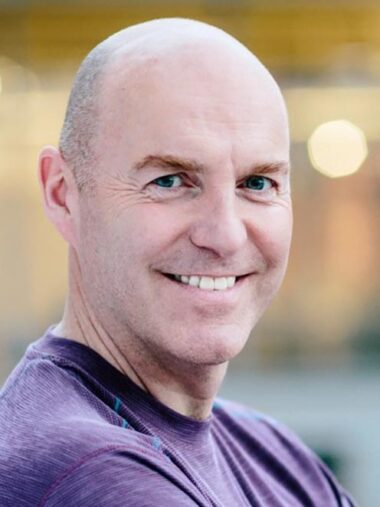
Daron Green
When Daron Green managed operations and academic relations for Facebook Research in 2018, he saw an issue in its hiring pool: a nominal proportion of women and groups historically underrepresented in tech, especially those with advanced degrees in computer science. So when Carla Brodley, dean of the Khoury College of Computer Sciences at the time, introduced Green to Northeastern’s Align master’s in computer science —which accepted students from any undergraduate degree — Green saw tremendous potential for systemic change.
“Facebook’s intent was to try and move the needle at a national level by investing in a program that demonstrably provided an on-ramp for a more diverse pool into computer science,” Green says.
So, to support the program in building on its initial efforts, Facebook made a $4.16 million, four-year investment. The grant provided funding for scholarships — which Khoury College managed independently without any ties to an internal Facebook talent pipeline — and grew Northeastern’s marketing and recruitment efforts. Additionally, the funding supported the development of the MS Pathways to Computing Consortium, a networked learning community of colleges and universities across North America that are investing in their own “Align-like” programs on their campuses.
Green and his team were experts in the computer science industry, but they trusted Khoury College to define the curriculum students needed to bridge their undergraduate studies to computer science. It was a working relationship that relied on expertise and guidance on both sides. Mary Trimarco, director of strategic partnerships for the Align Program, says that working with Green meant “having a true partner who helps you improve your program and understands where you’re going, and isn’t just looking for those benchmarks.”
Green feels that Khoury College is a thought leader in preparing students for the industry. The potential of the program was evident in the feedback he heard from students, and in the way it reflected his own transition from his initial field of study in physical chemistry and simulation to computer science.
I think that every single computer science department should have an Align-equivalent program. They should all be able to onboard non-computer science graduates into a master’s program. The value to the university, to the student, and to the industry is clear
“Actually meeting the students was probably the most influential thing,” Green says. “The commentary that I heard from the students was, ‘I really enjoyed my first degree. My passion for that topic is now satisfied. I want to get a job and have a skill set that’s marketable. And this is the magic.’ I know exactly what that feels like. This is exactly what I went through.”
Although the intent of the funding was to support the broader industry, not to expand Facebook’s field of applicants, hiring data has shown that Align graduates have done quite well in their independent pursuit of jobs at Facebook (now Meta) upon graduation.
After Green left Facebook in 2021, he was hired to do an analysis of Northeastern’s corporate engagement strategy, including a series of recommendations to enhance the university’s ability to effectively engage industry at scale. In July 2021, Green became the chief scientist for Autodesk. Although Meta’s four-year partnership with Align concluded in 2022, the program and the Pathways to Computing Consortium have continued to grow thanks to the tremendous boost provided by this early funding. And Green believes that this is only the beginning.
“I think that every single computer science department should have an Align-equivalent program,” Green says. “They should all be able to onboard non-computer science graduates into a master’s program. The value to the university, to the student, and to the industry is clear.”
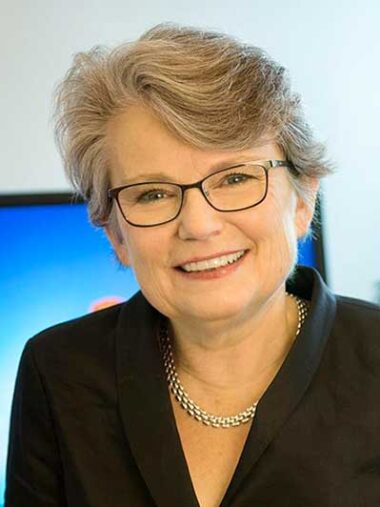
Doreen Hodgkin
During her 35 years at Northeastern, Doreen Hodgkin developed a reputation as a can-do manager, rising quickly through three different departments, finally reaching one of the top positions at Khoury College as associate dean.
One of her proudest achievements was helping Carla Brodley, a former dean of Khoury, increase the percentage of female students in the college from 19 percent when Brodley arrived in 2014 to 26 percent when Hodgkin retired in 2018.
Hodgkin took great pride in calling the family of every female student accepted into the computer science program, a personal touch that colleagues say was one of the reasons that college attracted top female students, a trend that continues today. Hodgkin was always completely honest with admitted students; she wanted to make sure that the College was the right fit for them and would meet their long-term goals.
“Her warmth, coupled with the confidence she inspires in prospective students and their families, was crucial,” said Brodley. “People automatically trust her.”
Whether their issue is academic or personal, her door was always open to students—as long as they arrived with a Dunkin’ Donuts dark roast with two creams and one Splenda.
Her warmth, coupled with the confidence she inspires in prospective students and their families, was crucial. People automatically trust her. — Carla Brodley
In recognition for all Hodgkin did for Khoury students, parents of a recent graduate established a fund in her honor, the Doreen Hodgkin Student Emergency Fund. The recognition was something that took Hodgkin by surprise. “I couldn’t believe it. I was so humbled,” she said. She added that throughout her time at Khoury, she always worked across the University to help students who were struggling financially.
In addition to her can-do attitude, Hodgkin said that she “always embraced change, whether for myself or for the organization.” This quality served her well at Northeastern, a university that prides itself on constant growth and improvement.
Since retiring, Hodgkin’s drive to help others has continued. Along with other North Shore volunteers, she set up a local non-profit aimed at helping seniors stay in their homes for as long as possible. And she also pursued another lifelong dream … learning to play the banjo.
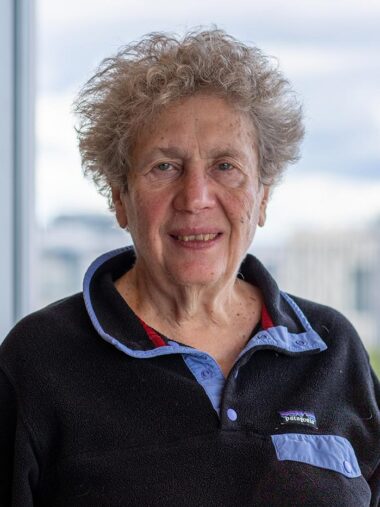
Betty Salzberg
Creating one of the first colleges of computer sciences was groundbreaking 40 years ago—especially when four of the six champions were women. One of those leaders was Betty Salzberg, Khoury professor emeritus.
Salzberg recalls that the group’s proposal for a new college “blew the accreditors out of sky…. Not only did we have an incredible program, but we also had all this supporting research to back it up.”
At the time, Salzberg was teaching programming courses in the mathematics department, but she and her colleagues could see the promise of the computing field and decided to pursue the idea of a stand-alone college of computer sciences separate from the colleges of engineering and arts and sciences. Their proposal contained an innovative idea at the time: concentrations within the degree offering. This idea continues to flourish to this day.
Once the college was approved and began admitting students, Salzberg enjoyed a 26-year tenure at Khoury. In total Salzberg was a faculty member for 37 years at Northeastern by the time she retired in 2008. During her time at Khoury College she raised significant grant income, served on several college and university committees, and continually mentored PhD students—a passion for her.
Her area of expertise was database systems, which she taught at the undergraduate and graduate level. She was elected as an IEEE Fellow for her contributions to the database field including access methods, online reorganization methods, and robust application techniques in computing. Much of this work was in collaboration with David Lomet of the Microsoft Corporation and with Khoury graduate students.
Not only did we have an incredible program, but we also had all this supporting research to back it up
During her tenure at Khoury, she saw the college’s reputation and reach continue to grow. She remembers when she came to Northeastern in 1971, most students were from the Boston area. “We were a streetcar university,” she recalled. Over time, the college and university expanded nationally and internationally. One constant she noted was the draw of the co-op program.
Salzberg said that she “had a great time working at Northeastern.” She sees some of CS colleagues from time to time and looks back at her time fondly.

Chris Jelly
Northeastern students are known for their remarkable ideas, but outside of the classroom it can be challenging to scramble for resources to bring their ideas to fruition. Based on his own experiences as a student at the Khoury College of Computer Sciences, alumnus Chris Jelly (BSCS ’14) recognized the need for a dedicated fund to support students’ self-directed projects.
With this need in mind, Jelly created the Jelly Incubation Fund for Khoury College in 2017 with a $25,000 donation. He has characterized the fund’s purpose as “no-strings-attached cash grants to students with unique, self-directed ideas that are related to computer science in some way.” He views the fund as a conduit for compelling student ideas and projects.
Back when he was an undergraduate, Northeastern had funding opportunities for students outside of the classroom, such as IDEA and the Provost’s Award, but nothing that worked specifically the way the Jelly Fund works. “Lots of students want to build their own product or conduct research, so I wanted to create a fund that would be all-encompassing,” Jelly explained.
Lots of students want to build their own product or conduct research, so I wanted to create a fund that would be all-encompassing
The fund is open to full-time Khoury College undergraduate students. In their proposals, which are assessed on the scope of the proposed idea and its relevance to both the College and the student applicants, they provide an outline of their project, including a budget, timeline, and a defined goal. Expenses typically covered by the fund include supplies, equipment, lab space, labor costs, or personal remuneration.
Collaborations with the Khoury College major gifts team and central university advancement, along with donations from parents, staff, and alumni of Northeastern, helped the Jelly Fund to award over $20,000 in project money in 2020 alone. Jelly also reached out and developed a partnership with Amazon’s Web Services (AWS) so that each grantee automatically receives an additional $5,000 in AWS credits via AWS Activate. These credits can be used for web services from infrastructure technologies like computing, storage, and databases–to emerging technologies, such as machine learning and artificial intelligence, data lakes and analytics, and the Internet of Things.
Jelly is involved in the selection of recipients of the Jelly Fund, and he serves on the selection committee along with faculty, staff, and alumni. He credits Doreen Hodgkin, former associate dean of Khoury College, with the idea of having students apply to the fund instead of him personally selecting specific projects.
One of the many fund recipients is Code4Community, a student-run organization dedicated to providing custom software solutions to local non-profits at no cost to them. The club partners with organizations needing software to increase their efficiency, scope, and ultimately their impact. (To learn more about Code4Community, go to c4cneu.com.)
Former club president, data science major Floris Dobber, reported that Code4Community is immensely grateful for the financial support they’ve received. “The Jelly Fund donation has made it possible for us to provide our services to our partners at no cost. Their donation, and the associated AWS credits, covers all our development costs and allows us to use industry standard development environments,” he said.
Preston Rakovsky, a computer science and business major and another Jelly Fund recipient, has created an iOS app called “Food Flock,” which seeks to solve the age-old problem of where to go out to eat. “Users can swipe through a collection of these cards with their partner, until all individuals swipe right, or ‘match’, on the same restaurant,” Rakovsky explained. “Because of the Jelly Fund, we were able to host our app on cloud resources, purchase design assets and, once we go live, we will be able to use the remaining funding to market and advertise our app on various social media platforms.”
Student recipients of the funding are unanimously grateful to Chris Jelly and the Jelly Fund team. Khoury College leadership is grateful, too, for how the grants help bring student ideas to life.
“The Jelly Fund has made it possible to fuel our students’ entrepreneurial spirit and creativity while supporting their experiential learning goals and preparing them for the world of work. Khoury College and the students are grateful for Chris Jelly’s generosity and his ongoing support of our students,” said Ben Hescott, Khoury College teaching professor and senior associate dean of undergraduate academic programs and student experience. Jelly is the Head of Software Engineering at Vestaboard, the owner of Jelly Consulting where he advises startups on product and engineering strategies, as well as a Founding Engineer at MirrorTab.
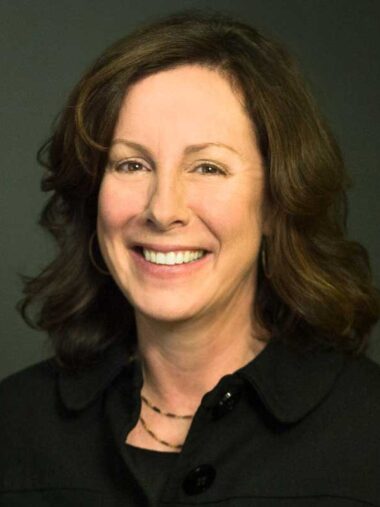
Carla Brodley
During her seven-year tenure as Dean of Khoury College from 2014 to 2021, Carla Brodley achieved a string of accomplishments. There was a record 43% growth in enrollment for first-year women students and a 50% increase in enrollment of groups historically marginalized in tech. Brodley focused on building the faculty of the college, hiring 46 tenure/tenure-track faculty, 5 professors of the practice and 50 teaching faculty; facilitating the creation of the Cybersecurity and Privacy Institute; and doubling the size of the PhD program. As a result, the College moved up to number 12 in in csrankings.org, which is the research ranking publication for Computer Science in the U.S.
Brodley also proved herself to be a prolific fundraiser, raising tens of millions of dollars for student scholarships and to fund the Center for Inclusive Computing, which currently works with 57 universities to increase access for women of all races to the field of computing. In addition, she worked with the faculty to raise money from corporations for research—increasing the industry research engagement from 12 to more than 30 tech companies.
Early in her tenure as Dean at Khoury, Brodley and her team made several strategic moves to increase the number of women and students from historically marginalized races and ethnicities. First off, the College created regular and accelerated versions of its two introductory courses for first-year students, ensuring that students without prior experience in computer science could take the first two classes without feeling like they were starting the program behind other students. The College also centralized undergraduate TA recruitment and training. “TAs are critical to the culture of computer science,” explains Brodley. “We made sure they understood how to be inclusive and create a sense of belonging for each and every student.” These two changes reduced the College’s drop/fail/withdraw rate from 25 percent to five percent, and when students met up again in the third course in the introductory sequence, the College observed no difference in performance between the two groups.
Next, to attract students, the College dramatically increased its combined majors from 12 to 43—leading to a significant increase in women students.
“In the first year we created our mission of ‘CS for everyone,’” said Brodley. “We made sure all our websites and marketing materials reflected all intersectional identities, and that all students feel welcome at Khoury. We also created one of the most interdisciplinary colleges of computer science in the country because the second meaning of our CS for Everyone is that CS touches all fields.” Indeed, 30% of the faculty that Brodley hired have interdisciplinary appointments with other colleges in the University.
One accomplishment that Brodley takes great pride in is the Align Master’s program, designed for students who come from non-technical backgrounds. When Brodley arrived at Khoury College, there were 11 students enrolled in an earlier version of the program on the Seattle campus. Since then, the program has dramatically expanded to seven campuses, including Boston, and currently has 1,721 students enrolled.
In the first year we created our mission of CS for everyone. We made sure all our websites and marketing materials reflected all intersectional identities, and that all students feel welcome at Khoury. We also created one of the most interdisciplinary colleges of computer science in the country because the second meaning of our CS for Everyone is that CS touches all fields
As Brodley puts it, the program creates a “new pathway of talent” that benefits students and regional economies. The program’s success led to scholarship investments from industry and the ability to draw faculty to apply to Khoury College who are motivated by the Align mission.
Since completing her tenure as Dean of Khoury College, Brodley has remained on the Northeastern campus as Dean and Executive Director for the Center for Inclusive Computing, a position that allows her to amplify her mission of making CS available and accessible to everyone.

Meet Greg Waters
Up until eight years ago, Khoury College 40 for 40 honoree Greg Waters wouldn’t have described himself as an involved alumnus. He’d barely had time to be involved back when he was a student; when Waters graduated in 1989 with a master’s degree in computer science, he was juggling a recent promotion, a new house, and a new baby.
“Northeastern and I were reintroduced when I was running a public semiconductor and sensor company in San Jose called Integrated Device Technologies (IDTI). We were hiring a lot of computer science and engineering people, and we also had this beautiful campus in Silicon Valley that had excess space” Waters said. “One of the previous CEOs was also a Northeastern grad and when we met for breakfast, he mentioned that Northeastern had ambitions to establish a technical graduate campus in the Bay Area. This sparked a series of conversations that led to Northeastern co-locating with our headquarters building to house their new Bay Area campus in 2015.”
The graduate school and business colocation took a couple of years to build momentum but became a huge success. Having so many students just across the hall brought new liveliness and energy to the IDTI work environment and jobs for some of the students.
A second project began in 2018, when Northeastern requested Waters evaluate the startup incubation potential of several research programs. Professor Jose Martinez Lorenzo’s laboratory had performed groundbreaking work in distributed artificial intelligence for drone swarms, which is a very difficult problem to solve. This early research was impressive but far from customer-ready, so Waters founded MatrixSpace, a Delaware corporation that began operations in January 2020.
MatrixSpace’s mission is to provide sensing products that digitize the outdoors, coupled with the AI processing to tell people what’s out there. The company’s cutting-edge sensors include a radar unit the size of your smartphone that weighs under a pound and can sense at long distances; these small sensors can be placed on the ground, vehicles, or aircraft, and when coupled with optical sensing and AI, create the ultimate safety and security system. They can detect hazards, enable light aircraft to fly more safely, and to provide secure perimeters anywhere in the world. MatrixSpace has also hired many Khoury College co-ops, and it operates out of the Kostas Research Institute at Northeastern University campus in Burlington, Massachusetts which means Waters has a familiar neighbor.
“It’s funny — I was their landlord for a while, and now they’re mine,” Waters laughed. “What a thought.”
To me, the scholarships are about getting everybody into the tech game. Anybody can learn tech if they’re so motivated. Our job as a society is to make tech skills accessible to everyone. We should be teaching them in high school
Greg Waters, MSCS ’89
Waters finds himself drawn back to Khoury College again and again by the college’s twin commitments to diversity and innovation. He applauds Khoury’s efforts to close the gap with programs like Align, a direct pathway to a master’s degree in computer science for students from all undergraduate backgrounds. Waters has a soft spot for the Align program; his own undergraduate degree was in engineering and had there been an Align program in the ’80s, he believes he would have applied. To ensure that advantage is open to all, Waters funds three scholarships: the Greg and Carolyn Waters Align Scholarship, the Torch Scholars, and the KCCS Dean’s Fund.
“To me, the scholarships are about getting everybody into the tech game,” Waters said. “Anybody can learn tech if they’re so motivated. Our job as a society is to make tech skills accessible to everyone. We should be teaching them in high school.”
As Khoury College celebrates its 40th year, Waters is excited to finally describe himself as an involved alumnus, and excited to see where the school goes next.
“I think my favorite thing about Northeastern is that they keep really working on getting better, and how to be a leader in adapting higher education to the needs of the modern world,” Waters said. “That attitude — in simple words, go to where the bright students are, versus them necessarily coming to us — is different from what I see out there in other institutions. It’s an exciting time with more to come.”
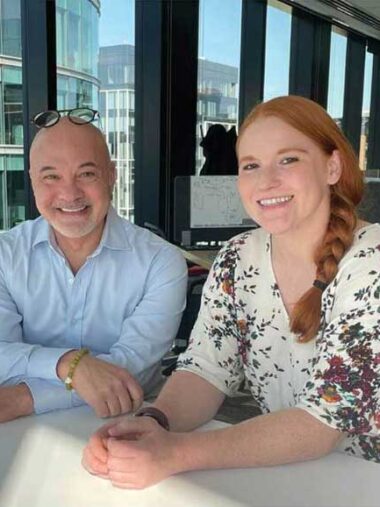
Meet Brecka Fetzer and Wayne Duso
If you introduce a problem to six people from roughly the same background, you often receive six variants of roughly the same solution, says Wayne Duso, former vice president of engineering and product at Amazon Web Services (AWS). But if you give the same problem to six people with wildly different backgrounds, the interplay between their varied perspectives will create ideas you’ve never dreamed of, and you get something much better. And the students that make up Khoury College’s Align program, which provides a pathway to an MS in computer science to students from all undergraduate backgrounds, bring perspectives drawn from everything from psychology to environmental science to English literature. This means they bring exactly what Duso seeks at AWS: diversity of experience and ideas to drive global innovation.
That’s why Duso and Brecka Fetzer, senior program manager, created the Align Career Prep Program. The partnership provides mentorship and support to Align students from all of Northeastern’s network campuses to prepare them to apply for AWS’ Software Development Engineering Internship; it also guarantees them the opportunity to complete the technical screening that is the first step in the hiring process. Align interns who are offered and accept a post-graduation position with AWS will have their final semester paid for by their future employer.
READ: Unique opportunities for Align students bring new CS perspectives to Amazon Web Services
“There’s a lot we offer in terms of how people learn to become an engineer, how to become a team member, owner, and leader,” Duso said. “I had the privilege of doing that years ago in a company that was amazing in terms of its strong culture grounded in pride-of-ownership and quality results as measured by its customers. I wouldn’t have become the engineer I became if I didn’t have a great place to start, with great people who really wanted me to succeed. Our objective is to provide the same opportunity and experience to the Align students.”
The program is the brainchild of Duso, who first began talking about the idea with former dean Carla Brodley after the two reconnected at a University of Massachusetts Amherst dean’s advisory board meeting. Both were struck by how tightly AWS and Khoury College’s cultures meshed, and they each kept an eye out for ways to collaborate. Several years later, the Align Career Prep Program presented itself.
Fetzer manages the program daily — answering student questions, interfacing with her Khoury counterpart Mary Trimarco, and identifying ways to develop the program further.
”I love coming in and getting different perspectives, hearing stories from people and learning from them. You learn so much from folks who come from different walks of life, and I think that’s super important to bring into the workplace,” Fetzer said. “Align interns are very driven and excited … It takes a lot of courage to leave an industry that you’re in and transition into computer science. I’m glad we can help them pursue a career they’re passionate in.”
After starting with just a handful of students three years ago, the program has exploded in popularity since, and AWS is significantly scaling it up this summer. The Align Career Prep Program is also serving as a model for other partnerships, like the one Fetzer and Duso recently launched with Hack Diversity, a nonprofit that breaks down barriers for Black and Latinx tech professionals. Most of Duso’s intern class now arrives through nontraditional pathways like the Align Career Prep Program and Hack Diversity.
Align interns are very driven and excited … It takes a lot of courage to leave an industry that you’re in and transition into computer science. I’m glad we can help them pursue a career they’re passionate in
Brecka Fetzer, Creator of the Align Career Prep Program
The next step, Duso says, is to think about how to scale sustainably.
“Successful relationships like this take commitment from both parties. They take time,” he said. Duso wants to provide opportunities to as many students as possible — and welcome as much diverse talent and their ideas into AWS as possible — without creating a strain that would do harm to the program itself. “For anybody who decides to engage Align, engage it as a relationship, because you are engaging people. If you want to be effective with those people, the algorithm isn’t one of efficiency. It’s one of understanding and completeness.”
Fetzer is excited to watch the program grow further. She’s also thrilled to meet her newest colleagues when they arrive this summer, and grow meaningful relationships with them as they continue to grow their careers.