Meet Dian Wang
When AlphaGo revealed its advanced Go-playing AI in 2016, it was a shock for Dian Wang. Wishing to understand the complexities of artificial intelligence, he entered Khoury College’s PhD program, where he found support among professors for his research at the intersection of machine learning and robotics.
Khoury is very supportive for interdisciplinary research. … I would like to be a good professor like my advisor some day
Dian Wang, PhD in CS ’25
Meet Johanna Gunawan
For Johanna Gunawan, the Align program provided a transformative opportunity to pivot from a background in political science to a career in cybersecurity. Embracing the interdisciplinary approach and supportive environment at Khoury College, she went on to pursue her PhD. Her research, sitting at the intersection of law and technology, aims to unearth how digital interfaces can influence and deceive users.
It’s been very fulfilling and really a rewarding experience where I just get to explore so many different things. I’ve felt that support through my entire time here at Northeastern, from the Ph.D., but also before my prior degrees
Johanna Gunawan, MSCY ’20
Meet Jeongkyu Lee
While Jeongkyu Lee enjoyed aspects of his former role as a database administrator, he regretted that he didn’t get many opportunities to directly engage with students. Now teaching at Khoury College, he runs a student research lab that bridges his passions for research and fostering student success.
We started the research lab as a form of a student interest group. … I believe that such a research experience will be the foundation of their future
Jeongkyu Lee, Teaching Professor
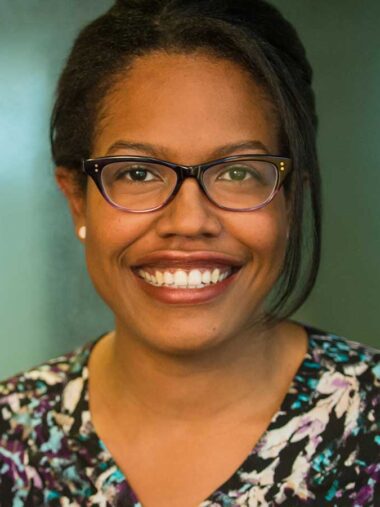
Meet Andrea Grimes Parker
Andrea Grimes Parker is currently on the faculty at Georgia Tech, holds courtesy faculty appointments at three additional universities, and is the founder and director of her own research lab focusing on the intersection of technology, health, and medicine. It’s a full plate of work she loves, and Parker would have it no other way.
It was so rewarding not to have to choose one discipline over another. Going to faculty meetings and talks and mentoring students from both worlds was extremely rewarding. Then, bringing it all together and creating this lab of interdisciplinary students where public health students were working alongside computer science students [not only] made me enjoy the work, but I think it was also essential for doing the kind of research that I was doing
Andrea Grimes Parker, BSCS ’05
It was at Northeastern University, first as an undergraduate student and later as a faculty member, where she took the university’s interdisciplinary message to heart, and began juggling multiple disciplines and projects at the same time.
Even before Parker found her focus on human-computer interaction, she knew that Northeastern would be the right place to begin her education. While visiting as a prospective student, she could see the school was excited to have her join the community and that she would be supported in her studies. Professor Bryant York met with Parker and her parents, offering her a rare opportunity to conduct research in her first year. She pursued further research opportunities during her co-op, which prepared her well for graduate school and set the trajectory for her career. For her many research efforts, Parker earned the Computing Research Association Outstanding Undergraduate Award.
“I had so many faculty members, mentors, and supporters that helped me feel like I could achieve my goals,” she says, “and that I had a promising future.”
During graduate school, Parker began to focus on the intersection of technology, health, and well-being through digital health equity research. After earning her PhD, she returned to Northeastern with a joint appointment in Khoury College and the Bouvé College of Health Sciences.
“It was so rewarding not to have to choose one discipline over another,” she says. “Going to faculty meetings and talks and mentoring students from both worlds was extremely rewarding. Then, bringing it all together and creating this lab of interdisciplinary students where public health students were working alongside computer science students [not only] made me enjoy the work, but I think it was also essential for doing the kind of research that I was doing.”

Marina Moskowitz
When Marina Moskowitz arrived at Northeastern University in 2014, she was undecided about her major. Although she knew she wanted to study business, she also wanted to explore her other passions. The combined majors program at Northeastern, which offered her the flexibility to pursue two disciplines, played a crucial role in her decision to attend the university.
One of her interests was computer science, but she had no prior experience in programming. So she enrolled in the course Fundamentals I at Khoury College, which introduced her to computing and programming.
“It was extremely difficult,” she said. “My brain was not used to thinking in that way, but I fell in love with the field because it taught me how to think objectively and independently.”
By the end of her first semester, Moskowitz declared a combined major in computer science and business. As she progressed in her studies, her focus shifted from pursuing grades to learning for learning’s sake. This allowed her to not only retain information better and understand the subjects more deeply, but also to explore them more extensively.
The success I have achieved is a direct result of my experiences at Khoury College, where I fell in love with learning. I was taught how to think objectively, at the most fundamental level, about what cybersecurity and artificial intelligence can do for us in the future
This refined ability to think quickly and apply her computer science knowledge became valuable during her four co-ops at the Department of Defense, as well as her two internships at Apple focusing on cybersecurity and machine learning. Although she had no experience in these fields, she was welcomed into these positions because of her aptitude for fast learning.
“I’m fortunate to have been in positions where I was given problems for which my manager said, ‘This doesn’t have a solution. If you fail, that’s okay,’” Moskowitz recalled.
Moskowitz explored these problems and soon fell in love with the work. By the end of her co-ops at the Department of Defense, Moskowitz had earned several awards for developing tools that the organization still uses. At Apple, during her first internship, she leveraged her skills in machine learning and natural language processing to create a tool that identified critical threats in Apple’s network. This tool was then implemented on a third-party vendor website, allowing anyone to benefit from the algorithm. During her second internship, she built upon this tool to pinpoint the location of vulnerable systems and machines within Apple’s network.
After each internship and co-op, Moskowitz returned to Northeastern to take advanced classes that allowed her to delve deeper into each new subject, further expanding her knowledge. Additionally, during her senior year, and under the supervision of Professor Alina Oprea, she conducted an independent research project in which she applied machine learning to find red flags in a network. She concluded her time at Northeastern having earned several awards, including being recognized as a Young Global Leader and as one of the most 100 influential students at Northeastern University (the Huntington 100).
Today, Moskowitz holds the position of AI and cyber security engineer at Apple’s Information Security department, where she writes algorithms to help protect Apple’s internal network from threats and vulnerabilities. Her focus is on reinforcement learning, an emerging field in artificial intelligence. She is also pursuing her master’s degree in machine learning and data science at the University of California, Berkeley.
Given the impact of rapid advancements in cybersecurity and artificial intelligence, Moskowitz believes that students exploring these fields must be prepared for a lifelong journey of continuous learning. She stresses the importance of students learning to think independently as they master foundational course material.
“The success I have achieved is a direct result of my experiences at Khoury College, where I fell in love with learning,” she said. “I was taught how to think objectively, at the most fundamental level, about what cybersecurity and artificial intelligence can do for us in the future.”