Meet Ritu Shah
Ritu Shah believes it is crucial to design technology that emphasizes human values. When she landed her research co-op with Professor Intille, she discovered the perfect opportunity to put her beliefs into practice by building technology to combat student loneliness.
I learned so much about what needs to be incorporated into an application, and how important it is to get really different perspectives
Ritu Shah, BSCS ‘25
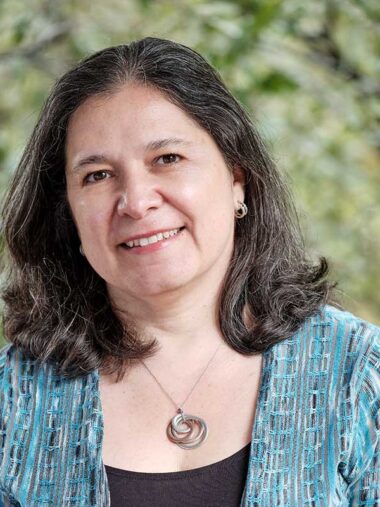
Natasha Noy
Research has been a driving force of Natasha Noy’s career. After completing her bachelor’s degree at Moscow State University, Noy began applying for United States-based PhD programs in computer science while still living in Moscow in the 1990s. Boston was one of the cities she had heard of, and she says, “It was mostly Boston where I wanted to go, and to the program that gave me full assistance — which was Northeastern.”
Noy first experienced “how to do real research” at Northeastern. Her research assistance came out of a grant with several professors collaborating on it. “I was immediately exposed to multiple points of view. There were a lot of firsts for me as part of that research. It grew into my dissertation.” The grant was focused on using knowledge representation methods to find information in medical and biology text. Noy’s dissertation was ultimately titled “Knowledge representation for intelligent information retrieval in experimental sciences.”
After completing the program, Noy taught for a year at Northeastern. She fondly recalls teaching an introductory computer science class where students wrote game programs. “The last day of the semester, they spent the whole night in the lab playing each other’s games.”
Her research led to a move to Stanford for a post-doctoral position working on knowledge representation and systems, “AI as it was perceived back then.” She worked as part of a group of computer scientists in the medical school. Their work became the Protégé ontology editor, which helped scientists build ontologies describing their domains.
Northeastern set me on the path of being a researcher, asking interesting questions, finding something new. In some sense, my research at Google goes back to what I was doing when I was at NU: helping users find information
After fifteen years as a research scientist at Stanford, she was looking for a change. She was enjoying the applied research, so she joined a research team at Google, one of the “bigger and more exciting labs for me.” Having joined a company built around searching the web, she eventually started Dataset Search – a search engine for datasets, akin to what Google Scholar is for papers.
Noy says, “Northeastern set me on the path of being a researcher, asking interesting questions, finding something new. In some sense, my research at Google goes back to what I was doing when I was at NU: helping users find information.” Noy was elected as an AAAI Fellow in 2020.
Assessing Northeastern today, Noy is impressed by its growth in stature. “I’ve moved across the country, and seeing NU from afar with its new professors, programs, and alumni, I’ve seen the PhD become even more valuable over time. Being selected as part of 40 for 40 is really special. It’s humbling to receive this award.”
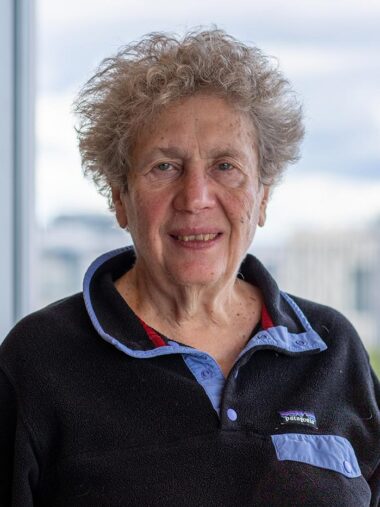
Betty Salzberg
Creating one of the first colleges of computer sciences was groundbreaking 40 years ago—especially when four of the six champions were women. One of those leaders was Betty Salzberg, Khoury professor emeritus.
Salzberg recalls that the group’s proposal for a new college “blew the accreditors out of sky…. Not only did we have an incredible program, but we also had all this supporting research to back it up.”
At the time, Salzberg was teaching programming courses in the mathematics department, but she and her colleagues could see the promise of the computing field and decided to pursue the idea of a stand-alone college of computer sciences separate from the colleges of engineering and arts and sciences. Their proposal contained an innovative idea at the time: concentrations within the degree offering. This idea continues to flourish to this day.
Once the college was approved and began admitting students, Salzberg enjoyed a 26-year tenure at Khoury. In total Salzberg was a faculty member for 37 years at Northeastern by the time she retired in 2008. During her time at Khoury College she raised significant grant income, served on several college and university committees, and continually mentored PhD students—a passion for her.
Her area of expertise was database systems, which she taught at the undergraduate and graduate level. She was elected as an IEEE Fellow for her contributions to the database field including access methods, online reorganization methods, and robust application techniques in computing. Much of this work was in collaboration with David Lomet of the Microsoft Corporation and with Khoury graduate students.
Not only did we have an incredible program, but we also had all this supporting research to back it up
During her tenure at Khoury, she saw the college’s reputation and reach continue to grow. She remembers when she came to Northeastern in 1971, most students were from the Boston area. “We were a streetcar university,” she recalled. Over time, the college and university expanded nationally and internationally. One constant she noted was the draw of the co-op program.
Salzberg said that she “had a great time working at Northeastern.” She sees some of CS colleagues from time to time and looks back at her time fondly.
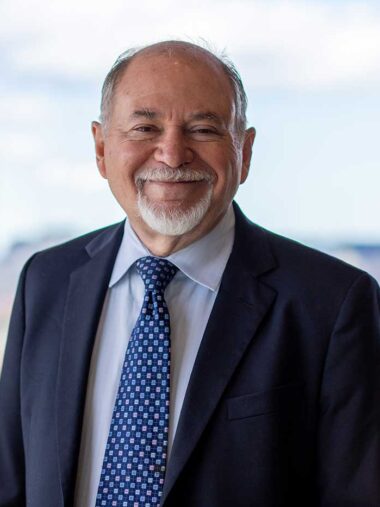
Mitch Wand
One of the best-known features of the computer science curriculum at Khoury College is its approach to teaching programming languages, specifically its focus on functional languages. This is due in no small part to Mitchell Wand, who has been a proponent of these languages since the 1970s, even co-authoring (with Dan Friedman) Essentials of Programming Languages, one of the leading texts in the field.
Wand’s research in programming languages, specifically the mathematical theory of programming languages, began in the early 1970s when he was a graduate student at the Massachusetts Institute of Technology. When Wand joined Northeastern’s faculty in 1985, he already had many contacts in the field and became instrumental in recruiting faculty that would eventually comprise Khoury’s premier research group in programming languages.
Wand’s own research focused on developing functional languages, which allow programmers to use mathematical functions and precise semantics to give confidence that a program produces the correct result. “By using those languages, we can more effectively communicate to the students the principles that they should be using, even if they are programming in other languages.” Over time, as students have graduated and moved on to other institutions, they’ve continued using and teaching this approach, creating ripples that spread the idea well beyond Khoury.
In addition to his work in programming languages, Wand was also instrumental in launching the Khoury graduate program. In his role as Associate Dean for Graduate Studies and Research from 1985 to 1991, Wand’s first task was to get the PhD program approved, which he was able to accomplish in just one year.
The master’s degree program also needed a reset as it had been designed as an evening program for students coming from working in industry. When industry took a financial dip and stopped funding master’s students, Wand oversaw the program’s adaptation to accommodate the influx of interested international students. This included the approval of a master’s level co-op, which proved to be a tremendous draw because it allowed international students the opportunity to work in the U.S.
I think one of the things that’s most distinctive about Khoury is our resilience, flexibility, and ability to evolve to a changing environment. It’s a wide, wonderful world out there, and we aim to contribute to it and be an essential part of it
Under Wand’s leadership, the graduate program continued to adapt and change with the times. It grew beyond the confines of the Boston campus into a global network of campuses, providing opportunities for students all over the world to receive a Khoury College education. Additionally, Wand oversaw a two-year effort to make the computer science courses available online, where they can be accessed by an even broader group of students.
In 2017, Wand retired from full-time faculty and now teaches software engineering part time. He feels that Khoury College has continued to be at the forefront of this rapidly changing industry. “I think one of the things that’s most distinctive about Khoury is our resilience, flexibility, and ability to evolve to a changing environment,” said Wand. “It’s a wide, wonderful world out there, and we aim to contribute to it and be an essential part of it.”
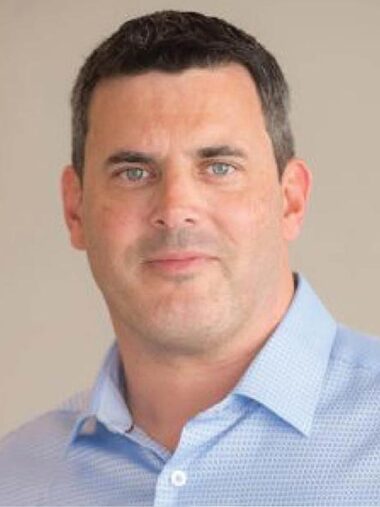
Bill Lakeland
When the Vancouver Northeastern campus started looking for business partners to support the research work of its CS master’s students, Bill Lakeland did not hesitate to offer support. In fact, the company that he owns, Spexi Geospatial, was the first industry partner to provide work opportunities for Khoury College students in Vancouver.
Students were drawn to work at Spexi Geospatial, which provides a cloud-based platform that makes it easy to capture, process, analyze, and share aerial imagery collected by drones. To date, Khoury College students have worked on three projects, one focused on forest fires and two focused on the railway system. The projects began as capstones, then scaled up to research assistant opportunities for students.
According to visiting associate teaching professor Michal Aibin, Lakeland has been a strong champion of Khoury College students. “He always provides additional resources and help from his team of developers whenever asked,” said Aibin.
Northeastern and Spexi Geospatial have been the recipient have two significant multi-year grants from the Canadian government, one from Via Rail and Transport Canada and the other from Natural Resources Canada.
Lakeland has been impressed by the caliber of Northeastern students and the immediate contributions they make to projects. “Quite frankly, there’s just been a very good response to the contributions students are making, and our clients recognize this contribution,” said Lakeland.
Quite frankly, there’s just been a very good response to the contributions students are making, and our clients recognize this contribution
The research partnership is also one that students are enjoying as well, as they see the impact of their work in real time, explained Lakeland. The students are “getting to make a difference” across Canada as new technologies are being rolled out—technology, for example, that is helping people and communities across the country fight wildfires. “Protecting areas around the city where we know we can reduce the fuel sources” is critical said Lakeland. “Making an impact and saving homes is a real,” he said. “It’s definitely exciting.”
Lakeland says that it’s a great time to study computer science in Vancouver as the city continues to flourish as a tech hub, doing work that will benefit communities locally and globally.
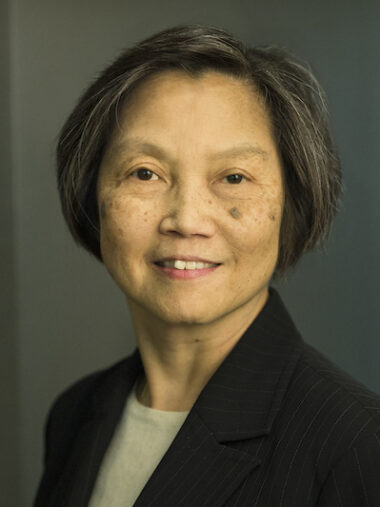
Agnes Chan
When Agnes Chan helped found the College of Computer Science (now Khoury College) in 1982, “cybersecurity” was not yet a word, much less a critical field within computer science. Through Chan’s leadership as Associate Dean of Graduate Programs and Associate Dean of Research from 1993 through 2015, and through her role as Executive Director of the cybersecurity programs, Northeastern has become a leader in cybersecurity and a top destination for students interested in this growing field.
Chan’s exploration into cybersecurity began with her interest in cryptography and its application to digital communication. She was the first at Khoury College to teach courses in cryptography and networking as part of the computer science curriculum. When the National Security Agency (NSA) noticed a severe shortage of people qualified to work in cybersecurity and began a program to recognize universities providing these skills, Chan saw an opportunity.
Although the school taught many of the computer science courses required for this program (known as the National Academic Centers of Excellence in Cybersecurity, or CAE-C), there were gaps. Through Chan’s leadership, the College enhanced its offerings, including adding a now-popular course in cyber law. Khoury College successfully received the CAE-C designation in 2001. Later, in 2008, the NSA introduced the Center of Academic Excellence in Cybersecurity Research (CAE-R) to recognize universities with strong cybersecurity research activities, and CAE-Cyber Operations in 2012 to certify programs with technical depth. Northeastern was one of the first to receive both designations, and one of only a few universities at that time to receive all three CAE designations.
In 40 years, look at what we have achieved! We are among the top 20 programs in computer science. That takes a lot of effort
At the same time, Chan led the creation of the multidisciplinary Institute of Information Assurance (IIA) at the College in 2005. Bringing together faculty and students in the fields of computer science, electrical engineering, and social science and the humanities, the institute focuses on advancing research and education related to the integrity and security of information and reducing the likelihood of cyber-attacks.
In her time at Khoury, Chan has been dedicated to maintaining the school’s “vibrant graduate programs, emphasizing quality.” A key focus of her efforts has been supporting the needs of students from diverse backgrounds. She was instrumental in launching the Align program, a Master of Science in CS, designed for students with no formal background in the field.
Working with other graduate school deans at Northeastern, Chan also led an effort to create university-funded fellowships for qualified first-year PhD students who had financial need. This was critical for attracting a wide array of strong PhD applicants to the university, as well as to improving the school’s research rankings. As Chan says, “In 40 years, look at what we have achieved! We are among the top 20 programs in computer science. That takes a lot of effort.”

Larry Finkelstein
Today, the Khoury College of Computer Sciences holds national prominence as one of the premier colleges for computer science and information science. However, Larry Finkelstein, who served as Khoury’s Dean from September 1993 to July 2014, remembers the early days when he joined the College as a professor in 1983 in its second year: “It was an exciting time to join the College. We were still in the process of inventing all of the administrative structures and curriculum from scratch, to ensure that the surge of students the University anticipated in the new field of computer science received a high-quality education.”
In fact, it was this “sense of being part of a startup” that allowed and encouraged ingenuity in how the College was structured and shaped the revolutionary directions in which Finkelstein helped steer the school when he became dean. This was especially critical during the national crisis of enrollments in computer science beginning in 1991. “At the time I became Dean [in 1993],” Finkelstein says, “We were…functioning as a very good department, but we weren’t leveraging the fact that we were a separate college to shape our own future and to have a strategic impact on educational programs throughout the University.”
Khoury College’s growth and strong national reputation are the result of the strategic decisions made during this difficult time. These decisions led to an expansion from the core set of computer science majors to a broader field of subjects, including a new focus on interdisciplinary education and research. The highlight of the interdisciplinary focus was the innovative combined majors program; Finkelstein worked closely with Richard Rasala to create a template for developing the programs. And as faculty from the different colleges worked together on the requirements for each program, Larry championed their efforts with his fellow deans to build trust and support the culture of collaboration. In 2001, the program launched with three combined computer science majors with Math, Physics, and Cognitive Psychology. Today, Khoury boasts 60 combined degree programs, and more than 60% of Khoury undergraduate students participate in these programs.
It was an exciting time to join the College. We were still in the process of inventing all of the administrative structures and curriculum from scratch, to ensure that the surge of students the University anticipated in the new field of computer science received a high-quality education
Additional achievements during Finkelstein’s tenure included the college’s renaming in 2002 as the College of Computer and Information Science (CCIS) to reflect an increased focus on information as a foundation of the computing discipline. In 2004, CCIS moved into the brand new, state-of-the-art (and award-winning) West Village H building. Through strategic hires, Khoury College made Northeastern a national leader in the core fields of programming languages and cybersecurity. In 2005, Agnes Chan led the creation of the multidisciplinary Institute of Information Assurance (IIA) and was later responsible for having Northeastern be one of only 13 universities to earn the designation as a National Center of Academic Excellence in Cyber Operations by the National Security Agency (NSA). Under Finkelstein’s tenure Khoury also led the development of interdisciplinary programs in Health Informatics, Network Science, and Data Science, areas of research critical to the solution of major societal problems.
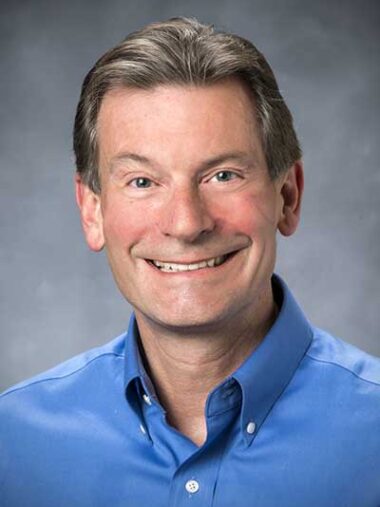
Meet Greg Waters
Up until eight years ago, Khoury College 40 for 40 honoree Greg Waters wouldn’t have described himself as an involved alumnus. He’d barely had time to be involved back when he was a student; when Waters graduated in 1989 with a master’s degree in computer science, he was juggling a recent promotion, a new house, and a new baby.
“Northeastern and I were reintroduced when I was running a public semiconductor and sensor company in San Jose called Integrated Device Technologies (IDTI). We were hiring a lot of computer science and engineering people, and we also had this beautiful campus in Silicon Valley that had excess space” Waters said. “One of the previous CEOs was also a Northeastern grad and when we met for breakfast, he mentioned that Northeastern had ambitions to establish a technical graduate campus in the Bay Area. This sparked a series of conversations that led to Northeastern co-locating with our headquarters building to house their new Bay Area campus in 2015.”
The graduate school and business colocation took a couple of years to build momentum but became a huge success. Having so many students just across the hall brought new liveliness and energy to the IDTI work environment and jobs for some of the students.
A second project began in 2018, when Northeastern requested Waters evaluate the startup incubation potential of several research programs. Professor Jose Martinez Lorenzo’s laboratory had performed groundbreaking work in distributed artificial intelligence for drone swarms, which is a very difficult problem to solve. This early research was impressive but far from customer-ready, so Waters founded MatrixSpace, a Delaware corporation that began operations in January 2020.
MatrixSpace’s mission is to provide sensing products that digitize the outdoors, coupled with the AI processing to tell people what’s out there. The company’s cutting-edge sensors include a radar unit the size of your smartphone that weighs under a pound and can sense at long distances; these small sensors can be placed on the ground, vehicles, or aircraft, and when coupled with optical sensing and AI, create the ultimate safety and security system. They can detect hazards, enable light aircraft to fly more safely, and to provide secure perimeters anywhere in the world. MatrixSpace has also hired many Khoury College co-ops, and it operates out of the Kostas Research Institute at Northeastern University campus in Burlington, Massachusetts which means Waters has a familiar neighbor.
“It’s funny — I was their landlord for a while, and now they’re mine,” Waters laughed. “What a thought.”
To me, the scholarships are about getting everybody into the tech game. Anybody can learn tech if they’re so motivated. Our job as a society is to make tech skills accessible to everyone. We should be teaching them in high school
Greg Waters, MSCS ’89
Waters finds himself drawn back to Khoury College again and again by the college’s twin commitments to diversity and innovation. He applauds Khoury’s efforts to close the gap with programs like Align, a direct pathway to a master’s degree in computer science for students from all undergraduate backgrounds. Waters has a soft spot for the Align program; his own undergraduate degree was in engineering and had there been an Align program in the ’80s, he believes he would have applied. To ensure that advantage is open to all, Waters funds three scholarships: the Greg and Carolyn Waters Align Scholarship, the Torch Scholars, and the KCCS Dean’s Fund.
“To me, the scholarships are about getting everybody into the tech game,” Waters said. “Anybody can learn tech if they’re so motivated. Our job as a society is to make tech skills accessible to everyone. We should be teaching them in high school.”
As Khoury College celebrates its 40th year, Waters is excited to finally describe himself as an involved alumnus, and excited to see where the school goes next.
“I think my favorite thing about Northeastern is that they keep really working on getting better, and how to be a leader in adapting higher education to the needs of the modern world,” Waters said. “That attitude — in simple words, go to where the bright students are, versus them necessarily coming to us — is different from what I see out there in other institutions. It’s an exciting time with more to come.”

Meet Crista Lopes
Cristina (Crista) Lopes, who received her PhD in computer science from Northeastern University in 1998, can often be found working on multiple projects spanning programming languages and compilers, code duplication detection, analytics of very large code bases, search engines, Internet technologies, open source development, and games and virtual worlds. “I have a serious case of wanting to do many things at the same time,” Lopes said. “I pursue everything that I find interesting.”
As a PhD student studying under Karl Lieberherr at Khoury College of Computer Sciences, Lopes pioneered research into aspect-oriented programming, a way of organizing code to group similar aspects of a program together. After a summer internship working on aspect-oriented programming with the Xerox Palo Alto Research Center (PARC), Lopes was invited to extend her internship and soon moved to Palo Alto to continue her work with PARC during the last two years of her PhD.
In 2008, Lopes became a co-developer on OpenSimulator, an open source version of the 3D virtual world called Second Life. OpenSimulator allows individuals and companies to run their own virtual environments and has since been used in a variety of applications from urban planning and medical training to advanced military simulations and, one of Lopes’s personal interests, education. For her work on the project, Lopes became the first woman to receive the prestigious Antonio Pizzigati Prize for Software in the Public Interest in March 2016.
Over the years, Lopes’s work has reconnected her with Northeastern through collaborations with Khoury professors. Lopes had the opportunity to work with Jan Vitek, Professor of Computer Science, on a project funded by DARPA, which used large data sets of source code to test machine learning approaches to software program syntheses, a precursor to today’s large language models in software.
Then, in 2020, as the global pandemic shut down in-person conferences, the work that Lopes had already been doing in the virtual conference space grew more critical. At that time, she and Jon Bell, an assistant professor at Northeastern, had been in the process of organizing the ICSE 2020 conference. They shifted their work to prototyping a solution in open source, and over the course of a few months they had developed a browser-based virtual conference platform. The new platform, called Clowdr (now Midspace), supported not only ICSE 2020 but also a dozen other conferences in the next few months.
I strive to do things in open source as much as possible. As a professor, I feel that it’s my responsibility to leave something to the public and to the rest of the world
Crista Lopes, PhD in Computer Science ’98
As evidenced by her prolific work as an open source developer, Lopes is a staunch advocate for working in open source. She considers it a part of the public infrastructure that’s critical to communities. “I strive to do things in open source as much as possible,” Lopes said. “As a professor, I feel that it’s my responsibility to leave something to the public and to the rest of the world.”
Crista Lopes is currently the Chancellor’s Professor of Software Engineering at the University of California, Irvine, and Director of the Professional Master program in Software Engineering. From her time as a graduate student at Khoury, to her current research and work as a professor, and even her efforts as an expert witness in legal cases related to software artifacts, what unities all of her work is her love of building new things, reflecting on the building process, and sharing her learning with others.
In addition to the Pizzigati Prize, Lopes has won numerous honors and awards for her research, including the 2004 Distinguished Alumni Award from Northeastern University.