Meet Mathena Chan
Growing up, Mathena Chan was creative and also curious about technology, such as websites and apps. At Khoury College, where she is studying user experience, she is able to combine both her interests.
The Khoury curriculum especially does a really good job at kind of evening out the playing field, so it doesn’t really matter as much how much experience you have going in. And it’s easy to catch up and really know, kind of, what you want to be learning
Mathena Chan, BS in Computer Science and Design ‘25
Meet Ilmi Yoon
As an undergraduate student in Korea, computer science did not come easy to Ilmi Yoon. But she hit her stride in her third year and went on to earn a PhD. Now at Khoury College, she uses her experience to help students build confidence in their studies.
Computing can be, you know, challenging, and it looks very foreign, but it takes some time. Once you figure it out, it becomes so exciting, and you can do some amazing things with computing
Ilmi Yoon, Teaching Professor, Director of Computing Programs – Silicon Valley
Meet Gigi Gillen
When Gigi Gillen arrived at Khoury College, she kept her major undecided, not yet ready to limit her options. When she discovered the possibilities of combined majors, however, she realized she didn’t have to choose between her passions. With a combined computer science and design degree, Gigi found the perfect balance between technical expertise and creative expression — unlocking a world of limitless opportunities for her future.
I wouldn’t be in computer science and design anywhere else. … I’ve had a very well-rounded education that I’ve really enjoyed
Gigi Gillen, BSCS + Design ’25

Brenda Bailey
As Northeastern University explored launching a new computer science campus in Vancouver, British Columbia, Canada’s second largest tech and innovation hub, they received invaluable support from an expert in the needs of both the industry and the region—Brenda Bailey. Bailey, a leader in the local tech sector, held roles ranging from co-founding Canada’s first women-owned-and-operated video game studio to leading British Columbia’s interactive and creative digital marketing association, DigiBC. So, when she learned about Northeastern’s vision for supporting the local tech ecosystem, Bailey was thrilled at the chance to help bring the idea to fruition.
It all began when Bailey’s former colleague at the British Columbia Institute of Technology (BCIT), Bethany Edmunds, went to work for Khoury College. Edmunds, now a teaching professor and the director of computing programs at Northeastern’s Vancouver campus, shared with Bailey the college’s vision to prepare more women—and other populations underrepresented in the tech sector—for computer science careers. The college was looking for support in determining the best way to carry out its vision for the new campus. As Edmunds said, “We want to be part of the ecosystem. We recognize and respect what’s already here, so to have somebody that fully understands the nuances and can help inform where our value gets added, it allows us to be a better team player.” Bailey provided that guidance.
In 2019, Bailey met with Northeastern President Joseph Aoun and provided input as part of his informal advisory group. Throughout the development process, Bailey shared insights and advice around the strategic direction of the program. As the school prepared to apply to the BC Accrediting Board, Bailey helped to inform their approach of addressing the gap in research institutions offering master’s degrees, with particular emphasis on DEIAB. Bailey also wrote letters of recommendation and drew on her extensive network to make introductions to key industry and government partners.
As she helped the university find their place in the local education sphere, Bailey connected closely with Khoury College’s mission of “CS for Everyone.” Having focused much of her career on helping underrepresented groups, particularly women and First Nations people, move into tech, she saw the opportunities the Khoury programs offered. This was especially true of the Align program, which provides a two-semester bridge to prepare students from non-CS undergraduate backgrounds to complete a master’s program in data science or computer science. For students who may have gotten the message early on that computer science is not for them, Align provides a way to make the career shift a reality, something that Bailey feels the province really needs.
“When you’re a minority in a particular setting, it often can communicate to you that you don’t belong there,” Bailey said. “I was very often in rooms where I was the only woman leader. Those types of communications are done subtly through who’s represented in particular areas.” Bailey also believes that who makes our technology matters. “With technology, we are creating tools,” she said. “But unlike a shovel or a hammer, technology tools come with values laden within them. It’s really important that we understand that and ensure that those values express the values of all of us, not just one small segment. There are many examples of tech gone wrong because it hasn’t been inclusive. That’s a contribution that Northeastern is helping us with, and it’s deeply important.”
Bailey also understands the challenges that students may face even after graduating from Khoury College or another post-secondary institution, so she saw this as an opportunity to overhaul the Innovator Skills Initiative (ISI) program. The ISI program was originally designed to help recent public university CS graduates who were having trouble finding their first job because companies only wanted people with one to two years of experience. With the increased need for new talent in the region, this was no longer an issue, but the problem had shifted to one of bias in who gets hired for these early-career jobs.
With technology, we are creating tools. But unlike a shovel or a hammer, technology tools come with values laden within them. It’s really important that we understand that and ensure that those values express the values of all of us, not just one small segment
Bailey and the ISI team introduced a new $15 million program to focus on supporting people facing these barriers. The program provided grants to hiring companies to cover the mentorship required for onboarding someone from an underserved community with no experience. The revamped program also expanded the range of eligible post-secondary programs to include both public and private institutions, which allowed Northeastern to extend the opportunity to their graduates.
Brenda Bailey was elected MLA (Member of the Legislative Assembly) for Vancouver-False Creek in 2020. She is now the Minister of Jobs, Economic Development, and Innovation for British Columbia. She sees the future of the local technology industry as a busy one, with a continued role for both public and private institutions in the region.
“There are a million people that we need to train in the next 10 years,” Bailey said. “Our industries are all transitioning to become tech enabled. Our future is in sustainable technology and a green economy. And those objectives align very strongly with what Northeastern brings to the table and the training that they provide. It’s a really strong fit, and we’re very grateful to have them do this work.”
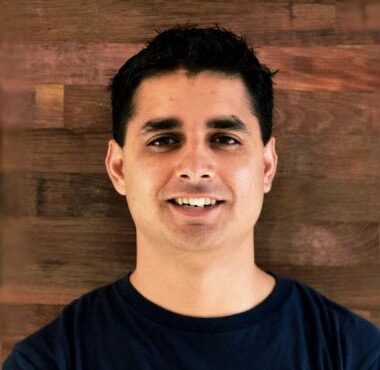
Praful Mathur
Since his childhood days, Praful Mathur relished computer science. He just didn’t always know what to do with it.
“I wanted to do anything with computers. I would stay up writing software, and I ended up not working on some school assignments so I could work on projects instead,” he recalls. “Then I broke through the school’s admin systems. It was fun, but I got into some trouble, and I realized I had to figure out where I could align my strengths.”
He initially set his sights on San Francisco, and tried to convince his parents that he wasn’t college material. But after the family toured a handful of Boston colleges and his mom insisted they check out Northeastern, the university struck a chord with Mathur.
“The thing that struck me was the co-op program,” he explains. “At my core, I’m a hacker, and Northeastern was incredible in the sense that I could apply that immediately. I knew I’d have extra projects, and to do that in the wild was really attractive.”
Now, more than a decade later, that impulse lingers. Mathur has made his living in entrepreneurship, founding multiple companies with computing at their core. And it all began during his time at Khoury College, where he joined the first cohort of coaches at venture accelerator IDEA and wrote the curriculum for the first Husky Startup Challenge.
“I wanted to be around other people who were thinking about building businesses,” he says. “It was rare on campus, and the fact that two groups were getting started simultaneously was exciting.”
By the summer after his first year, he co-founded his first company, this time in collaboration with fellow Northeastern computer science student Sergey Grabkovsky and their colleague Sumant Yerramilly. Called Amp Idea, it aimed to place advertising and credit card machines on taxicabs. Mathur, who had purchased initial equipment using money he’d saved while working, quickly found himself competing against big-name companies for Boston city contracts. They carved out the second-largest market share in the space before eventually selling the company to Verifone.
His next venture, Shotput, came soon after Mathur graduated Northeastern in 2011. It began as a more research-oriented venture based around self-driving cars, but morphed into a logistics company that aided other companies in creating product warehouses. Although it attracted some well-known customers including the Wall Street Journal, Samsung, and Red Bull, the team also made some key mistakes, and the company paid the price.
“I became cocky because I’d built my first company and sold it, so I thought I could just do it again, and that I was in my mid 20s and nothing could stop me. I just lost my way,” Mathur admits. “I learned to stick to my strengths, to know who I was and why I was doing things, and to choose the right partners and investors.”
The next few years saw Mathur involve himself with ComFreight, a freight factoring company that aids truck drivers with invoicing and collection.
“I ended up raising $3.5 million for them, as well as building out the team and initial product,” he says. “But it was just a pit stop for me. I wasn’t going to stay too long because I wanted to start something again in software.”
And after Mathur founded a nonprofit called AI on the Beach for researchers interested in animal communication, his wife gave him the spark he needed.
“She said, ‘You keep talking about dolphin communication, but you can’t tell me what our dog Kai is saying,’” Mathur remembers.
I’ve become the type of person I admired when I was in college, and a lot of it was because of Khoury College. I wouldn’t have accomplished any of this and have this kind of life without it. It has this emphasis on making things work in production, in real-life situations
Thus was born Sarama, Mathur’s latest venture, in which he strives to use AI to translate dogs’ barks into messages and alerts that pet parents can understand.
“I can get back to my core roots in software and deep tech,” Mathur says. “I think animal communication will be mainstream by the end of the decade. But it’s a niche thing right now. So my goal is to build a company that can take the research and commercialize it so there can be a sustained way of getting resources behind it.”
And as he builds momentum behind Sarama while advising other startups on how to clear the mental and psychological hurdles that often plague new operations, he can’t help but look back to the first place where he focused his own drive for computing.
“I’ve become the type of person I admired when I was in college, and a lot of it was because of Khoury College. I wouldn’t have accomplished any of this and have this kind of life without it,” Mathur says. “It has this emphasis on making things work in production, in real-life situations. And now, even in companies I advise, the top engineers are all Northeastern grads.”
Meet Maggie Xu
In the middle of the pandemic, Maggie Xu became a mother. Being an Align graduate enabled her to work in tech roles during that period that helped support her new family while keeping her responsibilities and lifestyle balanced.
You don’t have to be defined by other people, or pretend to be someone else you’re not. And you can still survive and thrive in this industry
Maggie Xu, MSCS ’16
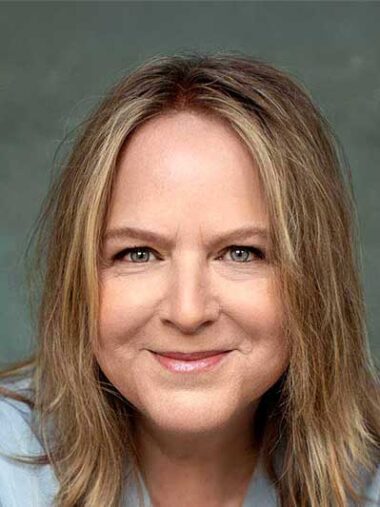
Melody Biringer
Melody Biringer calls herself a connection engineer. “I think about how I can engineer an event so that the audience gets seen and heard and connected to each other, versus going to a keynote at a hotel ballroom where you listen, get inspired, and go home.” Through her WiT Regatta Conference, she collaborates with Khoury College to bring together women in tech from around the world to meet for a week of connection in cities such as Seattle, Vancouver, and Amsterdam, with future conferences planned for Stockholm and others. “I want people to meet their best friend and their new boss at these events. We have our speakers tell real life stories so that people relate to them, then break up everyone into small groups to tell their own stories and be vulnerable with each other.”
The mission has personal value to Biringer. She notes that she did not grow up with sisters or attend university, instead starting her own business at eighteen. “I went through it by myself, having employees and being independent. I woke up one day in my early thirties, and I realized I don’t have many like-minded people to hang out with, I don’t have many friends.” She started the Crave Party, an event set in an upscale dining venue for women entrepreneurs, but everyone had to wear pajamas. “I realized this kind of connection was on everyone else’s mind.” The event was popular, and it grew every subsequent quarter.
In her larger view, loneliness is an epidemic. As adults, introverts have a hard time making friends on their own. “No one likes to walk into a room alone. They need facilitated connections. I believe connections are made one by one over a long time.” While sitting on the board of Women in Tech Seattle, Biringer encountered many women in tech fields that worked for men and heard what they were experiencing at work. She decided to switch her focus to these women. “My skills were needed there.”
In the second year of the WiT Regatta, Khoury College reached out to her, wanting to get involved. Khoury College now hosts half of the event in Northeastern University’s Seattle and Vancouver campuses. For a week, panels take place on technology, leadership, career building, with over two hundred speakers, discussions, and workshops, as well as social events and walks. Khoury College provides technology content with students, staff, and faculty leading discussions.
I hope to live in a world where we don’t have to say, ‘women in tech,’ where we’ve reached parity, where there’s no gender in tech, and we’re all just people
Biringer sees Khoury College as a leader in diversifying tech. “One thing I love about the Regatta and Khoury is the attention we can bring to inspiring role models. Girls at a younger age need the encouragement when they see other girls in every kind of class. I have seen that generation changing in the seven years of the Regatta. I hope to live in a world where we don’t have to say, ‘women in tech,’ where we’ve reached parity, where there’s no gender in tech, and we’re all just people.”
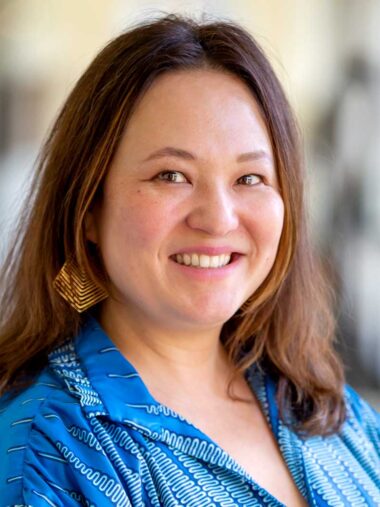
Laurel Yamaguchi
Pivotal Ventures was founded by Melinda French Gates to bring more equality and opportunity to people in the United States. Laurel Yamaguchi, Pivotal’s lead for women and tech innovation, focuses on efforts to increase women’s pathways into the U.S. tech sector.
When Laurel and the Pivotal team learned about the encouraging results of an NSF-funded pilot of the Align MS in Computer Science at the Khoury College of Computer Sciences — a program that provides a bridge for students who didn’t study computing as undergraduates to move into graduate-level computer science majors — they saw an opportunity to make an impact.
“What was interesting to us is how they were using best-known practices to recruit, retain, and graduate women and underrepresented groups in computing,” Yamaguchi said. “It was really encouraging.”
Pivotal launched their support in 2017 with a three-year investment to fund Align scholarships, build out the program’s staff, and develop the MS Pathways to Computing Consortium, a networked learning community of colleges and universities across North America that are investing in “Align-like” bridge programs. After working closely with Northeastern on these projects, Yamaguchi was impressed by the university’s interest in advancing equity.
“They had a willingness to share with others what had worked for them with a commitment to the greater good,” Yamaguchi said. On the strength of the university’s work on Align and the Consortium, Pivotal supported the launch of the Center for Inclusive Computing (CIC) at Northeastern. The CIC’s aim would be to provide financial and technical support to the largest computing departments in the country in order to increase the representation of women graduating with computing degrees. This gets to the heart of Yamaguchi’s goal at Pivotal.
“One of the things that I think is such a big deal about Align and the CIC is that they’re working out the systemic issues that are holding us back,” Yamaguchi said. “It’s not easy work, but they really are getting at the root of some of these issues.”
Throughout her work with Northeastern, Yamaguchi has been a deeply engaged partner, participating in strategy sessions, hosting events, and making connections. Catherine Gill, the CIC’s executive director, emphasizes how much she values Yamaguchi’s approach: “She’s an active advocate, spokesperson, and connector for us. She understands how hard it is to move the needle and she is with us every step of the way.”
I love working with the Center for Inclusive Computing. I learn so much from them constantly because of their deep expertise in higher education. They’re bold and they deliver. It’s really a pleasure to watch them do their thing
As for Yamaguchi, collaborating with Northeastern has been a joyful experience.
“I love working with the Center for Inclusive Computing,” she said. “I learn so much from them constantly because of their deep expertise in higher education. They’re bold and they deliver. It’s really a pleasure to watch them do their thing.”
In looking toward the future, Yamaguchi sees continued growth in the Northeastern approach to engaging any students interested in pursuing computer science degrees.
“They’re always changing, always evolving, doing more,” she notes. “They’re figuring out how to make this systemic and sustainable for the long haul.”

Padmaja Vrudhula
Padmaja Vrudhula considers herself a reluctant technologist. In fact, she originally planned on being a neurosurgeon, but her early experience with an internship at a Seattle software company led her in a different direction.
“I loved the new technology that I was working with, and it was super exciting to develop products that people used,” she explained with a smile. “I did the one thing that Indian parents fear, which was to say, ‘I’m going take a year off to work to save money for med school.’ Fast forward 20-some-odd years, and I’m still working in tech, with med school in the rearview mirror.”
What resonates for Padmaja Vrudhula regarding Khoury and the Align program — and how she got involved — is “trying to bring in students with non-traditional backgrounds.” As an aspiring neurosurgeon turned tech executive, it’s a journey Vrudhula knows well., a global cloud-based data platform. Prior to working at Snowflake, she held a number of industry-facing tech roles at VMware.
While pursuing a career in tech, she has also been active in several nonprofits, primarily geared toward creating opportunities for the economically disadvantaged. Over the last 10 years, this work has evolved into a focus on education and inclusion in technology.
“As a child of Indian immigrant professionals, it never occurred to me that women were supposed to be bad at math and science,” Vrudhula said. “Also, joining tech at a time when credentials weren’t as important as skills and talent, I had a much more diverse experience than those entering the workforce today. This is why I am so focused on ensuring that students have a variety of opportunities to participate in technology.”
To that end, Vrudhula has always enjoyed teaching and mentoring others, whether as an adjunct instructor at the University of Washington or a mentor at the Foster School. She has also helped students in the Align program in Seattle to discover the same spark that led her to pursue a career in technology.
“If there’s one thing I wish I could hear people, particularly women, stop saying is ‘I am not good at math’ or ‘I am not technical,’” said Vrudhula. “The popular notion of math and programming savants needs to be replaced with the idea that it is a learned skill, just like anything else. We are all technical, it is just a matter of degree.”
What resonates for me regarding Khoury and the Align program, and how I got involved, was trying to bring in students with non-traditional backgrounds. These are students who may have had a change in what they wanted to be when they were in their 20s compared to what they want to be in their 30s
“Padmaja has been supporting Aligners since her role at VMWare and now as a VP at Snowflake,” said Mary Trimarco, Khoury College’s business and outreach director. “Her insights are so valuable, and she is a strong advocate for our students.”
Recently at Snowflake, Vrudhula brought in two Align students (both women of color) as interns. They proved their value immediately and will join her team as full-time employees after graduation. For both women, the internship was a way to discover the thrill of problem solving while applying the knowledge they gained during their studies.
Over the past few years, Vrudhula has worked with the Align team to provide math tutorial sessions for students requesting additional support. In addition, she has spoken on panels with Aligners and mentored several students.
“What resonates for me regarding Khoury and the Align program, and how I got involved, was trying to bring in students with non-traditional backgrounds. These are students who may have had a change in what they wanted to be when they were in their 20s compared to what they want to be in their 30s,” Vrudhula said. “As somebody who continuously questions ‘Is this really what I want to do when I grow up?’ that’s something that really resonates with me. This program is also one of the best ways to take action in terms of building diversity in technology, not just from a demographic point of view, but in terms of experience and capabilities.”