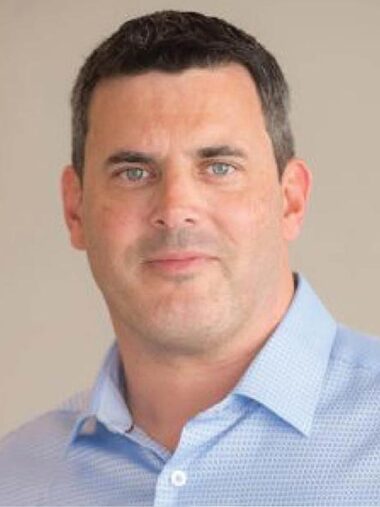
Bill Lakeland
When the Vancouver Northeastern campus started looking for business partners to support the research work of its CS master’s students, Bill Lakeland did not hesitate to offer support. In fact, the company that he owns, Spexi Geospatial, was the first industry partner to provide work opportunities for Khoury College students in Vancouver.
Students were drawn to work at Spexi Geospatial, which provides a cloud-based platform that makes it easy to capture, process, analyze, and share aerial imagery collected by drones. To date, Khoury College students have worked on three projects, one focused on forest fires and two focused on the railway system. The projects began as capstones, then scaled up to research assistant opportunities for students.
According to visiting associate teaching professor Michal Aibin, Lakeland has been a strong champion of Khoury College students. “He always provides additional resources and help from his team of developers whenever asked,” said Aibin.
Northeastern and Spexi Geospatial have been the recipient have two significant multi-year grants from the Canadian government, one from Via Rail and Transport Canada and the other from Natural Resources Canada.
Lakeland has been impressed by the caliber of Northeastern students and the immediate contributions they make to projects. “Quite frankly, there’s just been a very good response to the contributions students are making, and our clients recognize this contribution,” said Lakeland.
Quite frankly, there’s just been a very good response to the contributions students are making, and our clients recognize this contribution
The research partnership is also one that students are enjoying as well, as they see the impact of their work in real time, explained Lakeland. The students are “getting to make a difference” across Canada as new technologies are being rolled out—technology, for example, that is helping people and communities across the country fight wildfires. “Protecting areas around the city where we know we can reduce the fuel sources” is critical said Lakeland. “Making an impact and saving homes is a real,” he said. “It’s definitely exciting.”
Lakeland says that it’s a great time to study computer science in Vancouver as the city continues to flourish as a tech hub, doing work that will benefit communities locally and globally.

Meet Crista Lopes
Cristina (Crista) Lopes, who received her PhD in computer science from Northeastern University in 1998, can often be found working on multiple projects spanning programming languages and compilers, code duplication detection, analytics of very large code bases, search engines, Internet technologies, open source development, and games and virtual worlds. “I have a serious case of wanting to do many things at the same time,” Lopes said. “I pursue everything that I find interesting.”
As a PhD student studying under Karl Lieberherr at Khoury College of Computer Sciences, Lopes pioneered research into aspect-oriented programming, a way of organizing code to group similar aspects of a program together. After a summer internship working on aspect-oriented programming with the Xerox Palo Alto Research Center (PARC), Lopes was invited to extend her internship and soon moved to Palo Alto to continue her work with PARC during the last two years of her PhD.
In 2008, Lopes became a co-developer on OpenSimulator, an open source version of the 3D virtual world called Second Life. OpenSimulator allows individuals and companies to run their own virtual environments and has since been used in a variety of applications from urban planning and medical training to advanced military simulations and, one of Lopes’s personal interests, education. For her work on the project, Lopes became the first woman to receive the prestigious Antonio Pizzigati Prize for Software in the Public Interest in March 2016.
Over the years, Lopes’s work has reconnected her with Northeastern through collaborations with Khoury professors. Lopes had the opportunity to work with Jan Vitek, Professor of Computer Science, on a project funded by DARPA, which used large data sets of source code to test machine learning approaches to software program syntheses, a precursor to today’s large language models in software.
Then, in 2020, as the global pandemic shut down in-person conferences, the work that Lopes had already been doing in the virtual conference space grew more critical. At that time, she and Jon Bell, an assistant professor at Northeastern, had been in the process of organizing the ICSE 2020 conference. They shifted their work to prototyping a solution in open source, and over the course of a few months they had developed a browser-based virtual conference platform. The new platform, called Clowdr (now Midspace), supported not only ICSE 2020 but also a dozen other conferences in the next few months.
I strive to do things in open source as much as possible. As a professor, I feel that it’s my responsibility to leave something to the public and to the rest of the world
Crista Lopes, PhD in Computer Science ’98
As evidenced by her prolific work as an open source developer, Lopes is a staunch advocate for working in open source. She considers it a part of the public infrastructure that’s critical to communities. “I strive to do things in open source as much as possible,” Lopes said. “As a professor, I feel that it’s my responsibility to leave something to the public and to the rest of the world.”
Crista Lopes is currently the Chancellor’s Professor of Software Engineering at the University of California, Irvine, and Director of the Professional Master program in Software Engineering. From her time as a graduate student at Khoury, to her current research and work as a professor, and even her efforts as an expert witness in legal cases related to software artifacts, what unities all of her work is her love of building new things, reflecting on the building process, and sharing her learning with others.
In addition to the Pizzigati Prize, Lopes has won numerous honors and awards for her research, including the 2004 Distinguished Alumni Award from Northeastern University.
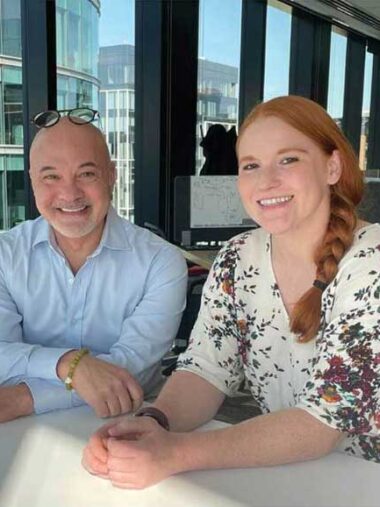
Meet Brecka Fetzer and Wayne Duso
If you introduce a problem to six people from roughly the same background, you often receive six variants of roughly the same solution, says Wayne Duso, former vice president of engineering and product at Amazon Web Services (AWS). But if you give the same problem to six people with wildly different backgrounds, the interplay between their varied perspectives will create ideas you’ve never dreamed of, and you get something much better. And the students that make up Khoury College’s Align program, which provides a pathway to an MS in computer science to students from all undergraduate backgrounds, bring perspectives drawn from everything from psychology to environmental science to English literature. This means they bring exactly what Duso seeks at AWS: diversity of experience and ideas to drive global innovation.
That’s why Duso and Brecka Fetzer, senior program manager, created the Align Career Prep Program. The partnership provides mentorship and support to Align students from all of Northeastern’s network campuses to prepare them to apply for AWS’ Software Development Engineering Internship; it also guarantees them the opportunity to complete the technical screening that is the first step in the hiring process. Align interns who are offered and accept a post-graduation position with AWS will have their final semester paid for by their future employer.
READ: Unique opportunities for Align students bring new CS perspectives to Amazon Web Services
“There’s a lot we offer in terms of how people learn to become an engineer, how to become a team member, owner, and leader,” Duso said. “I had the privilege of doing that years ago in a company that was amazing in terms of its strong culture grounded in pride-of-ownership and quality results as measured by its customers. I wouldn’t have become the engineer I became if I didn’t have a great place to start, with great people who really wanted me to succeed. Our objective is to provide the same opportunity and experience to the Align students.”
The program is the brainchild of Duso, who first began talking about the idea with former dean Carla Brodley after the two reconnected at a University of Massachusetts Amherst dean’s advisory board meeting. Both were struck by how tightly AWS and Khoury College’s cultures meshed, and they each kept an eye out for ways to collaborate. Several years later, the Align Career Prep Program presented itself.
Fetzer manages the program daily — answering student questions, interfacing with her Khoury counterpart Mary Trimarco, and identifying ways to develop the program further.
”I love coming in and getting different perspectives, hearing stories from people and learning from them. You learn so much from folks who come from different walks of life, and I think that’s super important to bring into the workplace,” Fetzer said. “Align interns are very driven and excited … It takes a lot of courage to leave an industry that you’re in and transition into computer science. I’m glad we can help them pursue a career they’re passionate in.”
After starting with just a handful of students three years ago, the program has exploded in popularity since, and AWS is significantly scaling it up this summer. The Align Career Prep Program is also serving as a model for other partnerships, like the one Fetzer and Duso recently launched with Hack Diversity, a nonprofit that breaks down barriers for Black and Latinx tech professionals. Most of Duso’s intern class now arrives through nontraditional pathways like the Align Career Prep Program and Hack Diversity.
Align interns are very driven and excited … It takes a lot of courage to leave an industry that you’re in and transition into computer science. I’m glad we can help them pursue a career they’re passionate in
Brecka Fetzer, Creator of the Align Career Prep Program
The next step, Duso says, is to think about how to scale sustainably.
“Successful relationships like this take commitment from both parties. They take time,” he said. Duso wants to provide opportunities to as many students as possible — and welcome as much diverse talent and their ideas into AWS as possible — without creating a strain that would do harm to the program itself. “For anybody who decides to engage Align, engage it as a relationship, because you are engaging people. If you want to be effective with those people, the algorithm isn’t one of efficiency. It’s one of understanding and completeness.”
Fetzer is excited to watch the program grow further. She’s also thrilled to meet her newest colleagues when they arrive this summer, and grow meaningful relationships with them as they continue to grow their careers.
Meet Samantha Olinksy
After receiving her BFA from the Fashion Institute of Technology, Samantha Olinsky found herself working on apps and websites, and wanting to understand how to build them herself. After graduating from the Align program, she has flourished in a new career chapter via her software engineering work at Atalssian.
The Align program really helped prepare me for the real world in a way that you only can hope a
Samantha Olinksy, Align MSCS ’24
program will do. I felt like the skills and the programs and the languages that I was being exposed to in classes are things … I’m already using
Meet Eddie Wang
For Eddie Wang, instant feedback is key. As a mechanical engineer, long project cycles made it tough to receive feedback on his work, but his satisfaction was met when he started coding software. Now, through the Align program, he’s completed impactful internships at Meta, Amazon, and SAP Concur, allowing him to transition into tech with ease.
The Align [network] is a very good resource while you are looking for different jobs. … Don’t be afraid of new things, and you will be more and more confident in future jobs
Eddie Wang, Align MSCS ’18
Meet Vy Nguyen
When Vy Nguyen told her mom she was going to get her master’s in computer science, it seemed like a crazy idea. But years later, after unlocking a new passion in the Align program, she is working on Amazon’s Shop By Interest product and leading community events to lift up women in tech. Her mom still can’t believe the shape of her career path, but they are both happy she took the leap.
We had a very friendly atmosphere where the faculty was really open to talking to us. We all felt like we were in an environment where we could all talk about how confused we are about this class we all took together. I think that’s why I made such good friends
Vy Nguyen, Align MSCS ’17
Meet Daryle Lamoureux
For Daryle Lamoureux, what began as a corporate partnership with Khoury College grew into a budding interest for exploring computer science. After learning about the Align program, he decided to transition careers, and has since doubled his salary in his new tech position.
Going from my previous job to where I am now, I about doubled my salary. So this gave me the opportunity to grow professionally. From that perspective – from a paycheck – it was worth it
Daryle Lamoureux, Align MSCS ’22
Meet Andrew Lucia
For Andrew Lucia, the biggest draw of Khoury College was the co-op program. Securing a co-op with cybersecurity company K logix helped him find footing in his career early, bolstering his confidence and leading to his first job out of college as a penetration tester.
It was kind of crazy to actually see myself now compared to when I arrived — all the stuff I just feel comfortable doing. … Computer science can be a tricky field, but you got to stick with it, and if you do, you’re going to find success that way
Andrew Lucia, BSCY ’22
Meet Kris Barnes
As a GIS specialist at the National Park Service, Kris Barnes knew he was programming, but he didn’t understand the deeper systems at play. Through the Align program, he got the opportunity to delve into the world of software, and now he’s looking forward to graduating with a new degree.
You have dance majors, econ majors, finance majors all coming together that want to learn something… That helps us go into the field and say, ‘oh yeah, let’s think about this differently
Kris Barnes, Align MSCS ’23