Meet Sidney La Fontaine
Eager to explain the world around him, Sidney La Fontaine chose to pursue data science for its focus on statistics. But instead of feeling forced to narrow his interests, he discovered limitless career possibilities.
I think the beauty of what I’m studying is that there is no one application. … I get the ability to move between vastly different areas while still applying the same principles and tools that I’ve been learning about at Northeastern
Sidney La Fontaine, Teaching Assistant
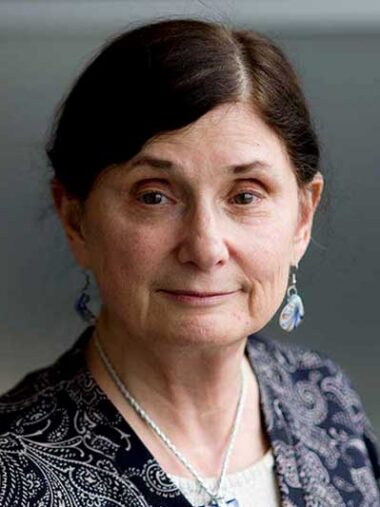
Harriet Fell
In 1982, the cohort of mathematics professors who founded the College of Computer Science (now Khoury College) included three women and three men, a unique balance in an emerging field that was male dominated. Harriet Fell, a professor at Northeastern since 1971, was one of the professors who chose to take on the challenge of creating this new college, despite having no formal training in computer science. Fell saw an emerging need…and a big opportunity.
Fell worked tirelessly to educate herself in the field while simultaneously collaborating with colleagues to develop courses for first-year students. “When we started the college, we had zero courses,” she said. “We had to create everything as we went.” The curriculum that the group developed went on to become the foundation for the Khoury first-year program and subsequently won national curriculum awards.
One of Fell’s biggest collaborations in her time at Khoury was her work with Linda Ferrier, a professor of speech-language pathology and audiology, to design software for users with disabilities. Over the years, Fell’s students, both undergraduate and graduate, helped to develop the software as part of their coursework. The students’ work on designing solutions to these real-world problems was expanded when Fell and Ferrier were funded by a National Institute of Health grant to develop a technology to identify infants with speech difficulties and then build tools to support them in their communication. Fell received an excellence in teaching award for leading senior projects classes in doing this work.
Bringing her passion for drawing and painting to her computer science work, Fell also developed graphics courses and built up the graphics program at Khoury. The courses were popular with students who were also looking for an opportunity to unite their artistic and computer science interests.
Although Fell retired in 2015, she found that her work was not yet done. Just a week after her retirement, the textbook she had co-written was published, and she began work on developing videos to support the text. Then, three weeks after her retirement, she received an NSF grant jointly with Tim Bickmore that helped support one of her graduate students in his doctoral work. She returned to Khoury to support her student in this four-year project.
Of course returning to support her student is not unexpected from a professor who always gave so much of her time to multiple committees and organizations, including serving for six years as secretary/treasurer of SIGCAPH, now sigACCESS, a special interest group of the national ACM (Association for Computing Machinery) supporting work to help people with disabilities.
When we started the college, we had zero courses. We had to create everything as we went
Ultimately, Fell spent more than 30 years at Khoury, and in that time, she witnessed how it has changed and grown. “[It has] become an outstanding place over the years,” she said. “It was tiny, and we were struggling hard just to exist. It’s very impressive to see what’s happened.”
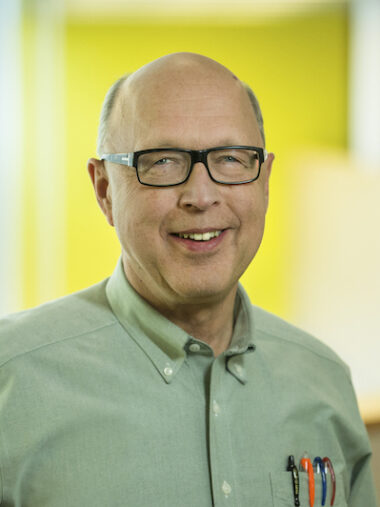
Richard Rasala
The revolutionary combined majors degree program at Khoury College allows for the integration of computing with a legion of other disciplines across Northeastern. Instrumental to the creation of this program was Richard Rasala, Professor Emeritus at Khoury.
Built through enormous cooperation among staff and administrators across the university, the program was first developed during the 1990s at Khoury College (then known as the College of Computer Science or CCS) by Rasala and then Dean Larry Finkelstein. Rasala led the effort to create a template for how students could have an interdisciplinary education that met the graduation needs of two distinct majors. Double majors already existed, but the additional time and cost needed to meet all requirements was only possible for a few students. The desire to extend this opportunity to all Khoury College students led to an innovative template that was both precise about the requirements needed to satisfy two specific majors and flexible enough to be successfully replicated. And, of course, students could complete the program without additional school time.
Combined majors (initially called “dual majors”) debuted in 2000 with three new Bachelor of Science degrees that combined computer science with cognitive psychology, mathematics, and physics. Over time, Rasala grew the program to include more departments across the university, opening avenues for students from diverse backgrounds to pursue interests outside of traditional computer science academia and industry.
In his final year at Khoury in 2017, Rasala helped develop a then record-breaking six new combined majors, more new majors than were released in any single year prior. Building on Rasala’s legacy with its commitment to interdisciplinary education, Khoury College now boasts 60 combined majors in 2025, and student interest only grows, with 62% of Khoury undergraduates pursuing a combined degree.
During his time at Khoury College, Rasala held many roles: professor, director of undergraduate studies, and associate dean for the undergraduate program. But any reflection on his time at Northeastern has to include the fact that he helped found CCS and became one of its first professors.
“I think the best thing that ever happened to me was coming to Northeastern as a faculty member. Because I was put into this place [that] really resonated with what I felt mattered.” — Richard Rasala
In that role, one of Rasala’s biggest goals was to “empower programmers to build the tools they need.” In his pioneering work in the use of software toolkits—essentially, programs that work around the lapses that arise in computer languages—he developed and shared tools with students, and then encouraged them to use these tools as a model to build their own. As he says, he likes to “teach them the zen of building tools.”
Rasala retired from the Khoury College in 2017, but he has not slowed down. He is now working on a tool that will allow anyone to build a web page simply by producing a structured outline. It is just one more way that he continues in his goal of empowering people through education and computer science, which first began at Northeastern. “I think the best thing that ever happened to me was coming to Northeastern as a faculty member,” Rasala says. “Because I was put into this place [that] really resonated with what I felt mattered.”
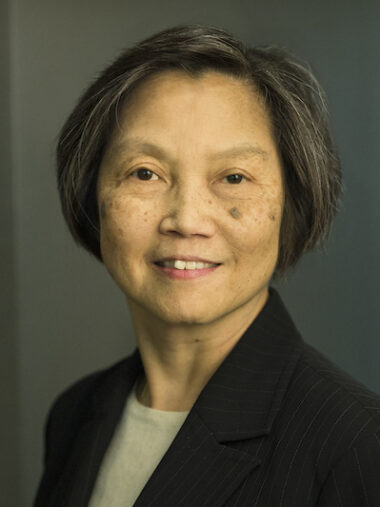
Agnes Chan
When Agnes Chan helped found the College of Computer Science (now Khoury College) in 1982, “cybersecurity” was not yet a word, much less a critical field within computer science. Through Chan’s leadership as Associate Dean of Graduate Programs and Associate Dean of Research from 1993 through 2015, and through her role as Executive Director of the cybersecurity programs, Northeastern has become a leader in cybersecurity and a top destination for students interested in this growing field.
Chan’s exploration into cybersecurity began with her interest in cryptography and its application to digital communication. She was the first at Khoury College to teach courses in cryptography and networking as part of the computer science curriculum. When the National Security Agency (NSA) noticed a severe shortage of people qualified to work in cybersecurity and began a program to recognize universities providing these skills, Chan saw an opportunity.
Although the school taught many of the computer science courses required for this program (known as the National Academic Centers of Excellence in Cybersecurity, or CAE-C), there were gaps. Through Chan’s leadership, the College enhanced its offerings, including adding a now-popular course in cyber law. Khoury College successfully received the CAE-C designation in 2001. Later, in 2008, the NSA introduced the Center of Academic Excellence in Cybersecurity Research (CAE-R) to recognize universities with strong cybersecurity research activities, and CAE-Cyber Operations in 2012 to certify programs with technical depth. Northeastern was one of the first to receive both designations, and one of only a few universities at that time to receive all three CAE designations.
In 40 years, look at what we have achieved! We are among the top 20 programs in computer science. That takes a lot of effort
At the same time, Chan led the creation of the multidisciplinary Institute of Information Assurance (IIA) at the College in 2005. Bringing together faculty and students in the fields of computer science, electrical engineering, and social science and the humanities, the institute focuses on advancing research and education related to the integrity and security of information and reducing the likelihood of cyber-attacks.
In her time at Khoury, Chan has been dedicated to maintaining the school’s “vibrant graduate programs, emphasizing quality.” A key focus of her efforts has been supporting the needs of students from diverse backgrounds. She was instrumental in launching the Align program, a Master of Science in CS, designed for students with no formal background in the field.
Working with other graduate school deans at Northeastern, Chan also led an effort to create university-funded fellowships for qualified first-year PhD students who had financial need. This was critical for attracting a wide array of strong PhD applicants to the university, as well as to improving the school’s research rankings. As Chan says, “In 40 years, look at what we have achieved! We are among the top 20 programs in computer science. That takes a lot of effort.”
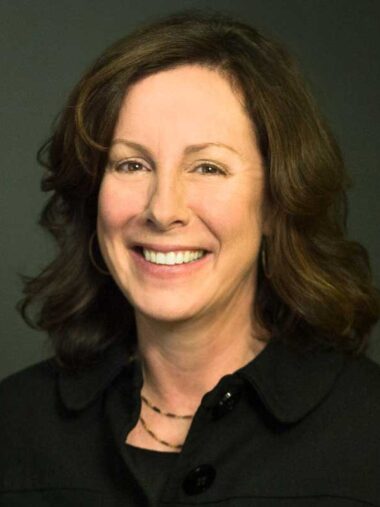
Carla Brodley
During her seven-year tenure as Dean of Khoury College from 2014 to 2021, Carla Brodley achieved a string of accomplishments. There was a record 43% growth in enrollment for first-year women students and a 50% increase in enrollment of groups historically marginalized in tech. Brodley focused on building the faculty of the college, hiring 46 tenure/tenure-track faculty, 5 professors of the practice and 50 teaching faculty; facilitating the creation of the Cybersecurity and Privacy Institute; and doubling the size of the PhD program. As a result, the College moved up to number 12 in in csrankings.org, which is the research ranking publication for Computer Science in the U.S.
Brodley also proved herself to be a prolific fundraiser, raising tens of millions of dollars for student scholarships and to fund the Center for Inclusive Computing, which currently works with 57 universities to increase access for women of all races to the field of computing. In addition, she worked with the faculty to raise money from corporations for research—increasing the industry research engagement from 12 to more than 30 tech companies.
Early in her tenure as Dean at Khoury, Brodley and her team made several strategic moves to increase the number of women and students from historically marginalized races and ethnicities. First off, the College created regular and accelerated versions of its two introductory courses for first-year students, ensuring that students without prior experience in computer science could take the first two classes without feeling like they were starting the program behind other students. The College also centralized undergraduate TA recruitment and training. “TAs are critical to the culture of computer science,” explains Brodley. “We made sure they understood how to be inclusive and create a sense of belonging for each and every student.” These two changes reduced the College’s drop/fail/withdraw rate from 25 percent to five percent, and when students met up again in the third course in the introductory sequence, the College observed no difference in performance between the two groups.
Next, to attract students, the College dramatically increased its combined majors from 12 to 43—leading to a significant increase in women students.
“In the first year we created our mission of ‘CS for everyone,’” said Brodley. “We made sure all our websites and marketing materials reflected all intersectional identities, and that all students feel welcome at Khoury. We also created one of the most interdisciplinary colleges of computer science in the country because the second meaning of our CS for Everyone is that CS touches all fields.” Indeed, 30% of the faculty that Brodley hired have interdisciplinary appointments with other colleges in the University.
One accomplishment that Brodley takes great pride in is the Align Master’s program, designed for students who come from non-technical backgrounds. When Brodley arrived at Khoury College, there were 11 students enrolled in an earlier version of the program on the Seattle campus. Since then, the program has dramatically expanded to seven campuses, including Boston, and currently has 1,721 students enrolled.
In the first year we created our mission of CS for everyone. We made sure all our websites and marketing materials reflected all intersectional identities, and that all students feel welcome at Khoury. We also created one of the most interdisciplinary colleges of computer science in the country because the second meaning of our CS for Everyone is that CS touches all fields
As Brodley puts it, the program creates a “new pathway of talent” that benefits students and regional economies. The program’s success led to scholarship investments from industry and the ability to draw faculty to apply to Khoury College who are motivated by the Align mission.
Since completing her tenure as Dean of Khoury College, Brodley has remained on the Northeastern campus as Dean and Executive Director for the Center for Inclusive Computing, a position that allows her to amplify her mission of making CS available and accessible to everyone.
Larry Finkelstein
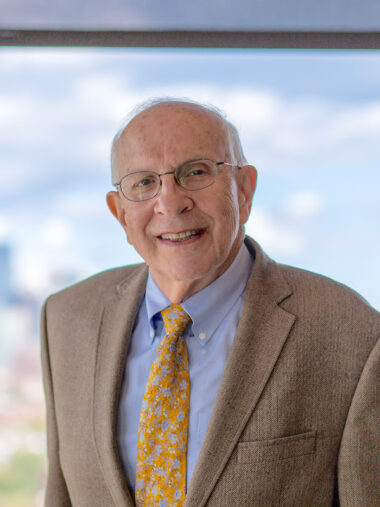
Today, the Khoury College of Computer Sciences holds national prominence as one of the premier colleges for computer science and information science. However, Larry Finkelstein, who served as Khoury’s Dean from September 1993 to July 2014, remembers the early days when he joined the College as a professor in 1983 in its second year: “It was an exciting time to join the College. We were still in the process of inventing all of the administrative structures and curriculum from scratch, to ensure that the surge of students the University anticipated in the new field of computer science received a high-quality education.”
In fact, it was this “sense of being part of a startup” that allowed and encouraged ingenuity in how the College was structured and shaped the revolutionary directions in which Finkelstein helped steer the school when he became dean. This was especially critical during the national crisis of enrollments in computer science beginning in 1991. “At the time I became Dean [in 1993],” Finkelstein says, “We were…functioning as a very good department, but we weren’t leveraging the fact that we were a separate college to shape our own future and to have a strategic impact on educational programs throughout the University.”
Khoury College’s growth and strong national reputation are the result of the strategic decisions made during this difficult time. These decisions led to an expansion from the core set of computer science majors to a broader field of subjects, including a new focus on interdisciplinary education and research. The highlight of the interdisciplinary focus was the innovative combined majors program; Finkelstein worked closely with Richard Rasala to create a template for developing the programs. And as faculty from the different colleges worked together on the requirements for each program, Larry championed their efforts with his fellow deans to build trust and support the culture of collaboration. In 2001, the program launched with three combined computer science majors with Math, Physics, and Cognitive Psychology. Today, Khoury boasts 60 combined degree programs, and more than 60% of Khoury undergraduate students participate in these programs.
It was an exciting time to join the College. We were still in the process of inventing all of the administrative structures and curriculum from scratch, to ensure that the surge of students the University anticipated in the new field of computer science received a high-quality education
Additional achievements during Finkelstein’s tenure included the college’s renaming in 2002 as the College of Computer and Information Science (CCIS) to reflect an increased focus on information as a foundation of the computing discipline. In 2004, CCIS moved into the brand new, state-of-the-art (and award-winning) West Village H building. Through strategic hires, Khoury College made Northeastern a national leader in the core fields of programming languages and cybersecurity. In 2005, Agnes Chan led the creation of the multidisciplinary Institute of Information Assurance (IIA) and was later responsible for having Northeastern be one of only 13 universities to earn the designation as a National Center of Academic Excellence in Cyber Operations by the National Security Agency (NSA). Under Finkelstein’s tenure Khoury also led the development of interdisciplinary programs in Health Informatics, Network Science, and Data Science, areas of research critical to the solution of major societal problems.
Meet Sarah Szvetecz
For a long time, Sarah Szvetecz thought that her aversion to the sight of blood would preclude a career in science and health care. After discovering computational biology, though, that world opened up to her, and now her cancer research is aiding the discovery of new drugs.
Knowing that you’re contributing to something that impactful and meaningful is just really inspiring
Sarah Szvetecz, PhD in Computer Science ’28
Meet Dian Wang
When AlphaGo revealed its advanced Go-playing AI in 2016, it was a shock for Dian Wang. Wishing to understand the complexities of artificial intelligence, he entered Khoury College’s PhD program, where he found support among professors for his research at the intersection of machine learning and robotics.
Khoury is very supportive for interdisciplinary research. … I would like to be a good professor like my advisor some day
Dian Wang, PhD in CS ’25
Meet Johanna Gunawan
For Johanna Gunawan, the Align program provided a transformative opportunity to pivot from a background in political science to a career in cybersecurity. Embracing the interdisciplinary approach and supportive environment at Khoury College, she went on to pursue her PhD. Her research, sitting at the intersection of law and technology, aims to unearth how digital interfaces can influence and deceive users.
It’s been very fulfilling and really a rewarding experience where I just get to explore so many different things. I’ve felt that support through my entire time here at Northeastern, from the Ph.D., but also before my prior degrees
Johanna Gunawan, MSCY ’20