
Brenda Bailey
As Northeastern University explored launching a new computer science campus in Vancouver, British Columbia, Canada’s second largest tech and innovation hub, they received invaluable support from an expert in the needs of both the industry and the region—Brenda Bailey. Bailey, a leader in the local tech sector, held roles ranging from co-founding Canada’s first women-owned-and-operated video game studio to leading British Columbia’s interactive and creative digital marketing association, DigiBC. So, when she learned about Northeastern’s vision for supporting the local tech ecosystem, Bailey was thrilled at the chance to help bring the idea to fruition.
It all began when Bailey’s former colleague at the British Columbia Institute of Technology (BCIT), Bethany Edmunds, went to work for Khoury College. Edmunds, now a teaching professor and the director of computing programs at Northeastern’s Vancouver campus, shared with Bailey the college’s vision to prepare more women—and other populations underrepresented in the tech sector—for computer science careers. The college was looking for support in determining the best way to carry out its vision for the new campus. As Edmunds said, “We want to be part of the ecosystem. We recognize and respect what’s already here, so to have somebody that fully understands the nuances and can help inform where our value gets added, it allows us to be a better team player.” Bailey provided that guidance.
In 2019, Bailey met with Northeastern President Joseph Aoun and provided input as part of his informal advisory group. Throughout the development process, Bailey shared insights and advice around the strategic direction of the program. As the school prepared to apply to the BC Accrediting Board, Bailey helped to inform their approach of addressing the gap in research institutions offering master’s degrees, with particular emphasis on DEIAB. Bailey also wrote letters of recommendation and drew on her extensive network to make introductions to key industry and government partners.
As she helped the university find their place in the local education sphere, Bailey connected closely with Khoury College’s mission of “CS for Everyone.” Having focused much of her career on helping underrepresented groups, particularly women and First Nations people, move into tech, she saw the opportunities the Khoury programs offered. This was especially true of the Align program, which provides a two-semester bridge to prepare students from non-CS undergraduate backgrounds to complete a master’s program in data science or computer science. For students who may have gotten the message early on that computer science is not for them, Align provides a way to make the career shift a reality, something that Bailey feels the province really needs.
“When you’re a minority in a particular setting, it often can communicate to you that you don’t belong there,” Bailey said. “I was very often in rooms where I was the only woman leader. Those types of communications are done subtly through who’s represented in particular areas.” Bailey also believes that who makes our technology matters. “With technology, we are creating tools,” she said. “But unlike a shovel or a hammer, technology tools come with values laden within them. It’s really important that we understand that and ensure that those values express the values of all of us, not just one small segment. There are many examples of tech gone wrong because it hasn’t been inclusive. That’s a contribution that Northeastern is helping us with, and it’s deeply important.”
Bailey also understands the challenges that students may face even after graduating from Khoury College or another post-secondary institution, so she saw this as an opportunity to overhaul the Innovator Skills Initiative (ISI) program. The ISI program was originally designed to help recent public university CS graduates who were having trouble finding their first job because companies only wanted people with one to two years of experience. With the increased need for new talent in the region, this was no longer an issue, but the problem had shifted to one of bias in who gets hired for these early-career jobs.
With technology, we are creating tools. But unlike a shovel or a hammer, technology tools come with values laden within them. It’s really important that we understand that and ensure that those values express the values of all of us, not just one small segment
Bailey and the ISI team introduced a new $15 million program to focus on supporting people facing these barriers. The program provided grants to hiring companies to cover the mentorship required for onboarding someone from an underserved community with no experience. The revamped program also expanded the range of eligible post-secondary programs to include both public and private institutions, which allowed Northeastern to extend the opportunity to their graduates.
Brenda Bailey was elected MLA (Member of the Legislative Assembly) for Vancouver-False Creek in 2020. She is now the Minister of Jobs, Economic Development, and Innovation for British Columbia. She sees the future of the local technology industry as a busy one, with a continued role for both public and private institutions in the region.
“There are a million people that we need to train in the next 10 years,” Bailey said. “Our industries are all transitioning to become tech enabled. Our future is in sustainable technology and a green economy. And those objectives align very strongly with what Northeastern brings to the table and the training that they provide. It’s a really strong fit, and we’re very grateful to have them do this work.”
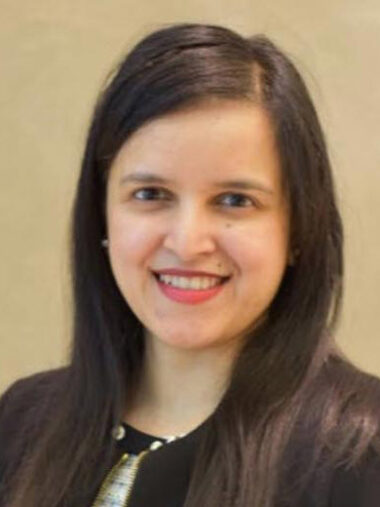
Rekha Kamat
When Rekha Kamat (MSCS ’05) was a young girl with a budding passion for science and technology, little did she imagine that she would one day become a prominent leader in the technology field. She worked with a single-minded focus and drive at every step of her journey, and success followed.
Today, Kamat is the Global Director of marketing for 3DEXPERIENCE Works at Dassault Systèmes, a science-based company and world leader in providing solutions for innovation, generating more than $5 billion in annual revenue. Her journey began in Mumbai, India, where she recalls watching in awe as NASA’s Sojourner Rover landed on Mars in 1997; she aspired to one day build game changing engineering feats.
“Growing up in India, I focused on education,” said Kamat. “Looking back, I think my passion and sense of purpose shaped my journey.”
Kamat’s family emphasized education from a young age, and in particular her mother — who once aspired to become a doctor herself — encouraged Kamat to pursue a future in STEM, despite the many challenges of entering a male-dominated field.
She became the first woman engineer in her family, graduating from the University of Mumbai with a degree in computer engineering. For advanced studies, Kamat decided to come to America for her masters, intent on building a career at the forefront of innovation.
Presented with many options for her graduate studies, Northeastern appealed to Kamat initially because of its location in Boston; she was inspired by Boston while learning of the American Revolution in history class and its centuries-long role in shaping the science and technology fields. What ultimately set Northeastern apart was the university’s wealth of opportunities and resources in cutting-edge areas of computer science.
“As I was reading up and researching schools, I remember there was an article at that time on Northeastern’s website about Agnes Chan. I also read about their programs in artificial intelligence from Professor Mitchell Wand, and their research in security, which all really attracted me to the school in addition to the opportunity to be in Boston and the campus.”
Her experience with the faculty and opportunities while at Northeastern lived up to her hopes when she first applied, paving the way for her career in STEM.
“The artificial intelligence courses I remember distinctly, learning the Lisp programming language that Professor Wand would teach us at that time. Security was another key field then, and the curriculum and teachings of the professors was innovative and inspiring,” Kamat said.
She accepted a role with Dassault Systèmes after graduating from Northeastern, first working on the research and development team before transitioning to sales industry and business consulting positions within the company.
Today, Kamat oversees 3DEXPERIENCE Works Marketing at corporate group level, including leading and managing geography marketing teams in 12 GEOs across the Americas, Europe and Asia. Her strong technology and sales background give her a unique perspective on how to effectively market the product and lead the strategic business initiatives.
“It’s a definite point of differentiation,” said Kamat. “I can look at how our solutions differentiate and add true value to our clients. I understand it both from the technology perspective, and the sales, business perspective.” Kamat is a lifelong learner, having acquired skills and additional qualifications in artificial intelligence, project management and marketing.
In 2018, Kamat was recognized in Boston Business Journal’s 40 Under 40 annual compendium. She was also among 11 young women globally (and one of two based in the U.S.) to be named Outstanding Rising Talent by the Women’s Forum for Economy and Society at their global conference in Paris, France in 2018.
With her prominent role and influence in the industry, Kamat feels a responsibility to empower the next generation of STEM researchers and advocate for gender equality in the field. Kamat is the head of the Women’s Initiative Americas at Dassault Systèmes. The initiative aims to advocate for women in STEM-based leadership roles and provide resources for women to progress from the grassroots level-upwards.
The artificial intelligence courses I remember distinctly, learning the Lisp programming language that Professor Wand would teach us at that time. Security was another key field then, and the curriculum and teachings of the professors was innovative and inspiring
Kamat has also been a recurring judge for the Congressional App Challenge, a U.S. Congress-sponsored nationwide competition for middle and high school students to encourage STEM, and the Technovation Challenge, an initiative to promote girls’ participation in both entrepreneurship and technology. She also serves on the New England Council’s advisory committee for inclusion and diversity.
“We’ve made a lot of progress since I started,” said Kamat. “Now, we have to look at accelerating the pace”.
And, while Kamat’s contributions to the field of STEM are wide-ranging, she hopes to continue leaving her mark by impacting others.
“Civic engagement is something I’ve been passionate about throughout my journey, even as a child growing up in India, I was volunteering and hopefully making an impact in the community,” said Kamat. “Building an inclusive society is important, including changing the narrative and the stereotypes that we see all around us.”
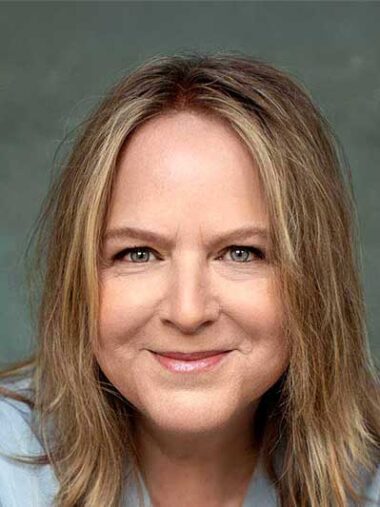
Melody Biringer
Melody Biringer calls herself a connection engineer. “I think about how I can engineer an event so that the audience gets seen and heard and connected to each other, versus going to a keynote at a hotel ballroom where you listen, get inspired, and go home.” Through her WiT Regatta Conference, she collaborates with Khoury College to bring together women in tech from around the world to meet for a week of connection in cities such as Seattle, Vancouver, and Amsterdam, with future conferences planned for Stockholm and others. “I want people to meet their best friend and their new boss at these events. We have our speakers tell real life stories so that people relate to them, then break up everyone into small groups to tell their own stories and be vulnerable with each other.”
The mission has personal value to Biringer. She notes that she did not grow up with sisters or attend university, instead starting her own business at eighteen. “I went through it by myself, having employees and being independent. I woke up one day in my early thirties, and I realized I don’t have many like-minded people to hang out with, I don’t have many friends.” She started the Crave Party, an event set in an upscale dining venue for women entrepreneurs, but everyone had to wear pajamas. “I realized this kind of connection was on everyone else’s mind.” The event was popular, and it grew every subsequent quarter.
In her larger view, loneliness is an epidemic. As adults, introverts have a hard time making friends on their own. “No one likes to walk into a room alone. They need facilitated connections. I believe connections are made one by one over a long time.” While sitting on the board of Women in Tech Seattle, Biringer encountered many women in tech fields that worked for men and heard what they were experiencing at work. She decided to switch her focus to these women. “My skills were needed there.”
In the second year of the WiT Regatta, Khoury College reached out to her, wanting to get involved. Khoury College now hosts half of the event in Northeastern University’s Seattle and Vancouver campuses. For a week, panels take place on technology, leadership, career building, with over two hundred speakers, discussions, and workshops, as well as social events and walks. Khoury College provides technology content with students, staff, and faculty leading discussions.
I hope to live in a world where we don’t have to say, ‘women in tech,’ where we’ve reached parity, where there’s no gender in tech, and we’re all just people
Biringer sees Khoury College as a leader in diversifying tech. “One thing I love about the Regatta and Khoury is the attention we can bring to inspiring role models. Girls at a younger age need the encouragement when they see other girls in every kind of class. I have seen that generation changing in the seven years of the Regatta. I hope to live in a world where we don’t have to say, ‘women in tech,’ where we’ve reached parity, where there’s no gender in tech, and we’re all just people.”
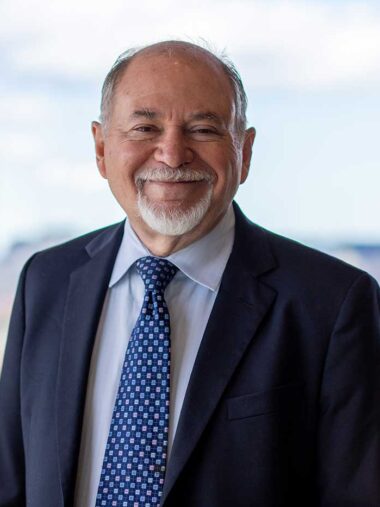
Mitch Wand
One of the best-known features of the computer science curriculum at Khoury College is its approach to teaching programming languages, specifically its focus on functional languages. This is due in no small part to Mitchell Wand, who has been a proponent of these languages since the 1970s, even co-authoring (with Dan Friedman) Essentials of Programming Languages, one of the leading texts in the field.
Wand’s research in programming languages, specifically the mathematical theory of programming languages, began in the early 1970s when he was a graduate student at the Massachusetts Institute of Technology. When Wand joined Northeastern’s faculty in 1985, he already had many contacts in the field and became instrumental in recruiting faculty that would eventually comprise Khoury’s premier research group in programming languages.
Wand’s own research focused on developing functional languages, which allow programmers to use mathematical functions and precise semantics to give confidence that a program produces the correct result. “By using those languages, we can more effectively communicate to the students the principles that they should be using, even if they are programming in other languages.” Over time, as students have graduated and moved on to other institutions, they’ve continued using and teaching this approach, creating ripples that spread the idea well beyond Khoury.
In addition to his work in programming languages, Wand was also instrumental in launching the Khoury graduate program. In his role as Associate Dean for Graduate Studies and Research from 1985 to 1991, Wand’s first task was to get the PhD program approved, which he was able to accomplish in just one year.
The master’s degree program also needed a reset as it had been designed as an evening program for students coming from working in industry. When industry took a financial dip and stopped funding master’s students, Wand oversaw the program’s adaptation to accommodate the influx of interested international students. This included the approval of a master’s level co-op, which proved to be a tremendous draw because it allowed international students the opportunity to work in the U.S.
I think one of the things that’s most distinctive about Khoury is our resilience, flexibility, and ability to evolve to a changing environment. It’s a wide, wonderful world out there, and we aim to contribute to it and be an essential part of it
Under Wand’s leadership, the graduate program continued to adapt and change with the times. It grew beyond the confines of the Boston campus into a global network of campuses, providing opportunities for students all over the world to receive a Khoury College education. Additionally, Wand oversaw a two-year effort to make the computer science courses available online, where they can be accessed by an even broader group of students.
In 2017, Wand retired from full-time faculty and now teaches software engineering part time. He feels that Khoury College has continued to be at the forefront of this rapidly changing industry. “I think one of the things that’s most distinctive about Khoury is our resilience, flexibility, and ability to evolve to a changing environment,” said Wand. “It’s a wide, wonderful world out there, and we aim to contribute to it and be an essential part of it.”

Bill Lakeland
When the Vancouver Northeastern campus started looking for business partners to support the research work of its CS master’s students, Bill Lakeland did not hesitate to offer support. In fact, the company that he owns, Spexi Geospatial, was the first industry partner to provide work opportunities for Khoury College students in Vancouver.
Students were drawn to work at Spexi Geospatial, which provides a cloud-based platform that makes it easy to capture, process, analyze, and share aerial imagery collected by drones. To date, Khoury College students have worked on three projects, one focused on forest fires and two focused on the railway system. The projects began as capstones, then scaled up to research assistant opportunities for students.
According to visiting associate teaching professor Michal Aibin, Lakeland has been a strong champion of Khoury College students. “He always provides additional resources and help from his team of developers whenever asked,” said Aibin.
Northeastern and Spexi Geospatial have been the recipient have two significant multi-year grants from the Canadian government, one from Via Rail and Transport Canada and the other from Natural Resources Canada.
Lakeland has been impressed by the caliber of Northeastern students and the immediate contributions they make to projects. “Quite frankly, there’s just been a very good response to the contributions students are making, and our clients recognize this contribution,” said Lakeland.
Quite frankly, there’s just been a very good response to the contributions students are making, and our clients recognize this contribution
The research partnership is also one that students are enjoying as well, as they see the impact of their work in real time, explained Lakeland. The students are “getting to make a difference” across Canada as new technologies are being rolled out—technology, for example, that is helping people and communities across the country fight wildfires. “Protecting areas around the city where we know we can reduce the fuel sources” is critical said Lakeland. “Making an impact and saving homes is a real,” he said. “It’s definitely exciting.”
Lakeland says that it’s a great time to study computer science in Vancouver as the city continues to flourish as a tech hub, doing work that will benefit communities locally and globally.
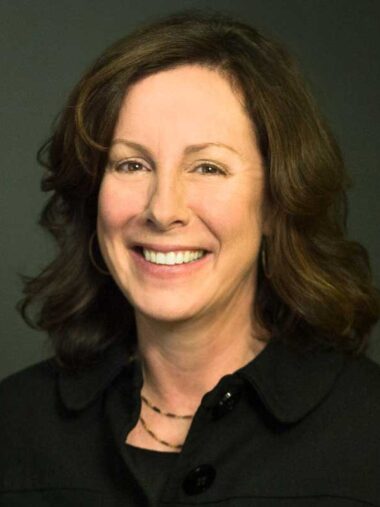
Carla Brodley
During her seven-year tenure as Dean of Khoury College from 2014 to 2021, Carla Brodley achieved a string of accomplishments. There was a record 43% growth in enrollment for first-year women students and a 50% increase in enrollment of groups historically marginalized in tech. Brodley focused on building the faculty of the college, hiring 46 tenure/tenure-track faculty, 5 professors of the practice and 50 teaching faculty; facilitating the creation of the Cybersecurity and Privacy Institute; and doubling the size of the PhD program. As a result, the College moved up to number 12 in in csrankings.org, which is the research ranking publication for Computer Science in the U.S.
Brodley also proved herself to be a prolific fundraiser, raising tens of millions of dollars for student scholarships and to fund the Center for Inclusive Computing, which currently works with 57 universities to increase access for women of all races to the field of computing. In addition, she worked with the faculty to raise money from corporations for research—increasing the industry research engagement from 12 to more than 30 tech companies.
Early in her tenure as Dean at Khoury, Brodley and her team made several strategic moves to increase the number of women and students from historically marginalized races and ethnicities. First off, the College created regular and accelerated versions of its two introductory courses for first-year students, ensuring that students without prior experience in computer science could take the first two classes without feeling like they were starting the program behind other students. The College also centralized undergraduate TA recruitment and training. “TAs are critical to the culture of computer science,” explains Brodley. “We made sure they understood how to be inclusive and create a sense of belonging for each and every student.” These two changes reduced the College’s drop/fail/withdraw rate from 25 percent to five percent, and when students met up again in the third course in the introductory sequence, the College observed no difference in performance between the two groups.
Next, to attract students, the College dramatically increased its combined majors from 12 to 43—leading to a significant increase in women students.
“In the first year we created our mission of ‘CS for everyone,’” said Brodley. “We made sure all our websites and marketing materials reflected all intersectional identities, and that all students feel welcome at Khoury. We also created one of the most interdisciplinary colleges of computer science in the country because the second meaning of our CS for Everyone is that CS touches all fields.” Indeed, 30% of the faculty that Brodley hired have interdisciplinary appointments with other colleges in the University.
One accomplishment that Brodley takes great pride in is the Align Master’s program, designed for students who come from non-technical backgrounds. When Brodley arrived at Khoury College, there were 11 students enrolled in an earlier version of the program on the Seattle campus. Since then, the program has dramatically expanded to seven campuses, including Boston, and currently has 1,721 students enrolled.
In the first year we created our mission of CS for everyone. We made sure all our websites and marketing materials reflected all intersectional identities, and that all students feel welcome at Khoury. We also created one of the most interdisciplinary colleges of computer science in the country because the second meaning of our CS for Everyone is that CS touches all fields
As Brodley puts it, the program creates a “new pathway of talent” that benefits students and regional economies. The program’s success led to scholarship investments from industry and the ability to draw faculty to apply to Khoury College who are motivated by the Align mission.
Since completing her tenure as Dean of Khoury College, Brodley has remained on the Northeastern campus as Dean and Executive Director for the Center for Inclusive Computing, a position that allows her to amplify her mission of making CS available and accessible to everyone.
Meet Mara Helfer
As a Global Scholar, Mara Helfer spent her first fall semester on Northeastern’s Oakland campus, then transitioned to the London campus for the remainder of the academic year. Although she was nervous about pursuing a male-dominated field, her first class in Oakland with Professor Ellen Spertus helped build her computing confidence, and now she’s excited to continue her tech journey around the world.
My professor always talks about her great experiences of going to MIT, and I think that having
Mara Helfer, BSCS ’28
someone like that on your first day, being a woman, having all these great experiences … definitely helped because I knew that this was something that was possible
Meet Angela Mo
After transitioning out of a biology program in Greece, first-year student Angela Mo decided to move to the London campus to take a chance on computer science. The supportive community she’s found there has helped her feel confident that she’ll have a place in the tech industry.
I noticed that everyone in the computer science community, they’re all really inviting and it doesn’t feel like there’s much of a divide between anyone. … I know that I’ll definitely have a place in the industry when I leave college
Angela Mo, BSCS ’26