Meet Mathena Chan
Growing up, Mathena Chan was creative and also curious about technology, such as websites and apps. At Khoury College, where she is studying user experience, she is able to combine both her interests.
The Khoury curriculum especially does a really good job at kind of evening out the playing field, so it doesn’t really matter as much how much experience you have going in. And it’s easy to catch up and really know, kind of, what you want to be learning
Mathena Chan, BS in Computer Science and Design ‘25
Meet Gigi Gillen
When Gigi Gillen arrived at Khoury College, she kept her major undecided, not yet ready to limit her options. When she discovered the possibilities of combined majors, however, she realized she didn’t have to choose between her passions. With a combined computer science and design degree, Gigi found the perfect balance between technical expertise and creative expression — unlocking a world of limitless opportunities for her future.
I wouldn’t be in computer science and design anywhere else. … I’ve had a very well-rounded education that I’ve really enjoyed
Gigi Gillen, BSCS + Design ’25
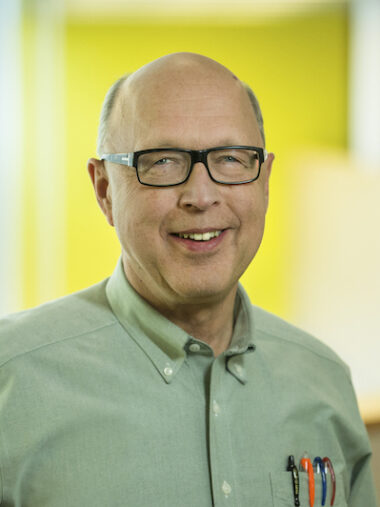
Richard Rasala
The revolutionary combined majors degree program at Khoury College allows for the integration of computing with a legion of other disciplines across Northeastern. Instrumental to the creation of this program was Richard Rasala, Professor Emeritus at Khoury.
Built through enormous cooperation among staff and administrators across the university, the program was first developed during the 1990s at Khoury College (then known as the College of Computer Science or CCS) by Rasala and then Dean Larry Finkelstein. Rasala led the effort to create a template for how students could have an interdisciplinary education that met the graduation needs of two distinct majors. Double majors already existed, but the additional time and cost needed to meet all requirements was only possible for a few students. The desire to extend this opportunity to all Khoury College students led to an innovative template that was both precise about the requirements needed to satisfy two specific majors and flexible enough to be successfully replicated. And, of course, students could complete the program without additional school time.
Combined majors (initially called “dual majors”) debuted in 2000 with three new Bachelor of Science degrees that combined computer science with cognitive psychology, mathematics, and physics. Over time, Rasala grew the program to include more departments across the university, opening avenues for students from diverse backgrounds to pursue interests outside of traditional computer science academia and industry.
In his final year at Khoury in 2017, Rasala helped develop a then record-breaking six new combined majors, more new majors than were released in any single year prior. Building on Rasala’s legacy with its commitment to interdisciplinary education, Khoury College now boasts 60 combined majors in 2025, and student interest only grows, with 62% of Khoury undergraduates pursuing a combined degree.
During his time at Khoury College, Rasala held many roles: professor, director of undergraduate studies, and associate dean for the undergraduate program. But any reflection on his time at Northeastern has to include the fact that he helped found CCS and became one of its first professors.
“I think the best thing that ever happened to me was coming to Northeastern as a faculty member. Because I was put into this place [that] really resonated with what I felt mattered.” — Richard Rasala
In that role, one of Rasala’s biggest goals was to “empower programmers to build the tools they need.” In his pioneering work in the use of software toolkits—essentially, programs that work around the lapses that arise in computer languages—he developed and shared tools with students, and then encouraged them to use these tools as a model to build their own. As he says, he likes to “teach them the zen of building tools.”
Rasala retired from the Khoury College in 2017, but he has not slowed down. He is now working on a tool that will allow anyone to build a web page simply by producing a structured outline. It is just one more way that he continues in his goal of empowering people through education and computer science, which first began at Northeastern. “I think the best thing that ever happened to me was coming to Northeastern as a faculty member,” Rasala says. “Because I was put into this place [that] really resonated with what I felt mattered.”
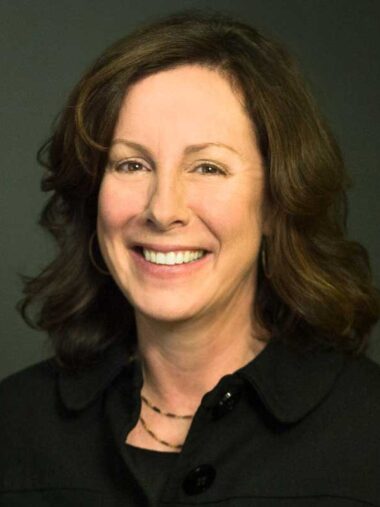
Carla Brodley
During her seven-year tenure as Dean of Khoury College from 2014 to 2021, Carla Brodley achieved a string of accomplishments. There was a record 43% growth in enrollment for first-year women students and a 50% increase in enrollment of groups historically marginalized in tech. Brodley focused on building the faculty of the college, hiring 46 tenure/tenure-track faculty, 5 professors of the practice and 50 teaching faculty; facilitating the creation of the Cybersecurity and Privacy Institute; and doubling the size of the PhD program. As a result, the College moved up to number 12 in in csrankings.org, which is the research ranking publication for Computer Science in the U.S.
Brodley also proved herself to be a prolific fundraiser, raising tens of millions of dollars for student scholarships and to fund the Center for Inclusive Computing, which currently works with 57 universities to increase access for women of all races to the field of computing. In addition, she worked with the faculty to raise money from corporations for research—increasing the industry research engagement from 12 to more than 30 tech companies.
Early in her tenure as Dean at Khoury, Brodley and her team made several strategic moves to increase the number of women and students from historically marginalized races and ethnicities. First off, the College created regular and accelerated versions of its two introductory courses for first-year students, ensuring that students without prior experience in computer science could take the first two classes without feeling like they were starting the program behind other students. The College also centralized undergraduate TA recruitment and training. “TAs are critical to the culture of computer science,” explains Brodley. “We made sure they understood how to be inclusive and create a sense of belonging for each and every student.” These two changes reduced the College’s drop/fail/withdraw rate from 25 percent to five percent, and when students met up again in the third course in the introductory sequence, the College observed no difference in performance between the two groups.
Next, to attract students, the College dramatically increased its combined majors from 12 to 43—leading to a significant increase in women students.
“In the first year we created our mission of ‘CS for everyone,’” said Brodley. “We made sure all our websites and marketing materials reflected all intersectional identities, and that all students feel welcome at Khoury. We also created one of the most interdisciplinary colleges of computer science in the country because the second meaning of our CS for Everyone is that CS touches all fields.” Indeed, 30% of the faculty that Brodley hired have interdisciplinary appointments with other colleges in the University.
One accomplishment that Brodley takes great pride in is the Align Master’s program, designed for students who come from non-technical backgrounds. When Brodley arrived at Khoury College, there were 11 students enrolled in an earlier version of the program on the Seattle campus. Since then, the program has dramatically expanded to seven campuses, including Boston, and currently has 1,721 students enrolled.
In the first year we created our mission of CS for everyone. We made sure all our websites and marketing materials reflected all intersectional identities, and that all students feel welcome at Khoury. We also created one of the most interdisciplinary colleges of computer science in the country because the second meaning of our CS for Everyone is that CS touches all fields
As Brodley puts it, the program creates a “new pathway of talent” that benefits students and regional economies. The program’s success led to scholarship investments from industry and the ability to draw faculty to apply to Khoury College who are motivated by the Align mission.
Since completing her tenure as Dean of Khoury College, Brodley has remained on the Northeastern campus as Dean and Executive Director for the Center for Inclusive Computing, a position that allows her to amplify her mission of making CS available and accessible to everyone.
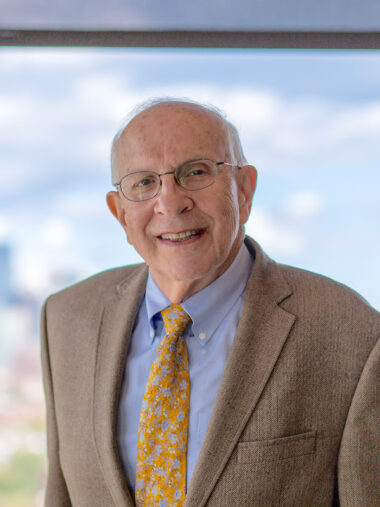
Larry Finkelstein
Today, the Khoury College of Computer Sciences holds national prominence as one of the premier colleges for computer science and information science. However, Larry Finkelstein, who served as Khoury’s Dean from September 1993 to July 2014, remembers the early days when he joined the College as a professor in 1983 in its second year: “It was an exciting time to join the College. We were still in the process of inventing all of the administrative structures and curriculum from scratch, to ensure that the surge of students the University anticipated in the new field of computer science received a high-quality education.”
In fact, it was this “sense of being part of a startup” that allowed and encouraged ingenuity in how the College was structured and shaped the revolutionary directions in which Finkelstein helped steer the school when he became dean. This was especially critical during the national crisis of enrollments in computer science beginning in 1991. “At the time I became Dean [in 1993],” Finkelstein says, “We were…functioning as a very good department, but we weren’t leveraging the fact that we were a separate college to shape our own future and to have a strategic impact on educational programs throughout the University.”
Khoury College’s growth and strong national reputation are the result of the strategic decisions made during this difficult time. These decisions led to an expansion from the core set of computer science majors to a broader field of subjects, including a new focus on interdisciplinary education and research. The highlight of the interdisciplinary focus was the innovative combined majors program; Finkelstein worked closely with Richard Rasala to create a template for developing the programs. And as faculty from the different colleges worked together on the requirements for each program, Larry championed their efforts with his fellow deans to build trust and support the culture of collaboration. In 2001, the program launched with three combined computer science majors with Math, Physics, and Cognitive Psychology. Today, Khoury boasts 60 combined degree programs, and more than 60% of Khoury undergraduate students participate in these programs.
It was an exciting time to join the College. We were still in the process of inventing all of the administrative structures and curriculum from scratch, to ensure that the surge of students the University anticipated in the new field of computer science received a high-quality education
Additional achievements during Finkelstein’s tenure included the college’s renaming in 2002 as the College of Computer and Information Science (CCIS) to reflect an increased focus on information as a foundation of the computing discipline. In 2004, CCIS moved into the brand new, state-of-the-art (and award-winning) West Village H building. Through strategic hires, Khoury College made Northeastern a national leader in the core fields of programming languages and cybersecurity. In 2005, Agnes Chan led the creation of the multidisciplinary Institute of Information Assurance (IIA) and was later responsible for having Northeastern be one of only 13 universities to earn the designation as a National Center of Academic Excellence in Cyber Operations by the National Security Agency (NSA). Under Finkelstein’s tenure Khoury also led the development of interdisciplinary programs in Health Informatics, Network Science, and Data Science, areas of research critical to the solution of major societal problems.
Meet Ivy Jordan
For Ivy Jordan, Khoury College’s combined majors awakened a passion to try every field adjacent to computer science. Originally pursuing cybersecurity and criminal justice, she switched into computer science and political science before settling on her current major of computer science and design. Now looking ahead to experiential learning opportunities, she’s bringing her appetite for exploration into the field.

Marina Moskowitz
When Marina Moskowitz arrived at Northeastern University in 2014, she was undecided about her major. Although she knew she wanted to study business, she also wanted to explore her other passions. The combined majors program at Northeastern, which offered her the flexibility to pursue two disciplines, played a crucial role in her decision to attend the university.
One of her interests was computer science, but she had no prior experience in programming. So she enrolled in the course Fundamentals I at Khoury College, which introduced her to computing and programming.
“It was extremely difficult,” she said. “My brain was not used to thinking in that way, but I fell in love with the field because it taught me how to think objectively and independently.”
By the end of her first semester, Moskowitz declared a combined major in computer science and business. As she progressed in her studies, her focus shifted from pursuing grades to learning for learning’s sake. This allowed her to not only retain information better and understand the subjects more deeply, but also to explore them more extensively.
The success I have achieved is a direct result of my experiences at Khoury College, where I fell in love with learning. I was taught how to think objectively, at the most fundamental level, about what cybersecurity and artificial intelligence can do for us in the future
This refined ability to think quickly and apply her computer science knowledge became valuable during her four co-ops at the Department of Defense, as well as her two internships at Apple focusing on cybersecurity and machine learning. Although she had no experience in these fields, she was welcomed into these positions because of her aptitude for fast learning.
“I’m fortunate to have been in positions where I was given problems for which my manager said, ‘This doesn’t have a solution. If you fail, that’s okay,’” Moskowitz recalled.
Moskowitz explored these problems and soon fell in love with the work. By the end of her co-ops at the Department of Defense, Moskowitz had earned several awards for developing tools that the organization still uses. At Apple, during her first internship, she leveraged her skills in machine learning and natural language processing to create a tool that identified critical threats in Apple’s network. This tool was then implemented on a third-party vendor website, allowing anyone to benefit from the algorithm. During her second internship, she built upon this tool to pinpoint the location of vulnerable systems and machines within Apple’s network.
After each internship and co-op, Moskowitz returned to Northeastern to take advanced classes that allowed her to delve deeper into each new subject, further expanding her knowledge. Additionally, during her senior year, and under the supervision of Professor Alina Oprea, she conducted an independent research project in which she applied machine learning to find red flags in a network. She concluded her time at Northeastern having earned several awards, including being recognized as a Young Global Leader and as one of the most 100 influential students at Northeastern University (the Huntington 100).
Today, Moskowitz holds the position of AI and cyber security engineer at Apple’s Information Security department, where she writes algorithms to help protect Apple’s internal network from threats and vulnerabilities. Her focus is on reinforcement learning, an emerging field in artificial intelligence. She is also pursuing her master’s degree in machine learning and data science at the University of California, Berkeley.
Given the impact of rapid advancements in cybersecurity and artificial intelligence, Moskowitz believes that students exploring these fields must be prepared for a lifelong journey of continuous learning. She stresses the importance of students learning to think independently as they master foundational course material.
“The success I have achieved is a direct result of my experiences at Khoury College, where I fell in love with learning,” she said. “I was taught how to think objectively, at the most fundamental level, about what cybersecurity and artificial intelligence can do for us in the future.”

Meet Glen Coppersmith
As an alumnus, Glen Coppersmith — who earned his bachelor’s in computer science and cognitive psychology in 2004 and his PhD in experimental psychology in 2008 — has been an active member of the Northeastern community.
“I’ve been welcomed with open arms,” Coppersmith said.
Since 2017, he has worked with faculty member Byron Wallace. In 2019, he joined the McCarthy Venture Network at Northeastern to help others shift from academia to industry.
“When I go to events, it’s nice to have a community of people,” he said. “With the launch of the Institute for Experiential AI, I reconnected with a friend from freshman year who is now a professor affiliated with the group: John Basl. He was just as bright and fun as before; it was a full circle from my freshman year dorm.”
In 2019, Coppersmith received the Outstanding Alumni Award from Khoury College in recognition of his work at Qntfy, a mental health data science startup he bootstrapped from its founding in the summer of 2014.
Within a year of receiving that award, the world was facing a mental health emergency due to the pandemic. Even in the first few weeks of the pandemic, Coppersmith said, “there were already early warning signs about the mental health crisis, especially with health care workers. We spent a bunch of time generating relevant information and getting it to people who needed it. The whole world was focusing on COVID, and we were with them.”
That summer, Coppersmith and Qntfy saw the massive need and decided to seek a pre-seed round, since the world was finally ready for what they were building. One of their investors made an introduction to another mental health leader: Mark Frank, CEO of SonderMind.
I’m working to better understand mental health and well-being using the data that is traditionally unavailable to clinicians and provders … We [can] look at this problem differently from the rest of the field by starting from a machine learning perspective
Glen Coppersmith, BSCS ’04
“We didn’t know much about each other, but within the first ten minutes we were completely aligned on how to redesign and hopefully fix the mental health care system,” Coppersmith remembered. “Frank said, ‘This might be a little forward, but could we acquire you? It looks like we’re building two halves of the same company.’ Four months later, we were on stage together doing a fireside chat all unified at SonderMind.”
Coppersmith now works as the chief data officer at SonderMind. Switching from the “lonely” CEO job at a small company to a C-suite with colleagues and collaborators has been rewarding for Coppersmith.
“It’s exciting to be part of a larger team again,” he said. “I’ve learned so much from Mark and my colleagues at SonderMind. It’s been a continuation of the journey and a total paradigm shift at the same time.”
At SonderMind, Coppersmith leads the team towards a data-driven method of mental health treatment. They want to address the critical problem of matching patients and mental health providers to improve their access and clinical outcomes. The SonderMind team has acquired companies with apps around self-care that facilitate interaction with the platform, which is a rich source of data for a feedback loop of improving care. Other possible ideas include sleep tracking through wearables.
Looking back at his time at Northeastern, Coppersmith believes that his double major in computer science and psychology paved the way for his work at Qntfy and SonderMind.
“I was enough of an expert in those spaces to see solutions differently. It helped hone my sense of pragmatism, the desire for real world impact,” he said. “Being out in the workforce for co-op before graduation was a huge part of that Northeastern pragmatism.”
Meet Marvin Sagastume
Marvin Sagastume found himself drawn to Northeastern by Khoury College’s combined majors, giving him the opportunity to blend his computing passion with something wider. Now at Outcomes4Me, he’s doing just that by helping develop a user-friendly information platform for cancer patients.
I love that every day when I come to work, I’m proud of what I’m doing. I’ve gone from having very little experience … to building software that is doing very complex things. That’s inspiring
Marvin Sagastume, BSCS ’21