Meet Ritu Shah
Ritu Shah believes it is crucial to design technology that emphasizes human values. When she landed her research co-op with Professor Intille, she discovered the perfect opportunity to put her beliefs into practice by building technology to combat student loneliness.
I learned so much about what needs to be incorporated into an application, and how important it is to get really different perspectives
Ritu Shah, BSCS ‘25
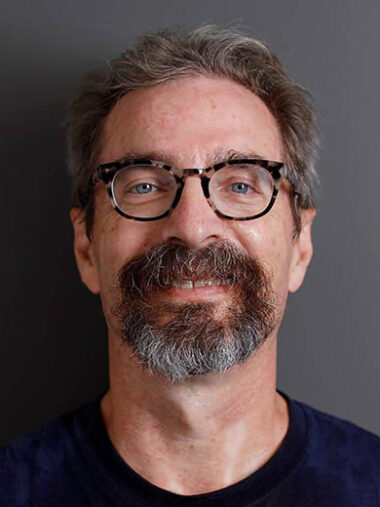
Chris Paul
Eleven different times, Chris Paul has either co-founded a startup or joined on the ground floor. And whether it was online media or rowing machines or an internet-enabled basketball hoop, his role has largely remained the same: to build, operationalize, and manage the software team that would make good on the company’s vision.
And as he built a resumé that reads more like an encyclopedia, Paul found a reservoir of software talent to tap: Khoury College co-ops. For more than a decade, he has not only hired them at company after company; he has involved his colleagues, forged connections with other companies, and shared his expertise with cohort after cohort of students at Khoury events. It’s no wonder, then, that the college bestowed him with an Outstanding Co-op Employer honor a few years back. Now, he’s added another: 40 for 40 honoree.
“In a town with some very good schools, Northeastern has long been my favorite place to hire engineers from because of the co-op program and the quality of the CS curriculum,” Paul said. “I simply love the program. I’m a huge fan, and I’ve tried to get involved.”
Paul began his own professional computing journey after graduating from Carnegie Mellon University in 1977 — “a hundred years ago,” he jokes, “with what amounted to a CS degree back then.” After working six years at Digital Equipment Corporation (DEC), then the second-largest computer manufacturer around, he founded his own: Working Set. The new company developed an SQL database for DEC that reigned as the world’s fastest for seven years, and Paul helped to develop database products for Apple, Microsoft, Oracle, and IBM.
From there, his career bounced between startups in numerous fields. Document management. Web traffic analytics. Media streaming. Video engagement analysis. Customized tween girl apparel. Investment reporting. But it was during his stint at InsightSquared that he first started hiring Khoury students, and the Boston-based business analytics company soon became a sought-after co-op spot.
“That was the big switchover because I met so many great Northeastern engineers,” Paul remembers. “Northeastern students love to build things. It’s a great culture of building and doing, and that’s the differentiating factor. They have a ton of out-of-class, practical experience that essentially none of the other schools have. You can work summer internships for a few months, but you can’t beat two or three stints of six months.”
Just about everywhere Paul went from that point, from software solutions provider Continuum to digital health company Om1 to rowing machine manufacturer Hydrow, he brought Khoury co-ops with him and earned rave reviews from colleagues. But the co-ops didn’t just come to him; he came to them too. Paul attended and volunteered for signature Khoury events, participated in panels, and shared his expertise with students looking to grow their skills and careers.
Northeastern students love to build things. It’s a great culture of building and doing, and that’s the differentiating factor. They have a ton of out-of-class, practical experience that essentially none of the other schools have. You can work summer internships for a few months, but you can’t beat two or three stints of six months
“I remember learning and struggling during my early days at Carnegie Mellon, and it would have been a whole lot easier if I’d had a decent mentor,” Paul explains. “Now I’m an old engineer with lots of experience who enjoys mentoring Northeastern students … The co-op program is so great, and it’s gratifying for me to help out in any way I can.”
Now, after his first retirement lasted, as his wife Lisa jokes, “about 15 minutes,” Paul says he phased out the majority of his work this spring to the point where he is now “very, very part-time.” He’s begun to make good on his long-awaited travel plans, rowing in Chattanooga, Tennessee before jetting off to France. And Rhode Kill, the long-running 65+ basketball team that Paul calls his “weekly religious experience,” is poised to make a serious run at a National Senior Games championship in July.
But even as Paul retires from working life, his fingerprints will linger in the form of the rising young professionals for whom he opened doors and shared wisdom.
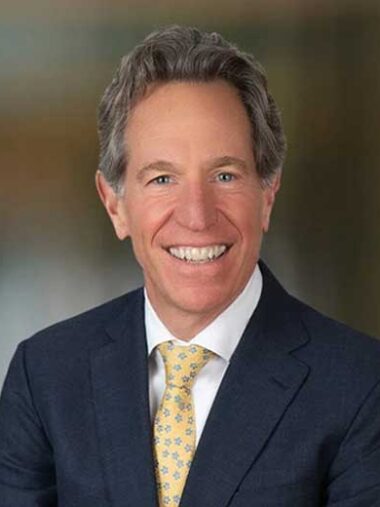
Martin Zoltick
Martin Zoltick was part of the first graduating class of Khoury College in 1983 with a BS in Computer Science. He says, “Back then, we had an older building where the computers were in the basement. Our lab was getting updated, but much of it was underground. When we wrote software, you’d go to the basement to submit it by typing into a terminal, which was connected to a mainframe computer. Sometime later the program was run, and if something was wrong, you’d have to start all over.”
Zoltick notes how much has changed from the College’s early years. “Being able to work on personal computers and seamlessly connect remotely – the evolution of technology has changed the way students can learn computer science. Beyond that, the importance and recognition of computer software and information systems technology has grown so substantially since the time I was studying at Northeastern. Like the shiny new building in West Village with more stature than our building back then. It was a small program with people primarily who wanted to study computers and become programmers. Just around the time I was graduating, students from other degree programs, like business, started thinking they should learn to program as software was starting to be used in all kinds of industries and fields.”
While studying at Northeastern, Zoltick had a co-op as a software engineer at several different companies, including Draper Labs, IBM, and Digital Equipment Corporation. At his co-op at Digital Equipment Corporation, he befriended an alum of Northeastern who was working at the company. “He had ideas about entrepreneurship, about starting a company that would focus on developing artificial intelligence technology.”
When Zoltick graduated, he worked at Data General as a software engineer and also pursued the AI startup with this fellow Northeastern alum. “In the context of starting the company and developing the business plan, we spoke with lawyers about names and protecting the technology. At the same time, at Data General, there had been legal issues with the software we were working with. Both experiences got me looking at what aspects of computers and software overlapped with the law. I got a book on it that piqued my interest. I applied to law school, got in, and decided to change my career path from software engineer to a lawyer whose focus would be computer technology and software.”
Thirty plus years later, Zoltick is a highly respected technology lawyer with Rothwell Figg, a firm based in Washington, DC. “Throughout my career, a lot of the technology I’ve worked on as a lawyer has related to computer tech and software, much of which now focuses on artificial intelligence and telecommunications. I work with companies to develop strategic plans to protect their technology and innovations, including applying for and obtaining patents, seeking copyright and trademark registrations, maintaining trade secrets, and counseling them on a wide variety of technology and intellectual property-related legal issues. I help my clients enforce their rights against companies that are infringing or violating their intellectual property rights and defend them when they are accused of wrongdoing. Lastly, I help companies handle transactions where they are acquiring tech, licensing tech, or raising money, and assist investors with due diligence review of technology and IP rights.”
In the past five years, Zoltick’s practice has included a focus on privacy and data protection. “It’s a timely topic now. It has a good cross section with technology and a lot of the areas that I’ve traditionally worked in as an IP and tech lawyer.”
The quality of the professors and the cutting-edge work that the college is publishing – the research groups are at a very high level. The school is leading the way in many important technology areas including AI and data privacy
Zoltick highlights three clients as particularly meaningful. “For twenty-five years, I’ve worked with one of the original developers of real-time operating systems software – Finite State Machine Labs. They were a company very involved in the open-source software community. They needed my help with navigating how to protect their technology and IP, while balancing that with providing open-source software to the community. I worked with them from an early stage and as they grew to be a market leader. I dealt with every legal aspect of their business.”
For the last ten years, Zoltick has worked to protect the technology and patents of Ericsson, the Swedish telecommunication company. Referencing the phone interview for this article, he says, “My work there relates to the tech we’re using right now on this call – 5G, etc.” He also represents RGF Environmental Group, an air, water, and food purification systems technology company. “Part of my interest is that I care a lot about the environment and global health. It was particularly important during COVID. Their devices to remove airborne pathogens pre-dated the pandemic – and they were then deployed around the world. I did the patent work to protect that technology.”
Zoltick is excited for the future of Khoury College and Northeastern University as a major research hub. “The quality of the professors and the cutting-edge work that the college is publishing – the research groups are at a very high level. The school is leading the way in many important technology areas including AI and data privacy. I’ve talked with current professors about this work. I see them publish and speak at conferences.” He’s proud to be a Northeastern alum. “When I was at Northeastern, people saw us as a small program. But now, Northeastern has elevated Khoury College to be on par with schools like MIT and Stanford.”
Reacting to the 40 for 40 selection, Zoltick says, “I’m proud to have been there at the beginning, and hopefully contributed to it over such a positive evolution in the last forty years. I keep in touch with the college and am glad to stay involved. From curriculum to professors to co-op jobs where you learn how to navigate the professional world, Northeastern provides relationships with companies and sets up students incredibly well once they get out in the real world. I credit a lot of my success to my experiences at Northeastern.”
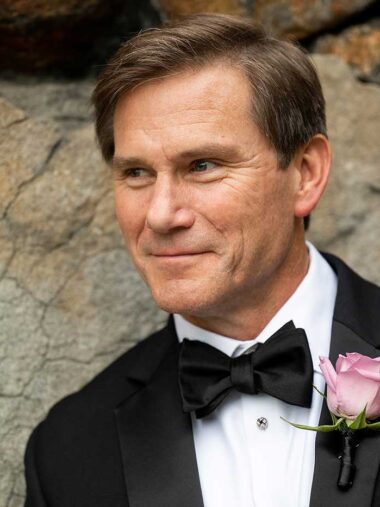
Brian Wenzinger
When Brian Wenzinger’s high school guidance counselor suggested he check out the computer science program at Northeastern University, Wenzinger wasn’t sure he would be going to college. It wasn’t a matter of academic ability or interest, but an issue of financial need. “I wasn’t going to college if I wasn’t getting money to attend,” Wenzinger explained. “Fortunately, Northeastern provided me with a scholarship, and that sealed the deal.” Receiving that scholarship not only set Wenzinger on a path to a college education plus a successful career, it also inspired him to eventually extend that opportunity to students who came after him.
Wenzinger (BSCS ‘89) has fond memories of his five years at Northeastern’s College of Computer Science (now Khoury College). One of his favorite and most valuable experiences was the co-op work. “The combination of academics and co-op was perfect for me,” he said. “I’m one of many people who will say, be smart about your co-ops. Learn what you like to do. Learn what you don’t like to do.” Wenzinger had the opportunity to take on three different co-op jobs during his time at Khoury. They all ended up being good experiences, but his first co-op in the summer after his freshman year, which involved otherwise unexciting data entry and minor programming work, is one that he still considers “the best job I’ll ever have.” Not only did the work expose him to statistical analysis and data analysis, which steered him toward his eventual career, but he was able to live for three months in Hawaii.
After college, Wenzinger’s focus on data led him to several job opportunities, such as developing software to analyze data for quality control at DuPont. Then, after years of traveling for work and looking to settle in one place, Wenzinger took a position at DuPont’s Wilmington, Delaware, office in their pension group. Having already pursued business as a minor while at Northeastern, Wenzinger took the opportunity to get his MBA at night through the University of Delaware. Upon graduation, Wenzinger fully shifted his career to finance, where he combined his new focus on money management with his background in software development to create software that helped evaluate stocks and portfolio risks.
Today, as he enjoys early retirement from a successful career, Wenzinger welcomes the opportunity to support the school that first got him started. “I wouldn’t be here without Northeastern, so it’s important to me to give back.” He has contributed to the Carl S. Ell Scholarship, which was the fund that he benefited from as a student. Additionally, in 2003, he set up the Jane K. Wenzinger Scholarship Fund, in honor of his mother, to support students in need who wish to study computer science, with preference given to those from single-parent households, as was his situation.
Then, in 2014, Brian Wenzinger pledged $1 million over several years to fund the Larry Finkelstein Innovative Computing Education Endowment (ICEE) at Khoury. The fund, named for Wenzinger’s former professor and, at the time, dean of CCS, came out of conversations that Wenzinger and Finkelstein were having about ways to improve education at Khoury. Something that Wenzinger thought was important, but he hadn’t experienced while at Northeastern himself, was research- and academic-focused professor-student interactions. When he was pursuing his undergraduate degree, the focus had been on preparing for work and not as much on the less-tangible benefits of academia. So, Wenzinger and Finkelstein worked with the development office to create an endowment that would allow the Khoury dean to provide funds for academic experiences that fell outside of the standard classroom program. Wenzinger described it as, “If there are opportunities for growth and diversity in the educational experience, that’s what that fund is for.”
The combination of academics and co-op was perfect for me,” he said. “I’m one of many people who will say, be smart about your co-ops. Learn what you like to do. Learn what you don’t like to do
One such funded program was introduced by Dean Carla Brodley, whose focus on increasing opportunities for women in computer science inspired her to send students to the Grace Hopper conference. As someone who was moved when he had the opportunity to hear Hopper speak in person himself, Wenzinger was thrilled that this opportunity could be shared with others. He proudly displays a signed, framed photo of a group of Khoury students who attended the conference thanks to the endowment. Additional funded activities have been both professor- and student-generated, all sharing a focus on creating innovative academic opportunities for students and their professors.
Wenzinger’s latest funding effort is in support of Northeastern’s library. Having experienced first-hand the critical importance of libraries during one of his co-ops and in his graduate program, he wanted to help Northeastern’s library better meet the needs of future students.
Wenzinger still feels lucky that his guidance counselor suggested Northeastern and put him on the path to the scholarship that made his college education and career possible. Having been on the other side of the hiring desk where he has interviewed recent computer science graduates, he recognizes the value of the education he received at Northeastern. He has since returned to the campus several times, including to tour it with his own daughters as they were looking at schools. He enjoys seeing the improvements to the campus and the updates to the CS program, including the dynamic academic opportunities he is grateful to be able to fund. “The whole environment has changed. It is never static in technology, and that’s a good thing.”
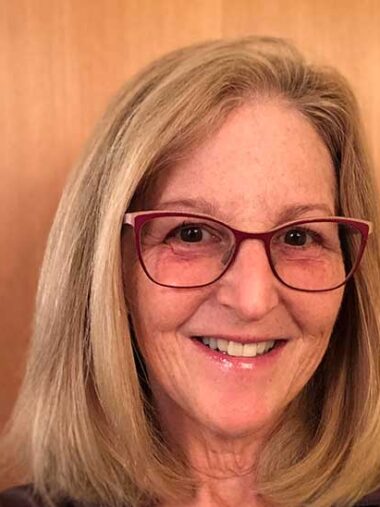
Melinda Kramer
For Melinda Kramer, professional pivots are nothing new.
That’s how Kramer, a member of Northeastern’s first computer science graduating class, marched from R&D co-ops and Wall Street firms to software consulting and start-up advising. And now, retired from her computing-and-business career, and with her advocacy work and far-flung hiking journeys to keep her busy, it’s worth peering back at the professional trail she’s trekked.
It began during her freshman year as a Northeastern business student.
“Even back then, I had a sense that tech could make a difference in the world,” she says.
“I went on co-op, and being my young self, decided I already knew all of this and needed to try something different,” she reminisces. Luckily, after she pivoted between different science degrees and recognized her interests in math, hardware, and problem solving, Northeastern’s curricula had evolved to match her interests.
“By my senior year, Northeastern had an official computer science college,” she says. “I loved the emerging technology, so I and 18 others became the first graduating class in computer science.”
Shortly thereafter, Kramer began her career on Wall Street, where she developed software for JPMorgan’s mainframe computers.
“It was fascinating to learn about the finance world, but after a few years, I got bored and wanted to try something new, so I pivoted to join a consulting firm,” she recalls. “I realized that I didn’t want to be a software developer, but I did want to be at the intersection of technology and business.
Her tech–business consulting work at Leveraged Technology wouldn’t take Kramer far from the word of software. The financial world was gradually moving online, and to build the tools traders now needed, coding support was essential. In one project, Kramer and her team developed what she called “a new concept in foreign exchange trading” — digital infrastructure for an industry that had conducted its business mostly over the phone. The goals, she says, were efficient record-keeping and faster settlements, which would eliminate failed trades if she could encourage traders to trust the tech.
During her time with the firm, Kramer traveled to Hong Kong and the UK for business, earned her MBA from NYU, and eventually took charge of her department. Then, in the early 90s, she moved to Chicago, where she soon joined Goldman Sachs and built the company’s first web-based money market trading systems. But her longest professional stint would come through one of a handful of her consulting clients.
“I was advising [GCM Grosvenor] while they were running everything out of one massive, sophisticated, incredible Excel spreadsheet,” Kramer recalls. “For growth and management, I advised them to hire someone with tech experience, someone who could systematically develop something to support their portfolio management. And they said, ‘How about you?’”
And so it was. After building software to replace Grosvenor’s behemoth spreadsheet, Kramer spent more than a decade running their new software department, and even hired a Northeastern co-op along the way.
Now, after more than 30 years in tech, Kramer has focused on giving back in retirement. For a while, that took the form of KloudVentures, in which Kramer offered mentorship, networking, and investment to Chicago-area women looking to build tech careers like she had. Now she’s turning much of her focus to her philanthropy and advocacy for women, the LGBTQ community, and disadvantaged children, which began with her co-heading the Chicago chapter of Help for Children.
I was advising [GCM Grosvenor] while they were running everything out of one massive, sophisticated, incredible Excel spreadsheet. For growth and management, I advised them to hire someone with tech experience, someone who could systematically develop something to support their portfolio management. And they said, ‘How about you?
“We raised awareness and money for organizations around the world that worked to prevent and treat child abuse,” Kramer explains. “We raised millions of dollars per year through our business networks, then spent time getting to know local organizations, vetting them, and providing grants.” Now she does similar work with Impact Grants Chicago, an all-female nonprofit with an even wider philanthropic mission. She also advocates for transgender people and communities, typically in the form of one-to-one relationship-building rather than large-scale public philanthropy.
But even in retirement, her computing connection can’t help but come full circle. In 2021, Alex Ernst, one of Kramer’s two children, graduated from Khoury College. And just like his mom, he’s forging a career at the intersection of computing and another field — music in his case, through a software engineering job at Spotify. Through him, as well as her financial support of Khoury College and her old Husky rowing team, Kramer says she’s never lost touch with the university where she first dove into computing.
“I have a soft spot in my heart for Northeastern; it really was a great fit and opportunity for me,” she says. “Northeastern remains core to a lot of my world.”
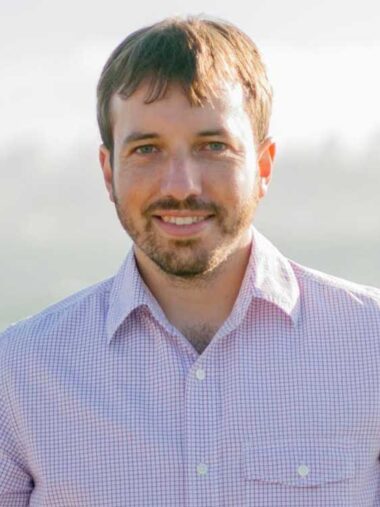
Chris Lambert
When deciding where to go for college in the early 2000s, former Lyft CTO Chris Lambert chose Northeastern University in part due the strength of the co-op program. “I found it valuable as a way to accelerate and enhance my experience.” He majored in computer science, and, he says, “got exposure to a broad set of areas within CS.” Lambert’s first two co-ops were with Intel, and his final co-op and first engineering position was with Google. A variety of classes set him up to hit the ground running, but he mentions his informational retrieval class with Javed Aslam and software development with Matthias Felleisen as particularly important.
A directed study with Aslam was important to his first job at Google as part of the natural language processing team in building a system that could translate between a hundred different languages. “The concepts and algorithms that I learned in the information retrieval class set me up to be comfortable in that research group.” In the directed study, Lambert was excited to work with Aslam as a mentor to apply the knowledge from his class to solving a specific problem domain: building a search engine for programming languages that was higher quality and more useful than a general search engine. “[Aslam] would give me suggestions and helped me approach problems the right way, but I had flexibility in the content and direction of the work.”
Looking back on his work in Felleisen’s class, Lambert remembers it as “very pragmatic in building software systems and teams for large scale development.” This proved useful in his second team at Google – the mobile group. “It was 2007, pre-iPhone. It wasn’t yet a priority for Google – we had one team doing mobile projects for the whole company, which was over ten thousand people.” Lambert’s focus was on location services and mapping technology. “I got exposure to large scale distributed systems, machine learning, mobile development, location services. It all ended up being a great background for what I did at Lyft.”
Lyft launched in May 2012, and Lambert joined in November 2012 as a software engineer. The engineering team was eight people in a thirty-person company. “We still had the pink mustaches on the cars, with maybe a hundred drivers on the road. It was an exciting, fun chaos. Every Friday night was our biggest night ever. When you’re growing that quickly, you’re always hitting the scaling limits of what you’ve built, and it’s all-hands-on-deck to fix it – a classic startup experience.”
He soon shifted into a CTO role. “Lyft was my first time as a people manager. I learned a lot of great lessons about building teams and taking care of people, putting people first.” Although the pandemic was “the hardest years” for the company, Lambert takes pride in weathering the storm and rallying employees to bounce back. On the business side, a proud moment for him was when Lyft launched twenty-four cities in twenty-four hours in 2014. “We enlisted our community of drivers to help onboard new drivers. It was a big milestone for us.” On the product side, he mentions the shared rides feature. “We were the first company to do that. We’ve expanded to be a portfolio transportation company, integrating a variety of transit methods into the app.”
We still had the pink mustaches on the cars, with maybe a hundred drivers on the road. It was an exciting, fun chaos. Every Friday night was our biggest night ever. When you’re growing that quickly, you’re always hitting the scaling limits of what you’ve built, and it’s all-hands-on-deck to fix it – a classic startup experience
Before going into the next phase in his career, Lambert plans to take a few months off and travel with his family. But following that, he’ll figure out what’s next. “Probably something early stage. That’s where I have the most fun, I’d love to that again.” In terms of areas, he’s particularly interested in large language models and the new AI revolution. “It will change more industries than you can believe.”
Reacting to his selection as a 40 for 40 recipient, Lambert feels deep gratitude. “I look back at my time at Northeastern fondly. To be remembered by the faculty and staff is an honor. I’m thrilled and excited to reconnect with the community.” He believes Khoury College and Northeastern’s futures are bright. “In the last few years there’s been a nationwide shift where more students have been more interested in CS majors, but Northeastern has been investing for 40 years. With the amount of time and attention given to CS, it’s not just that Northeastern is investing today, it’s the last 40 years and has only gotten stronger since then. Whenever I return to campus, seeing the West Village building is a visible sign of that investment. We have an amazing faculty that is paying dividends in so many ways.”
Meet Maggie Xu
In the middle of the pandemic, Maggie Xu became a mother. Being an Align graduate enabled her to work in tech roles during that period that helped support her new family while keeping her responsibilities and lifestyle balanced.
You don’t have to be defined by other people, or pretend to be someone else you’re not. And you can still survive and thrive in this industry
Maggie Xu, MSCS ’16
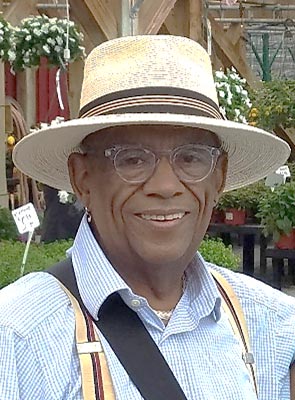
Melvin Simms
Melvin Simms launched Khoury College’s successful co-op program right from the beginning of the College in 1982. Little did he know at the time, he would shepherd the program for the next 30 years. Simms retired from Khoury nine years ago, but so much of what Simms achieved during his three decades of service to Northeastern is still felt today. Members of the Khoury community were deeply saddened to hear of his passing in late December.
As Director of Co-op, Simms established and grew the co-op program for undergraduate and graduate students. He created the backbone of co-op practices used today including the professional development class, the co-op clearance process, and the “First Formal Interview.”
According to Melissa Peikin and Aileen Kent Yates, current members of the co-op team, Simms was a valuable member of the University’s co-op division at large, serving on committees, undertaking new initiatives, and presenting at conferences both domestically and globally. He was a leader in introducing the need to look at data to measure the effectiveness and success of co-op from both the student and employer perspective.
In a tribute to Simms, Peikin and Simms shared: “The students respected Mel and to this day, alums always ask about him. When they think about the College of Computer Sciences, Northeastern University, and co-op, it is Mel who comes to mind. He was an integral part of their experience.”
“When the College moved into a new building in 1984, he insisted that the co-op faculty be co-located with the academic faculty of the College,” added Viera Proulx, a colleague of Simms during the late 1990s through 2012. “This was then a revolutionary idea that has proven to be a great success and has been since adopted by nearly all other university units.”
Proulx continued that Simms designed a co-op program that led students through the preparation for a job search in a systematic way—learning how to write a resume, how to apply for a job, go through a mock job interview, and write a follow-up letter. “He wanted to make sure that every co-op assignment was a valuable educational experience,” she said.
When I was a co-op coordinator for CCIS and Mel was director of the program, he kept students and the quality of their learning at the forefront of every decision
Another colleague, John Spadaccini, shared that under Simms’s leadership, CCIS, now known as Khoury College, was the first college at Northeastern to integrate academic and co-op advising and to take a holistic approach in advising. Spadaccini also appreciated Simms’s personal mentorship over the years as his own career unfolded.
“When I was a co-op coordinator for CCIS and Mel was director of the program, he kept students and the quality of their learning at the forefront of every decision,” said colleague Nora Jemison. “I was a young professional at the time, and he pushed me to become a better scholar and a better advocate for the students. I learned to go toe to toe with CEOs, when necessary, to ensure a quality learning experience.”
Concluded Jemison: “Melvin was funny, kind, a good communicator… best boss I ever had, really.”
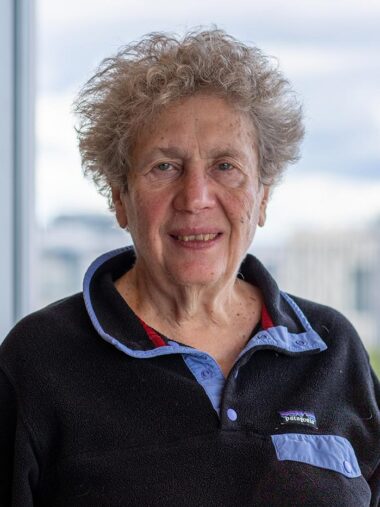
Betty Salzberg
Creating one of the first colleges of computer sciences was groundbreaking 40 years ago—especially when four of the six champions were women. One of those leaders was Betty Salzberg, Khoury professor emeritus.
Salzberg recalls that the group’s proposal for a new college “blew the accreditors out of sky…. Not only did we have an incredible program, but we also had all this supporting research to back it up.”
At the time, Salzberg was teaching programming courses in the mathematics department, but she and her colleagues could see the promise of the computing field and decided to pursue the idea of a stand-alone college of computer sciences separate from the colleges of engineering and arts and sciences. Their proposal contained an innovative idea at the time: concentrations within the degree offering. This idea continues to flourish to this day.
Once the college was approved and began admitting students, Salzberg enjoyed a 26-year tenure at Khoury. In total Salzberg was a faculty member for 37 years at Northeastern by the time she retired in 2008. During her time at Khoury College she raised significant grant income, served on several college and university committees, and continually mentored PhD students—a passion for her.
Her area of expertise was database systems, which she taught at the undergraduate and graduate level. She was elected as an IEEE Fellow for her contributions to the database field including access methods, online reorganization methods, and robust application techniques in computing. Much of this work was in collaboration with David Lomet of the Microsoft Corporation and with Khoury graduate students.
Not only did we have an incredible program, but we also had all this supporting research to back it up
During her tenure at Khoury, she saw the college’s reputation and reach continue to grow. She remembers when she came to Northeastern in 1971, most students were from the Boston area. “We were a streetcar university,” she recalled. Over time, the college and university expanded nationally and internationally. One constant she noted was the draw of the co-op program.
Salzberg said that she “had a great time working at Northeastern.” She sees some of CS colleagues from time to time and looks back at her time fondly.