
Martin Zoltick
Martin Zoltick was part of the first graduating class of Khoury College in 1983 with a BS in Computer Science. He says, “Back then, we had an older building where the computers were in the basement. Our lab was getting updated, but much of it was underground. When we wrote software, you’d go to the basement to submit it by typing into a terminal, which was connected to a mainframe computer. Sometime later the program was run, and if something was wrong, you’d have to start all over.”
Zoltick notes how much has changed from the College’s early years. “Being able to work on personal computers and seamlessly connect remotely – the evolution of technology has changed the way students can learn computer science. Beyond that, the importance and recognition of computer software and information systems technology has grown so substantially since the time I was studying at Northeastern. Like the shiny new building in West Village with more stature than our building back then. It was a small program with people primarily who wanted to study computers and become programmers. Just around the time I was graduating, students from other degree programs, like business, started thinking they should learn to program as software was starting to be used in all kinds of industries and fields.”
While studying at Northeastern, Zoltick had a co-op as a software engineer at several different companies, including Draper Labs, IBM, and Digital Equipment Corporation. At his co-op at Digital Equipment Corporation, he befriended an alum of Northeastern who was working at the company. “He had ideas about entrepreneurship, about starting a company that would focus on developing artificial intelligence technology.”
When Zoltick graduated, he worked at Data General as a software engineer and also pursued the AI startup with this fellow Northeastern alum. “In the context of starting the company and developing the business plan, we spoke with lawyers about names and protecting the technology. At the same time, at Data General, there had been legal issues with the software we were working with. Both experiences got me looking at what aspects of computers and software overlapped with the law. I got a book on it that piqued my interest. I applied to law school, got in, and decided to change my career path from software engineer to a lawyer whose focus would be computer technology and software.”
Thirty plus years later, Zoltick is a highly respected technology lawyer with Rothwell Figg, a firm based in Washington, DC. “Throughout my career, a lot of the technology I’ve worked on as a lawyer has related to computer tech and software, much of which now focuses on artificial intelligence and telecommunications. I work with companies to develop strategic plans to protect their technology and innovations, including applying for and obtaining patents, seeking copyright and trademark registrations, maintaining trade secrets, and counseling them on a wide variety of technology and intellectual property-related legal issues. I help my clients enforce their rights against companies that are infringing or violating their intellectual property rights and defend them when they are accused of wrongdoing. Lastly, I help companies handle transactions where they are acquiring tech, licensing tech, or raising money, and assist investors with due diligence review of technology and IP rights.”
In the past five years, Zoltick’s practice has included a focus on privacy and data protection. “It’s a timely topic now. It has a good cross section with technology and a lot of the areas that I’ve traditionally worked in as an IP and tech lawyer.”
The quality of the professors and the cutting-edge work that the college is publishing – the research groups are at a very high level. The school is leading the way in many important technology areas including AI and data privacy
Zoltick highlights three clients as particularly meaningful. “For twenty-five years, I’ve worked with one of the original developers of real-time operating systems software – Finite State Machine Labs. They were a company very involved in the open-source software community. They needed my help with navigating how to protect their technology and IP, while balancing that with providing open-source software to the community. I worked with them from an early stage and as they grew to be a market leader. I dealt with every legal aspect of their business.”
For the last ten years, Zoltick has worked to protect the technology and patents of Ericsson, the Swedish telecommunication company. Referencing the phone interview for this article, he says, “My work there relates to the tech we’re using right now on this call – 5G, etc.” He also represents RGF Environmental Group, an air, water, and food purification systems technology company. “Part of my interest is that I care a lot about the environment and global health. It was particularly important during COVID. Their devices to remove airborne pathogens pre-dated the pandemic – and they were then deployed around the world. I did the patent work to protect that technology.”
Zoltick is excited for the future of Khoury College and Northeastern University as a major research hub. “The quality of the professors and the cutting-edge work that the college is publishing – the research groups are at a very high level. The school is leading the way in many important technology areas including AI and data privacy. I’ve talked with current professors about this work. I see them publish and speak at conferences.” He’s proud to be a Northeastern alum. “When I was at Northeastern, people saw us as a small program. But now, Northeastern has elevated Khoury College to be on par with schools like MIT and Stanford.”
Reacting to the 40 for 40 selection, Zoltick says, “I’m proud to have been there at the beginning, and hopefully contributed to it over such a positive evolution in the last forty years. I keep in touch with the college and am glad to stay involved. From curriculum to professors to co-op jobs where you learn how to navigate the professional world, Northeastern provides relationships with companies and sets up students incredibly well once they get out in the real world. I credit a lot of my success to my experiences at Northeastern.”
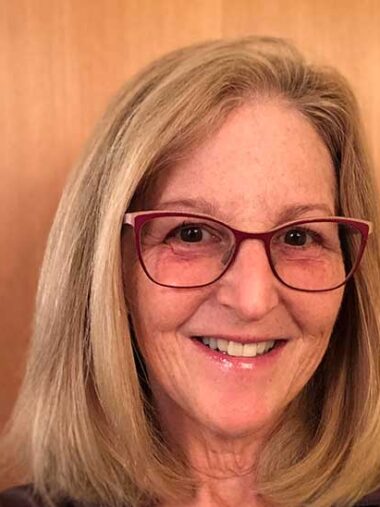
Melinda Kramer
For Melinda Kramer, professional pivots are nothing new.
That’s how Kramer, a member of Northeastern’s first computer science graduating class, marched from R&D co-ops and Wall Street firms to software consulting and start-up advising. And now, retired from her computing-and-business career, and with her advocacy work and far-flung hiking journeys to keep her busy, it’s worth peering back at the professional trail she’s trekked.
It began during her freshman year as a Northeastern business student.
“Even back then, I had a sense that tech could make a difference in the world,” she says.
“I went on co-op, and being my young self, decided I already knew all of this and needed to try something different,” she reminisces. Luckily, after she pivoted between different science degrees and recognized her interests in math, hardware, and problem solving, Northeastern’s curricula had evolved to match her interests.
“By my senior year, Northeastern had an official computer science college,” she says. “I loved the emerging technology, so I and 18 others became the first graduating class in computer science.”
Shortly thereafter, Kramer began her career on Wall Street, where she developed software for JPMorgan’s mainframe computers.
“It was fascinating to learn about the finance world, but after a few years, I got bored and wanted to try something new, so I pivoted to join a consulting firm,” she recalls. “I realized that I didn’t want to be a software developer, but I did want to be at the intersection of technology and business.
Her tech–business consulting work at Leveraged Technology wouldn’t take Kramer far from the word of software. The financial world was gradually moving online, and to build the tools traders now needed, coding support was essential. In one project, Kramer and her team developed what she called “a new concept in foreign exchange trading” — digital infrastructure for an industry that had conducted its business mostly over the phone. The goals, she says, were efficient record-keeping and faster settlements, which would eliminate failed trades if she could encourage traders to trust the tech.
During her time with the firm, Kramer traveled to Hong Kong and the UK for business, earned her MBA from NYU, and eventually took charge of her department. Then, in the early 90s, she moved to Chicago, where she soon joined Goldman Sachs and built the company’s first web-based money market trading systems. But her longest professional stint would come through one of a handful of her consulting clients.
“I was advising [GCM Grosvenor] while they were running everything out of one massive, sophisticated, incredible Excel spreadsheet,” Kramer recalls. “For growth and management, I advised them to hire someone with tech experience, someone who could systematically develop something to support their portfolio management. And they said, ‘How about you?’”
And so it was. After building software to replace Grosvenor’s behemoth spreadsheet, Kramer spent more than a decade running their new software department, and even hired a Northeastern co-op along the way.
Now, after more than 30 years in tech, Kramer has focused on giving back in retirement. For a while, that took the form of KloudVentures, in which Kramer offered mentorship, networking, and investment to Chicago-area women looking to build tech careers like she had. Now she’s turning much of her focus to her philanthropy and advocacy for women, the LGBTQ community, and disadvantaged children, which began with her co-heading the Chicago chapter of Help for Children.
I was advising [GCM Grosvenor] while they were running everything out of one massive, sophisticated, incredible Excel spreadsheet. For growth and management, I advised them to hire someone with tech experience, someone who could systematically develop something to support their portfolio management. And they said, ‘How about you?
“We raised awareness and money for organizations around the world that worked to prevent and treat child abuse,” Kramer explains. “We raised millions of dollars per year through our business networks, then spent time getting to know local organizations, vetting them, and providing grants.” Now she does similar work with Impact Grants Chicago, an all-female nonprofit with an even wider philanthropic mission. She also advocates for transgender people and communities, typically in the form of one-to-one relationship-building rather than large-scale public philanthropy.
But even in retirement, her computing connection can’t help but come full circle. In 2021, Alex Ernst, one of Kramer’s two children, graduated from Khoury College. And just like his mom, he’s forging a career at the intersection of computing and another field — music in his case, through a software engineering job at Spotify. Through him, as well as her financial support of Khoury College and her old Husky rowing team, Kramer says she’s never lost touch with the university where she first dove into computing.
“I have a soft spot in my heart for Northeastern; it really was a great fit and opportunity for me,” she says. “Northeastern remains core to a lot of my world.”
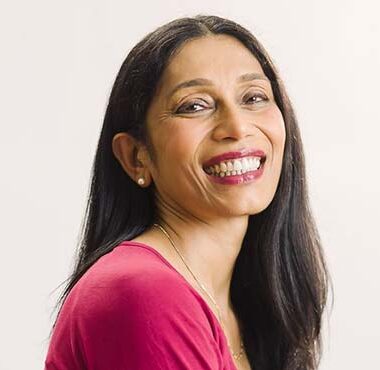
Bela Labovitch
Bela Labovitch is leading the way in technology and mentorship at athenahealth, where she is the VP of engineering. A fierce advocate for women in technology, she speaks regularly at conferences and forums to encourage and support women technologists. She is equally passionate about healthcare interoperability and fixing our healthcare system. In 2019 and 2021, the Healthcare Technology Report named her one of the Top 25 Women Leaders in Healthcare Software.
Labovitch began her computer science journey in high school, where she took a class and fell in love with programming. She later took college-level classes while attending Brandeis University, where inspirational professors cemented her desire to major in computer science.
“Even back then, I had a sense that tech could make a difference in the world,” she says.
After Brandeis, Labovitch was interested in a PhD or master’s program that would lead directly to industry, so she applied to Northeastern.
“I did want to learn; I felt I had gaps,” she recalls. “What I loved about Northeastern was that I could work and get real-world experience while getting my master’s.”
Her decision was helped by Mitchell Wand, who had switched from Brandeis to Northeastern shortly before.
“He was a great professor for me as undergraduate,” Wand says, “and I knew Northeastern must be good if he was going there.”
Following her master’s degree, Labovitch started as a programmer, then became a team lead, an architect, and a director of software engineering — “a fairly typical career,” she says. But before long, she pivoted.
“I had young kids and I felt like it was not my moment yet,” she remembers. “So I went back to being an individual contributor as an architect. Then I had a startup phase, before returning to director-level work after my kids grew older.”
Eventually, Labovitch landed in healthcare software, albeit by accident.
“A friend contacted me to talk to a startup around medication adherence, a huge issue in healthcare that costs this country $500 billion a year,” Labovitch says. “He had this idea of creating an automated pillbox which would remind people to take their medications and convey the data to a centralized care database to enable caregivers and providers to view a patient’s adherence. It was an early internet-of-things device, and it was an exciting journey. I saw firsthand the difference that the pillbox made to the lives of some people. It deeply affected me, and I wanted to stay in healthcare helping patients.”
Now, as a vice president of engineering at athenahealth, she leads a team on a mission to repair our broken healthcare system.
“There’s so much we can do with tech to automate and build interoperability of disparate systems to allow our clinicians to see a full view of their patient’s information,” Labovitch explains. “Right now, patient data is siloed. We want software to talk to each other with APIs, so that a lot of the manual work can be automated. It’s an interesting time in tech with AI and large language models, these can effect big changes in healthcare.”
Labovitch started the Women in Technology initiative at athenahealth to support tech women at the company. She also speaks at conferences and local events to excite women and girls about tech and convince them that it’s an amazing career. She is also an executive sponsor of Girls Who Code, a nonprofit focused on attracting girls to tech early.
“Attracting and keeping women in tech starts early, so we have to address the pipeline problem,” she says. “Once they’re in this field, I focus on keeping them in. Women face specific challenges; we can work on making the environment a hospitable place to grow their careers.”
What I loved about Northeastern was that I could work and get real-world experience while getting my master’s
Labovitch mentions with pride a woman she mentored who changed her major to computer science and joined athenahealth.
“She’s gone on to become a mentor herself and is working on bringing more Latina women into tech,” she says. “I’m proud of the trajectory of her career, but also her trajectory of making a difference for women. I get to view the next generation of women who are helping others at athenahealth and beyond.”
Looking back at Northeastern and Khoury College, Labovitch remarks on how the profiles of both have risen.
“All the kids I know now are trying to get into Northeastern. It was well-known when I was there, but not as well-known as it is now,” she says. “It’s exciting to see its journey these last few years. There have been great initiatives to help support women in CS. I look forward to getting more involved with these initiatives, too.”
And with the rapid developments in machine learning, AI, and big data enabling change in the way core work gets done, she is excited for Khoury College’s future.
“Northeastern graduates are talented, inspired students,” she says. “We see and hire them. They want to change the world, and I love that sentiment coming from the graduates of this generation.”
Reacting to the 40 for 40 honor, Labovitch feels grateful for Northeastern.
“It means a lot to me. I’m truly honored to be recognized, feeling proud for the education I had at Northeastern and grateful for what it’s doing for students today,” she says. “I’m looking forward to staying connected and helping the college. As I went through the 40 for 40 honorees list, I recognized some of the wonderful professors that I had while I was a student, such as Harriet Fell and Betty Salzberg. They were very impactful on me as role models, teachers, and women in computing. They inspired me and my career.”

Daron Green
When Daron Green managed operations and academic relations for Facebook Research in 2018, he saw an issue in its hiring pool: a nominal proportion of women and groups historically underrepresented in tech, especially those with advanced degrees in computer science. So when Carla Brodley, dean of the Khoury College of Computer Sciences at the time, introduced Green to Northeastern’s Align master’s in computer science —which accepted students from any undergraduate degree — Green saw tremendous potential for systemic change.
“Facebook’s intent was to try and move the needle at a national level by investing in a program that demonstrably provided an on-ramp for a more diverse pool into computer science,” Green says.
So, to support the program in building on its initial efforts, Facebook made a $4.16 million, four-year investment. The grant provided funding for scholarships — which Khoury College managed independently without any ties to an internal Facebook talent pipeline — and grew Northeastern’s marketing and recruitment efforts. Additionally, the funding supported the development of the MS Pathways to Computing Consortium, a networked learning community of colleges and universities across North America that are investing in their own “Align-like” programs on their campuses.
Green and his team were experts in the computer science industry, but they trusted Khoury College to define the curriculum students needed to bridge their undergraduate studies to computer science. It was a working relationship that relied on expertise and guidance on both sides. Mary Trimarco, director of strategic partnerships for the Align Program, says that working with Green meant “having a true partner who helps you improve your program and understands where you’re going, and isn’t just looking for those benchmarks.”
Green feels that Khoury College is a thought leader in preparing students for the industry. The potential of the program was evident in the feedback he heard from students, and in the way it reflected his own transition from his initial field of study in physical chemistry and simulation to computer science.
I think that every single computer science department should have an Align-equivalent program. They should all be able to onboard non-computer science graduates into a master’s program. The value to the university, to the student, and to the industry is clear
“Actually meeting the students was probably the most influential thing,” Green says. “The commentary that I heard from the students was, ‘I really enjoyed my first degree. My passion for that topic is now satisfied. I want to get a job and have a skill set that’s marketable. And this is the magic.’ I know exactly what that feels like. This is exactly what I went through.”
Although the intent of the funding was to support the broader industry, not to expand Facebook’s field of applicants, hiring data has shown that Align graduates have done quite well in their independent pursuit of jobs at Facebook (now Meta) upon graduation.
After Green left Facebook in 2021, he was hired to do an analysis of Northeastern’s corporate engagement strategy, including a series of recommendations to enhance the university’s ability to effectively engage industry at scale. In July 2021, Green became the chief scientist for Autodesk. Although Meta’s four-year partnership with Align concluded in 2022, the program and the Pathways to Computing Consortium have continued to grow thanks to the tremendous boost provided by this early funding. And Green believes that this is only the beginning.
“I think that every single computer science department should have an Align-equivalent program,” Green says. “They should all be able to onboard non-computer science graduates into a master’s program. The value to the university, to the student, and to the industry is clear.”

Molly White
Since graduating from Khoury College, Molly White has continued to pursue her two passions: programming and promoting accuracy in online platforms. In short order, she has proven herself a leader in both areas.
White graduated from Khoury College in 2016 with a bachelor’s in computer science. During her time at Khoury, she had two internships at HubSpot, a marketing software company, which led to a six-year stint there as a software developer.
“Northeastern was where I really discovered my love for software engineering,” explained White. “I started college in the engineering school at Northeastern, thinking I might go into electrical engineering, but it was through classes and co-ops at Northeastern that I realized how much I loved writing software.”
“I also ultimately met a group of close friends at Northeastern who loved coding just for the fun of it,” continued White. “They loved the same kinds of weird and fun projects that I did. Hacking on my personal projects with them was pretty formative.” White was a member of NUHacks and helped organize the Hack Beanpot.
White’s interest on online editing and content accuracy started long before she arrived at Northeastern. White began editing Wikipedia at the age of 13, and it’s something she is still doing today some 15 years later. In fact, she is one of Wikipedia’s most active female editors. While still in high school, she became a site administrator and has written on a range of topics from her favorite bands to women scientists to right-wing extremism. According to her Wikipedia page, she has made more than 100,000 edits as of early 2022. She states on Wikipedia that “this work fulfills her interest in validating information online and her belief that spreading information produces societal change.”
White is now among the most prominent and knowledgeable critics of the crypto and Web3 industries, according to industry experts. She has lectured on the topic, counseled senators on legislation, and is interviewed regularly on news sites and podcasts.
White believes that crypto has exacerbated wealth and access inequalities, giving power and control to a small number of investors, many of whom are already influential in shaping the web landscape, according to 2022 Financial Times article. White believes that federal regulation is urgently needed in the industry; she along with 25 other leading technologists encouraged congressional leaders to pass legislation that would result in crypto currency being regulated by the U.S. Securities and Exchange Commission.
Northeastern was where I really discovered my love for software engineering. I started college in the engineering school at Northeastern, thinking I might go into electrical engineering, but it was through classes and co-ops at Northeastern that I realized how much I loved writing software
White is the editor of the website, Web3 is Going Just Great, a site that explores cases of crypto malfeasance, documenting cases where often unsuspecting investors are duped by false claims.
This spring, she left HubSpot and is currently on a fellowship at the Harvard Library Innovation Lab and is an affiliate at Harvard’s Berkman Klein Center for Internet & Society. The fellowship has given her focused time to work on her research and writing.
After the fellowship is over, what’s next for White? That’s a question she is currently exploring. “When I do return to software, I will probably also try to figure out how I can sustainably work in the kinds of research and writing I enjoy doing on the side, without having to only pack it in around the edges of a full-time software career.”
Meet Benji Northrop
After becoming a father, Navy helicopter pilot Benji Northrop needed a career change. The Align Online program helped him transition into computer science at his own pace, giving him the flexibility to care for his family while pursuing a new degree.
Working full-time while doing grad school is a challenge. It’s a big exercise in time management, and you get to throw an extra wrench into the middle where you’re also a full-time parent. … I needed to be 100% asynchronous and I needed to have commitment from the school … Northeastern had that from day one
Benji Northrop, Align MSCS ’25
Meet Albert Lionelle
When Albert Lionelle was an undergrad, he pursued computer science to maximize his potential for career flexibility. This would prove beneficial, as he went on to work in computer vision, defense, and even ran a fertilizer company using modern software tools. Now as the director of Align, he is passionate about helping students achieve the same flexibility within their own careers.
The most important thing, and the thing that brings a smile to my face, is when [students are] happy with how they’re progressing, and when they are content in knowing they have a future that they didn’t have before
Albert Lionelle, Director of Align
Meet Natalie Grillo
Natalie Grillo knows it’s never too late to switch careers. After working in health care for 15 years, she attended a Break Into Tech event that introduced her to the Align Online program — empowering her to shift toward computer science and new career opportunities. Now she’s trading ambulances for office work, making connections at large tech companies she never imagined she’d have access to.
Having done my undergrad as an adult as well, there were moments I was like, ‘Oh no, is this for me? Am I too late?’ But with Northeastern and Khoury College’s Align Online, it’s right on time
Natalie Grillo, MSCS ’26
Meet Jeongkyu Lee
While Jeongkyu Lee enjoyed aspects of his former role as a database administrator, he regretted that he didn’t get many opportunities to directly engage with students. Now teaching at Khoury College, he runs a student research lab that bridges his passions for research and fostering student success.
We started the research lab as a form of a student interest group. … I believe that such a research experience will be the foundation of their future
Jeongkyu Lee, Teaching Professor