Robotics at Khoury College of Computer Sciences
Helping incorporate artificial intelligence into robots, enabling them to perceive, make decisions, and learn
Robotics research at Khoury College is an interdisciplinary field that explores how to create intelligent machines that can interact with the physical world and collaborate with humans. This brings together work on perception, how robots sense their world; manipulation, how they physically interact with it; planning and navigation, the ways robots make decisions on how to act on their own; and human-robot interaction (HRI), understanding how to make collaboration between robots and humans productive and safe.
Transforming industries and everyday life
Research in robotics is transforming industries and day-to-day life in many ways. Advanced manufacturing taps robotics to automate repetitive or dangerous tasks, making companies more efficient and decreasing the risk of injury. Khoury College’s research in this area has made new approaches possible in health care, from robotic surgery and rehabilitation tools to robots that provide companionship for people in recovery. Logistics and transportation are increasingly dependent on robots for warehouse work, and autonomous vehicles, though not yet in our driveways, are widely used in specific business contexts.
With the widespread popularity and acceptance of AI tools on computers, robots will likely be used in customer service roles, answering questions, and potentially even serving meals at restaurants, tasks that require strong background research in human psychology as well as computer science.
Sample research areas
- Multi-robot coordination
- Robot manipulation
- Perception, planning, and control algorithms
- Reinforcement learning, planning, and abstraction
- Knowledge representation and reasoning
- Intelligent agents
- AI-driven techniques
- Social robots
- Social implications and safety of robots
- Human robot collaboration
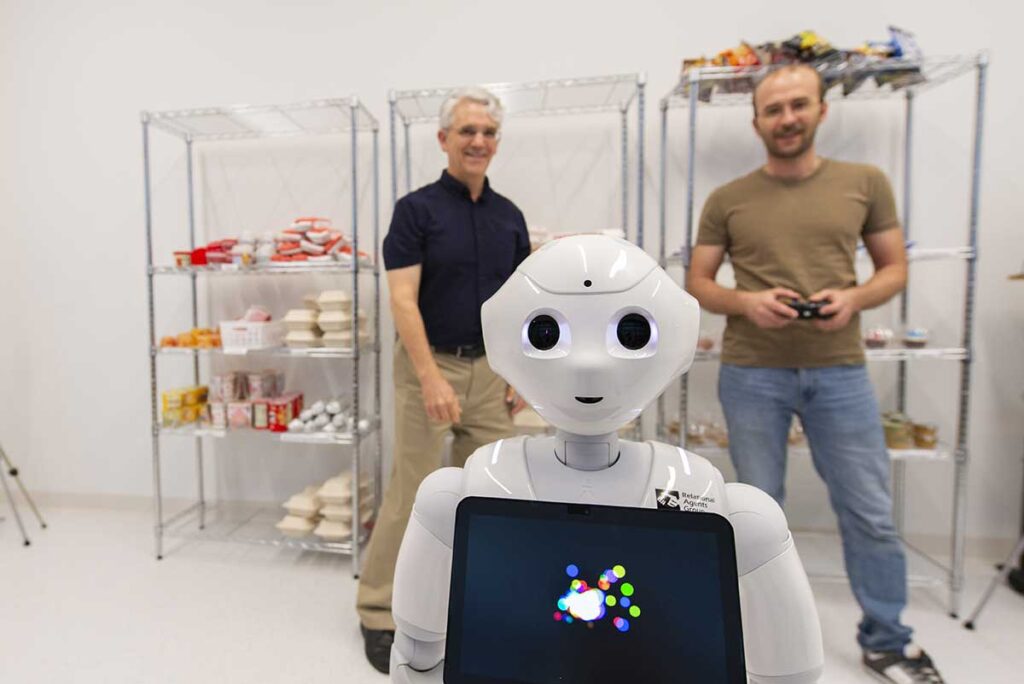
Khoury researchers: At the forefront
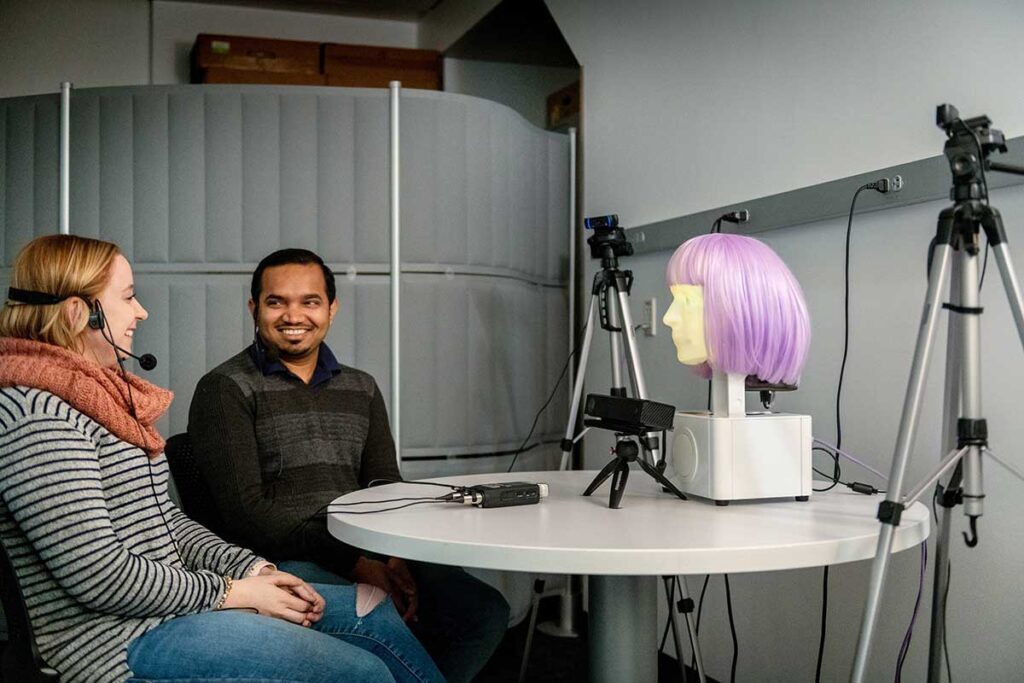
Current project highlights
Khoury researchers have worked with NASA to develop capabilities in robots that will travel to Mars and beyond.
Robotics have great potential to improve the quality of life for people living with disabilities, and Khoury researchers are exploring semi-autonomous robotic grasping capability that augment human skills.
Khoury researchers developed a way for robots to work together to deliver from a bar to customers, pointing the way to build robotic systems that can coordinate tasks even in environments where there are many random factors.